XVIII, Emilian School
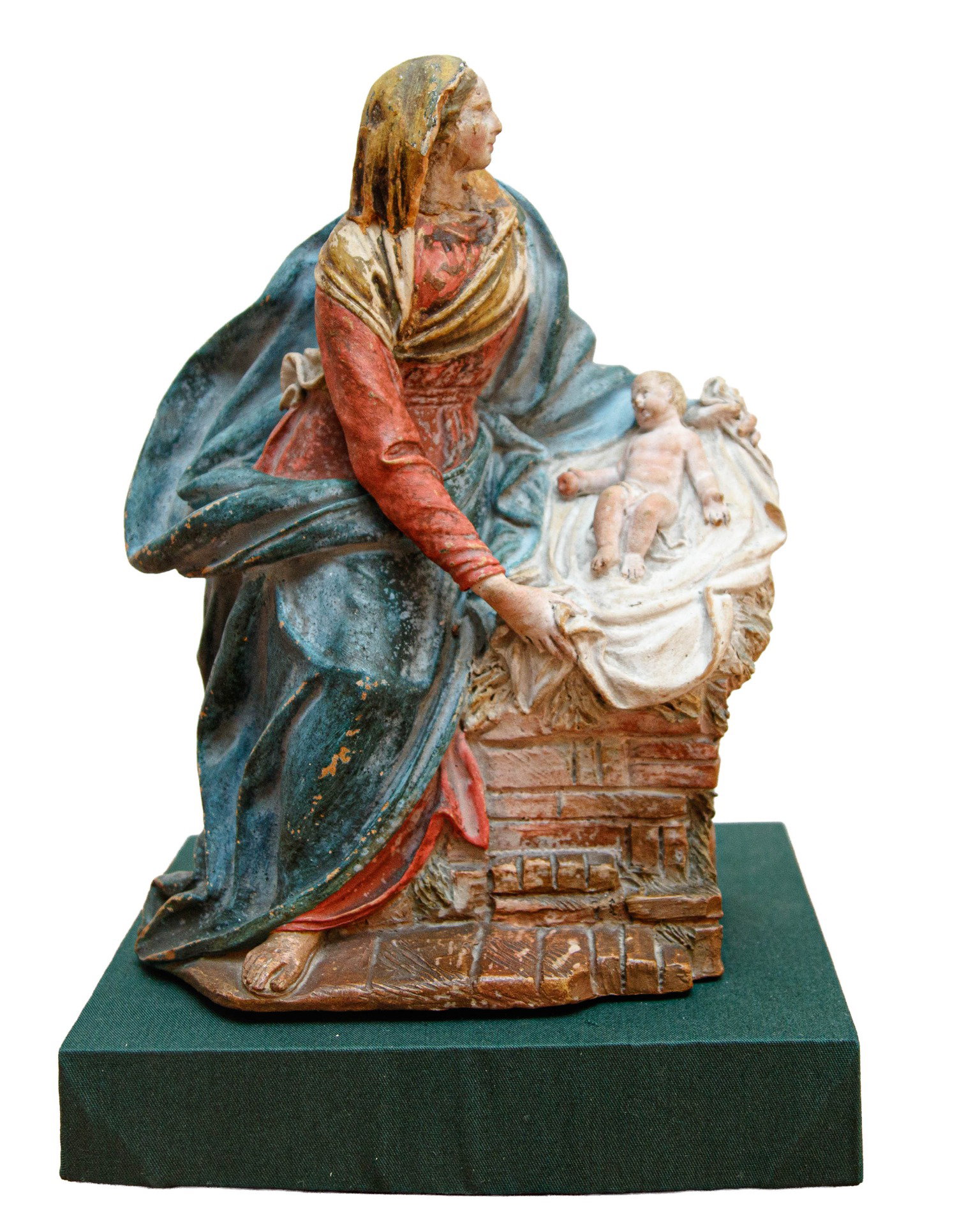
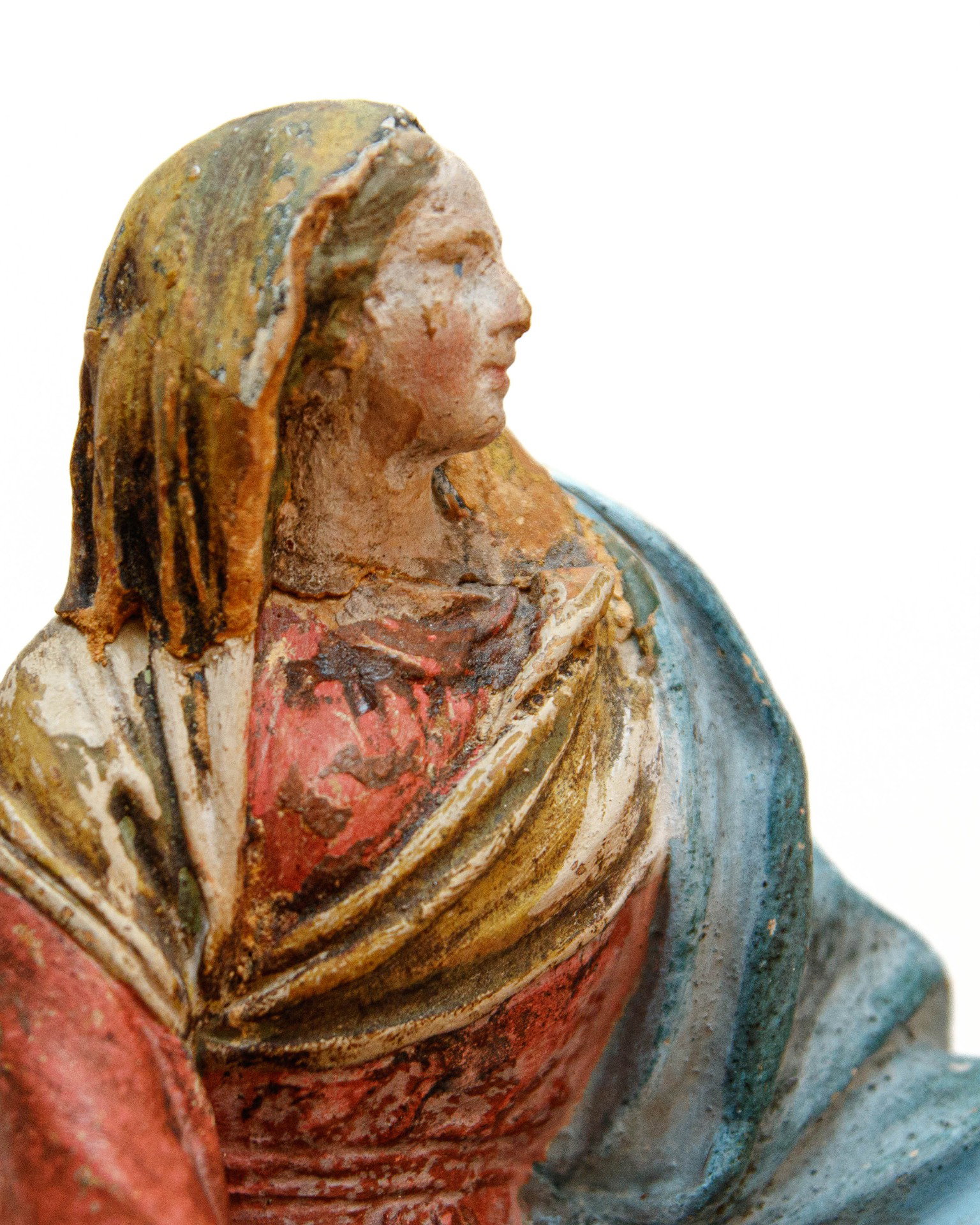
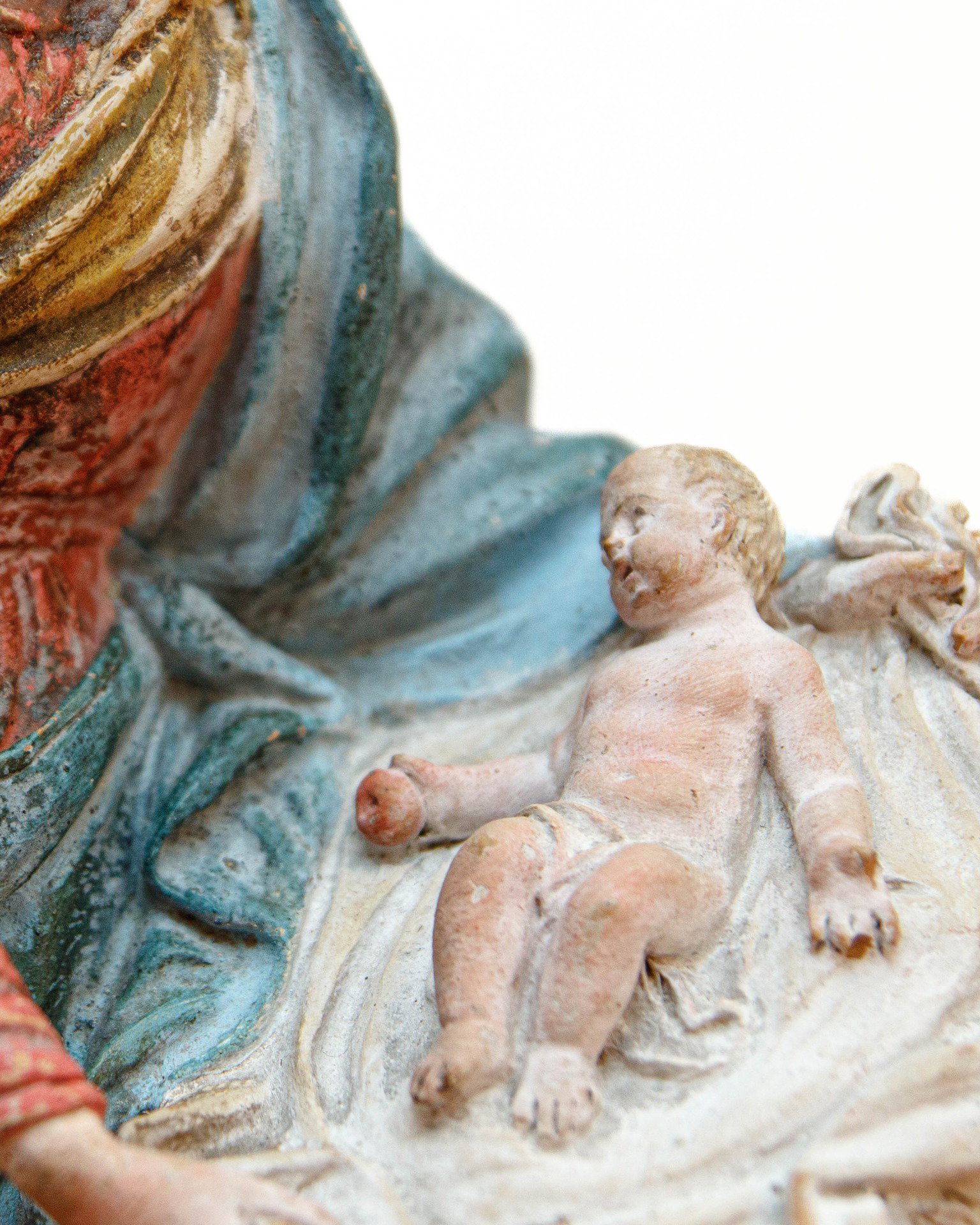
Madonna and Child
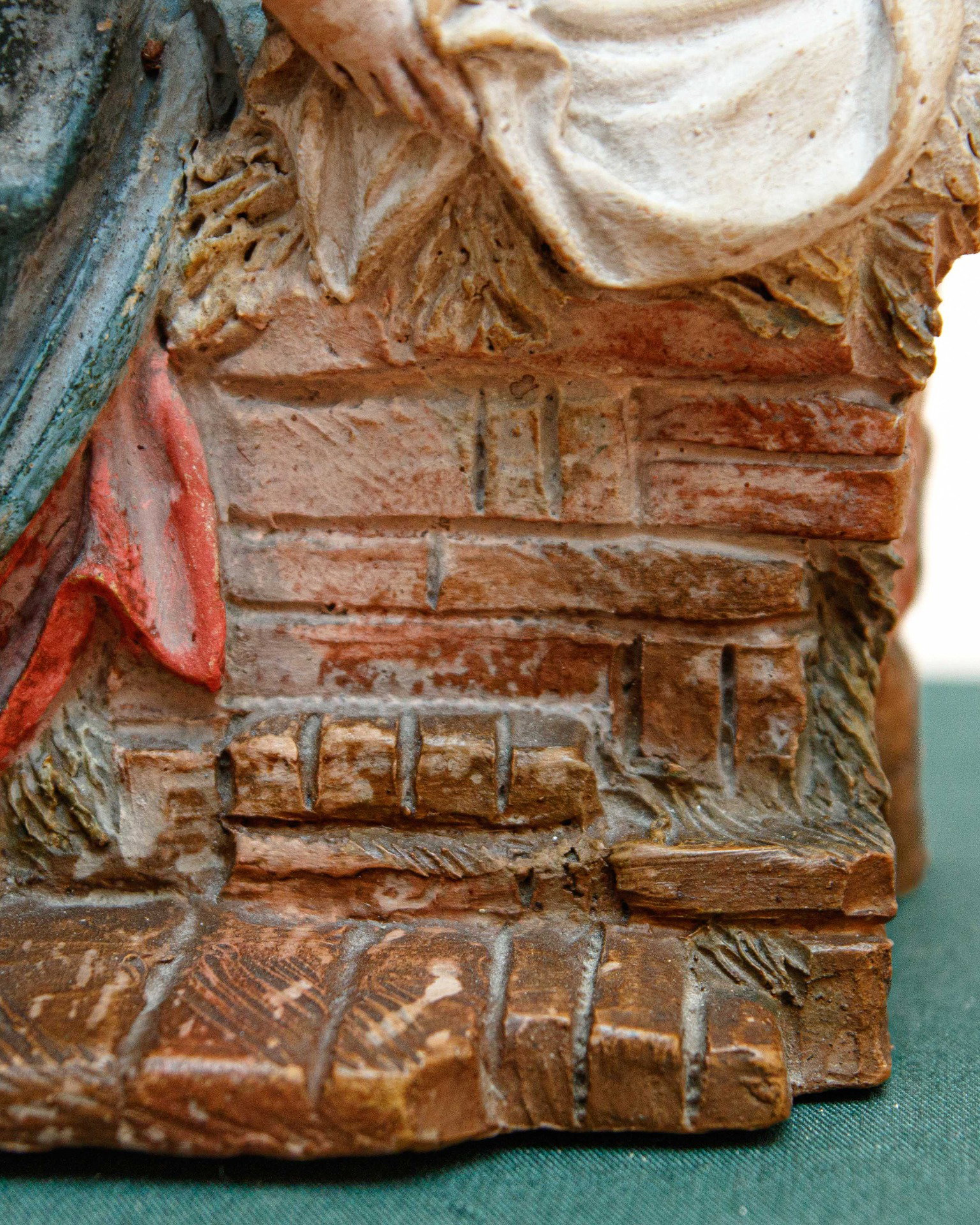
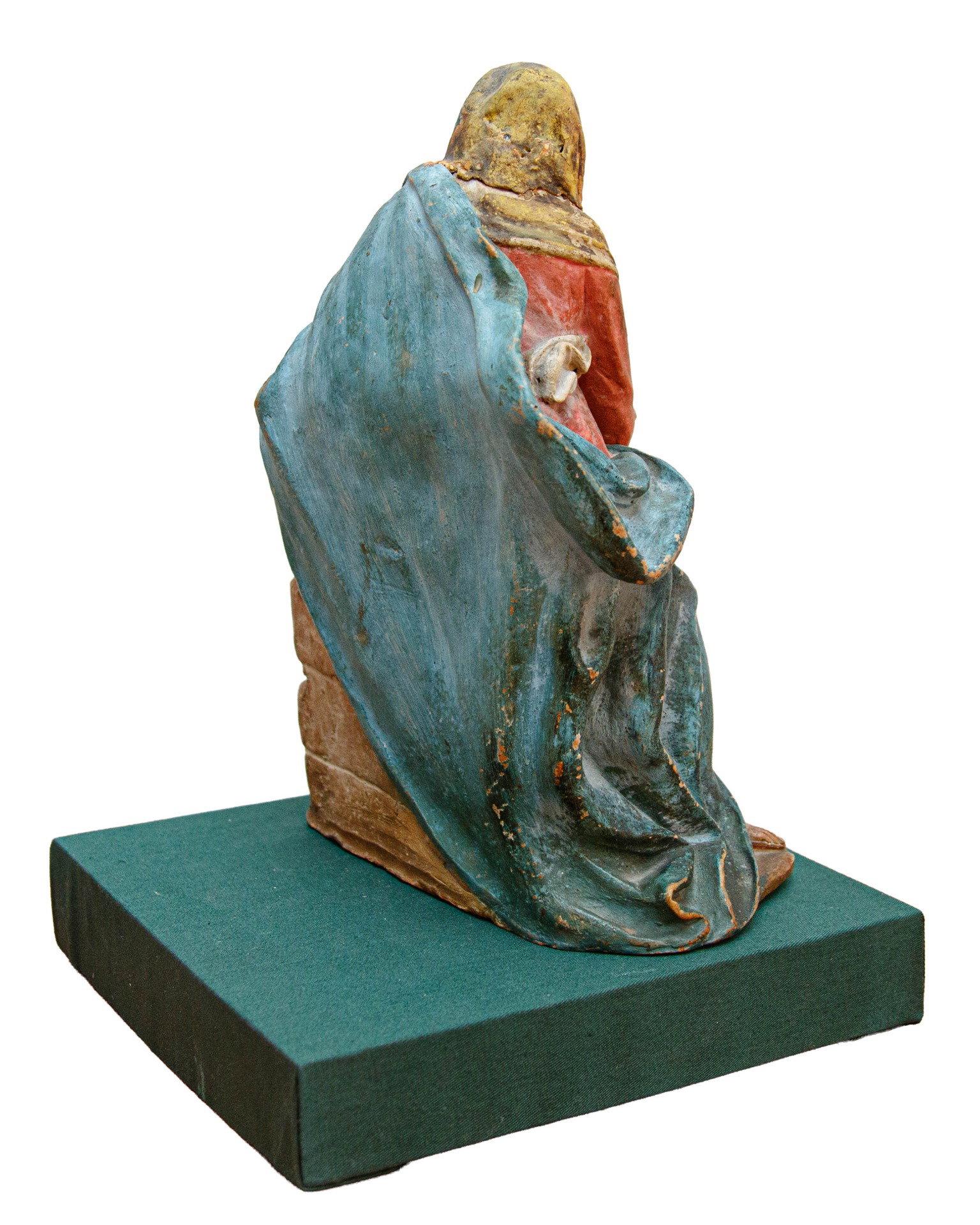
Polychrome terracotta, h cm 24
In a territory like Emilia, lacking stone quarries and bathed by the waters of the Po, the history of sculpture was born, out of necessity and genius, from clay. In a region where marble was a distant and inaccessible luxury, artists learned to work the earth of the rivers, transforming a humble material into extraordinary art. It was not a fallback, but a precise choice: terracotta became the ideal medium for telling faith in a direct and carnal way. Through clay, the Emilian masters managed to translate great sacred themes into a language close to the people, giving life to a "tactile" and profoundly human religiosity, capable of speaking to everyone's heart.
The trajectory of Emilian sculpture found its first, astounding peak in the 15th century with Niccolò dell'Arca. With him, humble clay abandoned any decorative function to become a stage for pain: the famous Lamentation over the Dead Christ in Santa Maria della Vita in Bologna represents, in this sense, a point of no return for the expressive intensity of the material.
However, as the centuries passed, that dramatic violence transformed: if the Renaissance had been the era of the cry, the eighteenth century became the era of affection and grace. The work in question – the Madonna and Child – fits perfectly into this context, a remarkable example of how clay, in the hands of Bolognese and Modenese masters, could compete with the nobility of marble through the warmth of the material and the softness of the modeling.
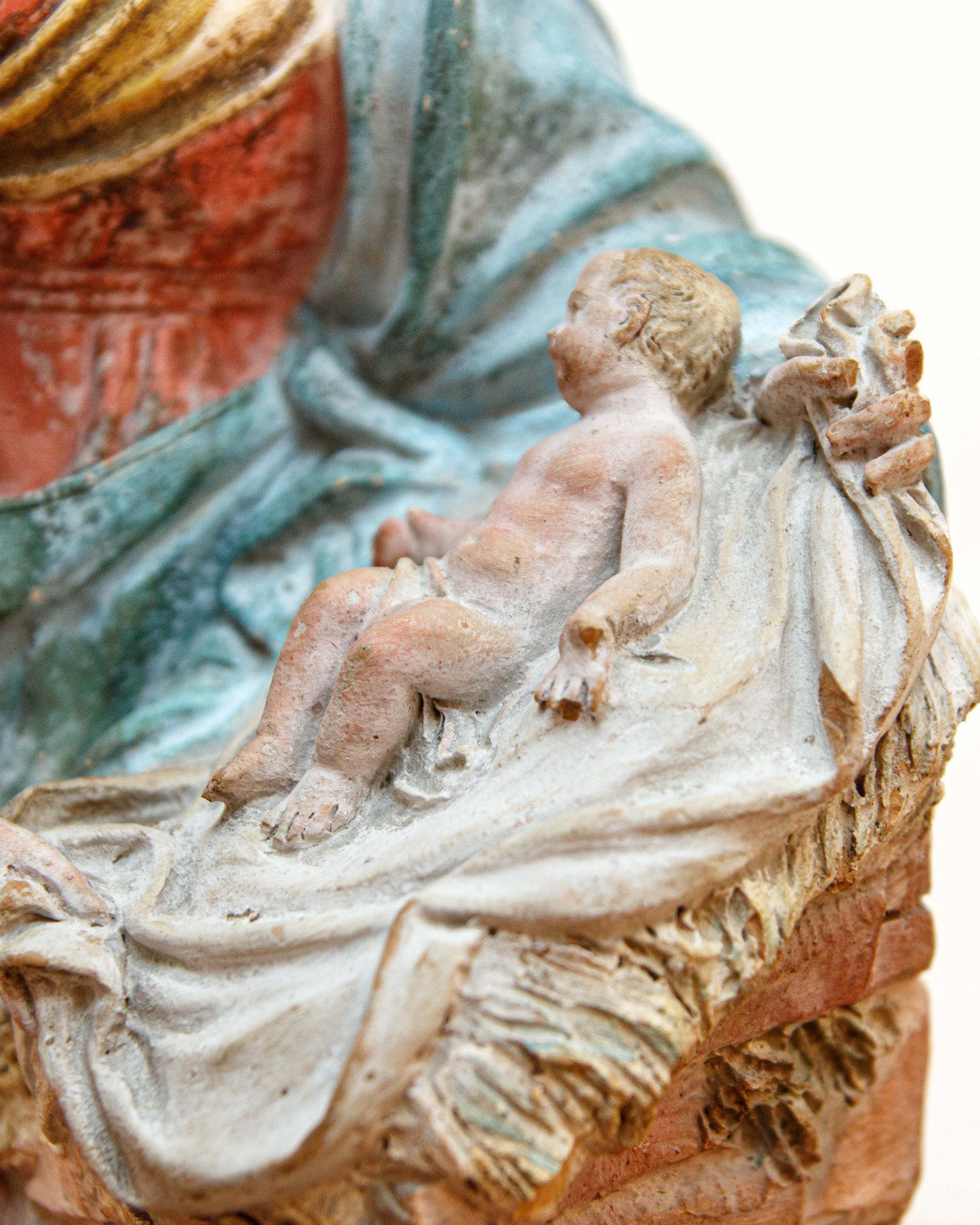
The structural analysis of the sculptural group reveals a pyramidal composition typical of the late Baroque, in which the figure of the Virgin dominates the space, enveloped in flowing and almost theatrical drapery. The heavy folds of the blue mantle, contrasting with the vibrant red of the tunic, act as vectors of movement that guide the eye towards the focal point of the scene: the Child. He appears to be lying on a ruined wall, an iconographic topos symbolizing the decline of the pagan era and the birth of the New Covenant.
The cold polychromy technique, perfected precisely in the eighteenth century, contributes to making the work even more vivid. Thanks to the painting, the sculptures managed to simulate the softness of flesh tones and the preciousness of fabrics with extraordinary realism, making the experience of the sacred a close, tangible, and profoundly everyday encounter.
For Italy only: with Ars Antiqua, it is possible to defer all amounts up to a maximum of €7,500 at ZERO INTEREST, for a total of 15 INSTALLMENTS
Ex. Total €4,500 = Monthly installment €300 for 15 months.
Ex. Total €3,600 = Monthly installment €720 for 5 months.
For amounts over €7,500 or for longer deferrals (over 15 installments), we can provide a personalized payment plan.
Contact us directly for the best quote.
LIVE TV
– SUNDAY 5:00 PM – 9:00 PM Digital Terrestrial 126 - Sky 824
– Streaming on our website www.arsantiquasrl.com and on our Facebook and Youtube social media
All works offered by Ars Antiqua are sold with a certificate of authenticity in accordance with the law and an accurate in-depth analysis.
It is possible to view the works directly at the gallery showroom in Milan, at via Pisacane 55 and 57.
We personally organize transport and delivery of the works, both for Italy and abroad.