Workshop of Frans Wouters (Lier, 1612 – Antwerp, 1659)
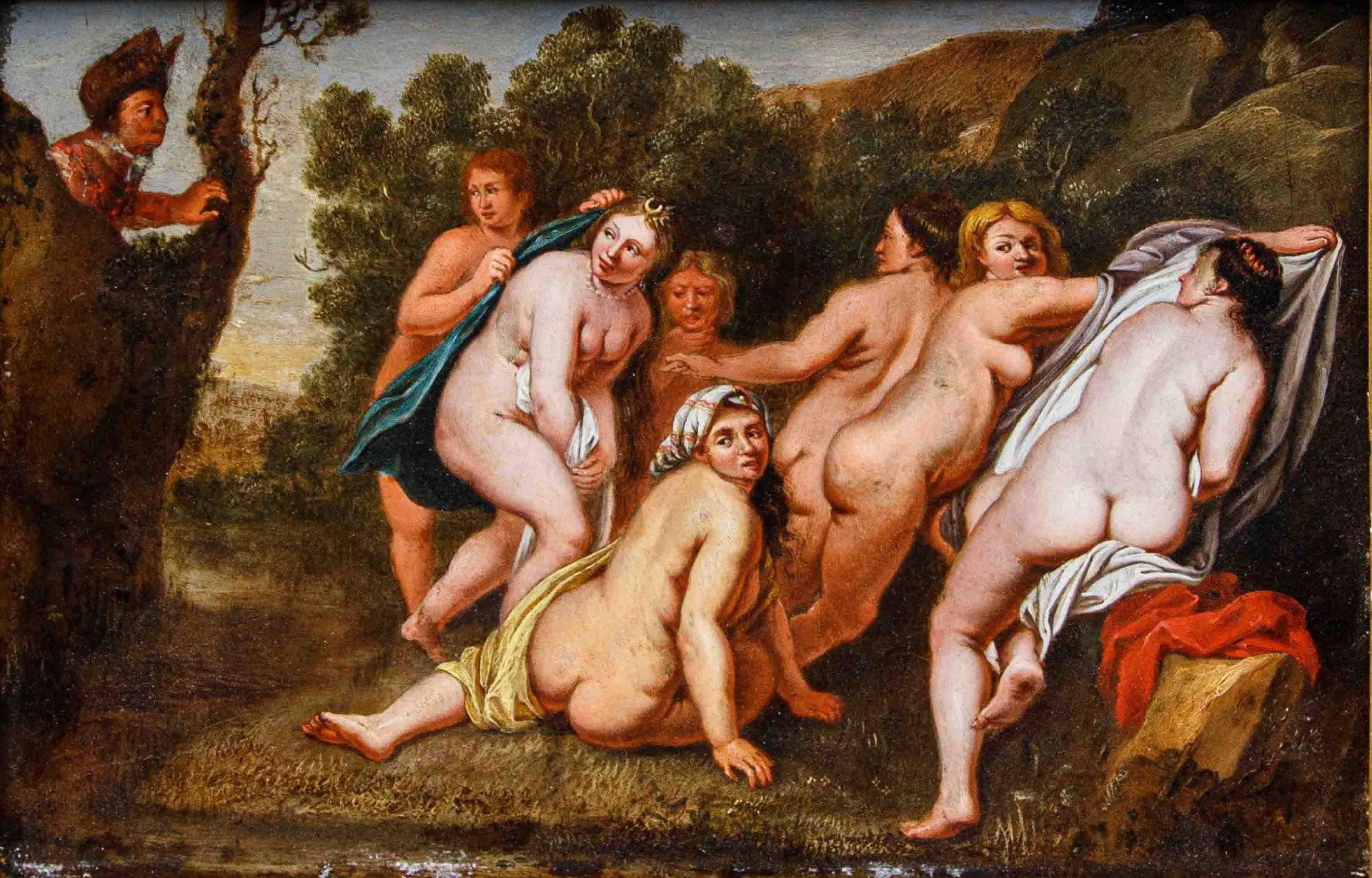
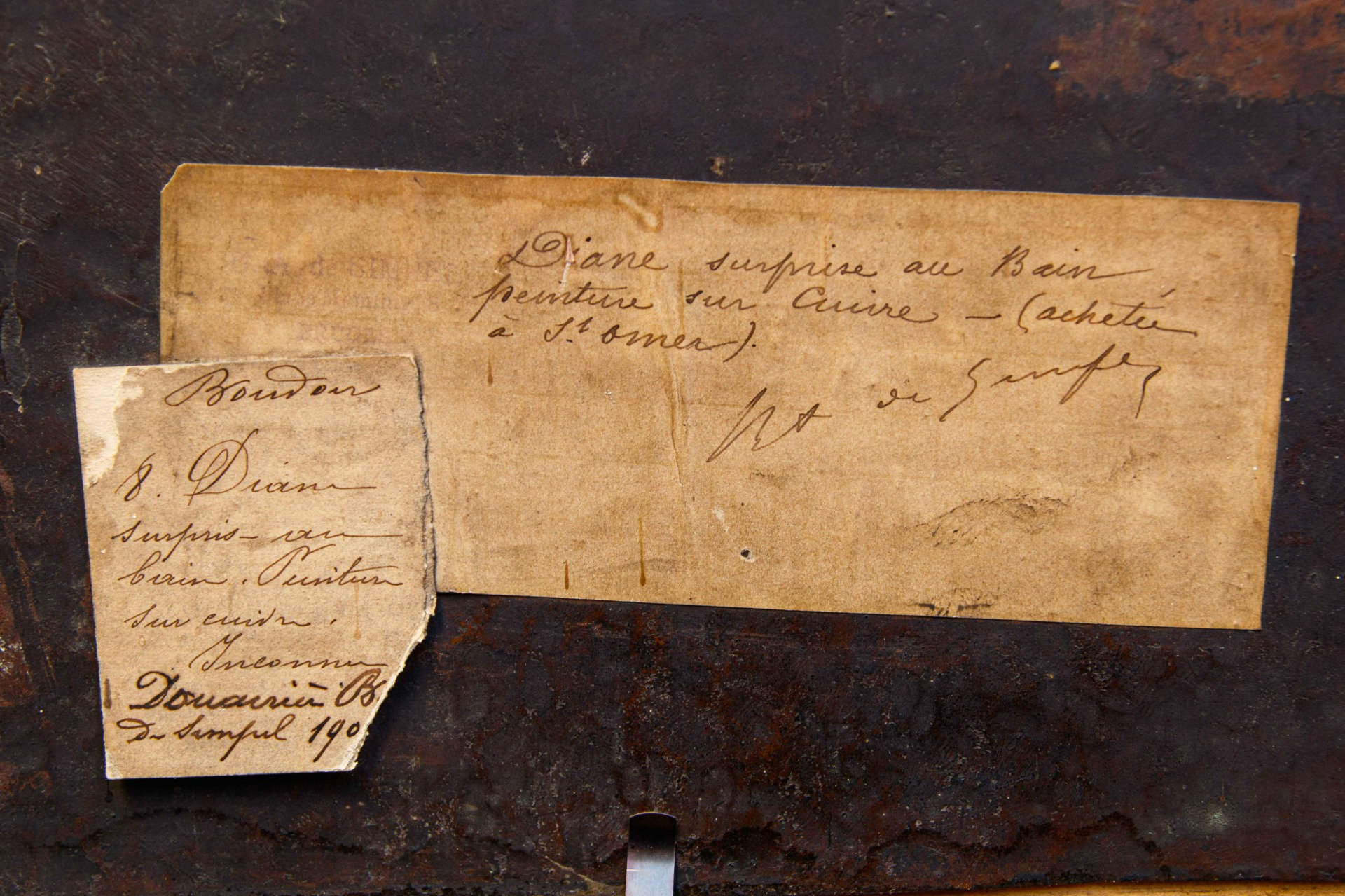
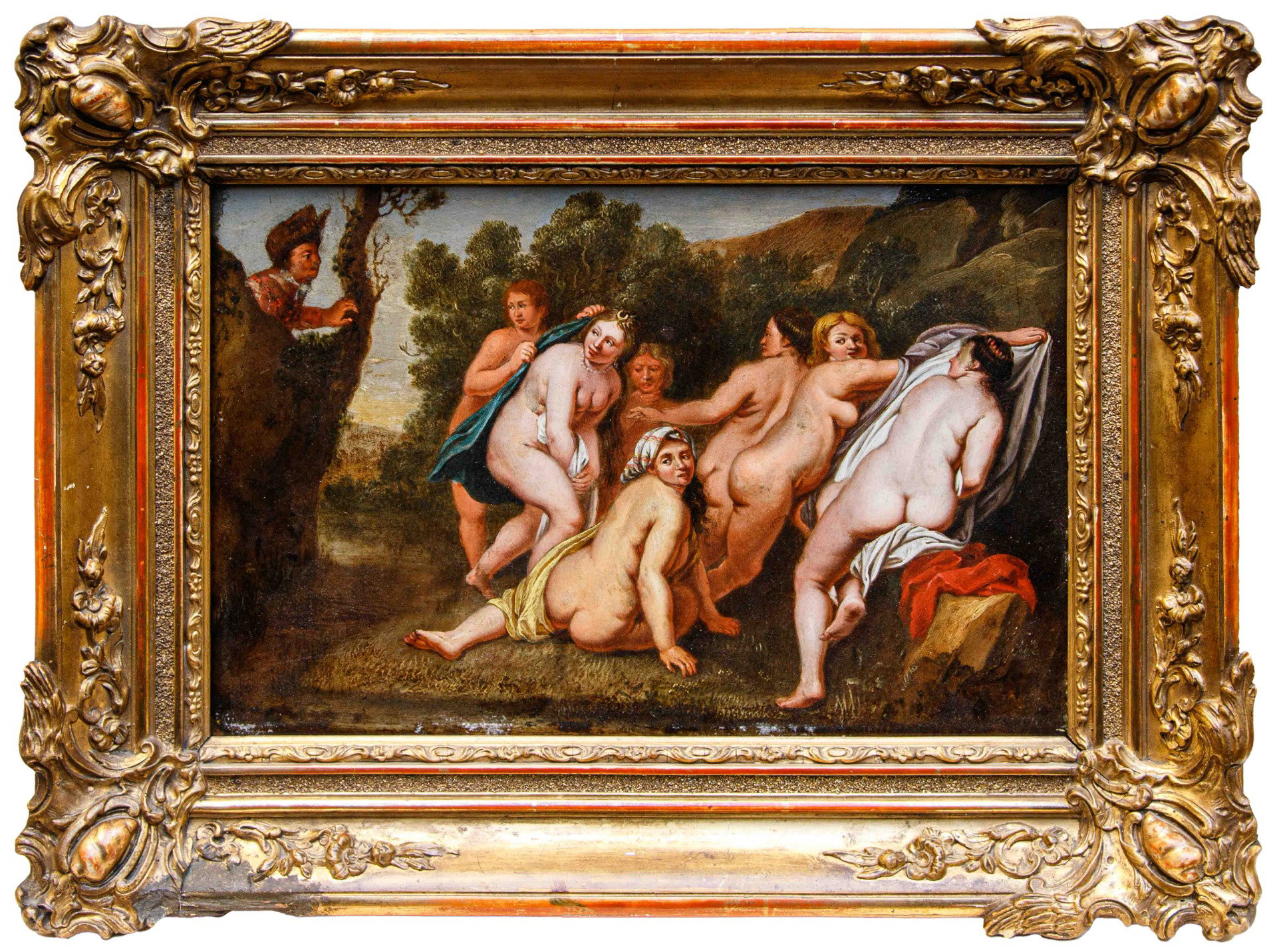
Diana surprised at her bath
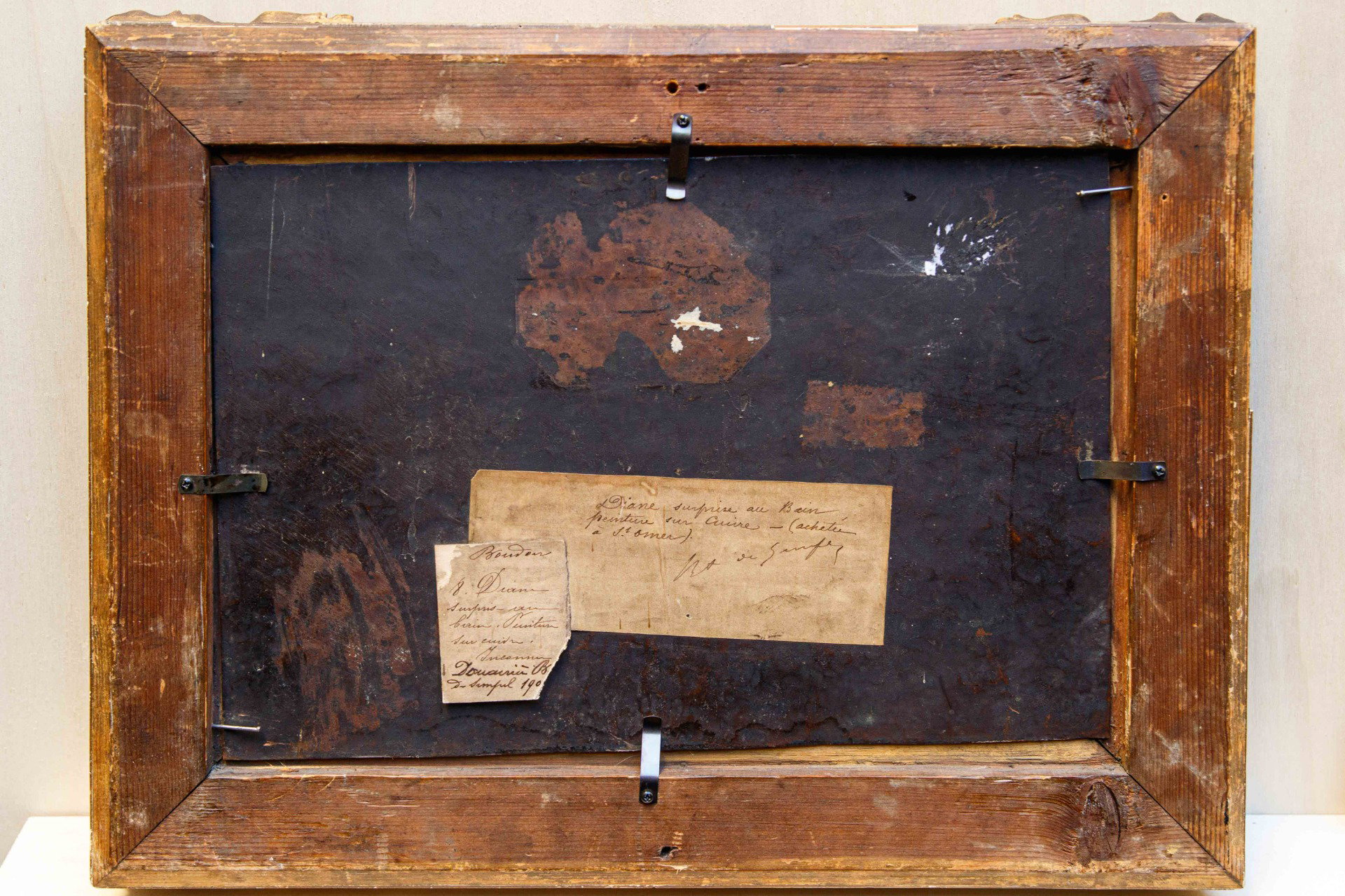
Oil on copper, 19.5 x 29.5 cm
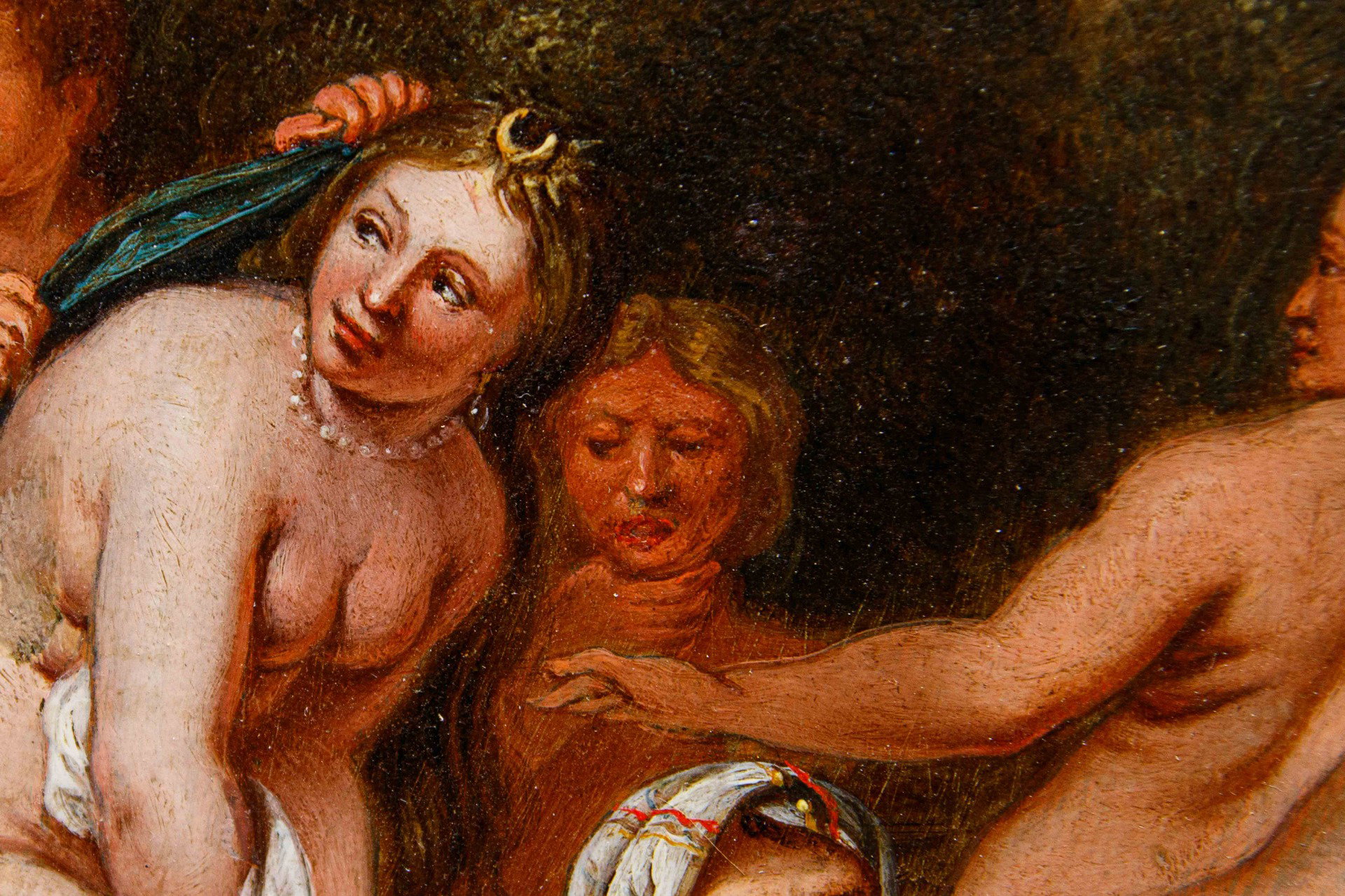
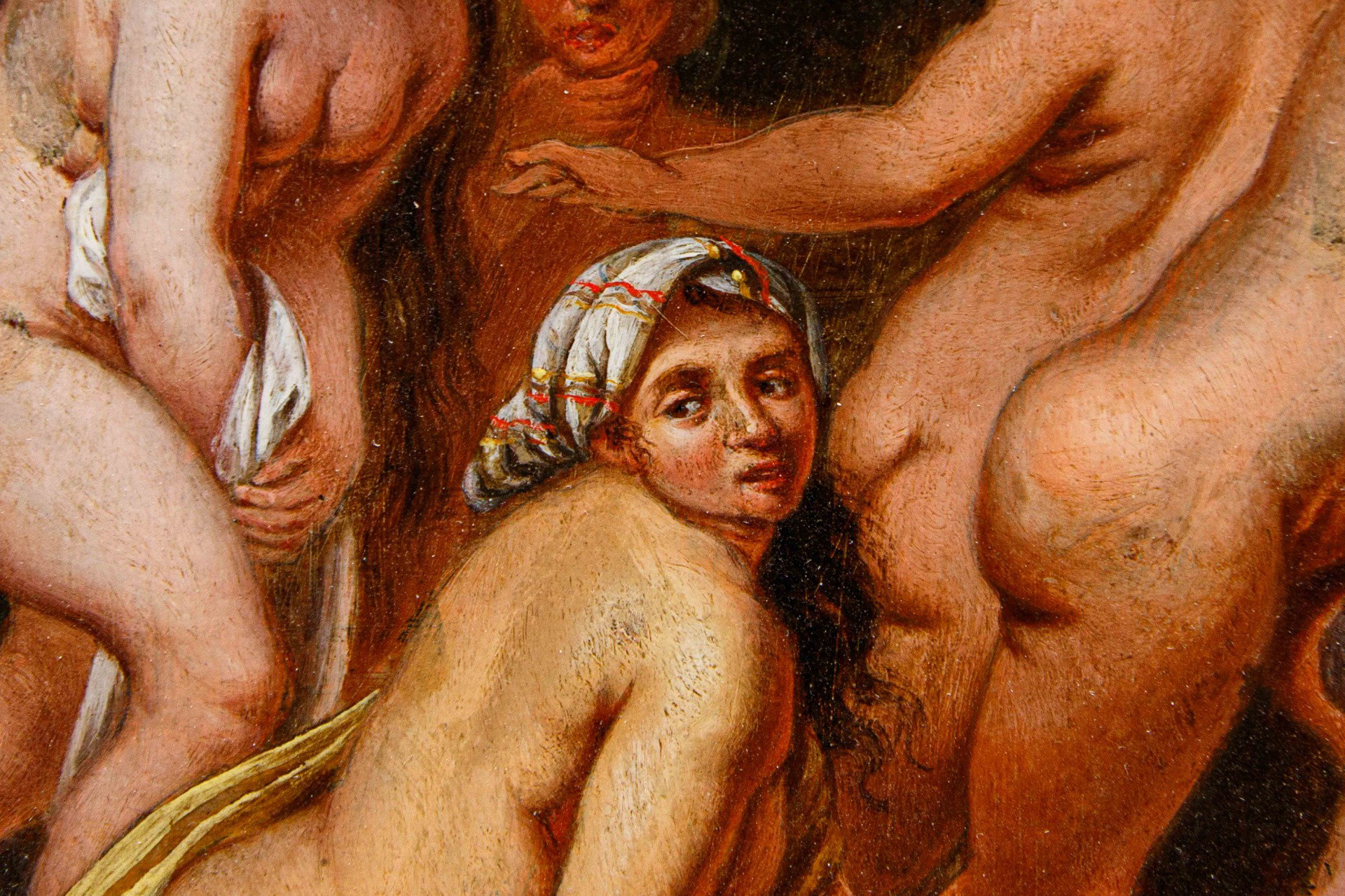
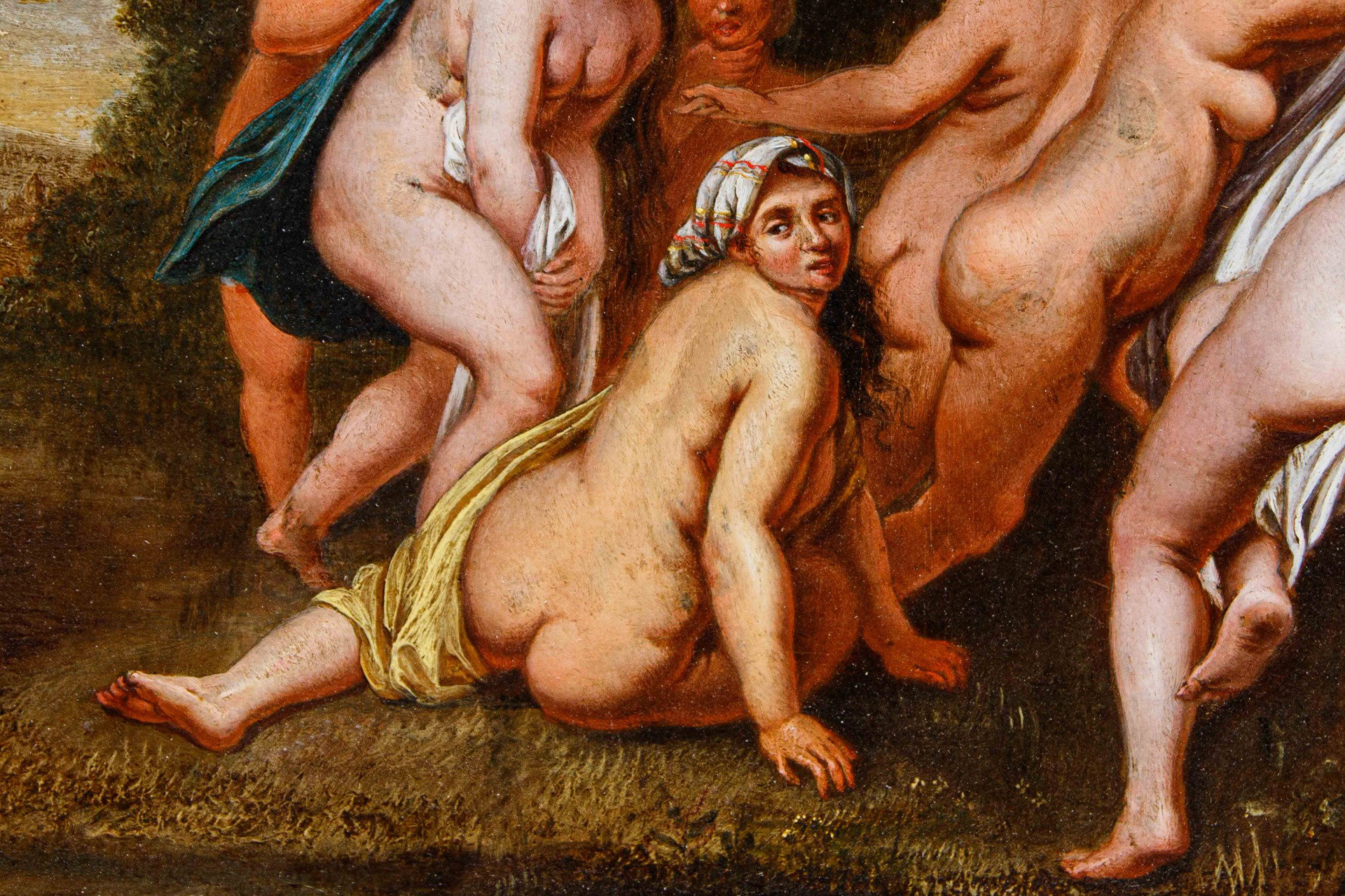
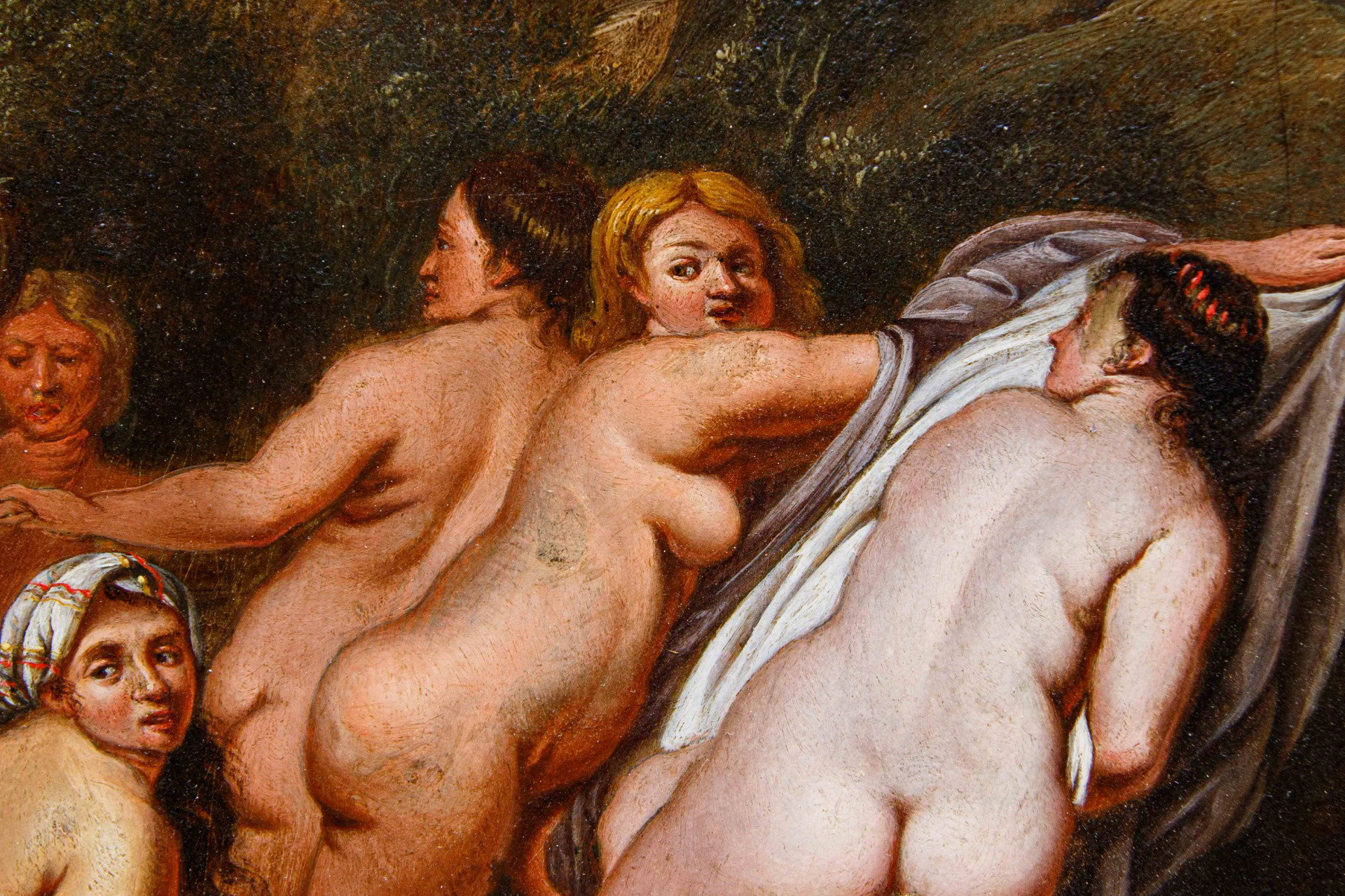
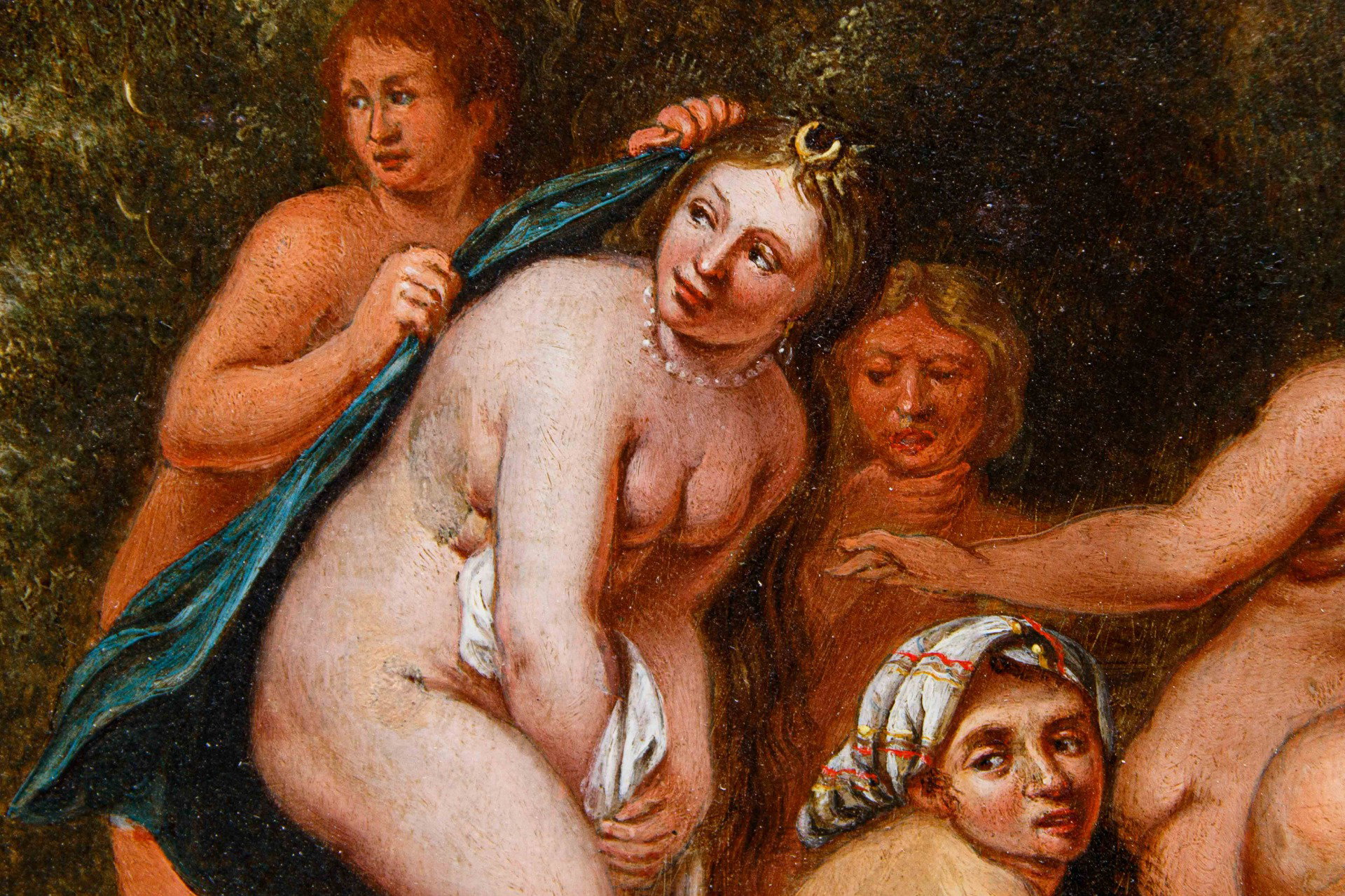
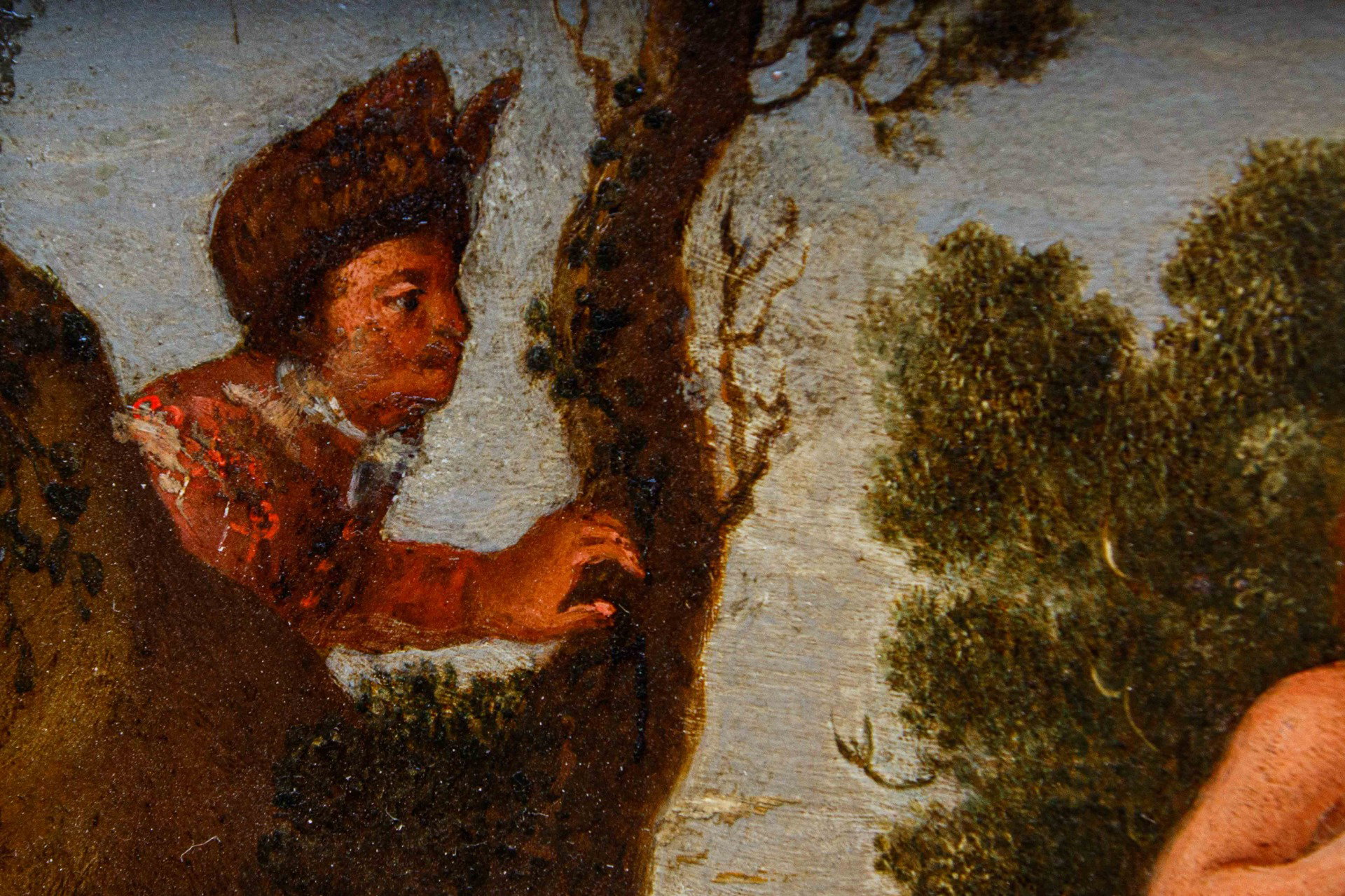
The oil painting on copper, Diana surprised at her bath by Actaeon, attributable to the workshop of Frans Wouters and dated between the late 17th and early 18th century, depicts one of the most successful mythological episodes in European figurative tradition. The scene captures the moment when Actaeon, having accidentally entered the sacred grove, surprises Diana and her retinue of nymphs during their bath. The composition, set in a wooded and shady landscape, is enlivened by a dense interplay of nude female bodies, captured in dynamic and varied poses: some nymphs try to cover themselves, others react with gestures of surprise or defense. From a stylistic point of view, the work presents elements that directly refer to Wouters's autograph production, especially in the construction of the background landscape, dense with trees and opening onto atmospheric vistas, and in the close dialogue between figures and nature. Significant comparisons can be made with paintings such as Nymphs surprised by Satyrs in the National Gallery of London or Venus and Adonis in a Landscape in the Torfaen Museum, which feature similar compositional arrangements and a similar attention to the rendering of bodies and the natural context, conceived not as a simple backdrop, but as a narrative space. The preference for medium-small formats and mythological subjects intended for private commission is also fully consistent with the practice of Wouters and his workshop. A further element of interest is the fact that another version of the same subject, attributed to a generic "anonymous Dutch painter," is documented in the RKD – Netherlands Institute for Art History. The presence of multiple versions confirms the iconographic success of the composition and suggests a circulation of models within the Flemish environment, probably linked precisely to workshop activity and the repetition of successful themes for the collector's market. Frans Wouters was a central figure in Flemish Baroque, capable of translating the grand inventions of Rubensian painting into a more intimate scale. After an initial apprenticeship with Pieter van Avont, he entered Peter Paul Rubens's workshop, assimilating a taste for warm color and light-filled landscapes. His career led him to work for important international commissions, from the Emperor Ferdinand II to the court of the Prince of Wales and future King Charles II of England, where he had the opportunity to engage with the art of Anthony van Dyck. After returning to Antwerp and serving the Archduke Leopold William of Austria, his style became more elegant and elongated in the figures, with greater attention to emotional expressiveness. The subject of Diana and Actaeon fits into a long figurative tradition dating back at least to the 16th century, with famous examples such as Titian's Diana and Actaeon, now in Edinburgh. The version considered here, despite its later dating and workshop origin, testifies to the persistence and adaptability of this iconographic model, reinterpreted according to the Flemish Baroque taste and the demands of educated private patrons.