Workshop of Bassano (17th century)
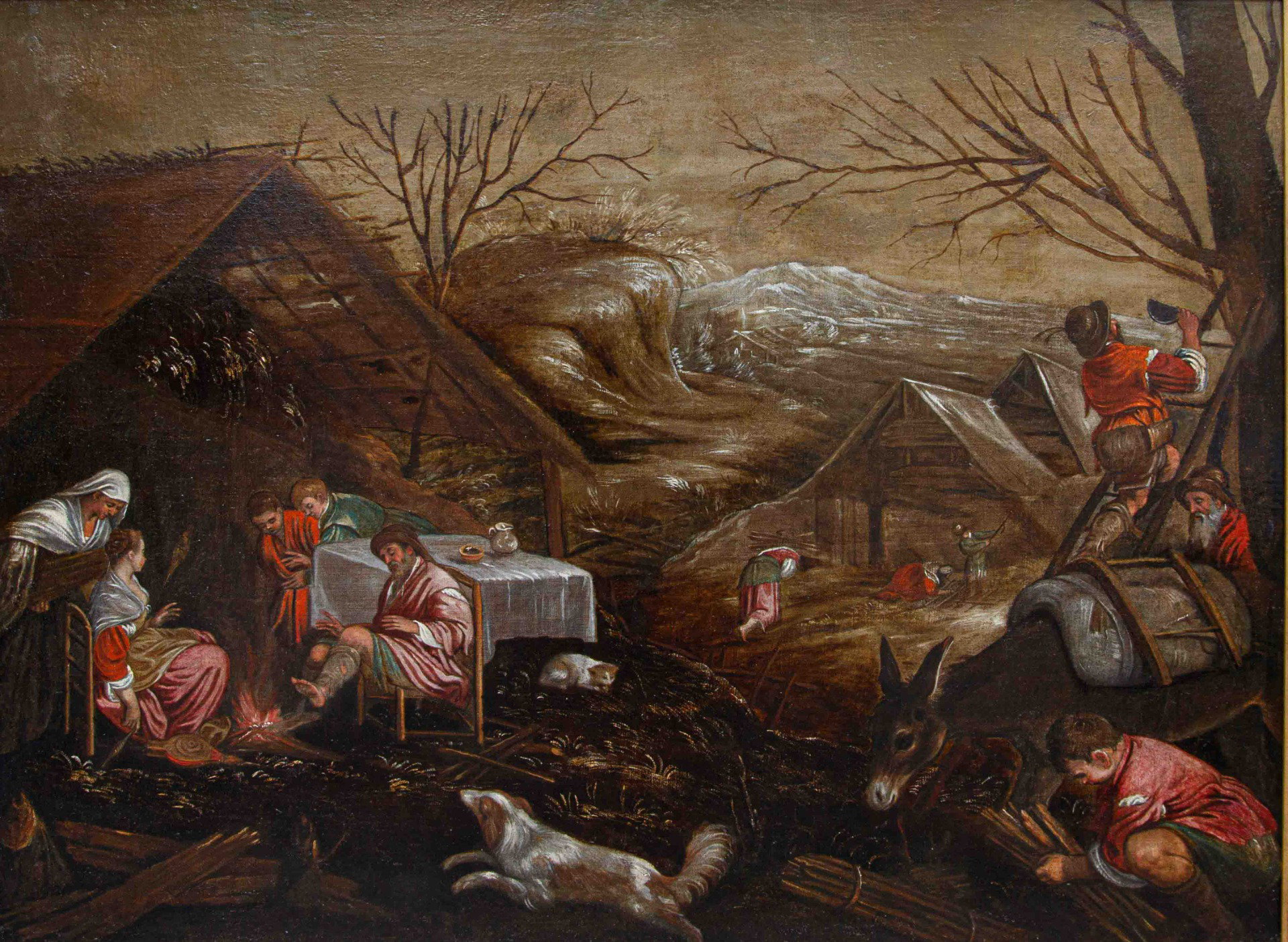
Allegory of Winter
Oil on canvas, 92.5 x 118 cm
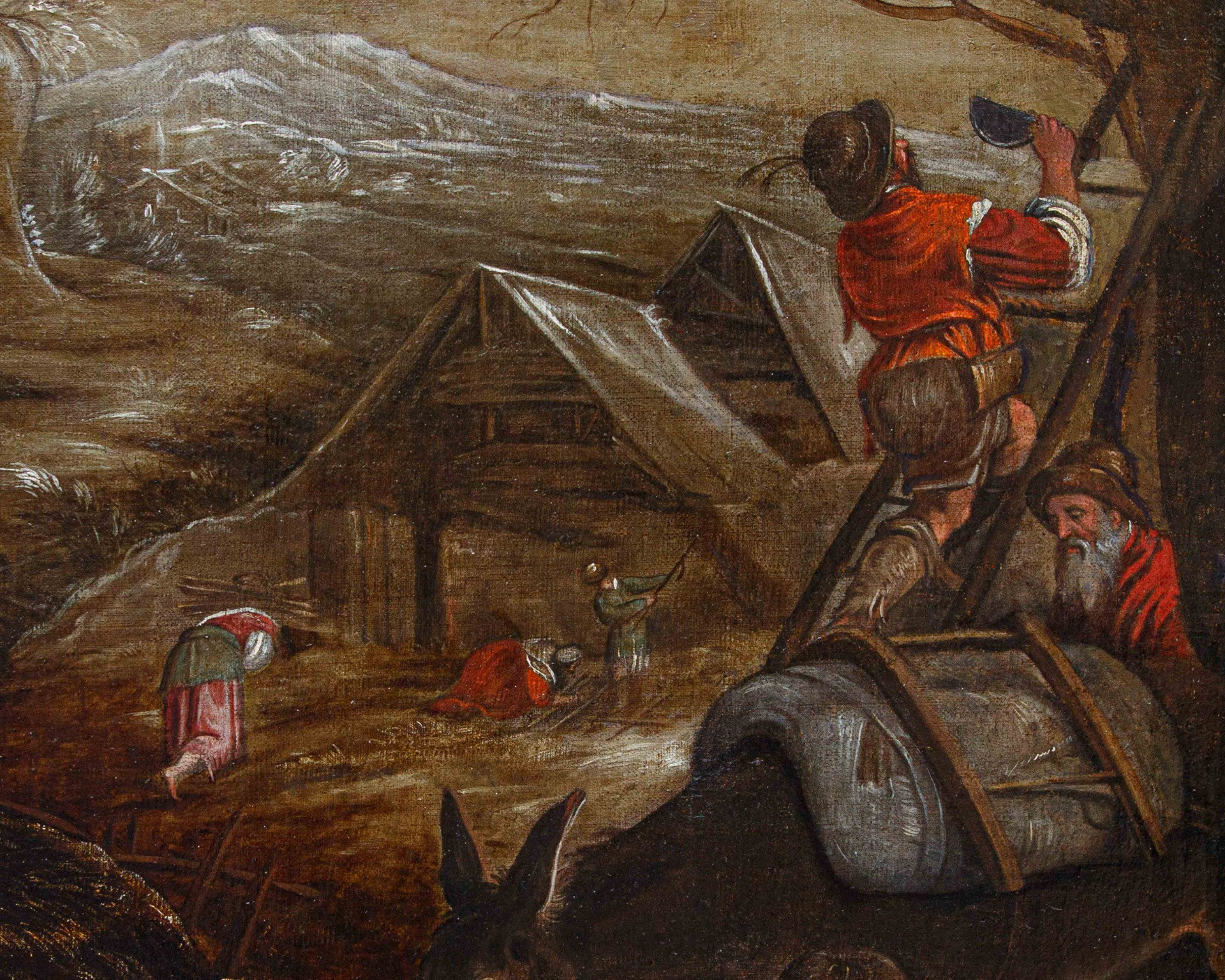
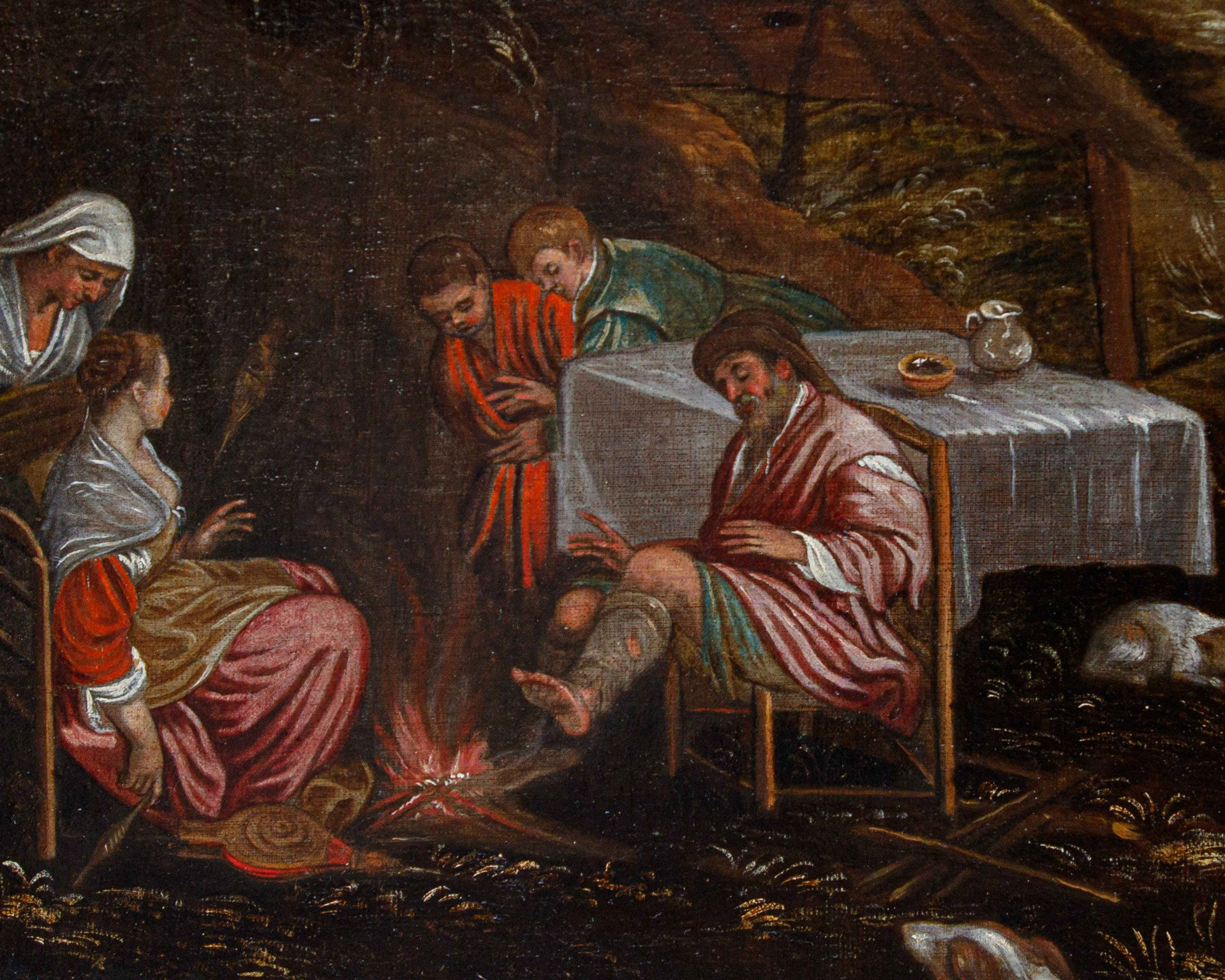
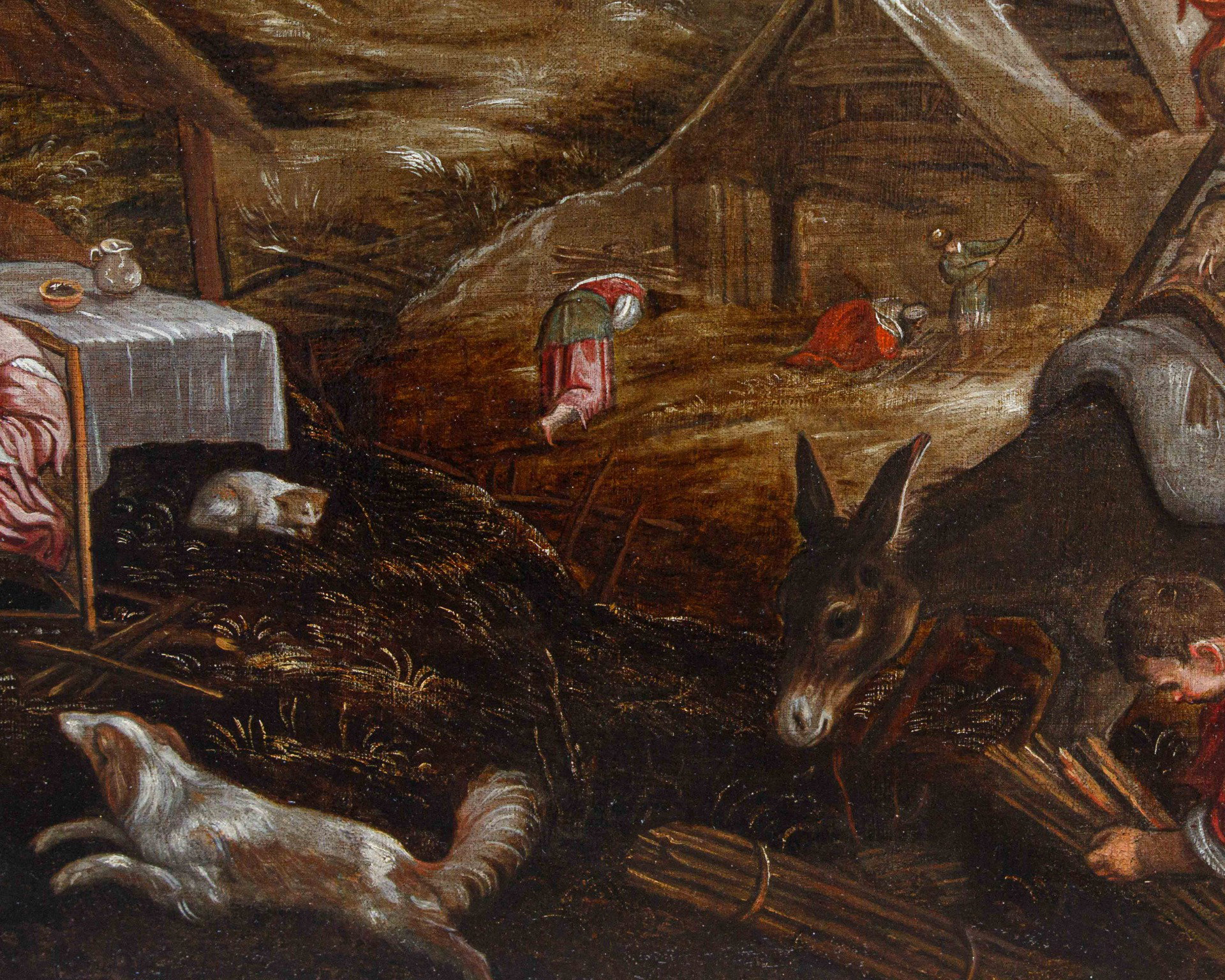
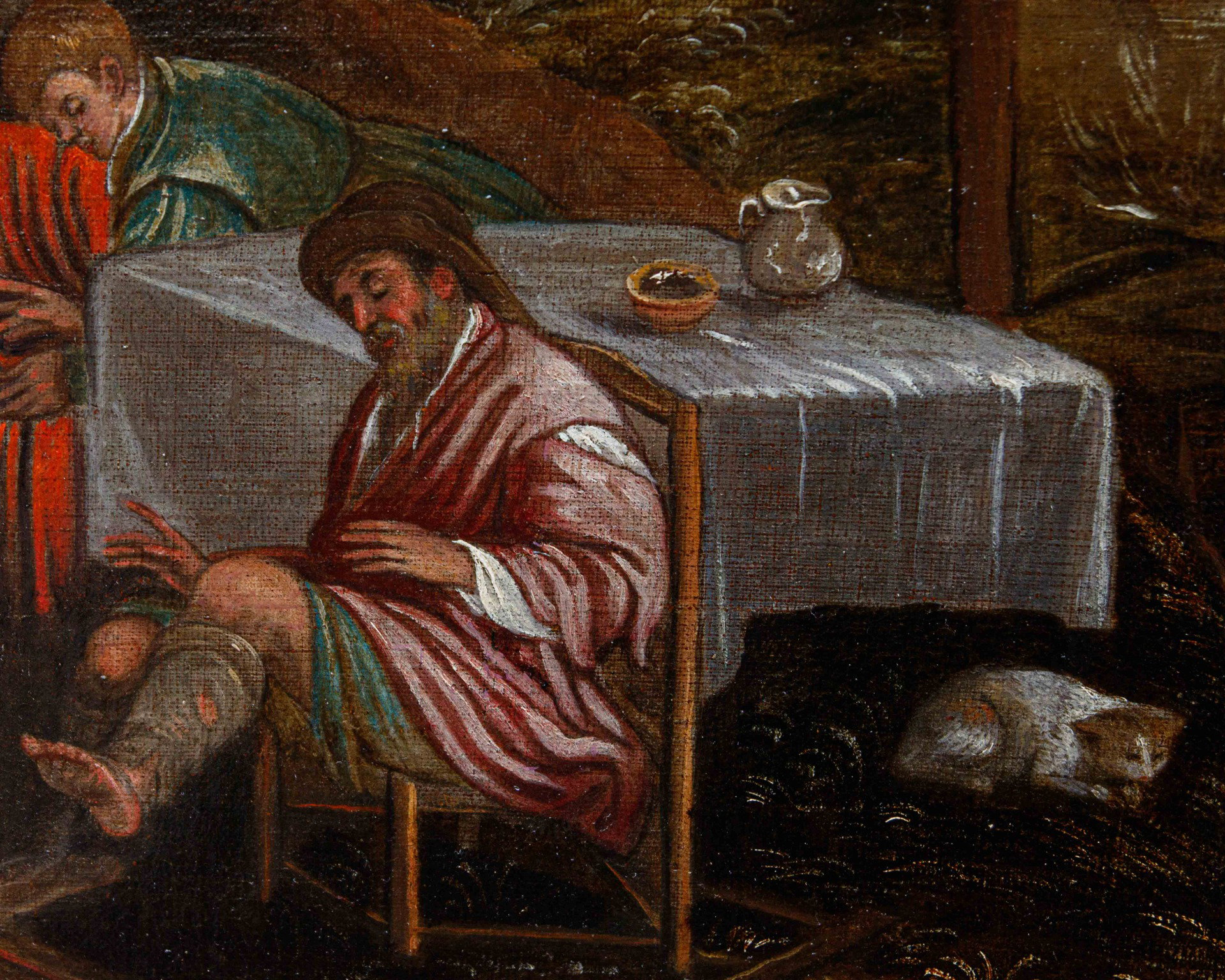
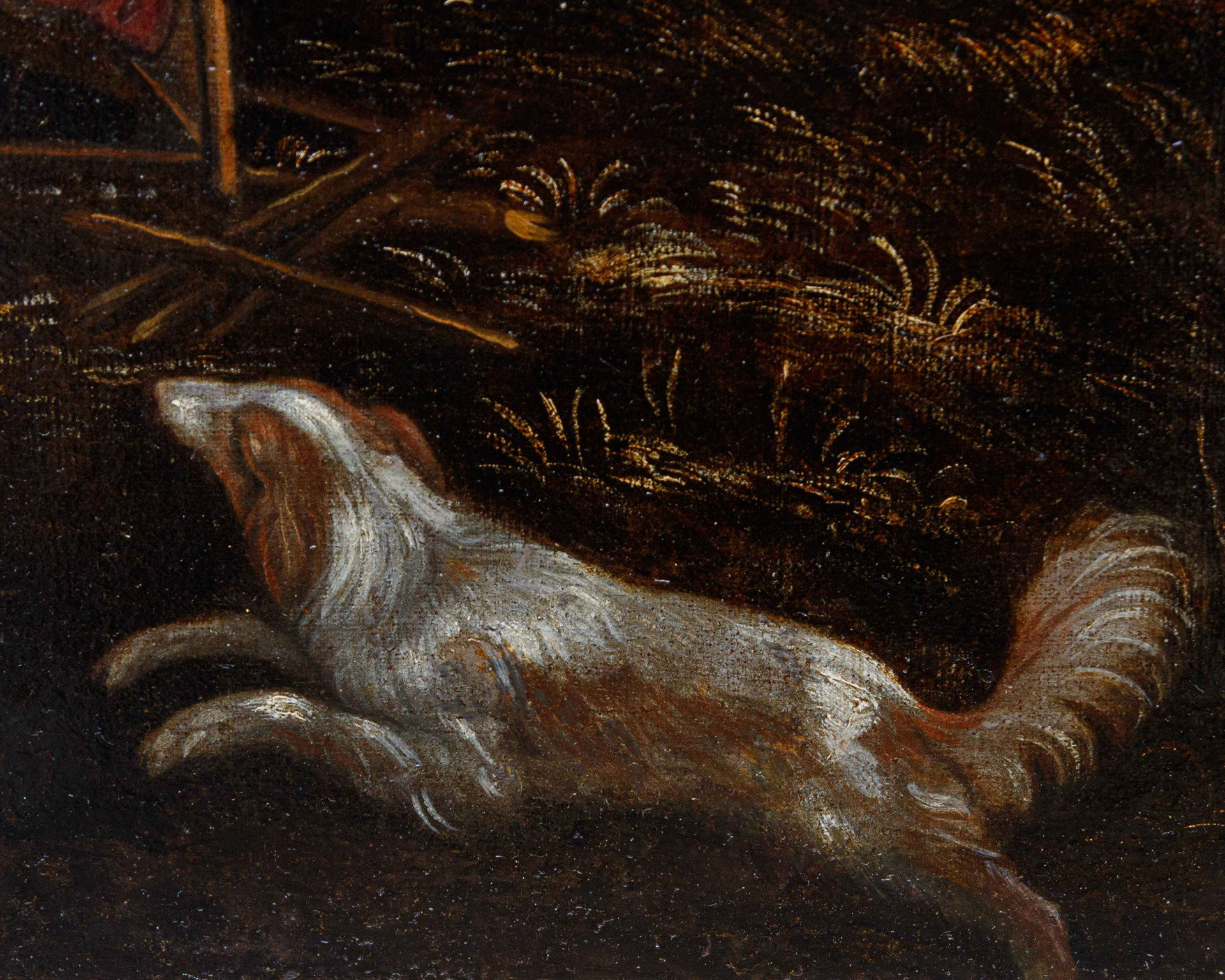
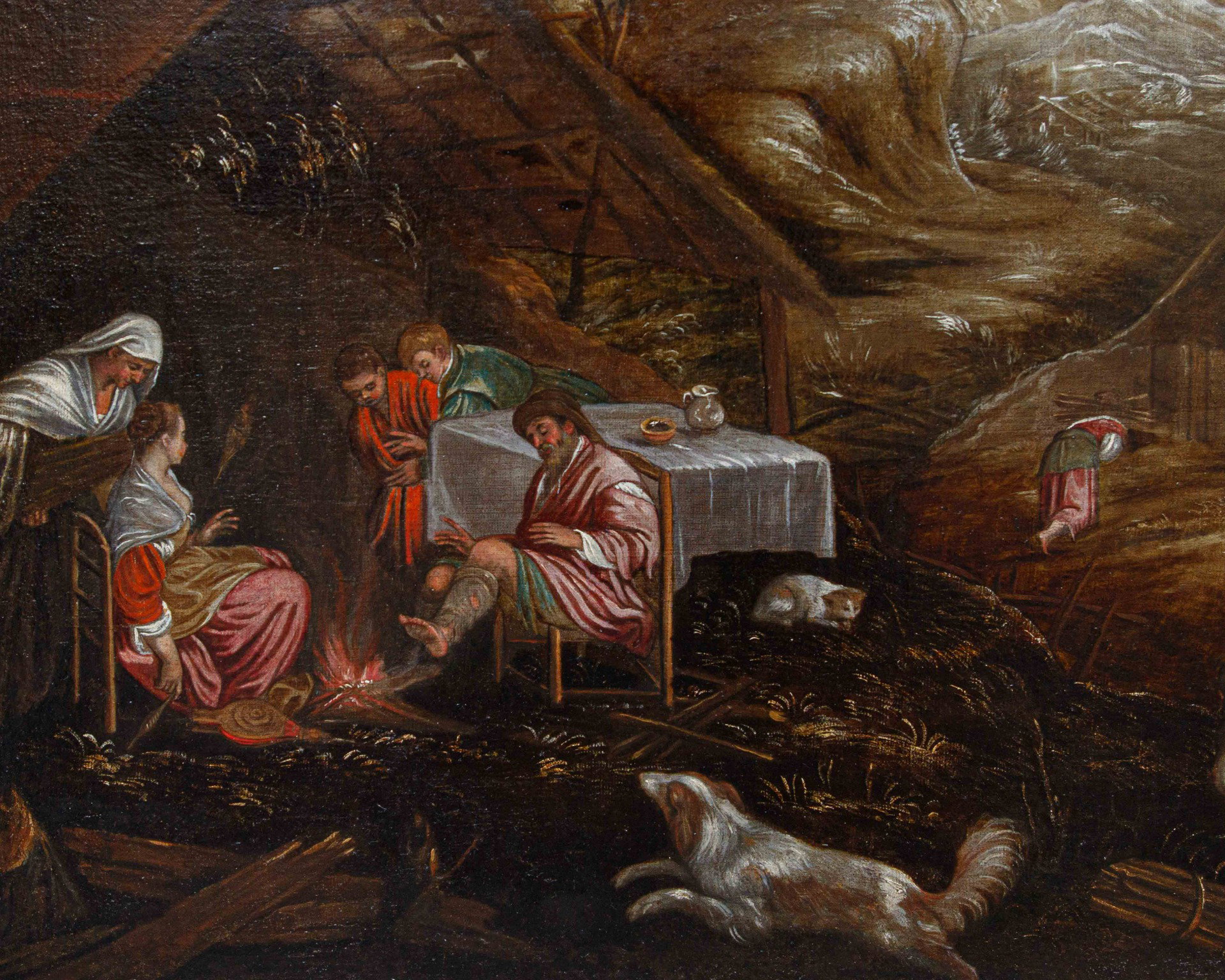
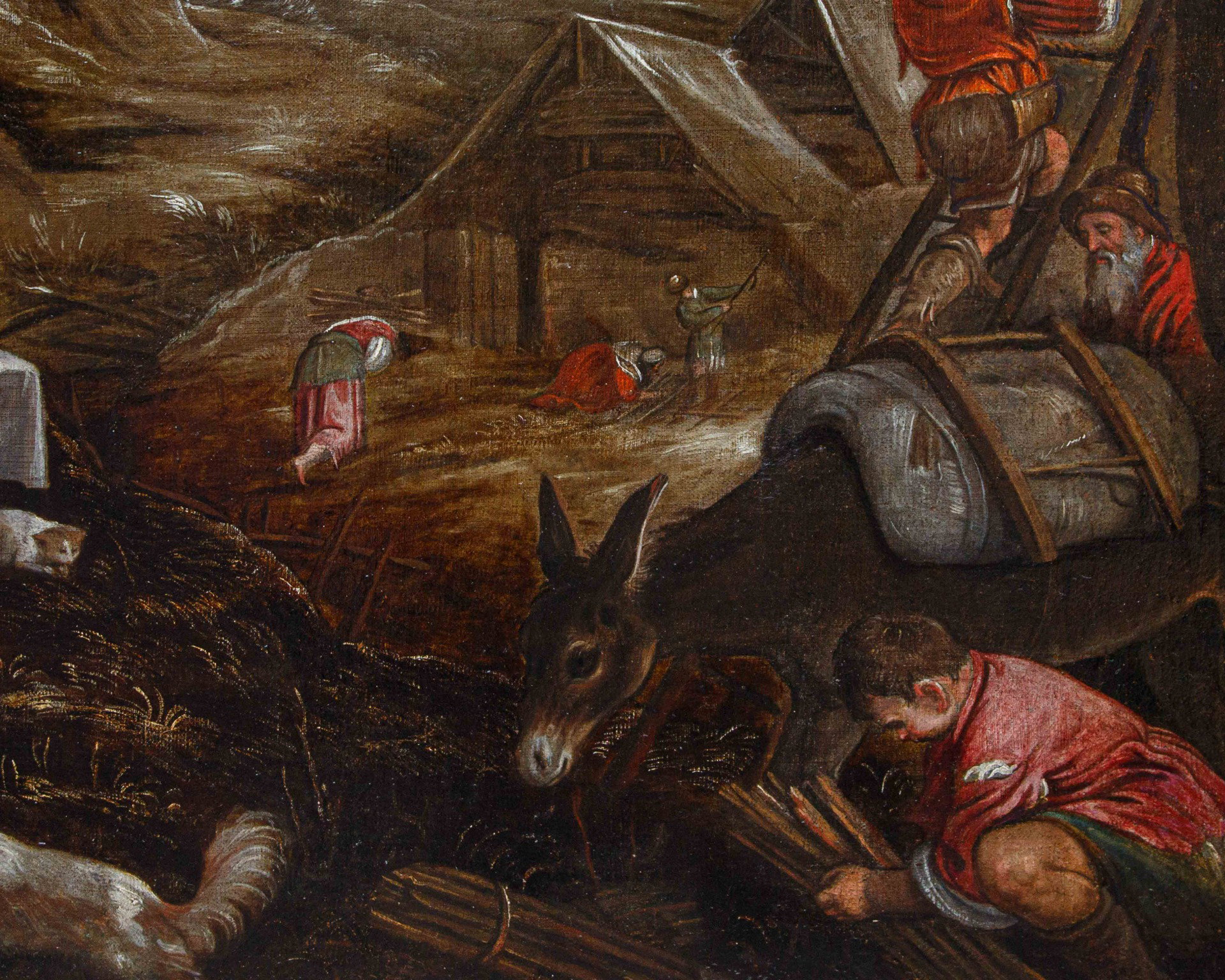
The Allegory of Winter, an oil on canvas attributable to the workshop of Bassano, fits into the successful cycle of the Seasons conceived by Jacopo Bassano in the second half of the 16th century and replicated in numerous variations to meet a broad and complex collecting demand. The painting presents the same compositional layout as the version attributed to Jacopo, preserved at the Galleria Borghese in Rome, confirming its dependence on a successful prototype, reworked with minimal differences by the prolific family workshop. Other versions of the same subject are now housed in private collections and important museum institutions, such as the Louvre in Paris and the Kunsthistorisches Museum in Vienna, testifying to the European diffusion of the theme and its critical and commercial success. The scene is set in a mountainous and snowy landscape, which occupies the background with a profile of whitened hills and a pregnant sky, furrowed with brown and gray tones. The palette, dominated by earths, ochres, and warm browns, is consistent with the seasonal subject and contributes to building a reserved and severe atmosphere. In the foreground, on the right, a young peasant is busy gathering and binding bundles of wood, which he is loading onto a donkey standing a short distance behind him. A dog runs in the center, caught in motion, animating the scene with a dynamic flourish and ideally connecting the different narrative nuclei. The visual and emotional focus of the work, however, is constituted by the family group arranged near a hut on the left. A family of humble shepherds gathers around a fire lit outdoors: an elderly woman, wrapped in a light cloak, bends towards a young mother with a child; a man, seated at a sumptuously set table, warms his hands and feet by the flame. In the background, other peasants are engaged in collecting wood, reiterating the theme of winter work and expanding the choral dimension of the scene. The work allows us to grasp with particular clarity the operational practice of the Bassano workshop, based on a tried-and-tested system of reused and recombined cartoons and figurative modules. The figures, animals, huts, and even some postures recur with slight variations in the different versions. In the Allegory of Winter, this dialectic translates into a solid and well-orchestrated composition, where daily naturalism—made up of simple gestures, domestic animals, tools, and rustic architectures—is charged with symbolic value. The domestic and pastoral dimension, so typical of Bassanesque sensibility, lends the scene an intimate and participatory tone, transforming the allegory into a tale of daily life imbued with realism and human warmth.