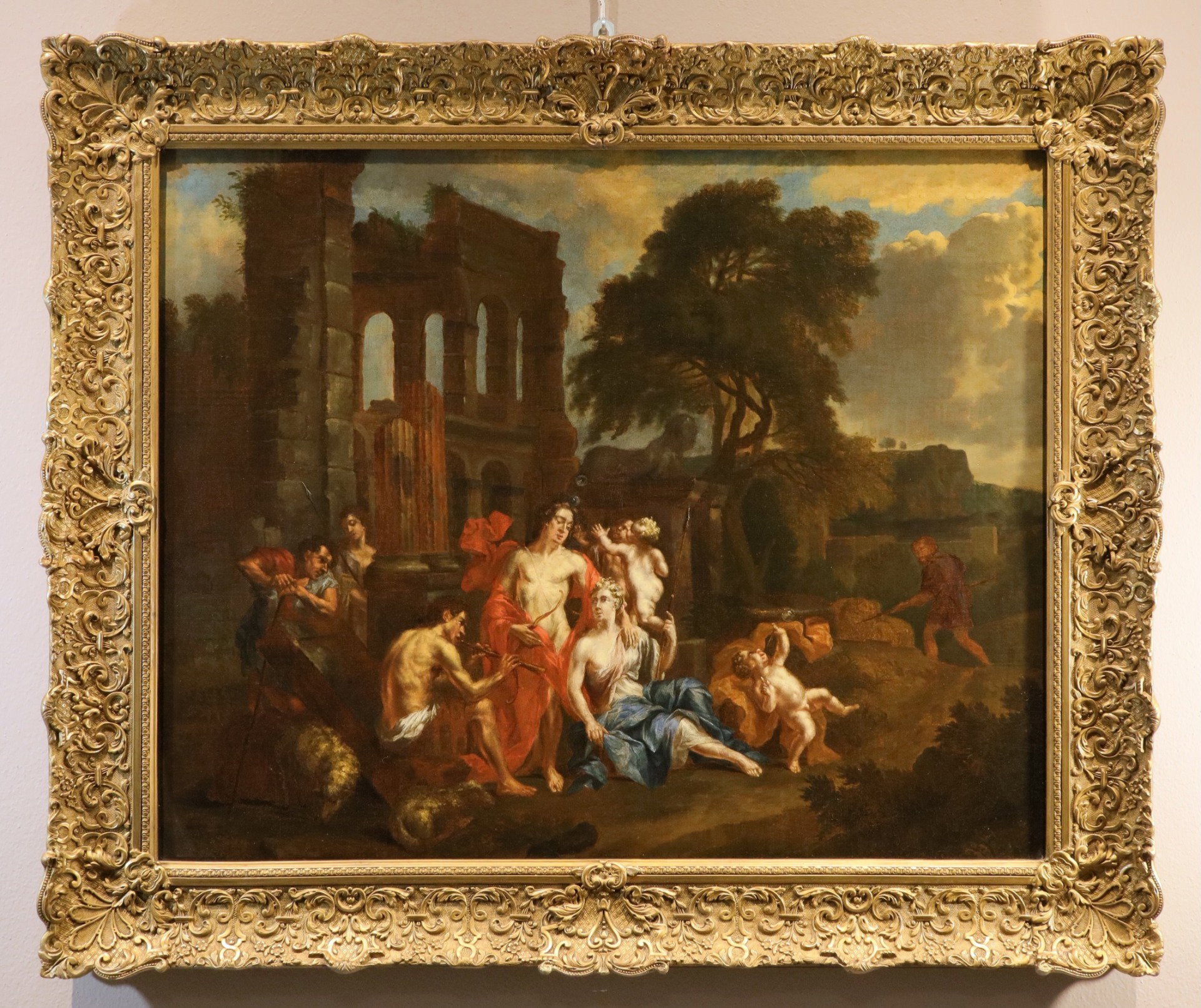
Gérard de Lairesse (Liège 1641 - Amsterdam 1711) workshop
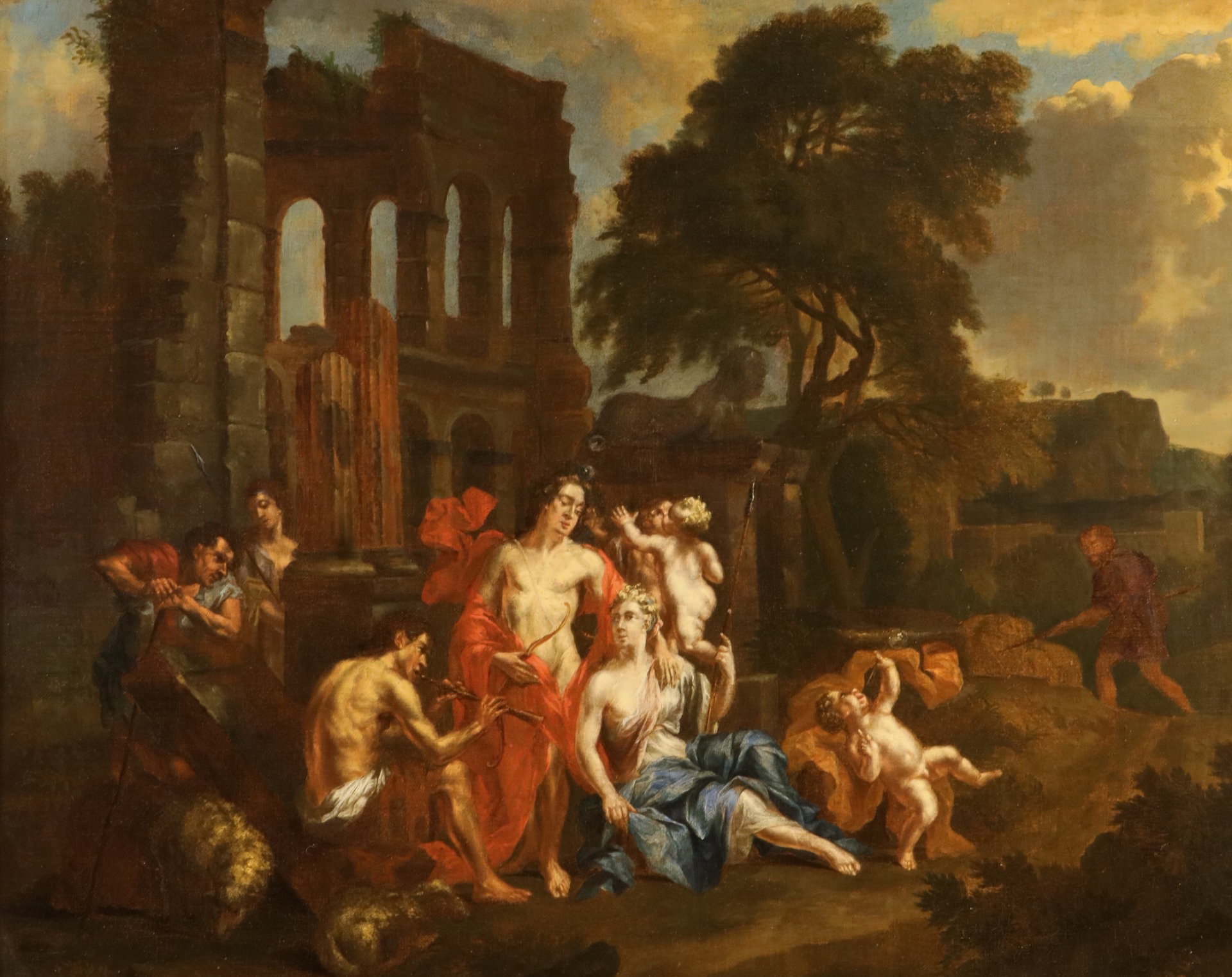
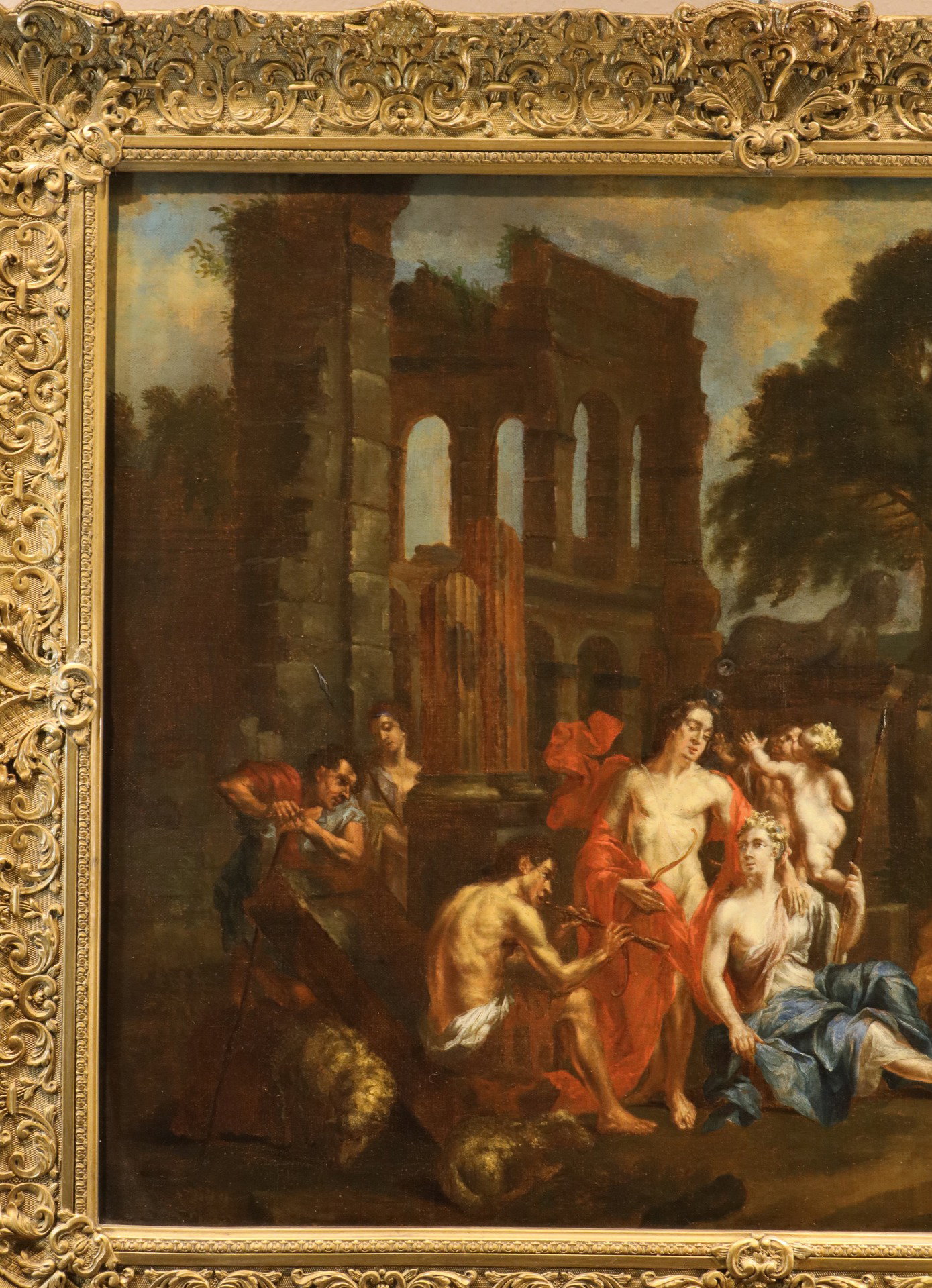
The Myth of Apollo and Hyacinthus (from Ovid, Metamorphoses, book VI, 122-124)
Oil on canvas (65 x 82 cm. - Framed 84 x 99 cm.)
Complete details of the painting (click HERE)
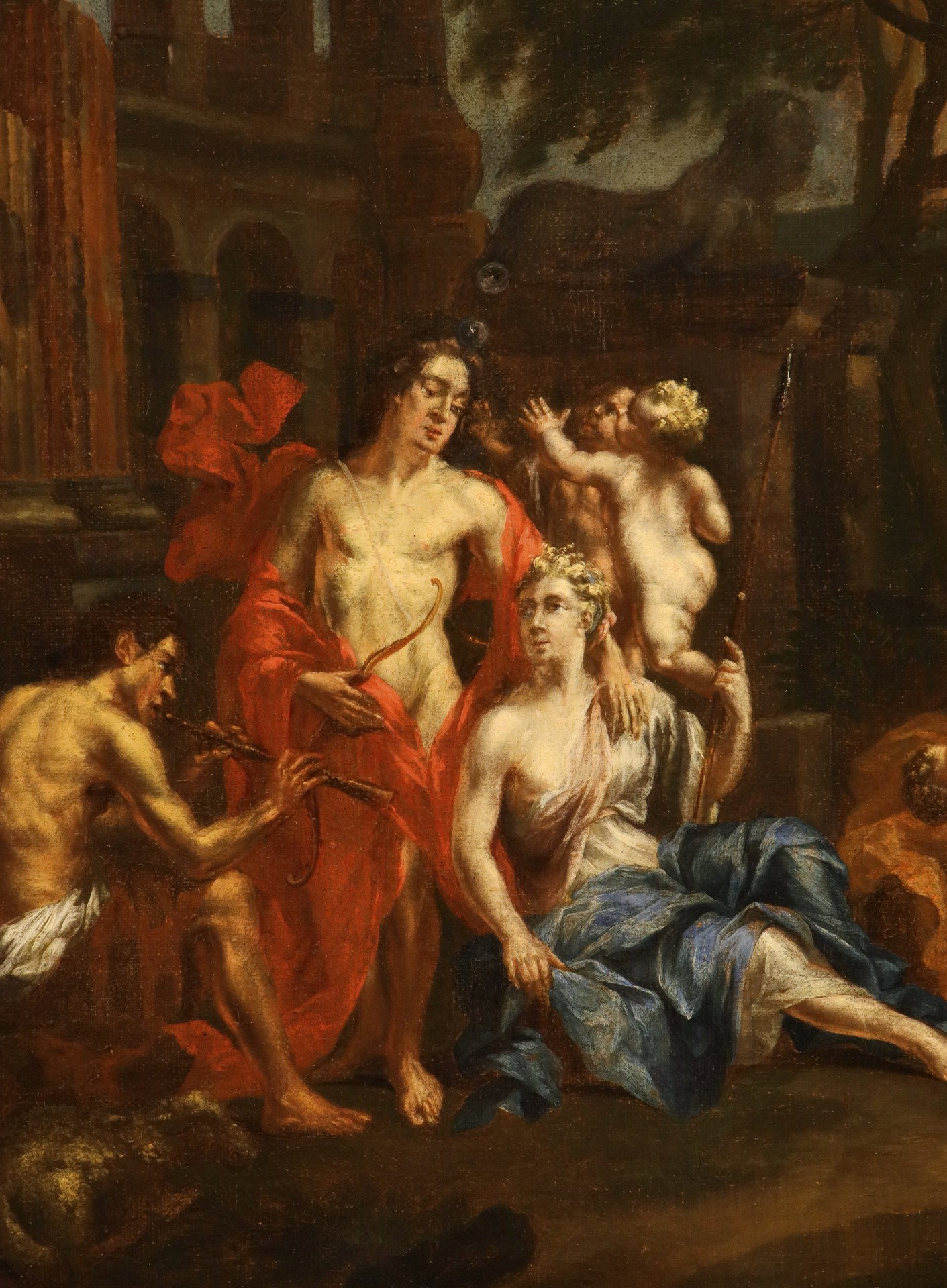
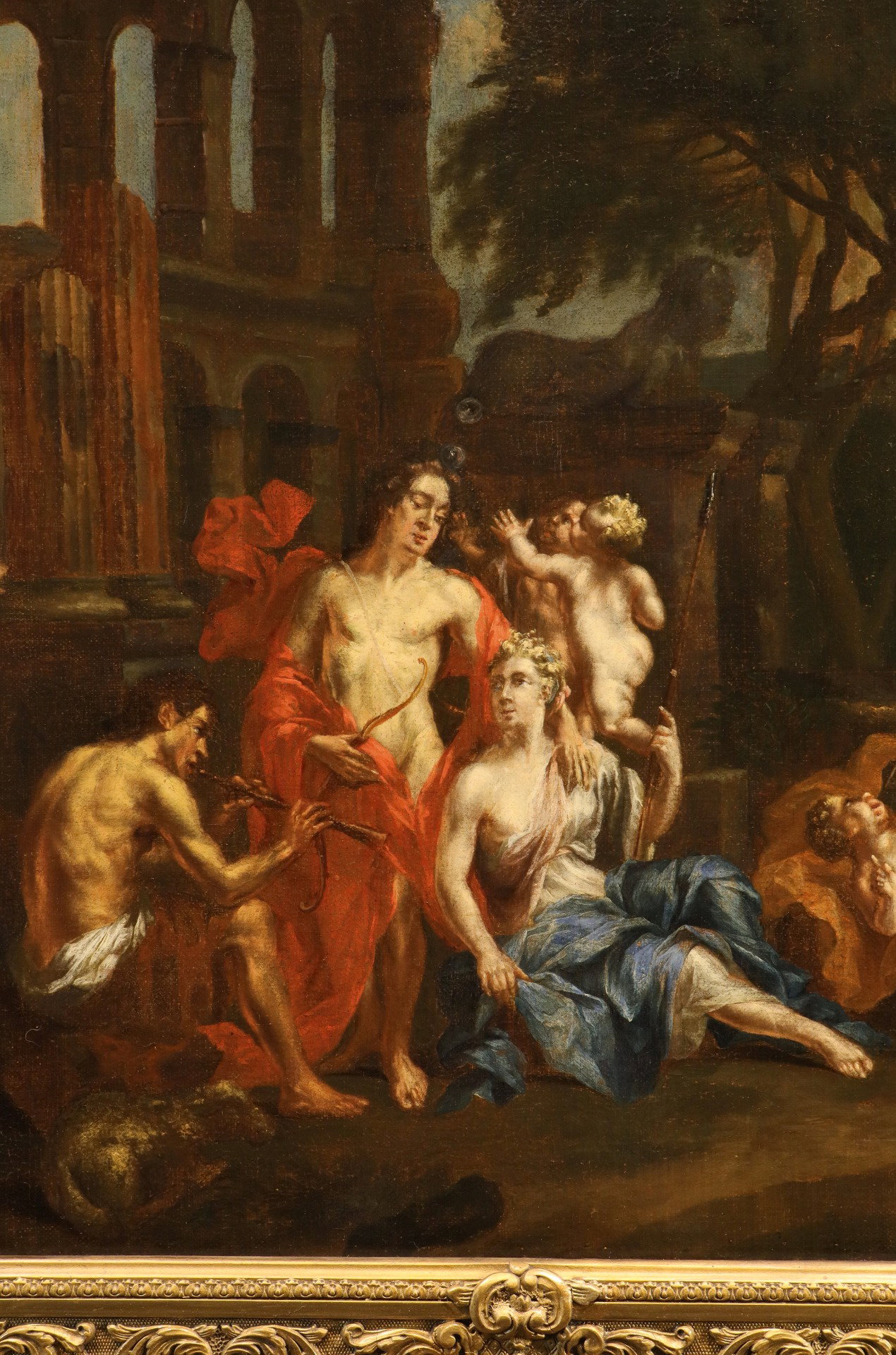
The painting presented here illustrates a little-known but fascinating Greek myth, taken from a passage in the Metamorphoses (book VI, 122-124), the famous mythological poem by the Latin poet Ovid, which tells of the passion between the god Apollo and the young mortal Hyacinthus.
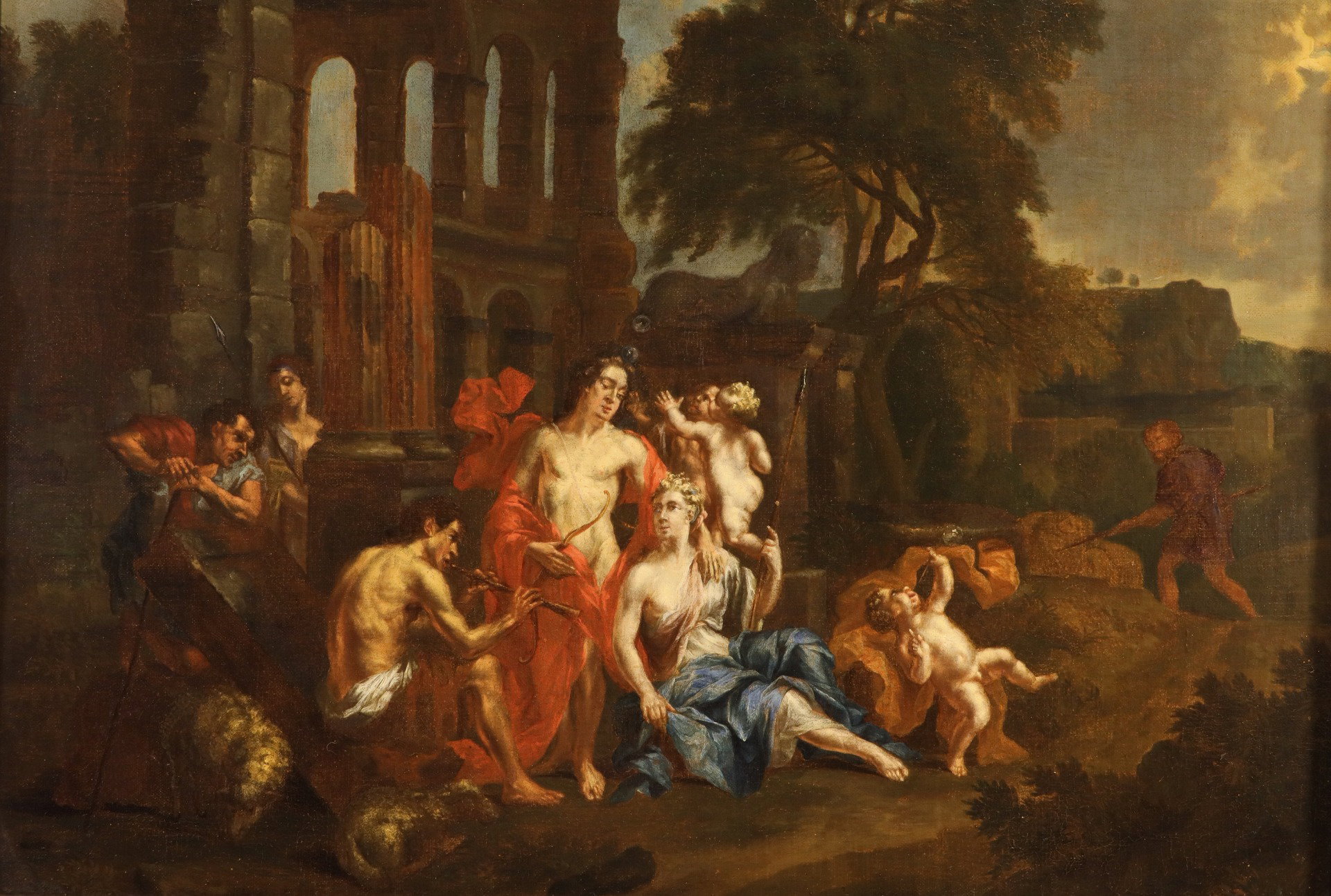
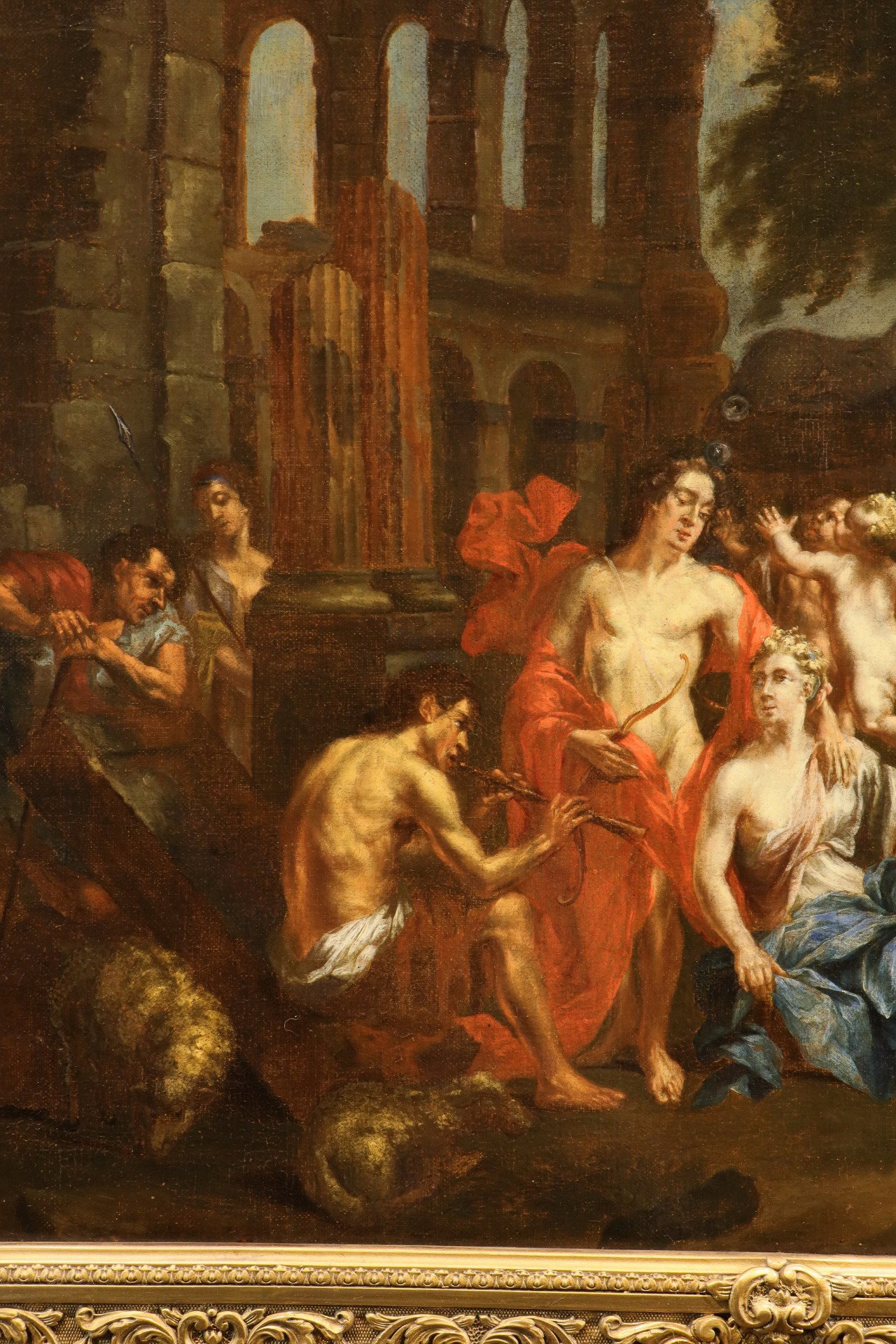
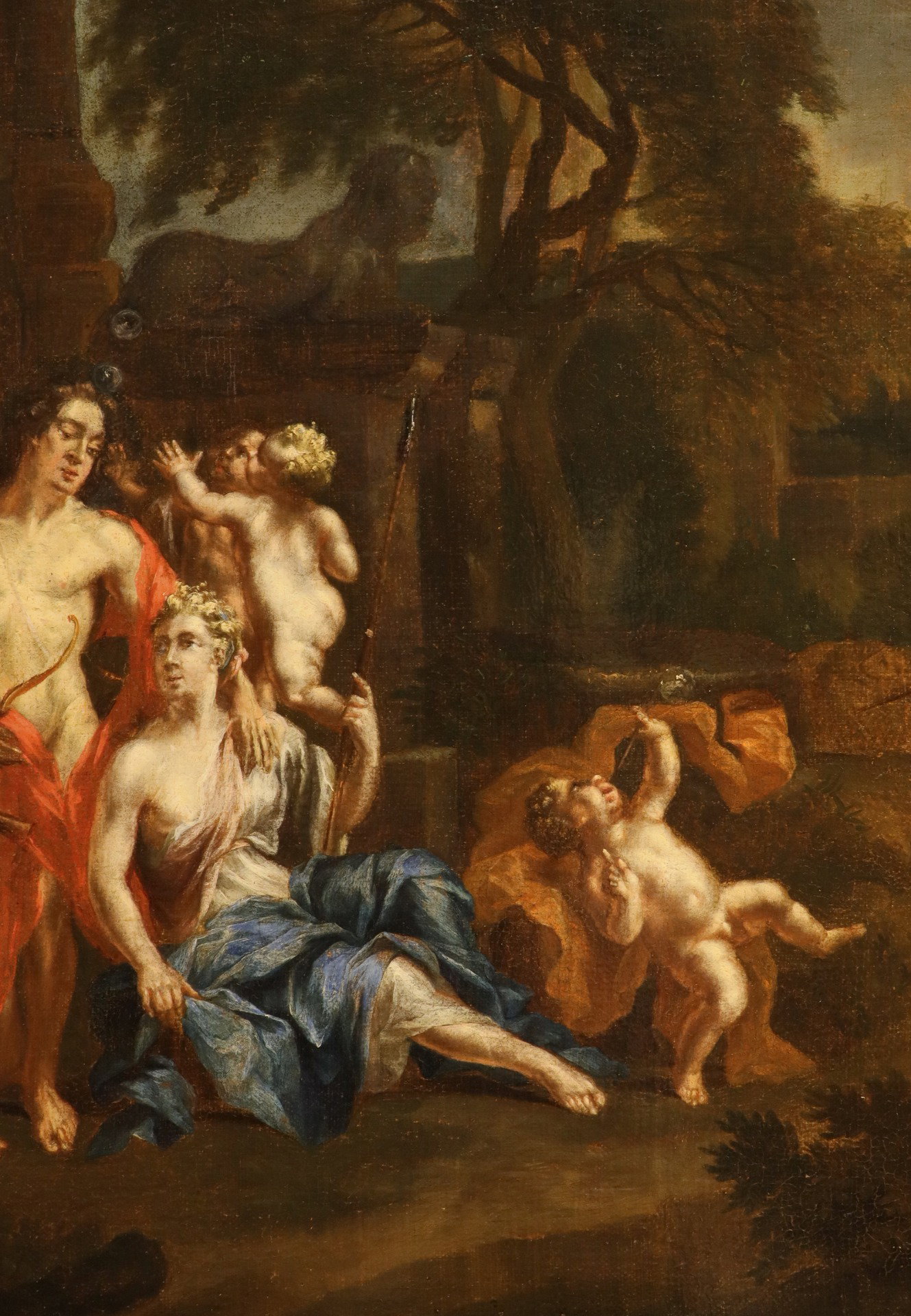
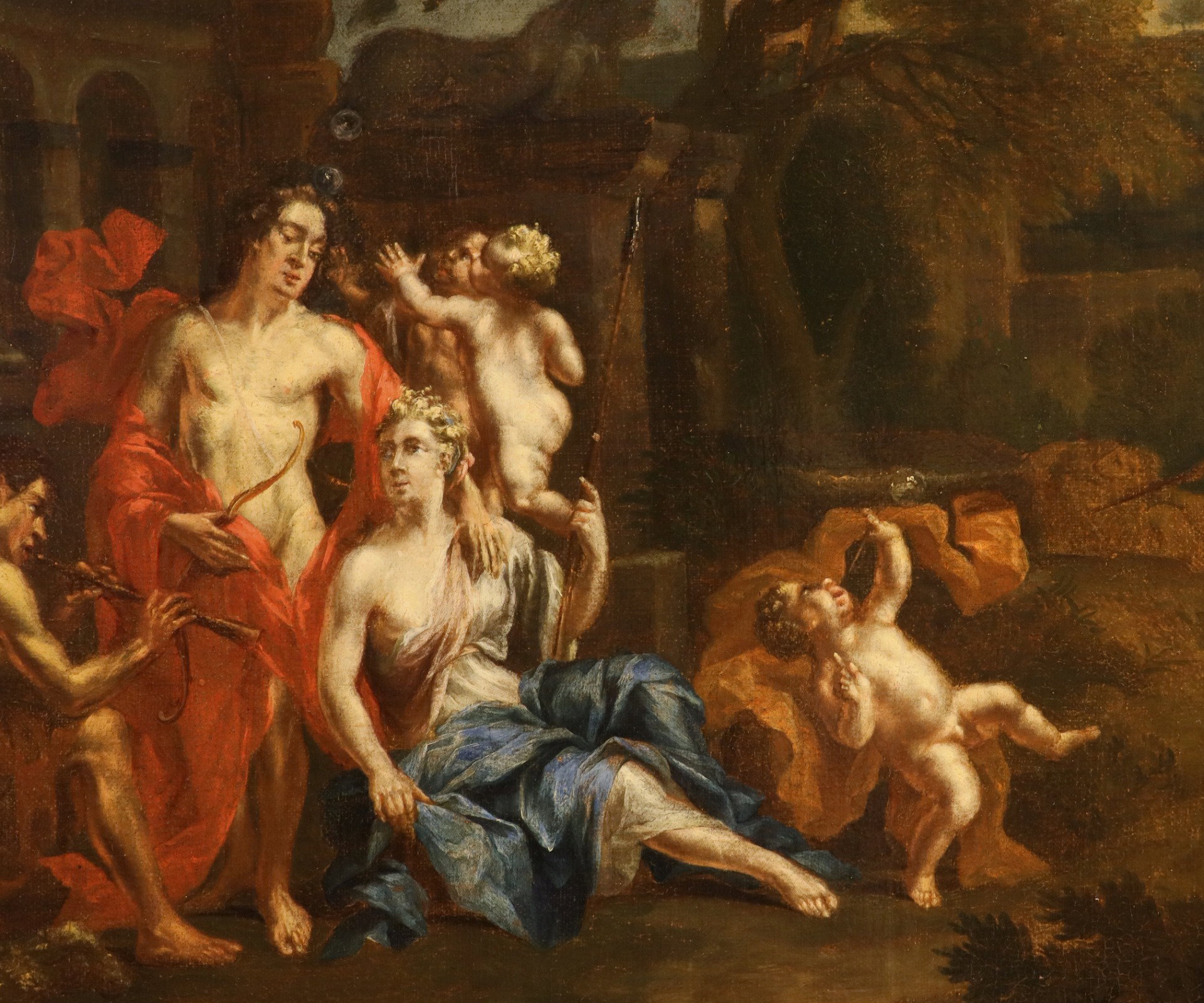
It is said that Apollo fell in love at first sight with the beautiful shepherdess Hyacinthus (daughter of Maeon), approached her while she was intent on herding her flocks, and transformed himself into a simple shepherd to seduce her without frightening her with his divine nature. The moment depicted is that in which the God revealed himself in his divine identity, showing himself in all his splendor, wrapped in a red drape and with his ever-present bow, and the maiden, as his beloved, also assumed the form of a deity.
The two lovers are surrounded by fluttering putti intent on playing with soap bubbles, which in art symbolize beauty but also fragility: in our case, they would allude to the brevity of love between deities and men, passionate but inevitably destined to end quickly.
An analysis of the compositional and stylistic characteristics of the painting, including the brilliance of execution, the classical elegance of the forms, and the quality of the colors, easily attributes its execution to Gérard de Lairesse (Liège, 1641 – 1711), a Dutch painter and engraver of the Golden Age, admired for his strongly classicist and academic style, which earned him the nickname "Dutch Poussin."
Although his basic training was Flemish – given his attendance at the School of Liège – his works are imbued with a marked classicist taste, where the French and Italian influence of Nicolas Poussin (1594-1665) was decisive, with whom strong affinities can be found at first glance.
The beautiful landscape context in which the scene is set, with ruins of classical architecture and sculptures that emphasize the Italianizing style of Arcadian taste, so loved by European collectors of the 17th century, deserves mention.
De Lairesse moved to Amsterdam, where he concentrated his activity between 1665 and 1689 thanks to a prolific workshop with a considerable number of students; here he was celebrated for his ability to translate the principles of classical art theory into vast mythological and allegorical compositions, much appreciated by the patrons of the time, who reflected the political, intellectual, and aristocratic elite of the era.
The most prestigious commissions came from the court and high nobility, where his mythological themes were used to elevate the status of the patrons through parallels with classical deities and virtues: William III of Orange, for example, commissioned a series of mythological love-themed scenes for the rooms of his wife, Mary Stuart, in the royal palace of Soestdijk.
He created a large number of works for the patrician homes of Amsterdam, almost exclusively mythological in character, preferring episodes from Ovid's Metamorphoses, often interpreted in a gallant key, where he often included portraits of the homeowners disguised as classical deities. Our work, given the well-defined features of the protagonists' faces that would suggest a portrait intention, could easily fall into this category.
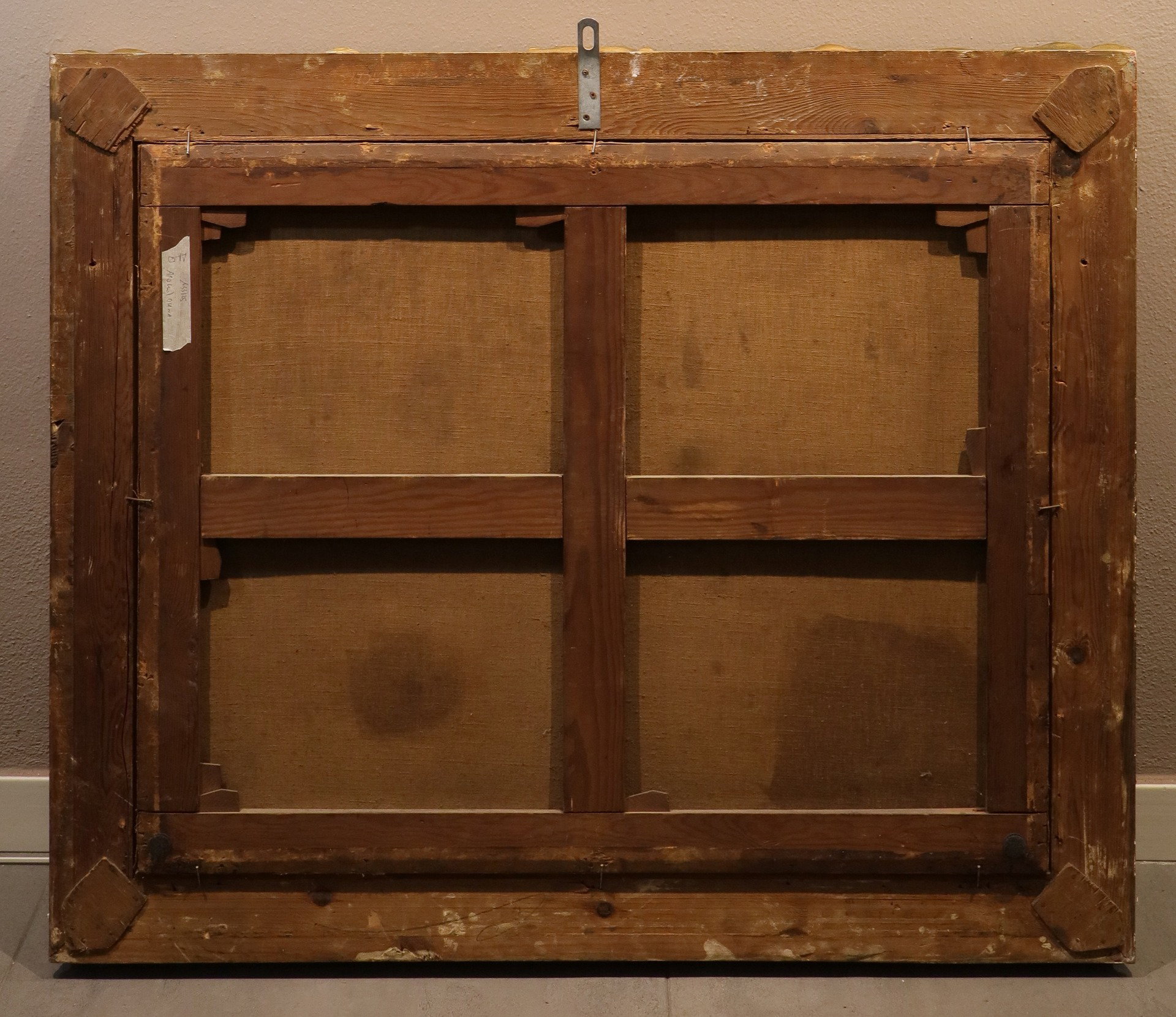
Good condition of preservation.
ADDITIONAL INFORMATION:
The painting is sold complete with a pleasant gilded frame and is accompanied by a certificate of authenticity and a descriptive iconographic sheet.
We handle and organize the transport of purchased works, both for Italy and abroad, through professional and insured carriers.
Should you wish to see this or other works in person, we would be delighted to welcome you to our new gallery in Riva del Garda, at Viale Giuseppe Canella 18. We look forward to seeing you!
Contact us for any information or to arrange a visit, we will be happy to answer you.
Follow us also on:
https://www.instagram.com/galleriacastelbarco/?hl=it
https://www.facebook.com/galleriacastelbarco/