Jacques Blanchard (Paris, 1600 – Paris, 1638) and workshop
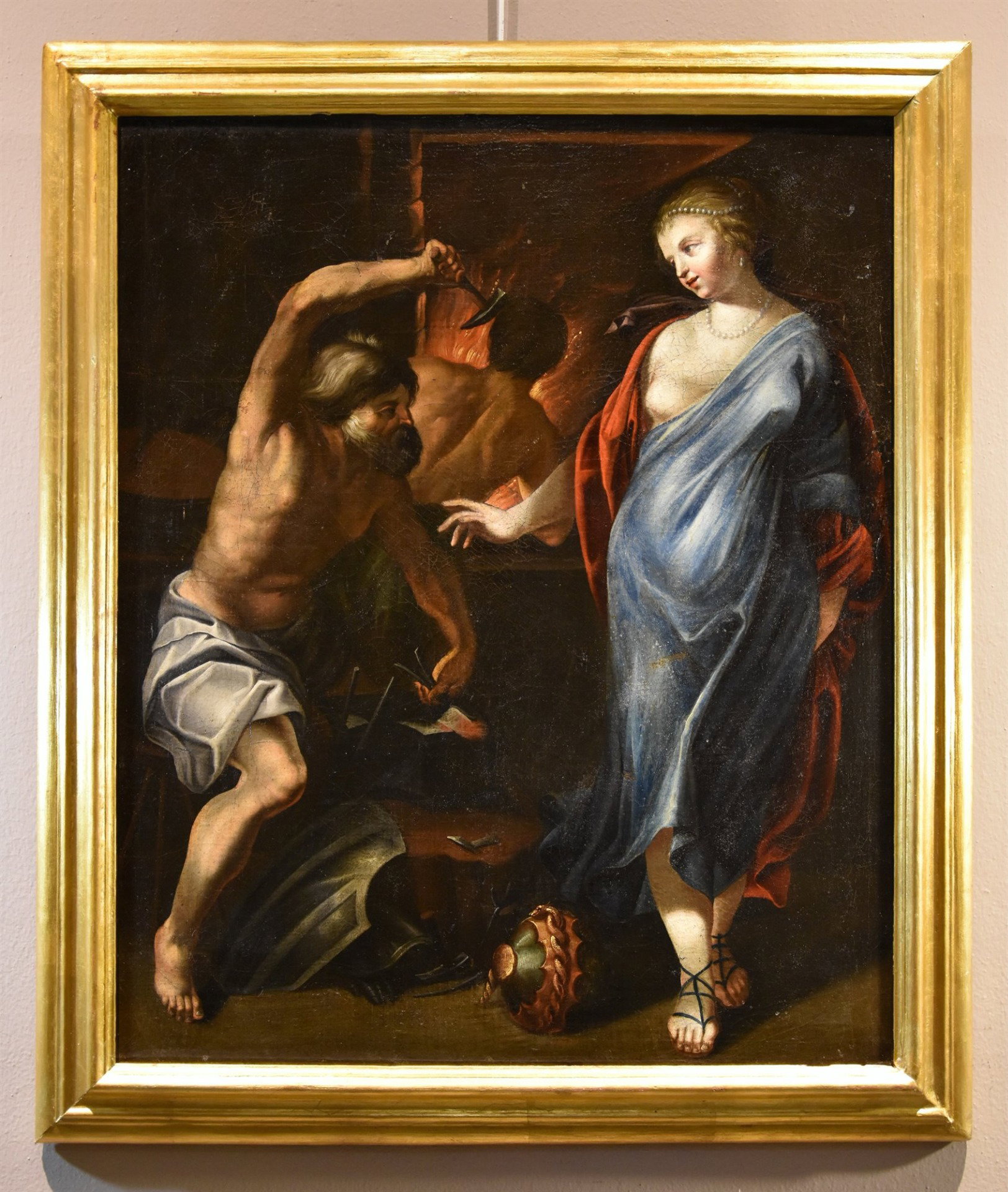
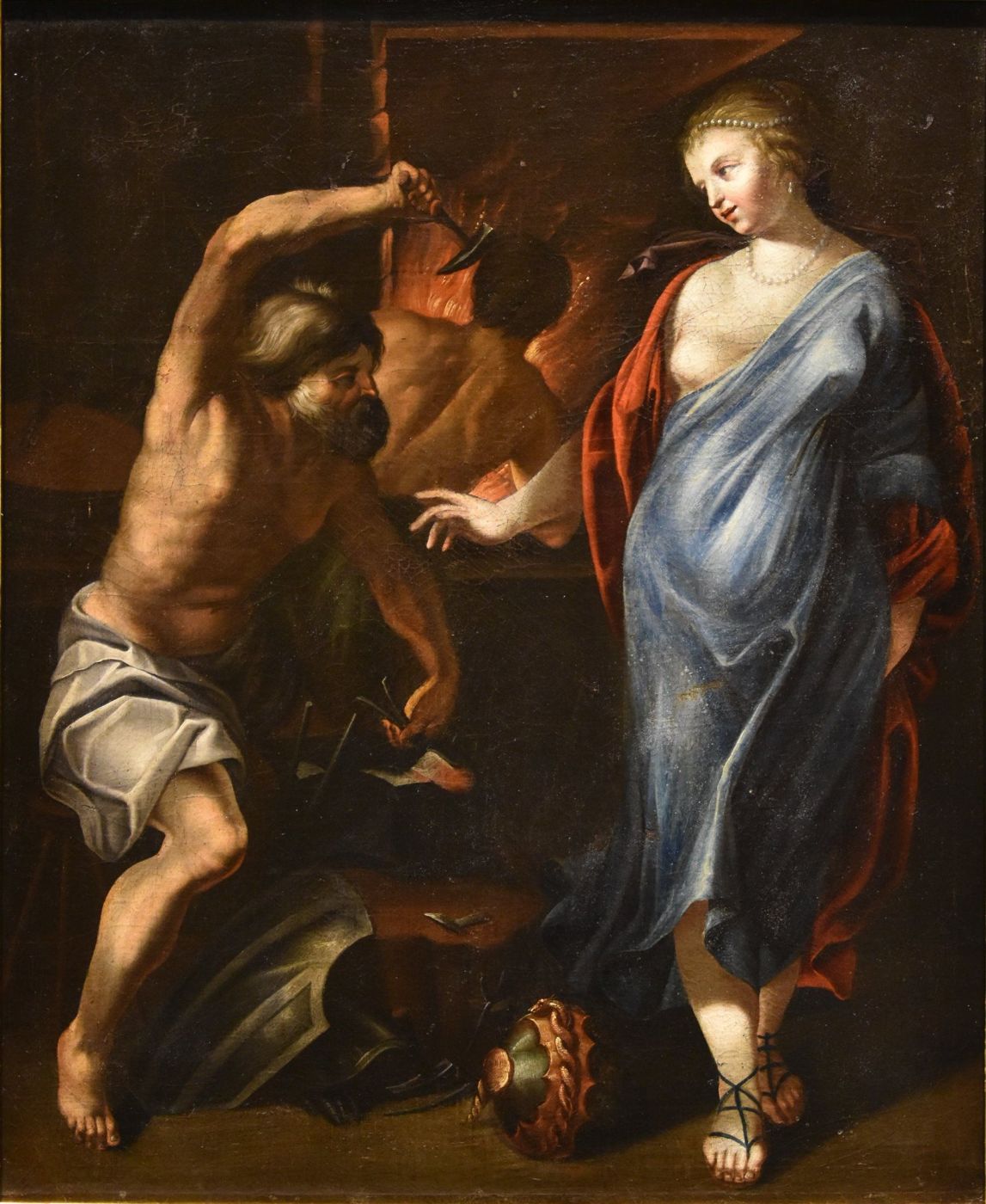
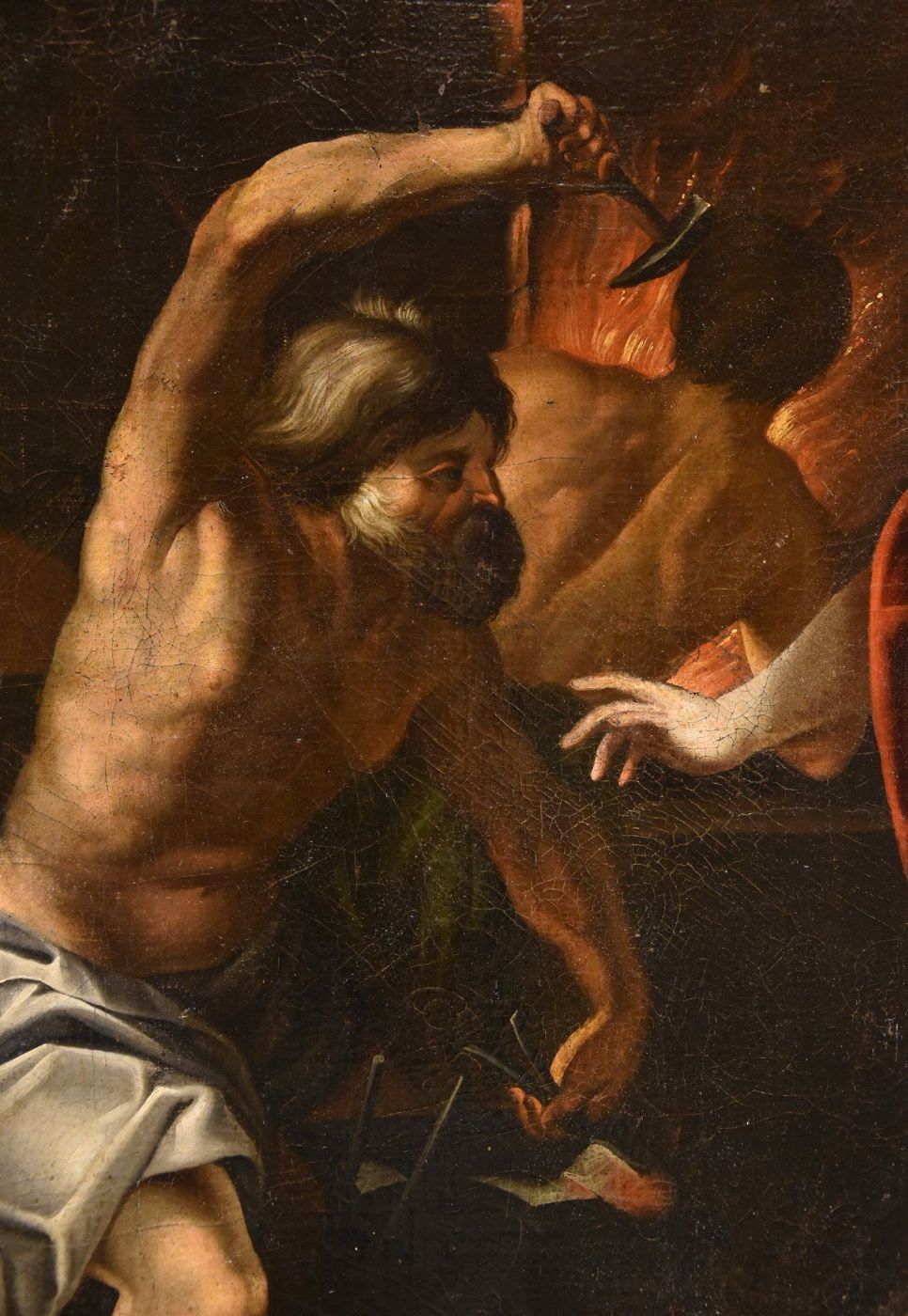
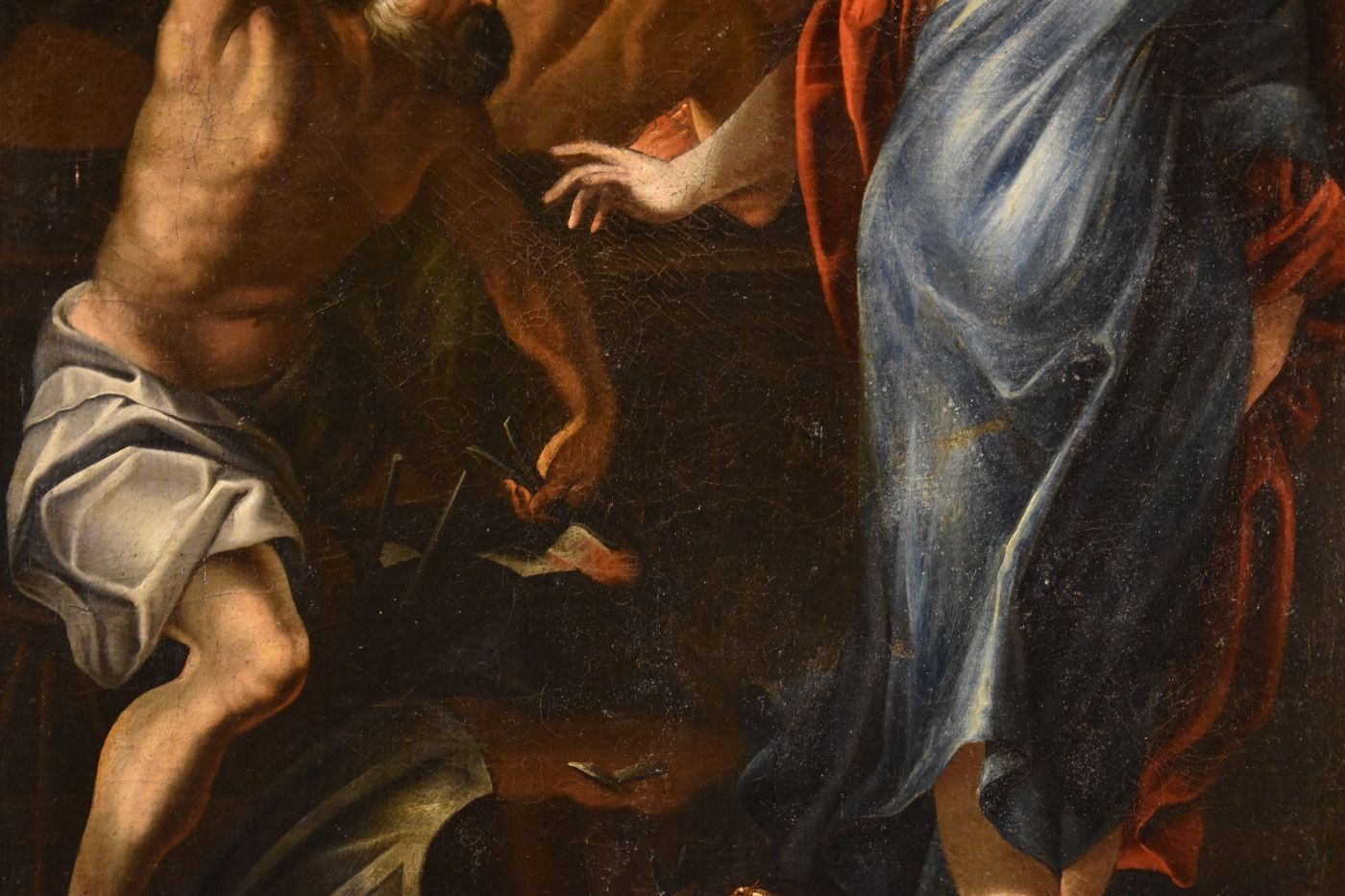
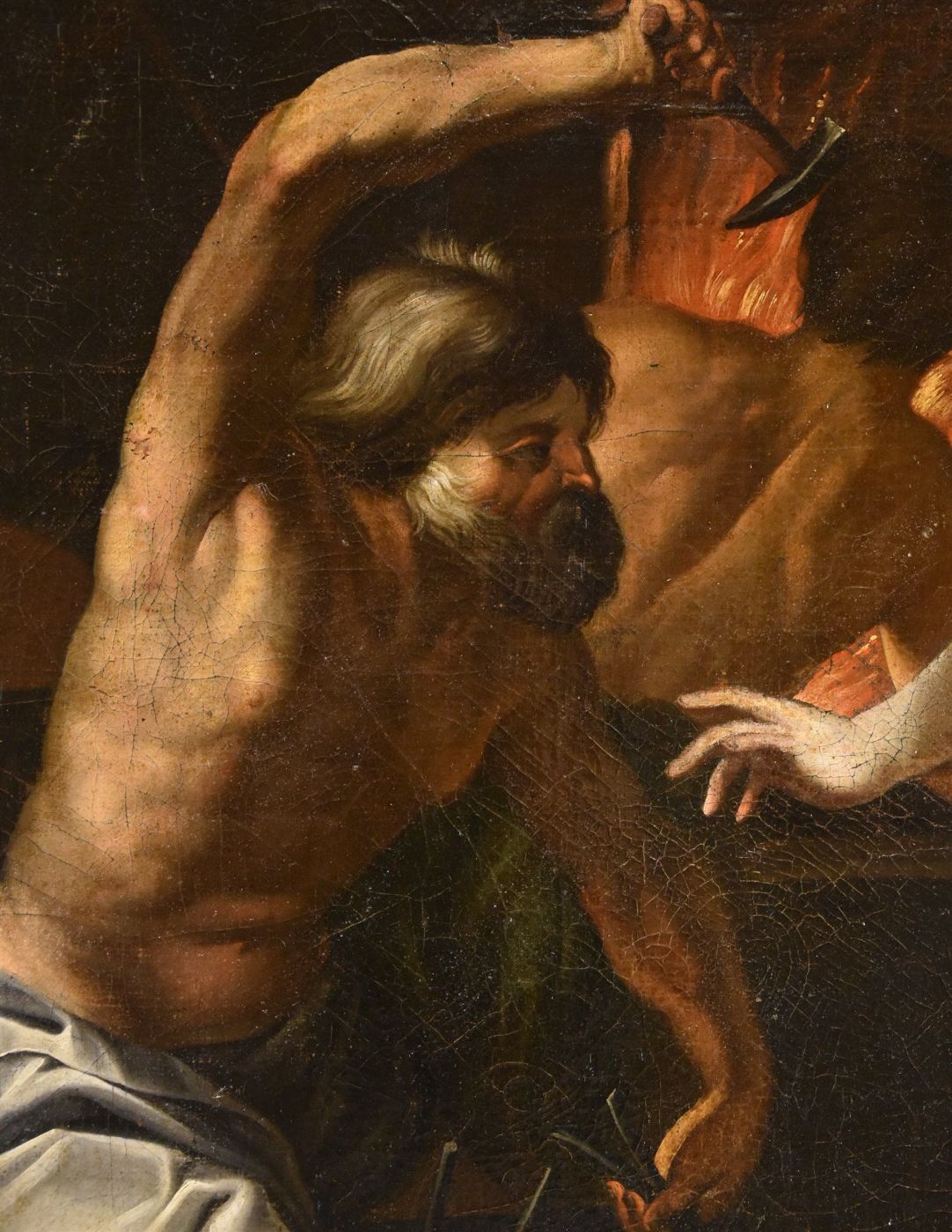
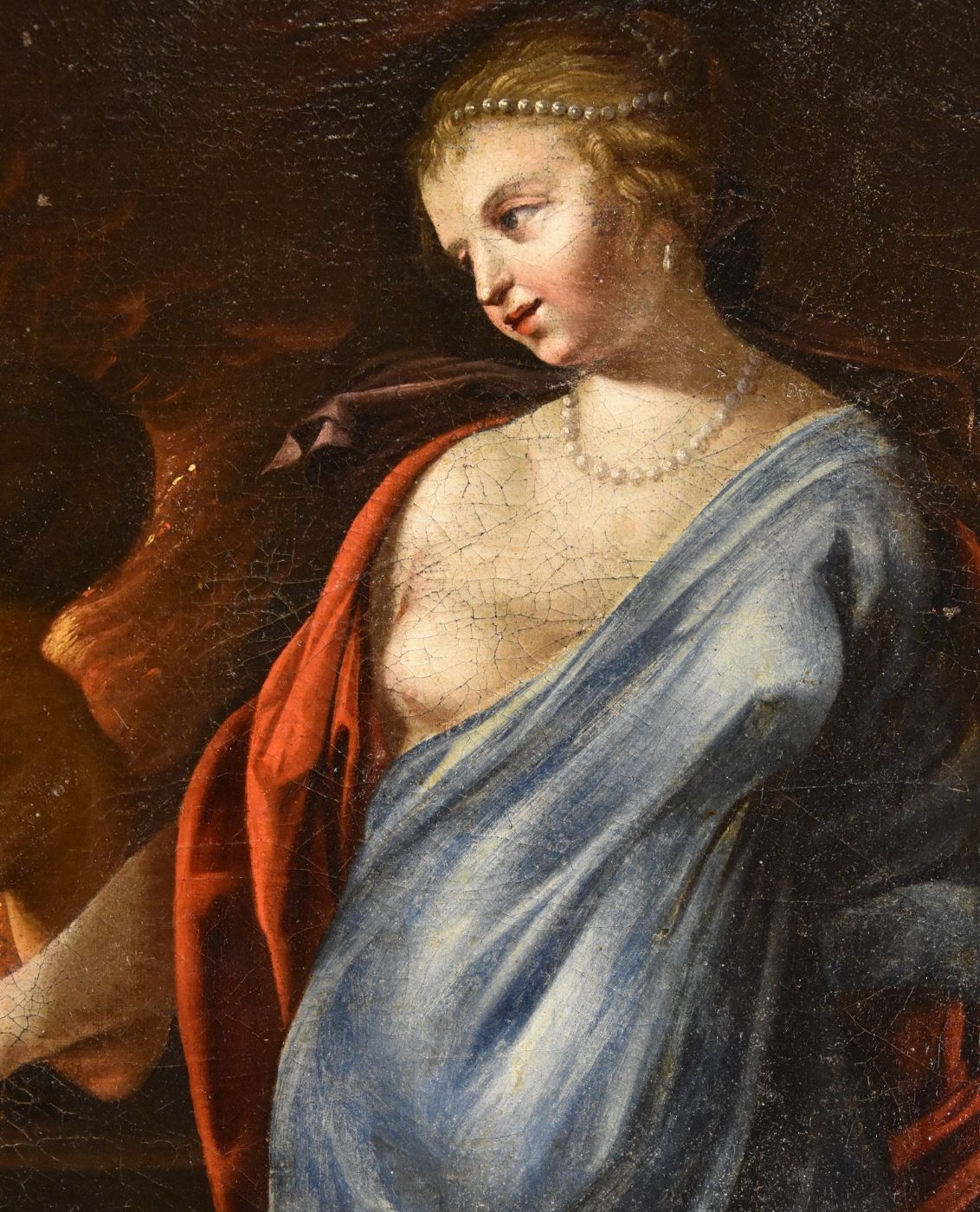
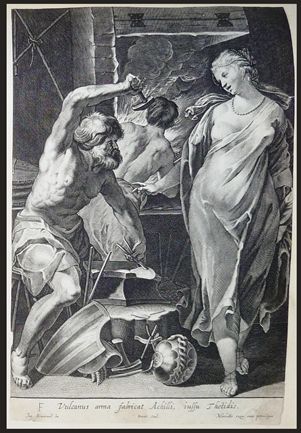
Thetis in Hephaestus' Forge (Hephaestus gives Thetis the weapons he forged for Achilles)
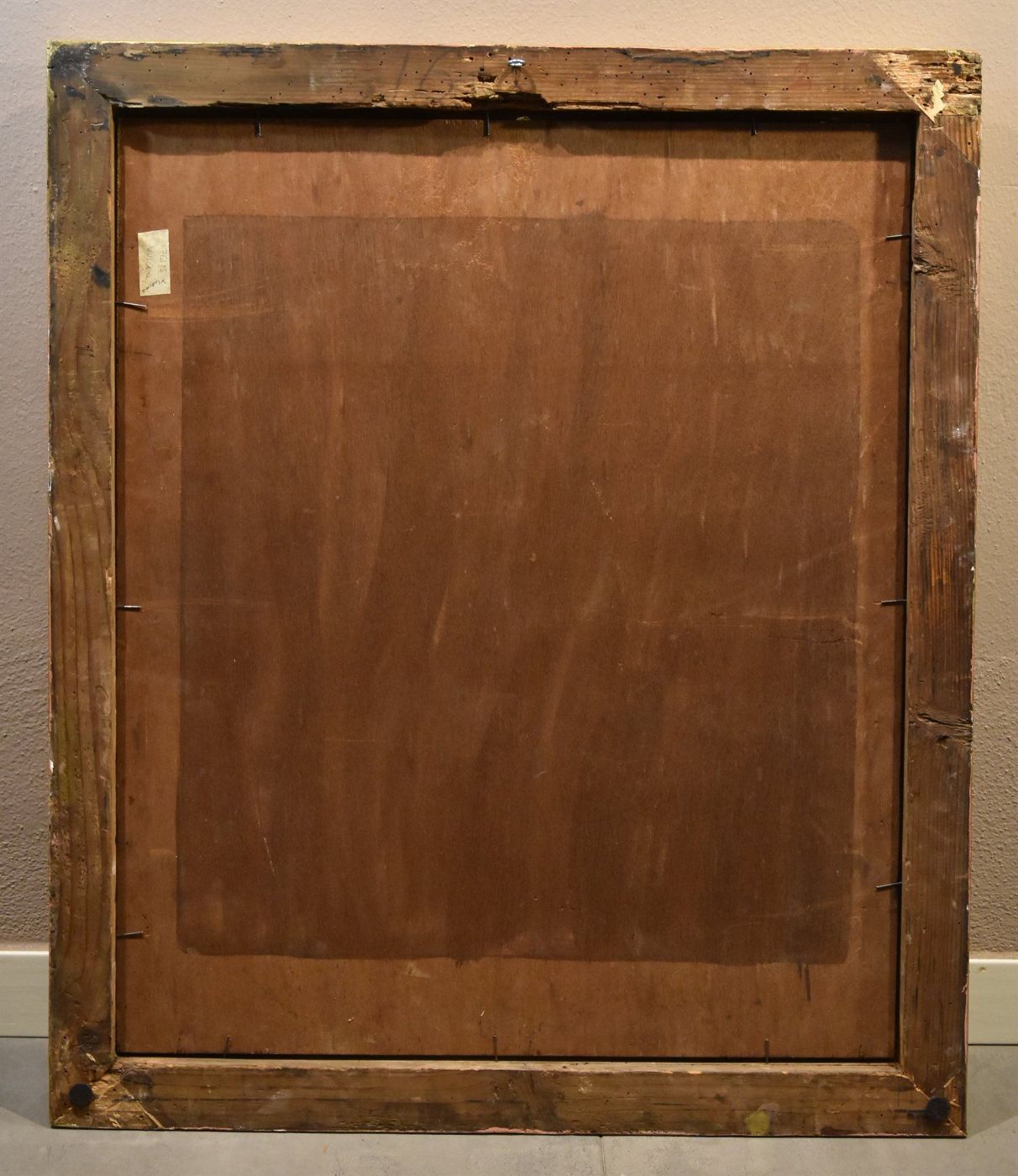
Oil on canvas applied to panel (80 x 65 cm - framed 90 x 76 cm)
Critical analysis by Arabella Cifani
Artwork details (click HERE)
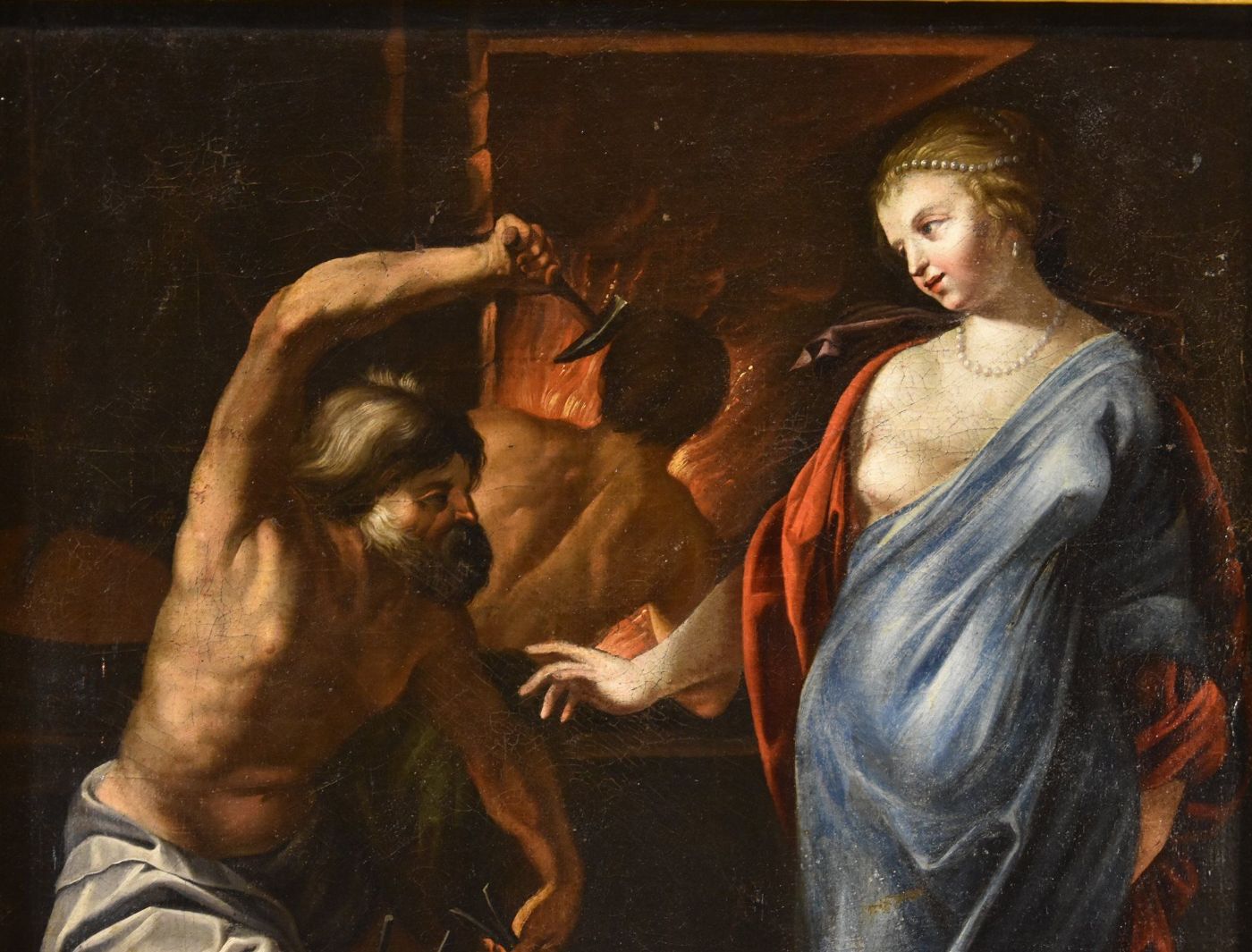
The interesting painting depicts a famous mythological episode narrated by Homer in the Iliad (Book XVIII) and portrays Thetis, the most beautiful of the Nereids and mother of the hero Achilles, together with Hephaestus, god of fire and blacksmith of the gods, who is seen here with a hammer in his hand intent on forging the weapons for the woman's son, which will become emblems of the hero's great power.
This is a recurring episode in art and literature: after the death of Patroclus, who wore Achilles' armour, his mother Thetis goes to the forge of Hephaestus (also known as Vulcan), located in the heart of Etna, to ask him for a new divine armour and all the weapons needed for his revenge against Hector, guilty of having killed her friend.
As indicated by Dr Arabella Cifani in her study of the painting, this is a work made by the French painter Jacques Blanchard (Paris, 1600 – Paris, 1638), in this specific case assisted by his workshop.
Blanchard was one of the most important painters active in Paris in the first half of the 17th century and, as we can see from the proposed painting, his works show remarkable technical skill and a predilection for depth and realism, making him a very influential artist on French painting.
His style is influenced by the Baroque of Rubens, without excluding a more classicist approach, particularly akin to the models of Poussin, with compositions defined by grace, proportion and balance.
His stay in Italy, between Rome and Venice, was also decisive for his painting, where he found inspiration in the work of Venetian painters, in particular Titian, Veronese and Tintoretto.
Before returning permanently to France, he was in the service of the Duke of Savoy, Carlo Emanuele of Savoy in Turin, for whom he painted numerous works with mythological subjects, among which we should remember "the loves of Venus and Adonis", works subsequently transferred to Paris.
Despite a minimal production of devotional religious works, Blanchard is still celebrated as a painter of mythological and allegorical subjects, which made him famous and sought after even in life, assisted in his work by a valuable workshop.
Of the painting under study, whose original is lost, there is a splendid engraving by Pierre Daret de Cazeneuve, dating from between 1663 and 1678, printed at the workshop of Pierre II Mariette (1634-1716) print merchant and great French publisher, active in Paris (https://www.boijmans.nl/en/collection/artworks/151540/thetis-at-the-forge-of-vulcan ).
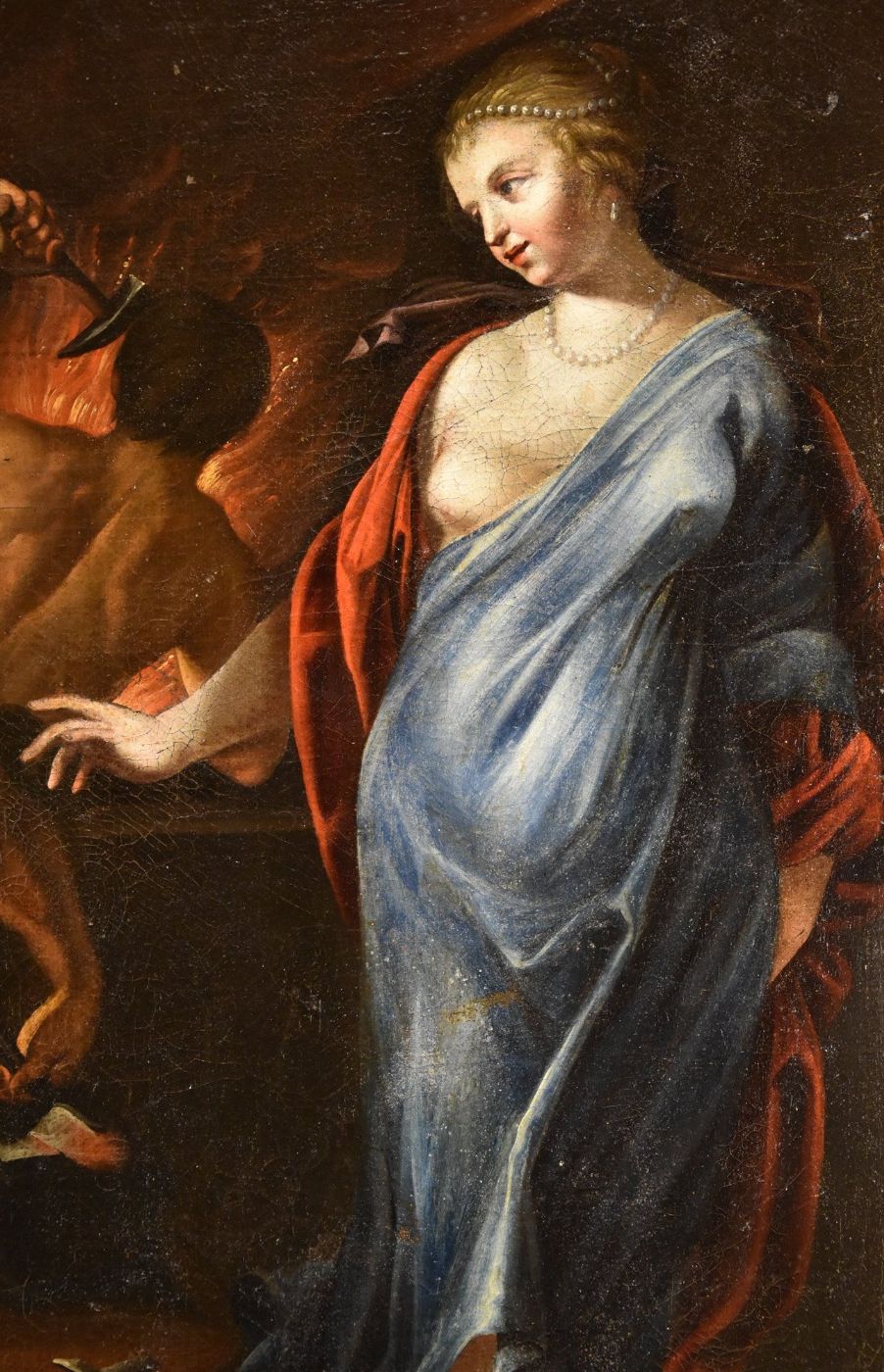
The main characteristic of his works is the propensity to infuse the illustrated subjects with an aura of sensuality, referring to masterpieces by Titian in Verona, where the pose of Thetis' body seems to echo the ancient Greek statues, portrayed with a blue dress that leaves her breasts uncovered. It is this that earned him the nickname of "French Titian" among his contemporaries and that places him in a crucial position in the development of French art between the eroticism of the court art of Fontainebleau in the 16th century and that of Boucher in the 18th century.
ADDITIONAL INFORMATION:
The work is sold complete with a gilded wood frame and is accompanied by a certificate of authenticity and a descriptive iconographic sheet.
We take care of and organise the transport of the works purchased, both for Italy and abroad, through professional and insured carriers. It is also possible to see the painting in the gallery in Riva del Garda, we will be happy to welcome you to show you our collection of works.
Contact us, without obligation, for any additional information.
Follow us on:
INSTAGRAM https://www.instagram.com/galleriacastelbarco/?hl=it
FACEBOOK https://www.facebook.com/galleriacastelbarco/