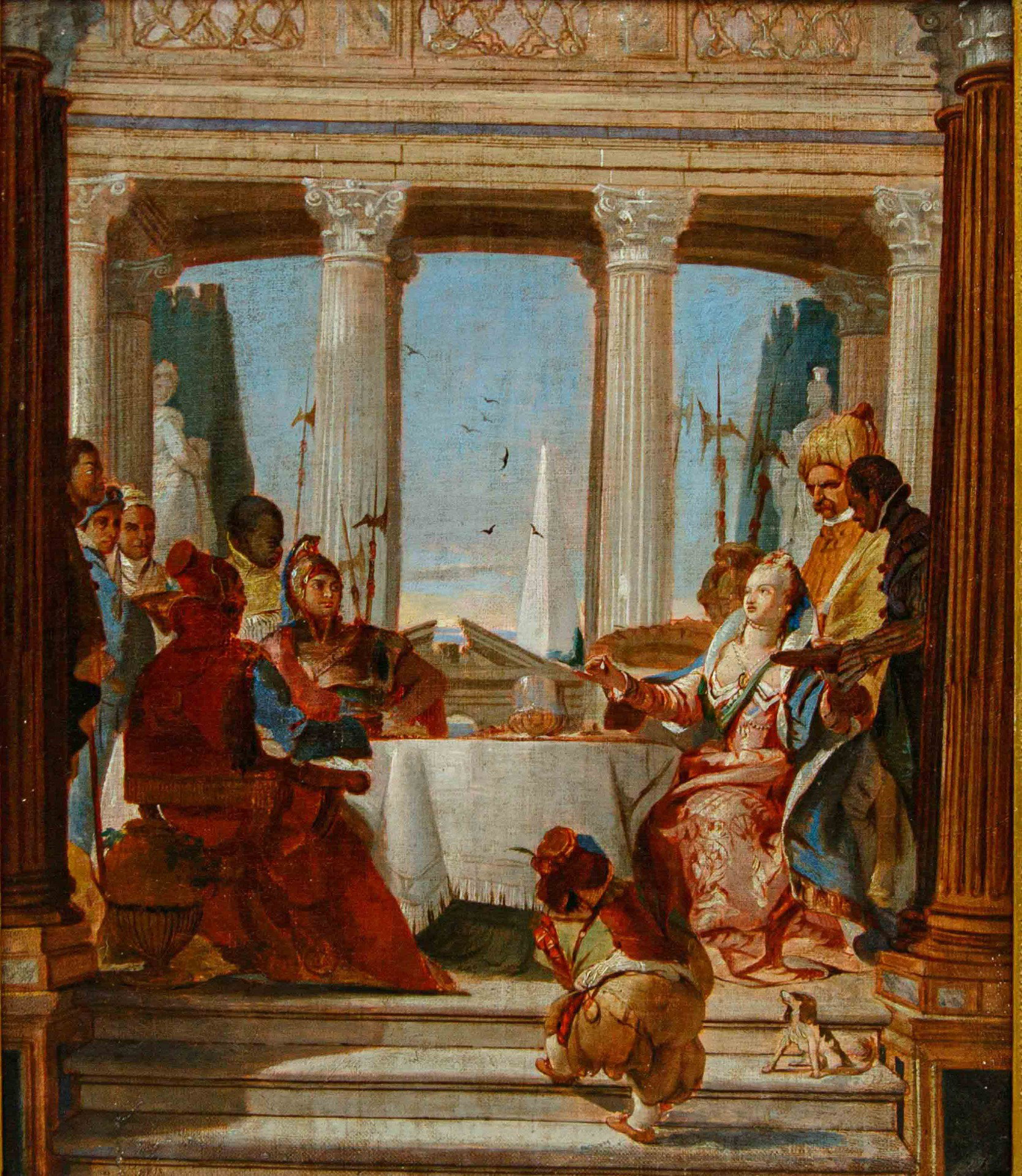
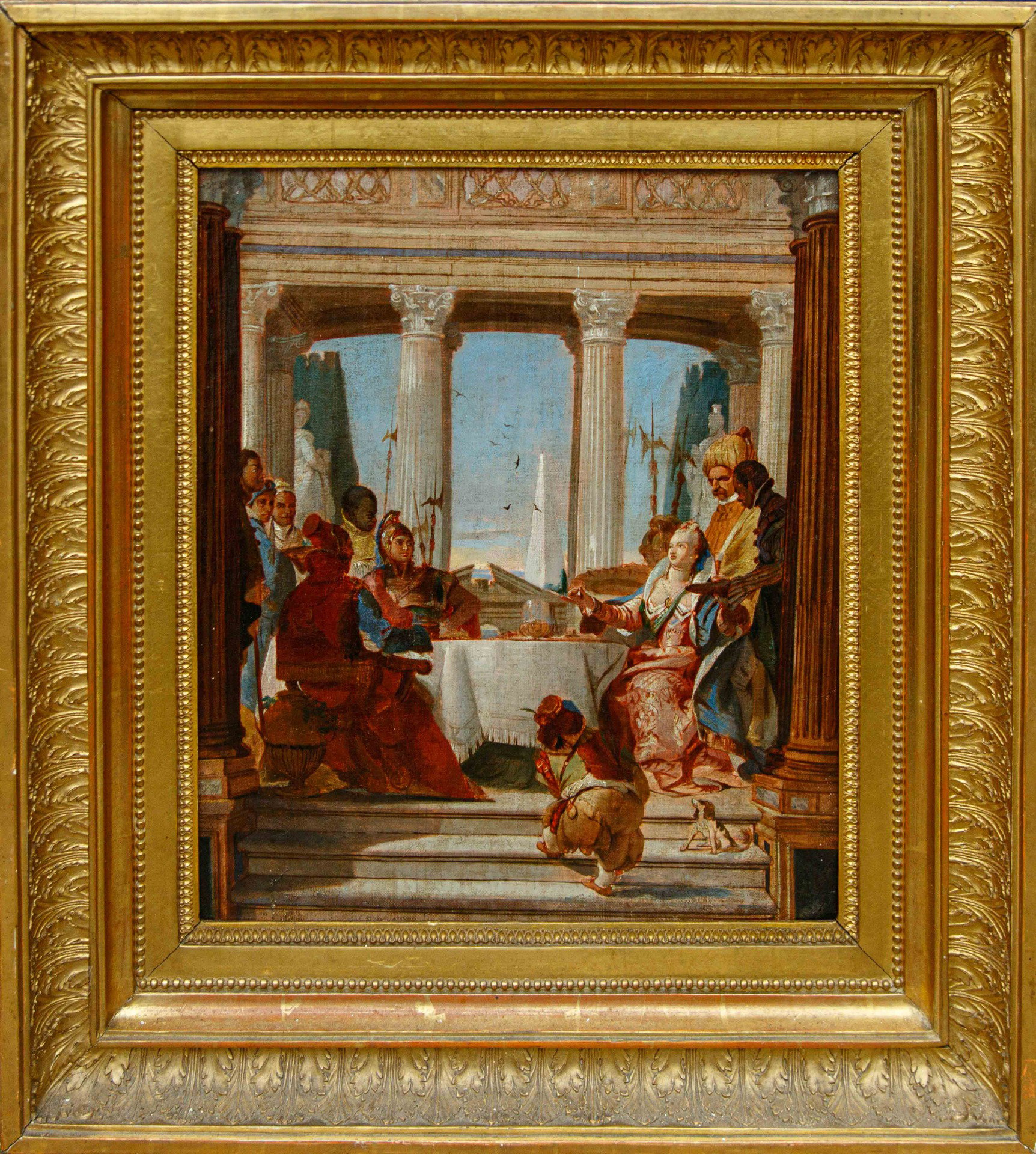
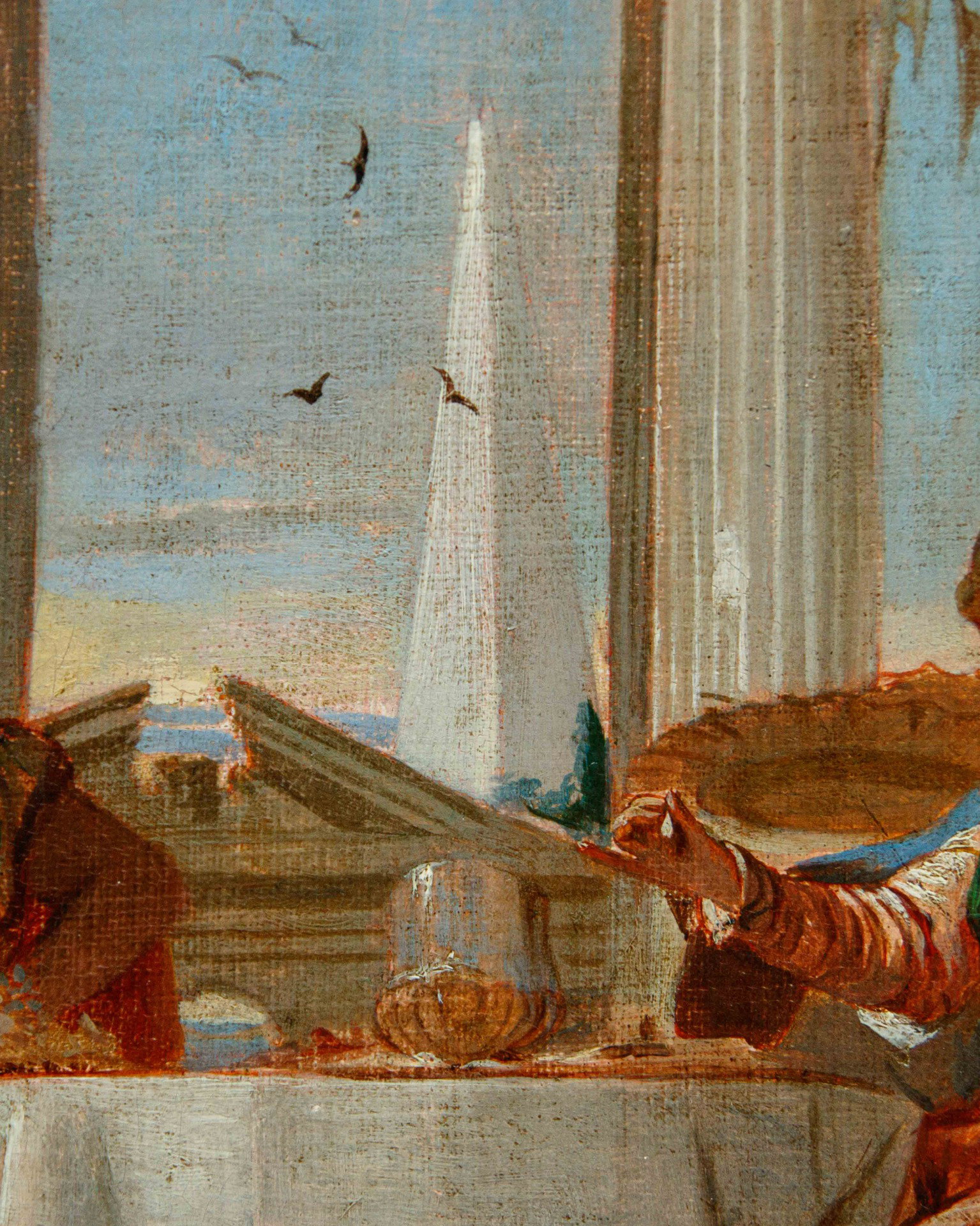
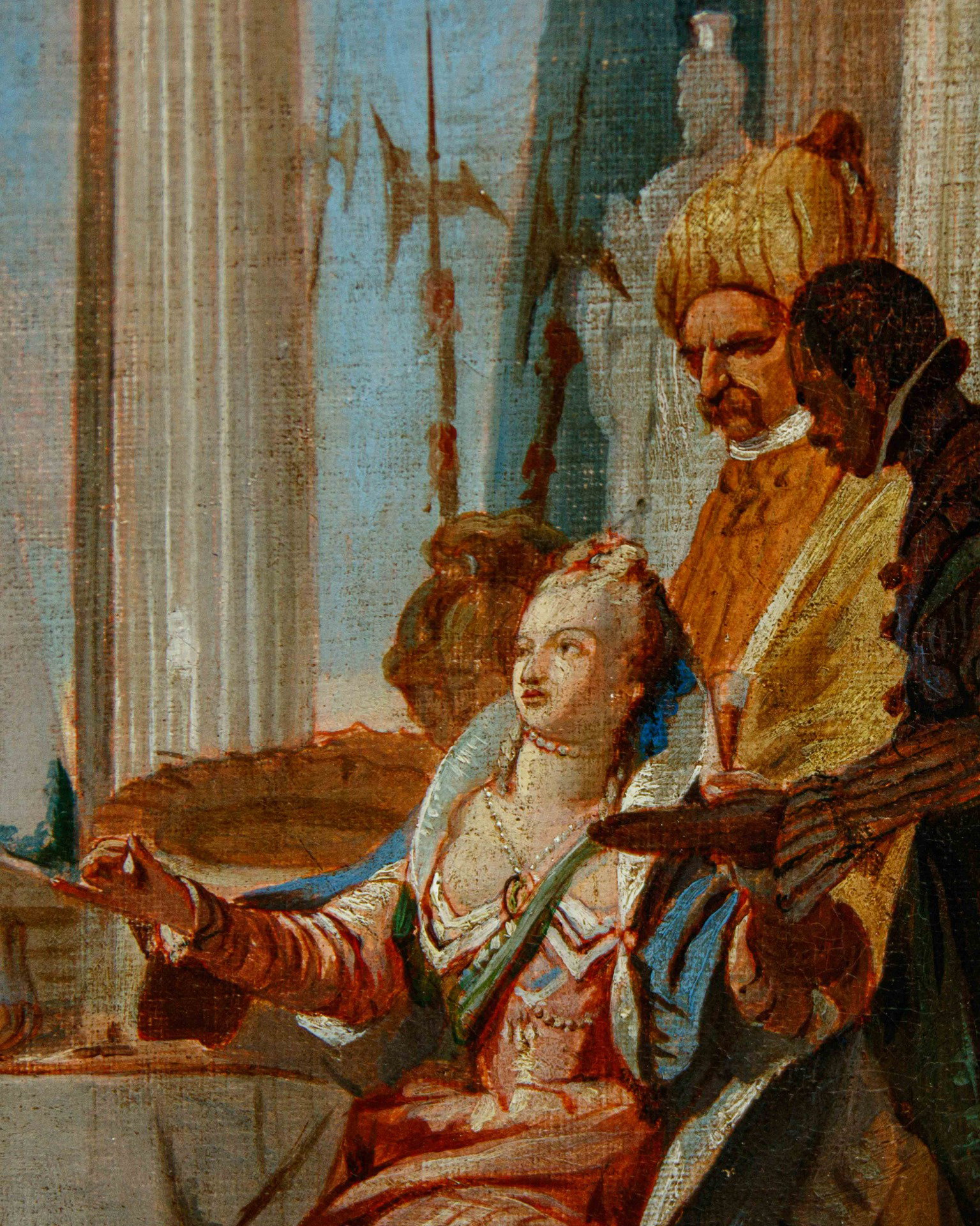
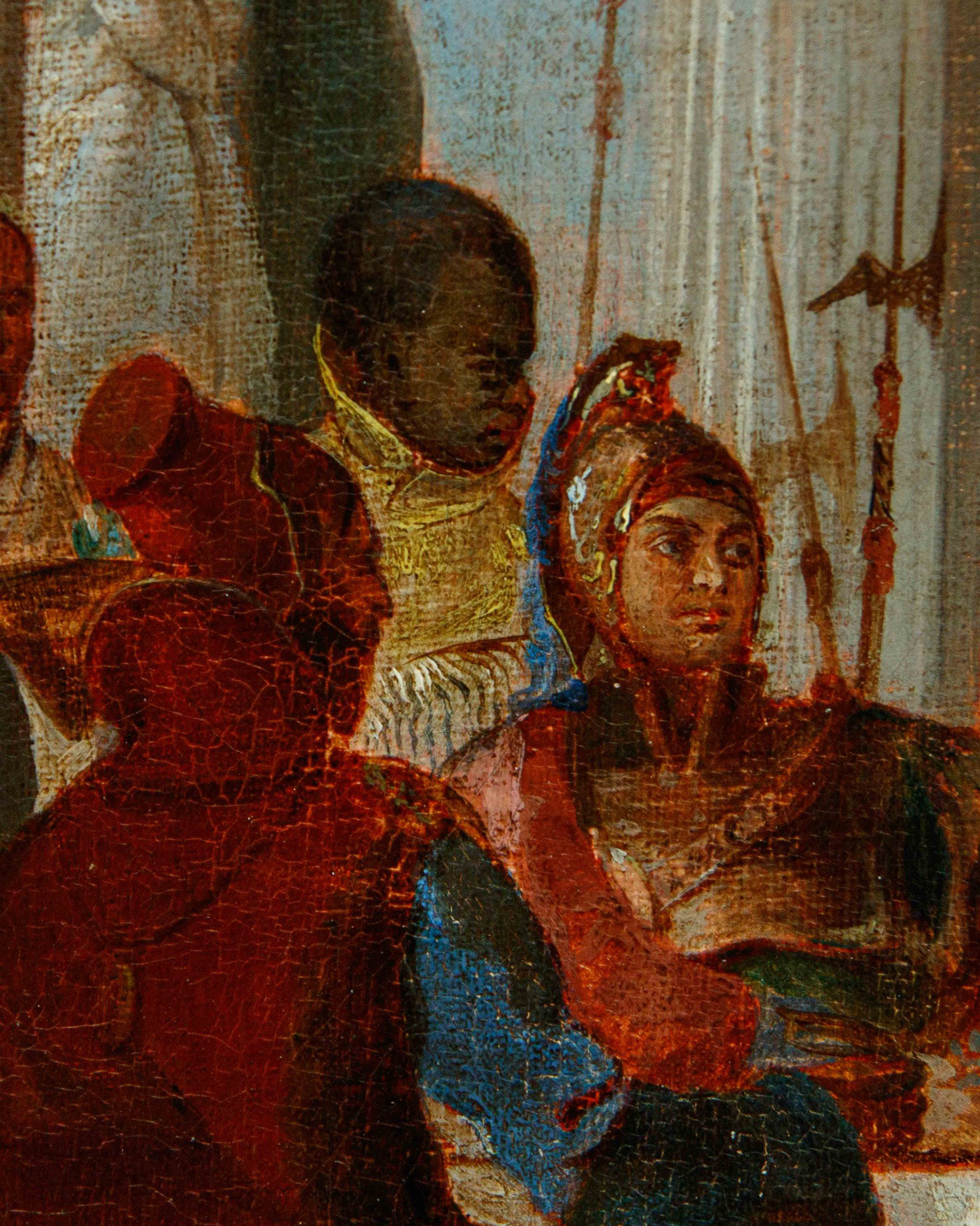
Follower of Giambattista Tiepolo, 18th century
The Feast of Cleopatra
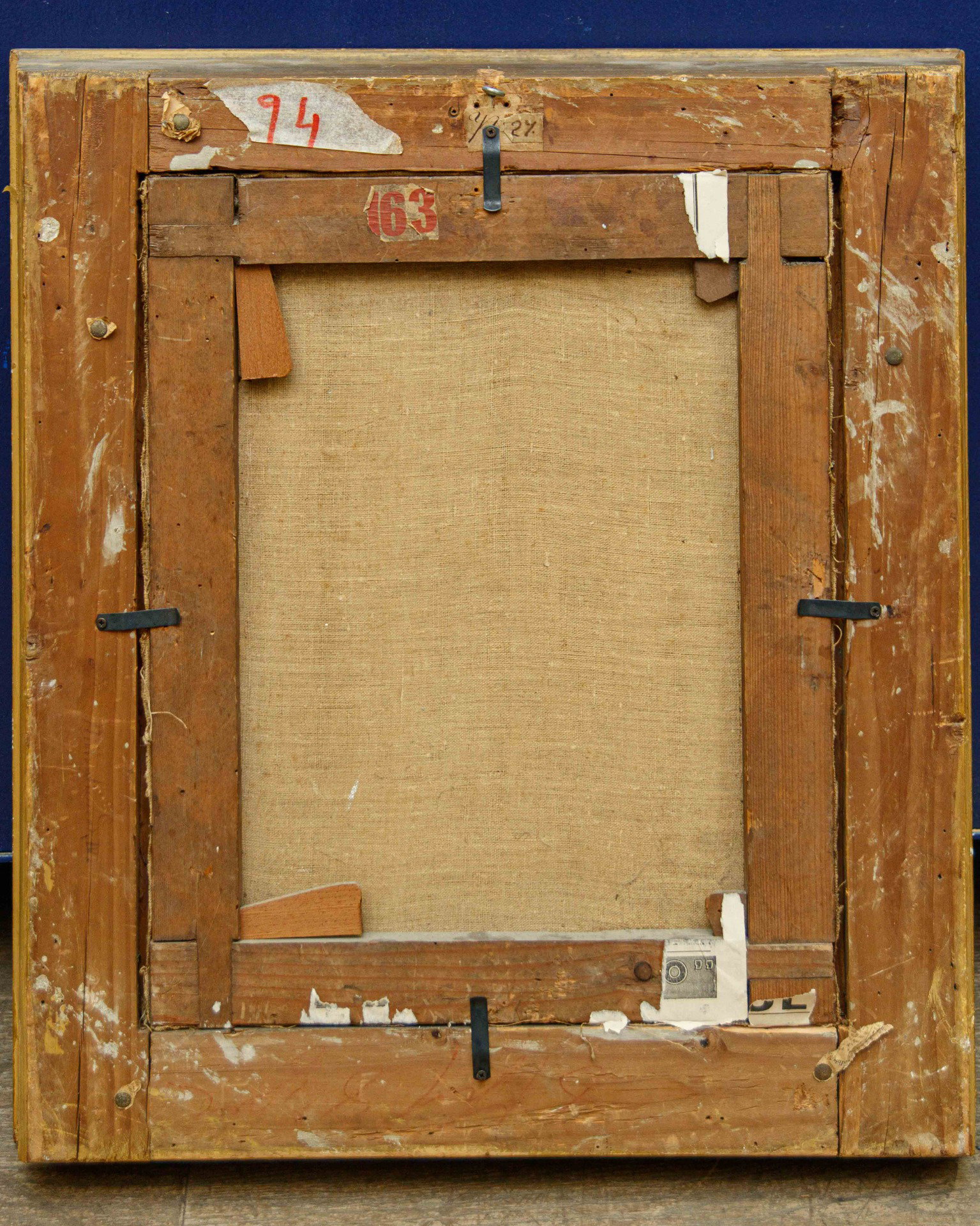
Oil on canvas, 48 x 40 cm – With frame, 67 x 59 cm
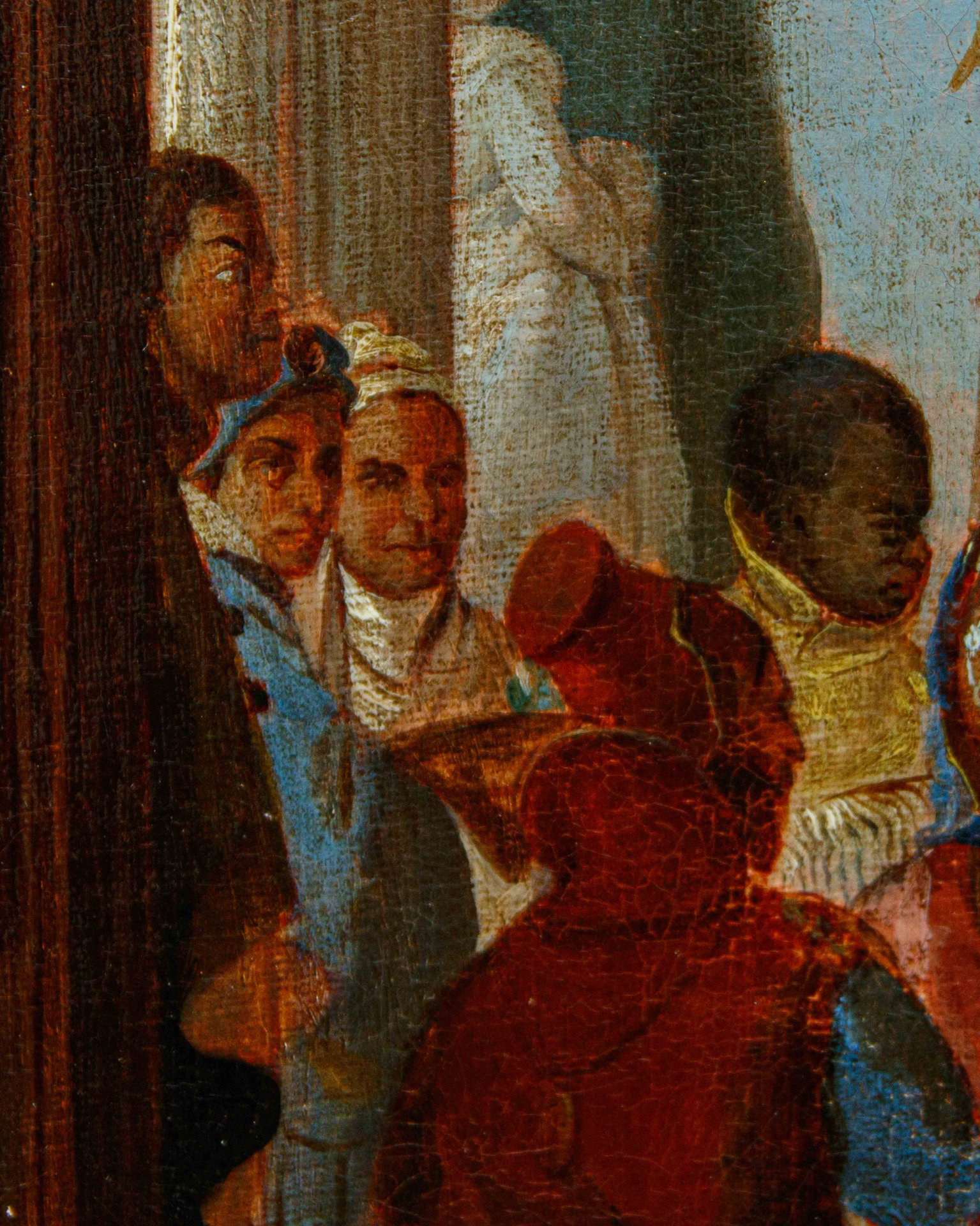
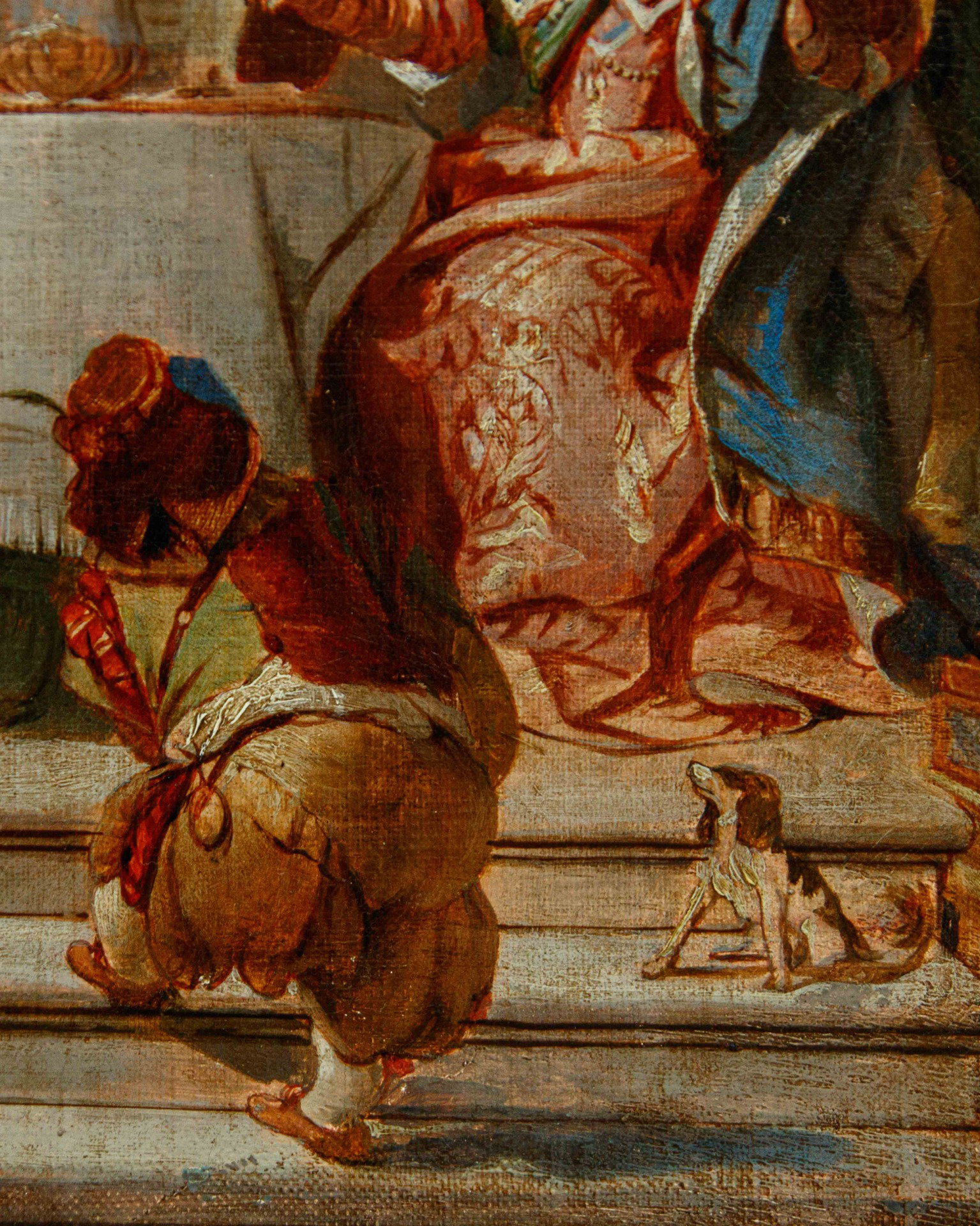
The theme of the Feast of Cleopatra represents one of the peaks of Giambattista Tiepolo's (Venice, 1696 – Madrid, 1770) production, a subject that the Venetian artist repeatedly addressed, transforming it into a manifesto of late-Baroque and Rococo painting. The narrative is inspired by the famous episode described by Pliny the Elder, in which the Queen of Egypt, to demonstrate her immense wealth to Mark Antony, dissolves a very rare pearl in a chalice of vinegar and then drinks it. Tiepolo uses this historical pretext to stage a theater of splendor, classicizing architectures, and sumptuous costumes that evoke the Venice of his time more than ancient Egypt. The first significant version dates back to the 1740s, with the large oil on canvas now kept at the National Gallery of Victoria in Melbourne (1743-44). In this work, Tiepolo defines the compositional structure that will become canonical: Cleopatra and Mark Antony sit opposite each other, separated by a set table, while the monumental architecture in the background, characterized by loggias and Corinthian columns, gives a solemn and almost theatrical tone to the event. The clear light and the brilliant palette emphasize the dramatic gesture of the queen holding the pearl suspended above the chalice. Shortly after, Tiepolo created a second version, now at the Cognacq-Jay Museum in Paris, smaller in size and with a more intimate atmosphere, almost a preparatory sketch or a variant for a private collector. However, the culmination of this iconographic research is represented by the spectacular fresco of Palazzo Labia in Venice (1746-47), which serves as a model for the canvas presented here, most likely made by a follower of the master who had the opportunity to see it live. Here, the banquet scene is inserted into a complex system of architectural quadrature created by Gerolamo Mengozzi Colonna. Cleopatra takes on the appearance of an 18th-century Venetian noblewoman, and the integration between painting and the real space of the salon transforms the observer into an eyewitness of the conviviality. The influence of these compositions was immense among the followers, who spread the model throughout Europe, especially taking up Tiepolo's ability to organize large masses of figures in open spaces, imitating the scenographic "grand goût" of Tiepolo that combined the architectural precision of Palladian derivation with an unprecedented chromatic freedom. The painting under examination captures the essence of the monumental Venetian fresco, transposing its theatricality into a more collected dimension, almost as if it were a small model, but with an equally vibrant character. While at Palazzo Labia Colonna's quadratures integrate the fresco into the real space of the room, here the artist reproduces those same fake architectures within the confines of the canvas, creating a sort of "picture within a picture" that emulates the original perspective effect. The brushstroke here appears quick, loose, and luminous, typical of Tiepolo's maturity, who spread the color with a freedom anticipating the new modern taste.
Only for Italy: with Ars Antiqua it is possible to postpone all amounts up to a maximum of € 7,500 at ZERO RATE, for a total of 15 INSTALLMENTS
Ex. Tot. € 4,500 = Monthly installment € 300 for 15 months.
Ex. Tot. € 3,600 = Monthly installment € 720 for 5 months.
For amounts exceeding € 7,500 or for a longer delay in time (over 15 installments), we can provide a personalized payment.
Contact us directly for the best quote.
LIVE TV
– SUNDAY 17.00 – 21.00 Dig.terr. 126 - Sky 824
– Streaming on our website www.arsantiquasrl.com and on our social networks Facebook and Youtube
All the works proposed by Ars Antiqua are sold accompanied by a certificate of authenticity according to the law and an accurate in-depth sheet.
You can see the works directly at the Milan gallery showroom, in via Pisacane 55 and 57.
We personally organize transports and deliveries of the works, both for Italy and abroad.