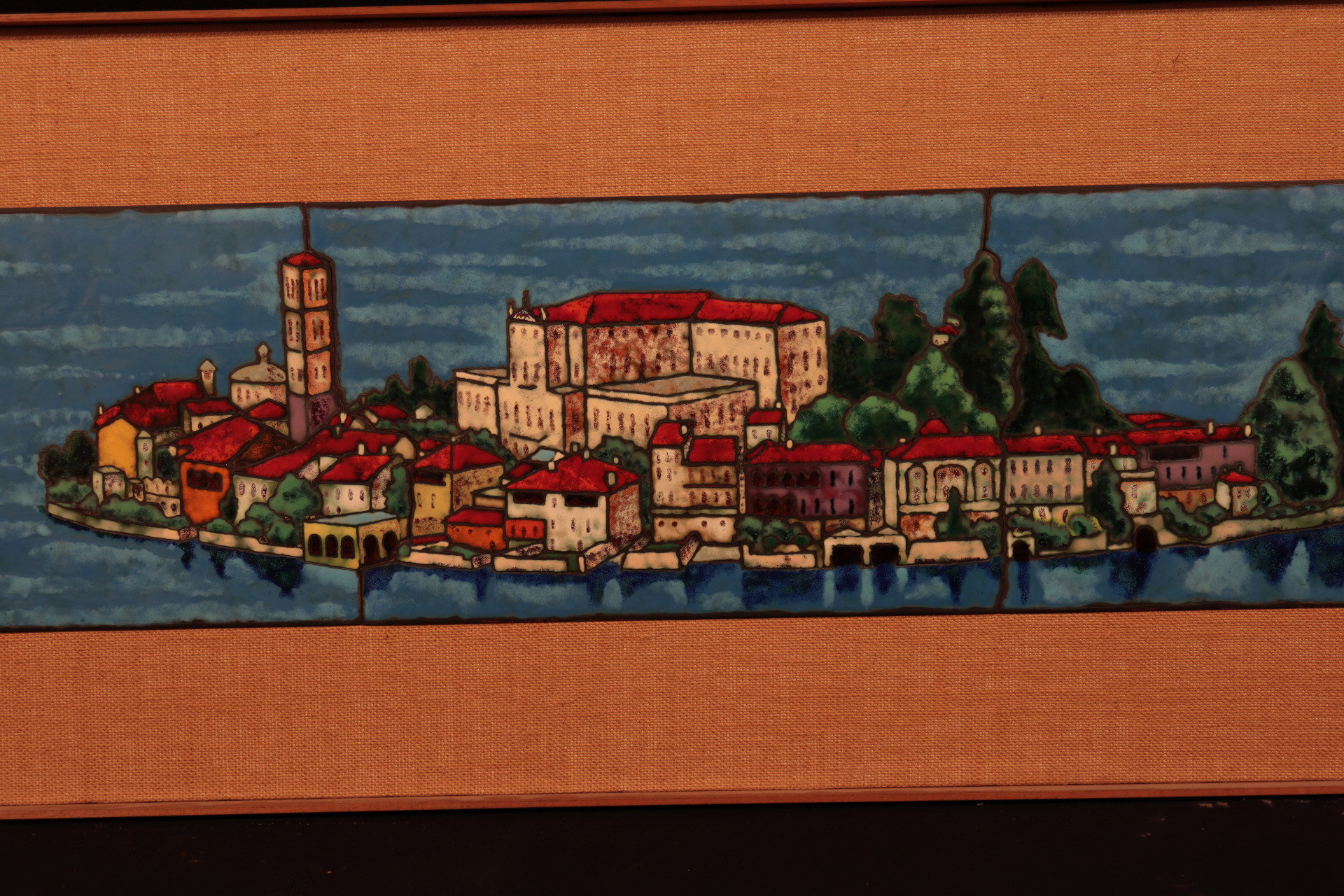
Giuseppe Maretto (Milan 1908-1984) was an Italian sculptor, painter, enameler, and medalist, primarily active in Milan in the first half of the 20th century.
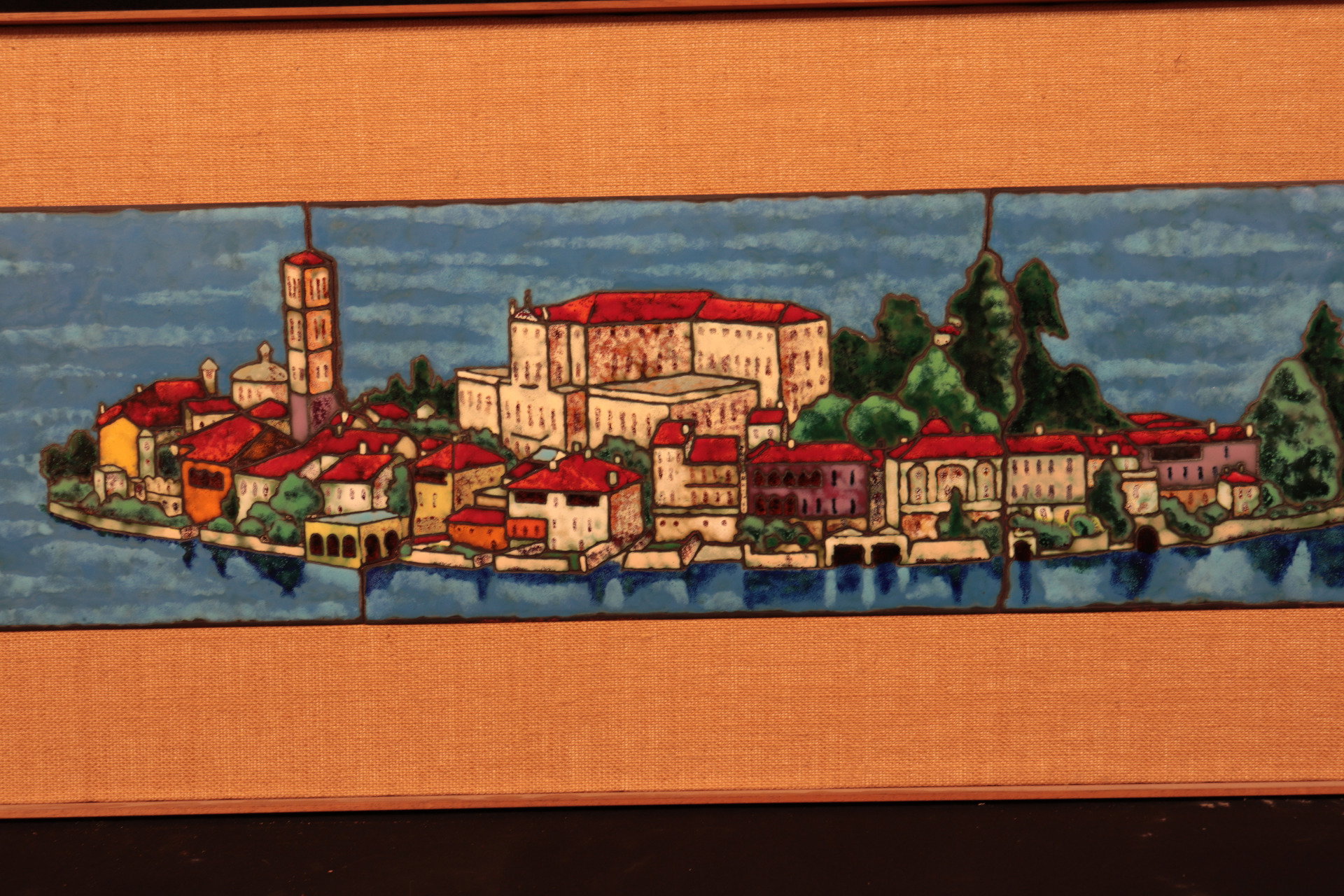
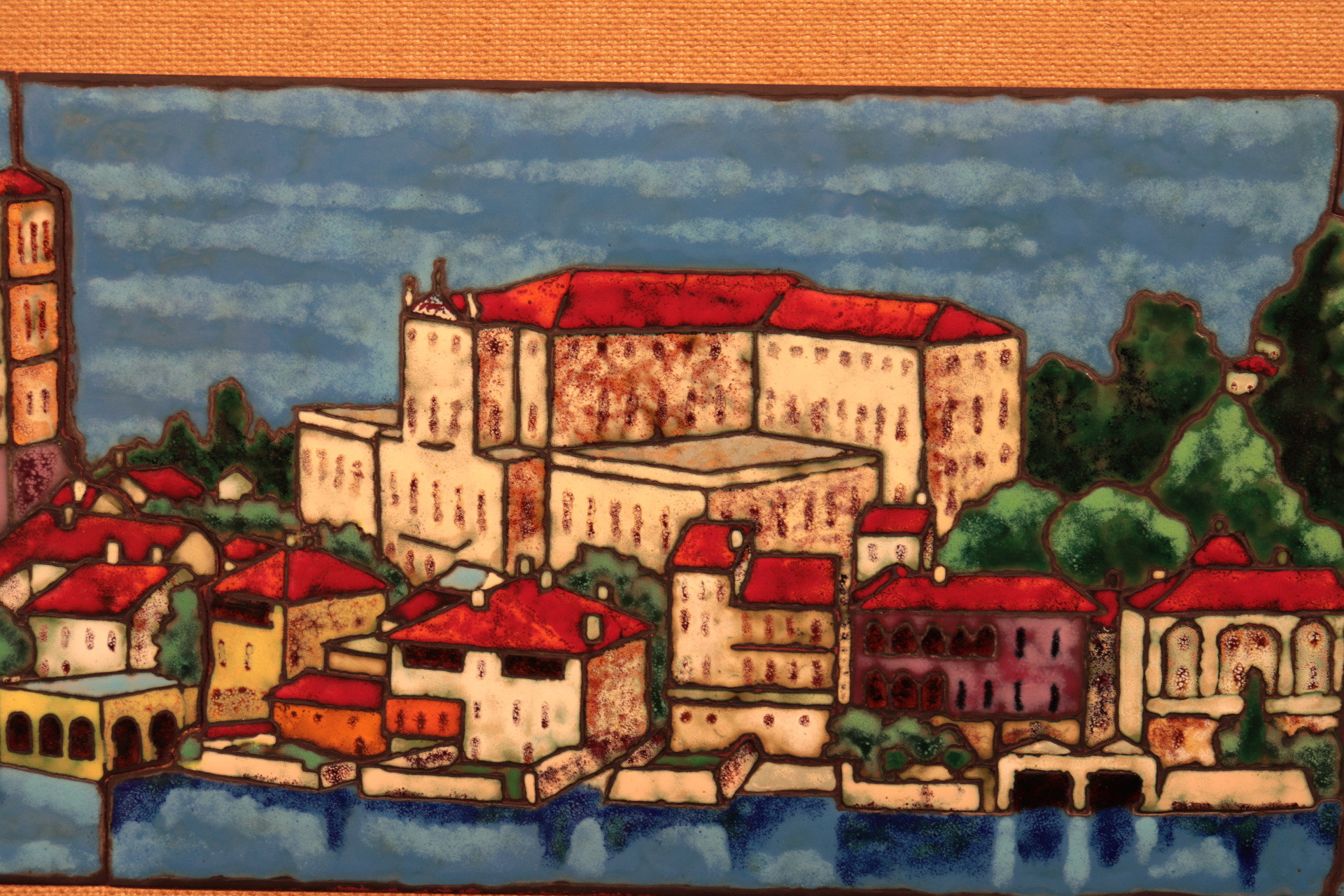
Enameled plaque on copper
120x48cm frame - 100x25cm plaque (Champlevé technique)
Biography
He exhibited at a very young age at the V Milan Triennale in 1933 with three sculptures: a panel for the fourth station of the Via Crucis and the bas-relief "Moses Draws Water from the Rock" in the Sacred Art exhibition pavilion; in the Exhibition of Housing pavilion.
From 1937-1939, the two monumental twin statues were placed on the building designed by Lancia, opposite Palazzo Mezzanotte in Piazza Affari in Milan. From 1932, the fountain with a statue of Saint Anthony of Padua preaching to the fish, located opposite the sanctuary of Saint Anthony of Padua on Via Farini, also in Milan, was damaged, likely by vandals, on September 18, 2020. Also his is the monumental fountain with a sculpture depicting a "river god" whose limbs are entwined with a serpent, adorning the courtyard of the renowned Casa della Fontana (architects Rino Ferrini and Franco Bruni, 1934-1936) at Viale Vittorio Veneto 24. For the church of Sant'Elena di Quarto Cagnino, he sculpted "The Invention of the Cross"; for the Milan Cathedral, the statue of Saint Lucia; for the church of San Gioachimo, a Via Crucis in copper.
Maretto also had an intense activity as an enameler and medalist.
The Enamels of Maretto or Art of Fire.
Enamel art is not a simple decorative glass coating for metal surfaces but the result of technical processes that give it a more seductive appearance with the splendid intensity of colors and the infinite variety of tones and delicate shades.
Enamels are a glassy substance composed of silicates, soda, potassium, and lead, and the colors are given by various mixed metal oxides.
Maretto used two techniques for creating enamels.
Champlevé enamels are made by excavating the alveoli outlined according to the design in the metal, filling the alveoli with enamel, and then subjecting the metal to furnace heat (around 900°C), causing the powdered enamel to melt and transform into vitreous paste, taking on its final colors. This technique flourished in Europe and especially in France in the 12th, 13th, and 14th centuries. Japanese-origin Musenshippo enamels are made with a simpler technique.
Raw enamels are placed in contact and superimposed on the surface of the metal plate, applied with a brush and spatula, thus forming the image to be reproduced through these juxtapositions, and then subjected to fusion so that they melt, blending together and creating effects of evanescent contours.


.JPG)
.JPG)