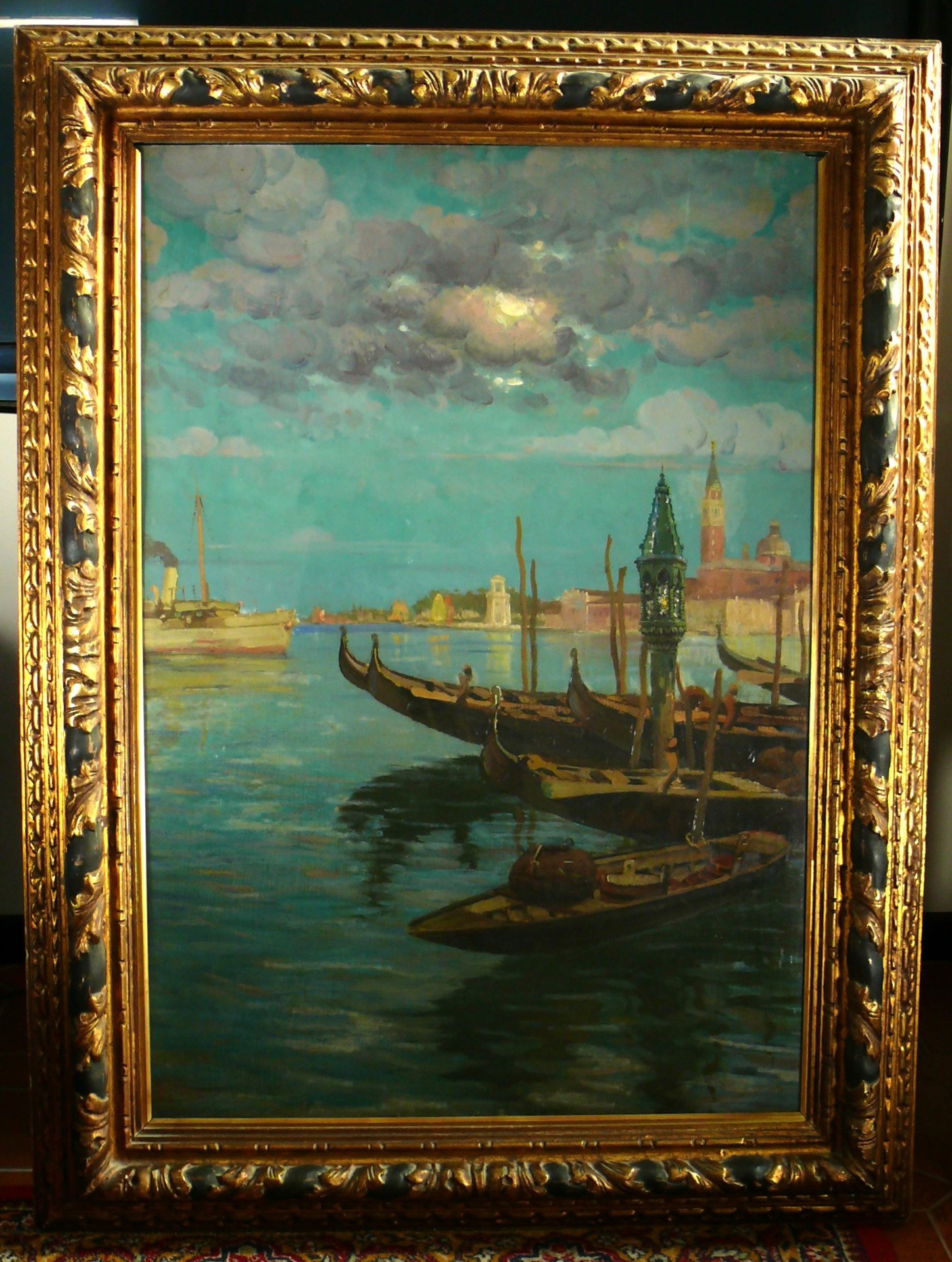
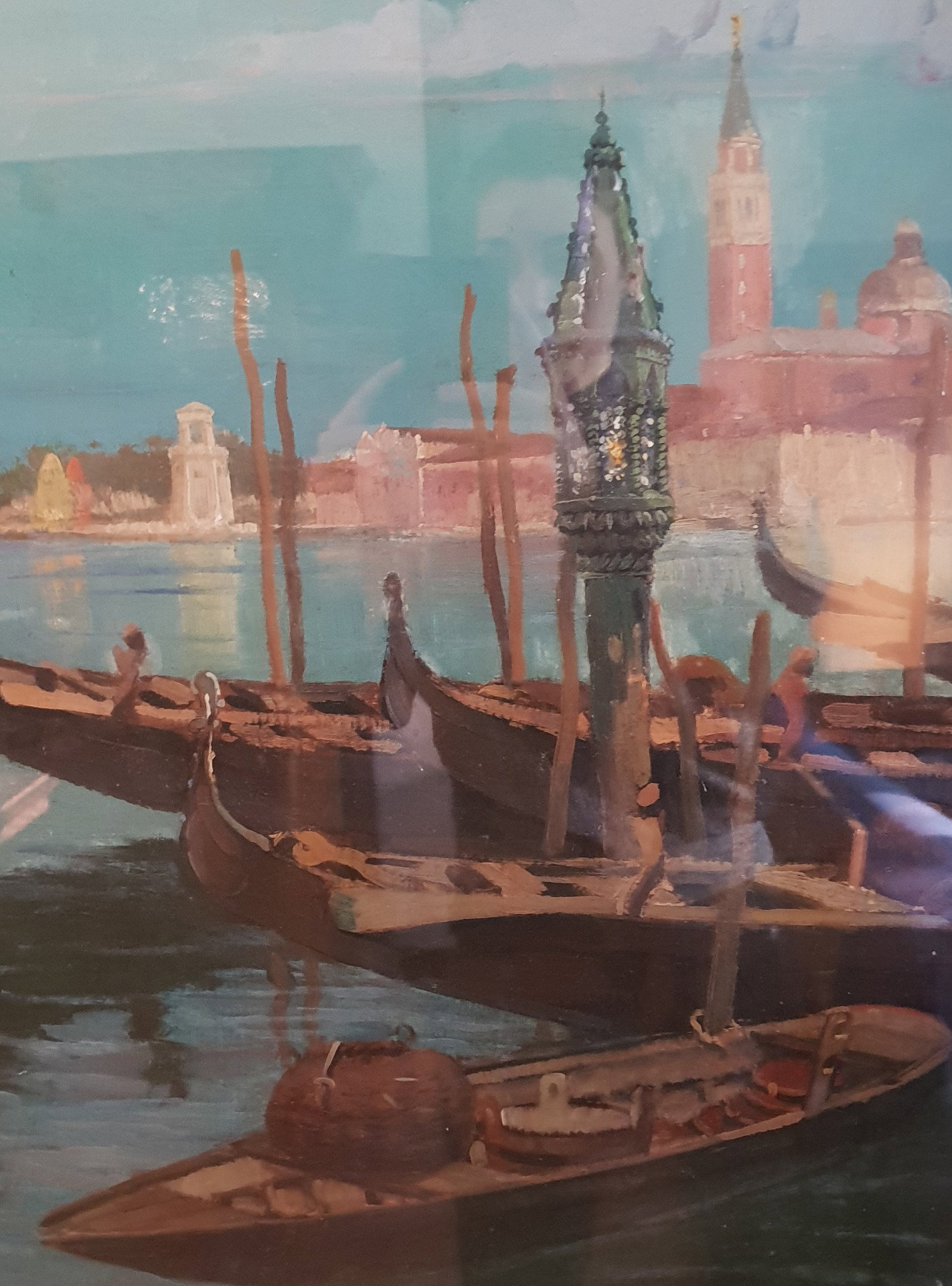
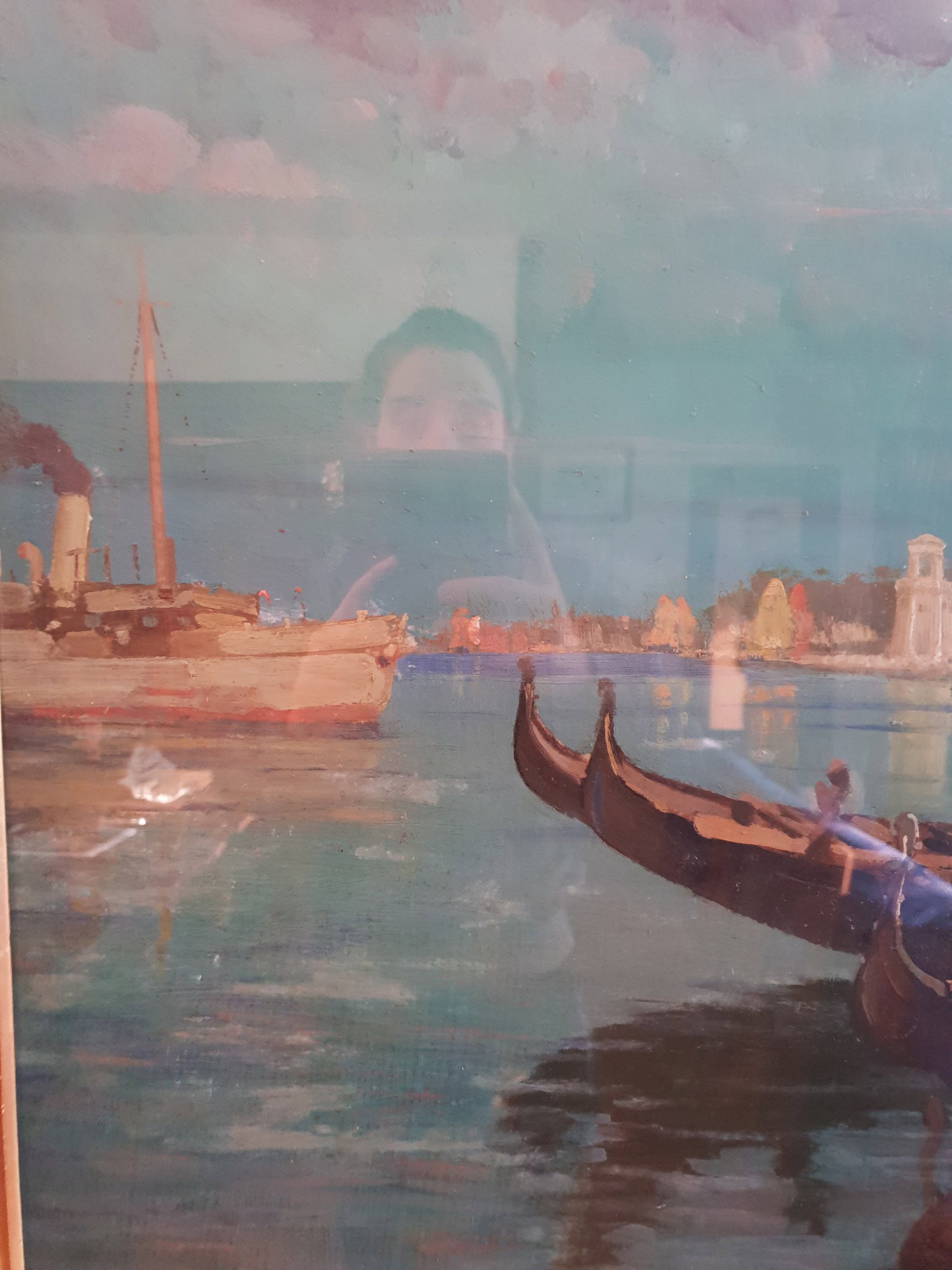
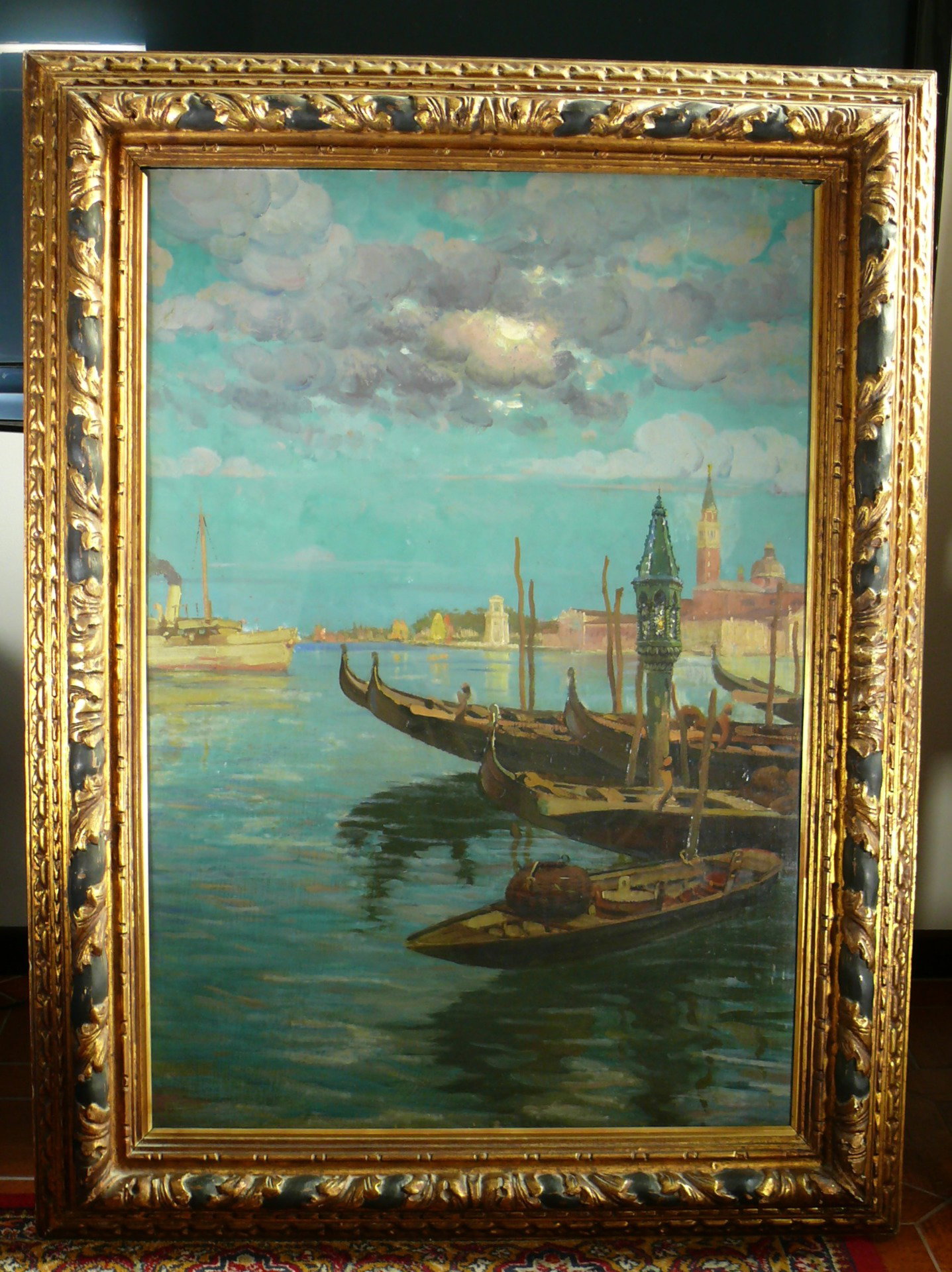
Oil painting on pressed cardboard.
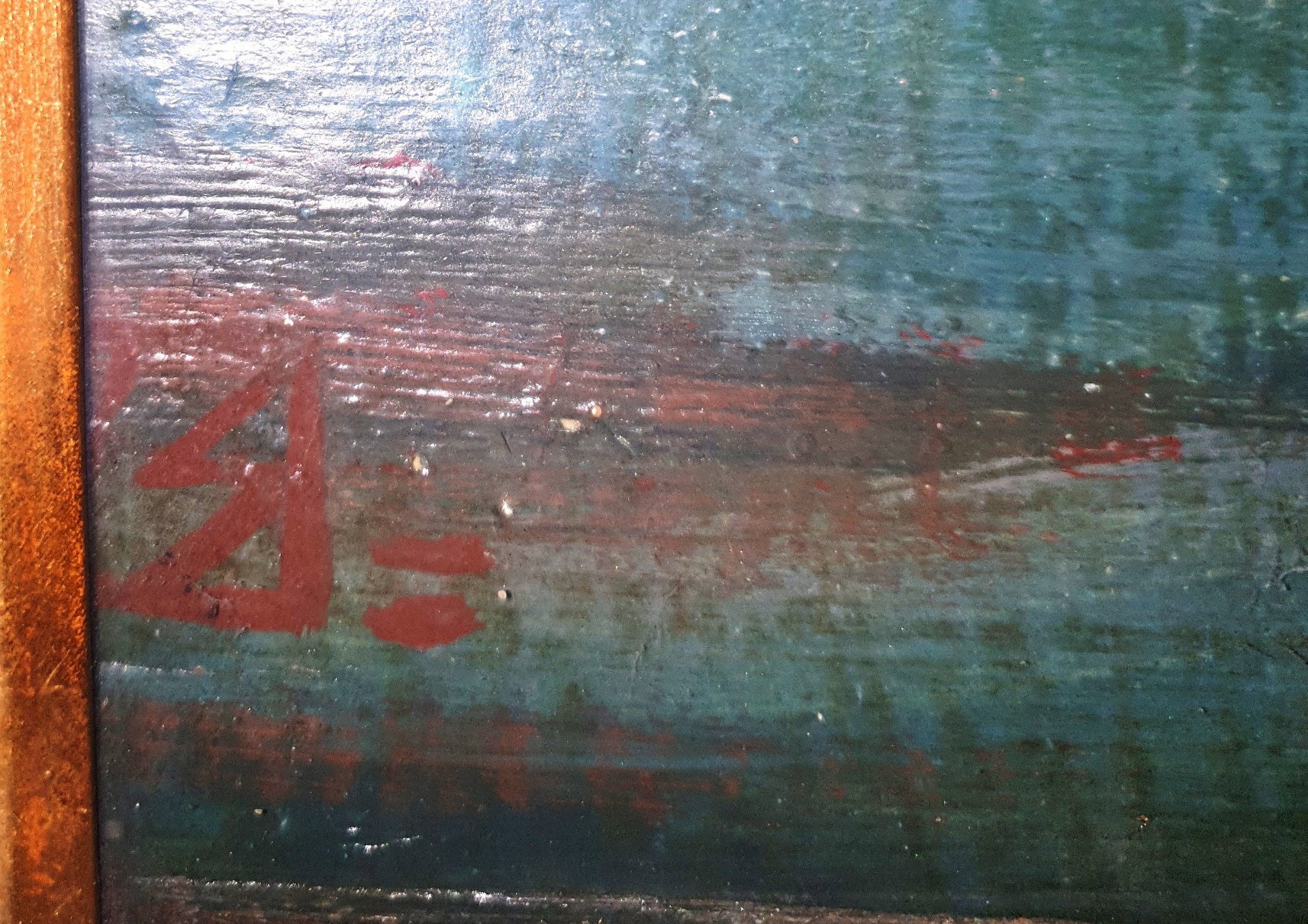
Signed in red on the left, with his monogram VZZ.
On the back, it bears the title of the work “Sul Molo” and the signature V Zanetti Zilla.
Measurements 102x72 cm. With original frame 116x86 cm.
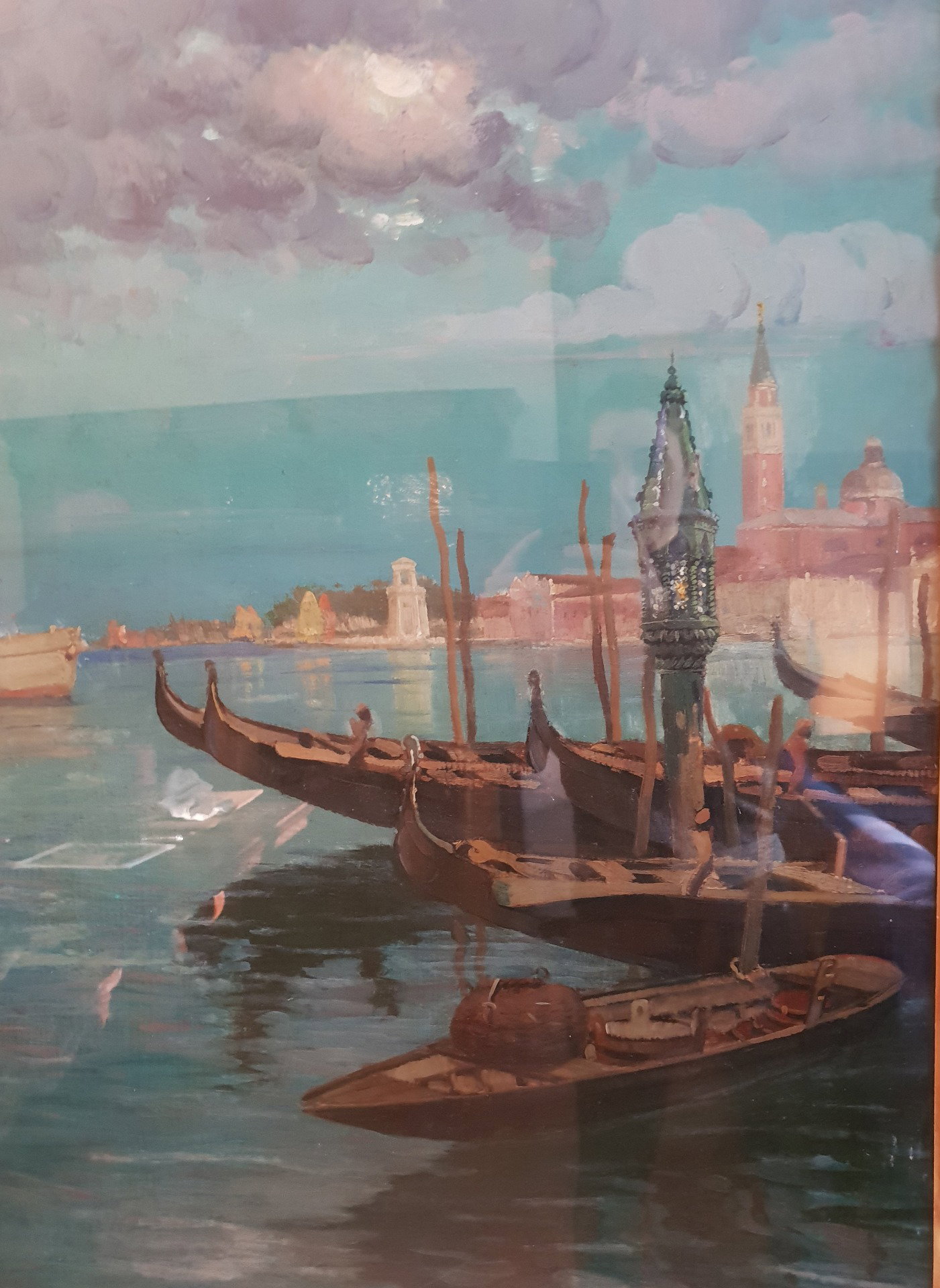
This vertical lagoon landscape is a pleasant scenic image, where in the foreground the boats in various positions form an amusing geometric intertwining, and in the distance on the horizon, S. Giorgio and Venice appear in all their architectural grandeur, in a composition of colors full of light.
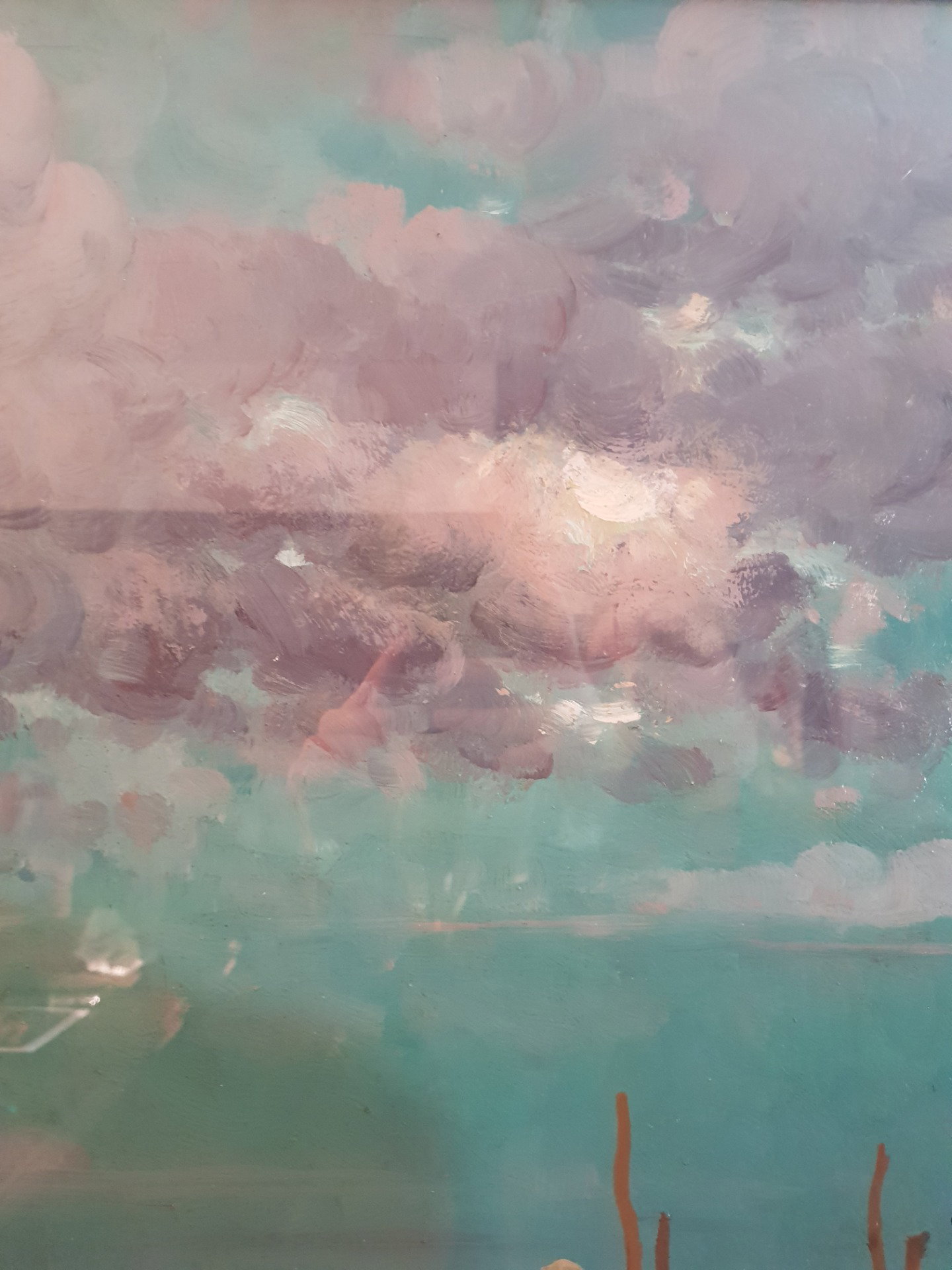
Under Wood's light examination, UV fluorescence (investigation aimed at detecting subsequent pictorial retouching on the surface of paintings), the painting shows no restoration.
BIOGRAPHY
Vittore Zanetti Zilla (Venice, 1864 – Milan, 1946)
He completed his technical studies in Venice and in the meantime began painting, attending the studio of Giacomo Favretto, a family friend. After obtaining his high school diploma in 1882, he decided to learn the rudiments of art under the guidance of Egisto Lancerotto.
In 1884, he served in the military in Naples and Sicily; upon completion, he returned to Venice and then moved for a few years to Abruzzo, where he worked as a teacher.
However, he did not interrupt his artistic research, and in 1898 he undertook a multi-stage trip through Europe, establishing contacts particularly with French landscape painters.
He participated in the Venice International Art Exhibitions since the first edition in 1895 (with a solo exhibition in 1914), distinguishing himself for his lagoon landscapes characterized by a decorative taste not devoid of transalpine influences. He experimented with watercolors and varnished tempera painting, the latter technique allowing him to achieve brilliant and pure colors.
Among the international exhibitions, we recall those in Munich in 1893 and Buenos Aires in 1910.
After the defeat of Caporetto during World War I, he took refuge in Milan, where he would reside in the following years, organizing two solo exhibitions at the Galleria Pesaro, in 1918 and 1920.