Bartholomeus Breenbergh (circle of) Deventer, November 13, 1598 – Amsterdam, October 5, 1657
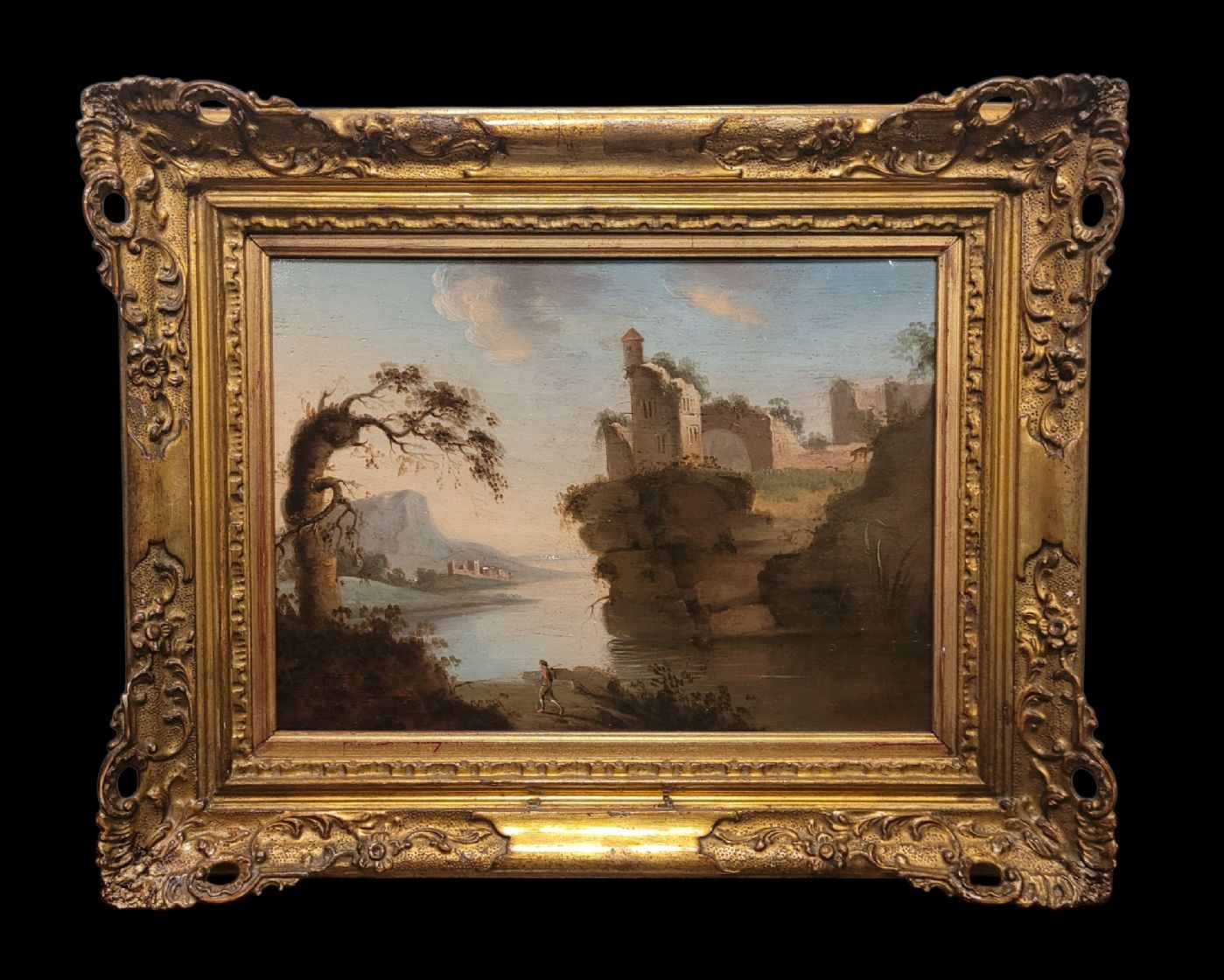
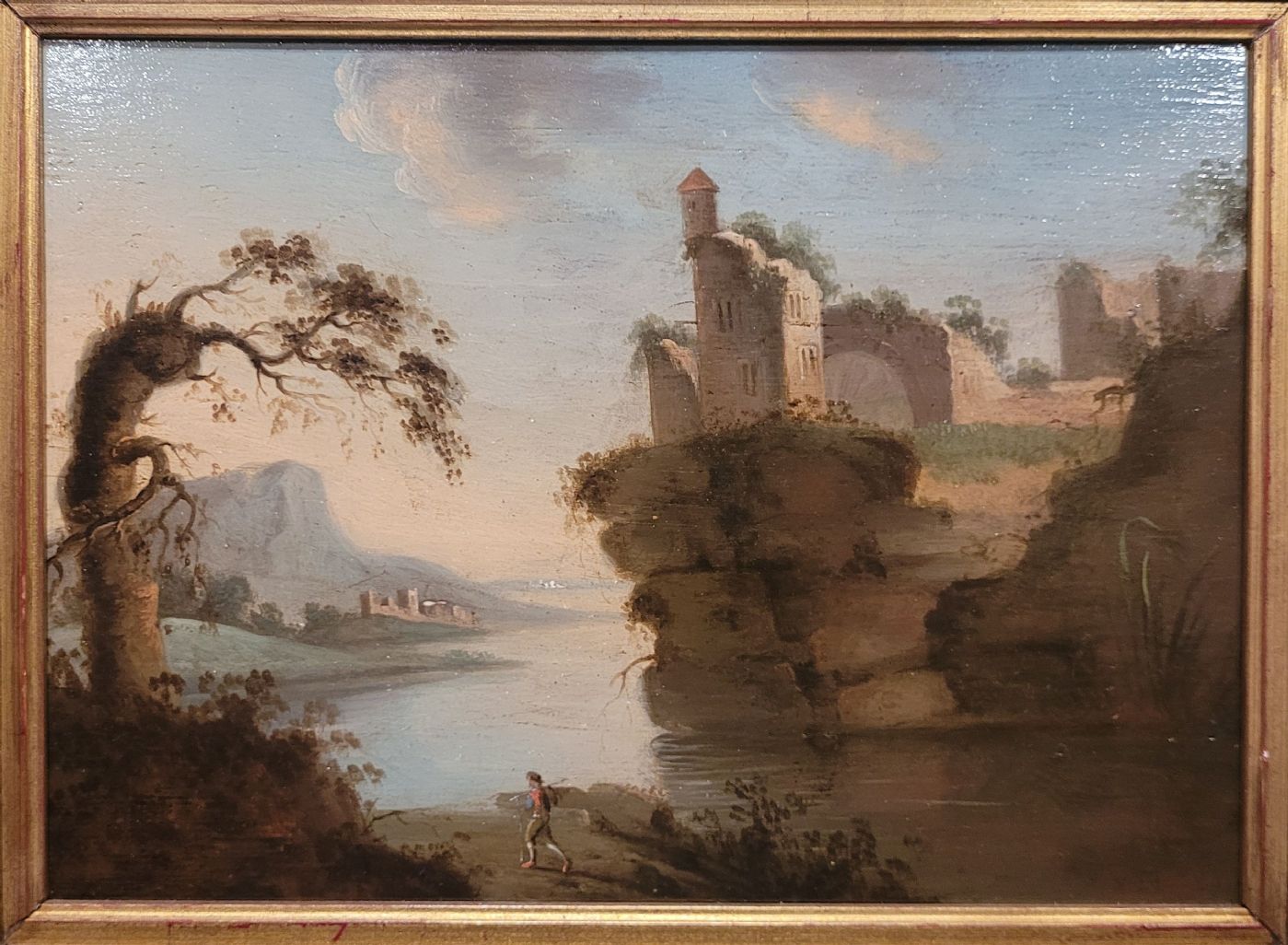
"River landscape with architectural ruins and figure"
Oil on panel
19th-century frame cm 38x46
Panel cm 25x35
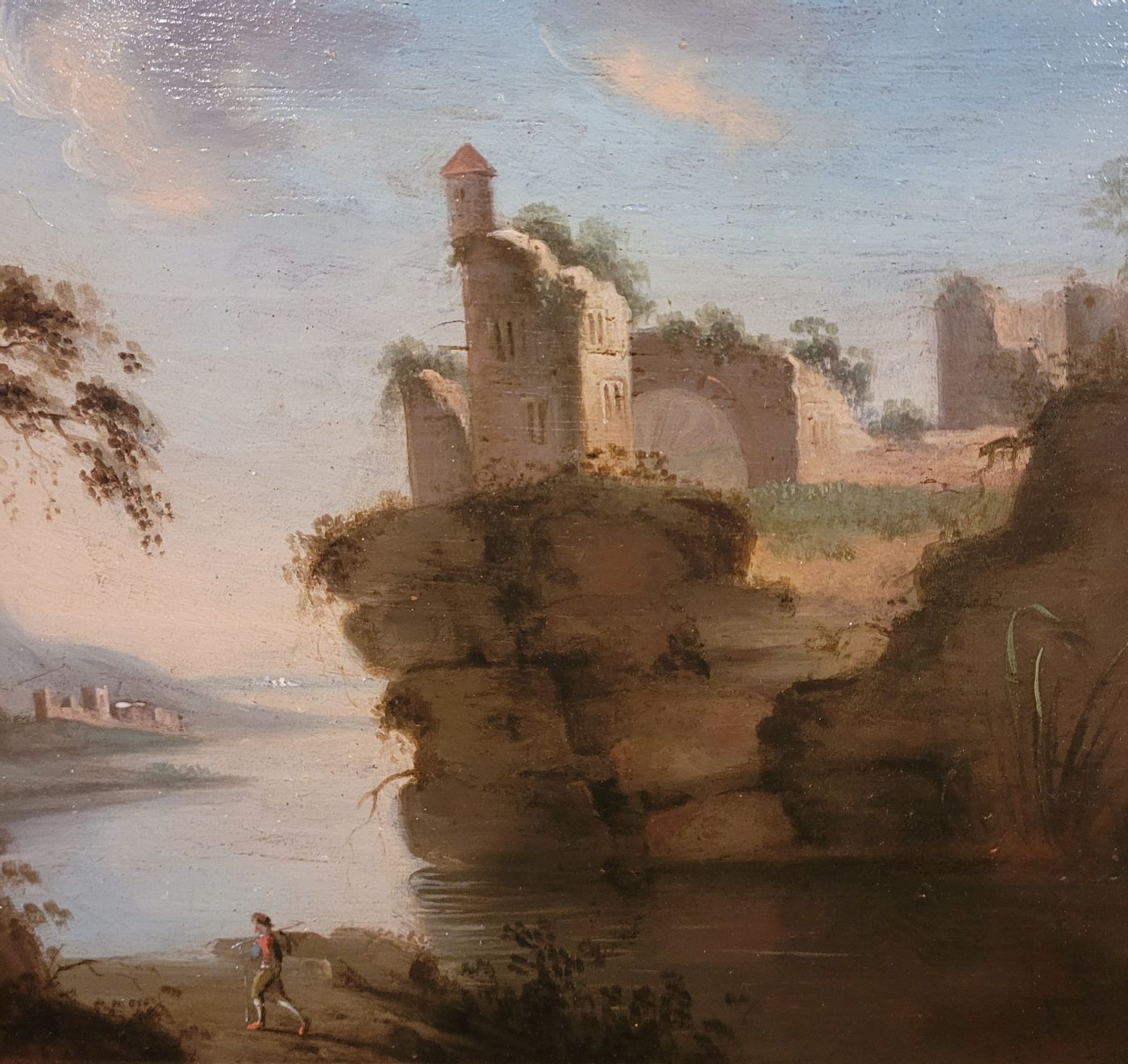
The painting depicts an idealized classicist landscape, articulated around a waterway that guides the eye in depth, according to a balanced and airy spatial construction. On the right, architectural ruins of Roman flavor emerge, probably inspired by ancient towers and fortifications, immersed in soft and luminous nature.
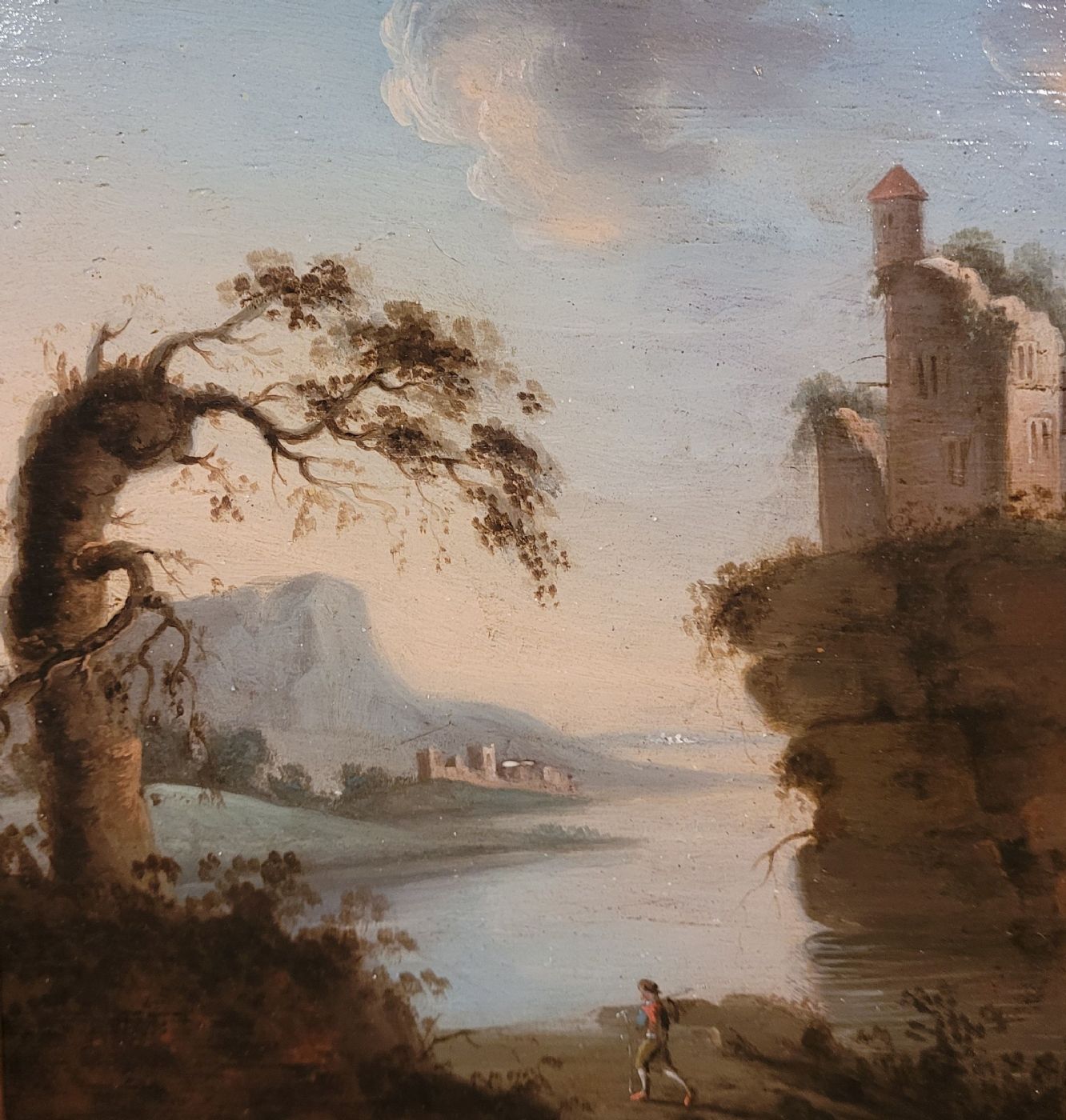
The presence of a small figure in the foreground, caught walking along the shore, introduces a discreet narrative element, typical of Breenbergh's painting, where man is subordinate to the grandeur of the landscape but becomes its poetic measure.
The warm and golden light, diffused and atmospheric, clearly recalls the Roman experience of the Dutch artist.
Particularly significant is the use of ruins as a lyrical, non-dramatic but contemplative element: a distinctive trait of Breenbergh compared to more theatrical landscape painters. The vegetation, treated with loose but controlled brushstrokes, also fits naturally into the composition.
Due to its compositional layout, light rendering and iconographic choice, the work shows close affinities with the Italianizing landscapes of Bartholomeus Breenbergh, in particular those executed after his stay in Rome.