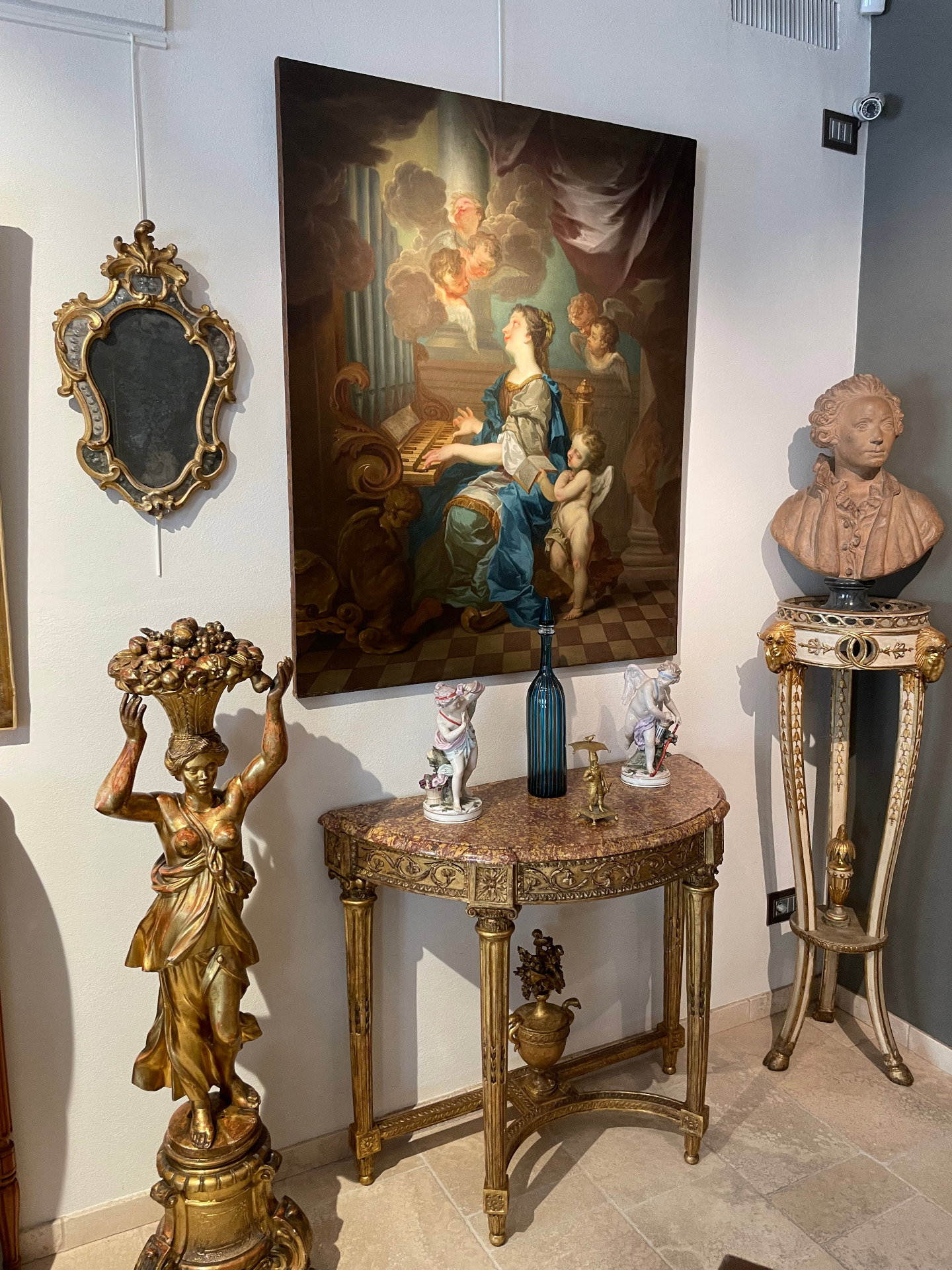
17th Century Roman School, Saint Cecilia with Angels in Concert, oil on canvas painting
Dimensions: W 102.5 x H 126 cm
Price: by private negotiation
Item accompanied by certificate of authenticity
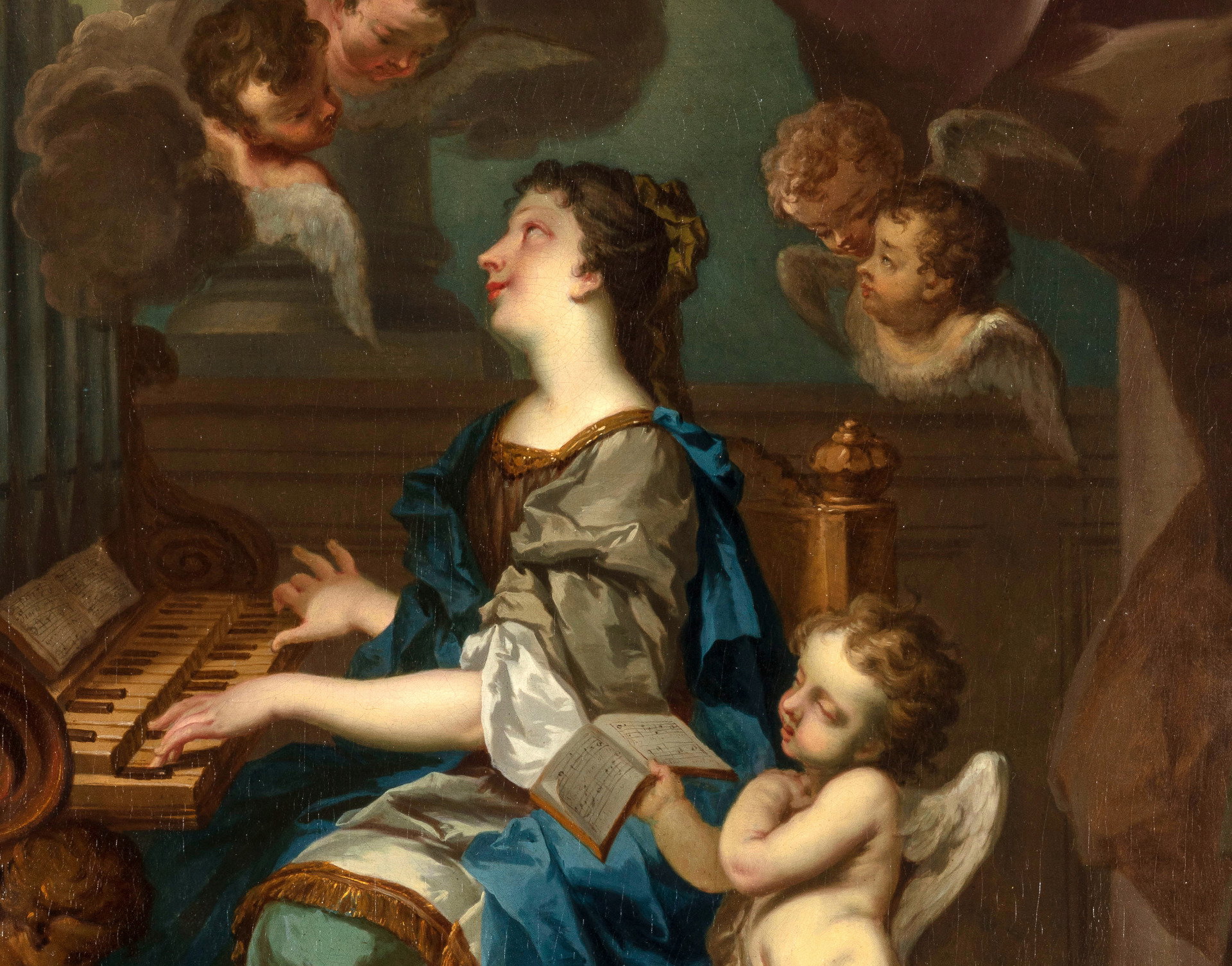
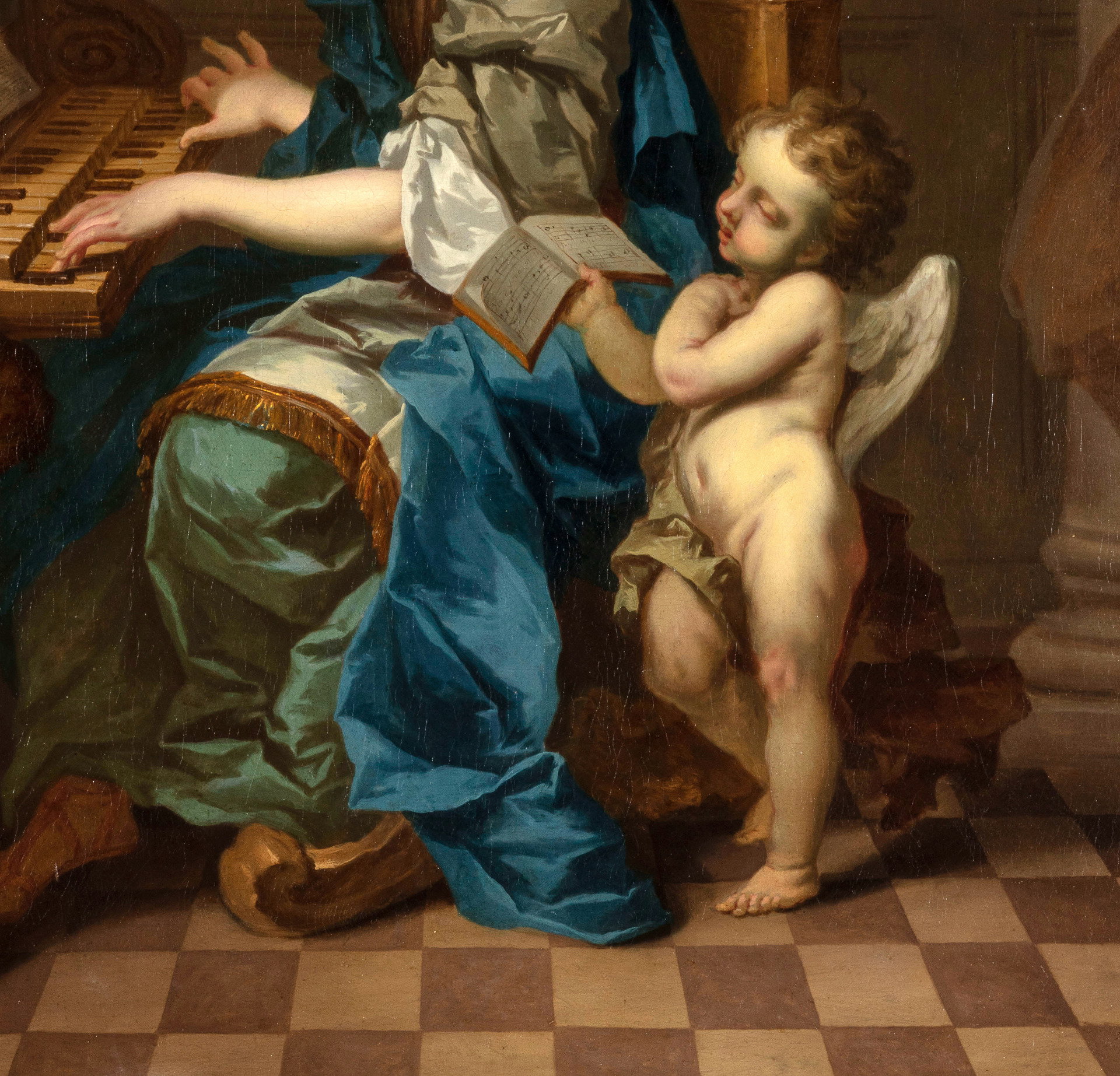
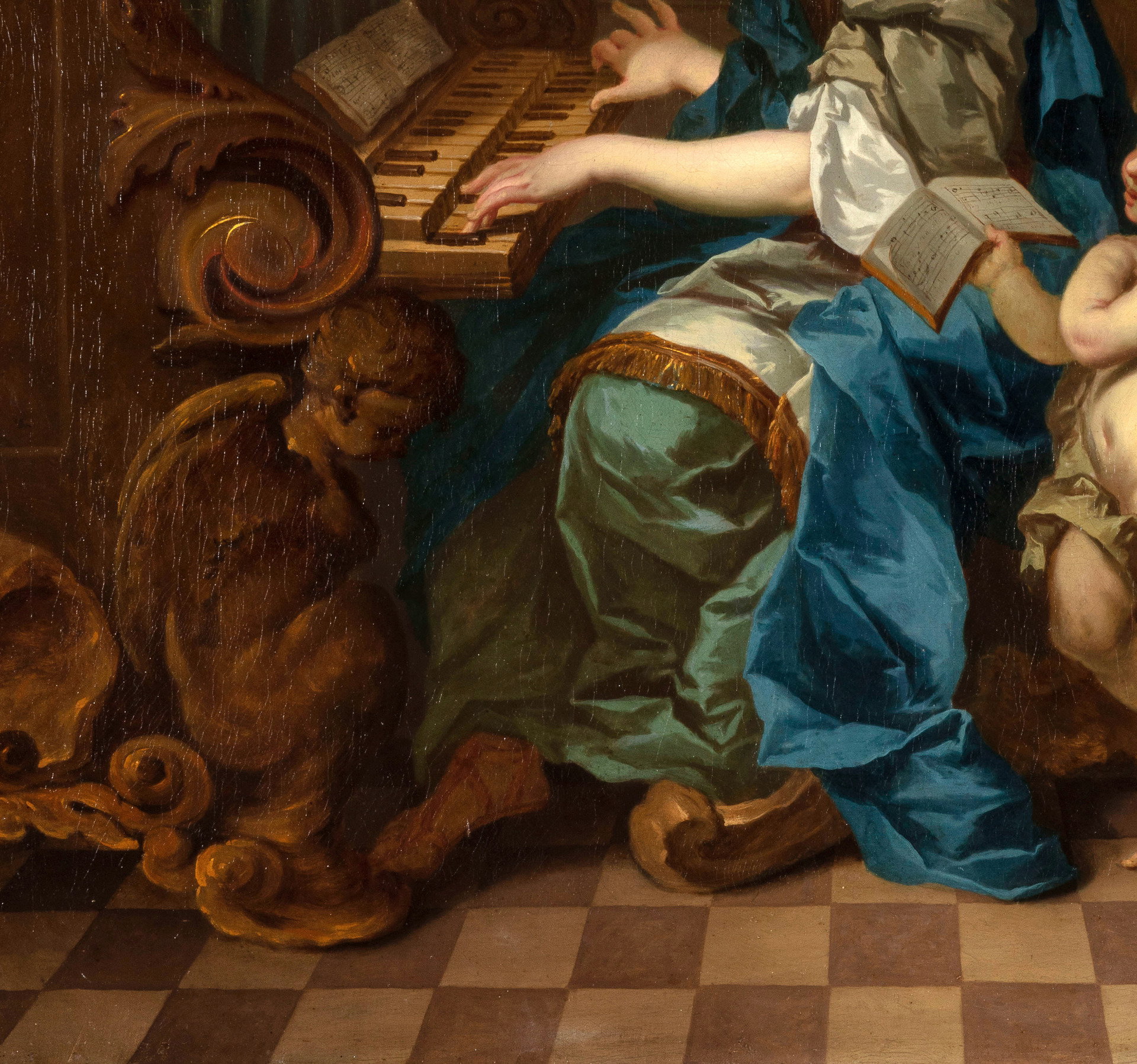
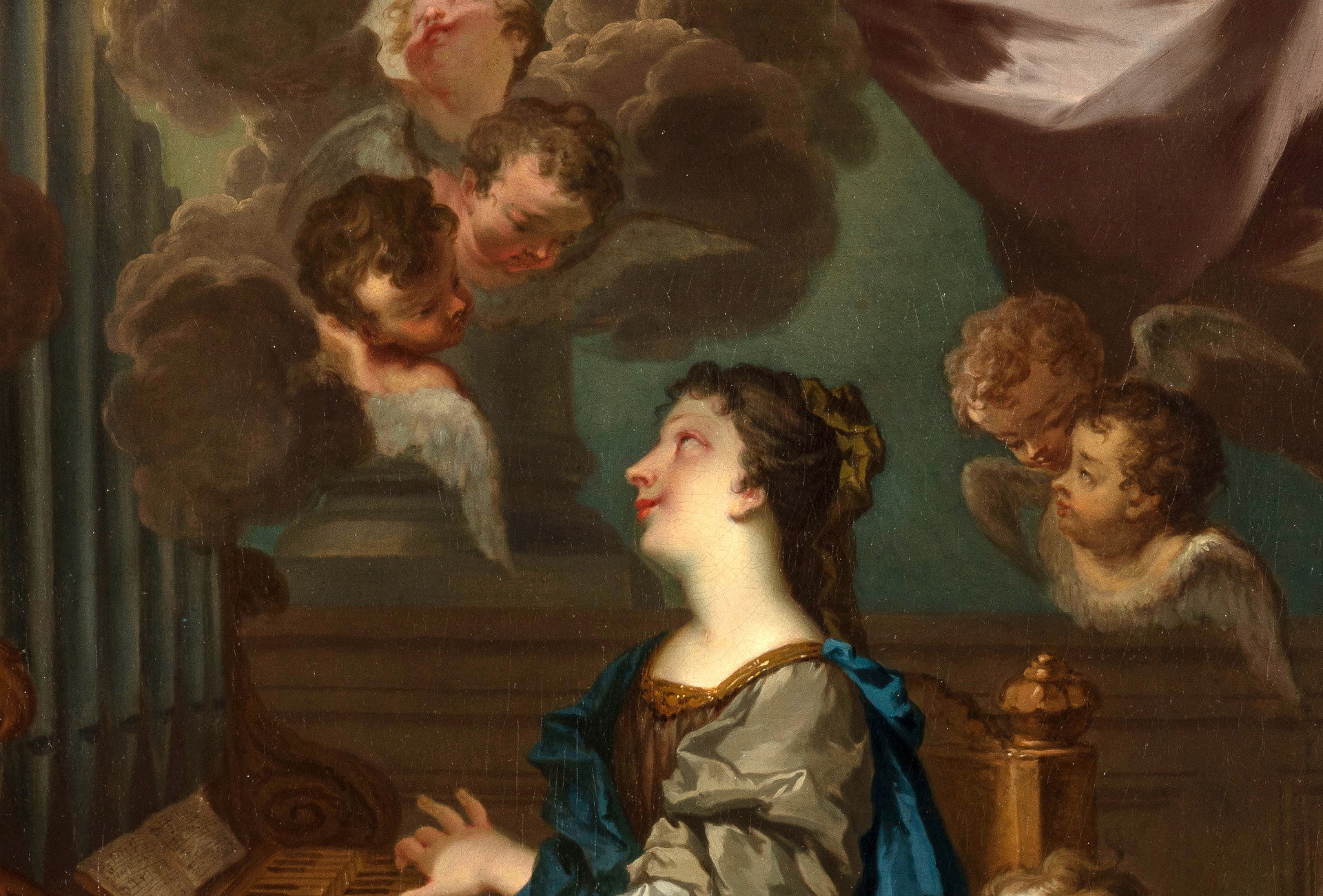
The exquisite painting, in excellent condition, depicts Saint Cecilia playing the organ, surrounded by putti and cherubi. The saint, with a vacant gaze directed towards a mystical and divine light emanating from behind the organ pipes and soft clouds, is dressed in refined and precious silk garments. Beside her, a putto offers her a musical score. The structure of the organ and the chair, made of carved wood, reflect the stylistic dictates prevalent in Rome during the Baroque era. The checkered floor, perspectively distorted, draws the viewer's gaze towards the center of the canvas, where the saint's face is depicted. In the background, two imposing marble columns and rich drapery frame the scene and act as a backdrop, enhancing the solemnity of the composition.
The author of the canvas is to be sought among a painter active in Rome in the 17th century with skilled technical and compositional abilities. The composition, predominantly in shades of brown, blue-green, and red, is harmonious and well-balanced. The natural rendering of the silk fabrics, as well as the flesh tones, demonstrates high pictorial skill.
Iconographically, Saint Cecilia is often depicted playing an instrument, and her image is frequently an allegory of Music itself, included in the quadrivium of liberal arts.
Cecilia was a Roman noblewoman, hence the sumptuous and rich clothing, who lived between the 2nd and 3rd centuries AD. She was married to Valerian, also from a noble Roman family. On their wedding night, Cecilia revealed her conversion to Christianity and her decision to take a vow of chastity to her husband. The husband accepted his wife's wish, converted to Christianity himself, and had his brother Tiburtius converted as well.
Thus, all three began an effort to spread the new religion, and Cecilia, an excellent orator, soon managed to convert many Romans, protected and aided by the two soldier brothers. Because of their charitable activities, their fame grew so rapidly that they were condemned to martyrdom by the Roman prefect Turcius Almachius. Saint Cecilia is known as the patron saint of music. Her association with this art was generated by a misinterpretation of the texts of the antiphons used in Masses during the celebrations for the saint.
The original text reads: "Candentibus organis, Caecilia virgo in corde suo soli Domino decantabat...", which means "Amidst the glowing organs (instruments of martyrdom), the virgin Cecilia sang praises to God in her heart...". The misinterpretation is in the first phrase, transcribed as: "Cantantibus organis..", meaning "Amidst the playing organs (musical instruments)", thus, listening to celestial music, she sang praises to God in her heart.
Therefore, starting from the 15th century, Cecilia's iconographic fortune began, and she was attributed musical abilities. Thus, a portative organ was assigned to the saint as a symbol of her excellent musical talents, and from then on, she was invoked by singers and composers as their protector.
Art historical studies are currently underway.


.jpg)
.jpg)
.jpg)
.jpg)
.jpg)