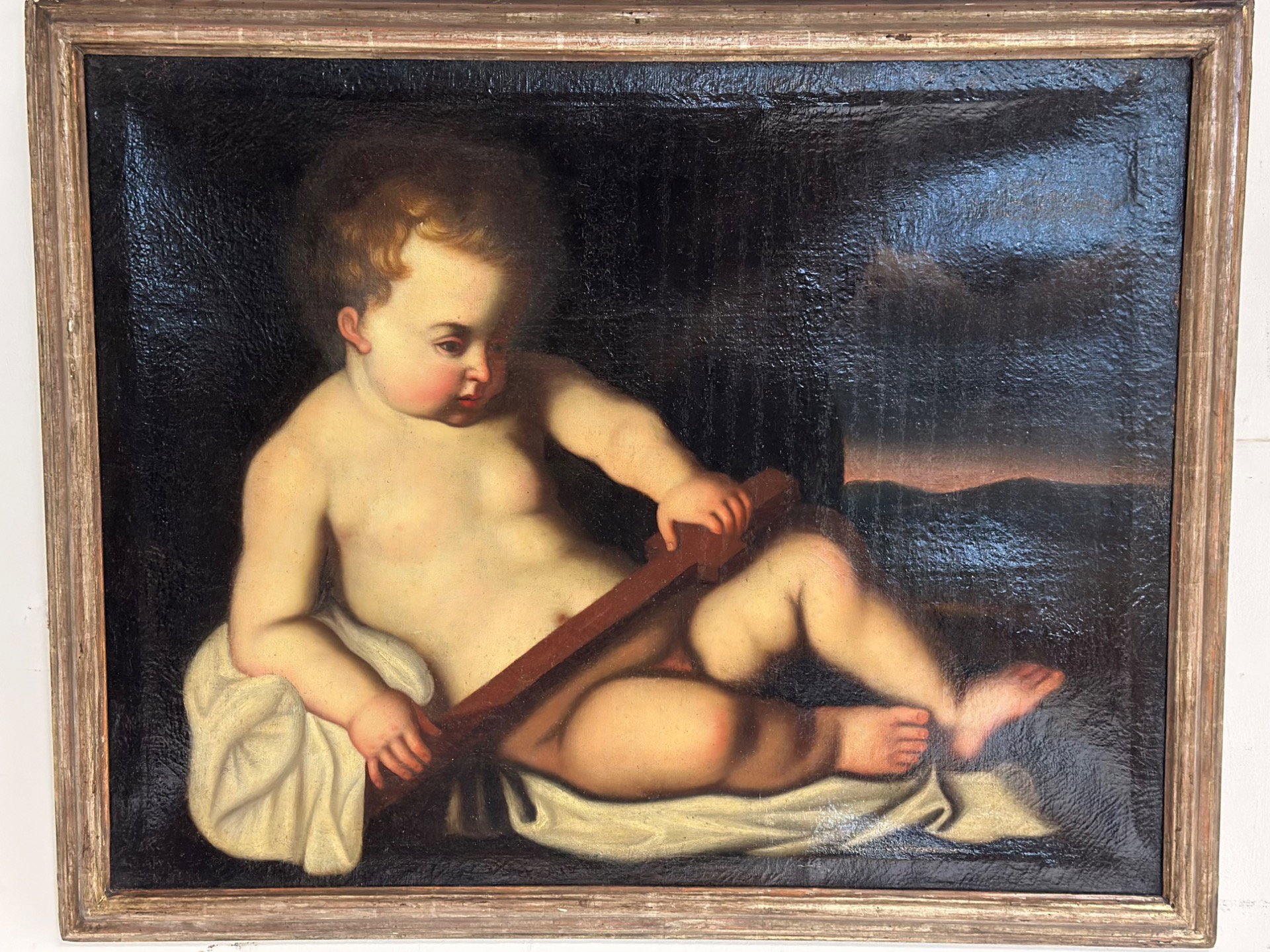
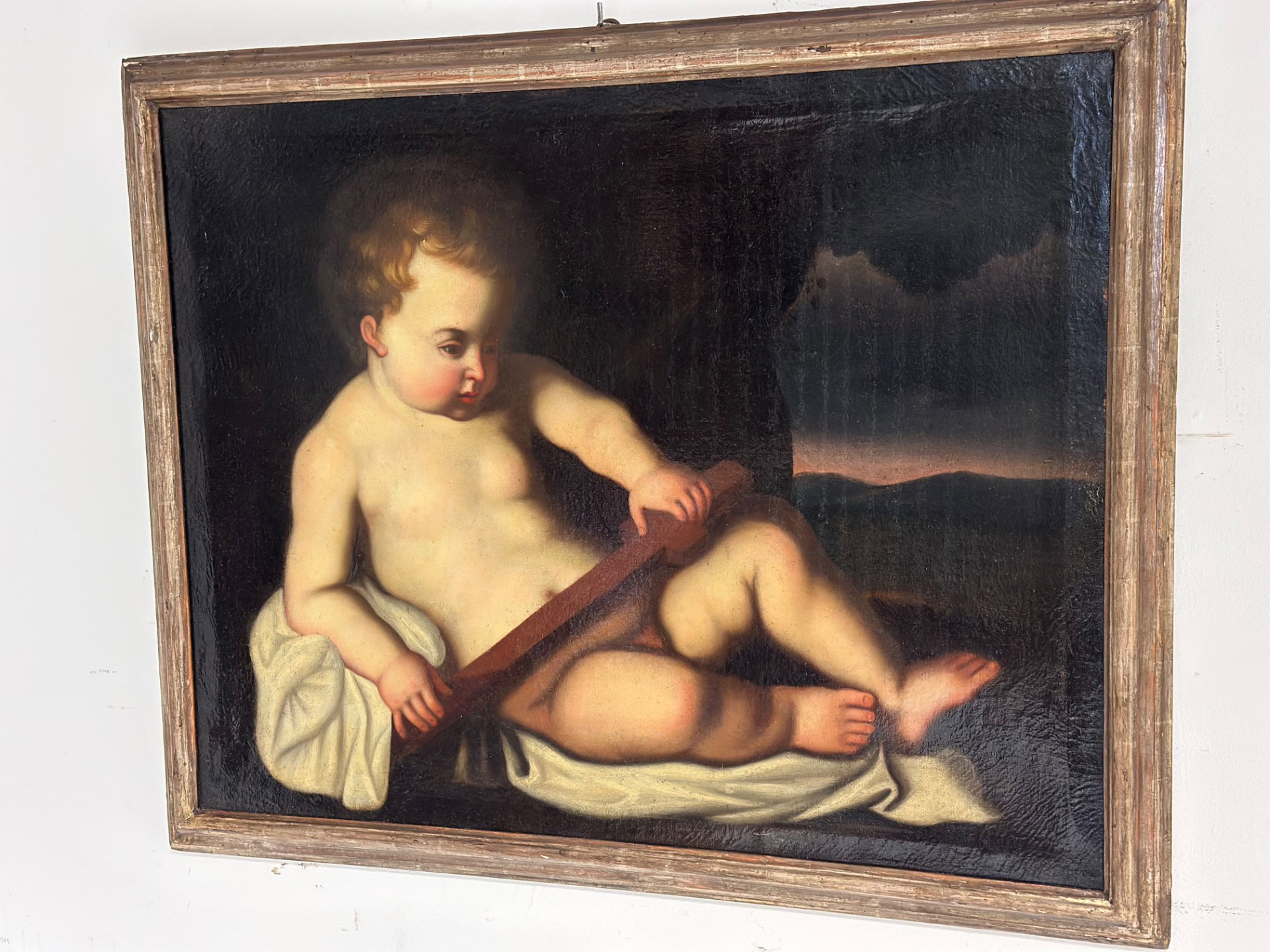
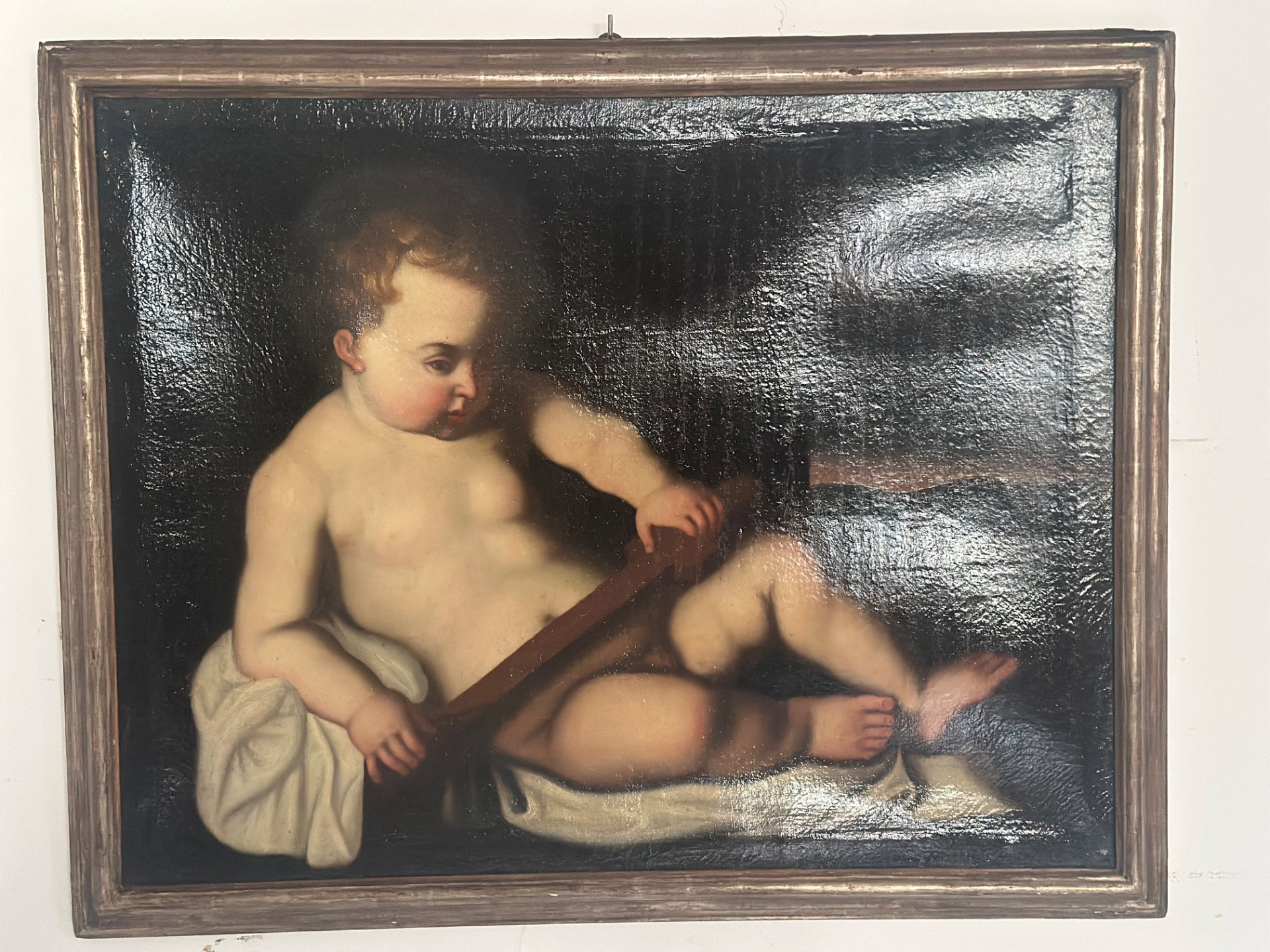
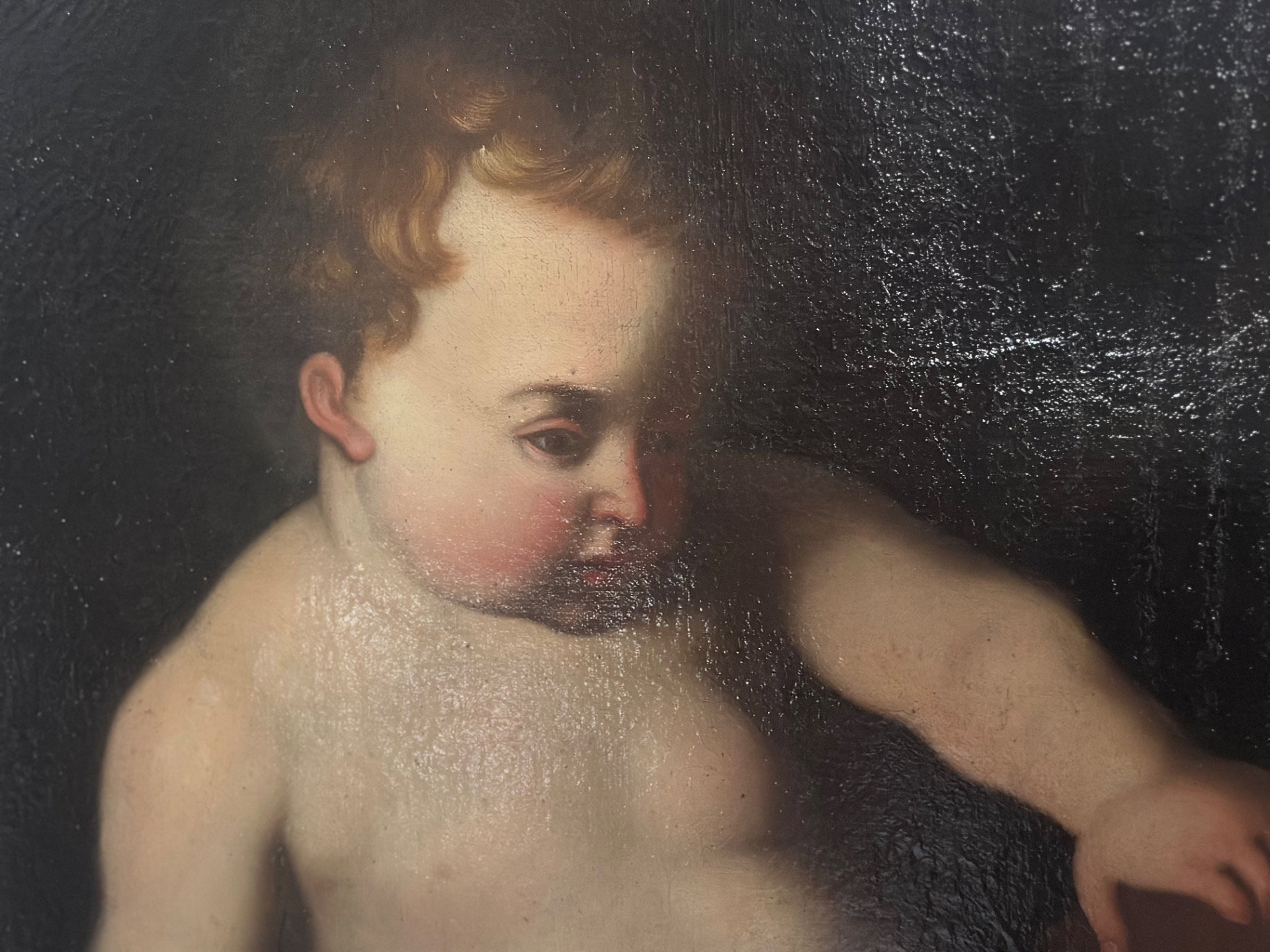
Subject: Infant Jesus with cross
Period: 17th century
Author: Guido Reni (workshop)
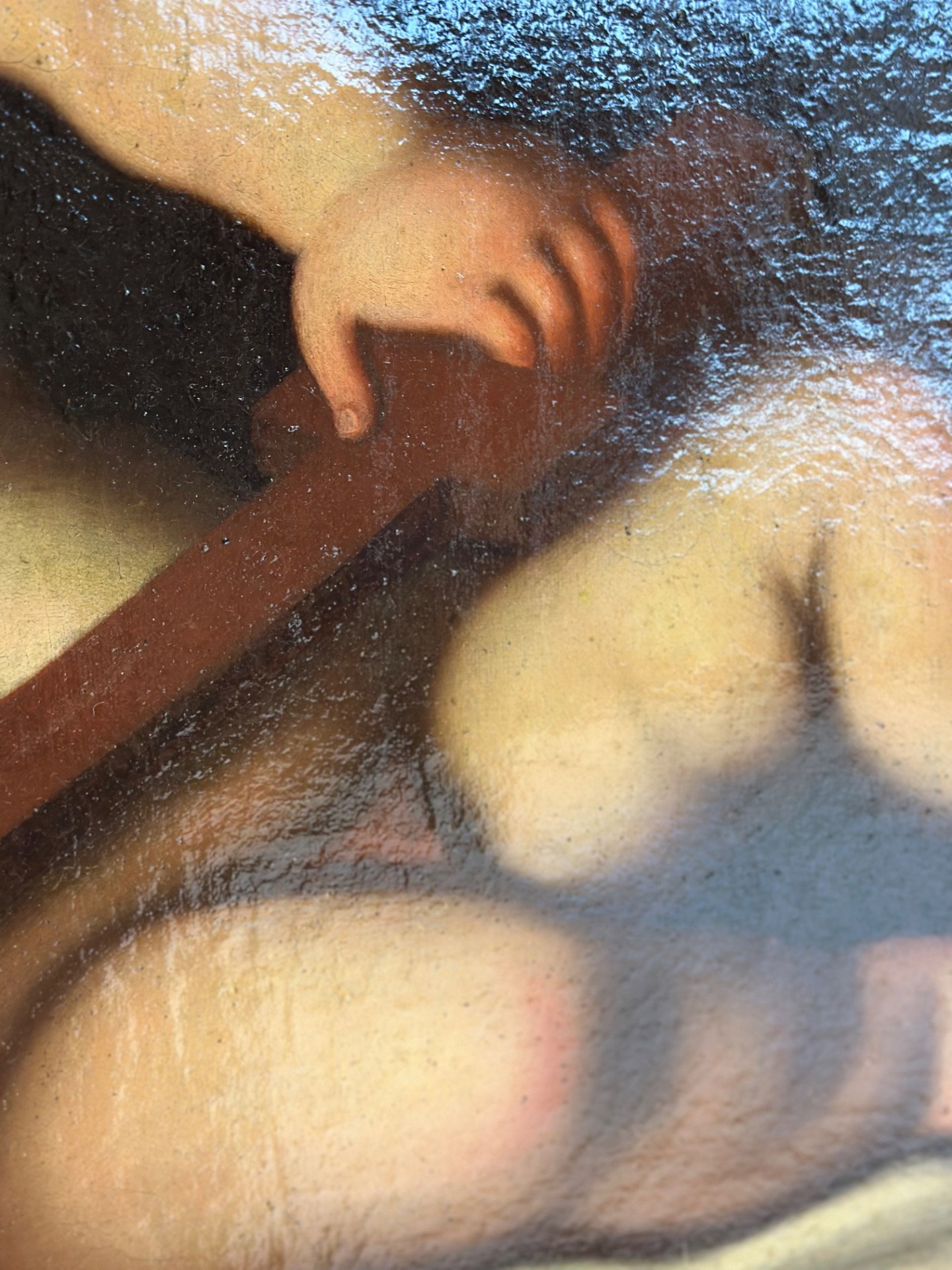
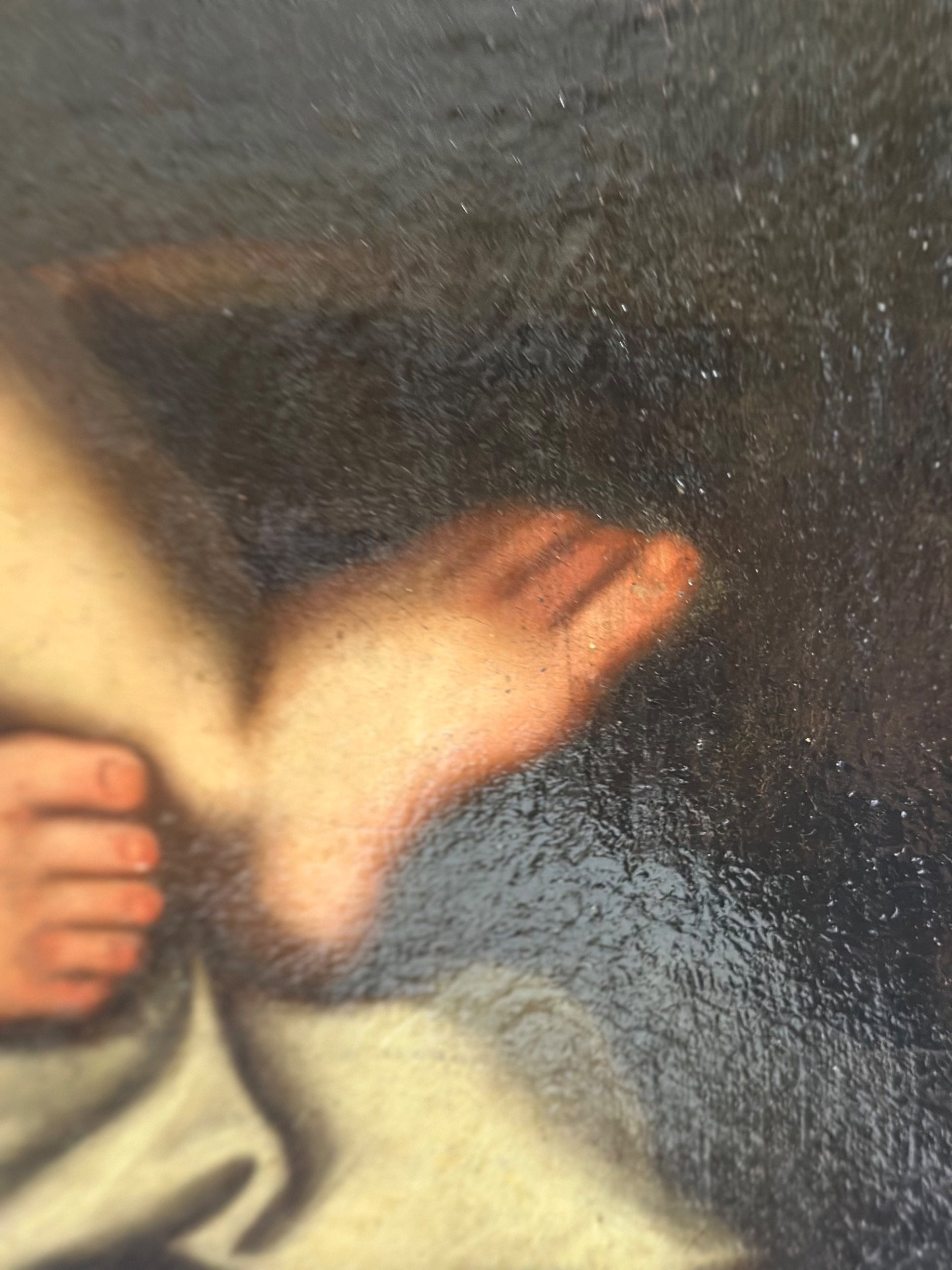
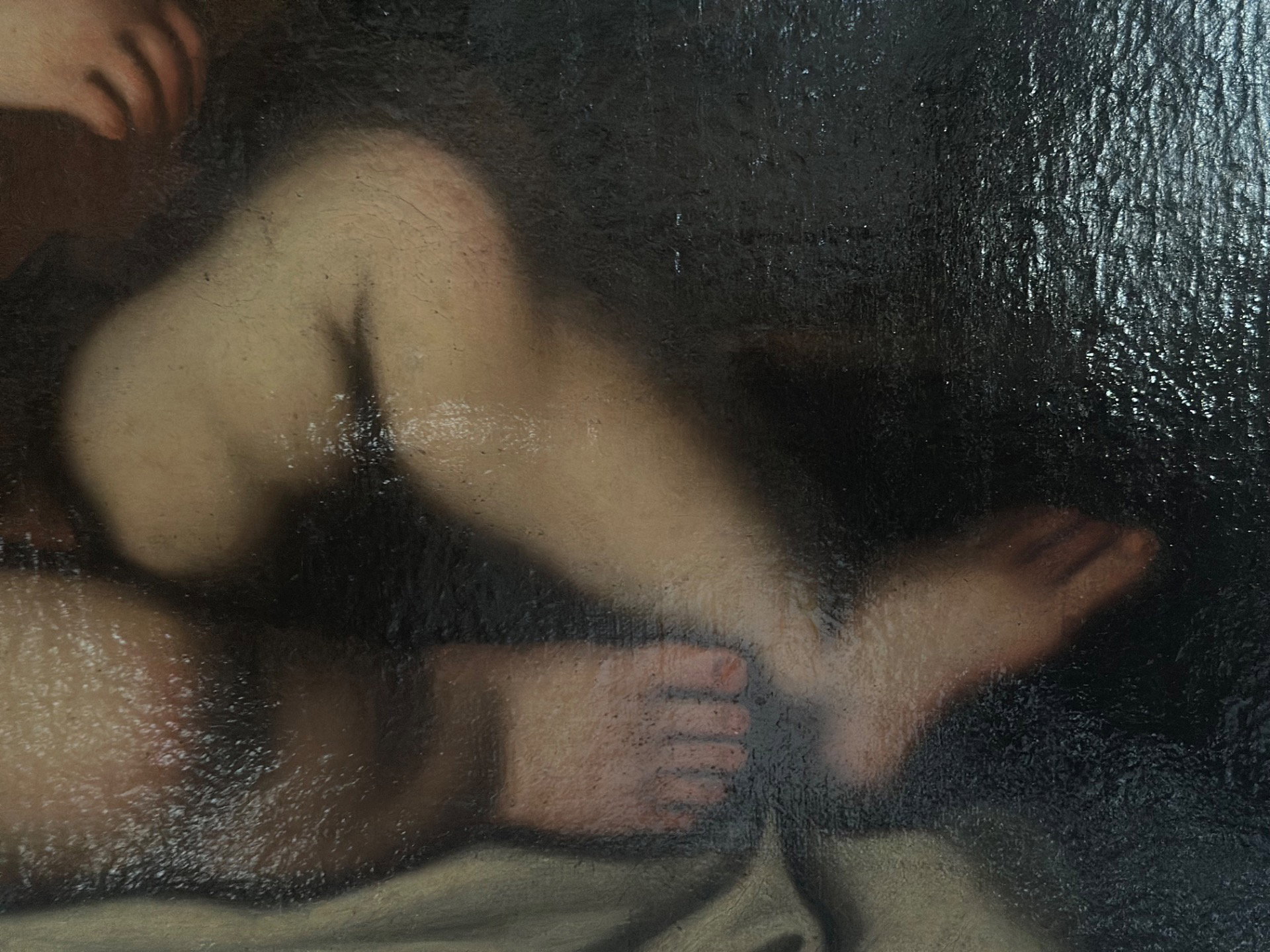
The artwork we present is an original reprise and elaboration of the Renian prototype of the "Infant Jesus sleeping on the cross."
The aforementioned model enjoyed particular success, especially due to the growing demand for the iconographic subject represented by collectors in Bologna and Rome.
The reasons for this success are rooted, first of all, in Reni's intuition to merge the classical and pagan theme of the sleeping Cupid with the Christian theme of the Passion of Christ into a single iconographic subject, symbolically prefigured through an explicit reference to the Old Testament biblical text of the Song of Songs (V, 2), an intuition qualified by Strinati as a true "invention" of Reni.
This harmonious fusion will be the fulcrum of another pictorial representation, famous in Reni's various versions: the martyrdom of Saint Sebastian, a new Apollo depicted in the guise of the Christian martyr, detached from the torments of the flesh, all intent on awakening sensual voluptuousness (Guido Reni, The torment and the ecstasy, The Saint Sebastians compared, edited by P. Boccardo and X. Salomon, 2007).
Caravaggesque precedents are evident (Caravaggio, "Sleeping Cupid", Florence, Palatine Gallery), visibly traceable already in a painting present in the Corsini collection in Rome and ascribed to Reni by Boehn (M. von Boehn, Guido Reni, Leipzig 1910, 1925 reprint).
Reni, to whom Malvasia repeatedly attributes "Sleeping Cupids," has been linked to a "Sleeping Putto" in a private collection in Milan (Riccoboni, "Emporium", 1961), without a cross, as well as an analogous subject in the Durazzo Pallavicini collection in Genoa (Torriti, 1967).
In particular, the sleeping putto mentioned by Riccoboni constitutes a reprise of a work by Reni (oil on copper) kept at the Princeton Art Museum and depicting the Infant Jesus sleeping on the cross.
In the eighteenth century, the work figured in the Orleans collection and then passed, in the last century, to the English collection of the Duke of Bridgewater and then to the Ellesmere, where it remained until 1946. Incisions by Le Villain exist of this painting, attesting to Reni's authorship.
In addition to this specimen, the versions of Auckland (Art Gallery), Dijon (Musée Magnin) already Vienna (Liechtenstein collection) deserve to be mentioned.
On the peculiar manner of depicting the Child as a chubby putto, if Malvasia establishes a derivation from Ludovico [i.e. Carracci] ("so that the superabundant fatness of the flesh covered even the most prominent muscle", elsewhere Reni attributed this ability to the example of Bagnacavallo ("he praised Bagnacavallo for the putti and boasted of having learned from him how to make them so buttery and plump").
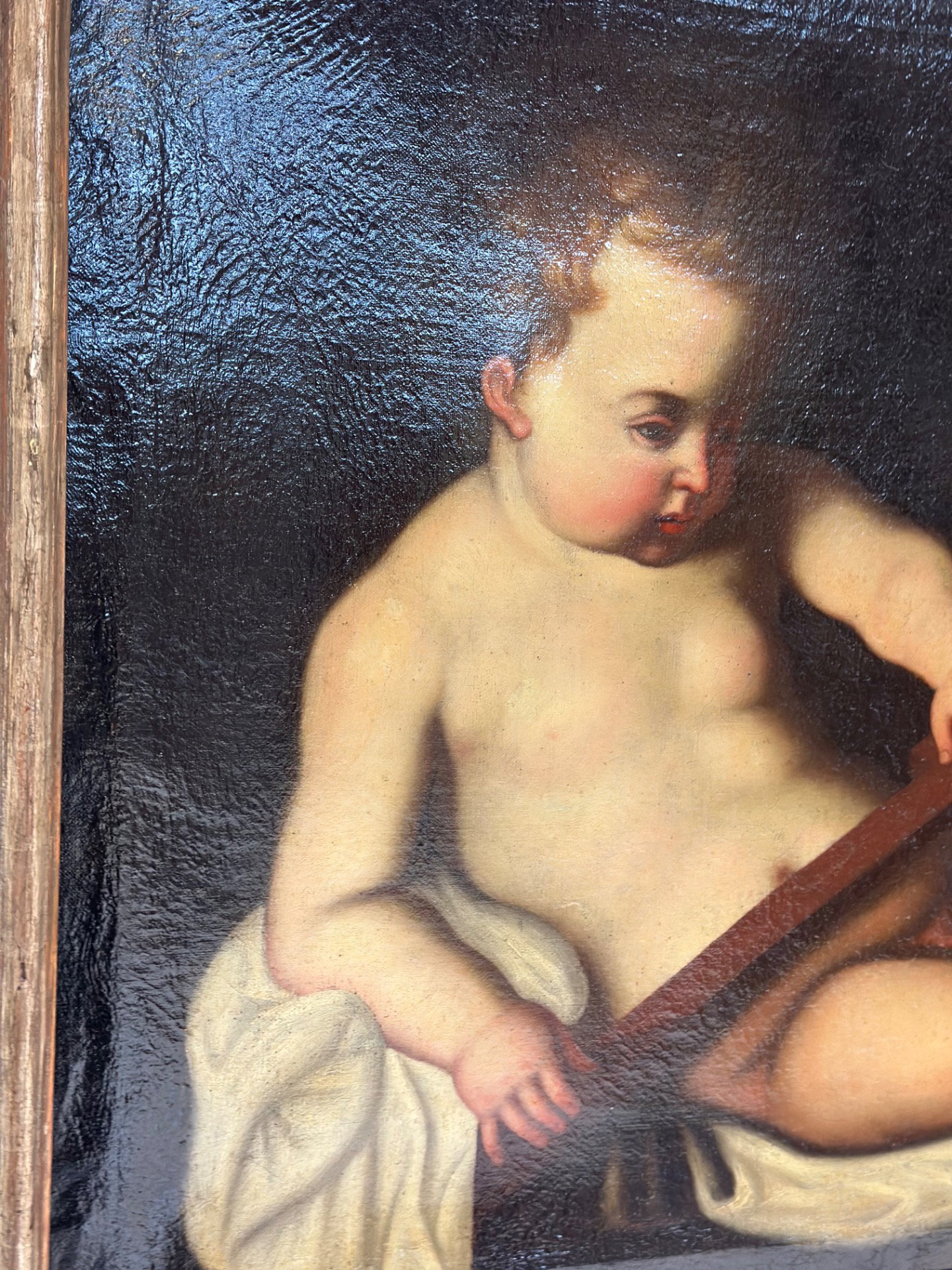
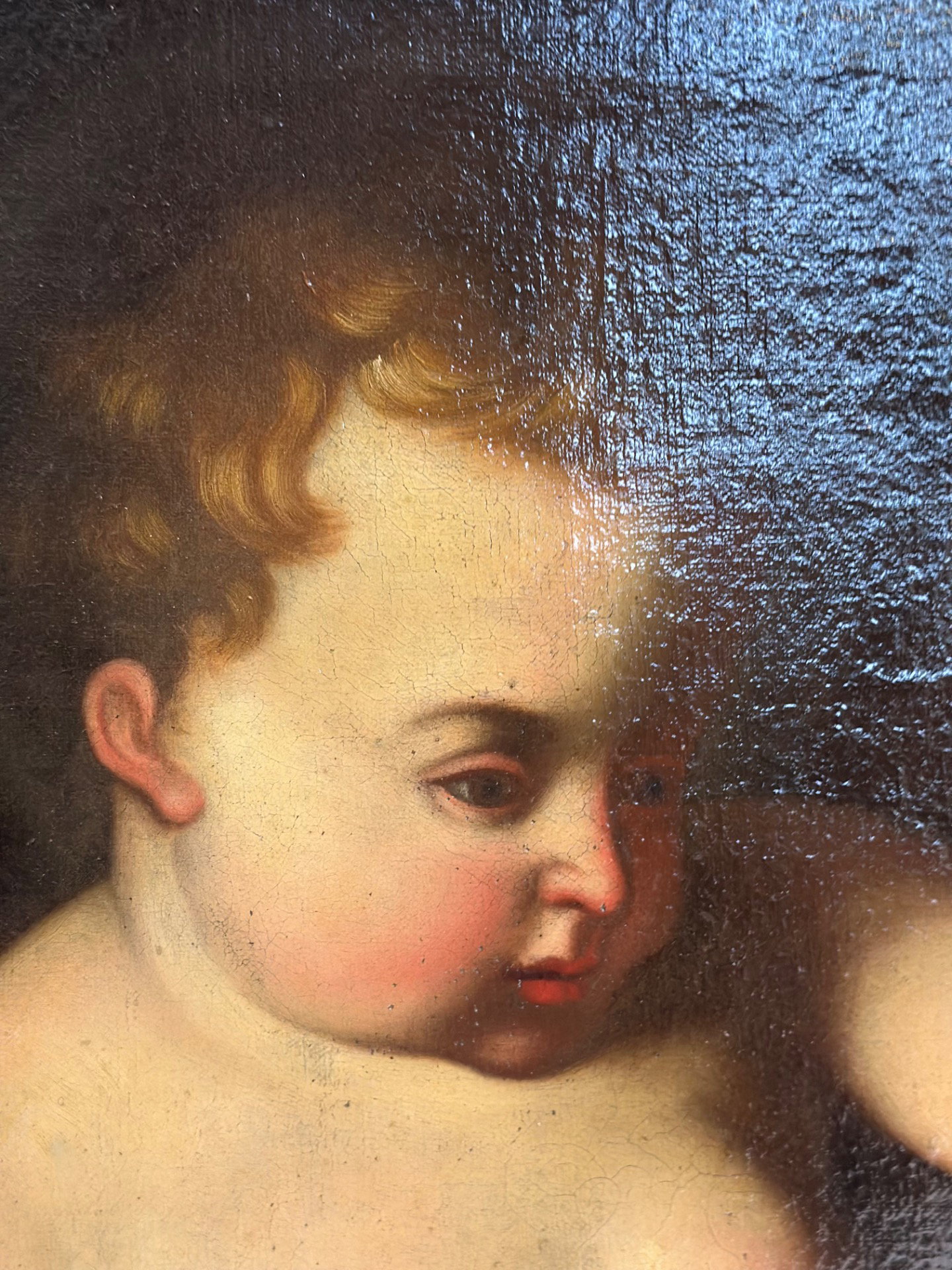
The painting shows a “buttery” sleeping Child, just like the tender and graceful Bolognese angels of Santa Maria dei Servi, dating back to the second decade of the seventeenth century, "a transcendent and melancholic evolution of the motif of the Infant Jesus lying down and mostly asleep that had repeatedly and frequently occupied the painter since the beginning of the century, both as a reference to the Virgin and as an isolated figure" (Andrea Emiliani).
Stephen Pepper, in his monograph on Reni (English edition of 1984, Italian edition of 1988) places the Renian beginnings of this iconographic prototype, due to direct formal analogies, contemporary with the masterpiece of the Aurora (1614).
As for the aforementioned Caravaggesque lesson (see also the "Martyrdom of Saint Peter", finished in 1605 and now at the Vatican Pinacoteca), it also bears direct traces in our painting, particularly in the chiaroscuro functional to highlighting the complexion of the Child, however with signs of an incipient abandonment of Caravaggio's dramatic nature in favor of an outline of classicism intended to celebrate only the grace of the Child, thus confining the reflection on passion and death to an entirely ideal sphere.
Dimensions: L 90 x 70