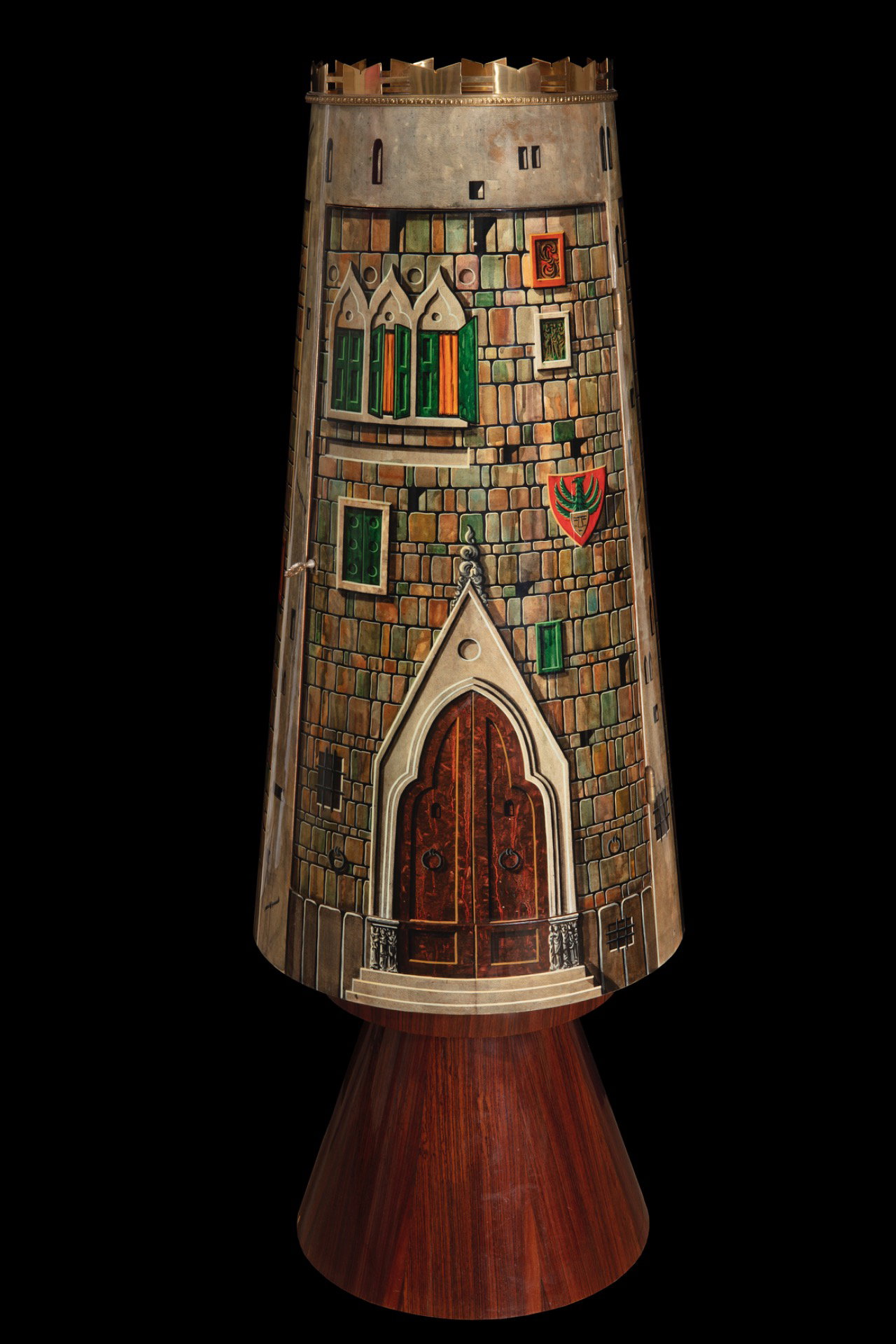
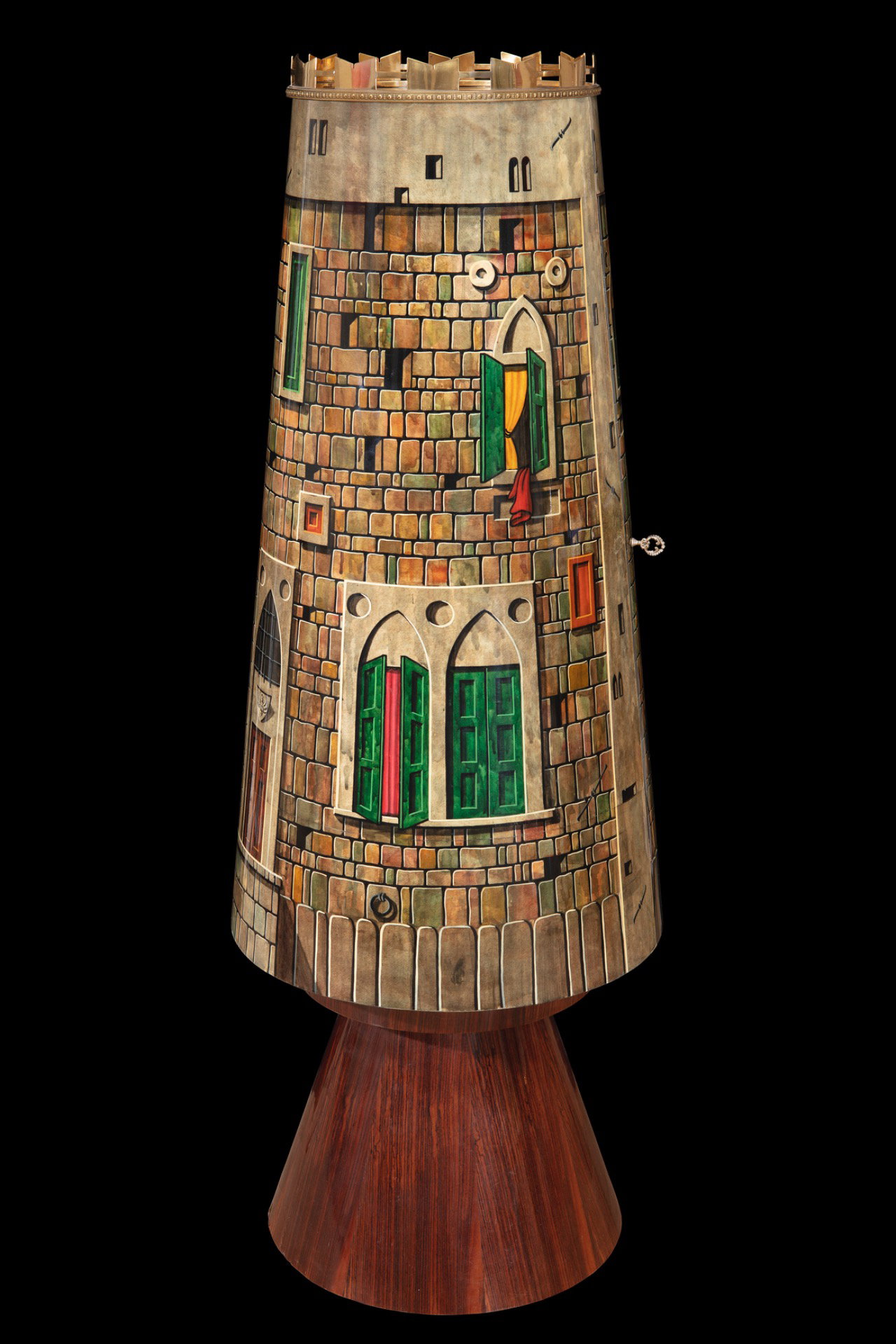
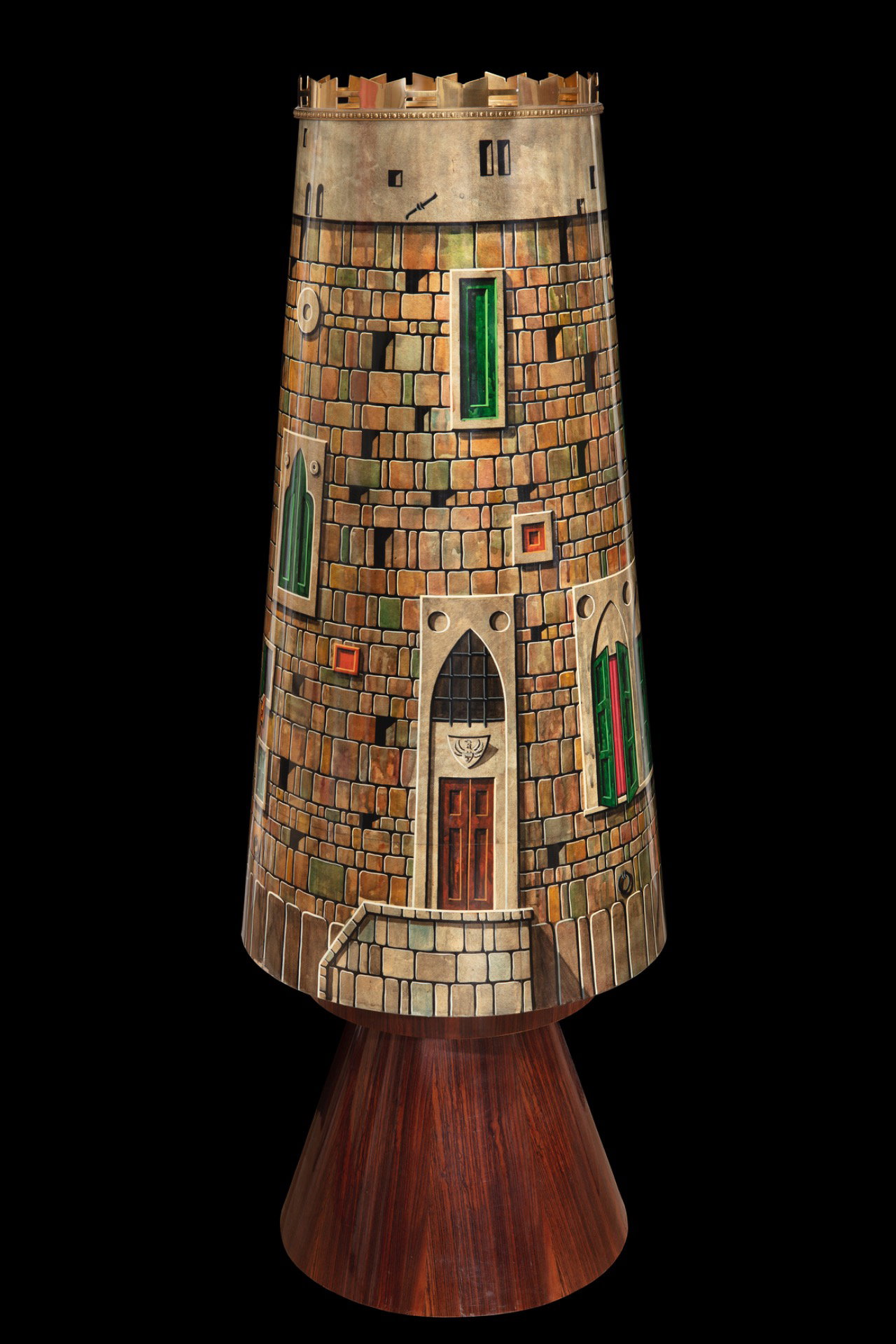
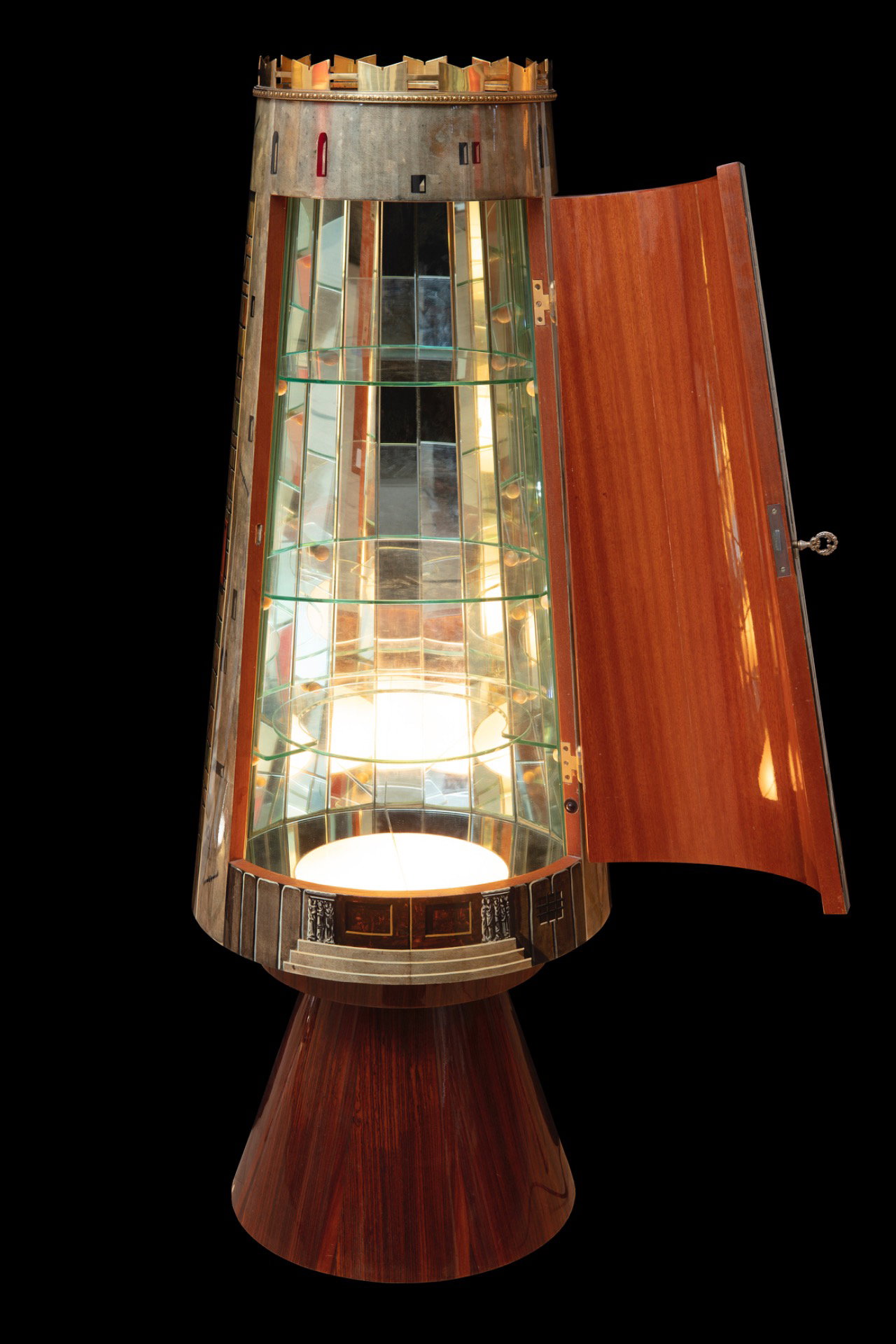
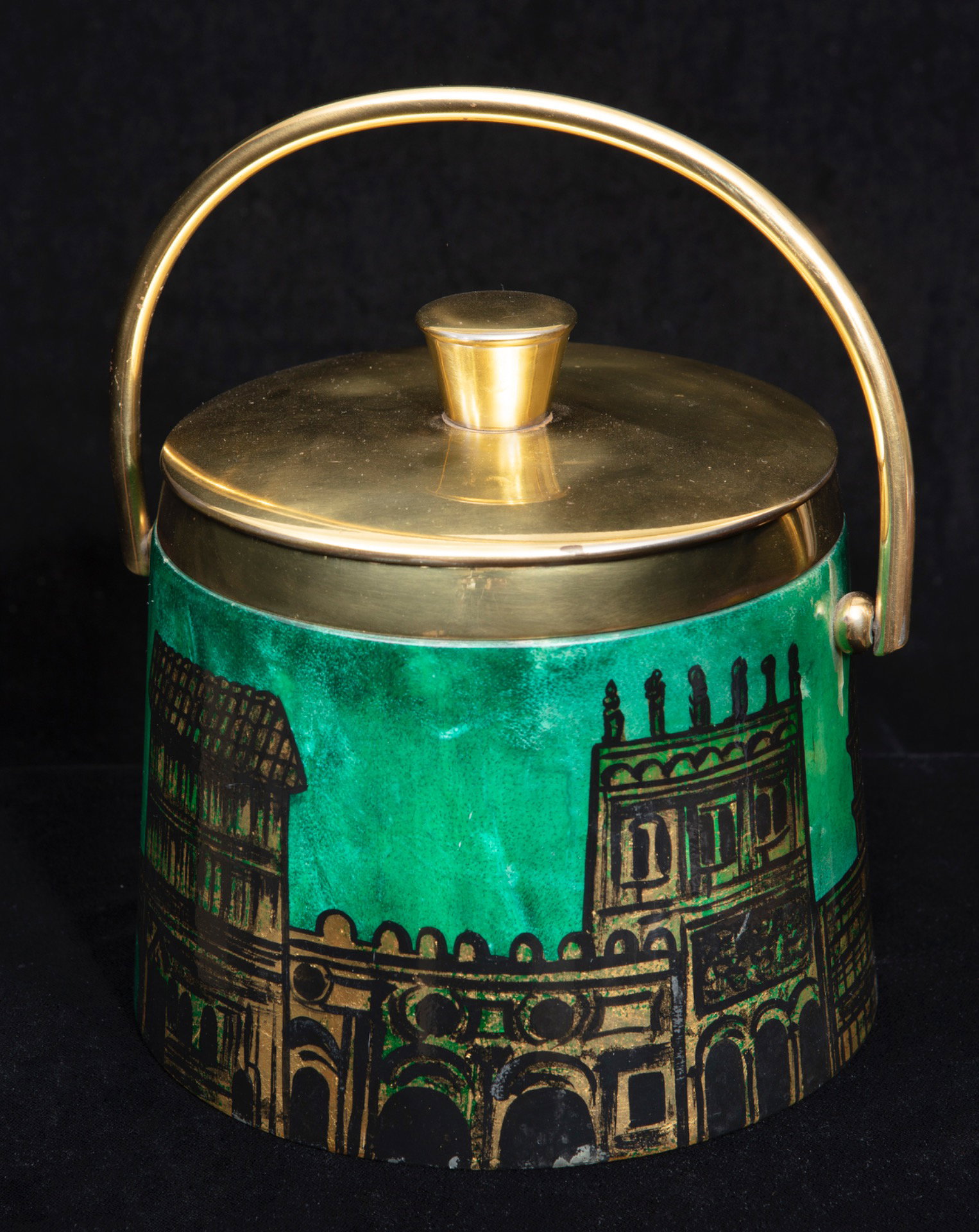
Aldo Tura (Milan 1909-1963), Bar cabinet and ice bucket, 1950s. Wood, brass, and parchment. Dimensions: H. 135 cm. The cabinet, with its peculiar conical shape, is decorated with the image of a Venetian Gothic palace in brown tones with bright green shutters; the top is crowned with a crenellated brass ornament reminiscent of medieval castles. With an eclectic and innovative design, the interior features three glass shelves and a mechanism that illuminates a lamp whenever the cabinet is opened.
The ice bucket, also made of wood and parchment, depicts the skyline of the lagoon city. BIOGRAPHY Born in Milan in 1909, he studied at the Brera Academy, where he became passionate about design. Tura began his career by handcrafting tables, cabinets, and lamps starting in the 1930s; in 1939, he founded his furniture workshop in Lombardy, near Milan. His mix of Art Deco and Art Nouveau styles with modern minimalist design transcended the boundaries of traditional craftsmanship. After the Art Deco movement, which focused on straight lines and angles, Tura's designs incorporated fluid lines and free forms. The limited edition of Tura's works are of high craftsmanship quality, with some pieces existing only as prototypes. In his designs, he used a wide range of unusual materials such as eggshells, parchment, goatskin, and wood veneers. His objects, often in red, green, and yellow (more rarely in dark blue or purple), were occasionally equipped with wheels or casters and bronze or brass fittings. Bar cabinets of various sizes and functions, from delicate trolleys to large stepped cabinets, formed the core of Tura's workshop. They were equipped with accessories such as ice buckets, decanters, humidors, ashtrays, and cocktail shakers, most of which were covered in lacquered goatskin. When, after the war, many furniture manufacturers focused on mass production, Tura remained true to traditional craftsmanship. The intricate and complex shapes he favored involved labor-intensive processes that did not allow for large-scale industrial production. In the 1950s, Tura also produced hand-painted living room furniture with architectural motifs or Venetian landscapes. In the 1950s and 1960s, Tura achieved international success, participating in exhibitions and fairs worldwide; his works became highly sought after by design enthusiasts. The Brooklyn Museum in New York exhibits some of Tura's works, which were originally part of the traveling exhibition Italy at Work: Her Renaissance in Design Today 1950-53. The Tura company of Lazzate continues to produce furniture inspired by the style of the designer, who died in 1963.