Vincenzo Giacomelli (Grizzo, 1812 – Venice, 1890)
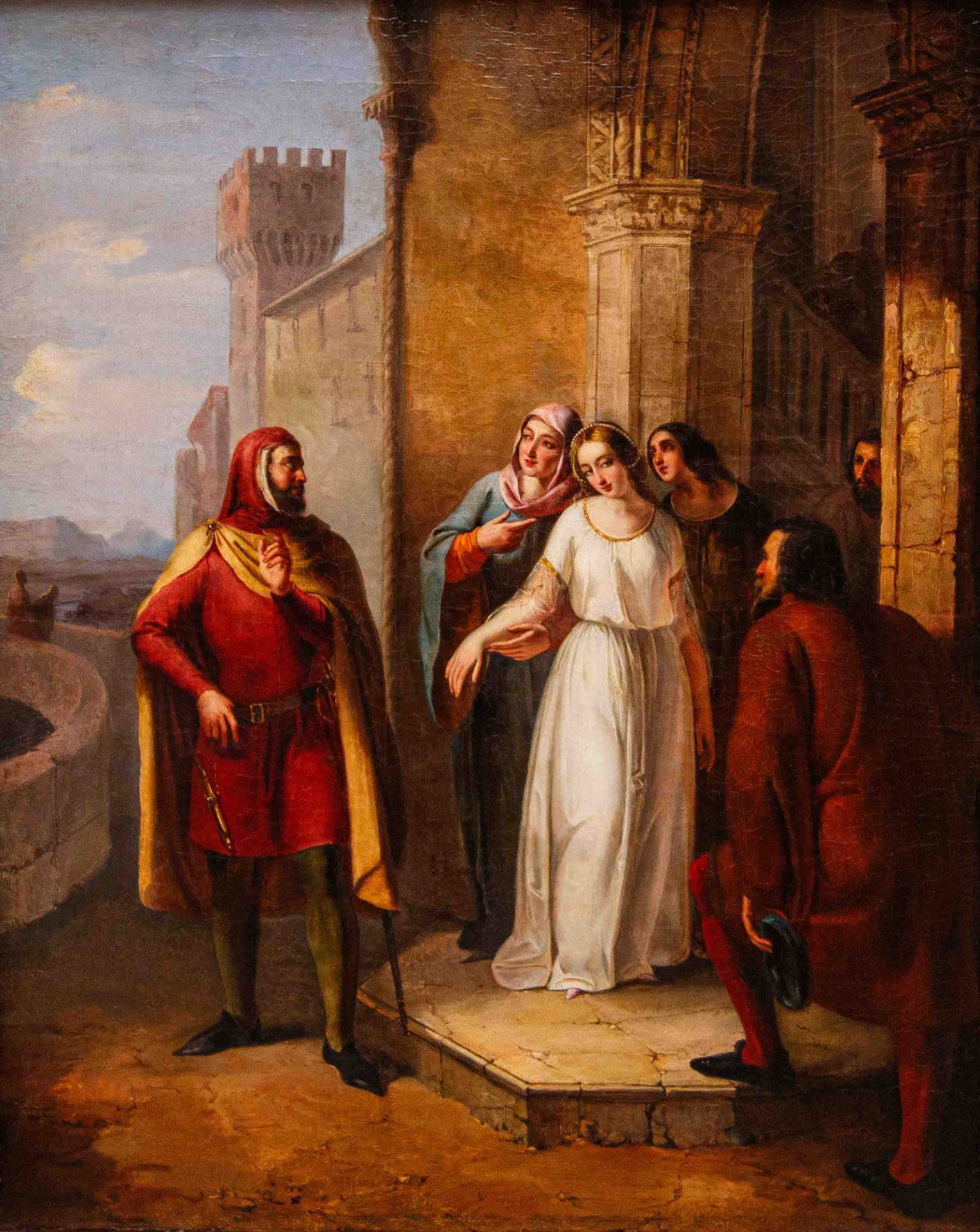
The Meeting of Cangrande II della Scala with Princess Elisabetta of Bavaria (1350)
Oil on canvas, 79 x 60 cm
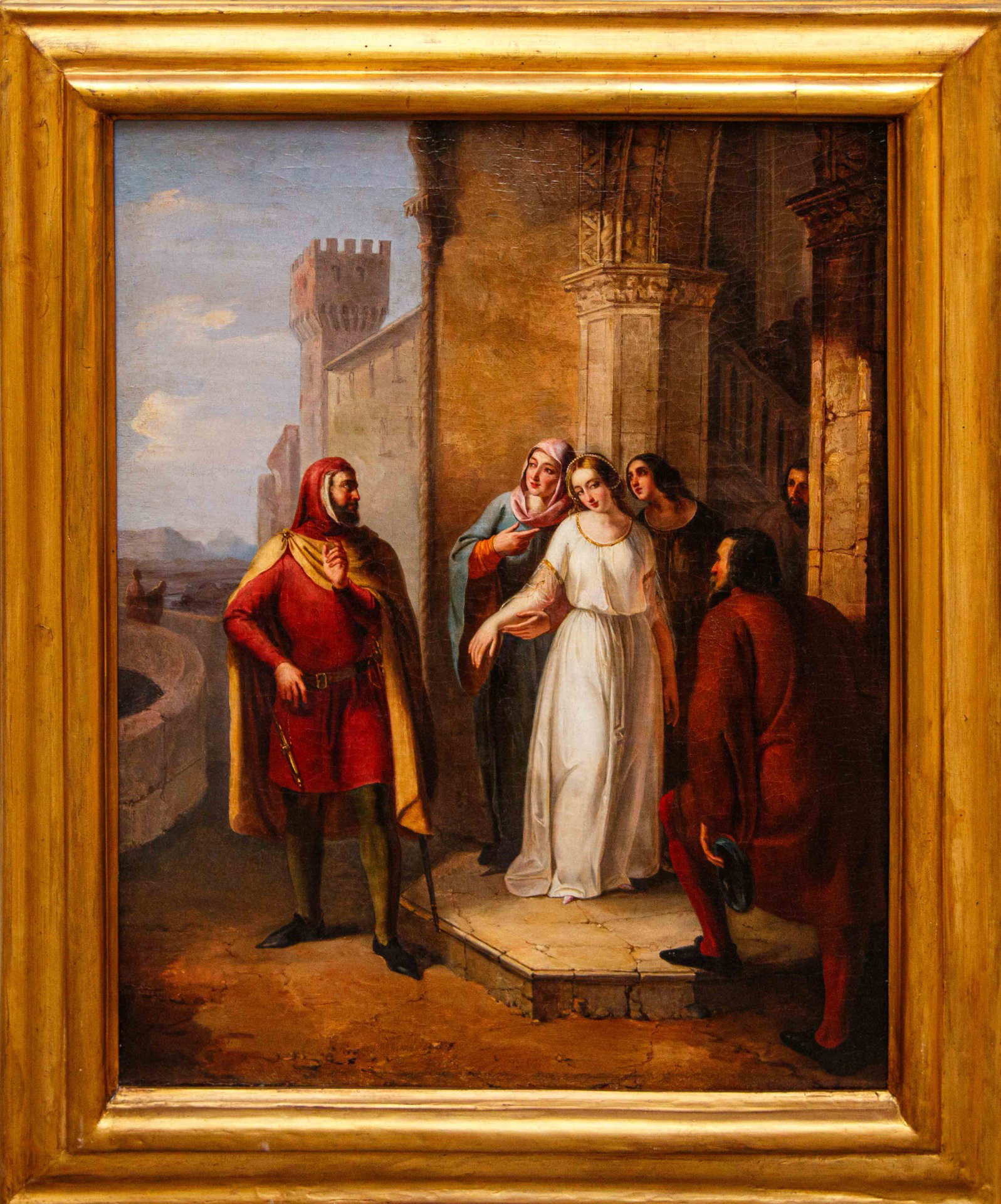
With frame, 95 x 78 cm
Signed lower right and dated 1845
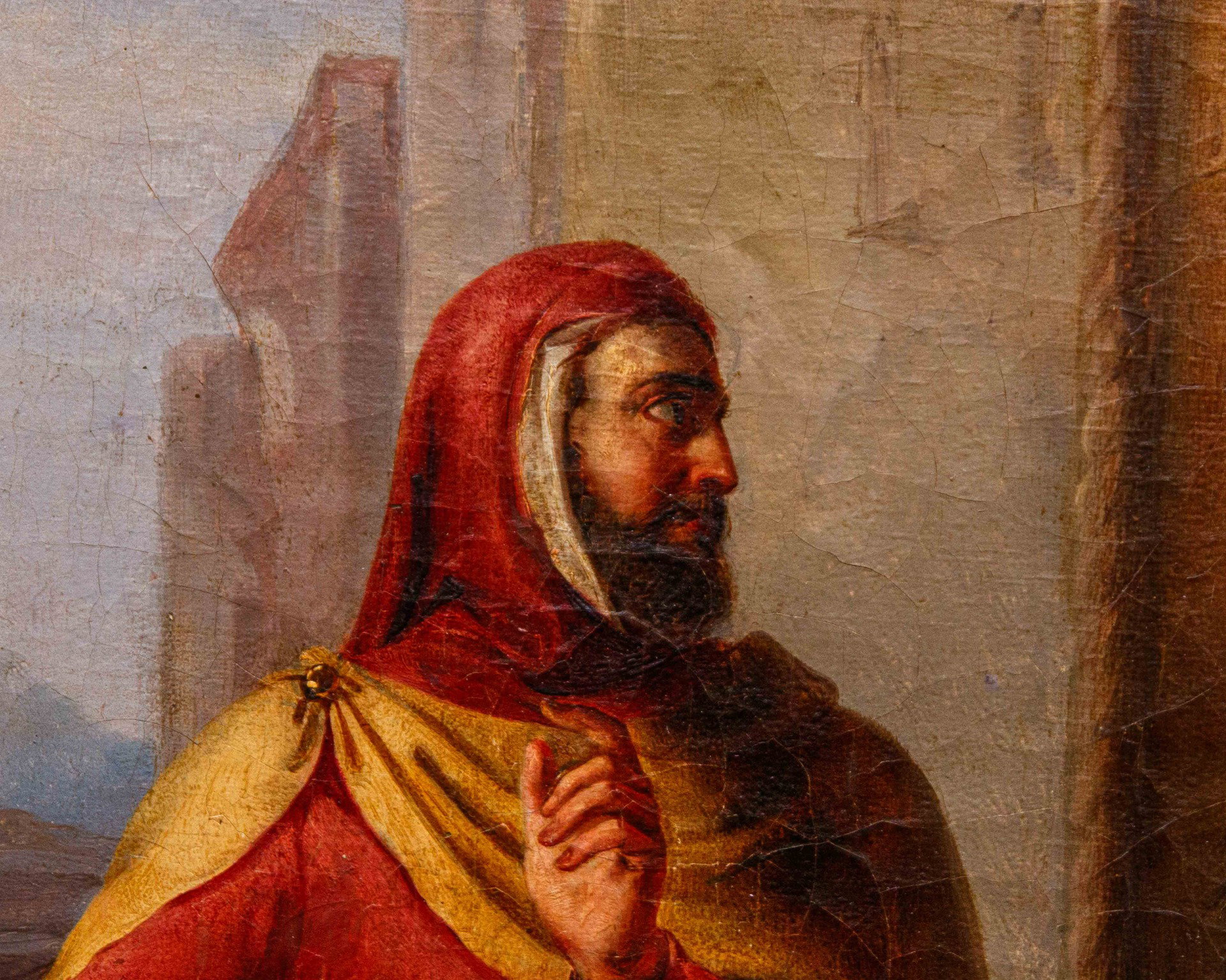
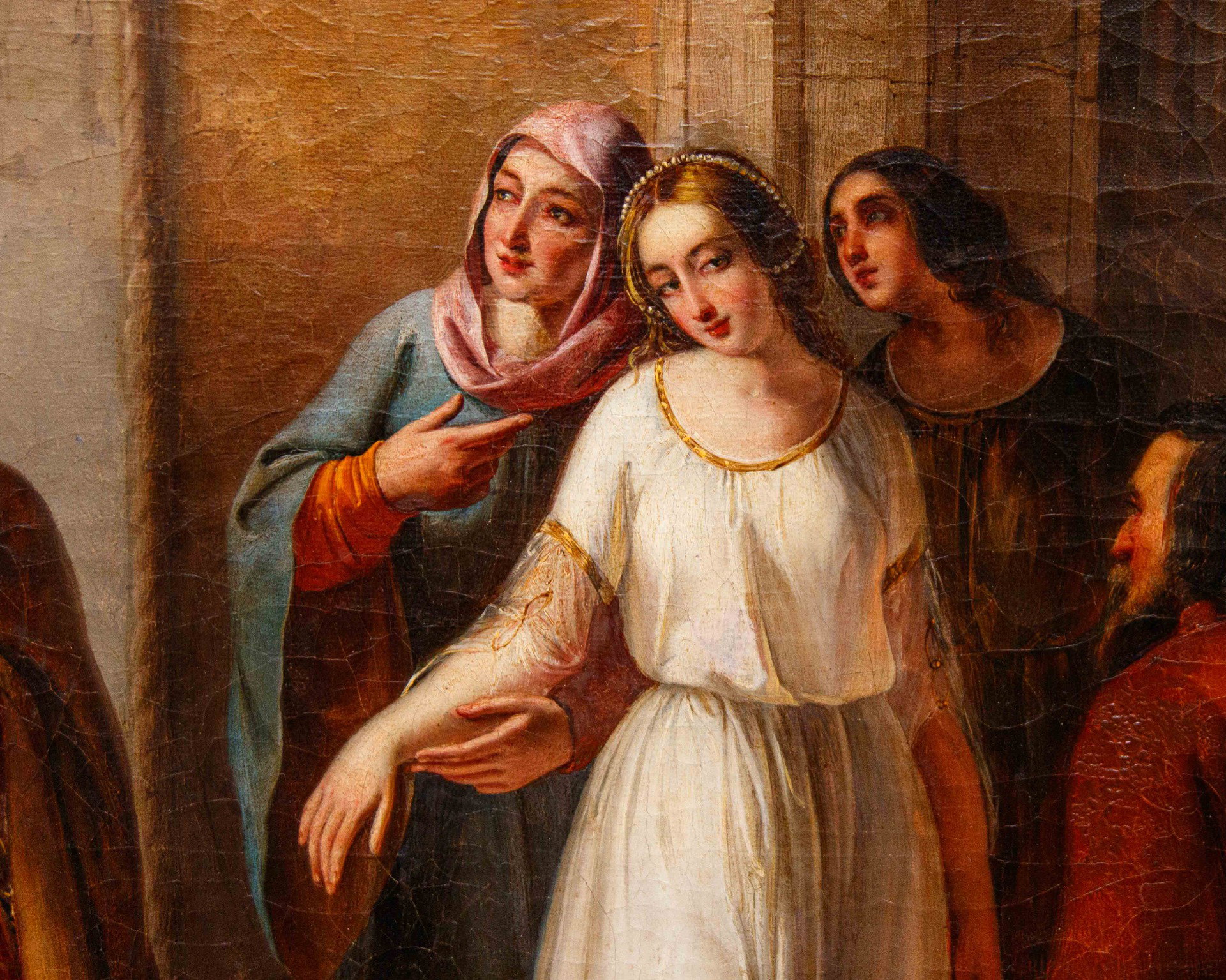
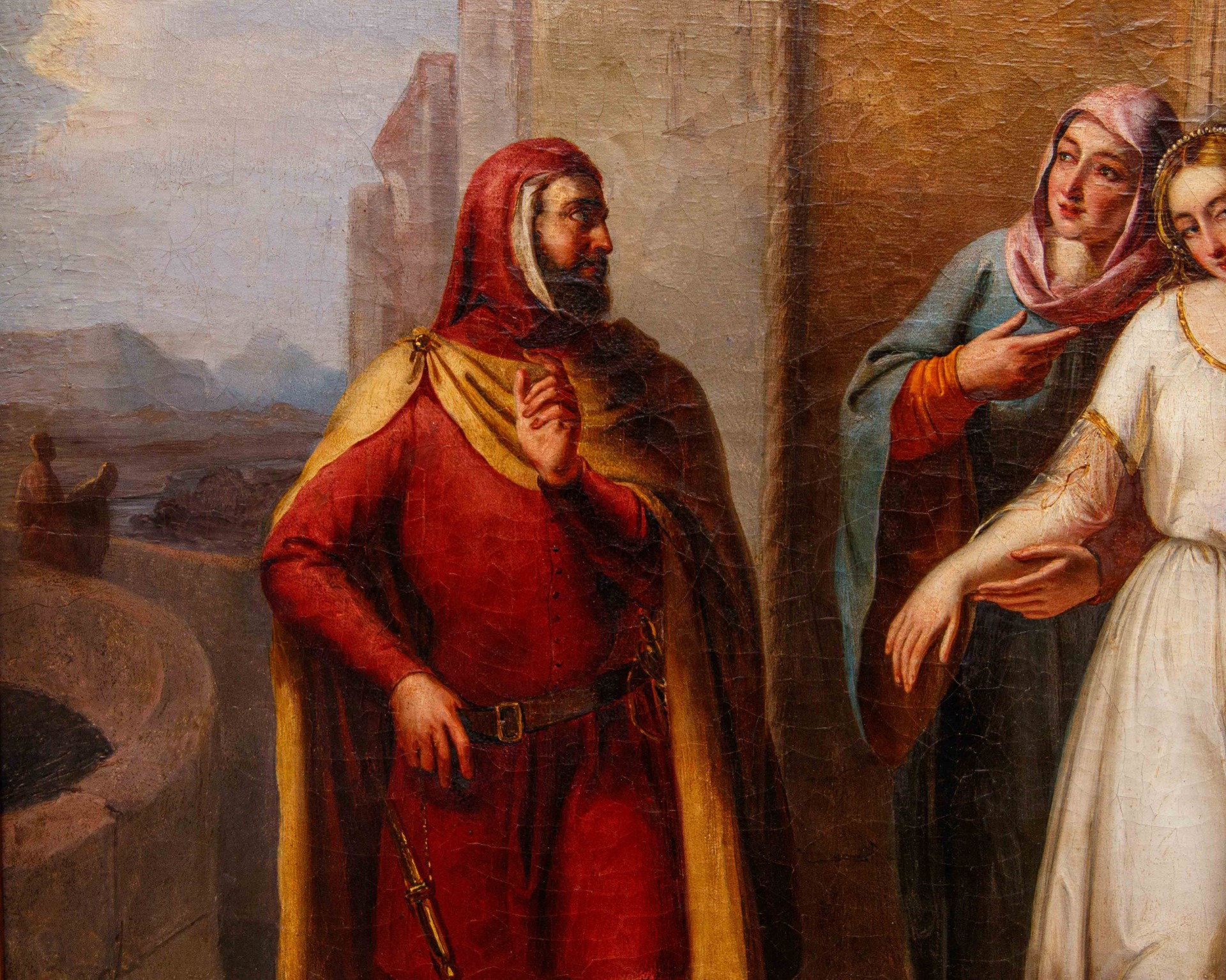
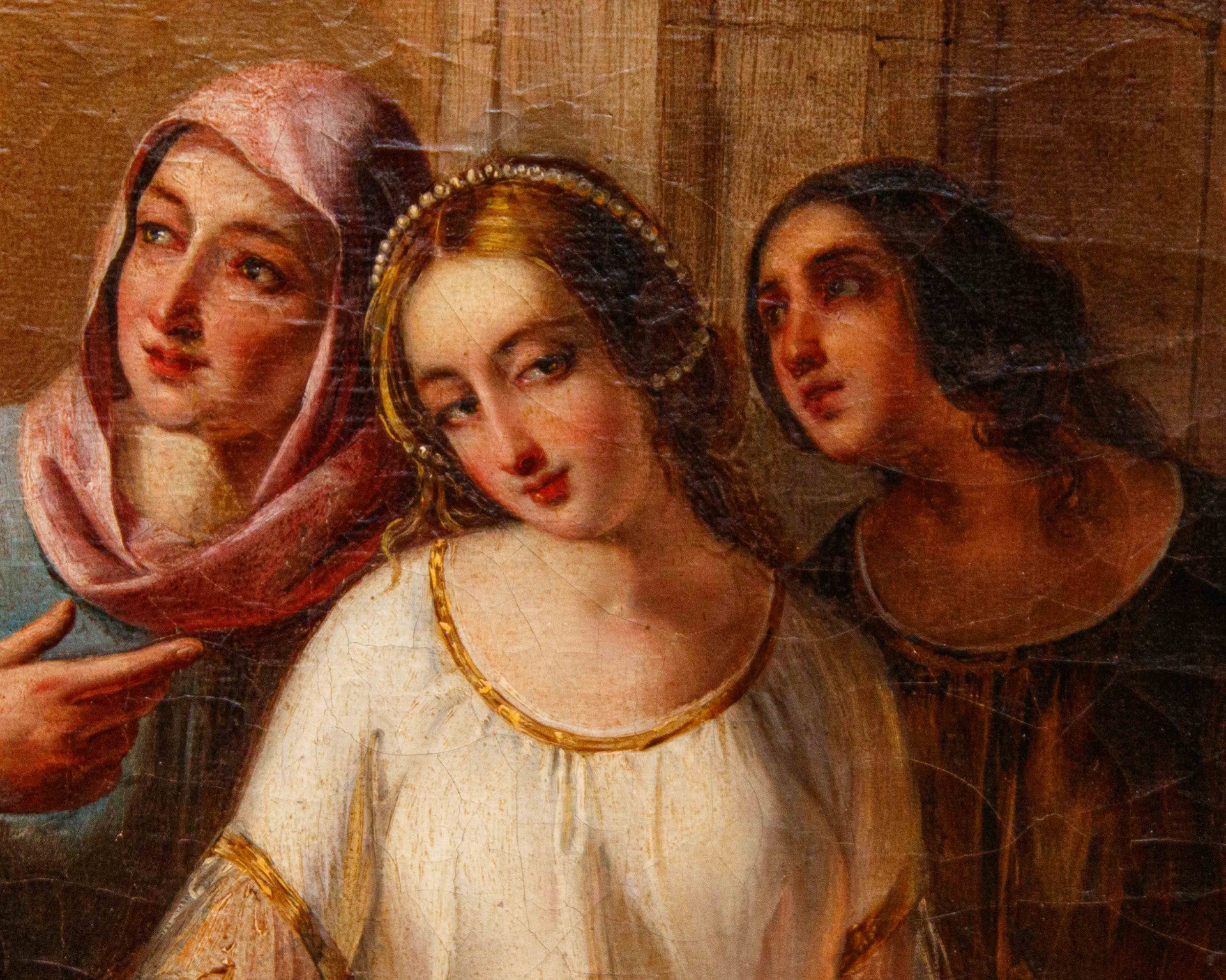
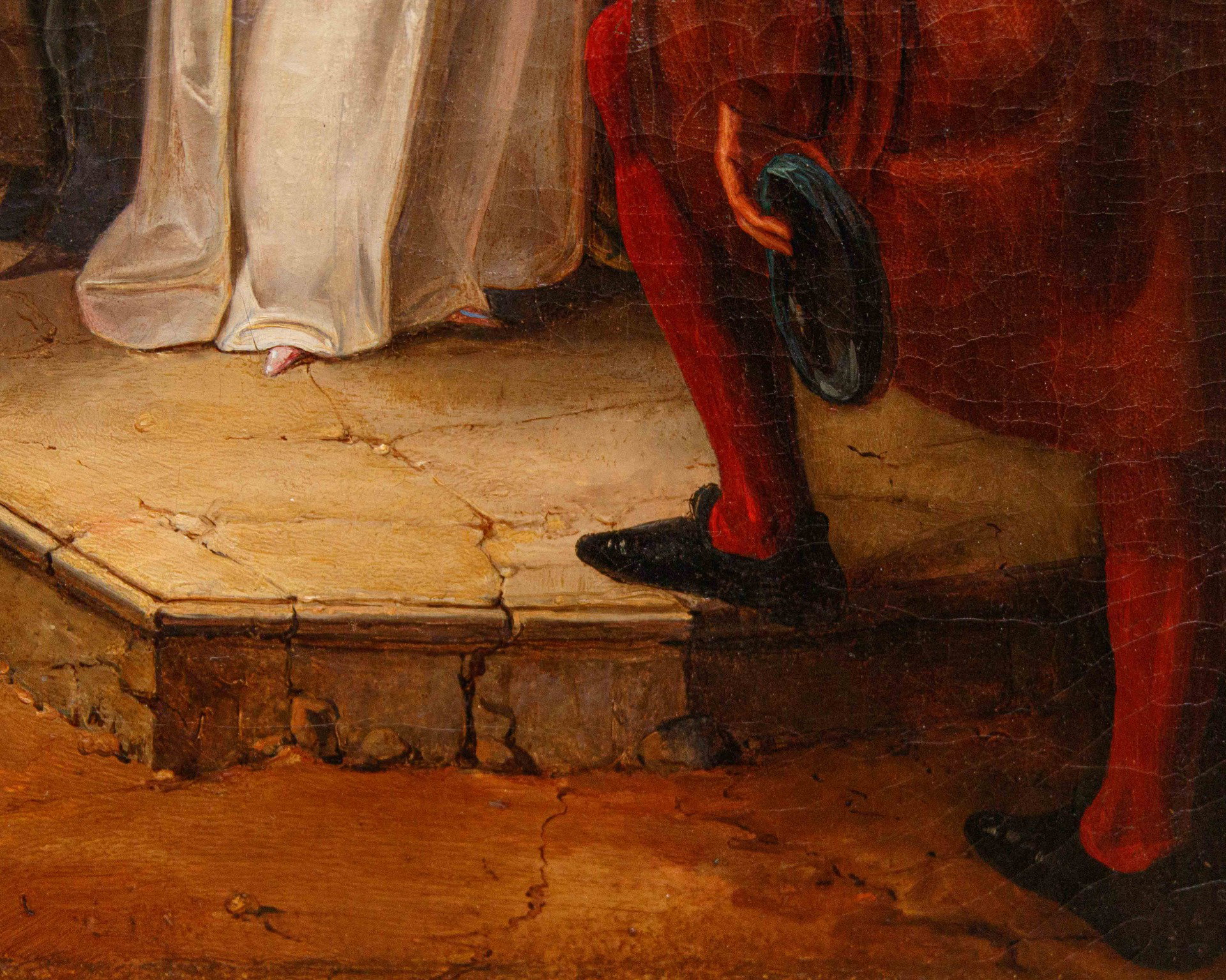
The work under examination belongs to the pictorial corpus of Vincenzo Giacomelli, as attested by the signature affixed by the artist himself in the lower right corner, together with the date of execution, 1845 (at the time of its creation, the painter was thirty-three years old). The work depicts the meeting between Prince Cangrande II della Scala, dressed in red in the center, and Princess Elisabetta of Bavaria, daughter of Louis the Bavarian who later became the Holy Roman Emperor under the name Louis IV of Germany, which took place in 1350, the year in which they actually married. Around the figures of the two protagonists are, in fact, the young woman's nurses and, in the foreground on the right, a squire, while in the background the city of Verona itself is visible. The following year, Cangrande II della Scala became Lord of Verona and Vicenza (1351), and was renamed by the people "rabid dog" because of his cruelty and his iron-fisted rule, which led to his assassination in 1359, leaving the baton to his son Cansignorio who, with the help of the princes of Carrara and Padua, became duke in his place.
Vincenzo Giacomelli was born in Grizzo di Montereale Valcellina on April 3, 1812, son of Giuseppe Giacomelli and Osvalda Rafael, and died in Venice in 1890. He trained at the Academy of Fine Arts in Venice, which he attended assiduously from 1830. His debut in the public art world occurred in 1837, when he presented an altarpiece at an exhibition organized by the Venetian institute. The following year, in 1838, he obtained significant public and critical recognition thanks to a series of paintings focused on the figure of Doge Marino Faliero. Further success was recorded in 1839, when he won the artistic competition announced by the well-known collector and patron Giacomo Treves. From 1840, the Friulian painter embarked on an intense exhibition activity, participating in the major art exhibitions of Northern Italy, touching cities such as Trieste, Venice, Milan and Turin. In particular, the period between 1839 and 1845 saw him particularly active in the Piedmontese city. In 1846, Giacomelli married the Parisian Vittoria Handin and opened his own successful studio in Venice, near the Tolentini at the Malcanton bridge. From these years, the artist distinguished himself in the execution of episodes of ancient history, showing a marked predilection for the glorious past of Venice. Among the works that confirmed his significant affirmation are, in particular, Diomede Flees Hiding the Palladium (1839, Venice, Gallerie dell'Accademia) and Antonio Loredan and the Siege of Scutari (1845, Treviso, Museo Civico), the latter made in the same year as the work considered here. Of fundamental historical and artistic importance was the cycle of six paintings dedicated to the siege of Venice (1848-1849), presented at the XVL edition of the Società Promotrice delle Belle Arti di Torino in 1866, at which he exhibited with some consistency over the years. This pictorial sequence - which includes titles such as The People Led by Daniele Manin Take the Arsenale, Offerings to the Homeland, Battle at the Albergo della Campana in Mestre, The Heroic Death of Lieutenant Colonel Rossaroll, The Austrians Driven from the Fort of Sant'Antonio and Bombardment of Venice - is alongside other works of the same theme made by the artist, possessing a high iconographic value relating to the heroic defense of the city from the Austrian army. It is crucial to highlight that the creation of these paintings, which enjoyed a fortunate lithographic transposition at Lemercier in Paris, took place "live" by Giacomelli, who operated not only as a painter, but also as an officer of the Venetian Republic. He participated in the Exhibitions of the Società Promotrice di Belle Arti di Genoa, in the editions of 1856, 1858, 1862, 1865, 1868 and 1875, while in 1877 he exhibited at the National Exhibition of Fine Arts in Naples.
The work shows us Giacomelli's style, which reflects his training at the Academy of Venice and the influences of historical romanticism, with particular attention to the emotional and narrative rendering of the scenes. Giacomelli stands out for his ability to combine a formal rigor of academic matrix, also visible in the precise and realistic brushstroke, with a romantic and narrative feeling, where light is used in a functional way to highlight the faces and bodies in the foreground, amplifying the pathos of the scene.
With Ars Antiqua it is possible to spread all amounts up to a maximum of € 7,500 at ZERO RATE, for a total of 15 INSTALLMENTS.
Ex. Tot. € 4,500 = Monthly installment € 300 for 15 months.
Ex. Tot. € 3,600 = Monthly installment € 720 for 5 months.
For amounts greater than € 7,500 or for a longer repayment period (over 15 installments), we can provide a personalized payment.
Contact us directly for the best quote.
LIVE TV
- SUNDAY 17.00 – 21.00 Dig.terr. 126 - Sky 824
- Streaming on our website www.arsantiquasrl.com and on our social networks Facebook and Youtube
All works offered by Ars Antiqua are sold accompanied by a certificate of authenticity according to the law and accurate in-depth sheet.
It is possible to see the works directly at the Milan showroom gallery, in via Pisacane 55 and 57.
We personally organize transport and delivery of works, both for Italy and abroad.