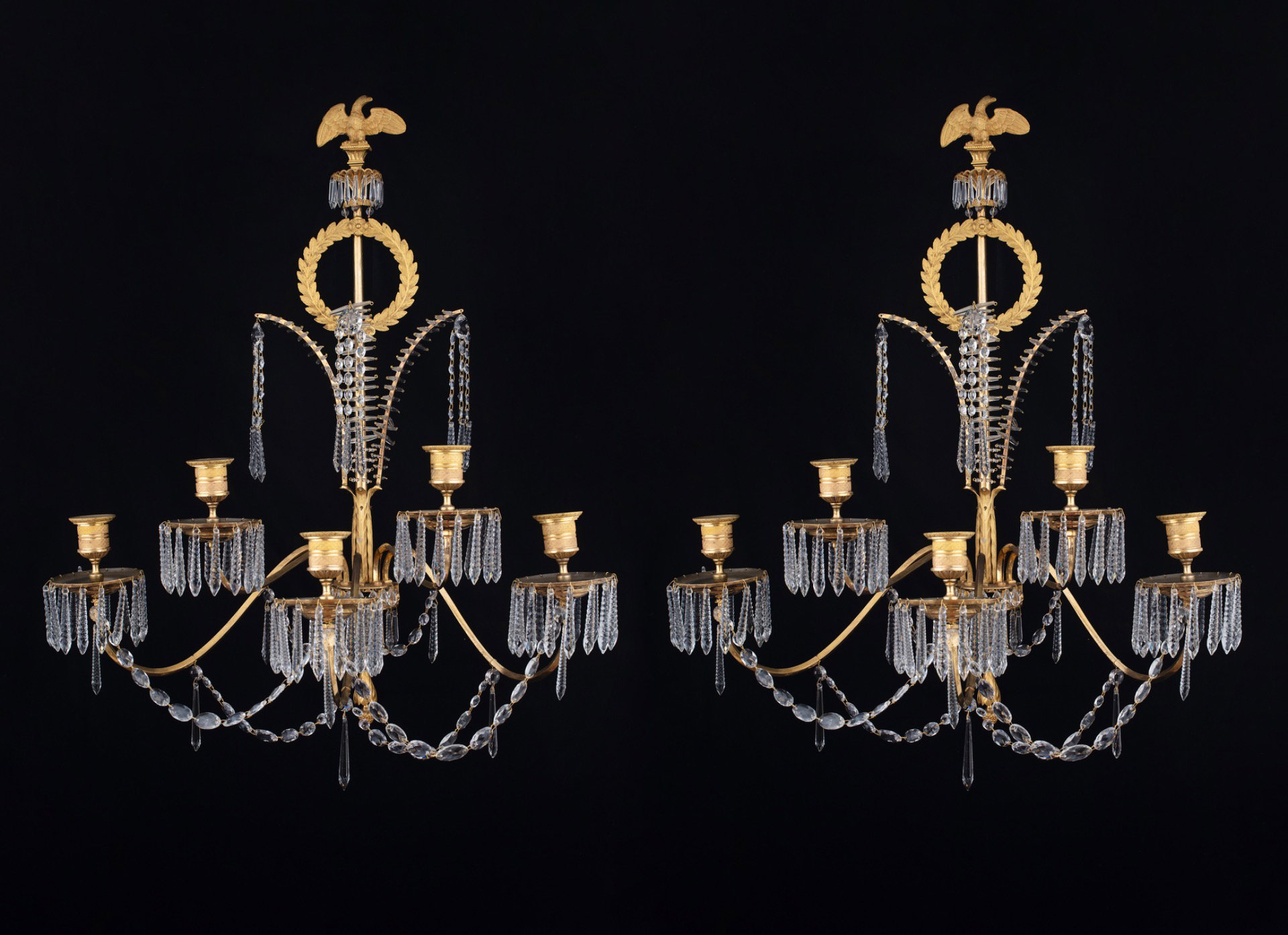
Pair of important gilt bronze and crystal appliques, France, circa 1805.
France, Circa 1805
Dimensions: 80x65x43 cm
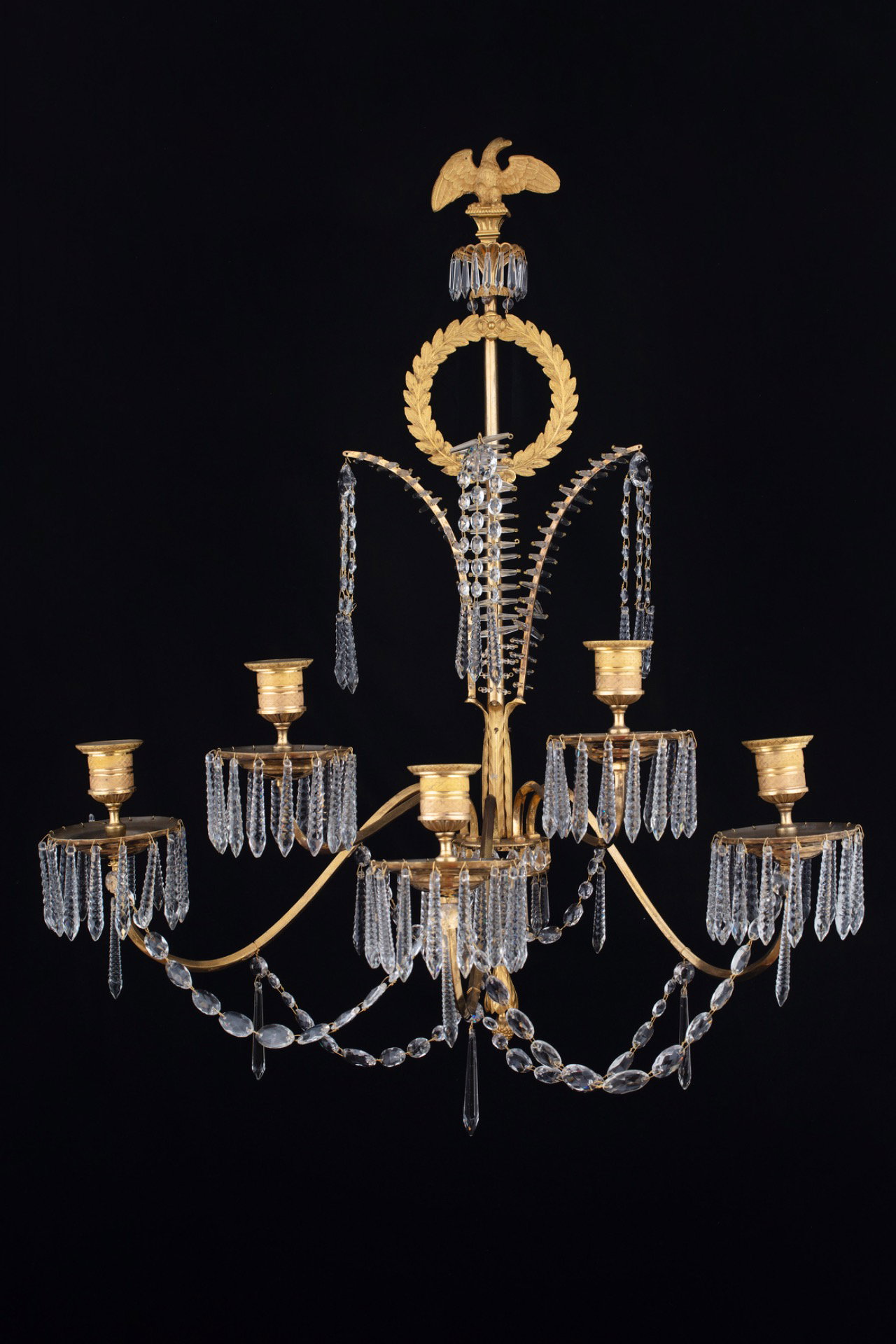
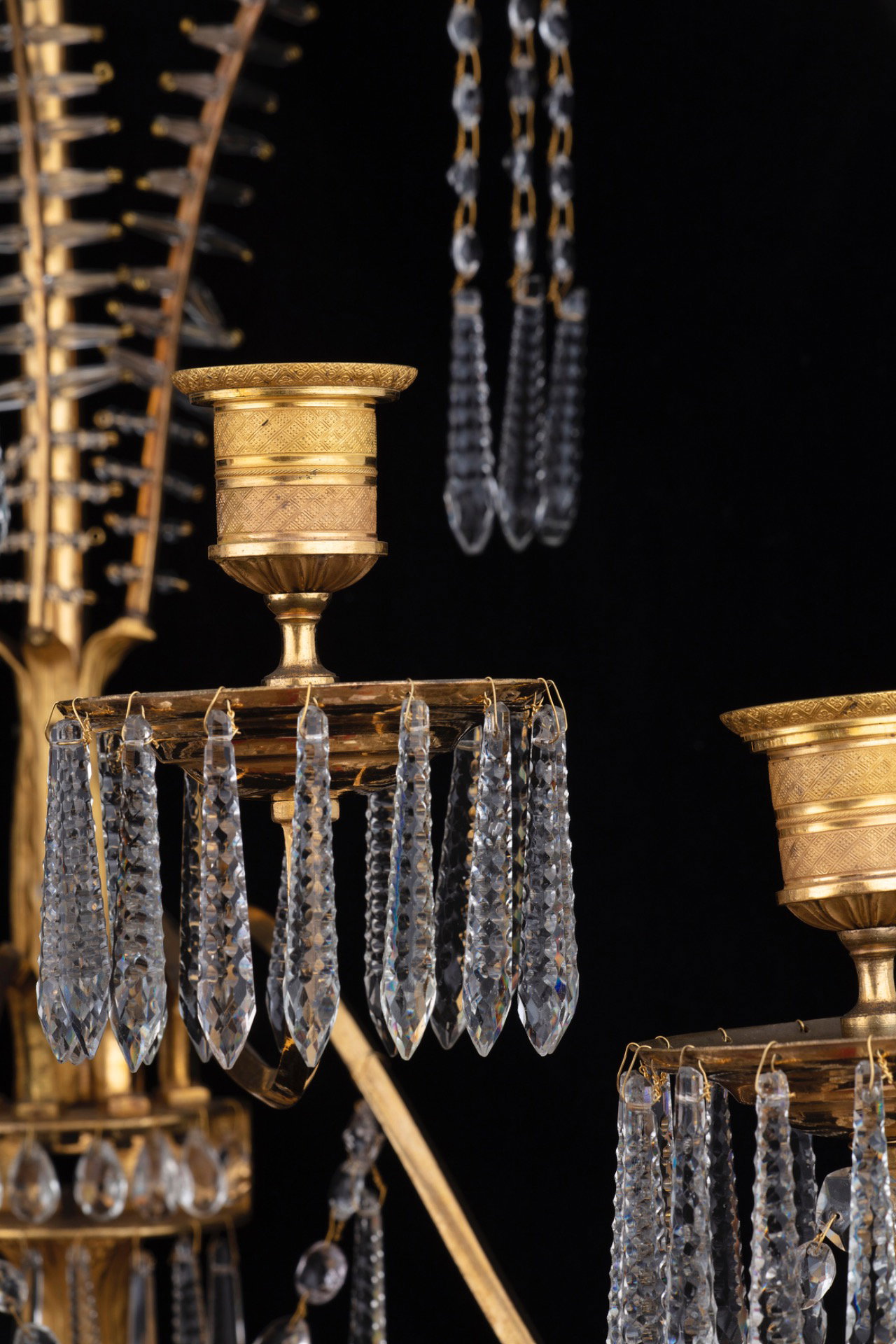
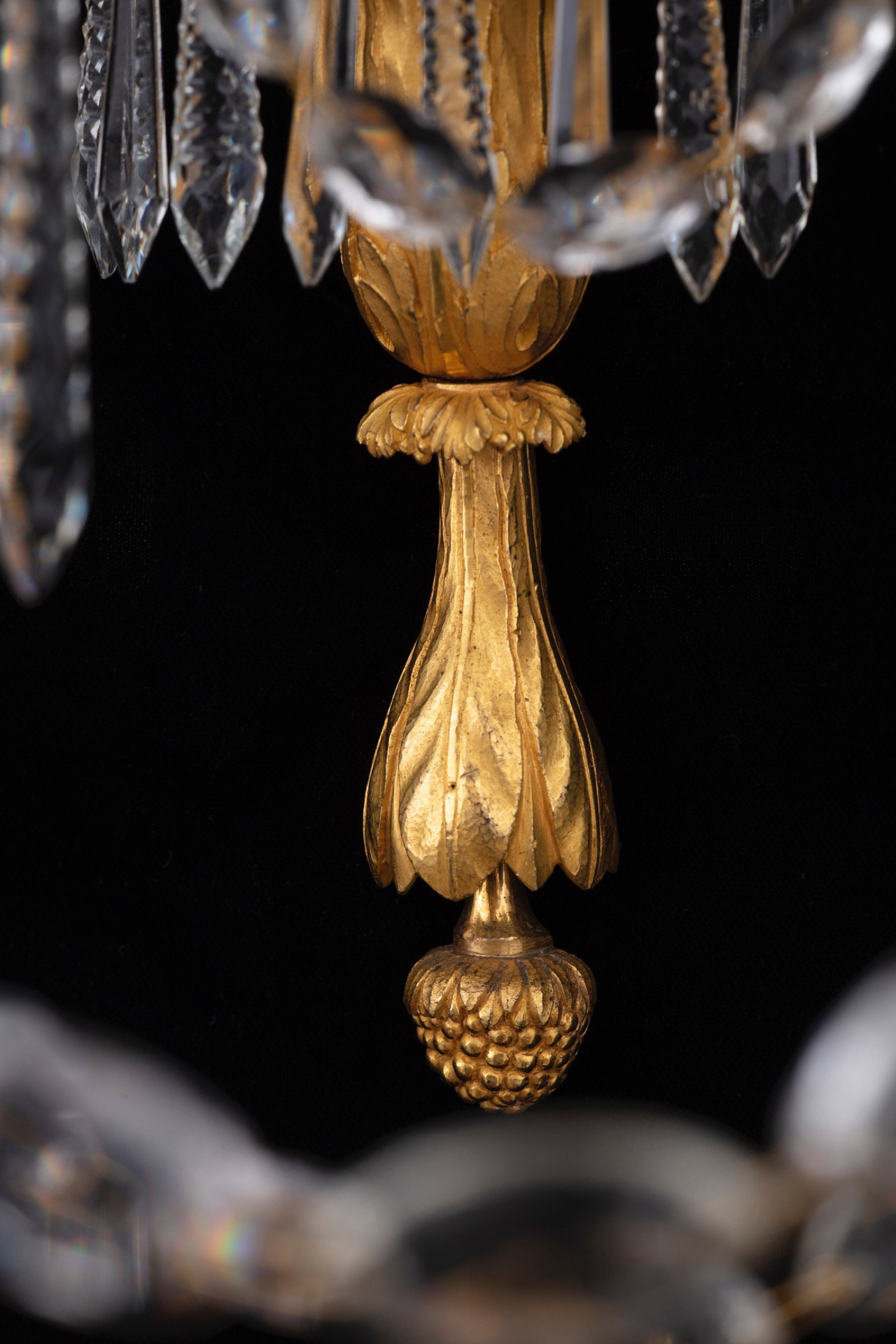
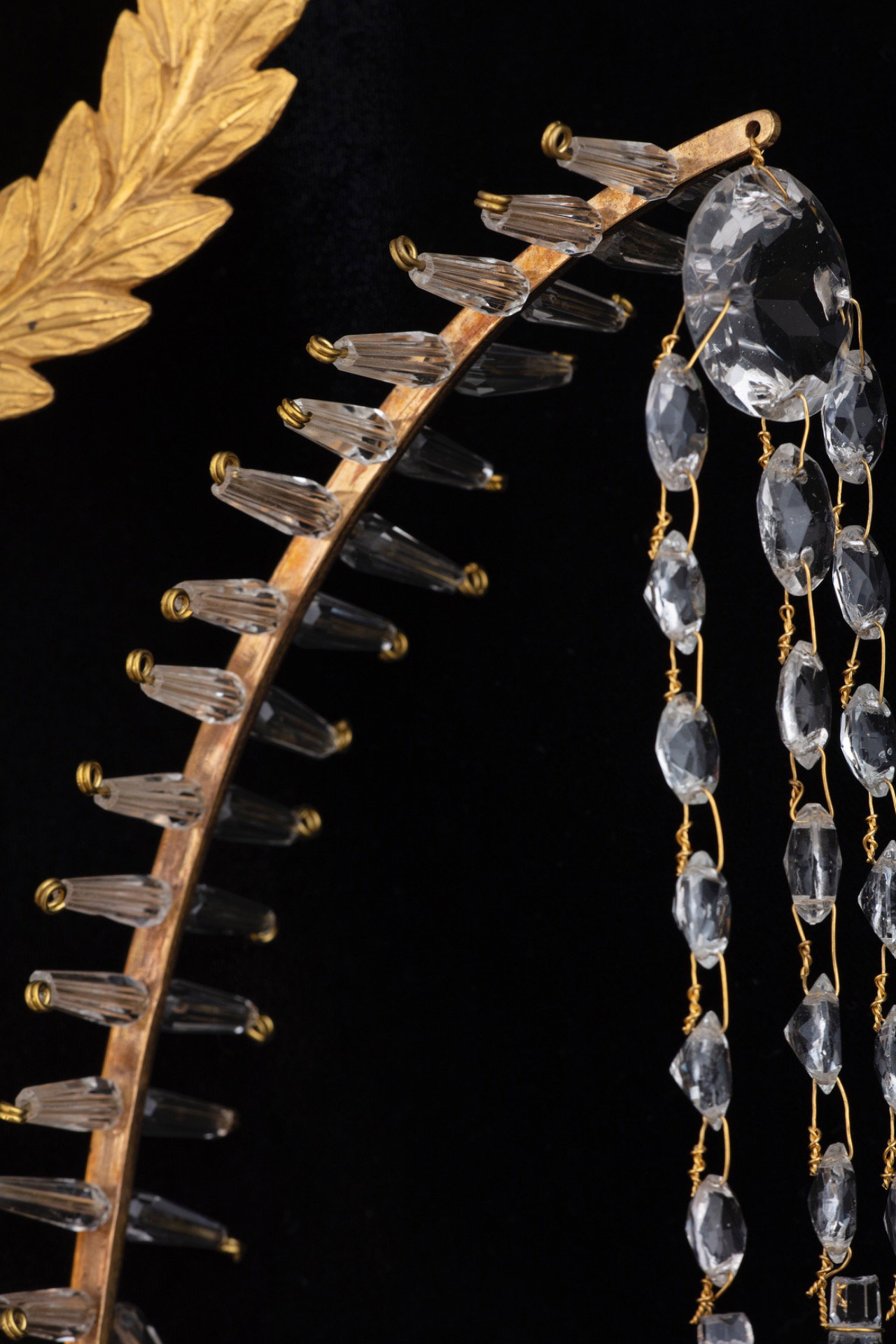
This important pair of appliques is a magnificent example of decorative lighting from the Empire period, dating to circa 1805. They feature a five-arm wall structure for candles, symmetrically arranged in a wide horizontal curve. They are made of gilt and mercury-chased bronze, combined with rows of pendants and drops in cut crystal, capable of capturing and refracting light.
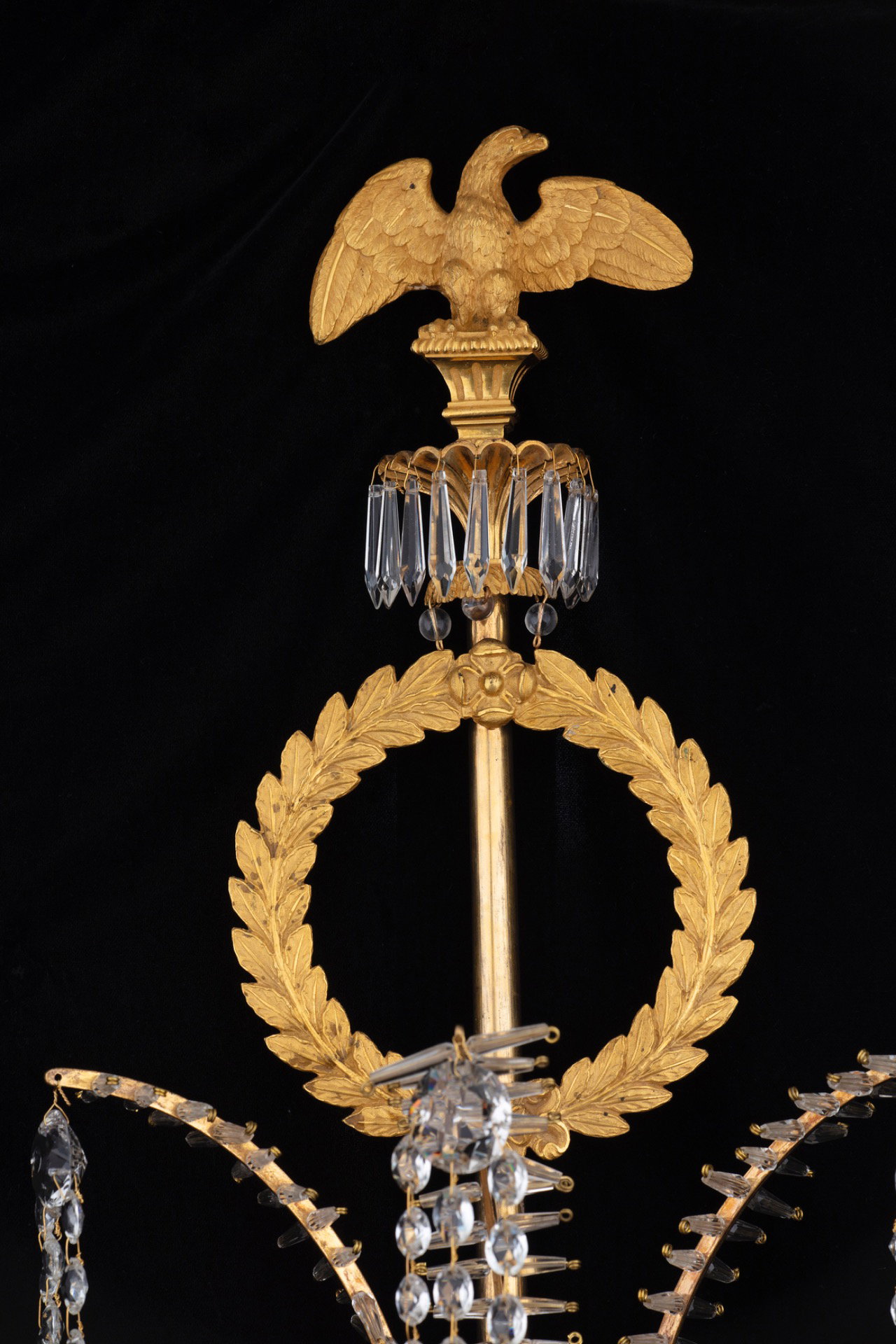
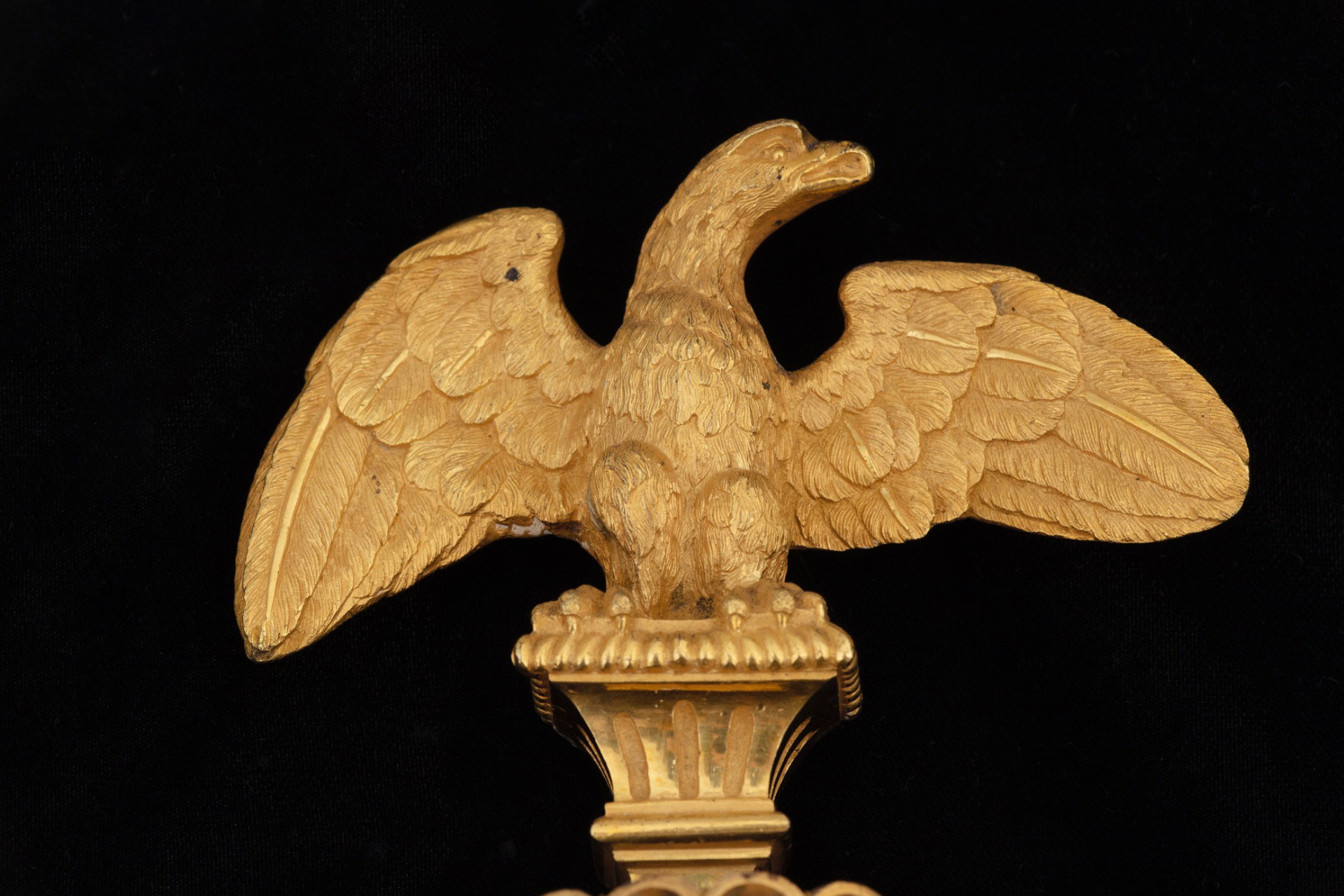
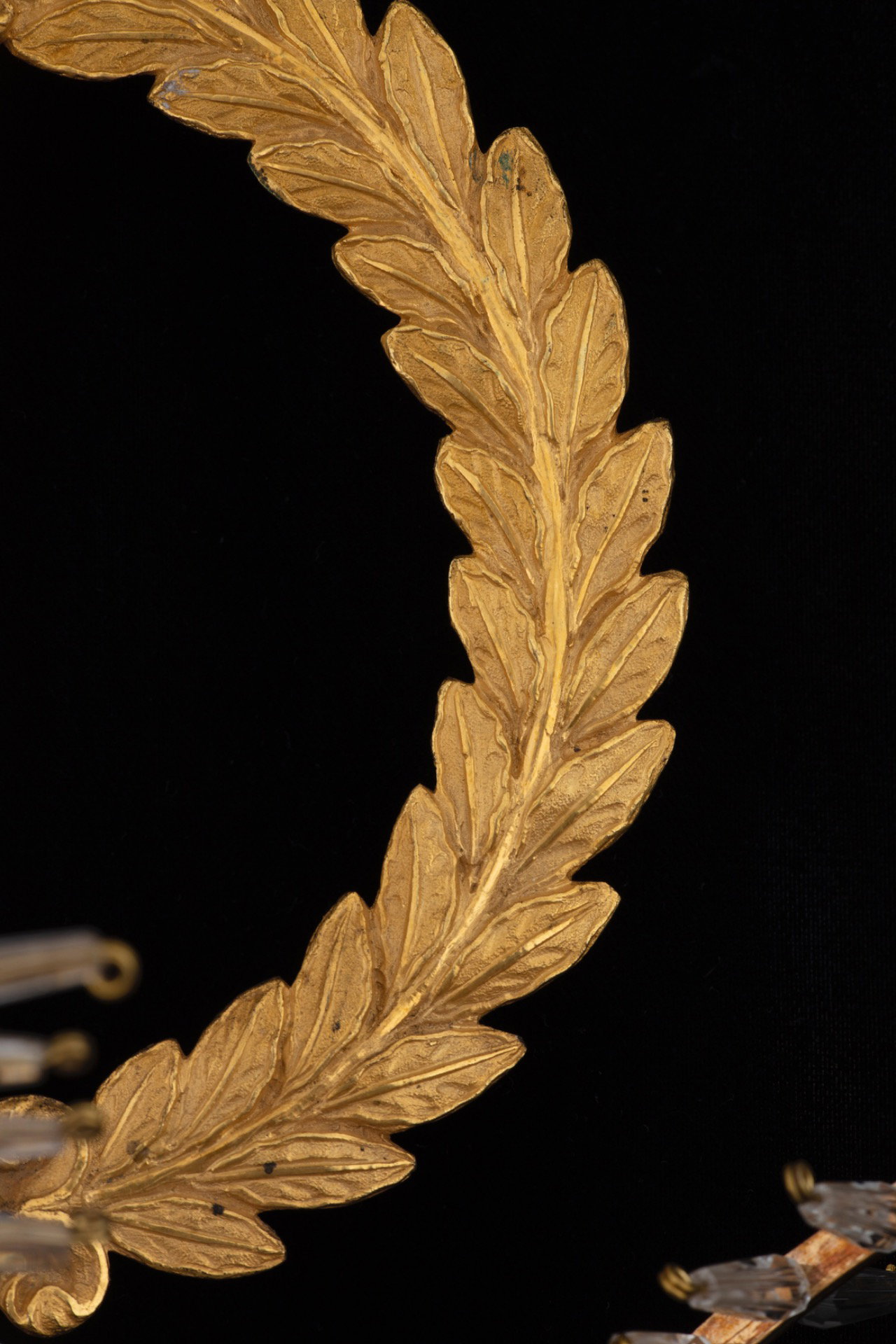
The decorative elements are characteristic of the French Empire style: the eagle at the top is emblematic of imperial authority. Below the eagle is a laurel wreath, a classical symbol of victory, wisdom, and glory.
Works like these were used to decorate and illuminate reception rooms, galleries, or dining rooms in palaces and luxury residences, reflecting the taste for splendor typical of the Empire period.
Due to the quality of execution and the use of noble materials, such as crystal and gilt bronze, these appliques can be attributed to a luxurious manufacture of Parisian bronziers, of whom Napoleon Bonaparte was a great patron.