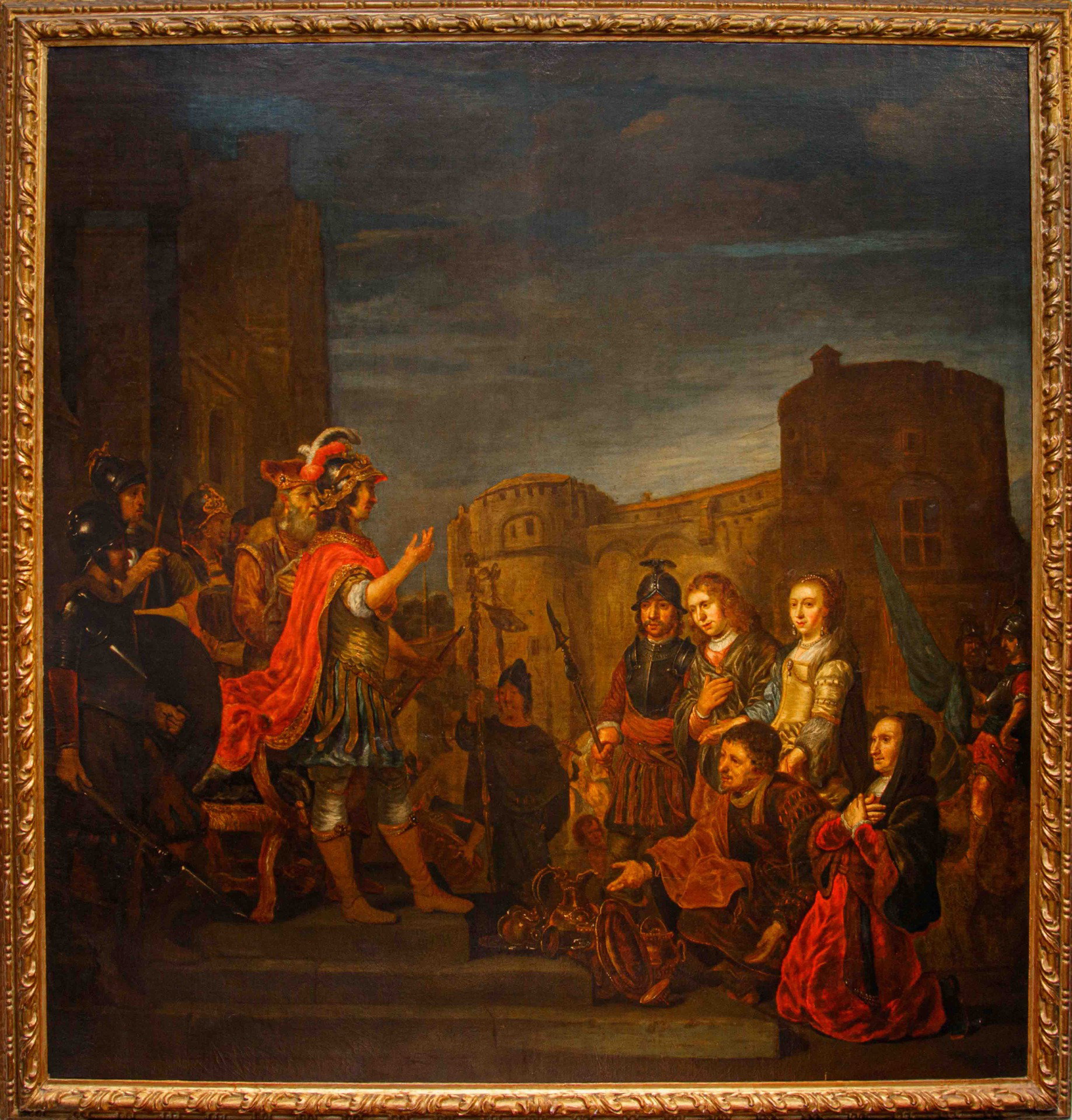
Gerbrand van den Eeckhout, (Amsterdam, 1621 – ibid., 1674)
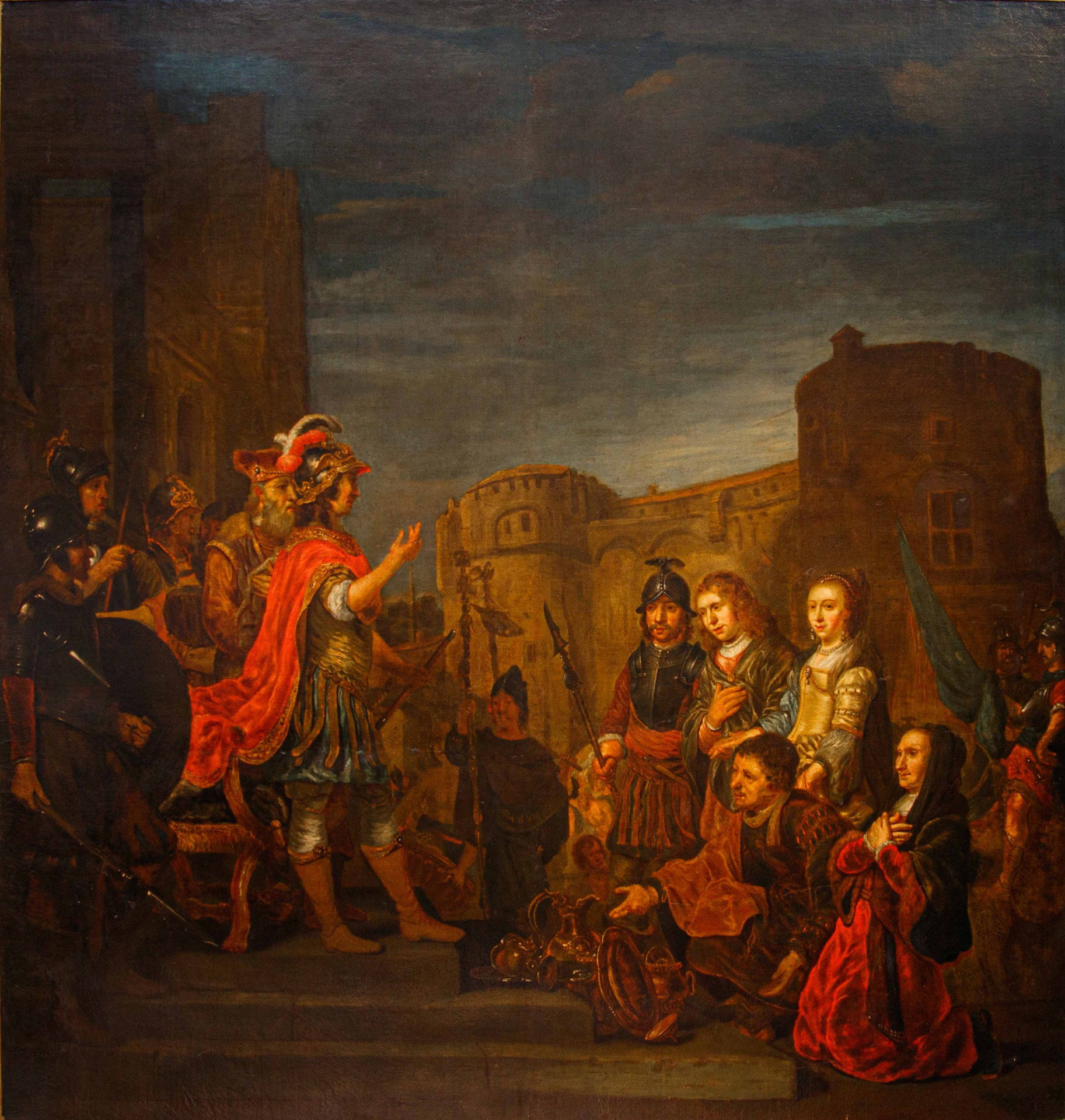
The Continence of Scipio
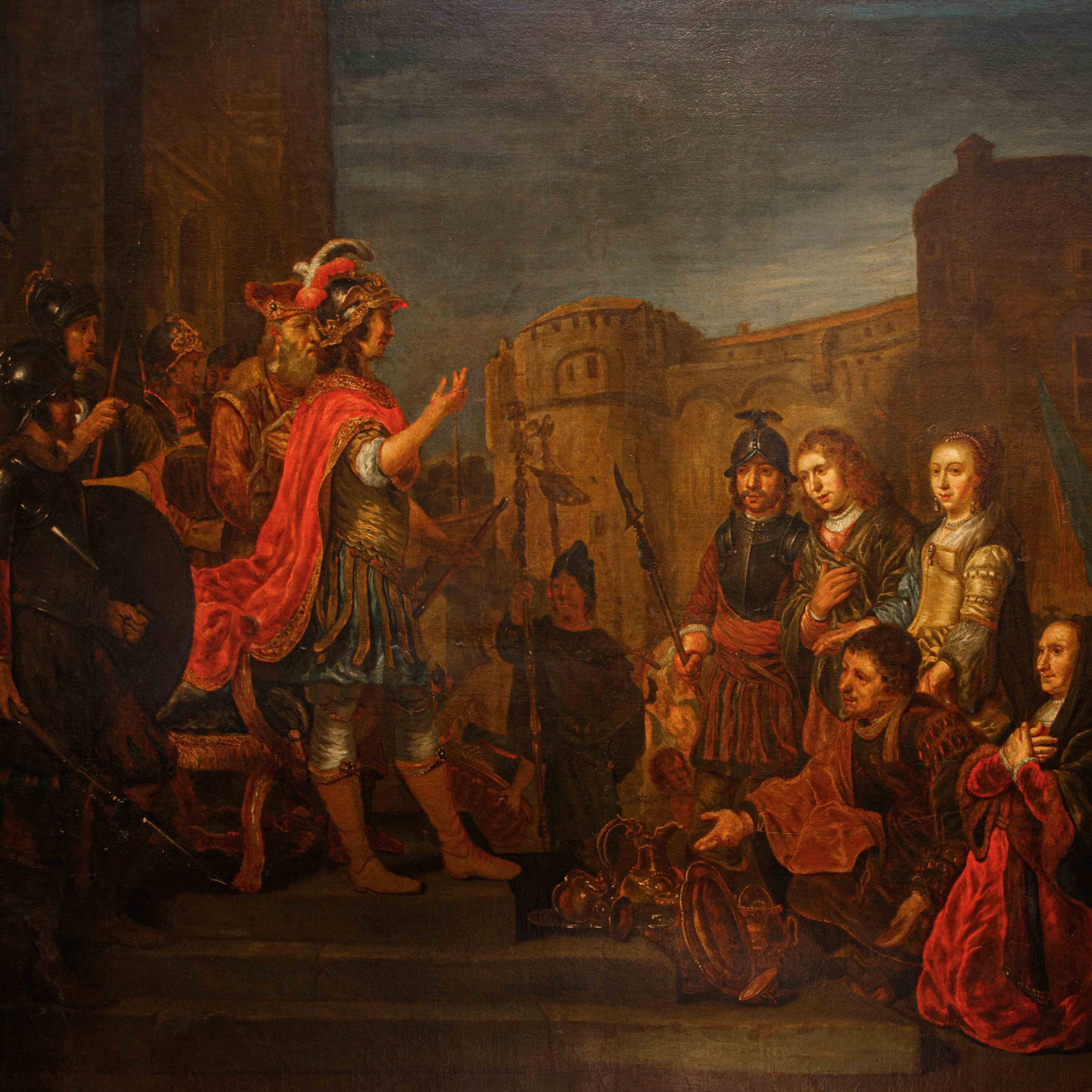
Oil on canvas, 181 x 170 cm
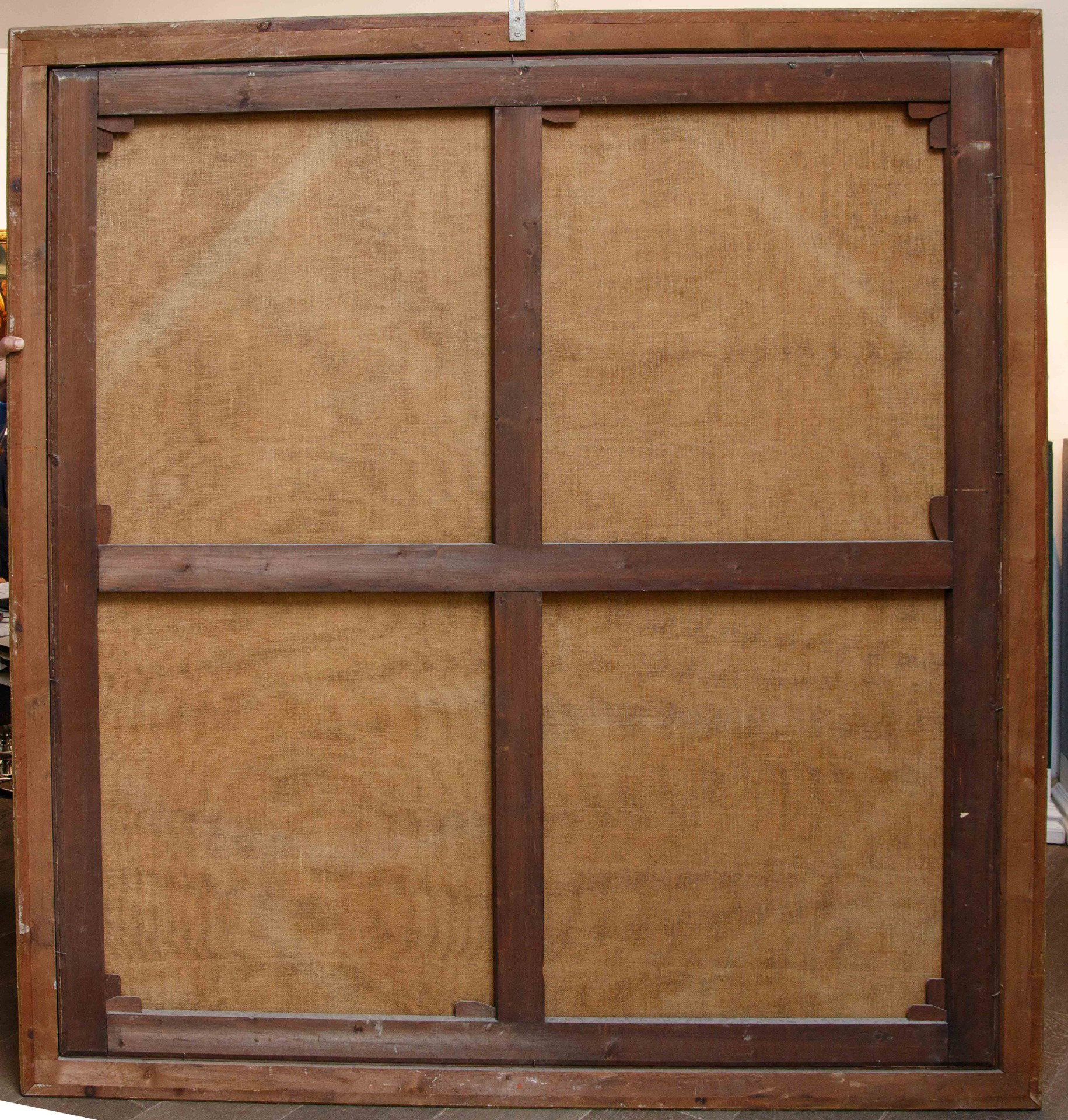
With frame 197 x 186 cm
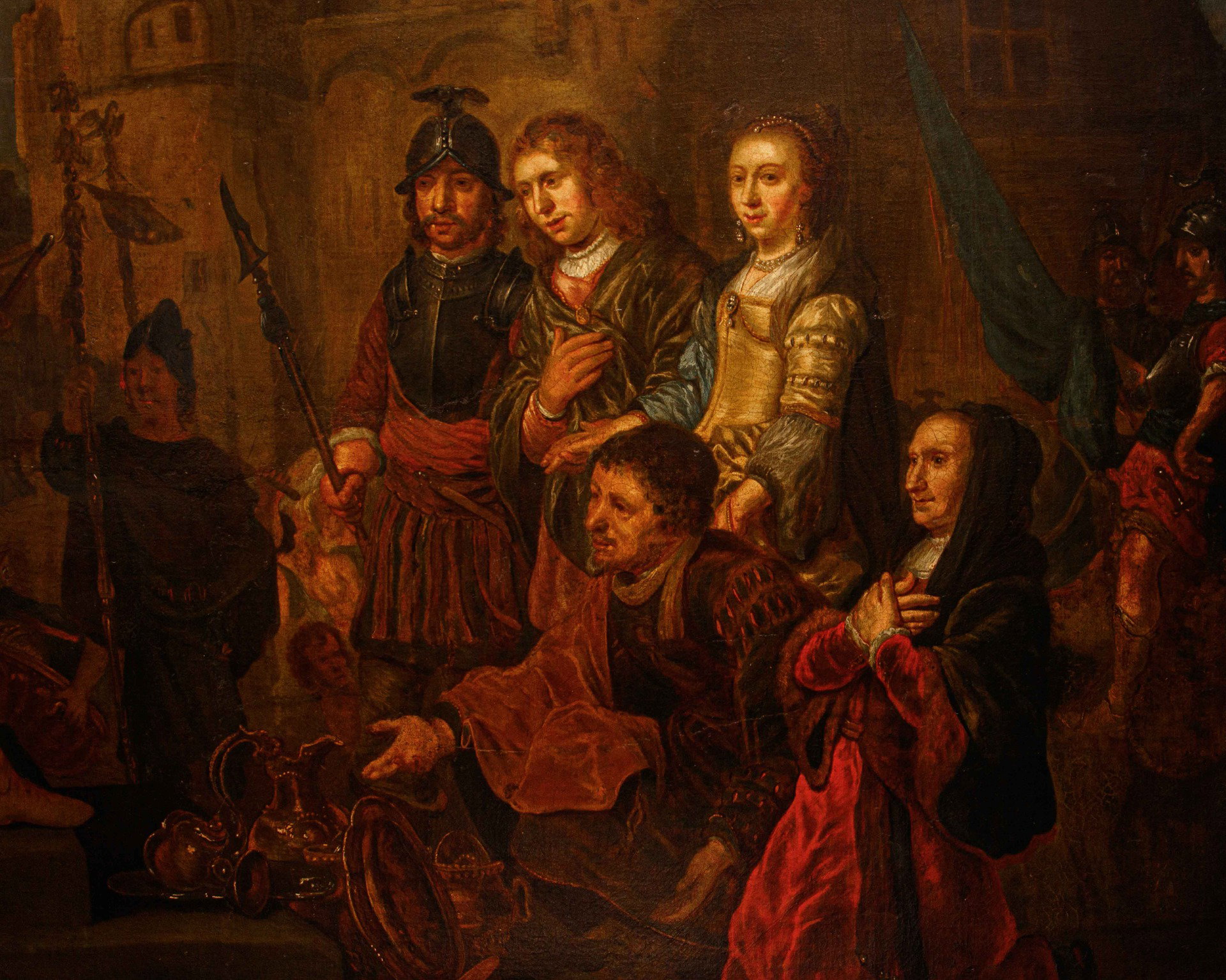
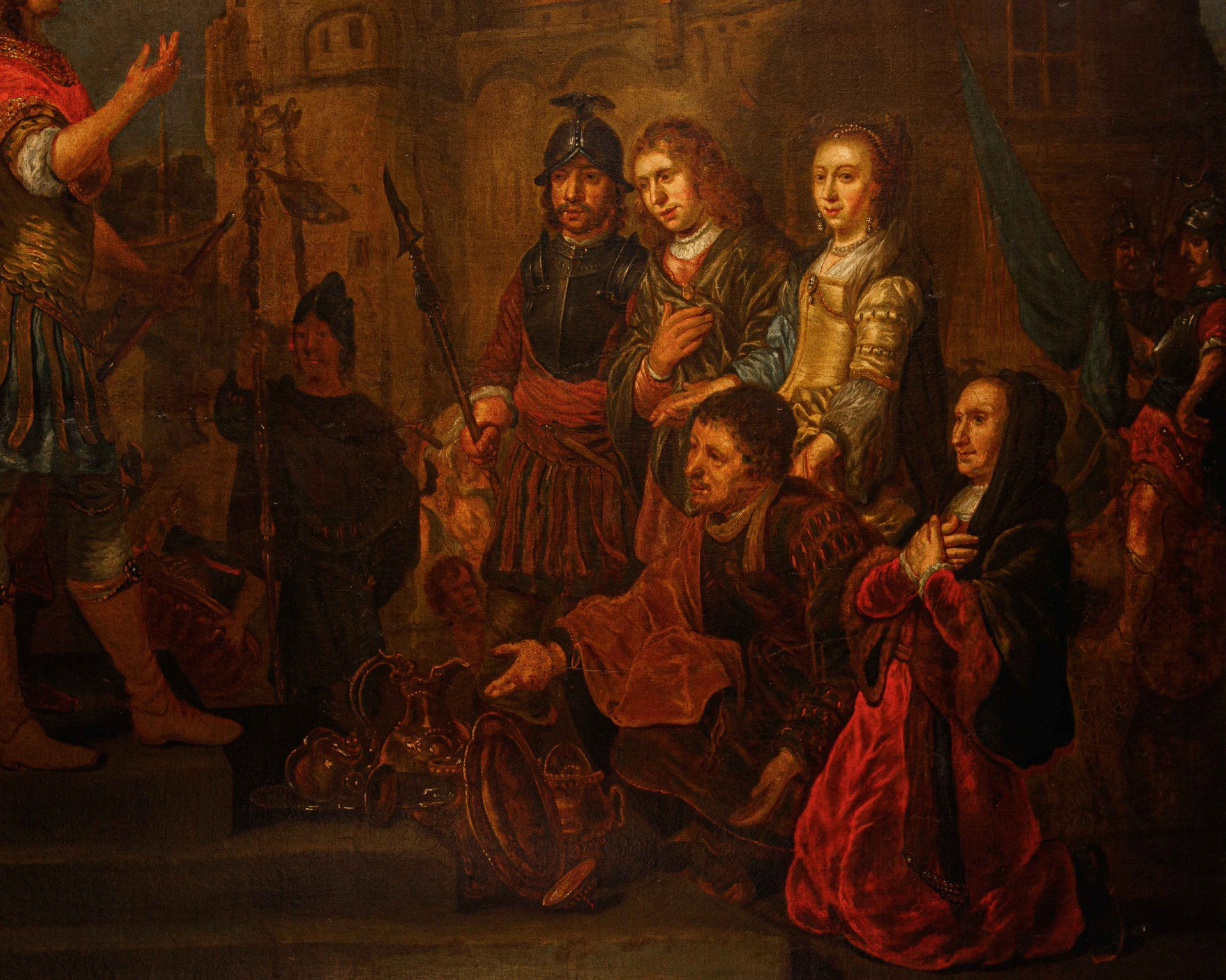
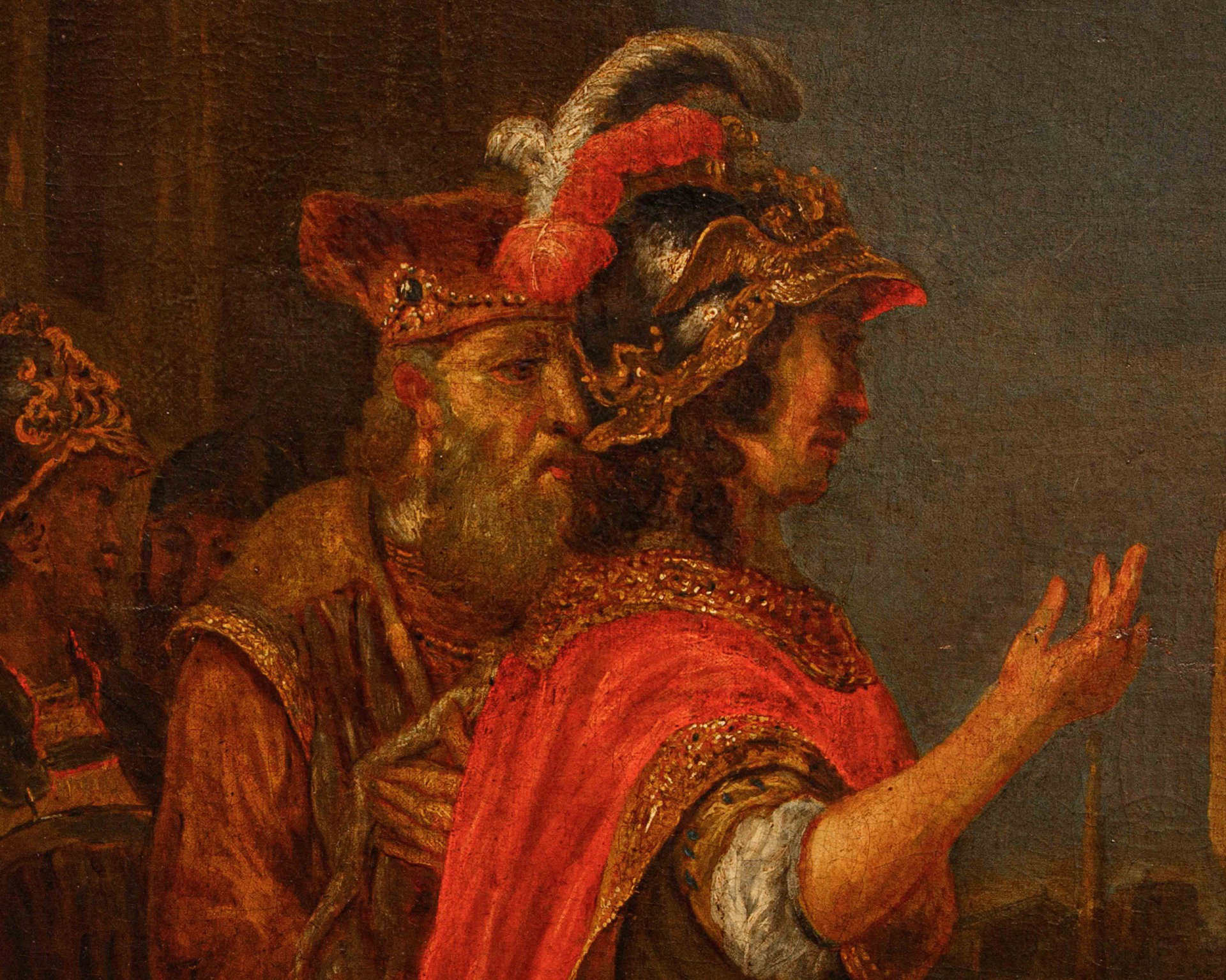
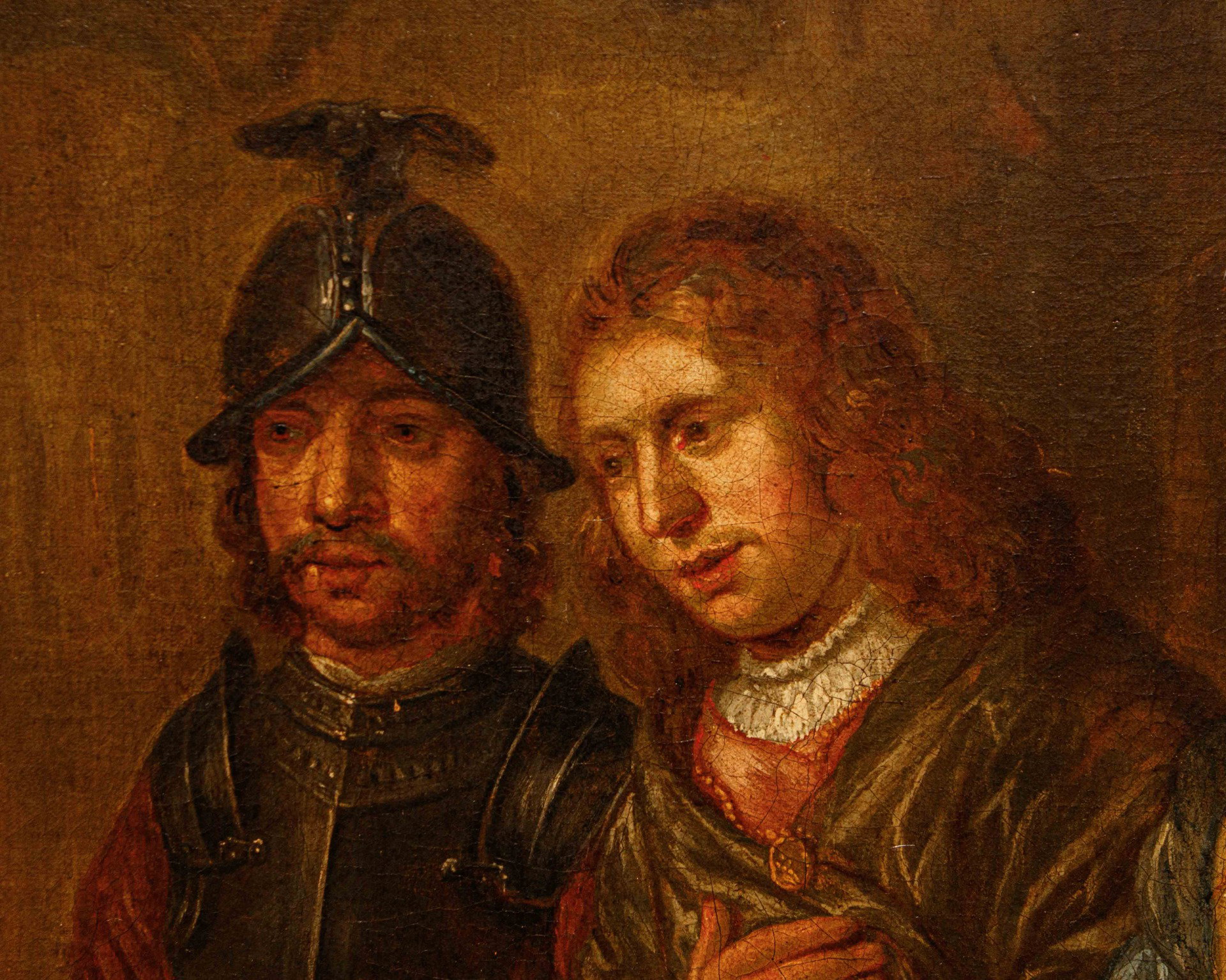
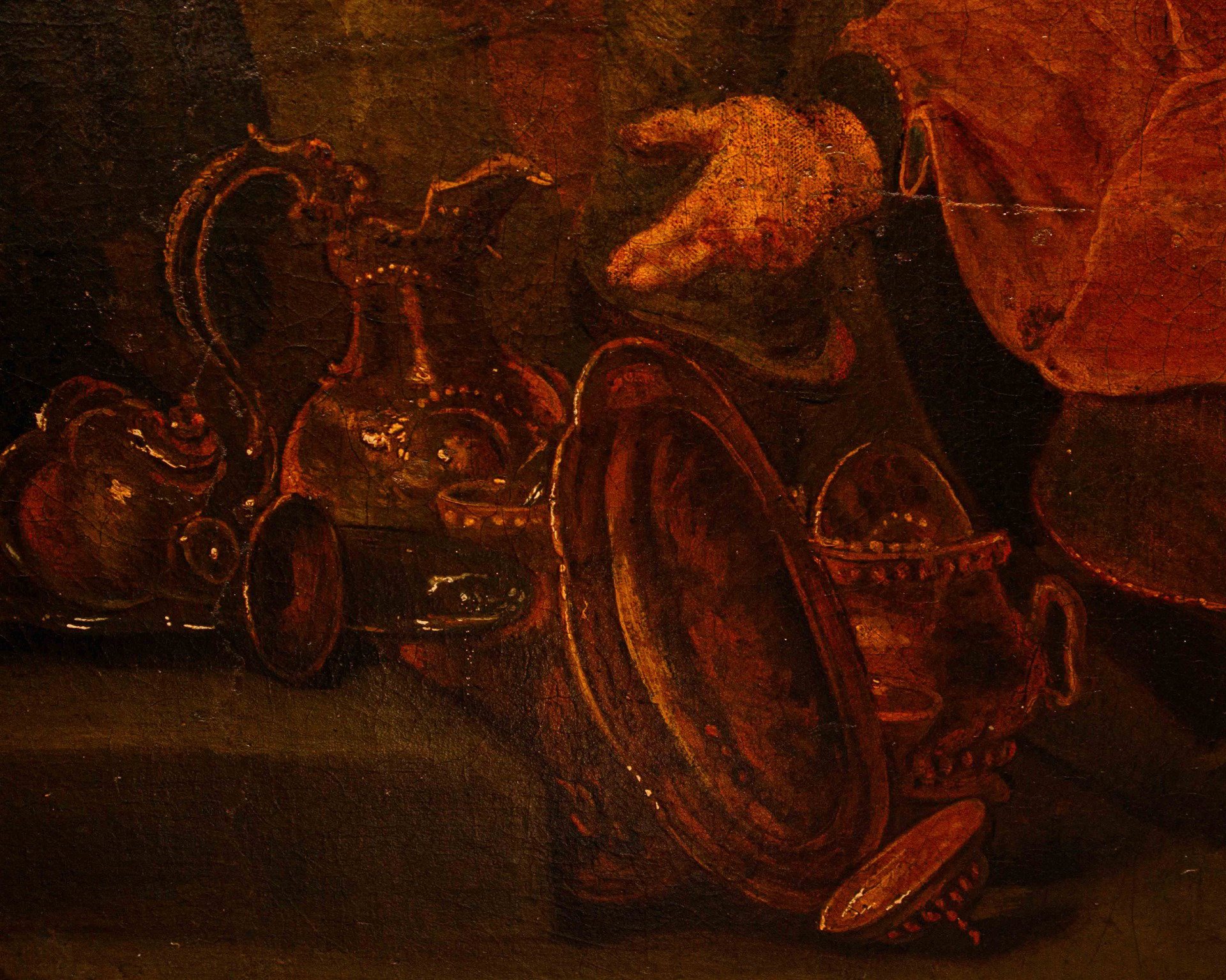
Follower of Ferdinand Bol, Nicolaes Maes, and Govert Flinck, but above all of the genius of Rembrandt, Van den Eeckhout combined the mark left by goldsmithing, known from his father's workshop, with the most updated lexicon of Flemish painting. His inclusion within the so-called Dutch Baroque, of which the artist became a fervent witness through the renewed expressionism of his historical paintings, harmonized with his lesson with growing interest; Van den Eeckhout anticipated in the subtle evanescence of the precious objects depicted, true scenarios of measured human events, what Pieter de Hooch would later do, and like him, many other students. The particular predilection for historical subjects, both biblical and secular, derived from the strong academicism then in vogue in the city of Amsterdam, which led to international commissions that discovered in the European South, especially France, the main demand in the market. Van den Eeckhout's association with Rembrandt occurred around the 1630s, while remaining in his pictorial style, albeit renewed and disciplined in a distinctly original way through the engaged dosage of color. If the dark tones and the detailed play of light are also recognizable in the master's style, Van den Eeckhout's voice is revealed in the heartfelt lyricism that emanates from the faces of the portraits, a sentimental stamp of the narrated story, capable of conveying the moral meaning of the image more forcefully to the viewer. The scene, of a historical nature, refers to what is told by Livy (Ab Urbe Condita, XXVI, 50, 1-13 passim), later romanticized by Petrarch (Africa, IV, 375-388), a theme truly sought after in the history of art. Within the context of the Second Punic War, the general Publius Cornelius Scipio (234 BC – 183 BC) besieged and captured the city of New Carthage in Spain. In the act of offering gifts to the new conqueror through libations and tributes, some citizens offered Scipio a large quantity of silver as well as a young maiden, already betrothed to one Allucius. Scipio refused the offer, returning the maiden to her fiancé. The event entered the repertoire of paradigmatic episodes of Roman altruism, along with genuine compassion, which later attracted some critical literature to Christian respect, which had rediscovered Scipio. The present painting, according to current studies, can be attributed to third versions executed by Van den Eeckhout himself, preserved in the collections of the Toledo Museum of Art, the Rijksmuseum in Amsterdam (1653), and the Philadelphia Museum of Art (1659); originating from the Accorsi Gallery, the work introduces, like similar canvases, but not as a pedantic repetition, a precise array of silver vessels – which Scipio refuses – exemplified on 17th-century pieces executed by Adam van Vianen. The proudly Flemish spirit is offered, in the present work, by the vividness of the golden and red tones, which ignite the composition. The calibrated presentation of the characters, linearly paced in the foreground, like the paratactic processions on ancient Roman friezes, organizes an ascending movement from the right side of the painting to the left, thus coinciding with the point of maximum tension in the person of Scipio, an excellent Roman man, moved by pietas and not by the base barbarism of the conqueror. The shaft of sunlight that floods the architecture in the background is reflected in the highlighted pendant that flows over the rich garments of the characters. Certainly, neither the betrothed couple nor the maiden's relatives wear Romano-Hispanic attire; the fashion is that of the Dutch Golden Age, magnificently praised in the triumph of soft folds that design the cloak of Scipio and the kneeling man, as well as in the crimson velvet of the woman in the lower right. The decisive and material brushstroke, full of plastic density, generously fills all areas of the painting, pursuing down to the smallest detail the candid drops of sunlight, which stand out on the precious stacked items and on the armor of the soldiers. The intensity of the historical passage, musically rendered through splendid artistic finishes, thus concentrates into a monumental political snapshot, of vibrant ecstatic appearance, of vividly happy allegorical teaching.
Moving away from art criticism, to confirm the importance of the work, we deem it appropriate to mention its provenance from the Accorsi collection in Turin, which was later transferred to an important Milanese collection as its last owner.
Paper documentation has also been presented, with recorded traces, attesting to the correspondence that took place in the mid-1980s between the owner and the Musée des Beaux-Arts in Lille, represented by Director and General Curator Arnaud Brejan de Lavergnèe and Mr. Robert Labati. The correspondence retraces the long process that led to a request for donation of the work to the aforementioned institution after a visit on December 28, which was not accepted by the owners of the painting.