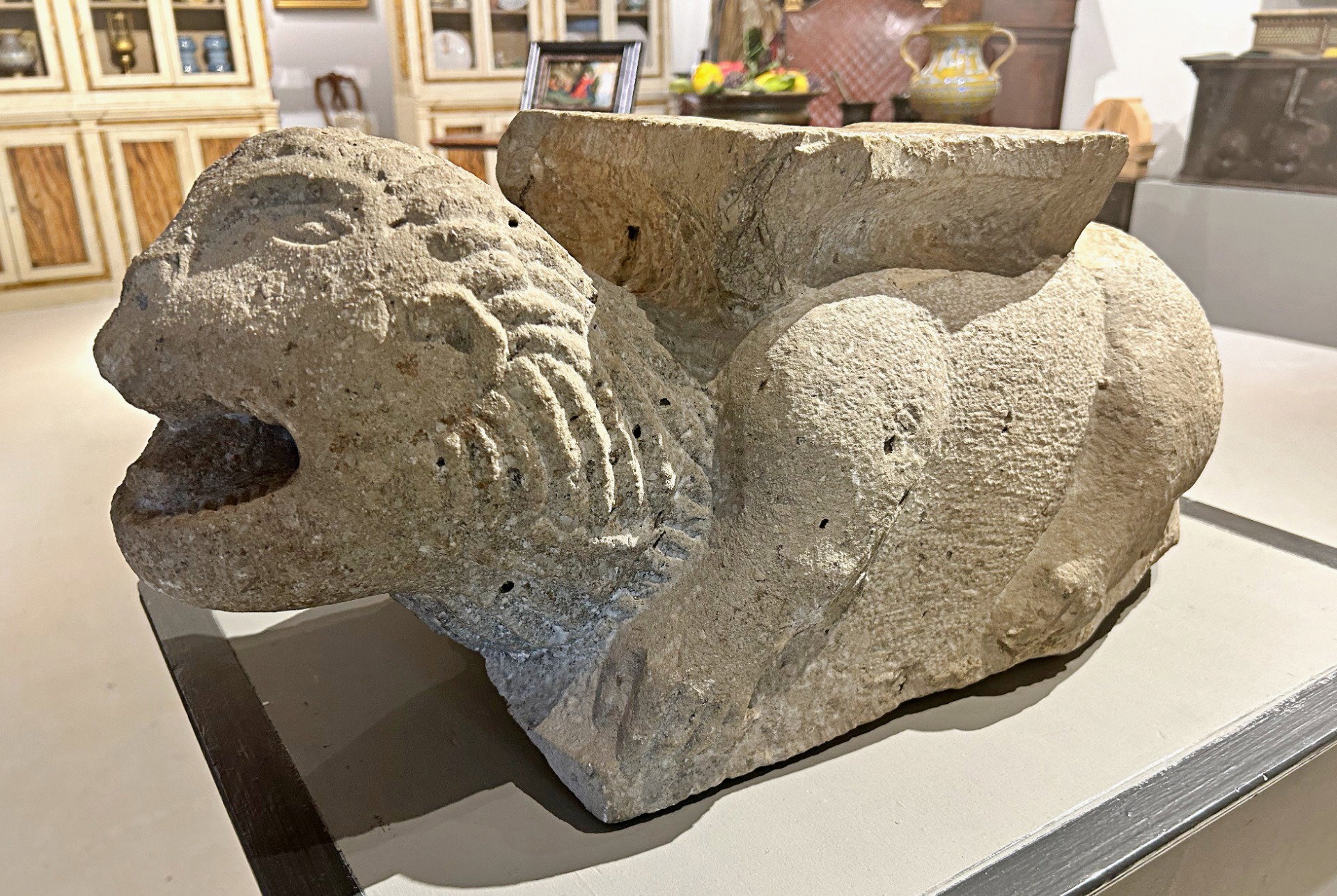
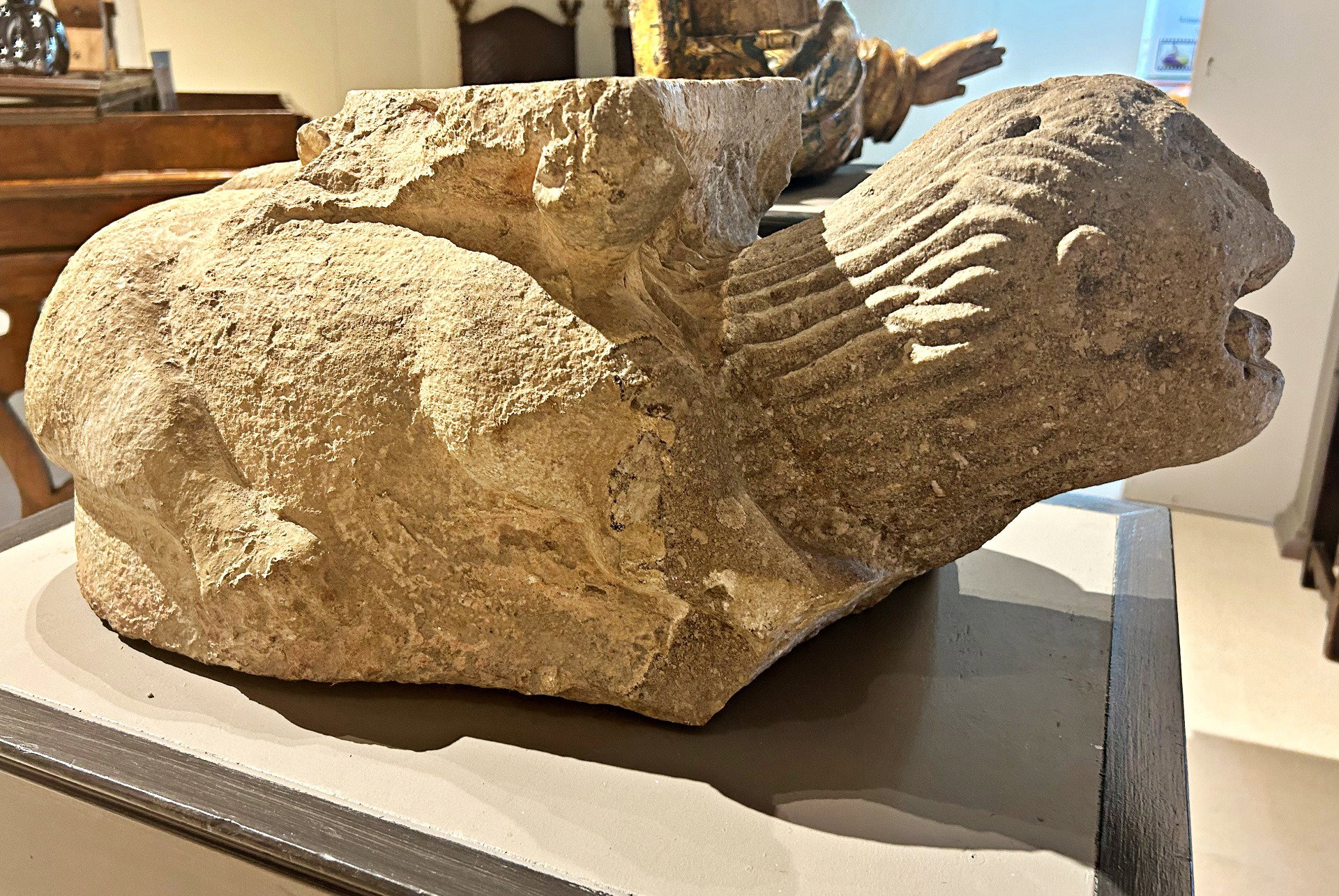
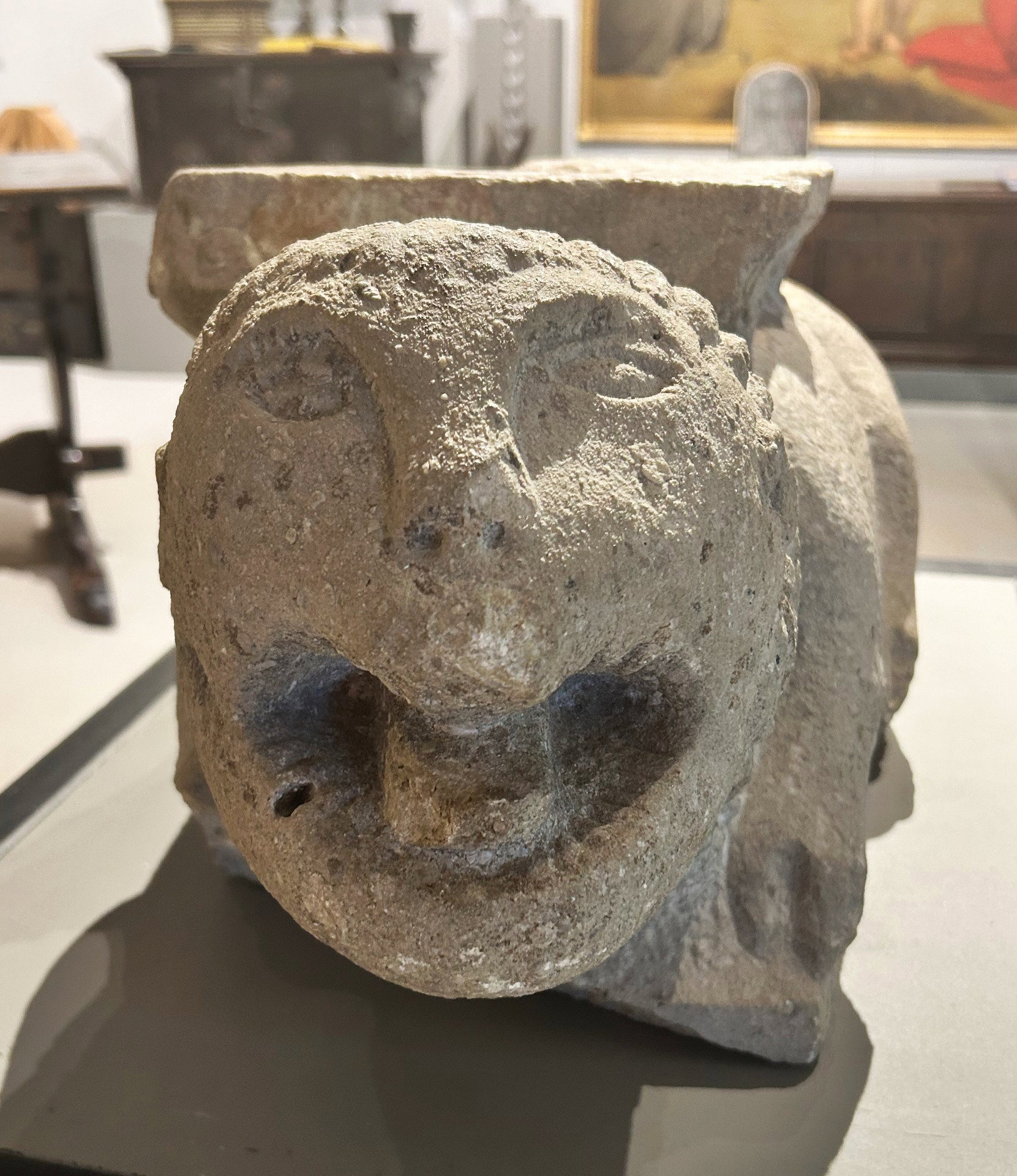
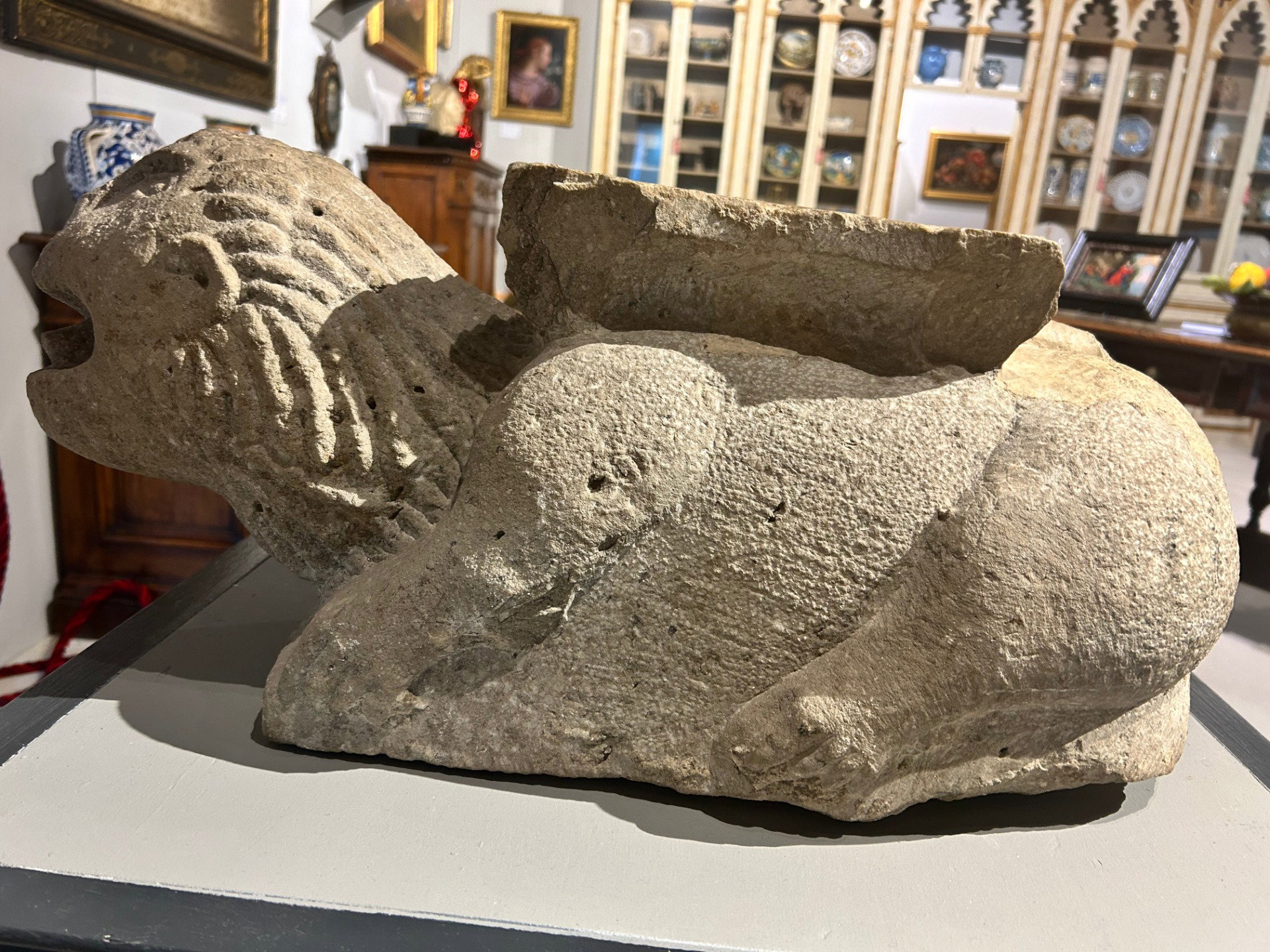
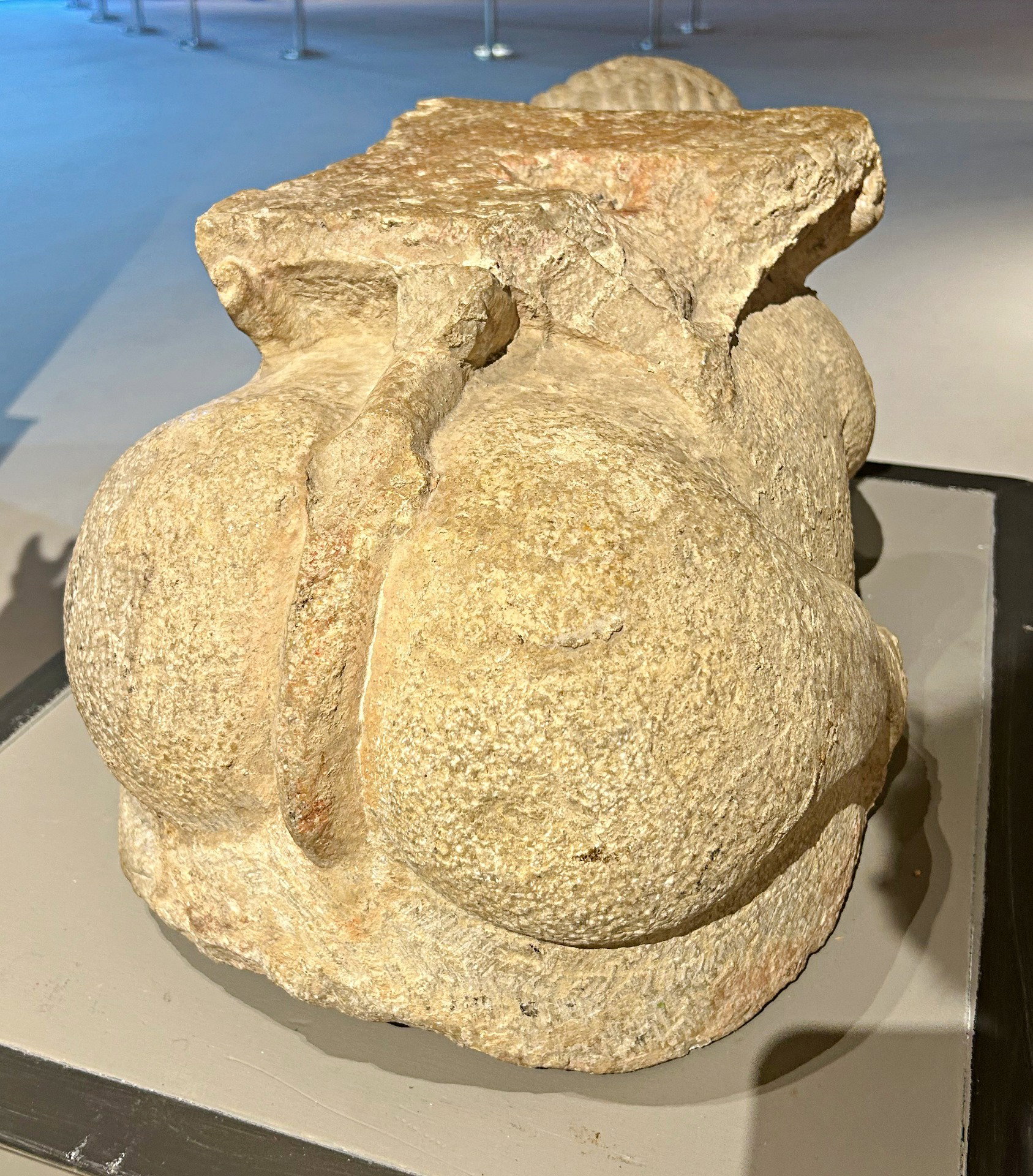
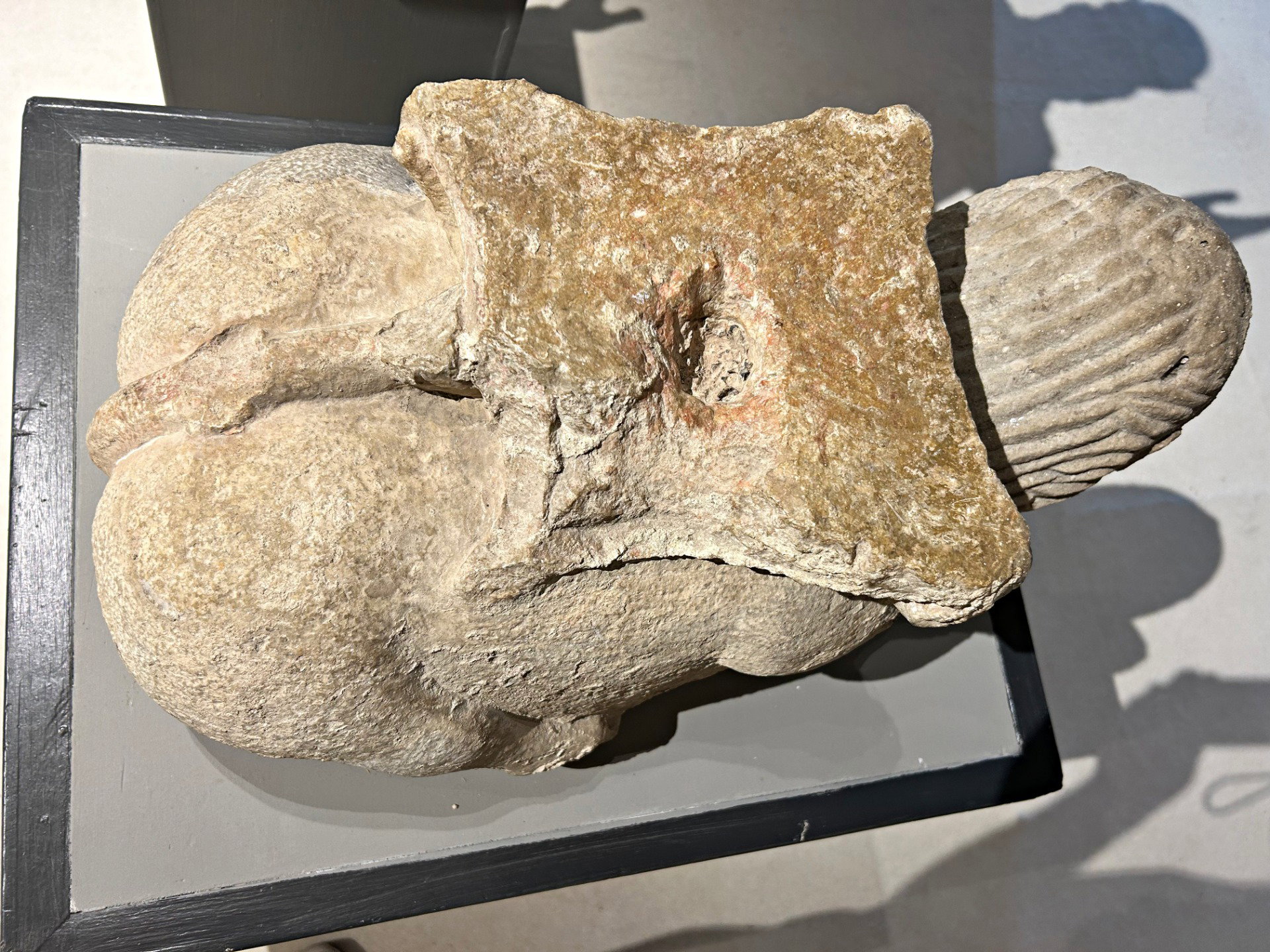
Stylophorous element that most likely depicts a sea lion taken from medieval bestiaries.
This is a fully sculpted stone sculpture forming the base of the internal ambo of an ancient proto-Romanesque cathedral. It is believed to be a sculpture dating back to the dawn of the early Middle Ages, between the year 1000 and the beginning of the 13th century.
The stylization of the features of this fantastic animal is characterized by an accentuated simplification of the masses and anatomically much less defined than examples of stylophorous lions from the full Romanesque period of the 13th century, which were very common throughout Italy.
Given this stylistic hypothesis, we perceive tendencies towards sculptures of barbaric or Nordic culture, therefore it cannot be excluded that it may be a piece even prior to the year 1000 executed by craftsmen of late-Lombard or Byzantine culture in central Italy. In fact, the type of stone appears to be gray peperino, a stone that is abundant in the Tuscia area, between Lazio and Tuscany.
It is known that most Italian basilicas have undergone numerous construction phases and therefore may belong to a primitive internal ambo built around the year 1000, a period characterized by numerous cultural and artistic influences in Europe and Italy.
The hypothesis that the animal is a sea lion can be advanced due to the strange engraved fins present under the animal's paws, both posterior and fragmentary in the anterior ones.
Measurements:
Approximately 65 cm long x 35 cm wide x 30 cm high.
We attach a certificate of authenticity issued by our antiques gallery to the sale.
Upon request, we can provide documentation for the free circulation of goods, if there is interest from a customer who lives outside of Italy.
Discover our ancient art proposals on www.antichitabompadre.com