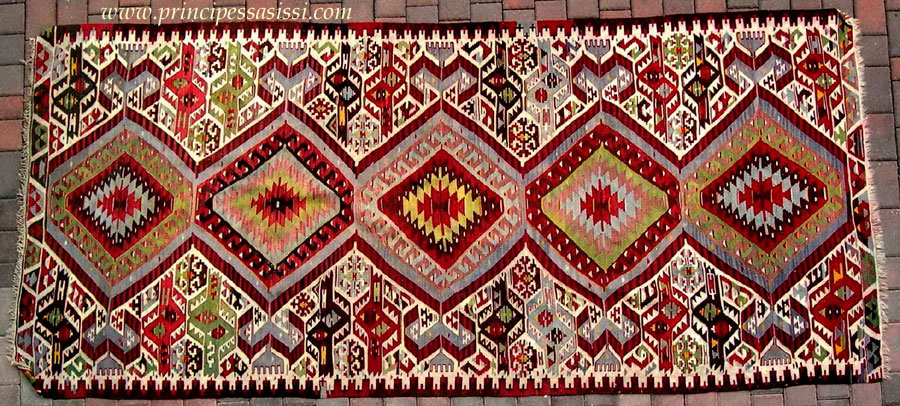
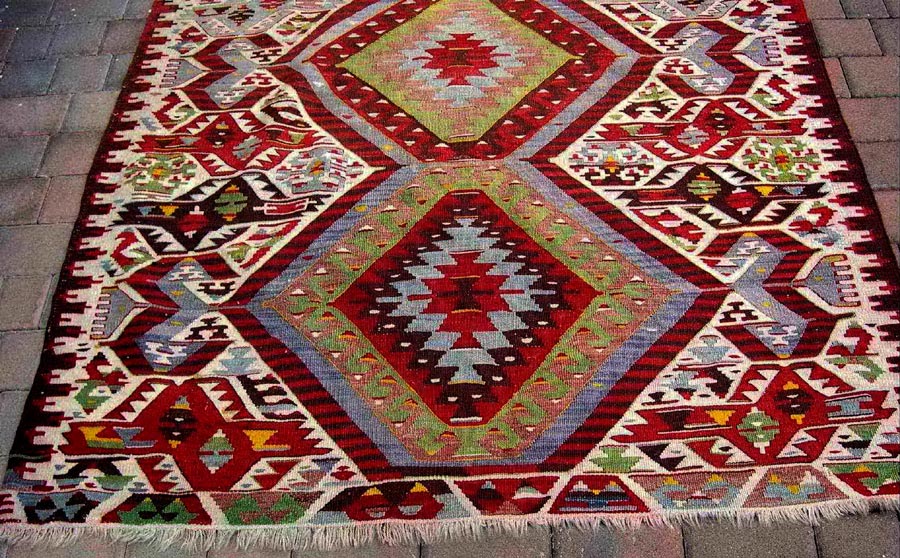
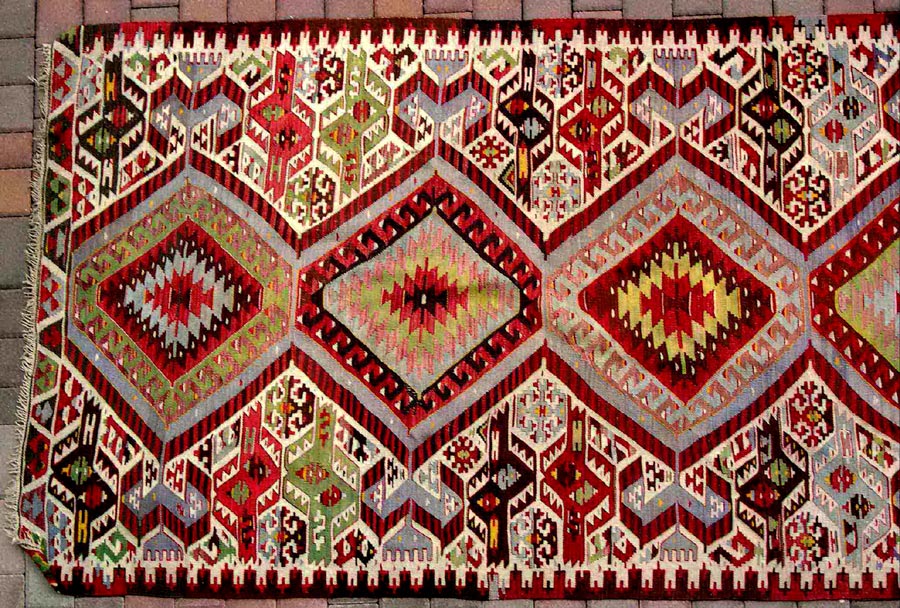
Rare Anatolian flatweave from the last third of the 19th century with vegetable dyes and a pleasant and delicate abrash, with considerable dimensions of Cm. 348 x 155. In very good condition with reference to the period. Patina and signs of aging corresponding to antiquity. Not restored.
Expert technical data sheet / study and detailed description of the work:
Stylistic analysis
1. Central notched diamond motifs
The large rhombuses with zigzag gradations in the center are very typical of Eastern Anatolian kilims (especially Malatya, Erzurum, or Sarkisla). The wavy green or blue outlines recall some motifs from the Aksaray and Nigde area, but the rendering is more complex and articulated.
These central "flame" or "stepped" motifs are often called "flaming medallions" and frequently appear in 19th-century kilims from the central-eastern Anatolian region.
2. Shaded natural colors
Our kilim shows a rich chromatic range, with shades of crimson, olive green, sky blue, and mustard yellows. This use of vegetable dyes is characteristic of antique carpets made before the spread of synthetic colors (after around 1900).
This type of tone recalls regions such as Malatya, Kayseri, and also some kilims from the Konya area (although the latter are often more minimalist in motifs).
3. "Uçarı" border motif and other protective motifs
The border shows many small repeated almond-shaped eye or "teardrop" protection motifs;
The hooks are symbols of a barrier against evil; the stylized horns (koçboynuzu) are a symbol of virility and power;
The Xs and triangles with bars can be interpreted as “bereket” (fertility) motifs.
The decorative density of our kilim's border is very typical of tribal kilims from the Sarkisla region (Sivas province) and the area between Kayseri and Adiyaman.
4. Compositional structure with aligned medallions
The structure with a horizontal sequence of rhomboidal medallions is typical of kilims the following areas:
Southeast Anatolia (Gaziantep, Adiyaman) or Erzincan / Sivas / Malatya
These kilims are known for being narrative, often wedding dowries (“çeyiz”) or nomadic tent kilims, woven by women who incorporated symbols of life, family, and superstition.
Conclusion on origin
Most likely region: Sarkisla – Malatya – Erzincan
Textile area: Eastern / central-eastern Anatolia
Period: Last third of the 19th century, before the introduction of synthetic dyes
Original use: probably a wedding dowry kilim or nomadic ceremonial rug
In compliance with the provisions of the New Code of Cultural Heritage, the selling company provides, at the time of sale, a detailed written photographic guarantee of the originality and provenance of the works sold. The data with which the works are described and then contained in the written guarantees are expressed determinations resulting from accurate and documented technical/historical/artistic investigations, even of an expert nature.