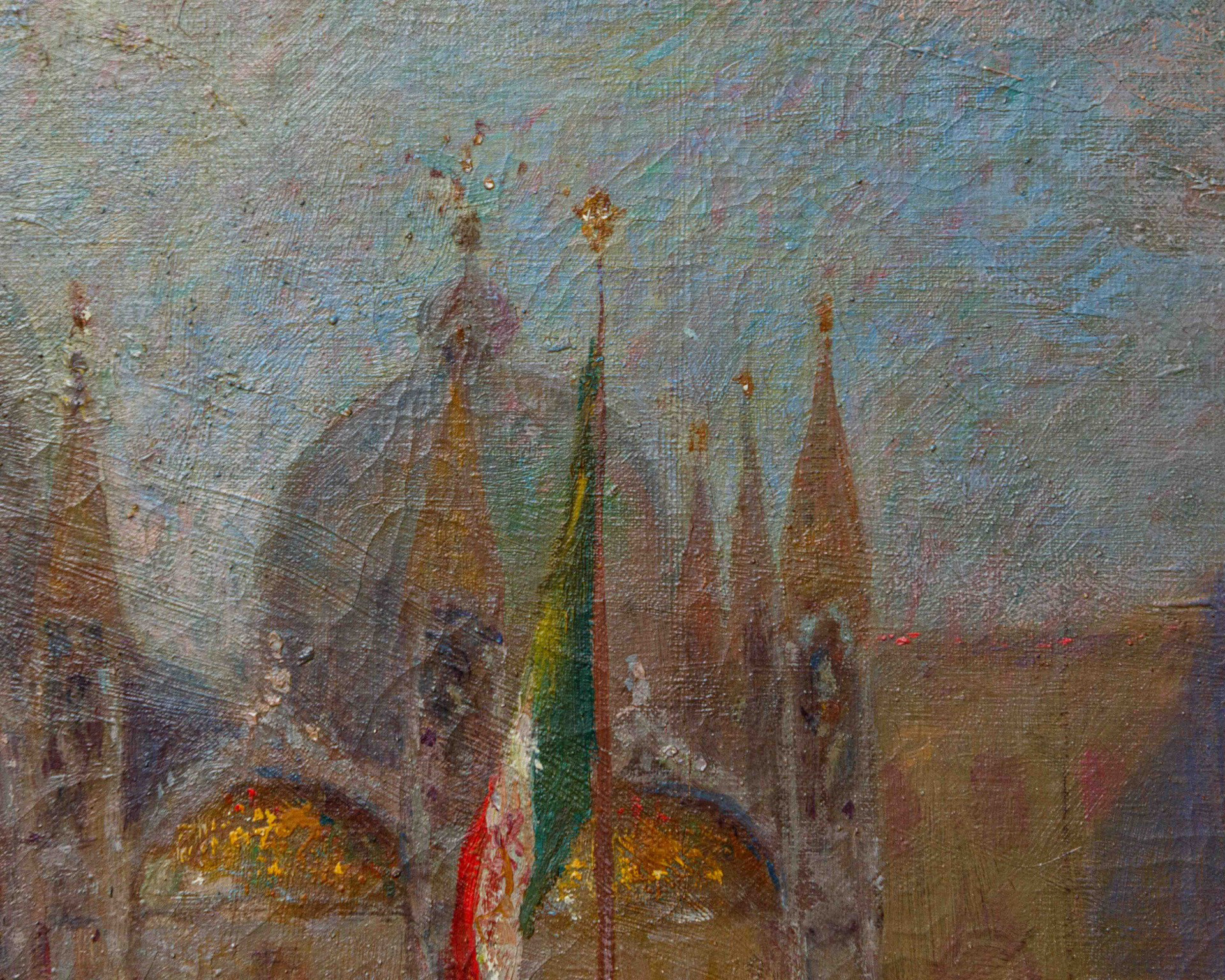
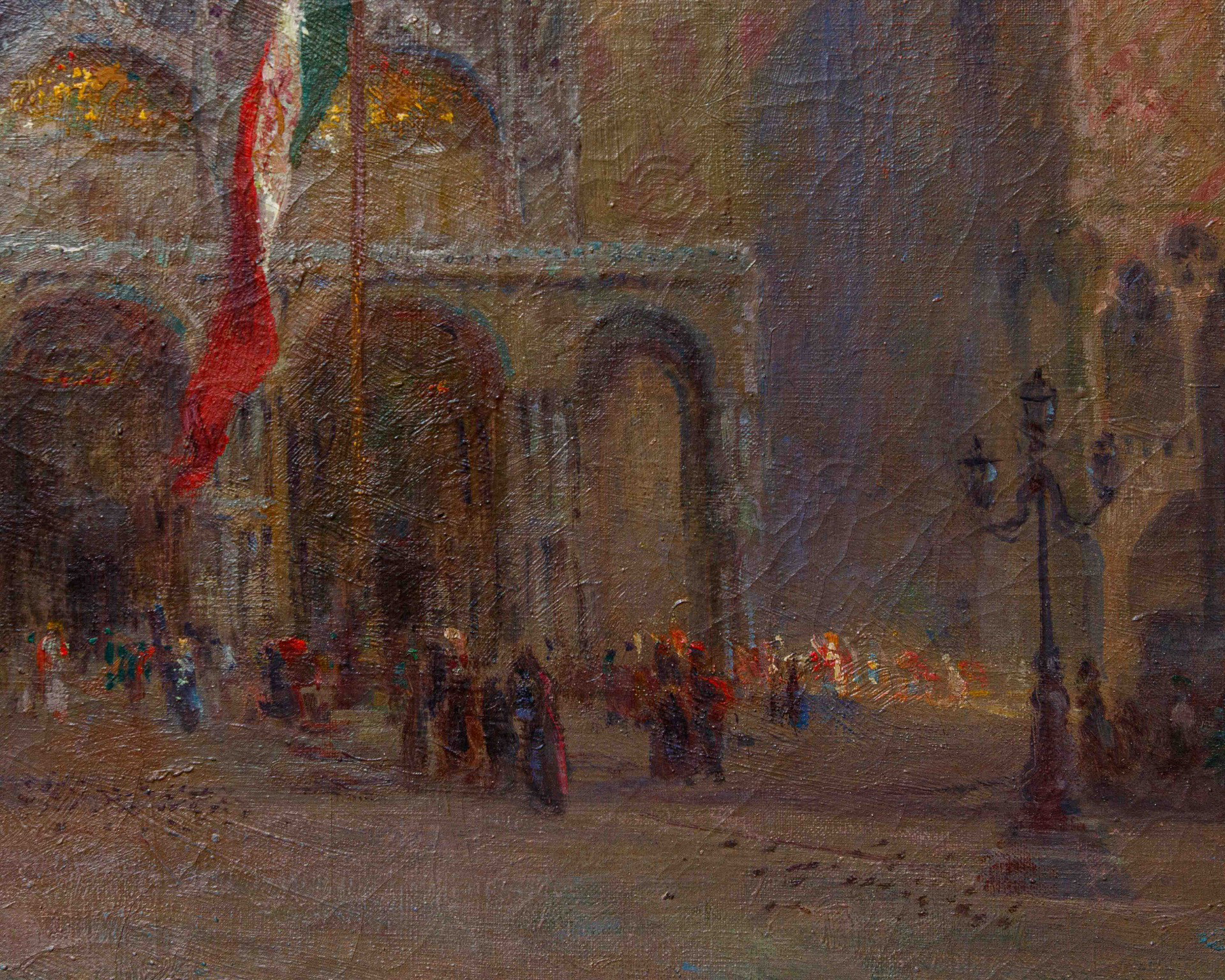
Second half of the 19th century
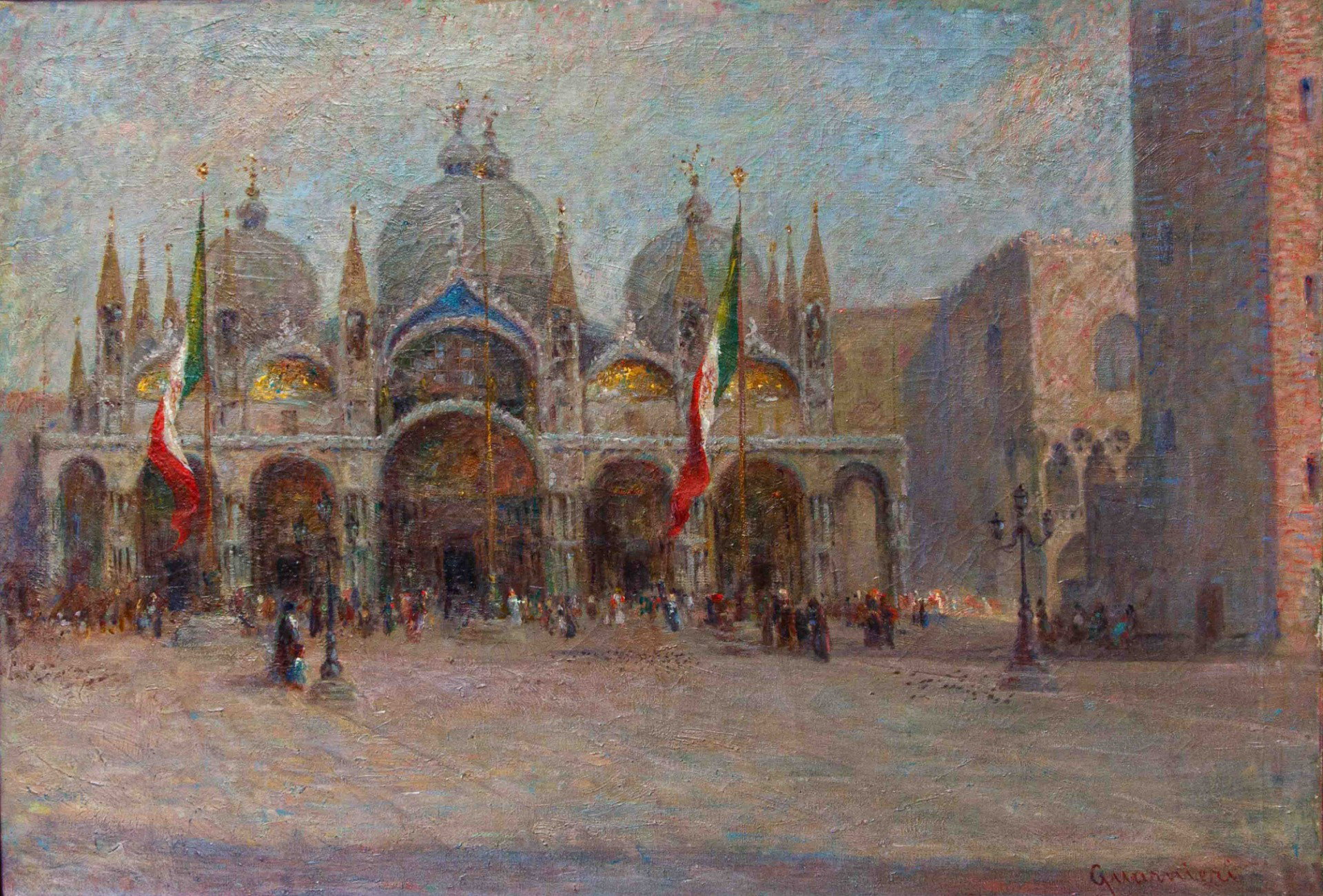
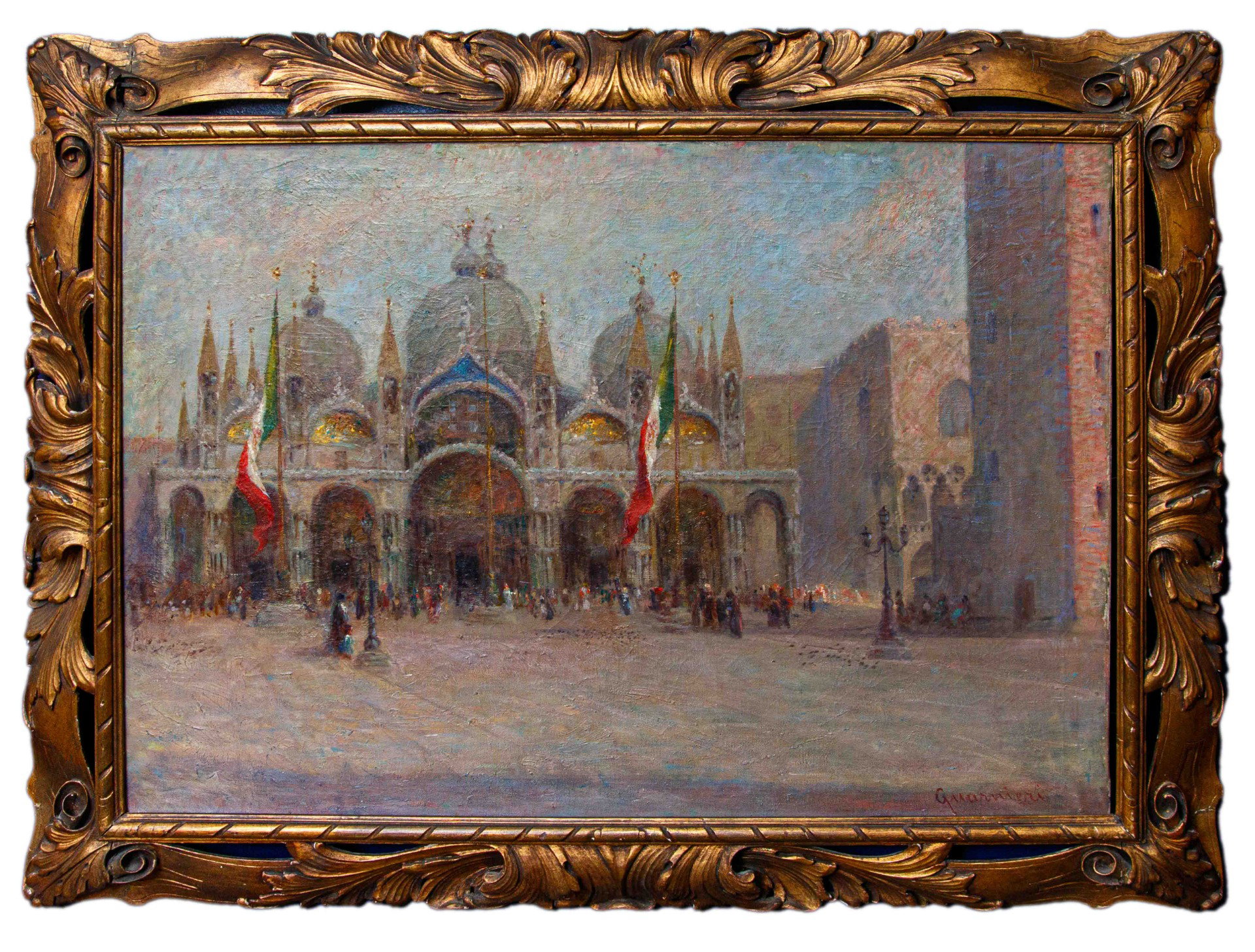
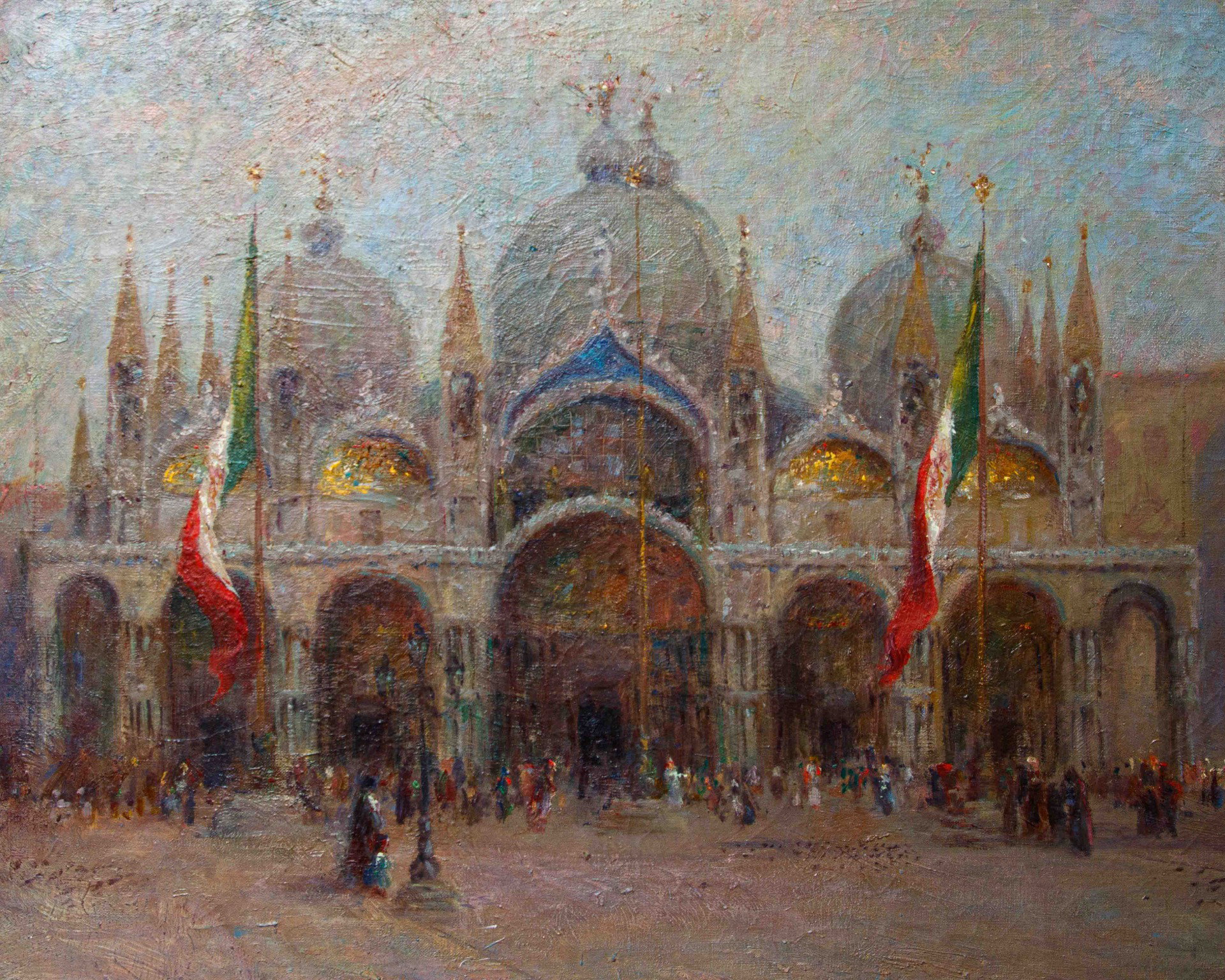
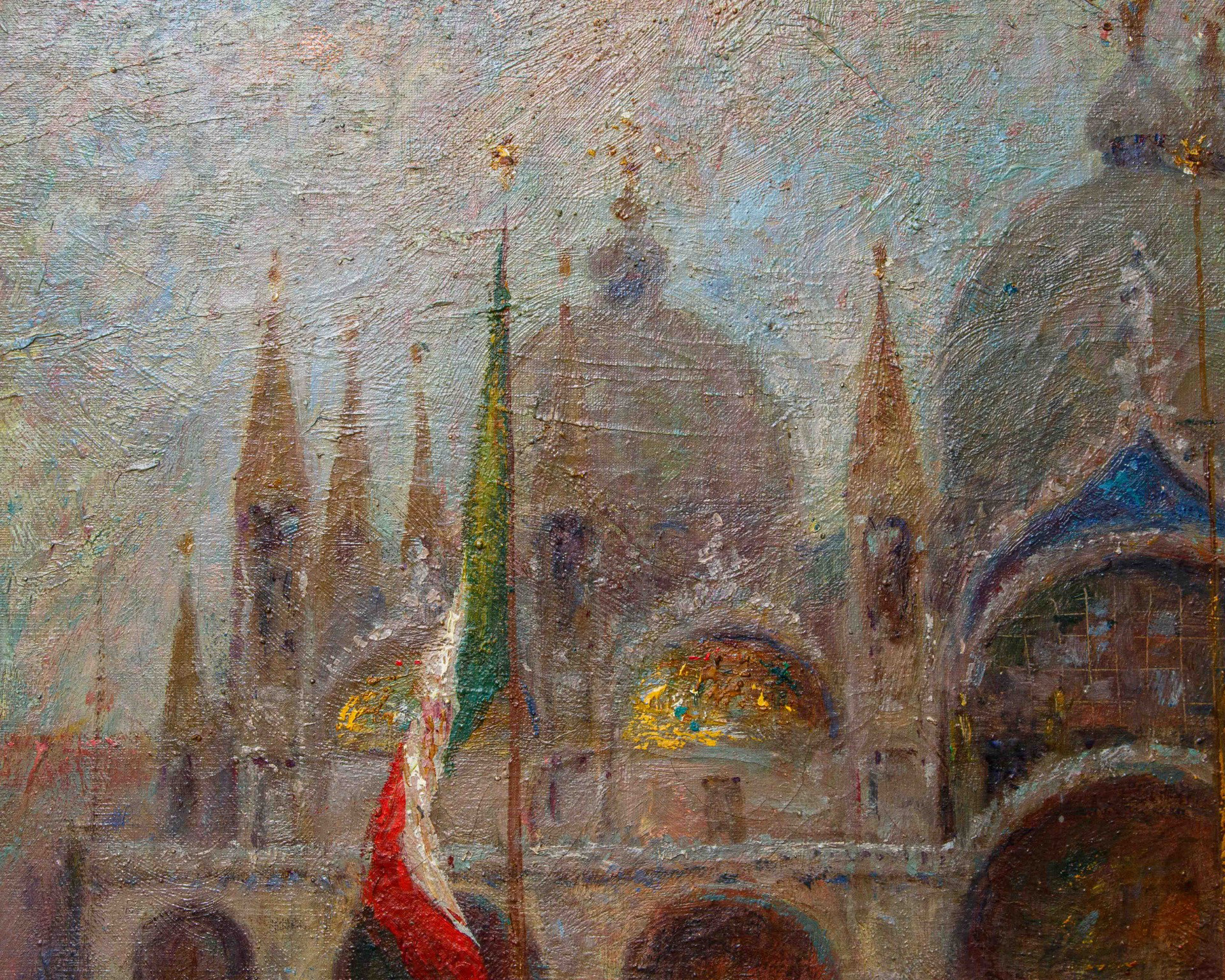
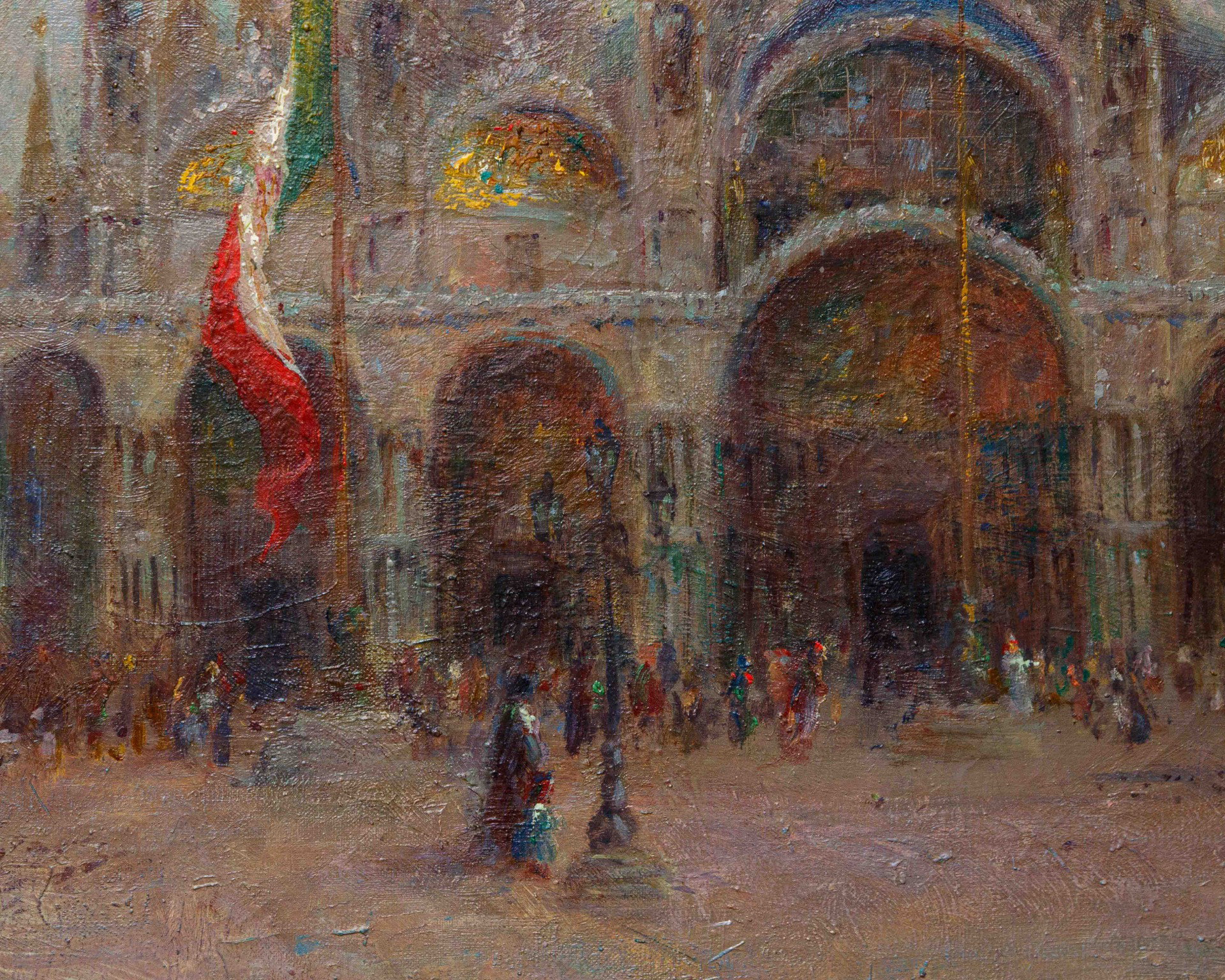
View of Saint Mark's Square
Oil on canvas, 69 x 99 cm
With frame, 92 x 119 cm
Signed lower right "Guarnieri"
1866 was a crucial year in the history of Venice: the period of long Austrian domination came to an end and the city became part of the Kingdom of Italy. Already in the early months of the year, the expectations of Venetian patriots were growing for the new European political climate, as documented by a series of publications which, under an innocuous guise (Austrian censorship remained ever rigorous), alluded to the upcoming unification with the Kingdom of Italy. After the armistice of Cormons on August 12th and the peace signed in the Treaty of Vienna on October 3rd, popular joy exploded for the imminent liberation, which had seemed compromised after the heavy Italian defeats at Lissa and Custoza. Finally free from censorship, the Venetian press unleashed itself and flooded the city with a series of publications that addressed and debated the hottest topics of the moment: from the economic and moral damages inflicted on the city by the long Austrian rule to the abandonment of port activity and maritime trade in favour of Trieste, with the consequent economic and employment crisis; from the stagnation of industrial development due to the lack of public support initiatives and adequate infrastructure to the suffocating bureaucracy. The Austrian plundering of important parts of the Venetian heritage (paintings, archival documents, manuscripts) was denounced, detailed by the Swiss consul Victor Ceresole and other Venetian intellectuals, in the hope of a rapid and complete implementation of the clauses of the Treaty of Vienna, which provided for the restitution of stolen works of art and documents. Once reunification took place, enthusiasm for the future manifested itself in a notable production of projects and proposals presented to the new Italian administration for the large-scale relaunch of the city through the promotion of maritime trade, the containment of duties, the reactivation of the Arsenal, the development of the railway network. To celebrate the reunification, the construction of great works was proposed to Vittorio Emanuele, including new bridges over the Grand Canal of great visual impact, works never realized but which testify to the intellectual fervor of the moment. The euphoria that spread in the city is evidenced by many celebratory compositions (popular choruses, songs, poems) which compensated for the paucity of the poetic level with the exhibition of a vibrant civic passion.
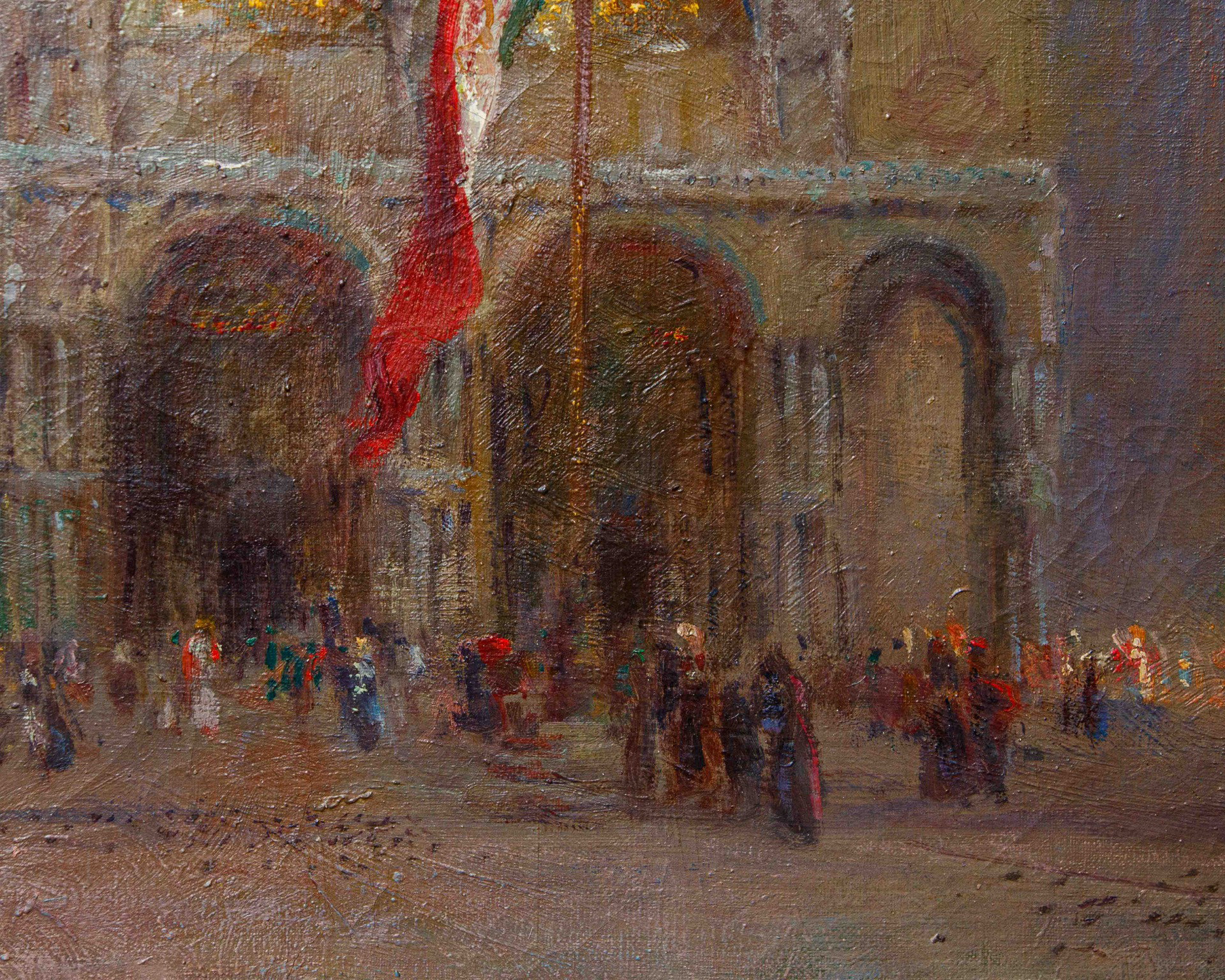
The scene depicted here may well be set in 1866: Saint Mark's Square appears embellished with a series of Italian flags, intended to celebrate the liberation of Venice from the long and painful Austrian domination. The subject in question is relatively frequent with regard to Venetian painting of the second half of the nineteenth century and the beginning of the twentieth century, as evidenced by the works of Vettore Zanetti, Cipriano Mannucci and Jean Belliure. The work in question constitutes a precious document for the reconstruction of a particularly relevant segment of the unitary parable of the Kingdom of Italy. The technique of the painting, which is distinguished by its quick and indefinite brushstrokes, is certainly influenced by the great masters of French Impressionism, whose notions spread in Italy starting from the eighties of the nineteenth century.