PACECCO DE ROSA
(Naples, 1607 - 1656)
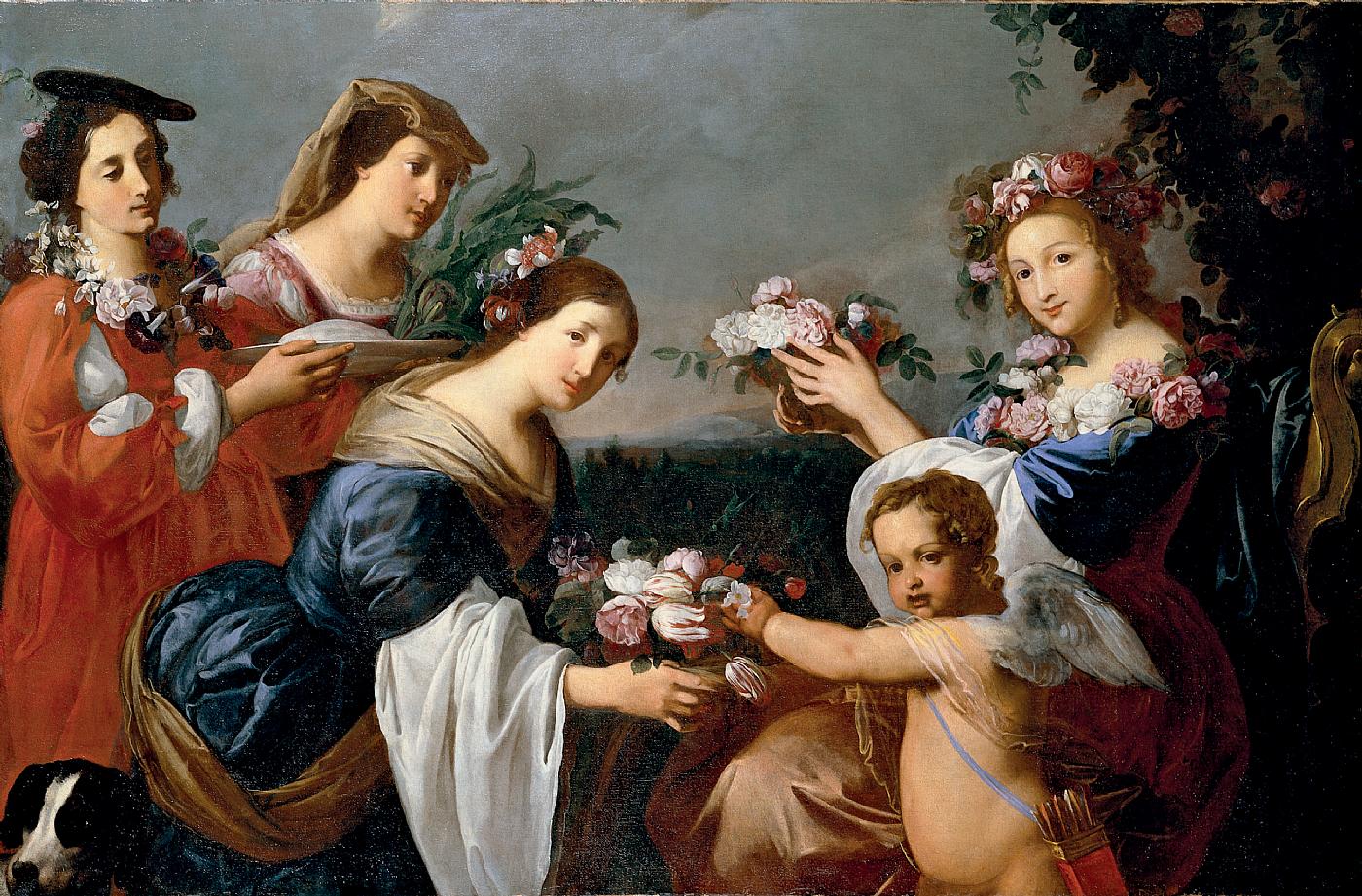
Allegory of the Bride in the guise of Flora
Oil on canvas, 130x200 cm
The mythological-allegorical representation described here can be deciphered if we consider two fundamental elements in the foreground: Cupid and the dog, respectively symbolizing Love and Fidelity; three flower-crowned women, two of whom are also distinguished by unique head coverings, in vogue in southern Italy since the 17th century, bring gifts to a young bride, dressed as the goddess of Spring but also characterized by a subtle portraiture, although likely, at least partly, idealized according to the classical canons.
The harmonious balance between Classicism, precisely, and naturalism, is the characteristic element of the Neapolitan grand manner of the mid-17th century, as is evident in the graceful and elegant, but also attentive to the study of "truth", compositions of Pacecco De Rosa, particularly inclined to depicting the female figure, from mythological subjects to the sacred sphere, and always attentive to creating noble and solemn atmospheres, detached from the "low" sphere of everyday life, even when defining themes close to Naturalism.
The compositional balance of the large canvas examined here could even recall the manner of Poussin, from whom, however, ours distinctly differs in the intensity of colour and the strongly truthful and tactile definition of the flesh tones, thanks to the accentuated and graduated sfumato; nor should one overlook the attention to the various still life sections, for which De Rosa, a great history painter, demonstrates a virtuosity comparable to that of the specialists, also Neapolitan, of this subject.