Russia, 19th century
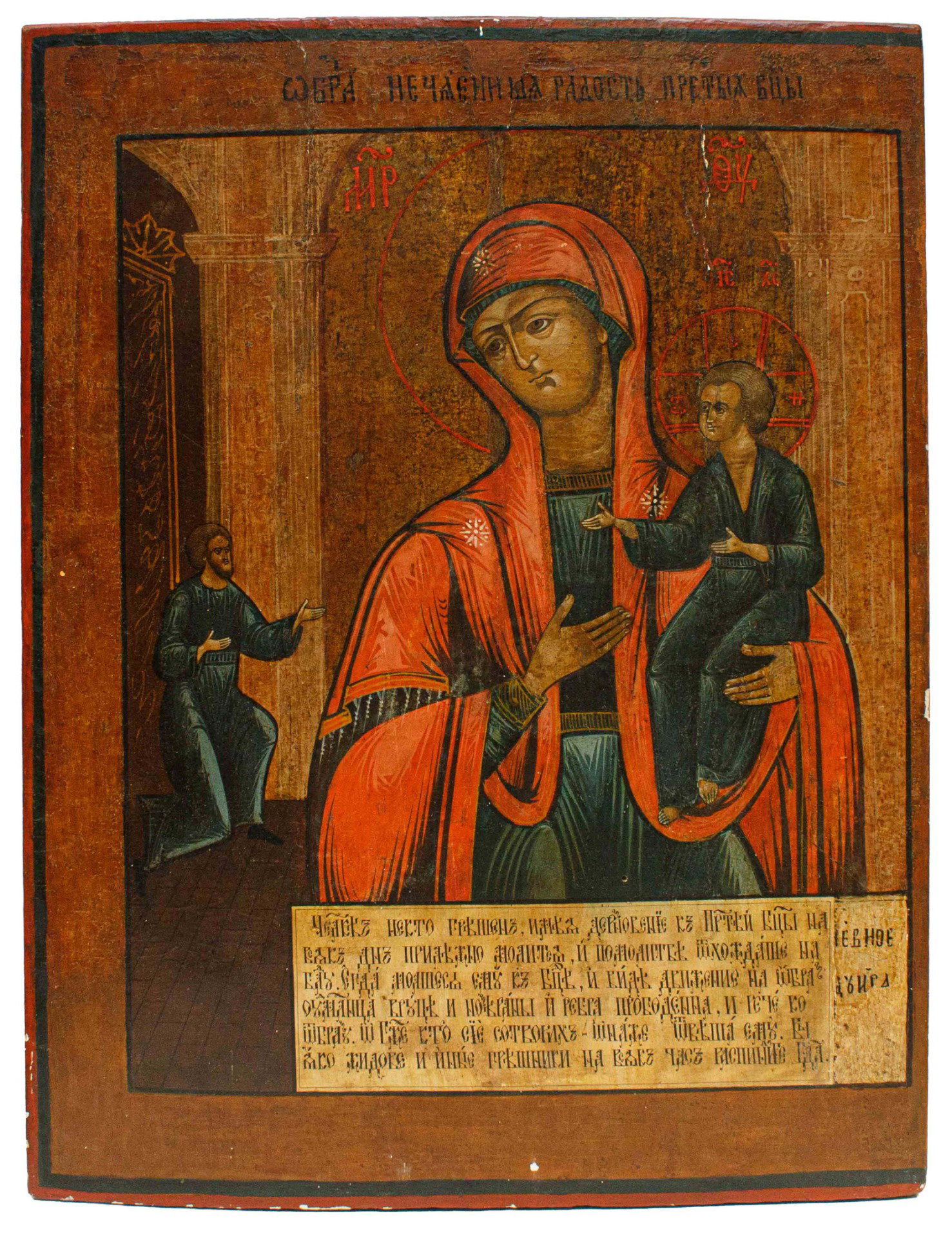
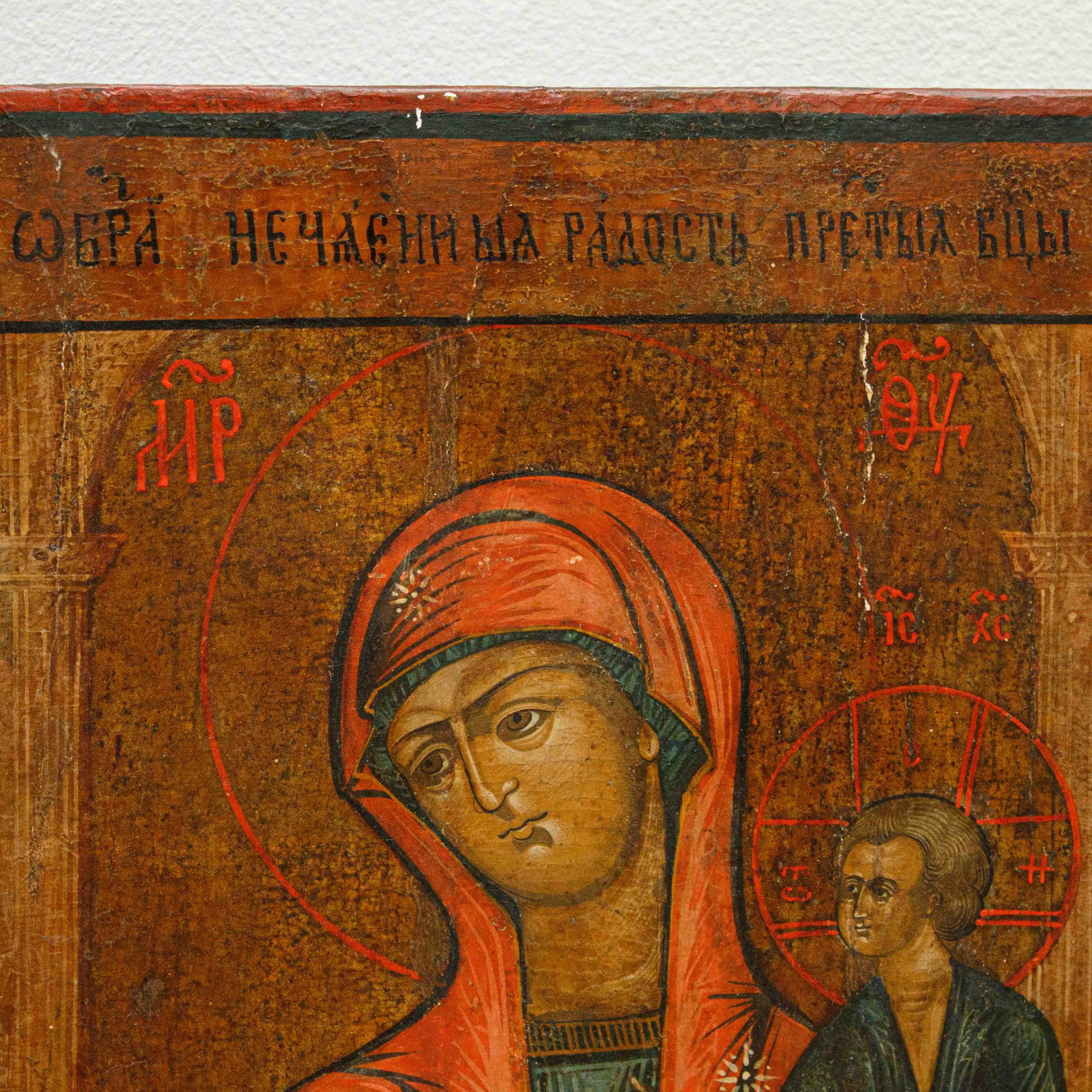
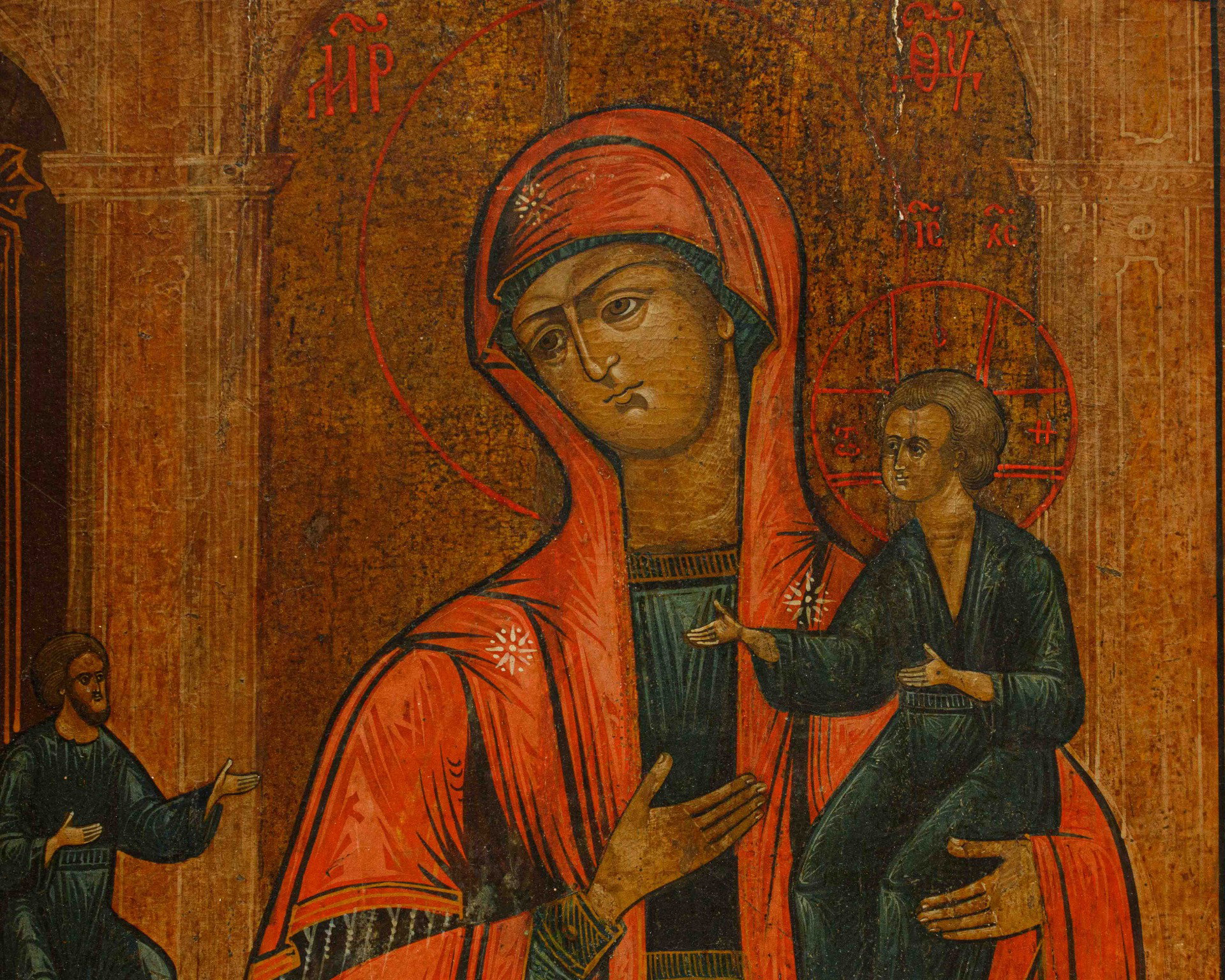
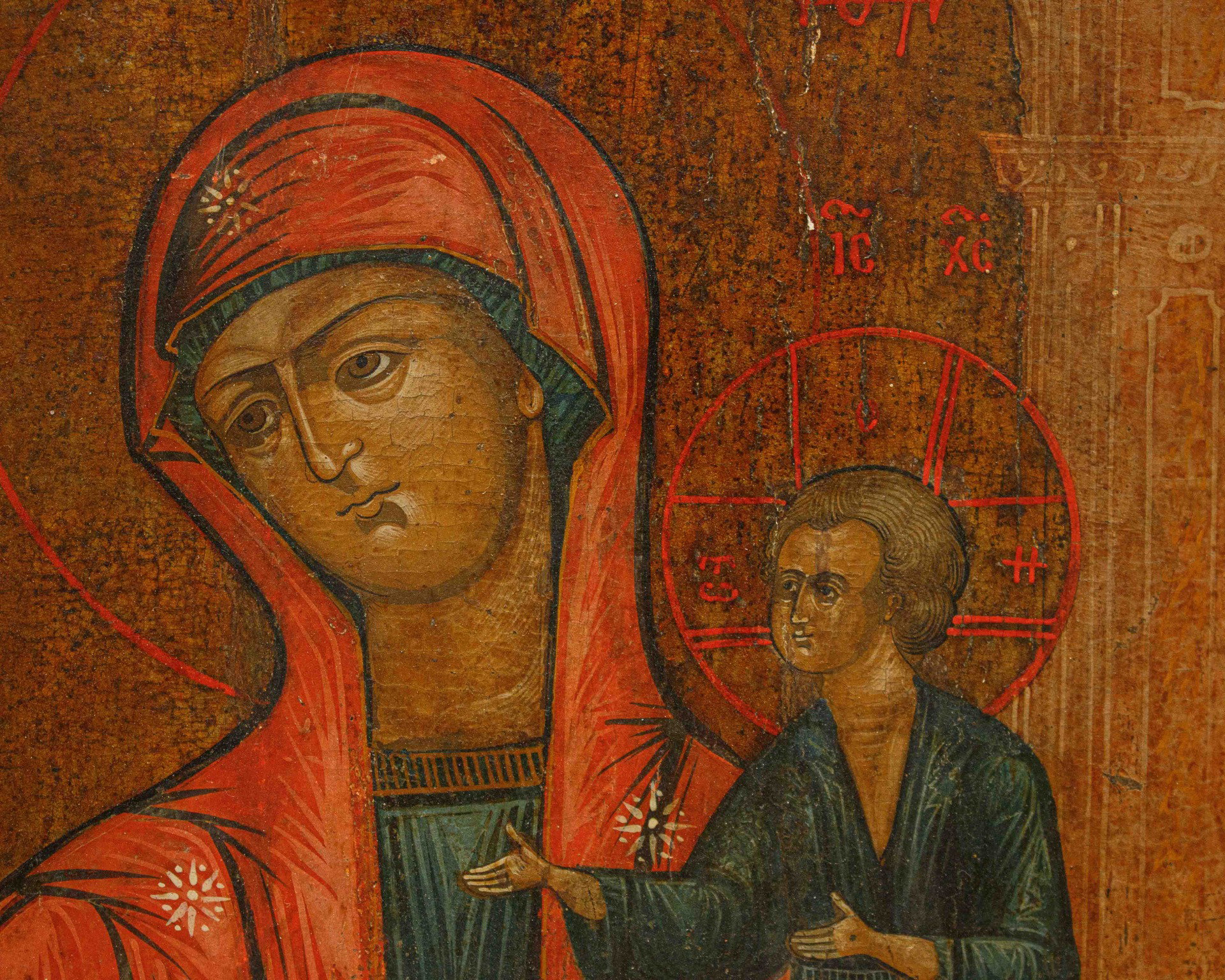
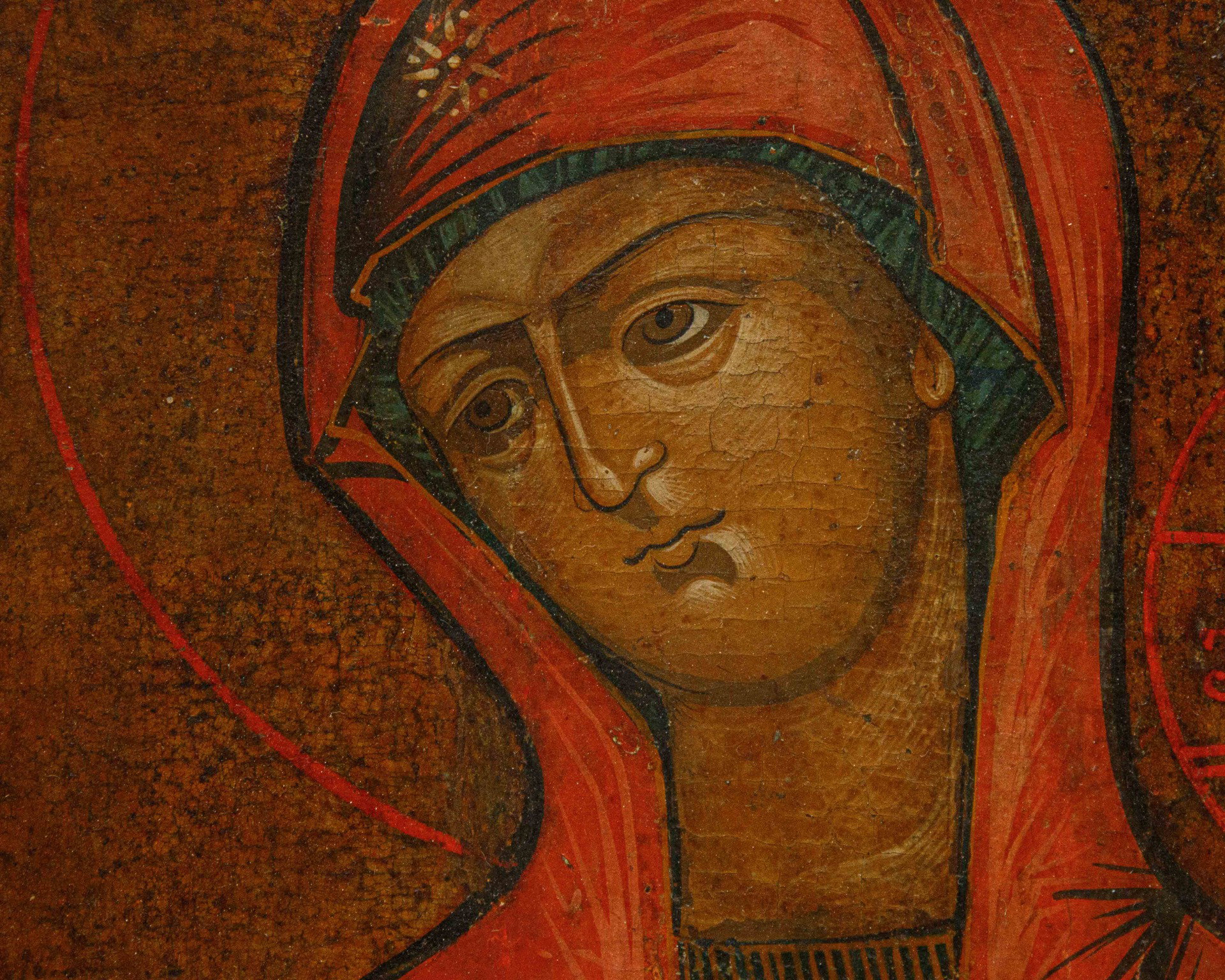
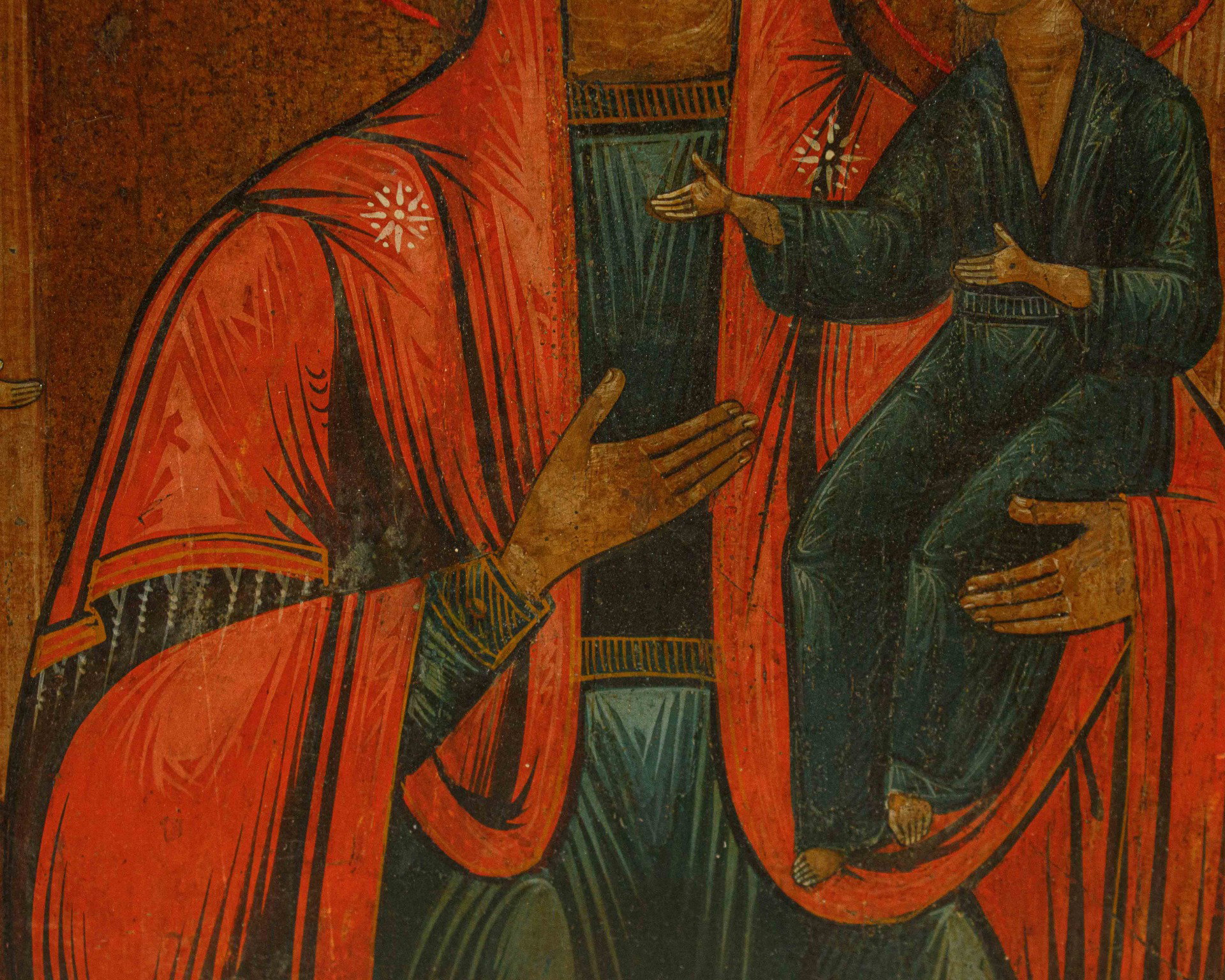
Icon of the Madonna and Child with donor
Tempera on panel, 52 x 40 cm
The icon, from the Greek eikon, image, presents the narration of some episodes of the life of the Virgin and Jesus, constituting a treatise of theology in colors.
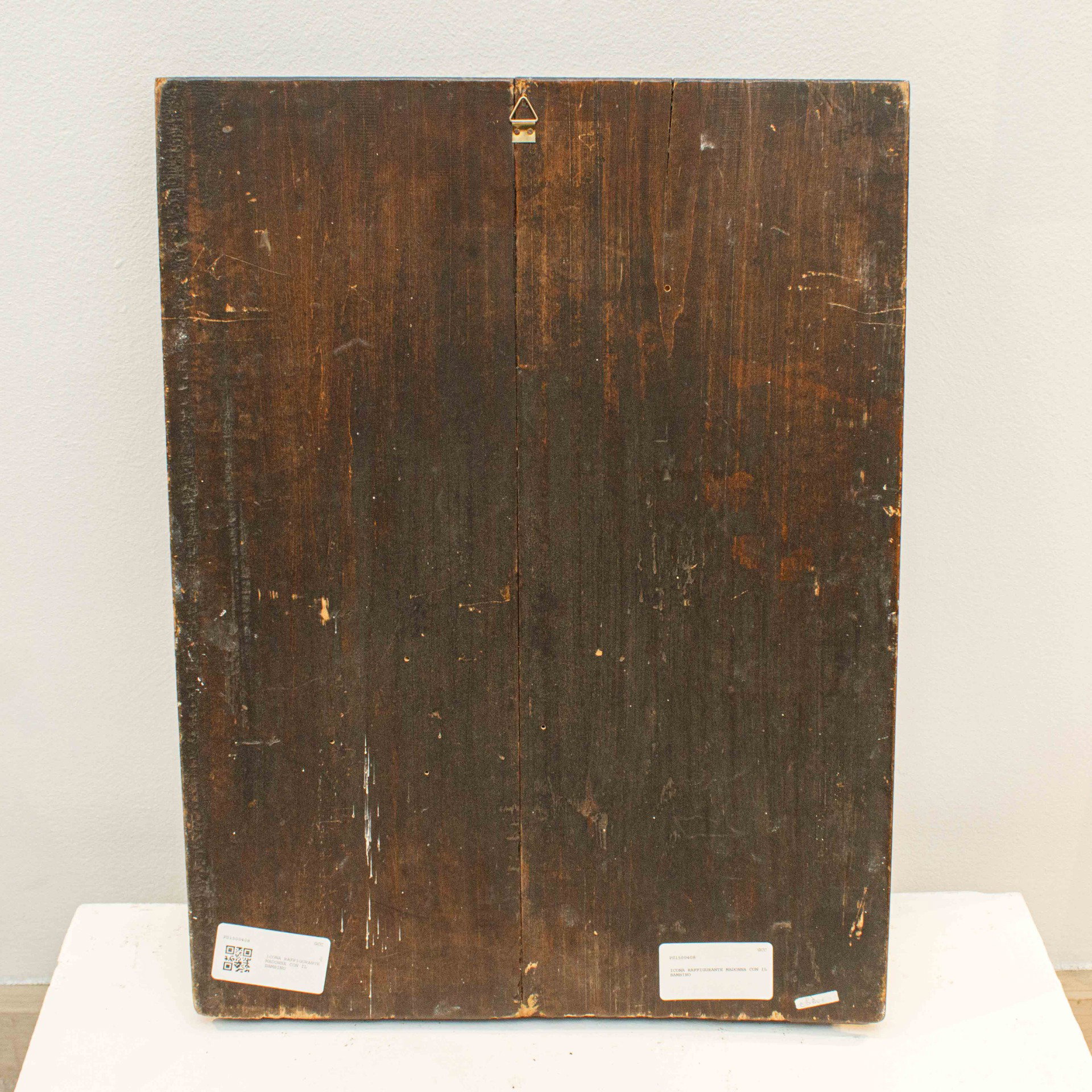
The particularity of the icons is evident from the preparation of the support on which it is painted. The wooden board itself is a symbol of the cross, while the canvas is a symbol of the mandylion, or the veil of Veronica, or the Shroud; the plaster that is spread on the canvas, the levkas, is a symbol of the stone. The icons were painted on wooden boards, generally of lime, larch or fir. On the inner side of the tablet a excavation was generally carried out, called "chest" or "ark", in order to leave a raised frame on the edges. The icon is not a personal interpretation but a rite with precise canons to be respected; unlike paintings, of which the name of the author is often known, the icon must remain anonymous. Theology considered the icons works of God himself, made through the hands of the iconographer.
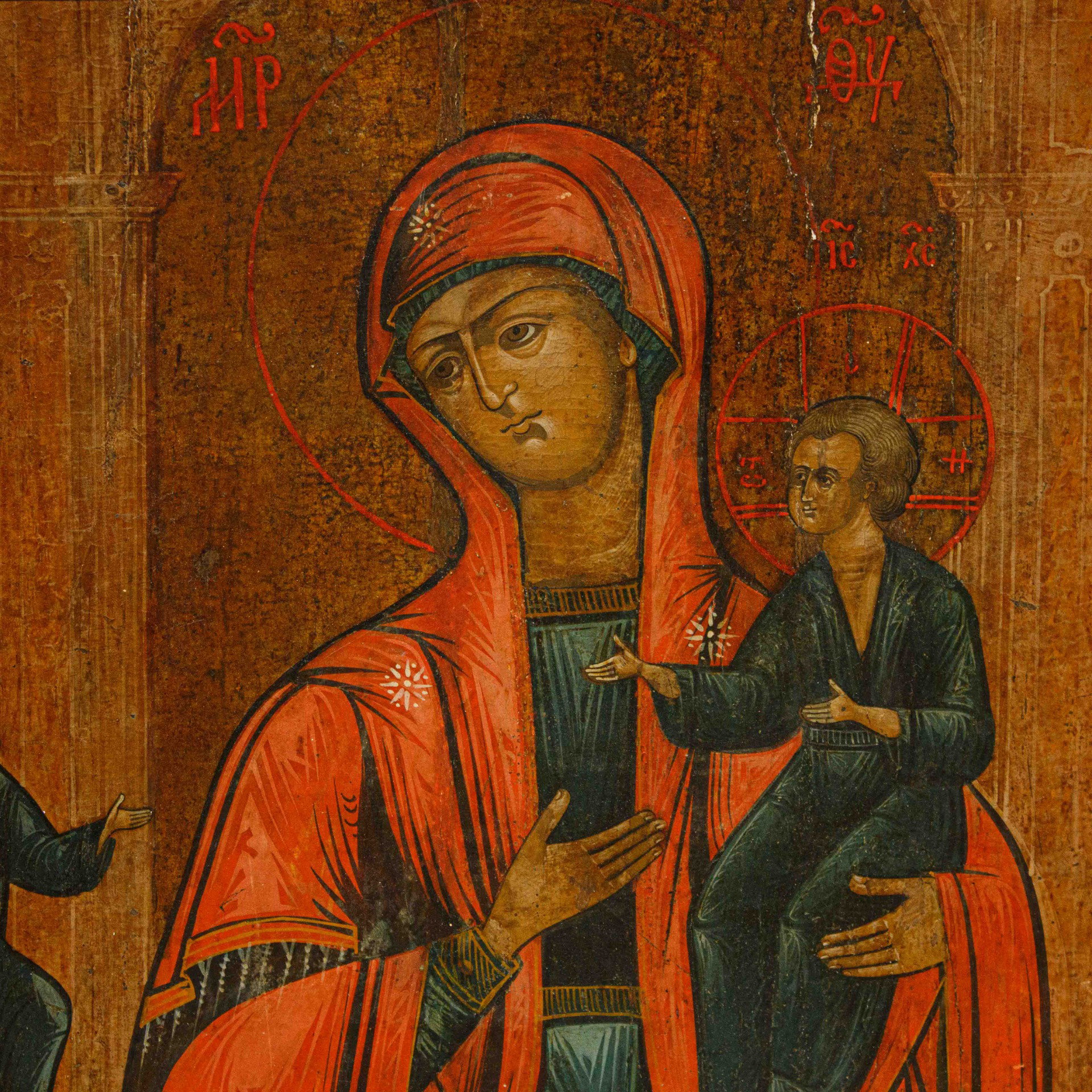
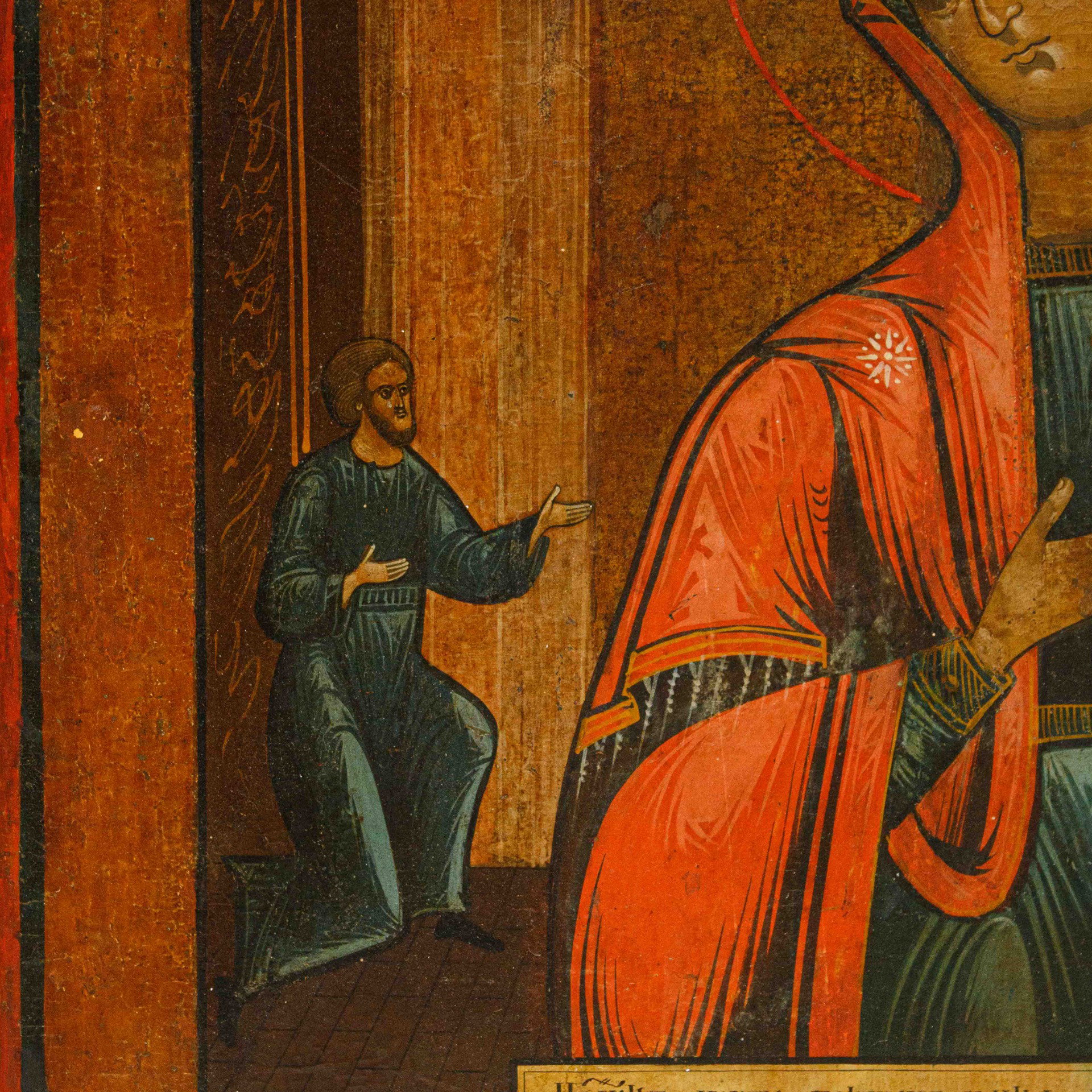
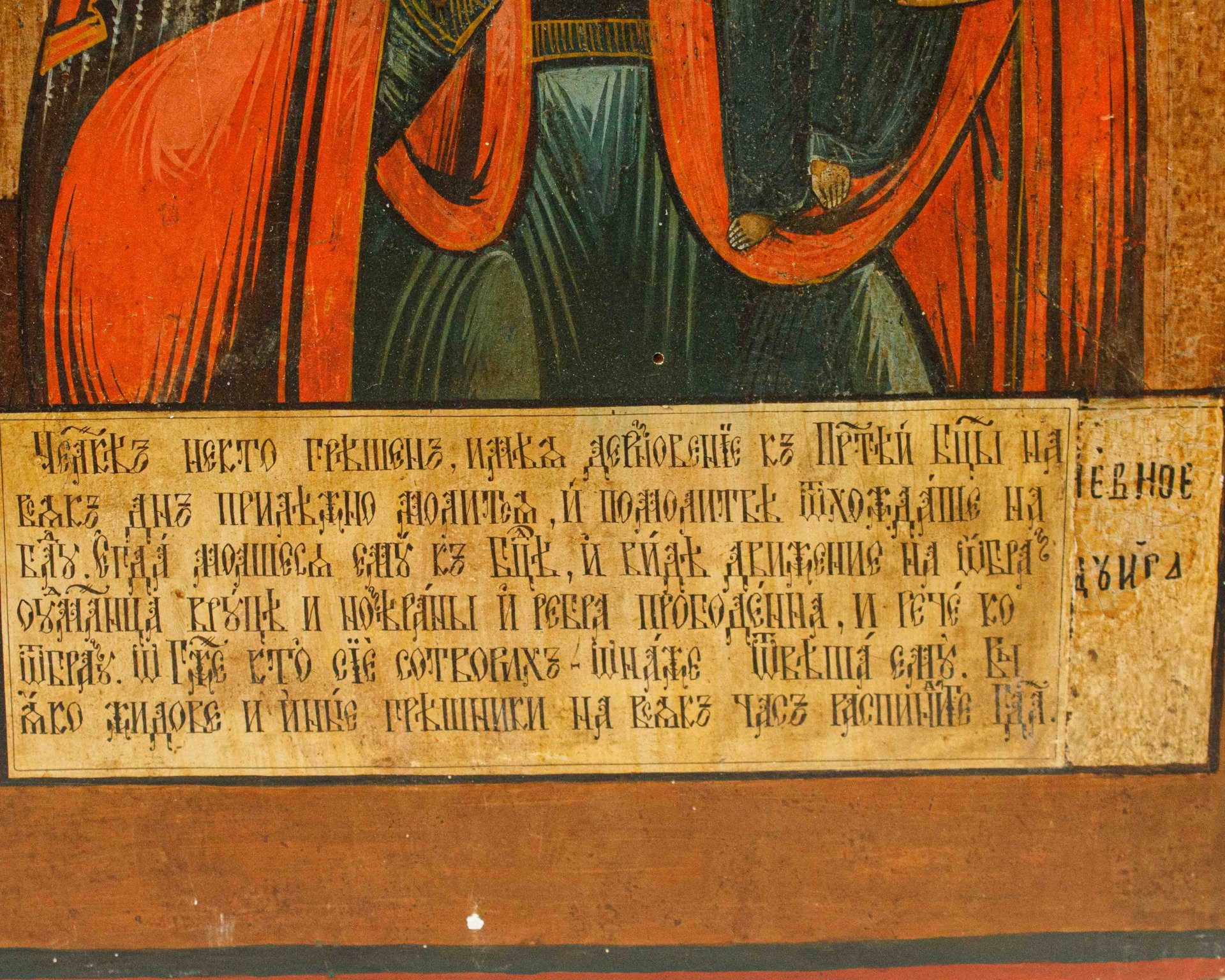
In the icon under examination we find a recurring depiction of the Madonna and Child, in this case enriched by the figure of the client/donor who is indicated by the hand of Christ.