Workshop of Francesco Battaglioli (Modena, circa 1710 – Venice, after 1796)
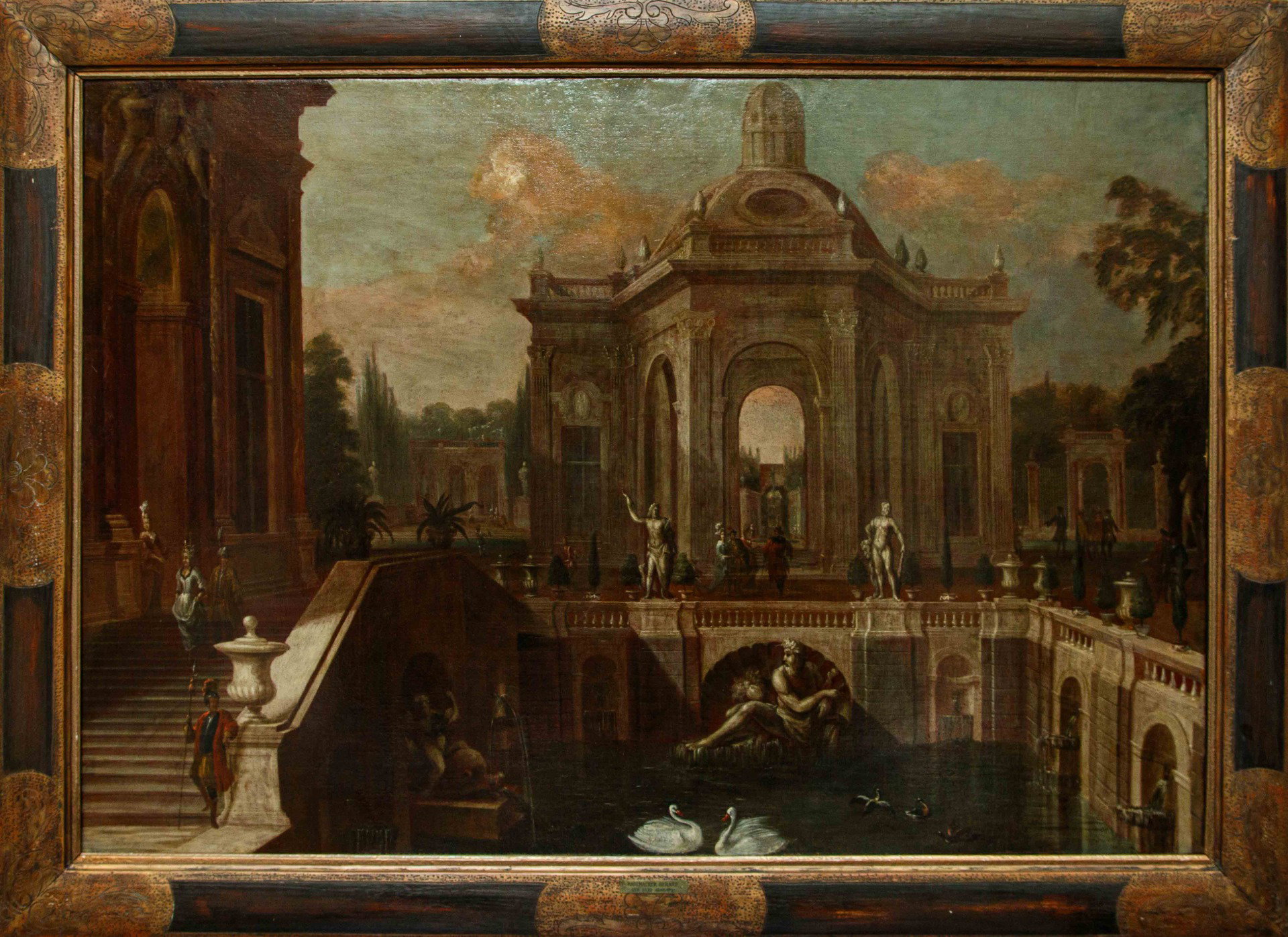
Architecture of a baroque palace with elegant figures and swans
Oil on canvas, 95 x 136 cm
Frame, 113 x 154 cm
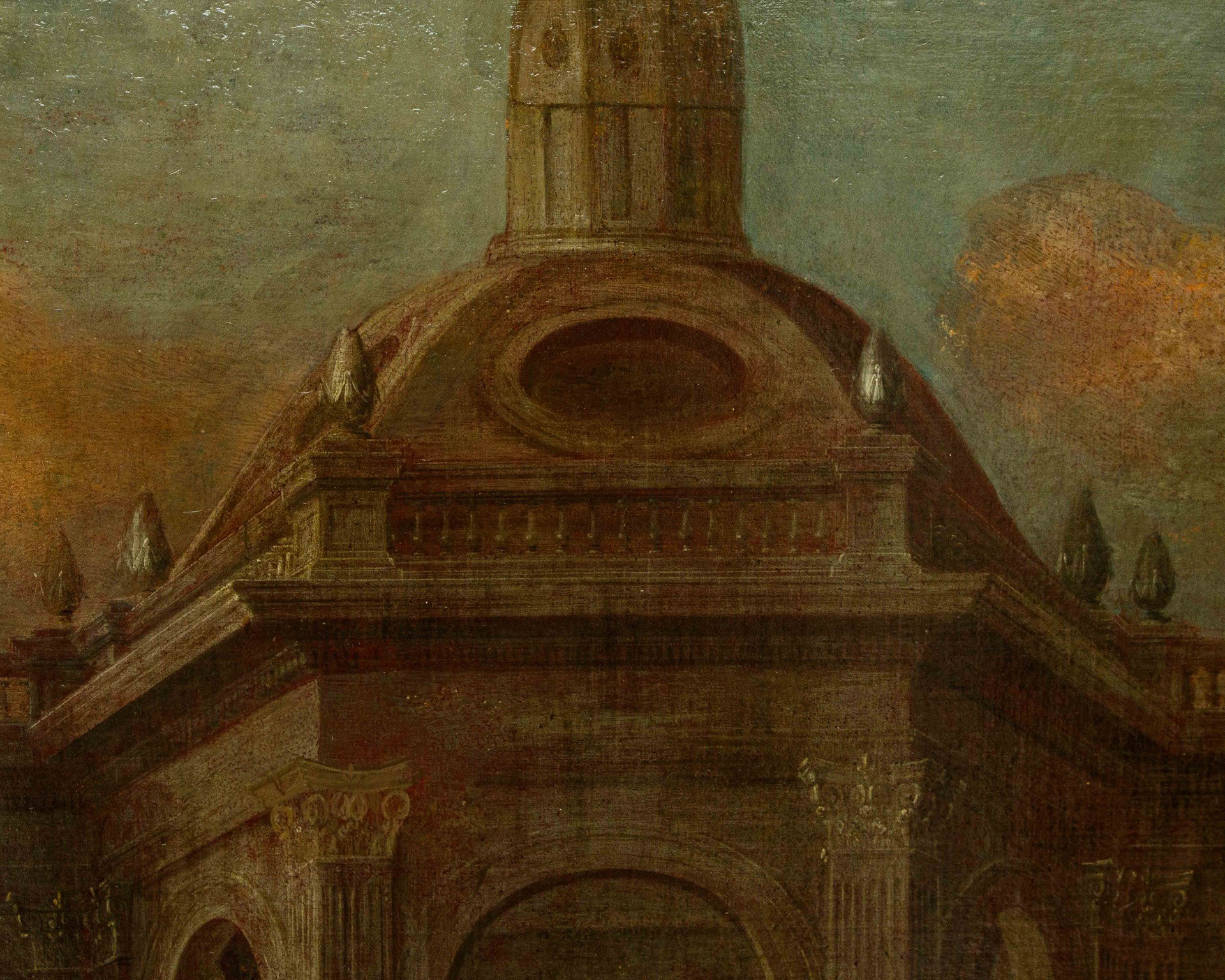
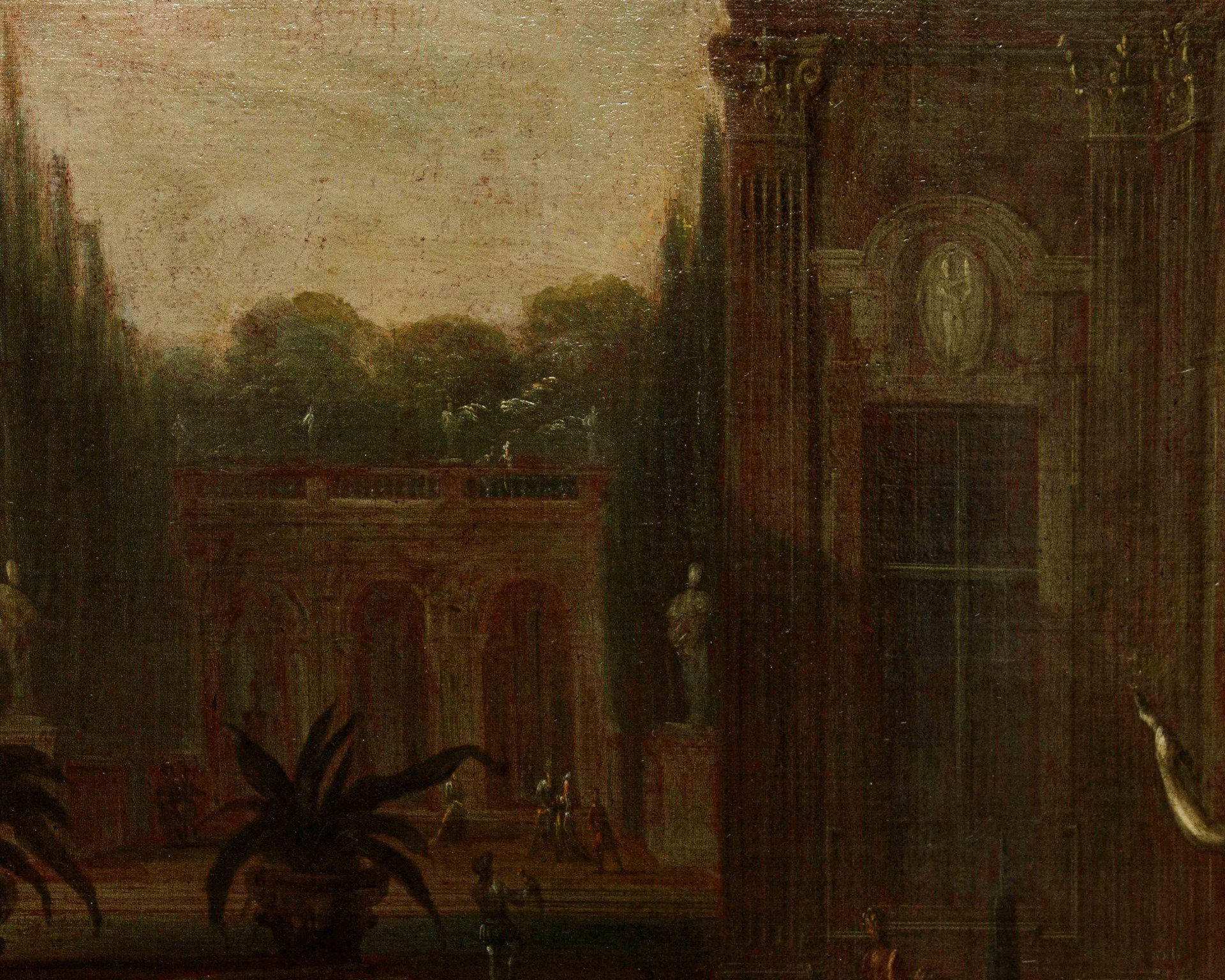
Of Modenese origin, as indicated by ancient sources, Francesco Battaglioli appears to be present in Venice, which effectively became his adopted homeland, from 1747 to 1751, a period in which his name appears in the Fraglia dei pittori (guild of painters). We find him in Madrid three years later, when he was called upon by Ferdinand VI, for whom he painted the Views of the Royal Palaces of Aranjuez and Madrid. At the Spanish court, he formed a collaborative relationship with Farinelli and Metastasio, creating the sets for numerous melodramatic performances. Returning to Venice upon the death of the King of Spain in 1759, he was elected a member of the Academy in 1772: within the Venetian institution, he would be called upon to hold the chair of Perspective from 1778 to 1789. In this beautiful painting, the use of perspective demonstrates the highest quality, capable of evoking extraordinary scenic representations, also vivid for the atmospheric and chromatic sensibility, reaching decorative levels of considerable visual impact. It can certainly be said that Battaglioli is the worthy heir of the artistic tradition inaugurated by Viviano Codazzi and pursued by Giovanni Paolo Pannini and Antonio Joli, giving rise to monumental outcomes in the wake of Michele Marieschi. It was certainly no coincidence that in 1778 he inherited the chair of perspective at the Academy of Venice after the resignation of Antonio Visentini, crowning a career of undisputed success with a recognition of the highest prestige. Battaglioli's celebrated ability is well demonstrated in this canvas, where the skillful drawing and painting lead to results worthy of the best vedutista tradition, without neglecting the taste for detail and narrative aspects. Equally noteworthy is the thick and chromatically lively impasto, also capable of measuring the shadow lines of the architectural moldings and their depth. The great technical-executive expertise of the painting and in particular the management of the shadows, bring Battaglioli's work closer to that of some of the most famous representatives of vedutismo: taking these aspects into consideration, it is not surprising that not a few of the works of the artist of Modenese origins active between Venice and Spain were attributed by Pallucchini to the young Canaletto.
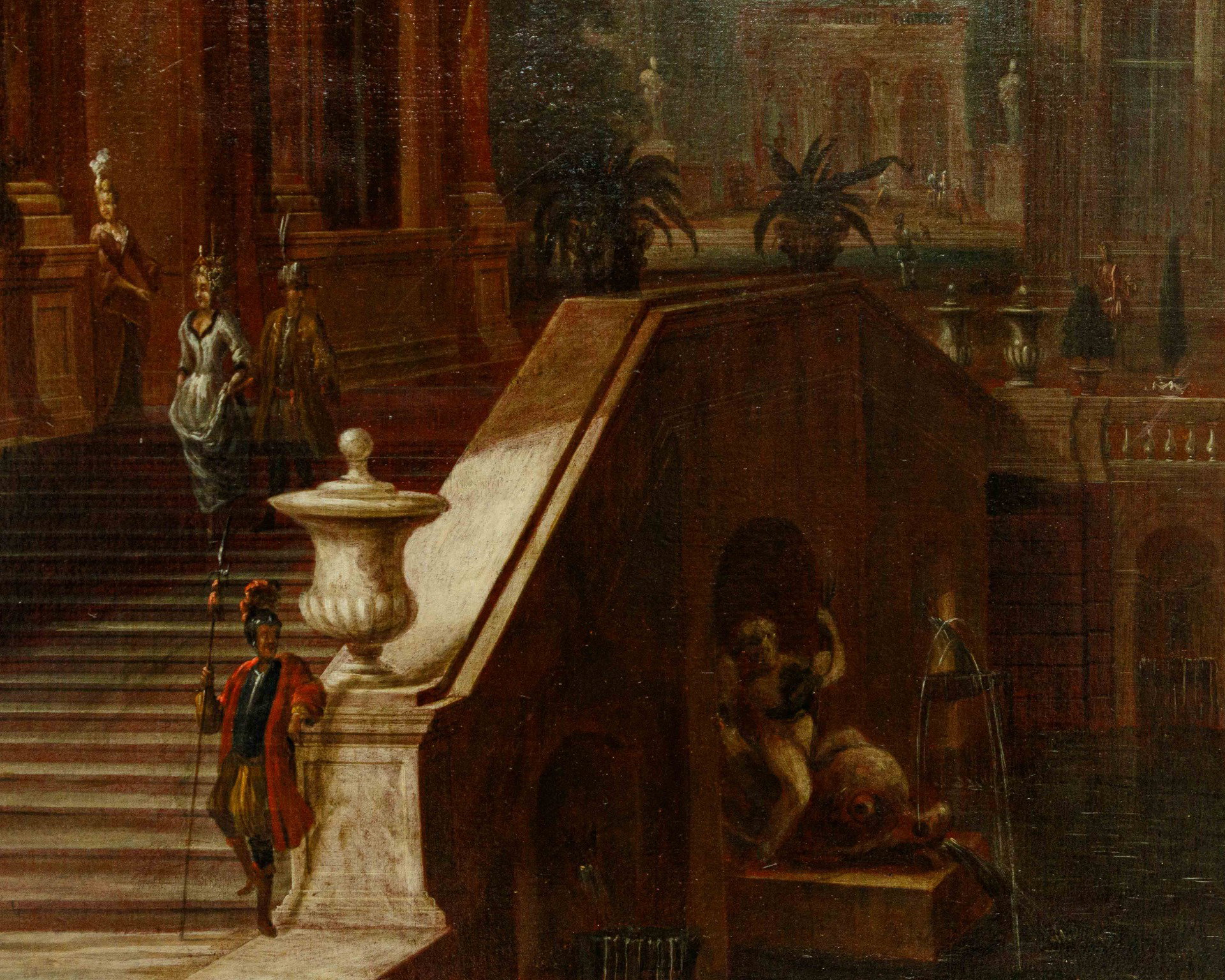
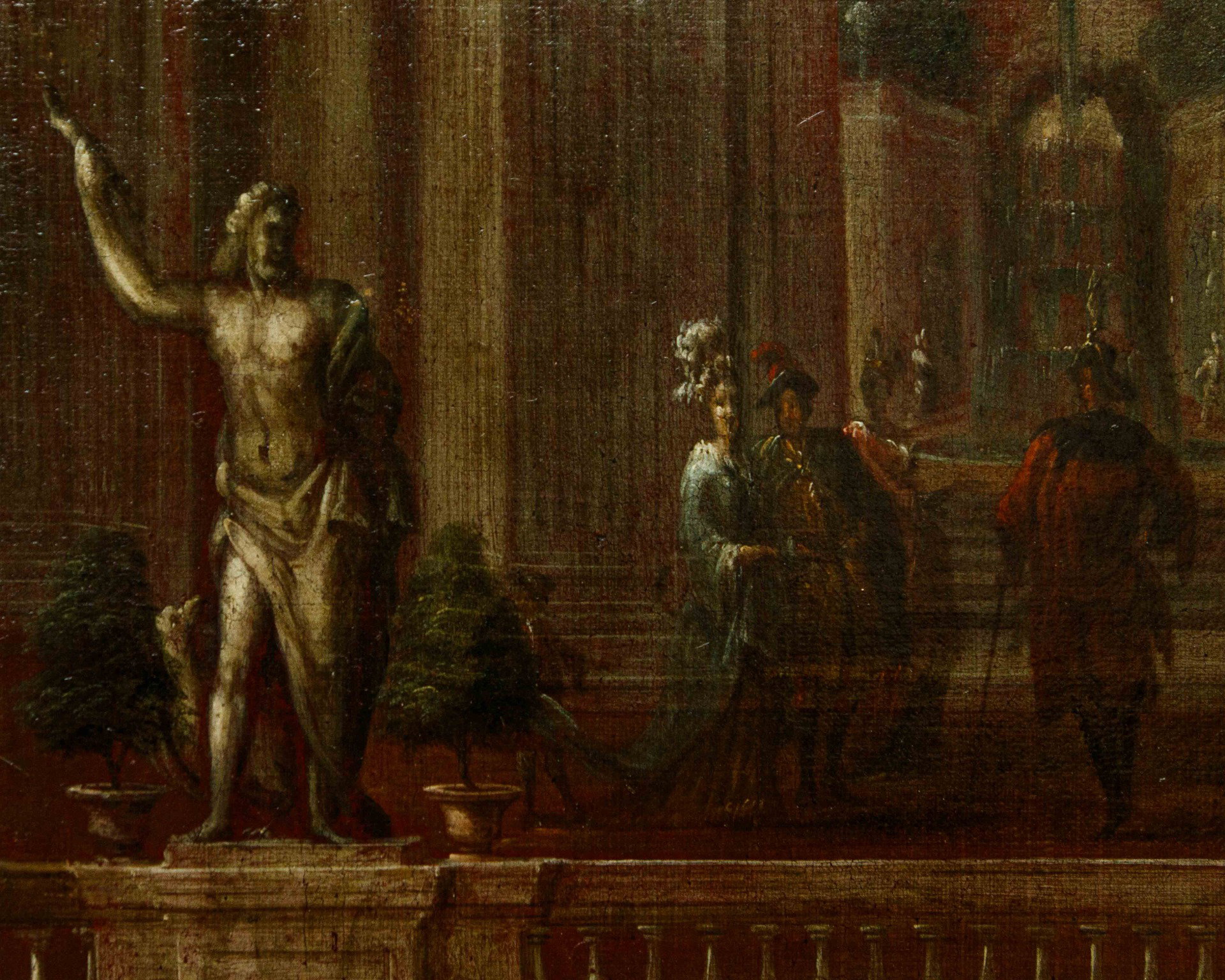
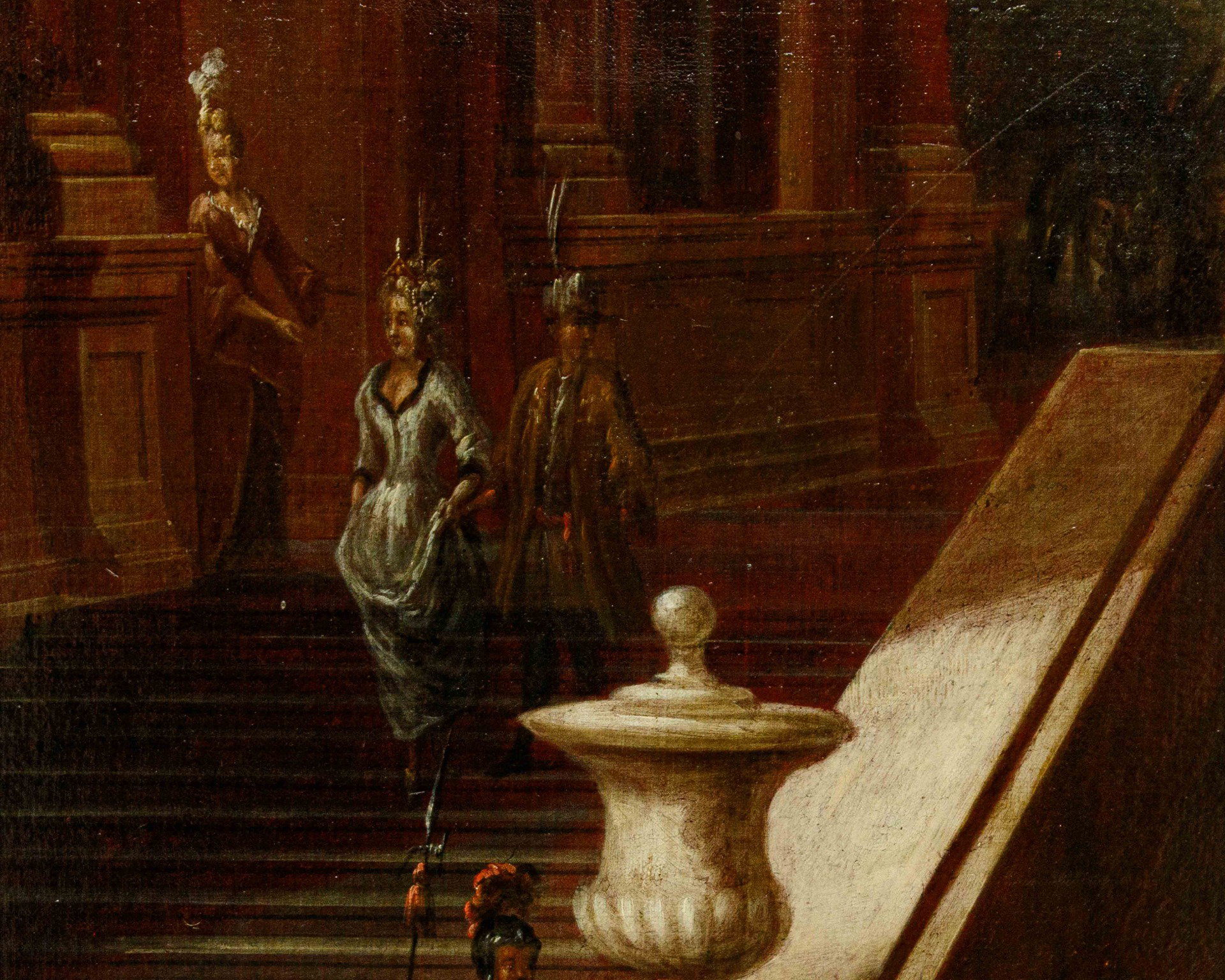
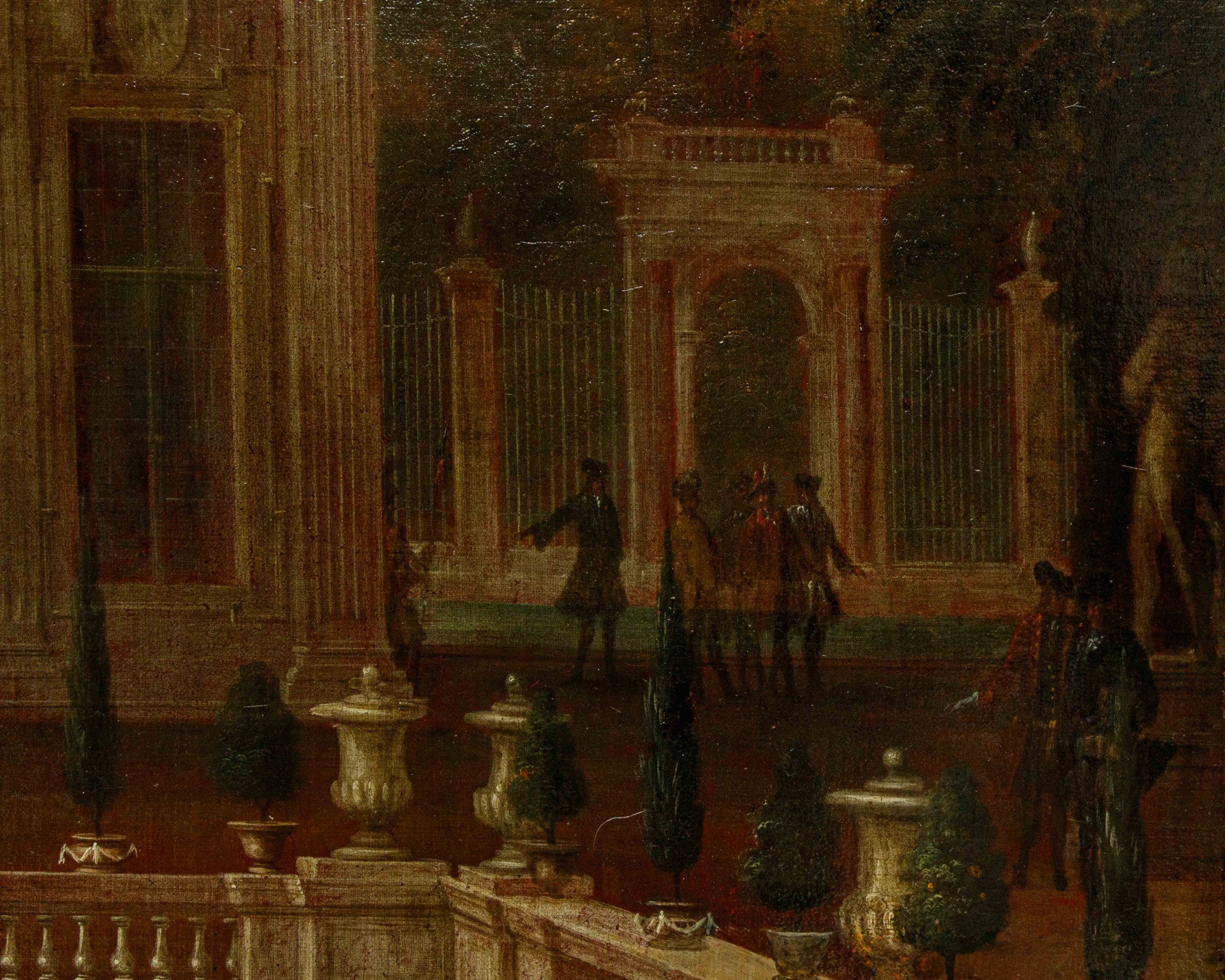
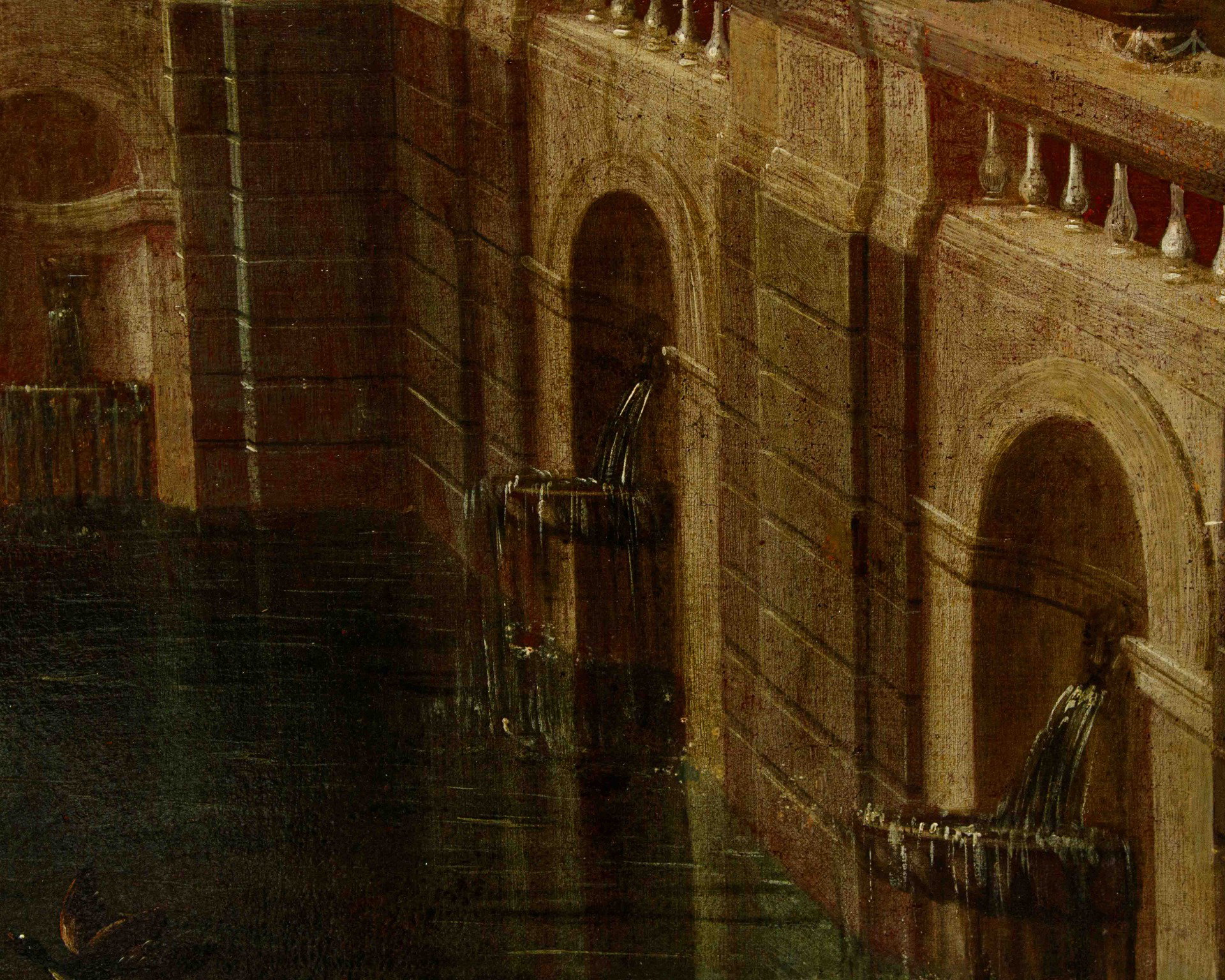
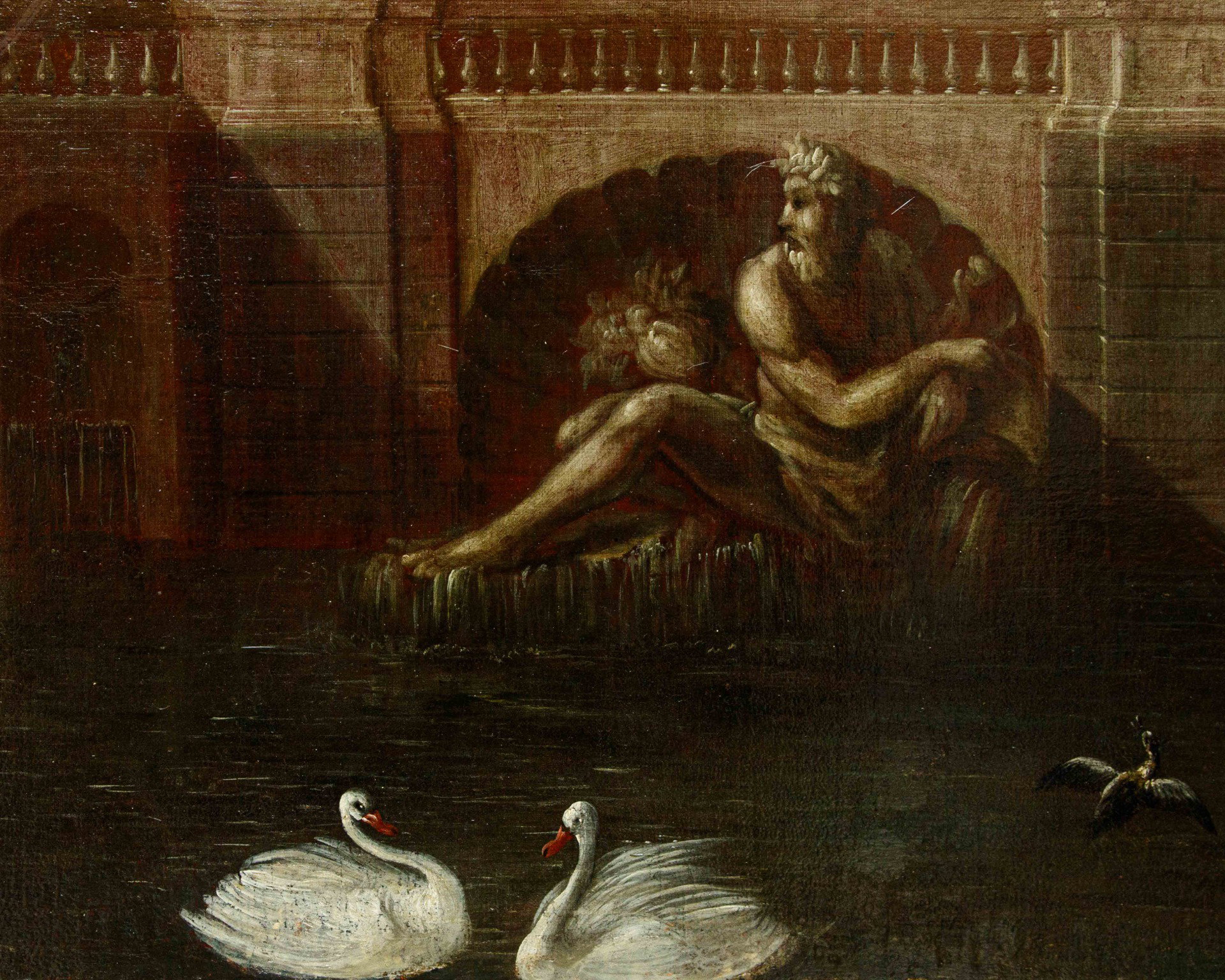
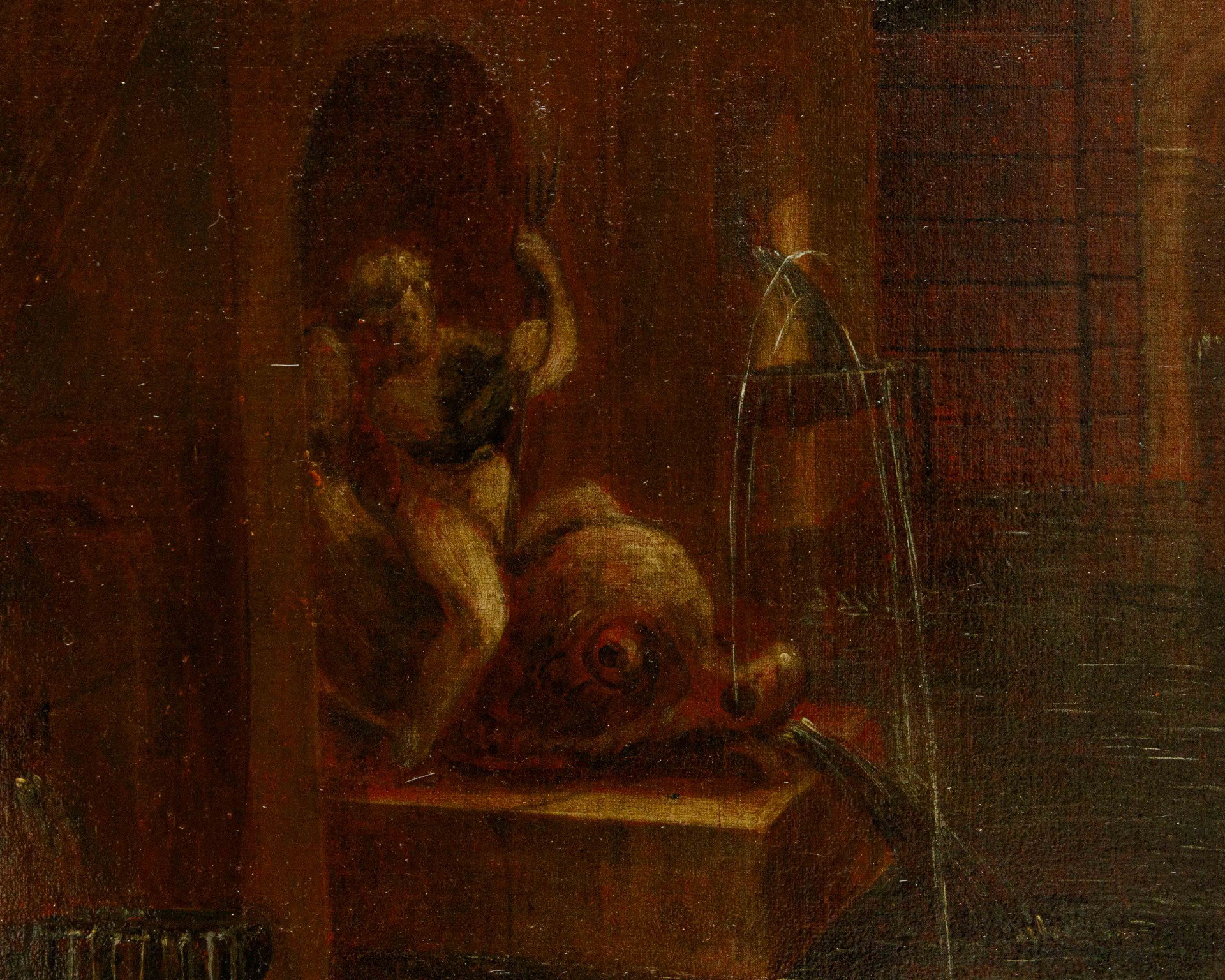
The subject in question is a villa of clear baroque taste, as evidenced by the wall decorations, the curved line, the elaborate forms, the polyhedral nature of the volumes and the extreme sense of theatricality conferred by the statues, the balustrades, the lake and the bridge. Within the lake swim some birds, including a pair of adult swans, a natural element inserted into a body of water surrounded by statues linked to the aquatic world: a river divinity within a shell niche, a putto equipped with a trident riding a fish and several niches within which some jets of water fill shell-shaped basins. The characters that populate the scene can be distinguished clearly however they are painted with few and rapid touches; they are distributed on multiple levels and animate the composition without subtracting the role of protagonist from architecture.