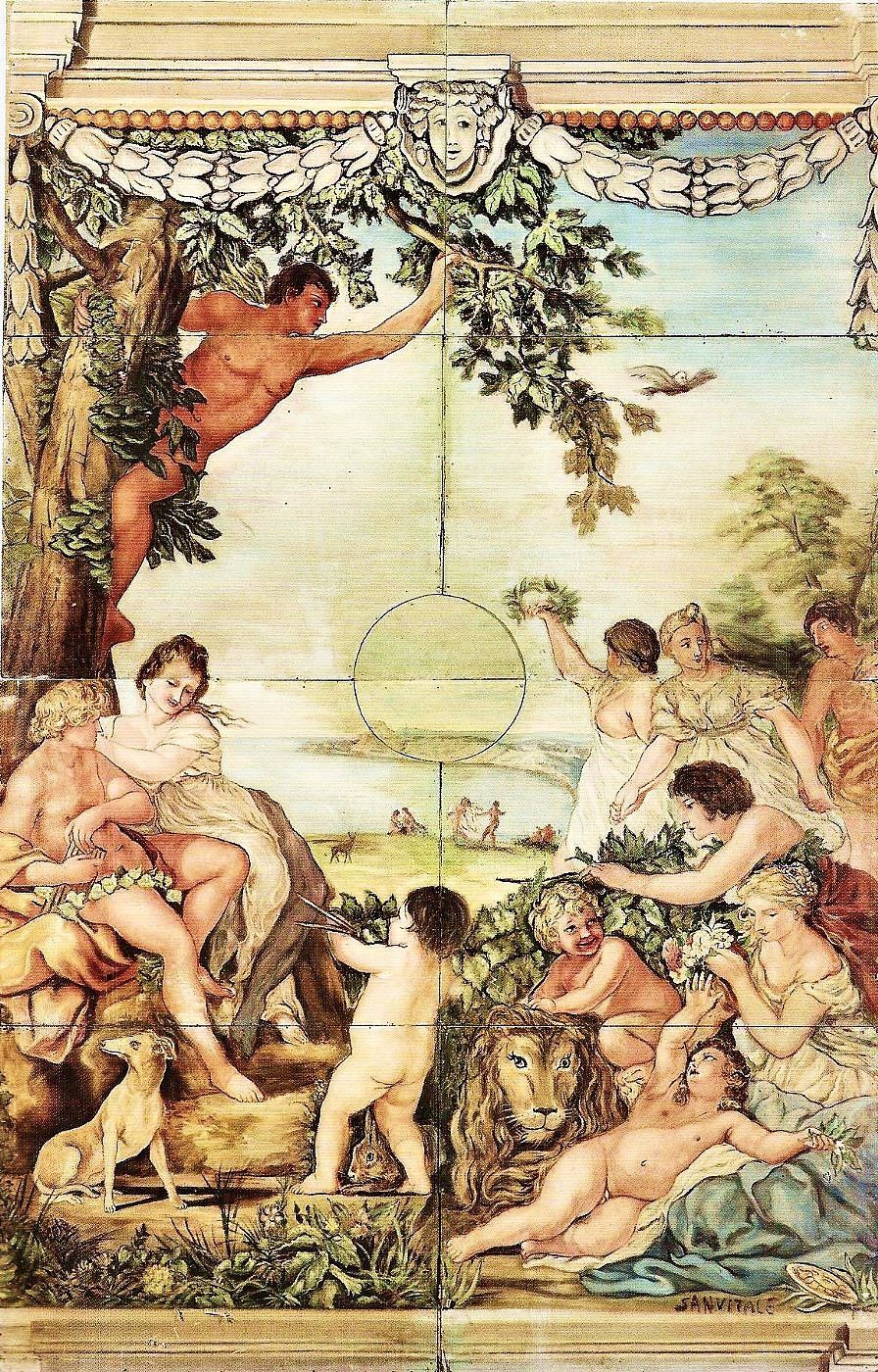
Alberto Sanvitale takes inspiration from two frescoes located in the "Stufa" room at Palazzo Pitti: "The Golden Age" and "The Silver Age" by Pietro da Cortona.
The reason for his choice is unknown. Perhaps commissioned?
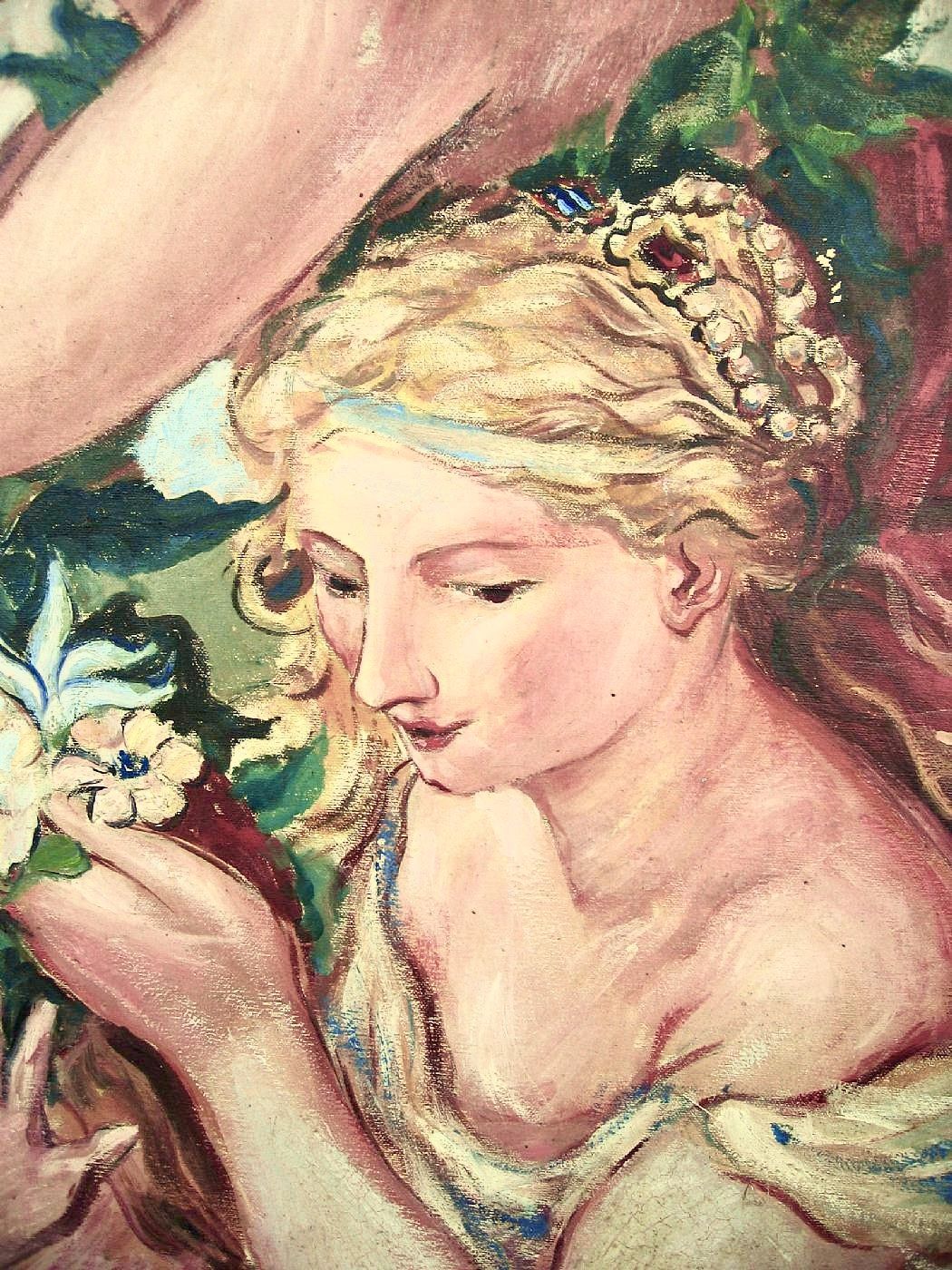
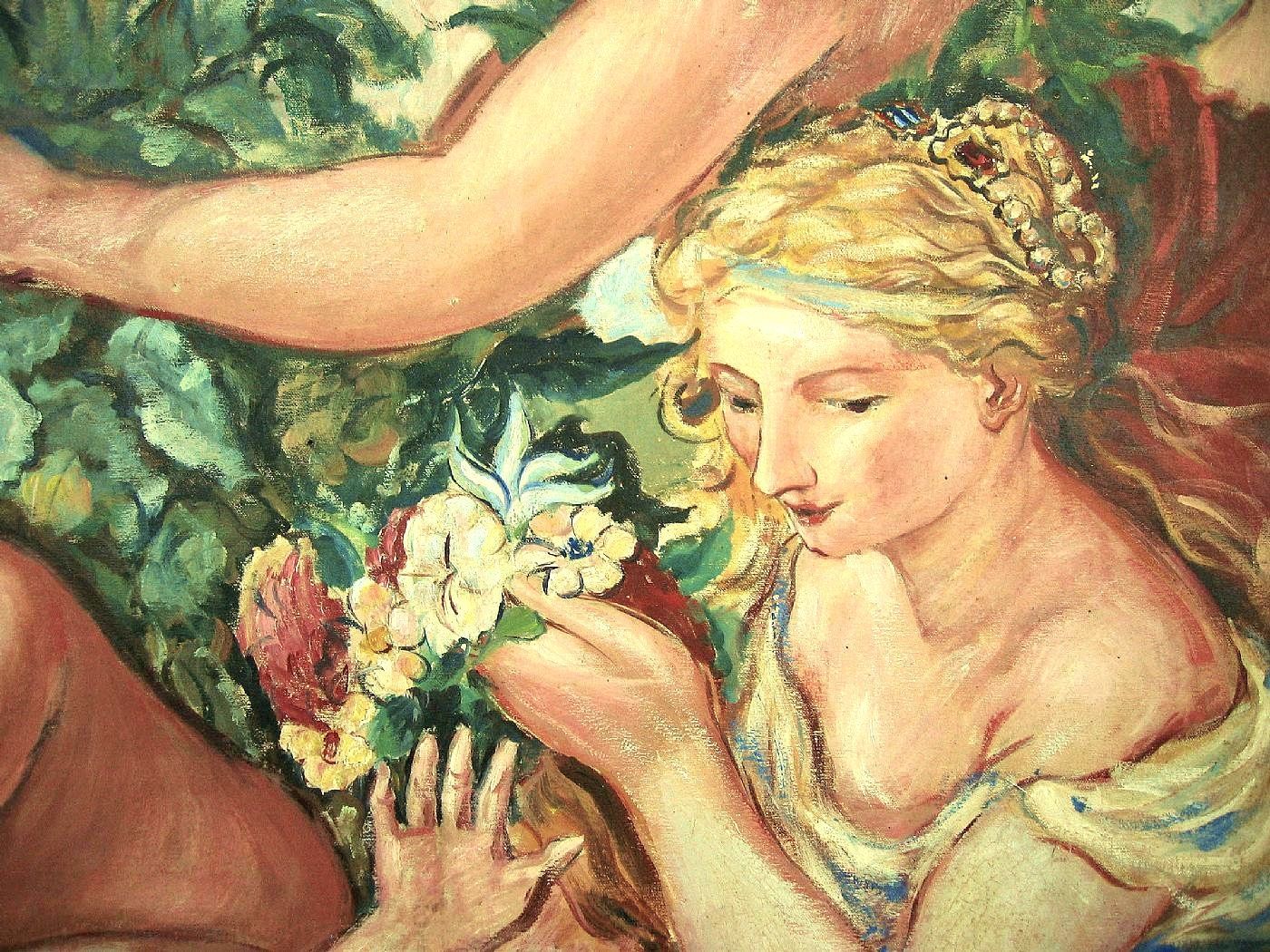
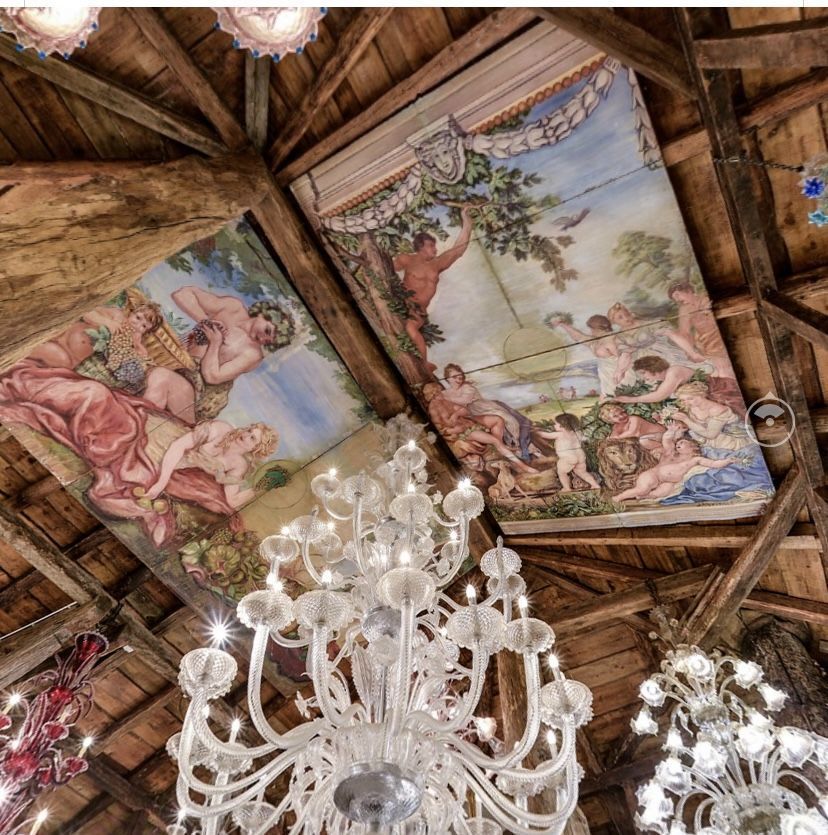
This painting takes up all the details of the fresco:
"Golden Age".
Let's look at it!
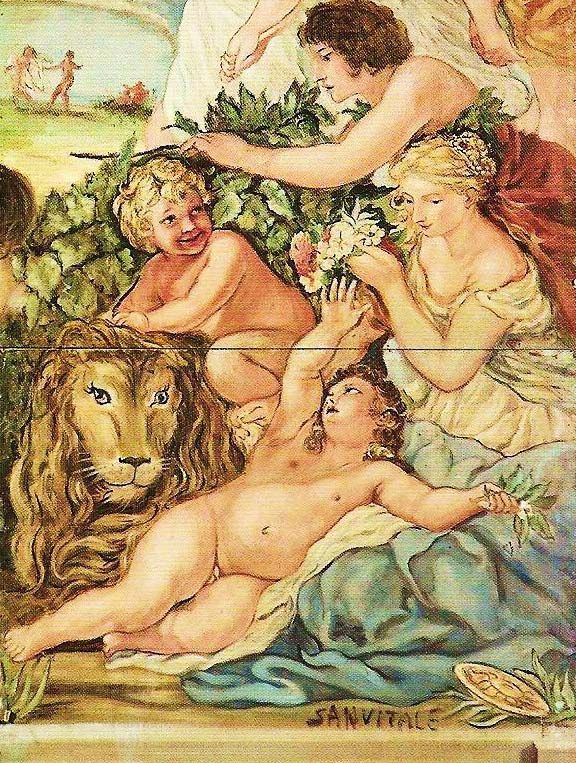
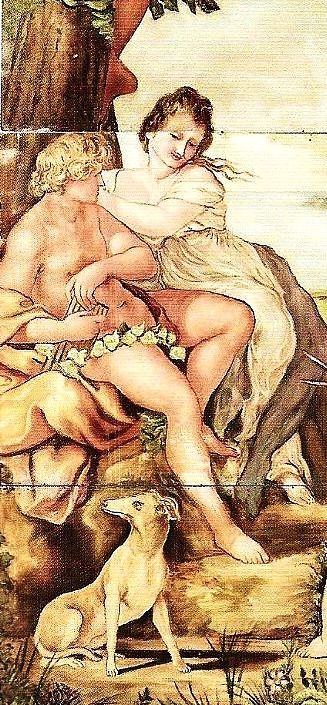
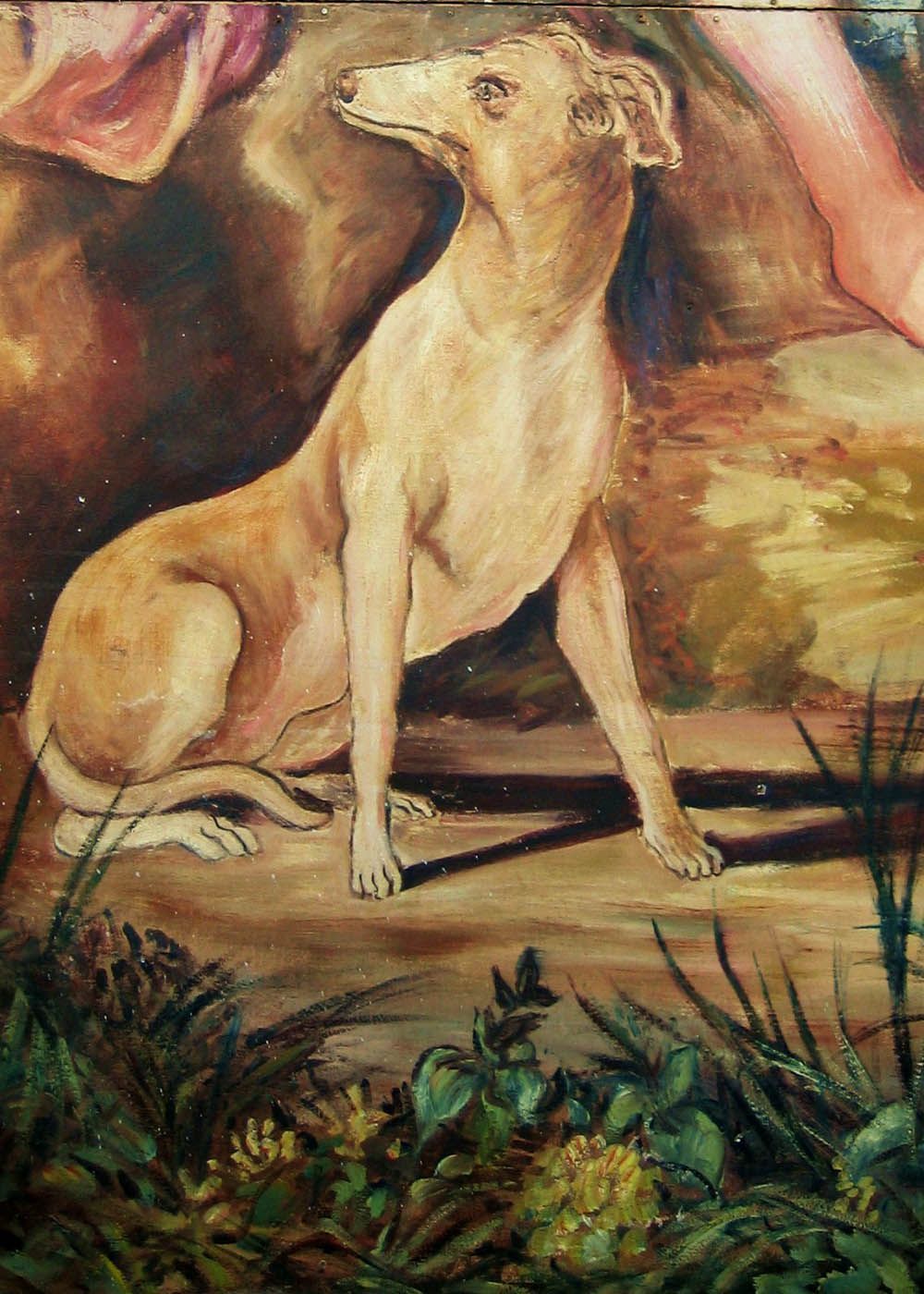
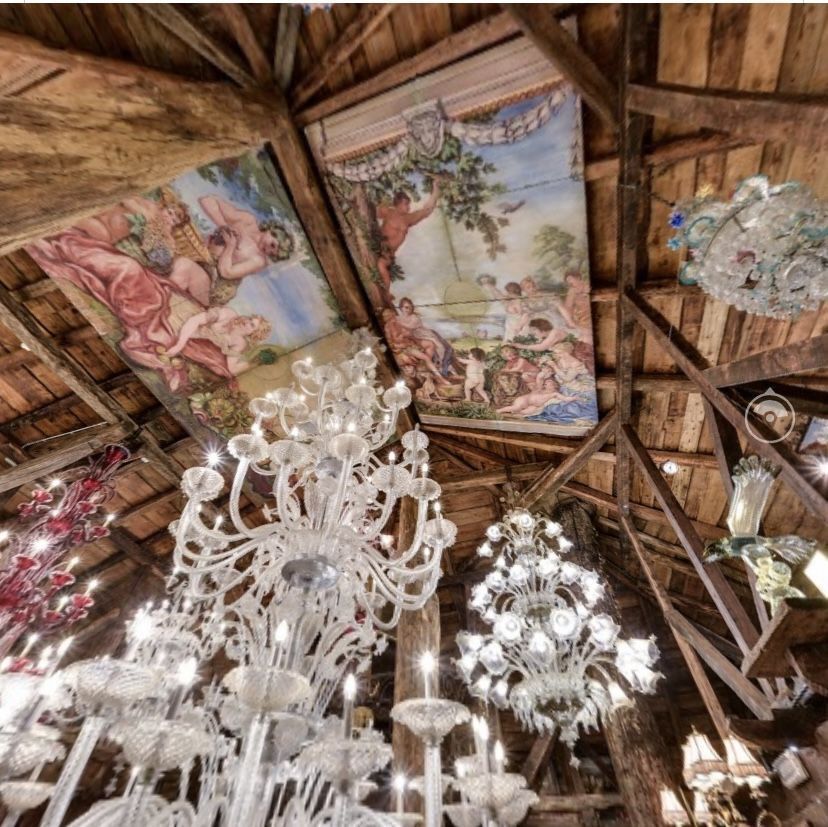
On the right, we see a group of children who, together with graceful cherubs, are playing and having fun with each other in the company of a peaceful lion. Meanwhile, two young people are courting under a tree with a beautiful greyhound at their feet, who rests, amused and serene. Meanwhile, a boy climbs the oak tree to detach and throw branches to the ground, and one of the cherubs collects them to offer them to the two young people. Behind this scene, we see other children dancing hand in hand in the distance.
A cheerful bucolic environment that inspires serenity and happiness!
Master Alberto Sanvitale (Rome 1927 - Sanremo 1999), student and follower of Carlo Carrà, moved to the Ligurian Riviera in 1966. The pictorial colorism and great decorative power of his works originate from a genuine inspiration that led him to be known as the Italian Matisse. This first of two large tempera panels on a masonite slab was part of the painted ceilings of the Sanremo Casino.
Signed artwork
Italy - Sanremo ca. 1970
Measurements: Height 238 cm Width 200 cm
Notes:
The "Stufa" room was originally an open loggia, which was later closed in the seventeenth century and structured as a heated bathroom with the same techniques as the Roman baths, for the private use of the Grand Duke who had his bedroom next to it. The decoration of this environment was promoted by Grand Duke Ferdinando II de' Medici who initially involved some Florentine masters.
In 1637, Pietro da Cortona was entrusted with the execution of the walls depicting The Four Ages of Man, a theme inspired by Ovid, and probably suggested by Michelangelo Buonarroti the Younger (great-nephew of the famous Michelangelo Buonarroti). In 1637, the diptych of the Golden Age and the Silver Age was created, and a few years later, in 1641, the scenes with the Bronze Age and the Iron Age. Pietro da Cortona's frescoes constitute the birth certificate of the great Baroque mural decoration and marked the birth of a new style in Florence, introducing a light and narrative lexicon, inspired by the Venetian painting of Paolo Veronese, and the Roman frescoes of Annibale Carracci.
The ideal Arcadia, which corresponds to the panel of the Golden Age, and where shepherds, children and animals coexist harmoniously, evokes the peaceful and happy government of Ferdinand, made even more flourishing by the Grand Duke's marriage, precisely in 1637, with Vittoria della Rovere, a very happy event to which the painter alludes by depicting a couple of young people courting under the majestic oak, heraldic symbol of the Rovere, in the presence of a lion that recalls the Florentine marzocco* the symbol of Florence, of popular power.
*The Lion that supports a shield, symbol of the freedom and strength of the Florentine people.