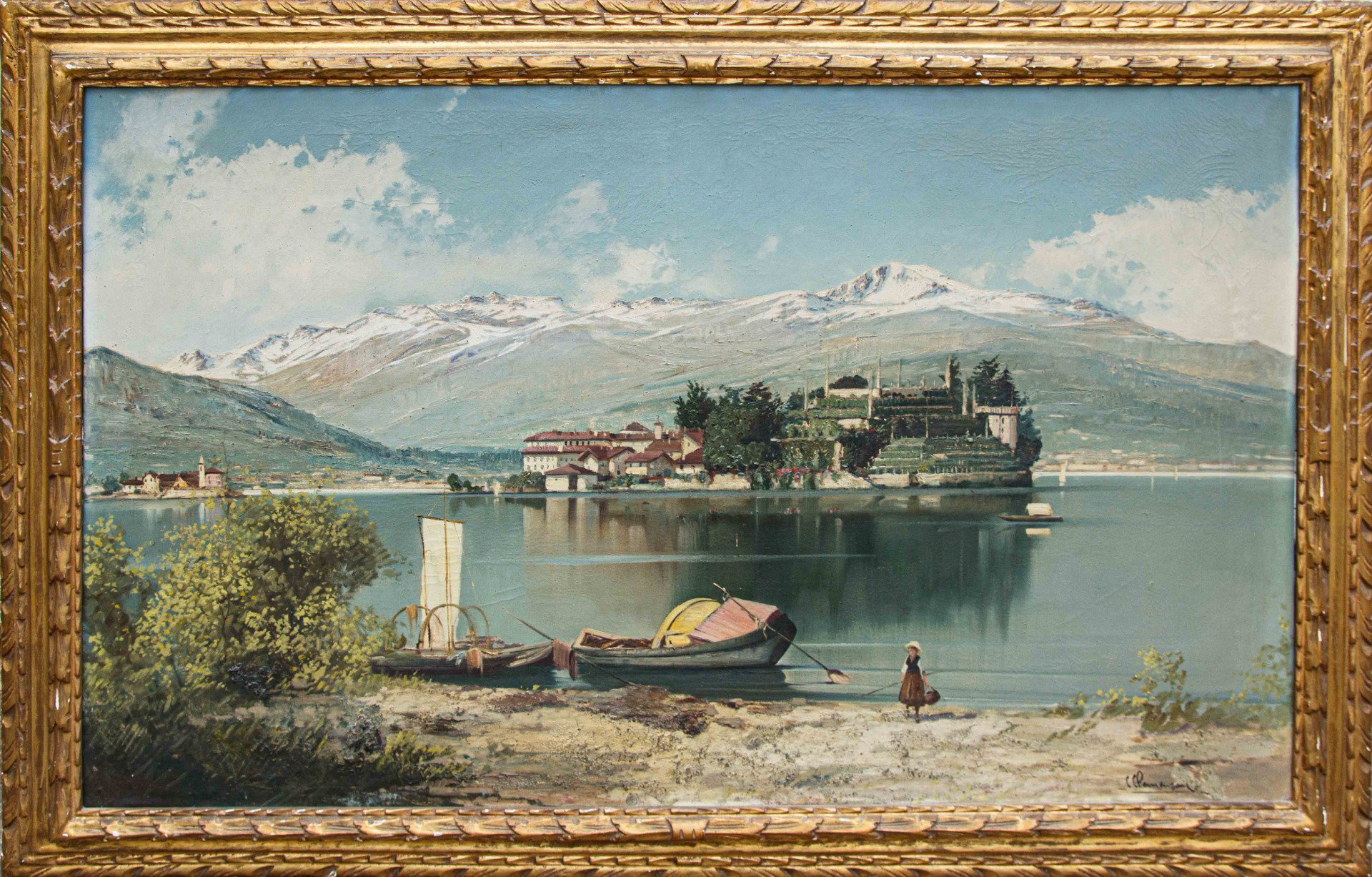
Clark Van Clemenson (1910- ?)
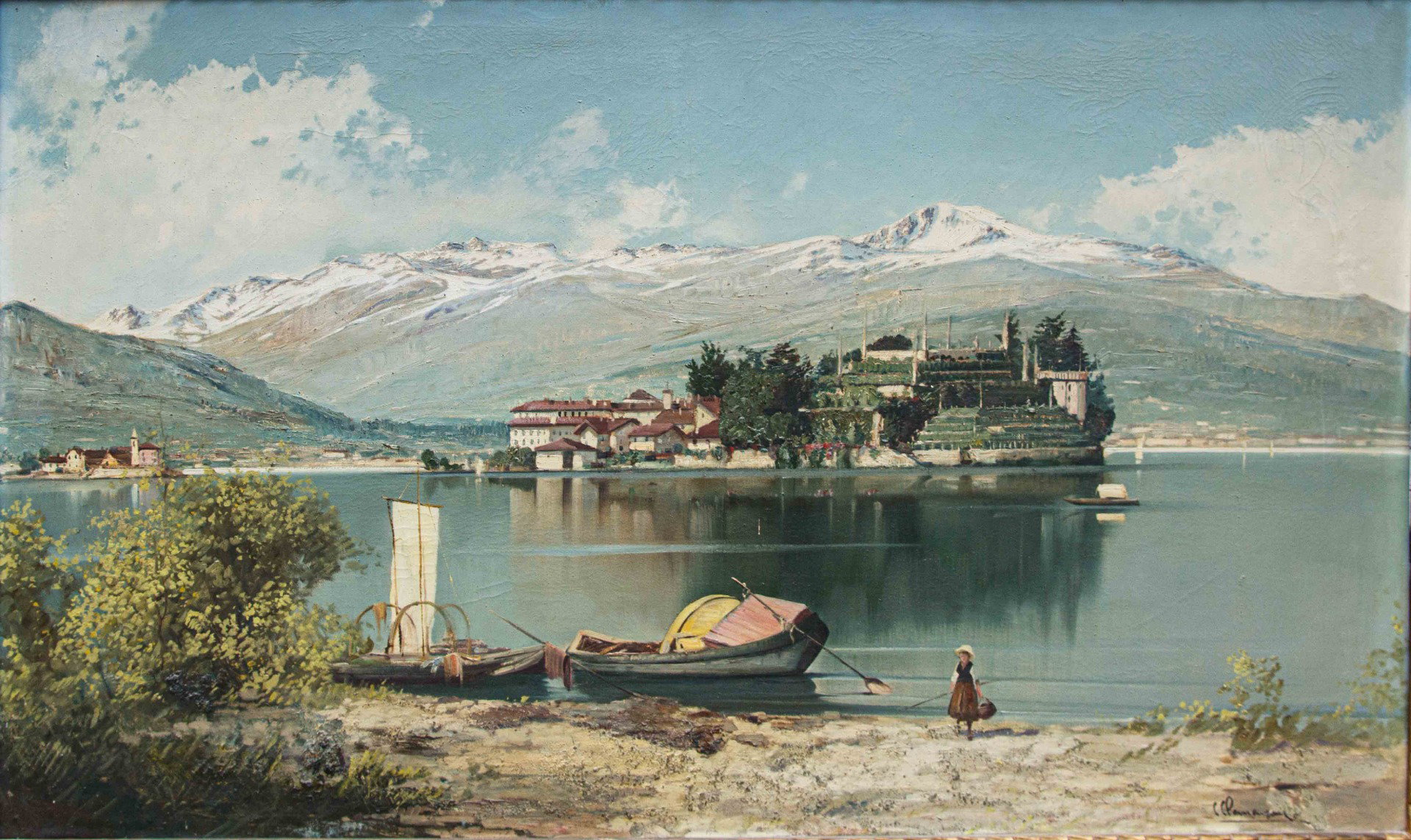
Isola Bella on Lake Maggiore
oil on canvas, 100 x 160 cm
with frame, 122 x 182 cm
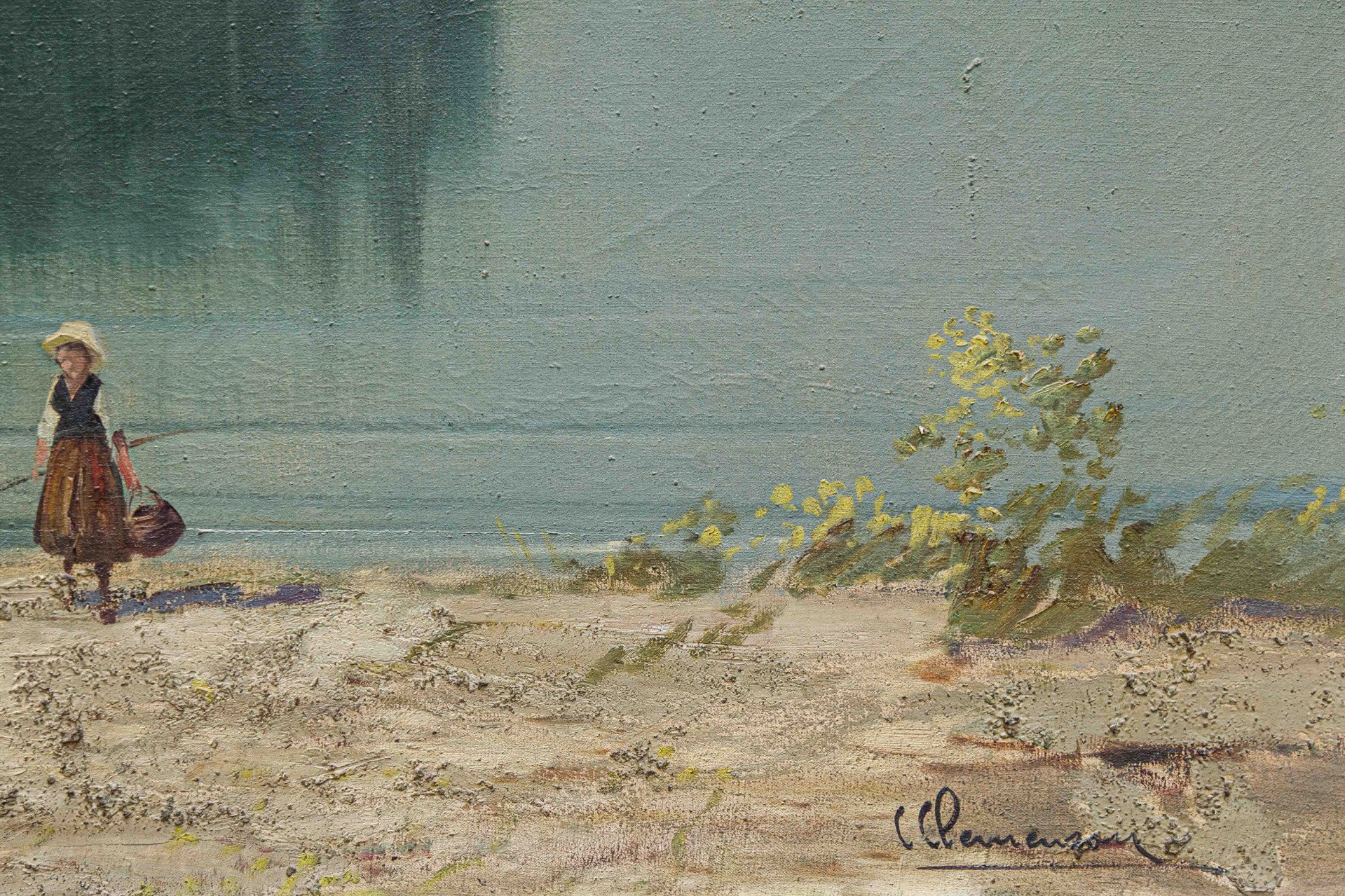
signed lower right C. Clemenson
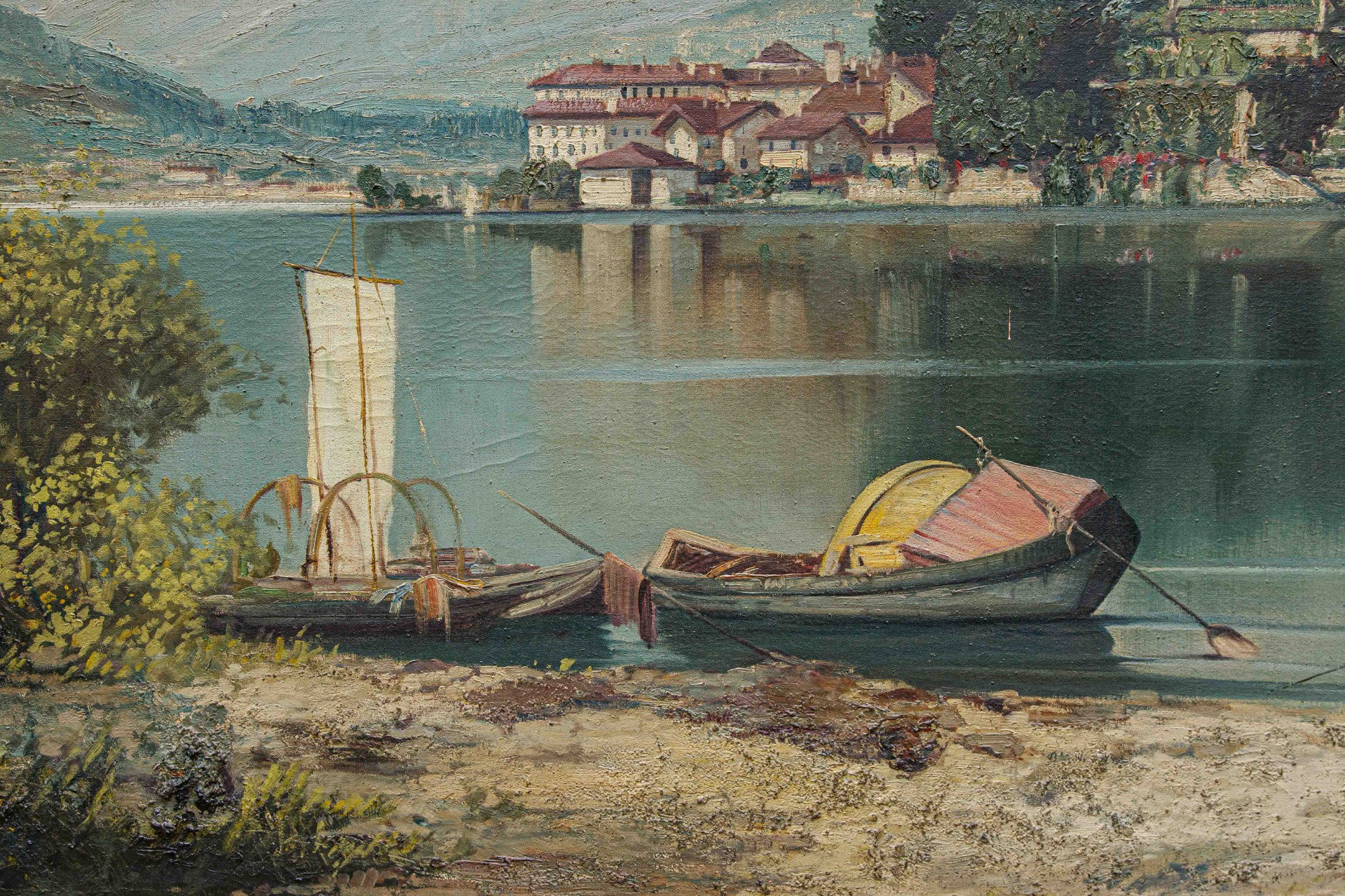
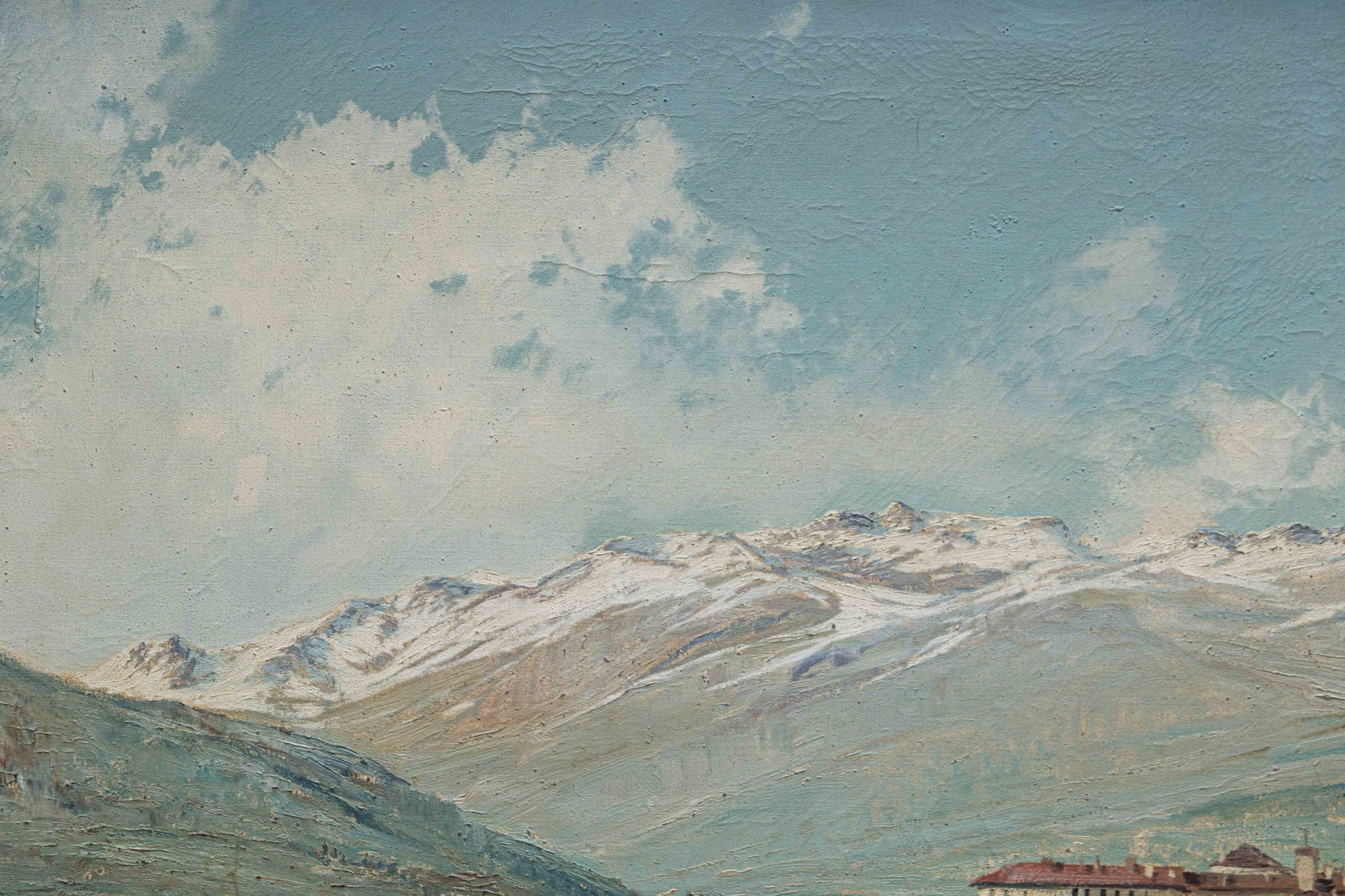
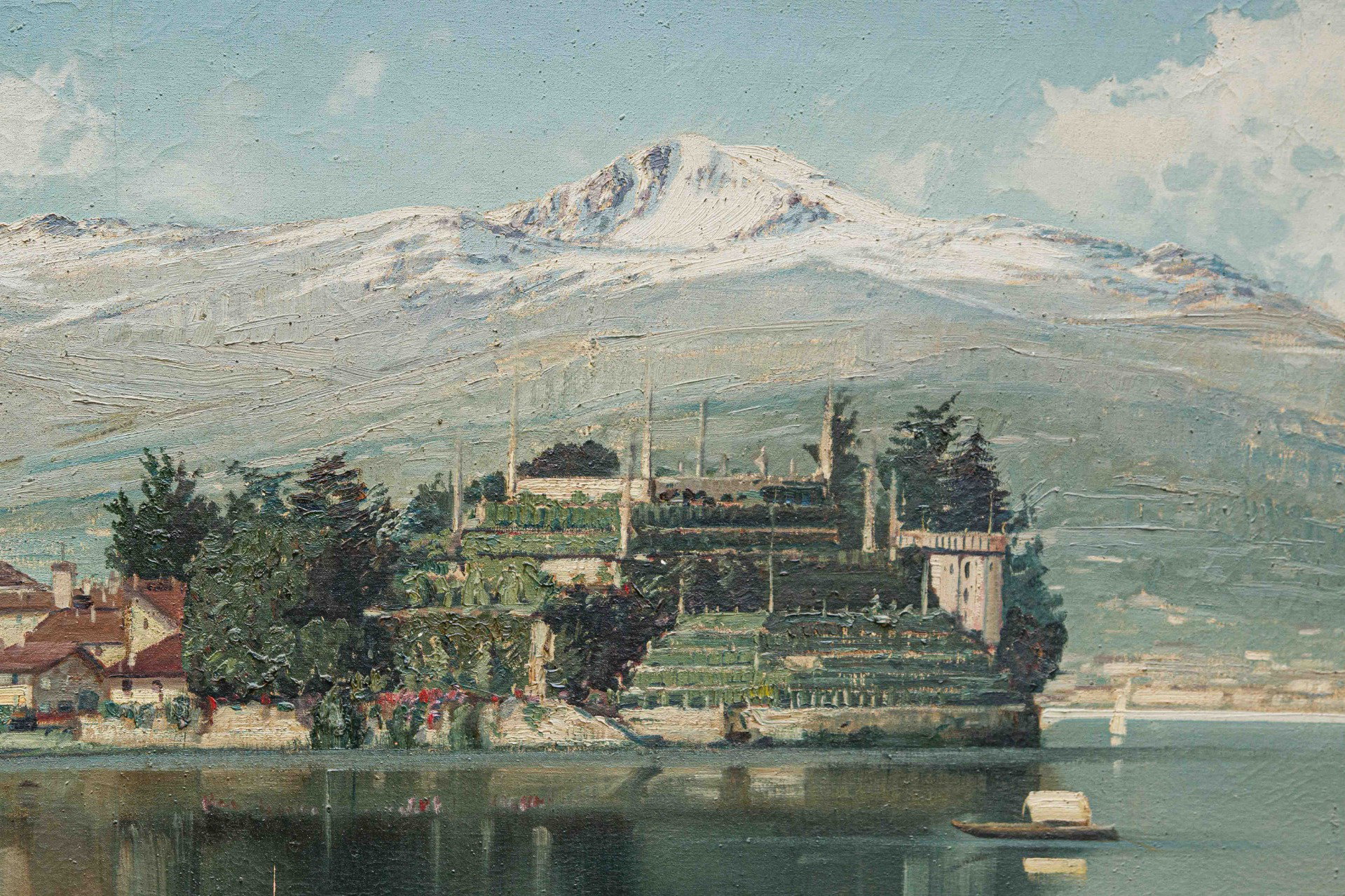
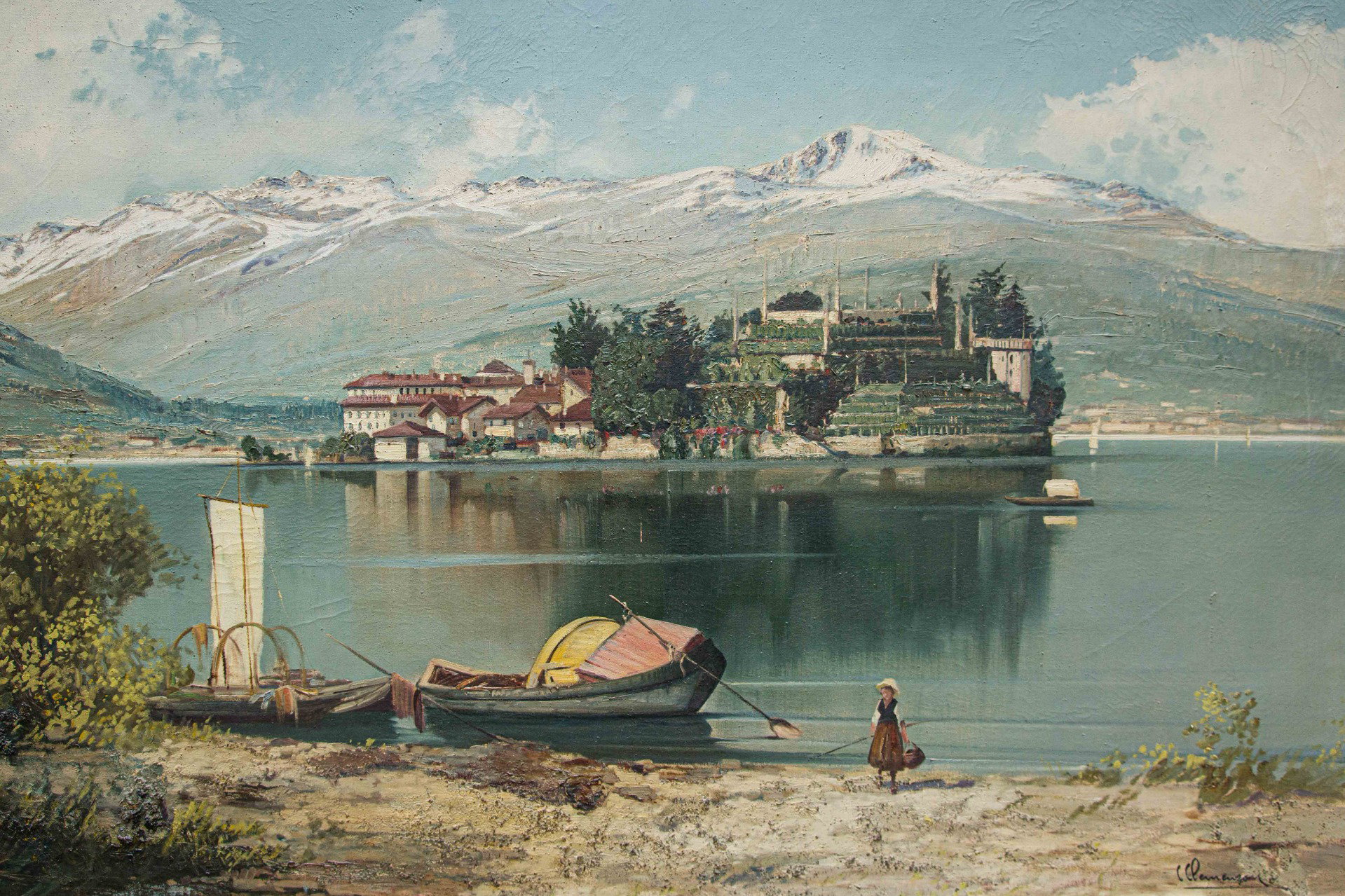
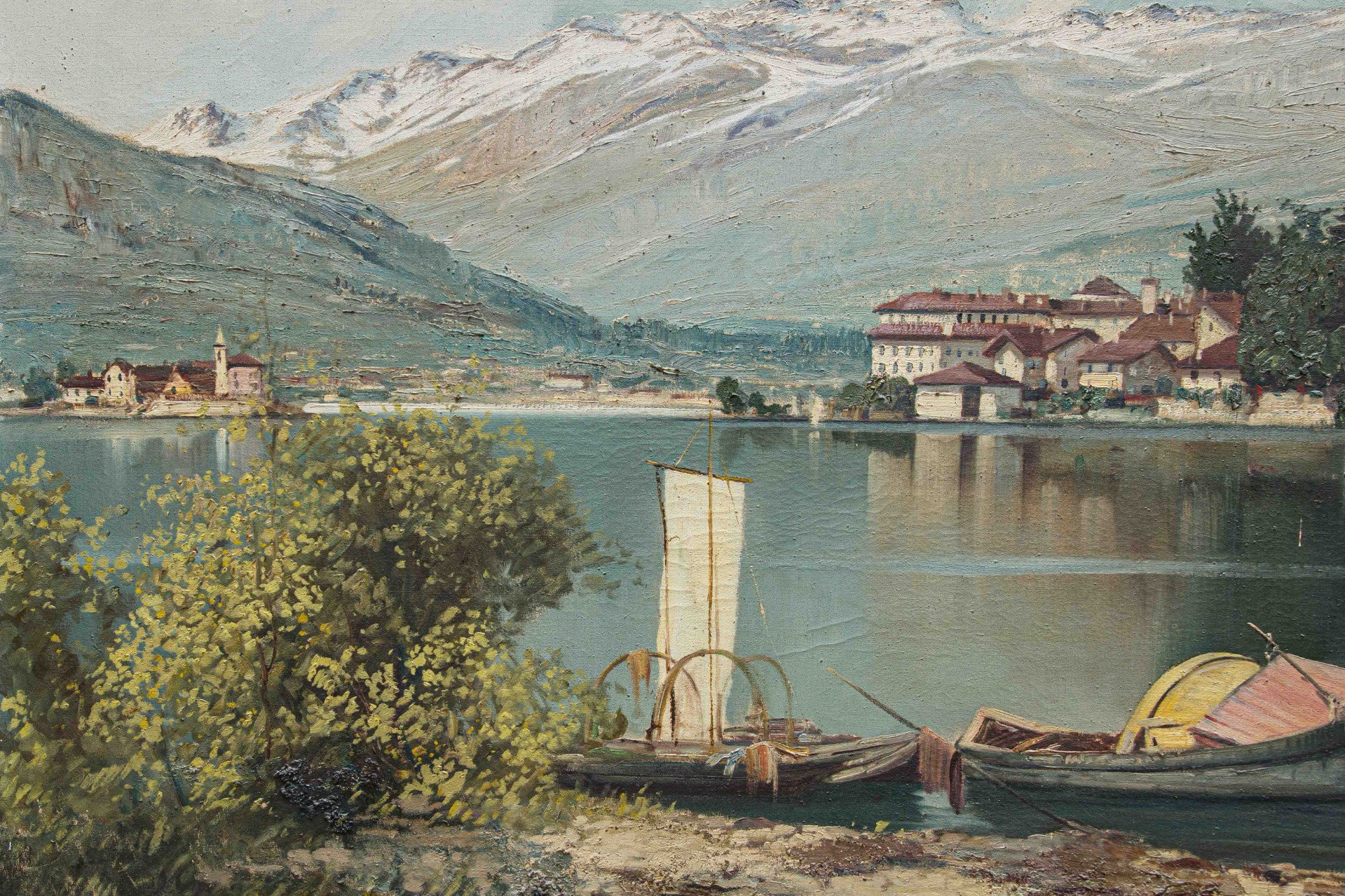
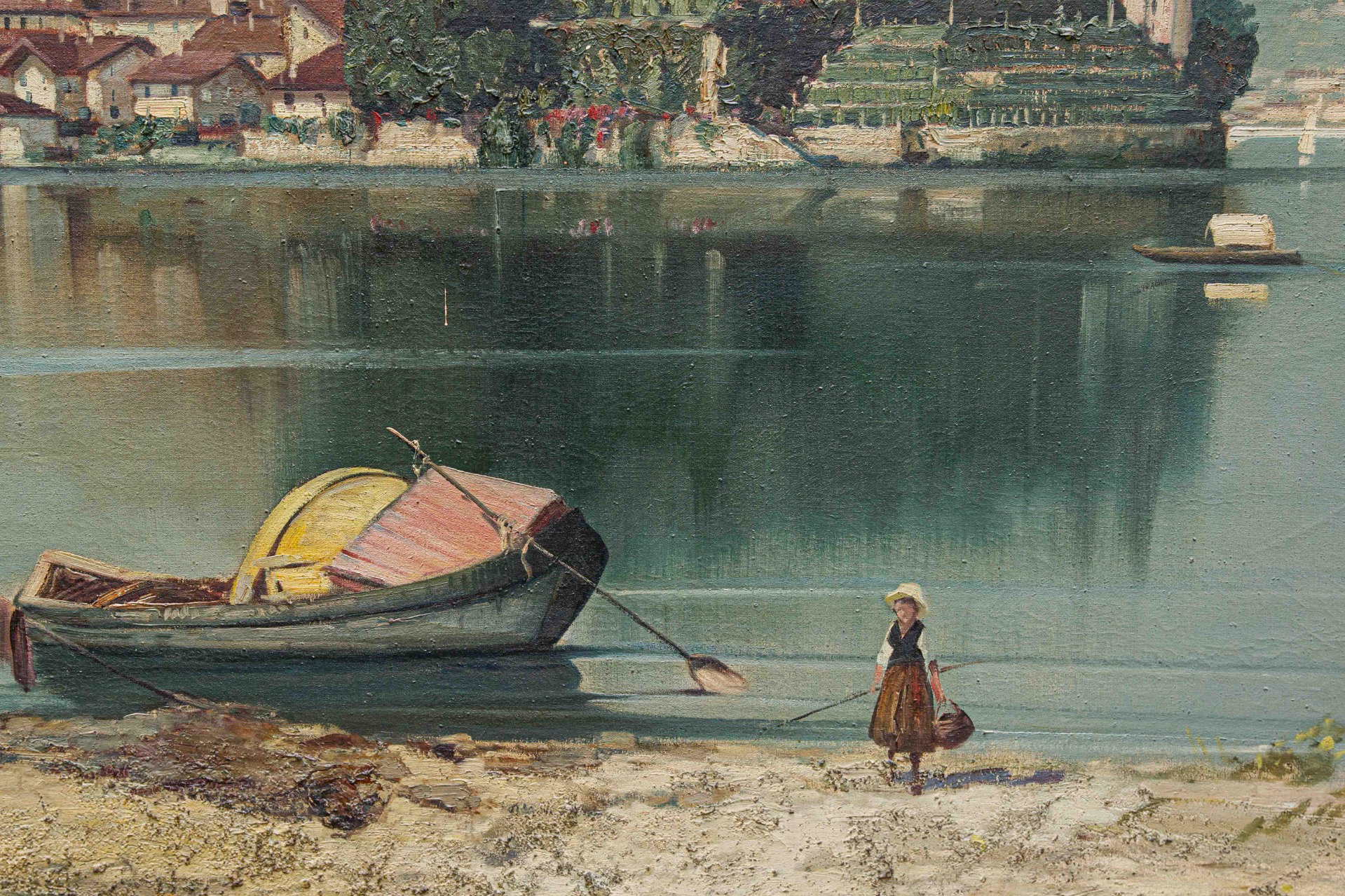
The painting under examination shows a splendid view of Isola Bella, one of the so-called Borromean Islands, reflected on the waters of Lake Maggiore. In the foreground is the small beach where two small boats are docked, and the scene is animated by a girl, the only human presence in the entire painting. High snow-capped mountains embrace the island and the lake. The oil on canvas is, as can be seen from the signature in the lower right, the work of the painter Clark Van Clemenson, born in Johnstown, Pennsylvania in 1910. The date of death, on the other hand, is unknown.
Until 1630, Isola Bella was a rock inhabited by fishermen, with two small churches and some vegetable gardens. The Borromeos, already owners of Isola Madre since 1501, from the first twenty years of the seventeenth century with Giulio Cesare III and Carlo III decided to concentrate their interests on this new islet, starting the grandiose project that will lead to the creation of the Palace and the Italian garden, easily recognizable in the painting.
The Palazzo Borromeo, whose 80-meter-long facade dominates the northern end of the island, was built throughout the seventeenth century and has a T-shape with a curved projection in the center corresponding to the hall of honor.
The surrounding garden was built from about 1631 to 1671. The Teatro Massimo, visible in the distance behind the Palace, is the most important monument of the garden of Isola Bella: statues, obelisks and fountains integrate perfectly with the vegetation of the ten scenic terraces, on whose top stands the statue of the Unicorn, heraldic symbol of the Borromeo family.
The pastel shades used by the artist instill in the viewer a sense of tranquility, calm and inner peace, which make the island a sort of locus amoenus. The pictorial rendering is particular: the small beach in the foreground as well as the foliage or the snow-capped peaks of the mountains are characterized by an extreme pictorial materiality, so much so that the color in these points is not perfectly spread but rather deliberately left in relief, giving a particular texture to the painting. Other portions of the painting, such as the water surface or the boats, are treated by the painter by smoothing the color and juxtaposing the color with brushstrokes or spatula strokes without describing them meticulously but making sure that the image defines itself from a vision in the distance from the canvas.