Germany, late 19th, early 20th century
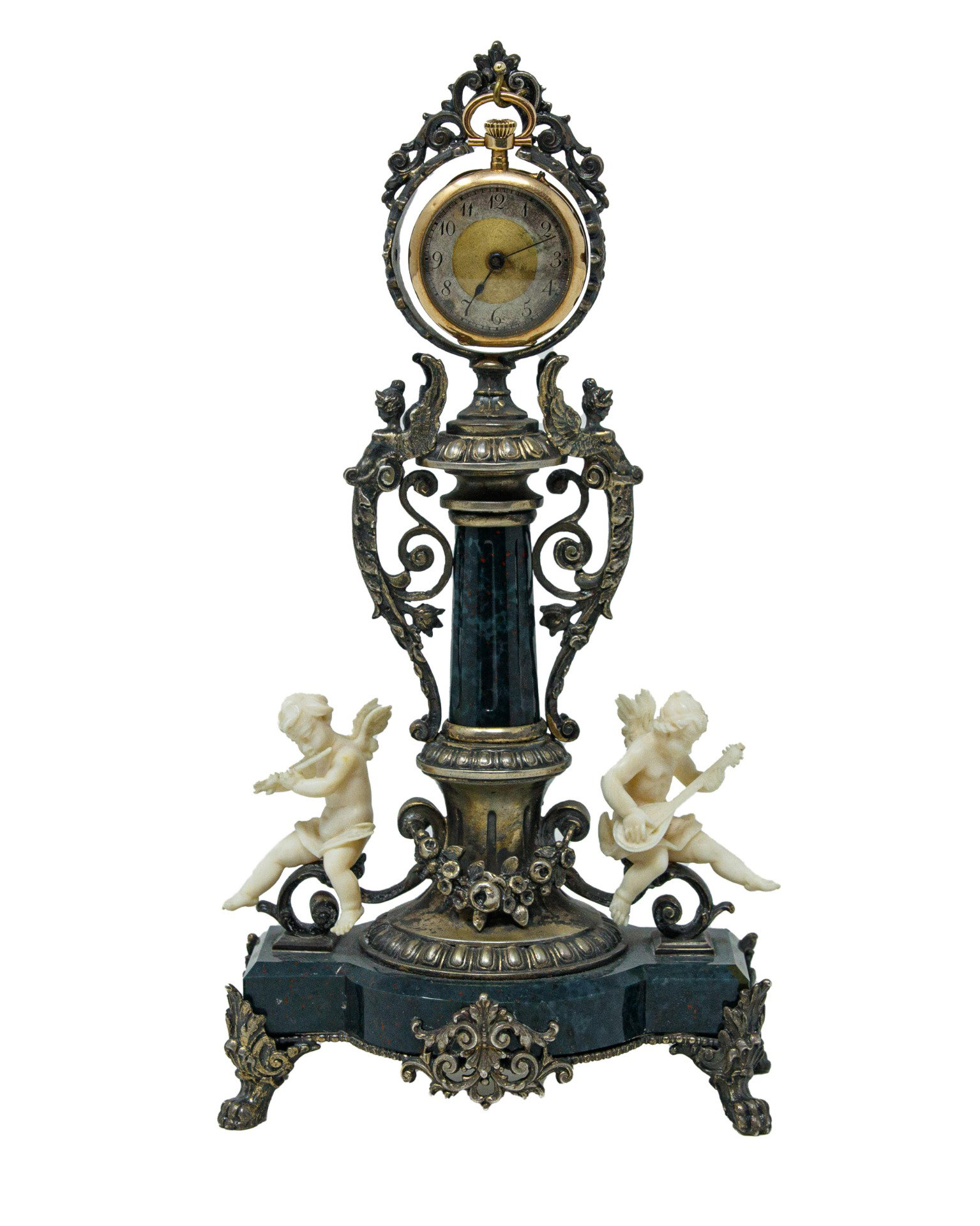
Watch holder with musical cherubs
Silver, jasper and ivory, Cm 16 x 8.3 x 5.4
The work is accompanied by a CITES Community Certificate
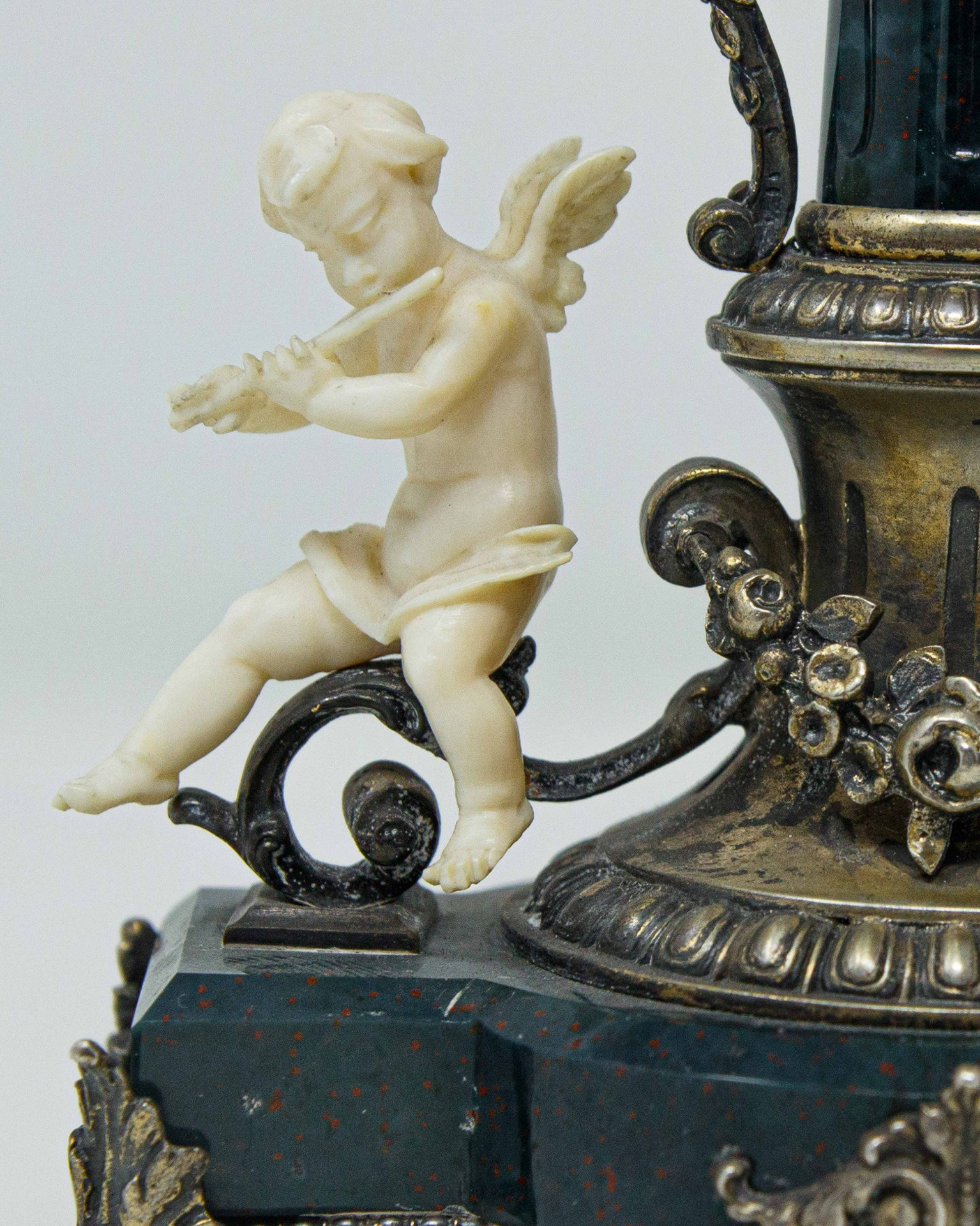
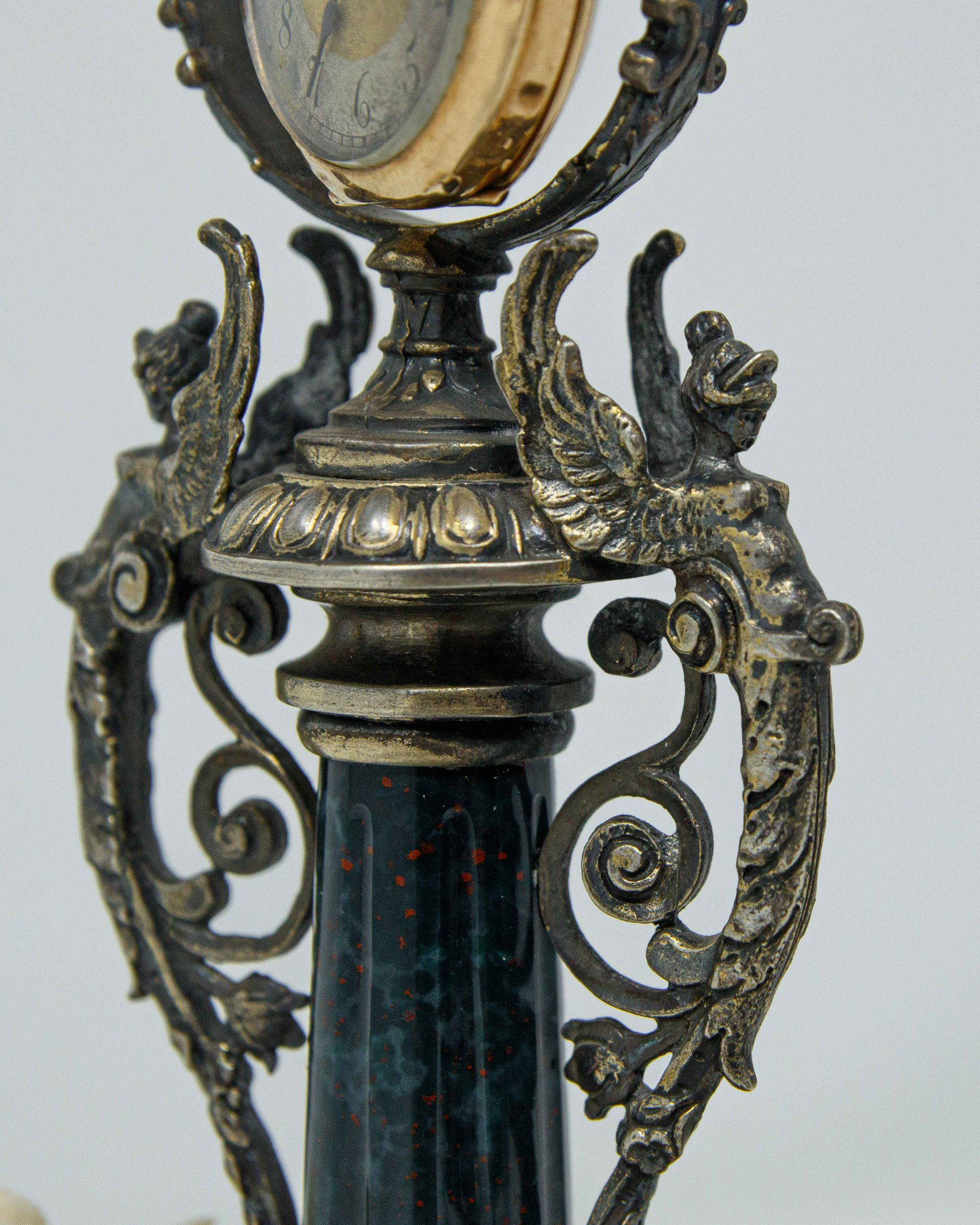
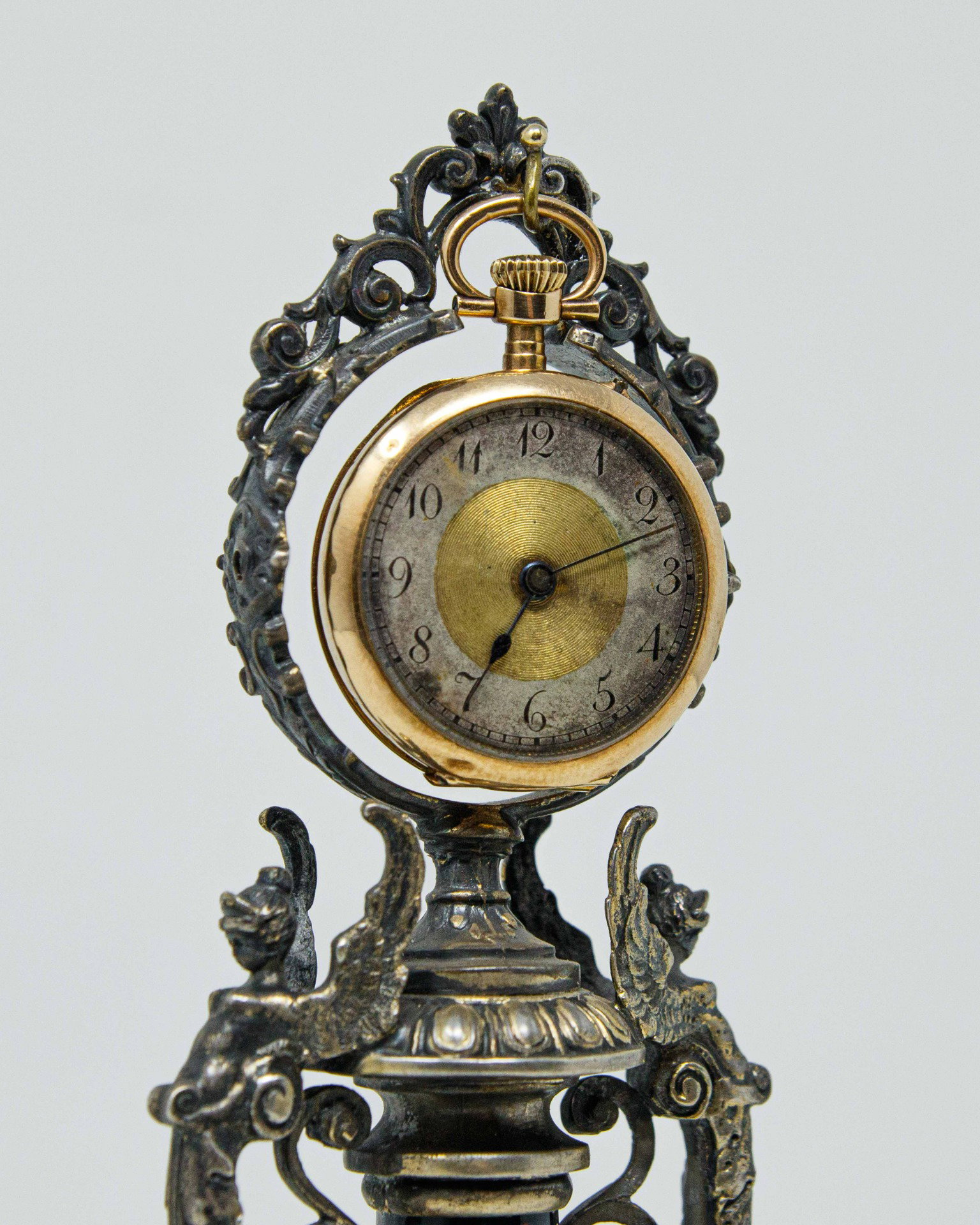
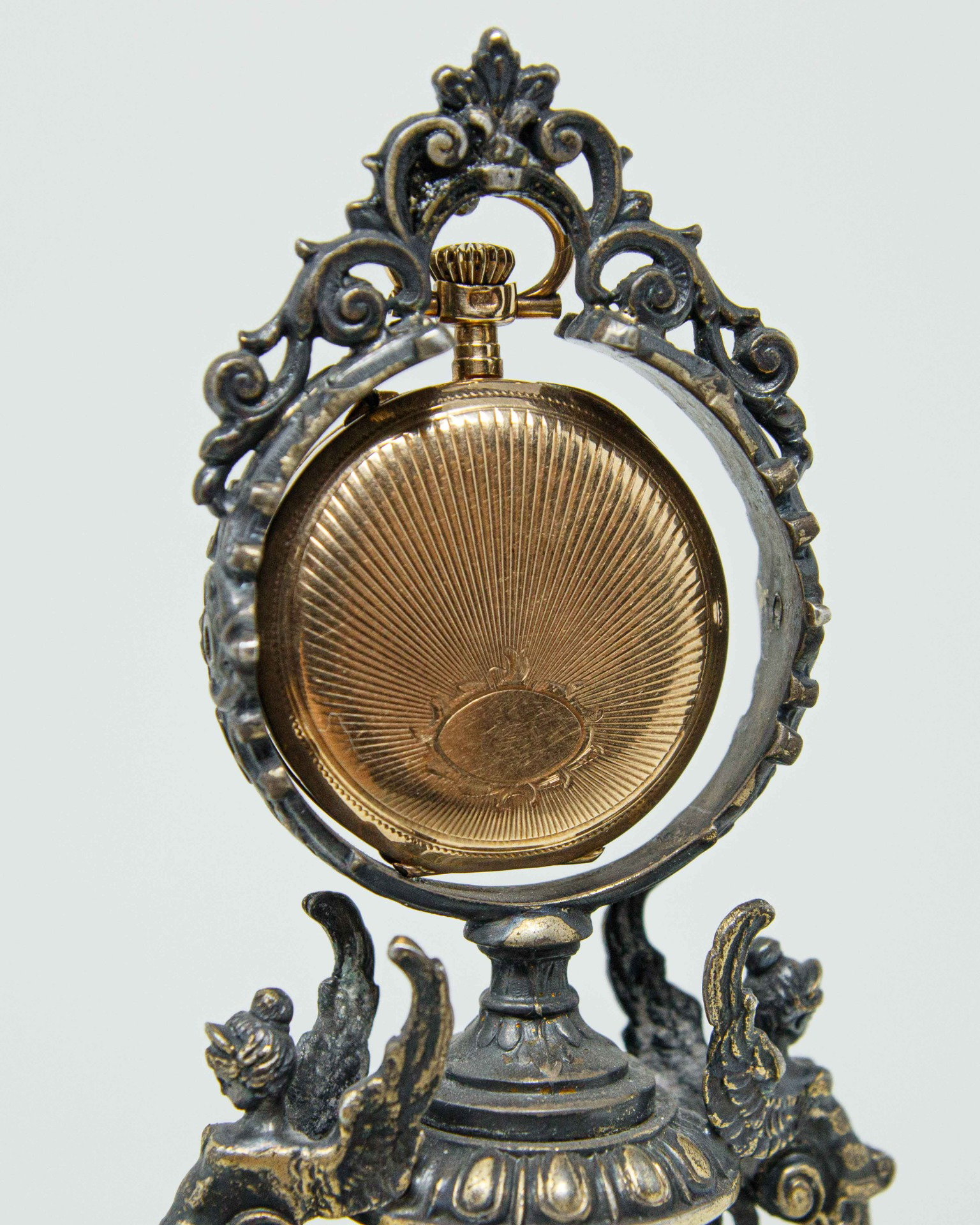
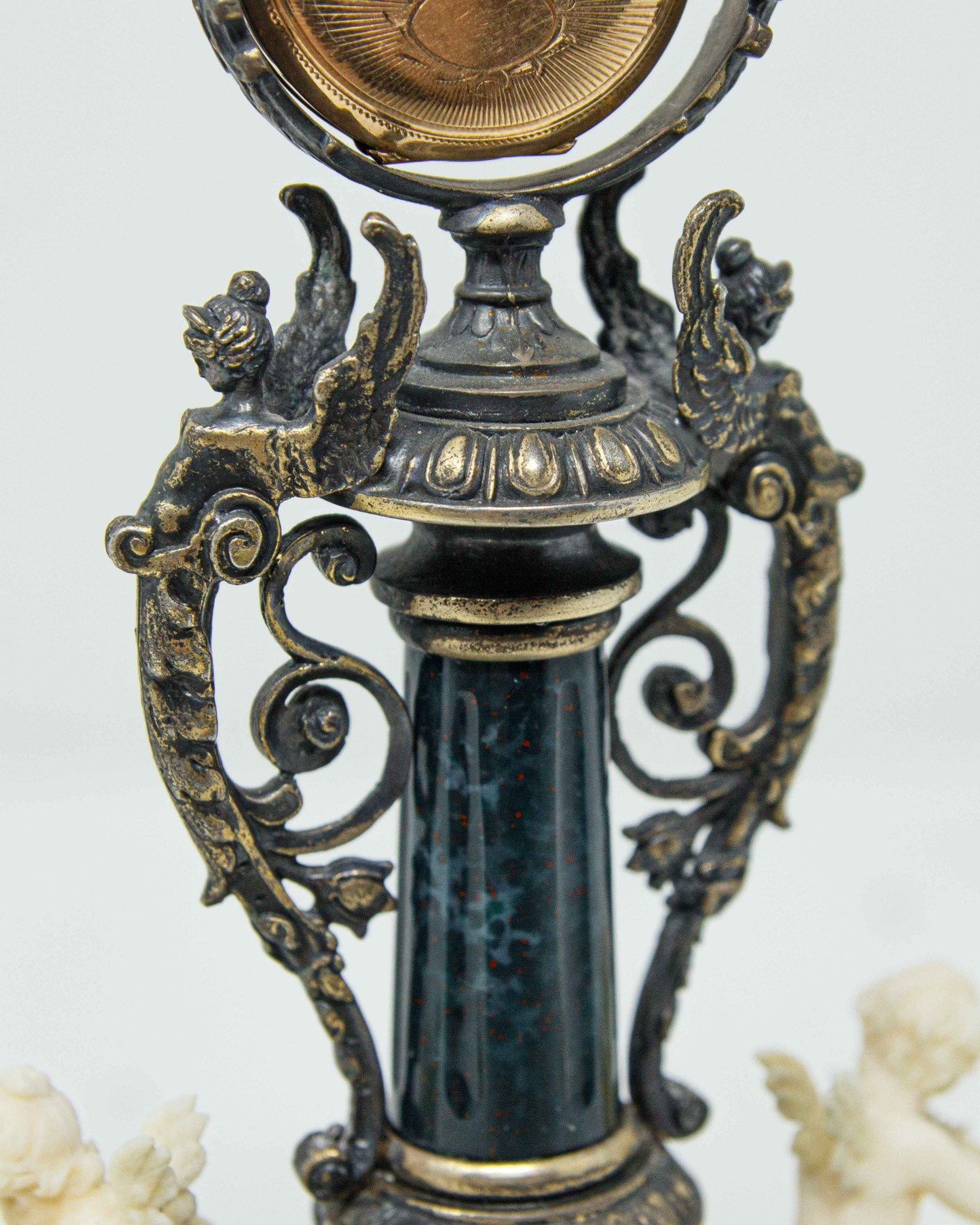
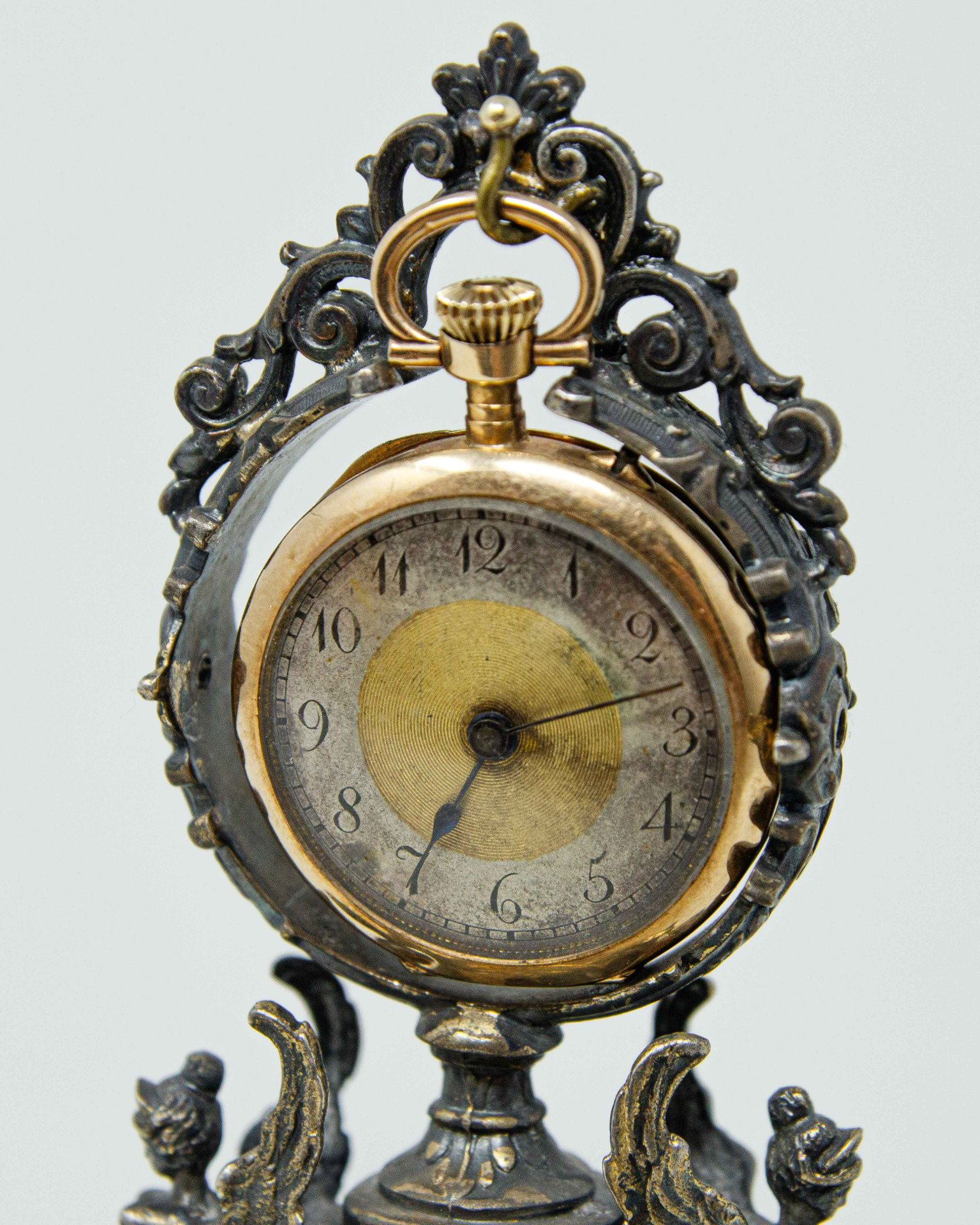
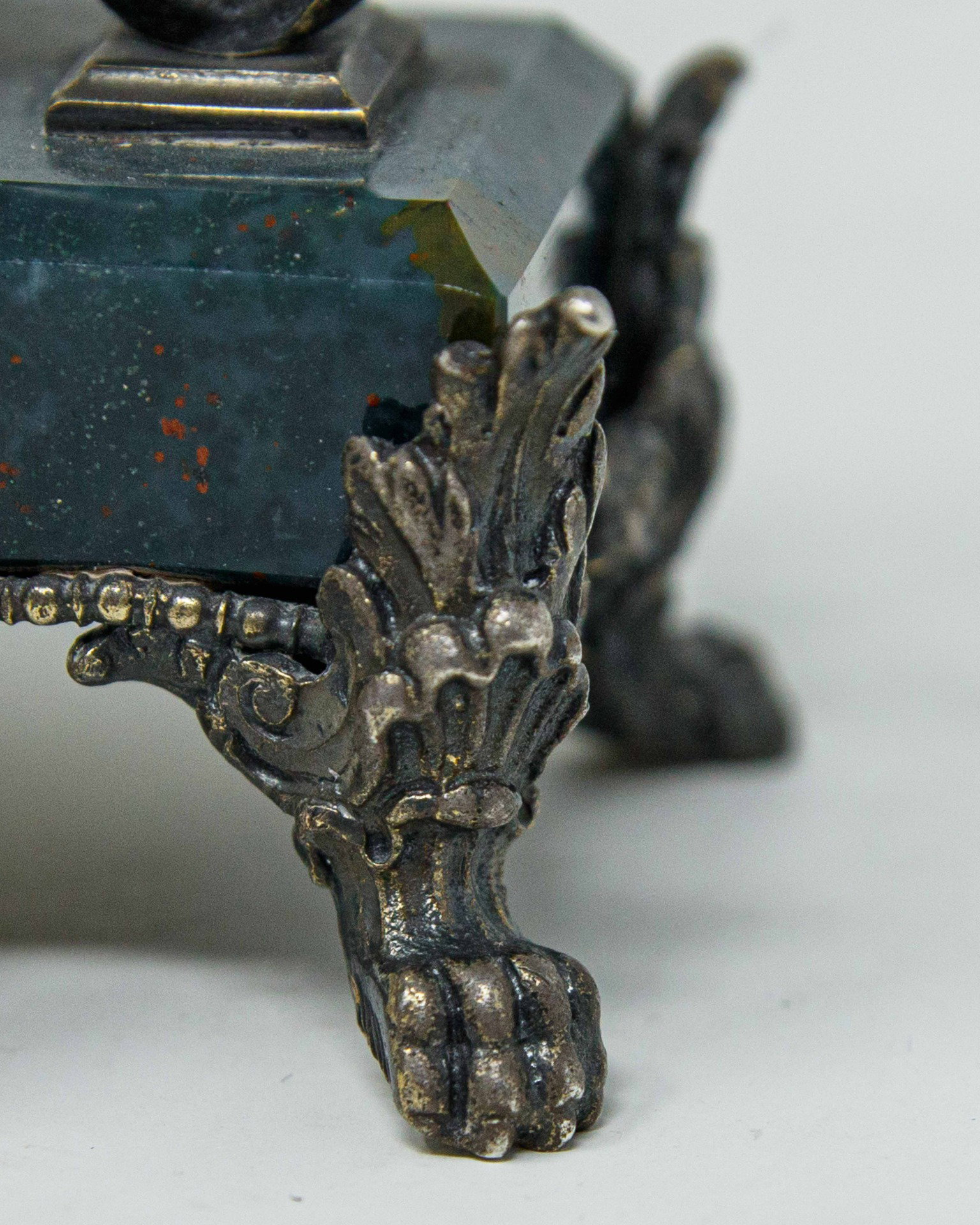
This watch holder is made of precious, partially gilded silver, in addition to the splendid base and column, both in jasper, on which two musical cherubs in carved elephant ivory are seated. The whole is accompanied by a small pocket watch with a 14-karat gold case, remontoir winding and cylinder movement; the movement of the hands is currently working, which gives an idea of the enormous quality of workmanship, also visible in the partially gilded dial with Arabic numerals. These objects are typical of German production from the late 19th century and more precisely from the city of Hanau, in central Germany. From the mid- to late 19th century, in fact, many reproductions in the French or German Rococo style were made in this city; the 'father' of this industry was August Schleissner, a virtuoso silversmith who, together with other city companies such as Neresheimer, developed the production of highly decorative objects, exhibited at important European and world exhibitions. The great success of the Hanau factories also derives from the local education at the city's design school, the Koenigliche Zeichenakademie, where courses in art history, drawing, chasing, and modeling were held for employees and apprentices. The taste for design and objects of the past meant that the artisans practiced on ancient models but also on those of more recent periods, such as the Baroque, Rococo and Neoclassicism, helping to give the works a certain versatility, capable of integrating typologies and forms from different eras and styles. The stylistic eclecticism is also accompanied by that of materials, as can be clearly seen in the work described here, in which the excellence of the technique can be measured both in the musical cherubs in ivory and in the silver details, up to the jasper base and the pocket watch at the top.