17th century, Spanish School
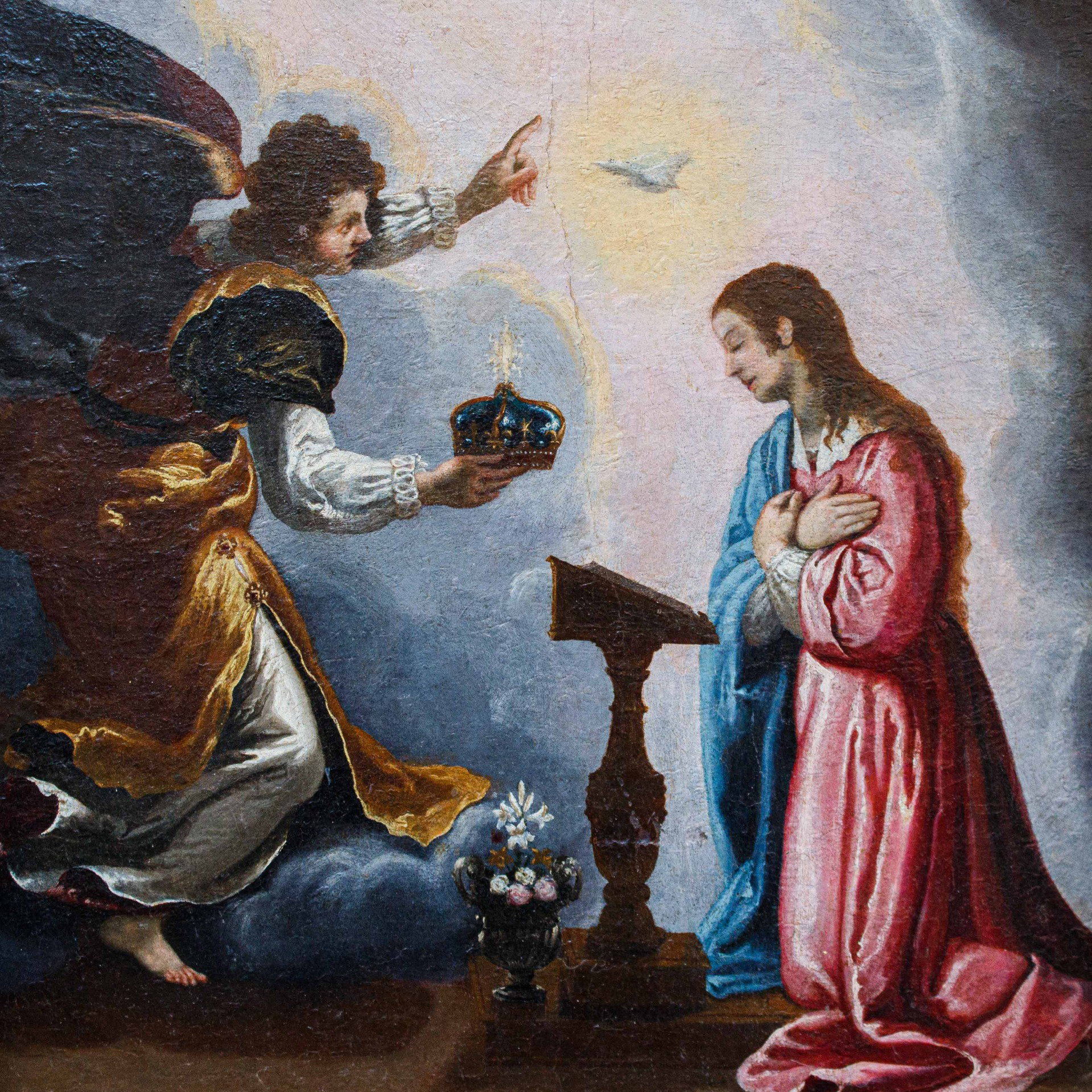
Annunciation
Oil on panel, 54.5 x 46 cm
With frame 69 x 62 cm
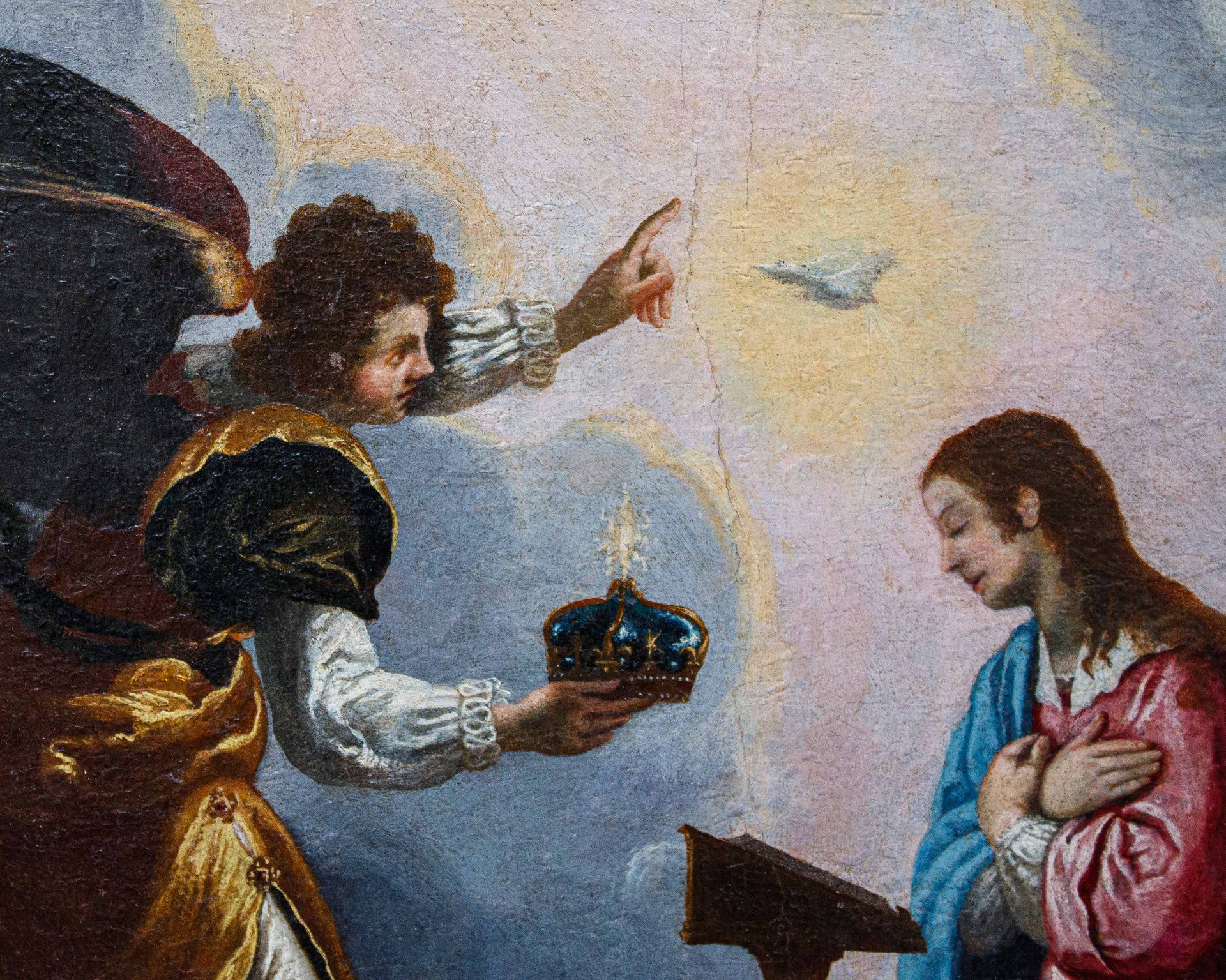
In this Annunciation, the Archangel Gabriel is the bearer of an innovative symbolism, rarely adopted: instead of the traditional virginal lily, the divine messenger shows the Virgin a precious golden crown with a night-blue lined cap, above which shines the sun, symbol of divine conception. The contemporary descent of the Holy Spirit from heaven, which the archangel indicates, helps to explain Mary's role as the future Queen of Heaven as mater Dei. The figured instant is when the Virgin, seeing the archangel approaching, perceives his ardent spirit and lowers her gaze, unable to bear such divine beauty. The only concrete reference to the daily context is the lectern with the volume that Mary was candidly reading, left halfway for Gabriel, and the graceful bronze vase on the foot embellished with delicate roses and a sprig of lily.
The affectedly blurred drawing line and the brilliant colorism allow us to associate this panel with 17th-century Spanish production. The particular choice of clothing worn by the archangel, preciously swollen and with a specific decoratively elaborate turn-up on the end of the sleeve, is a further indication of the cultural context of reference. The 17th century was named by Spanish historiographical-artistic criticism the Siglo de Oro of national painting, due to the temporary cultural isolation of the territory following the intensification of religious fervor. The artistic context did not fail to receive models from neighboring Italy and Flanders, however, in this period the language with a strong plastic expression that also characterizes the present one was codified. Just remember the choral work of the most important artistic fringe at the monastery of the Escorial, commissioned by Philip II as a sanctuary of Counter-Reformation art, which determined an alignment of the main taste.
In this regard, consider the Annunciation created by Bartolomé Estaban Murillo around 1660, now kept in the Prado collections. The canvas, which was purchased in 1729 to celebrate the marriage between Elisabetta Farnese and Philip V king of Spain, is symptomatic of the effervescent Spanish Baroque season, which here proposes the same figurative effects. Similarly, remember the Annunciation created by Francisco de Zurbarán (1598-1664), between 1638-1639, now kept at the Grenoble Museum.
The object is in good condition