19th century
Winged Victory
Gilded bronze, height 98 cm
Marble base diameter 49 cm
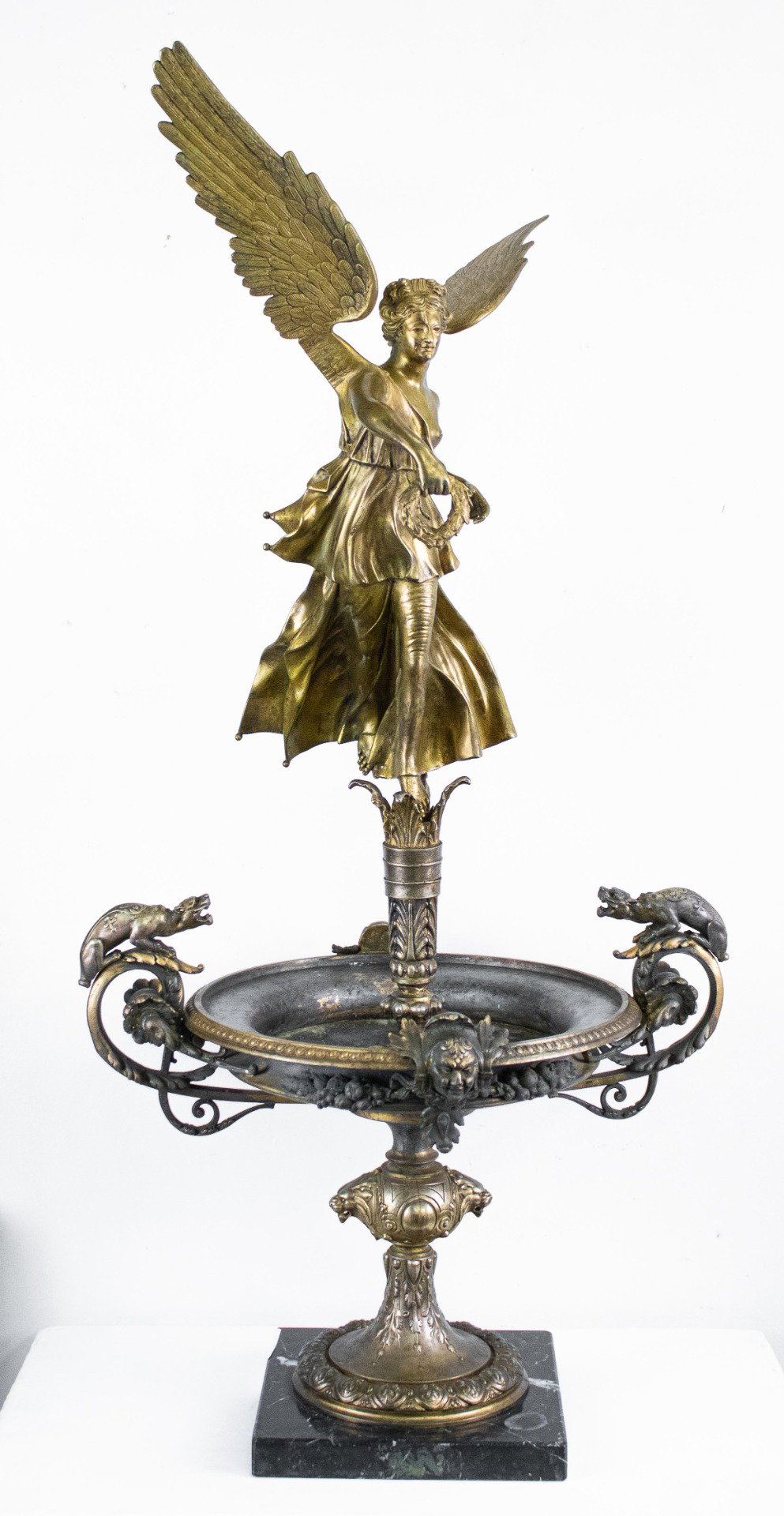
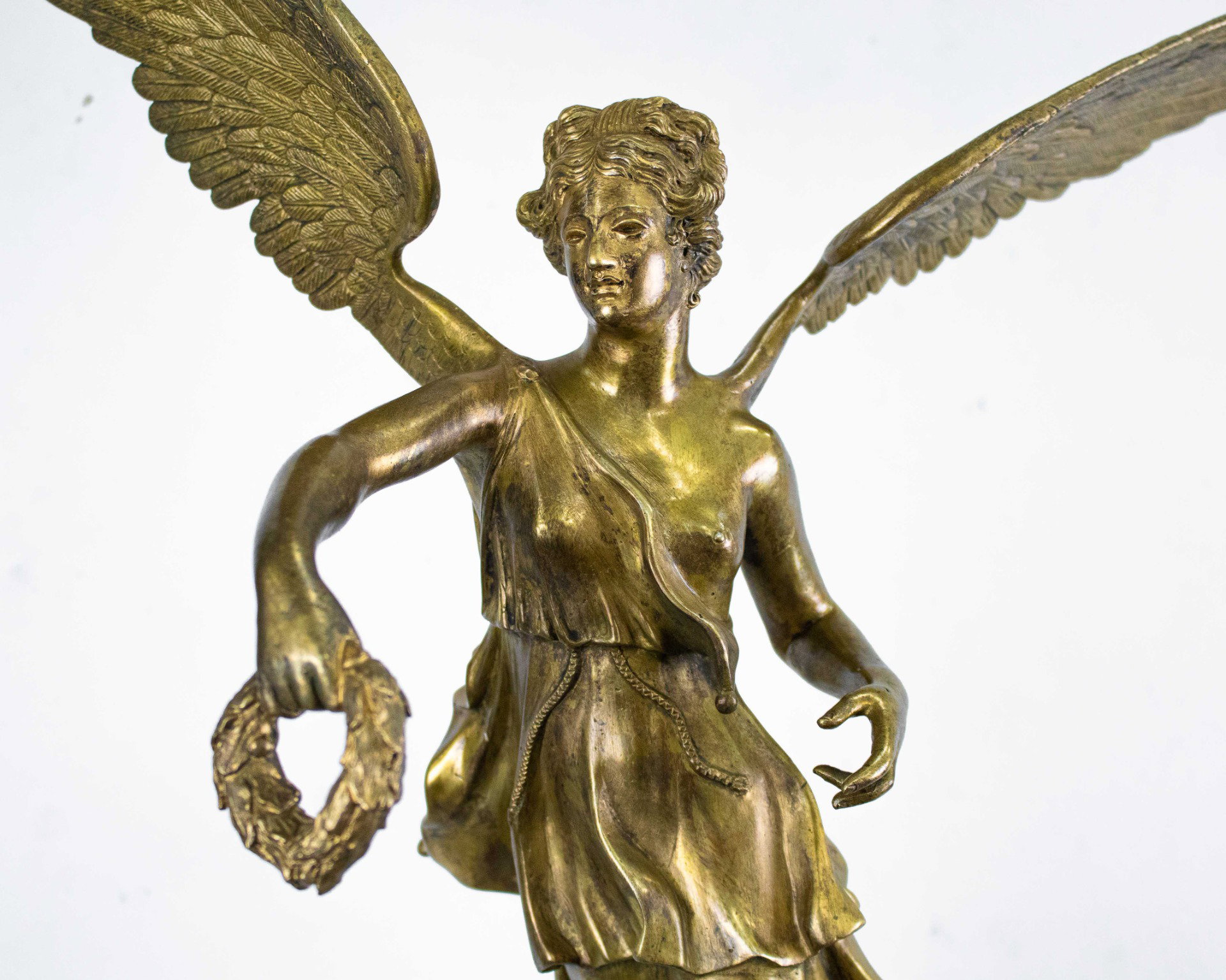
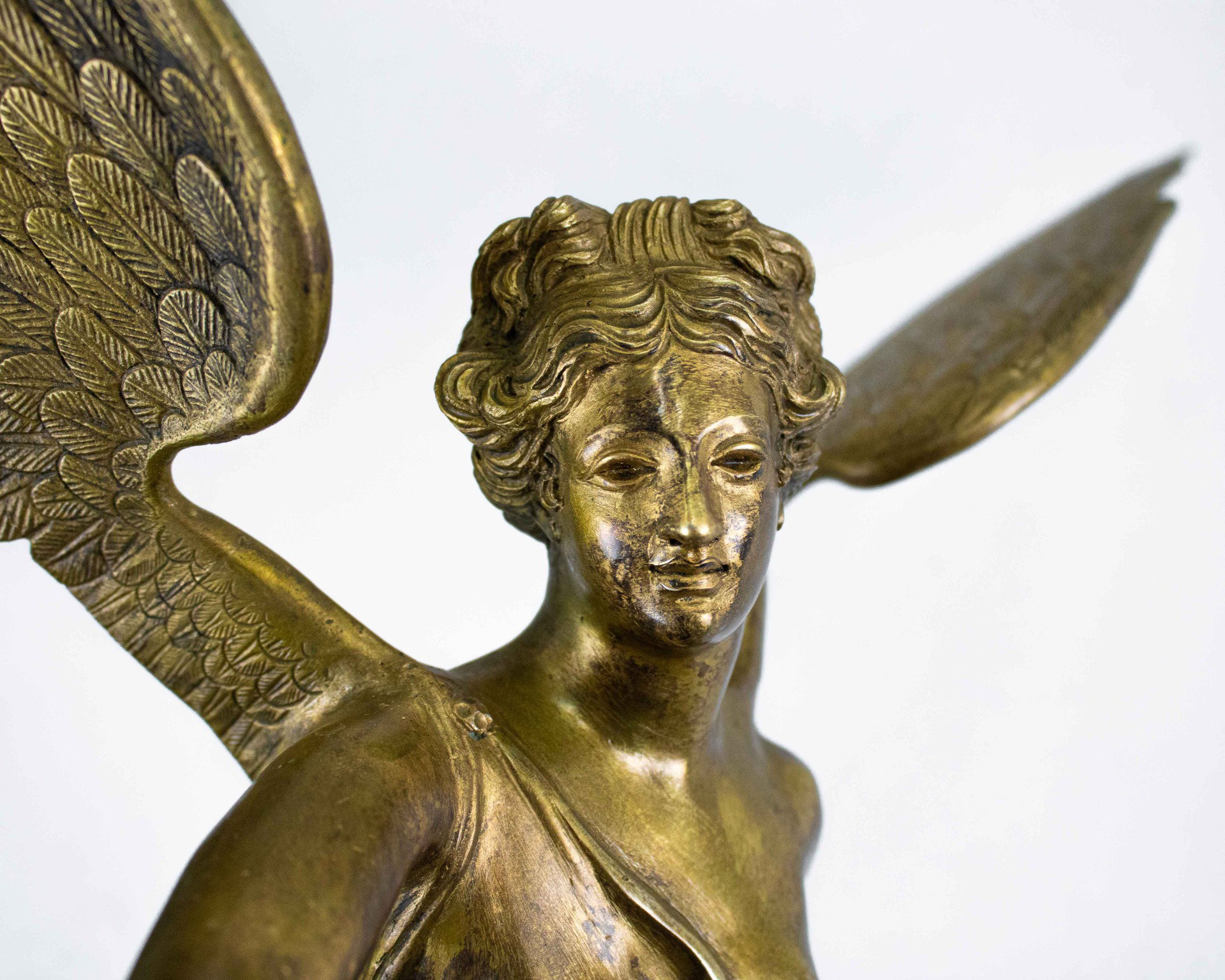
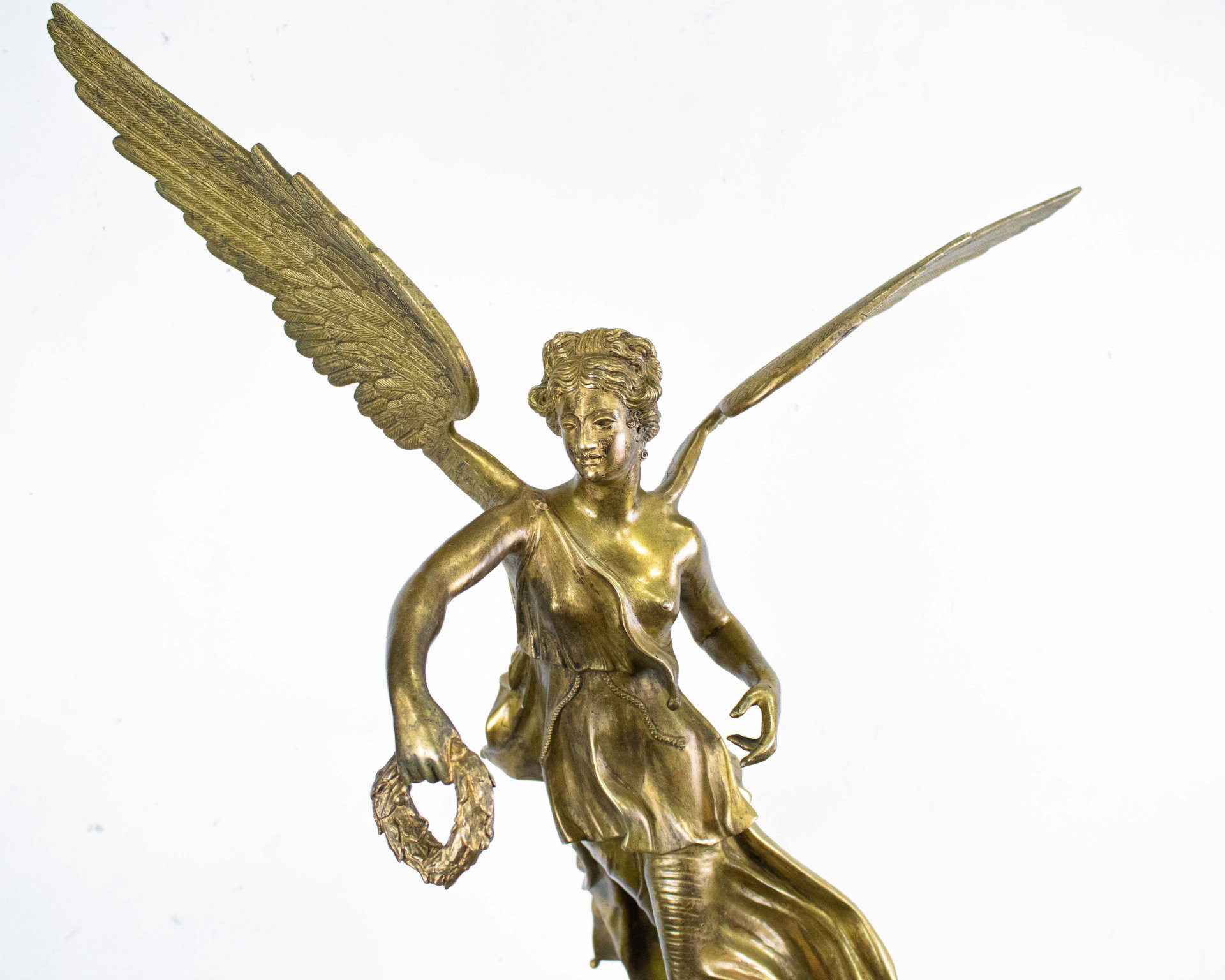
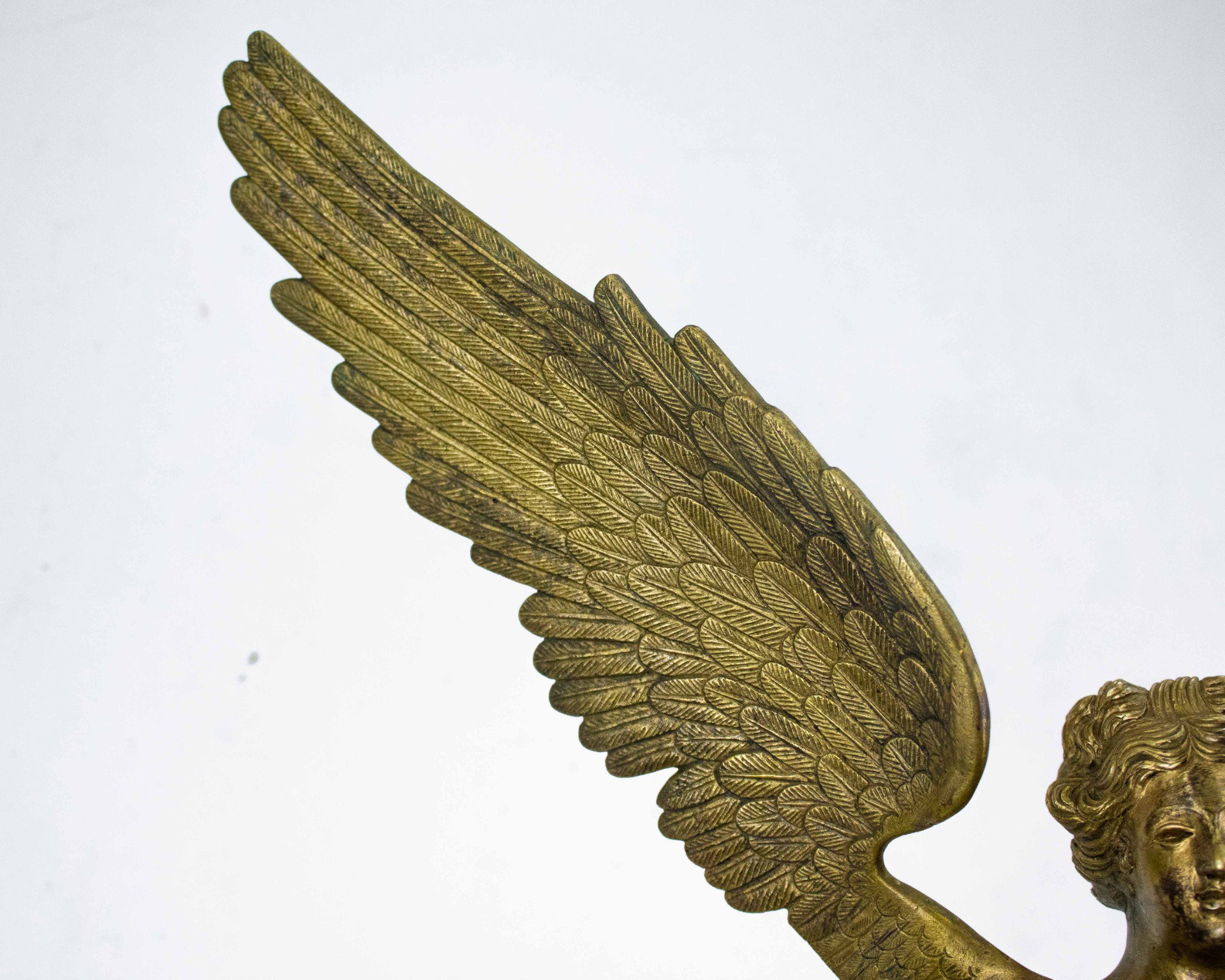
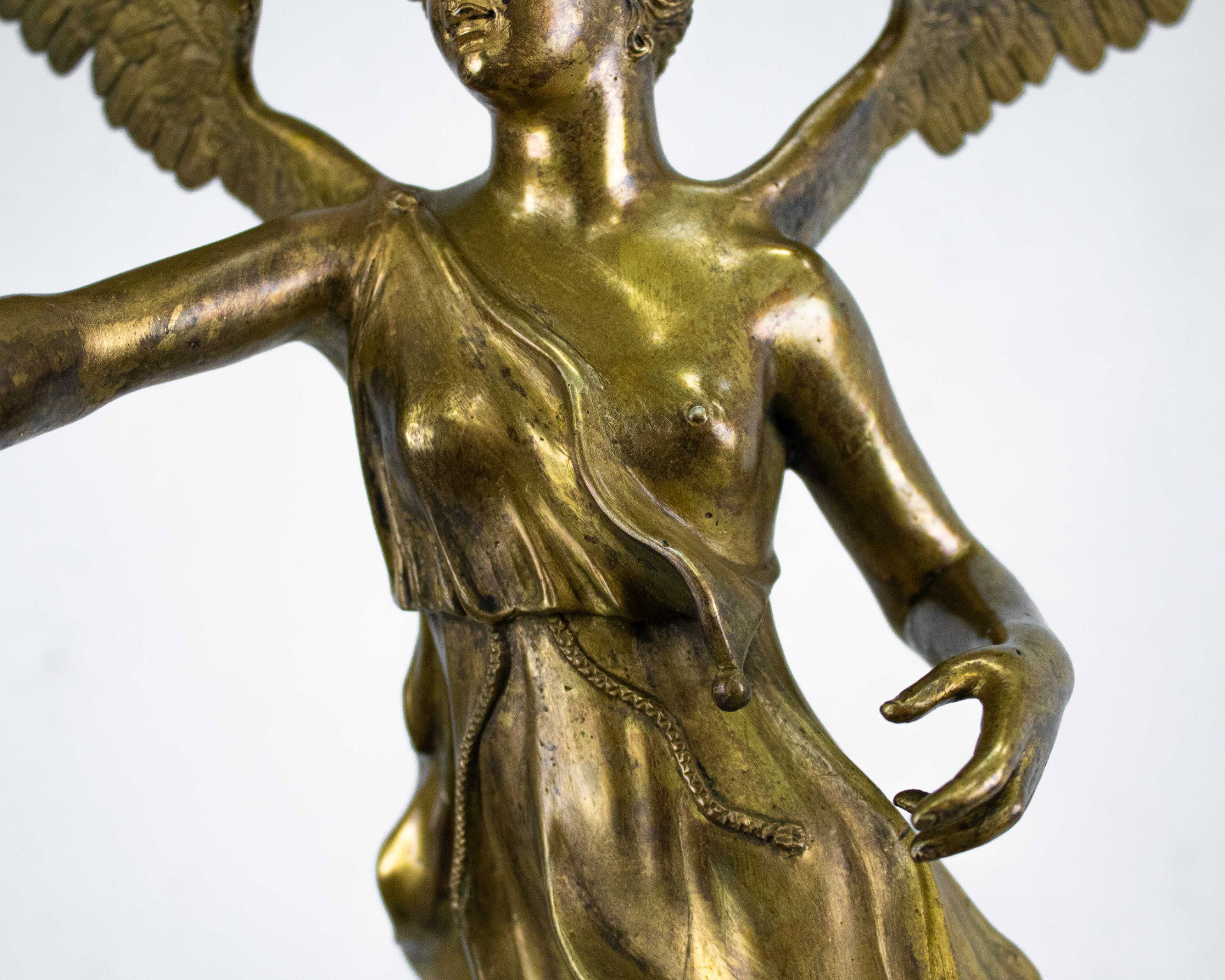
The balance in which this winged victory stands, erect on only her left ankle, masks the solidity of the bronze. The entire sculpture vibrates with opposing lines of force that create daring plastic movements, resulting in an effect of exuberant animation. The Victory, with fully spread wings, rides the wind while firmly holding a laurel wreath, a clear symbol of triumph. Unlike Justice, who always stands on both legs, Victory rests on a single foot, variously balanced on a globe, symbolizing on one hand the transient flight, and on the other the universal authority she enjoys. In the present sculpture, a column with vegetal decoration, modulated as if it were a lit torch, is preferred, a further symbol of the disruptive force that accompanies victory.
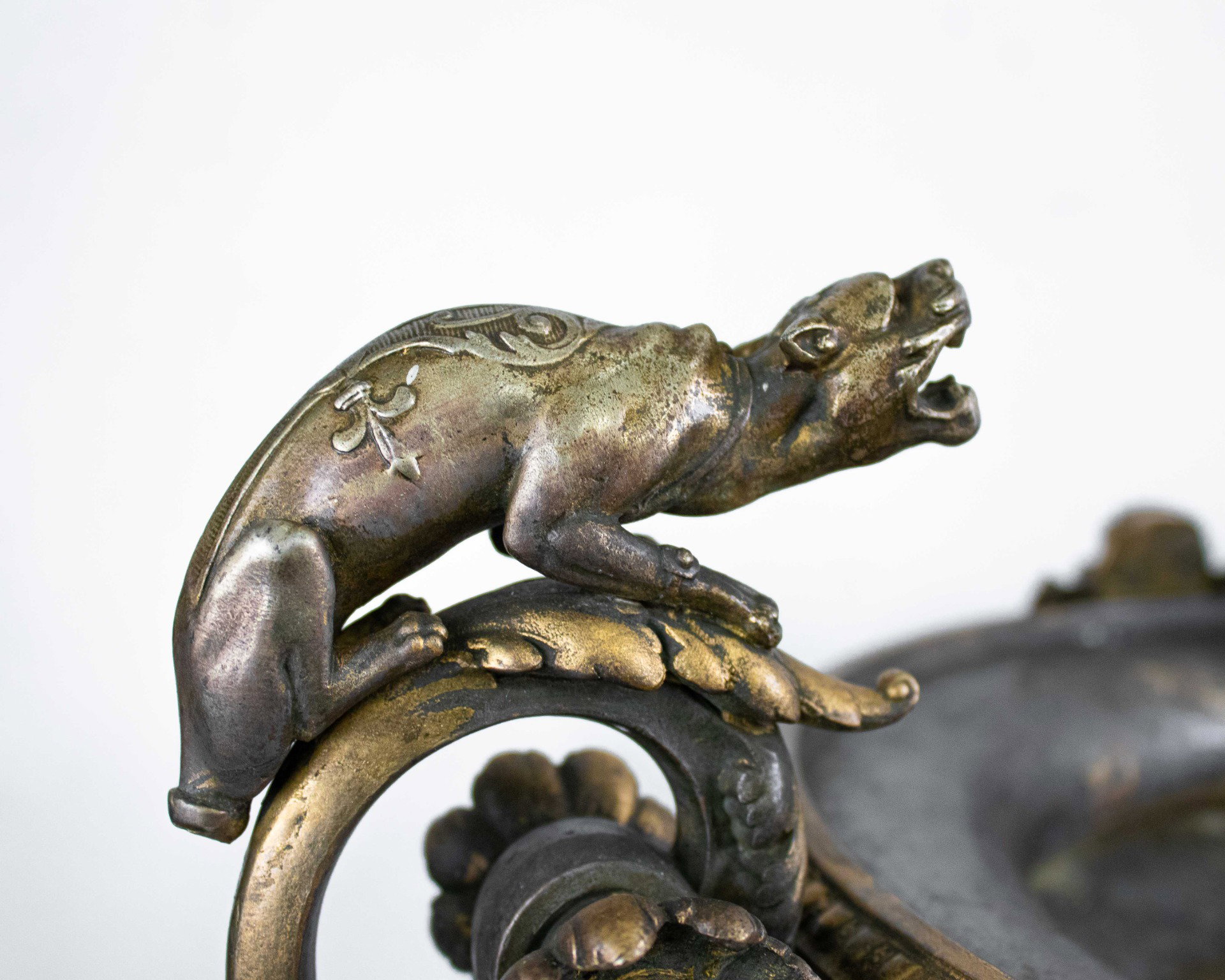
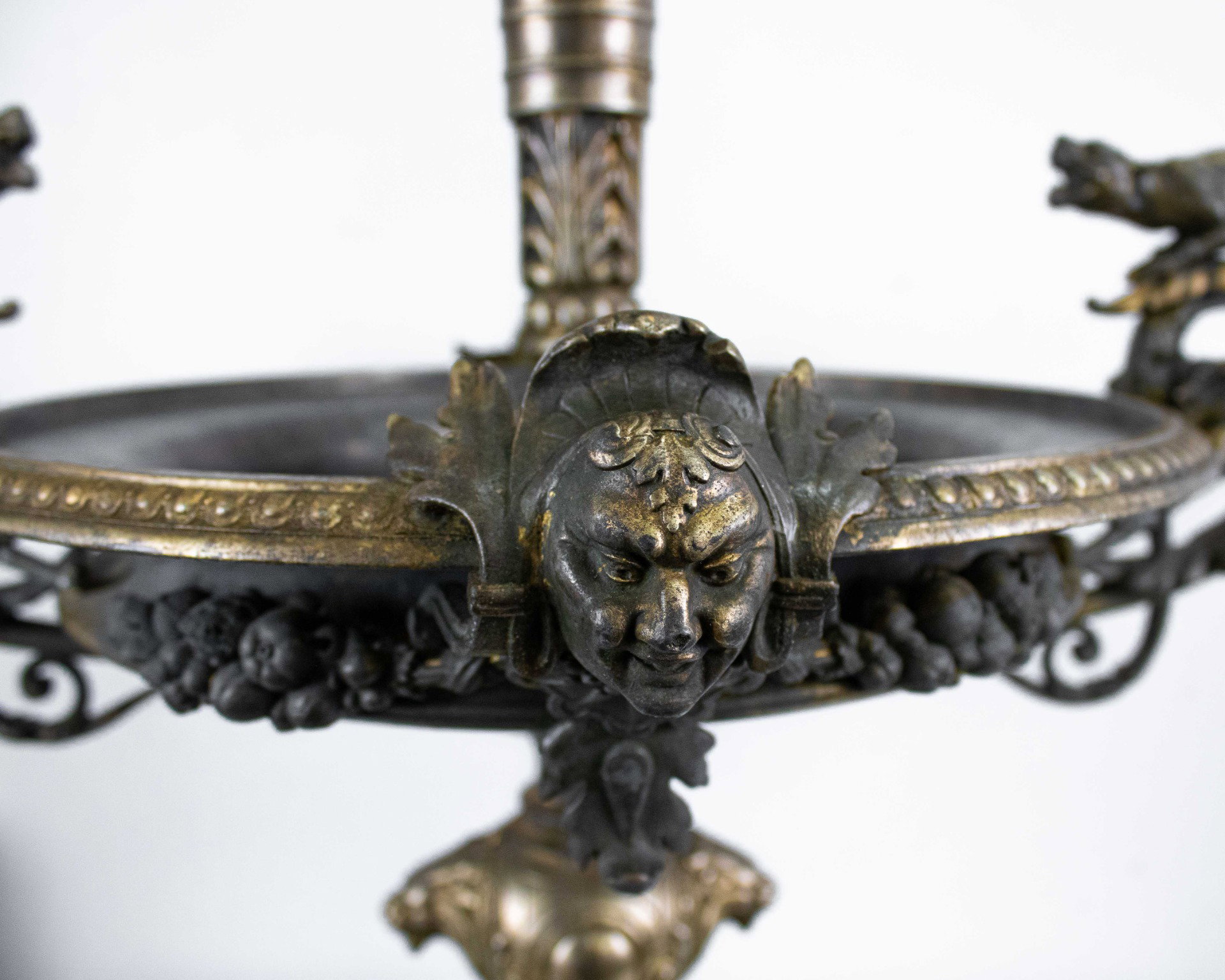
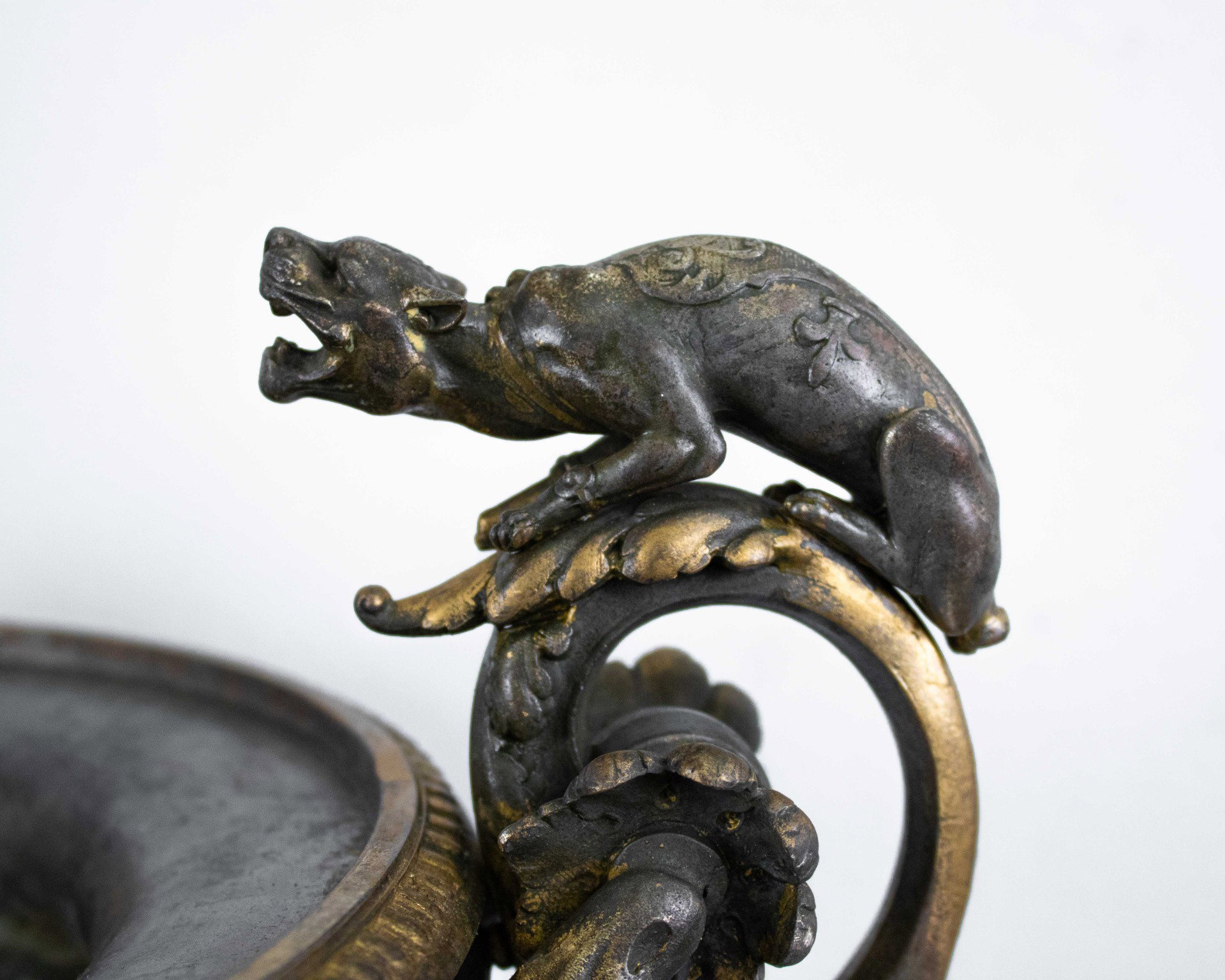
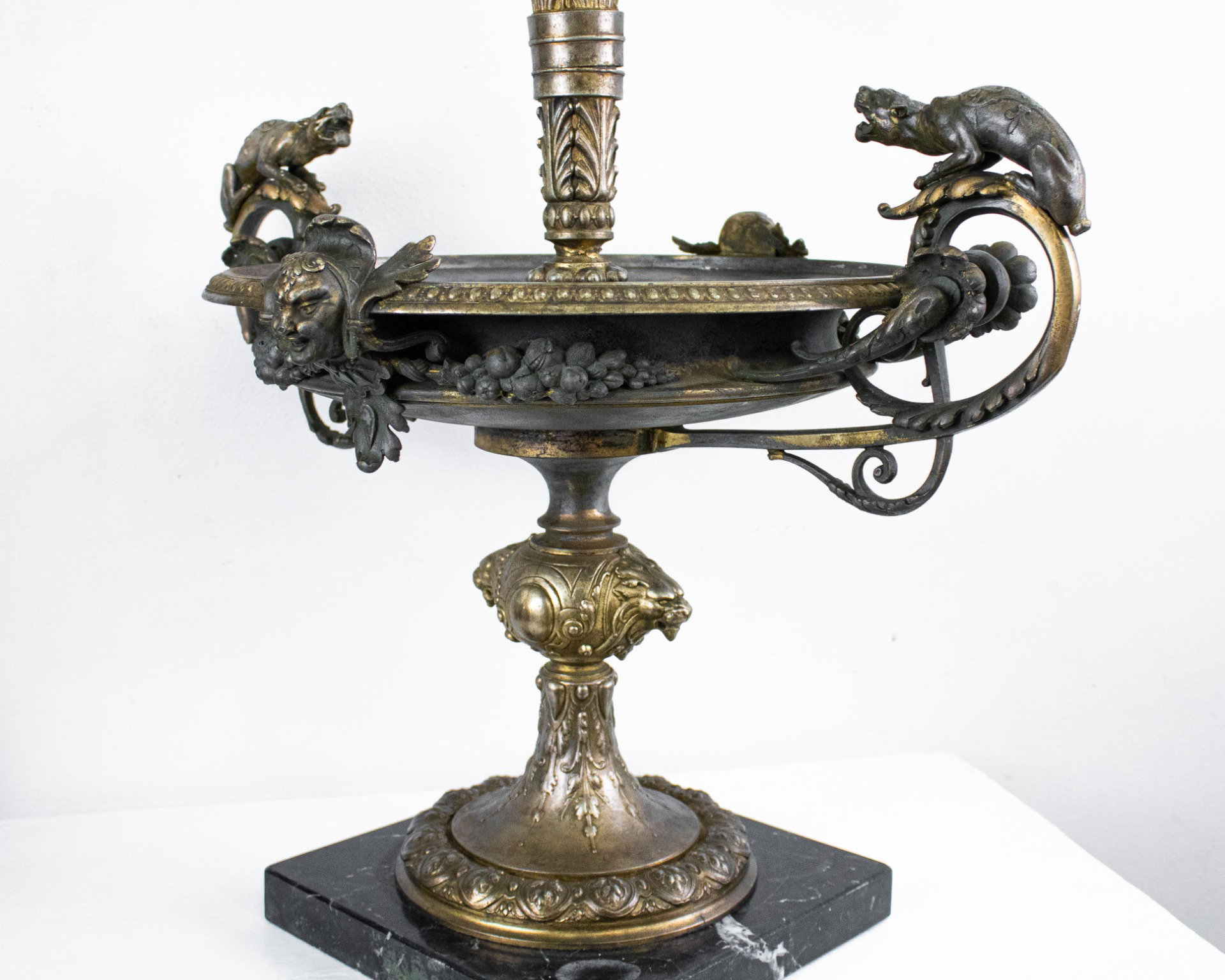
The base on which the Victory rises, shaped similarly to a wide and hollowed ancient vase, features a pair of lionesses as handles with a specular lily decoration on their backs; two human protomes, with grim expressions, mark the other parts of the mouth of the vase. On the neck of the base emerge lion heads, swallowed by vegetal ornamentation, which also recurs on the foot of the vase.
Except for very few exceptions, the iconography of the winged Victory, perfectly respected in this example, derives from a single model handed down over the millennia, now lost. Made of gilded bronze, this Victory-model was cast by the Tarantines in 280 BC to celebrate their revenge on the Romans at Heraclea; it was stolen by the Romans themselves in 272 BC during the Pyrrhic Wars, and in 29 BC placed by Octavian Augustus on an altar in the Curia Iulia, the seat of the Senate inaugurated by Julius Caesar inside the Forum. The Tarantine Victory was destroyed in 402 AD for religious reasons, as since 395 Christianity had become de jure the official creed of the Empire and Emperor Theodosius had no intention of sparing any pagan derogation. However, coins and sculptural reproductions preserved its memory: of vital importance was the Roman copy of the imperial age found during the excavations of Pompeii, the oldest existing, now kept at the National Archaeological Museum of Naples. All subsequent copies were based on this, including the present bronze and the later Victories of the monument in honor of Vittorio Emanuele II in Rome. The monument was immediately renamed Vittoriano to guarantee the reference to these sculptures, made by the artists Nicola Cantalamessa Papotti (Victory with palm and serpent), Adolfo Apolloni (with sword), Mario Rutelli and Arnaldo Zocchi (both with laurel wreath). The winged Victory, once a secular metaphor for the supremacy of Rome, thus became an emblem of the universal peace of peoples.
The object is in good condition.
With Ars Antiqua it is possible to defer all amounts up to a maximum of € 7,500 at ZERO RATE, for a total of 15 INSTALLMENTS.
Ex. Tot. € 4,500 = Monthly installment € 300 for 15 months.
Ex. Tot. € 3,600 = Monthly installment € 720 for 5 months.
For amounts exceeding € 7,500 or for a greater deferral in time (over 15 installments), we can provide a customized payment.
Contact us directly for the best quote.
TV LIVE
– SUNDAY 7.00 PM – 11.00 PM Dig.terr. 126 + 809 SKY
- THURSDAY 9.00 PM - 12.00 AM Dig.terr. 134 + 809 SKY
– Streaming on our website www.arsantiquasrl.com and on our social media Facebook and Youtube
All works offered by Ars Antiqua are sold with a certificate of authenticity according to law and a detailed information sheet.
It is possible to see the works directly at the Milan showroom gallery, in via Pisacane 55 and 57.
We personally organize transport and delivery of the works, both for Italy and abroad.