
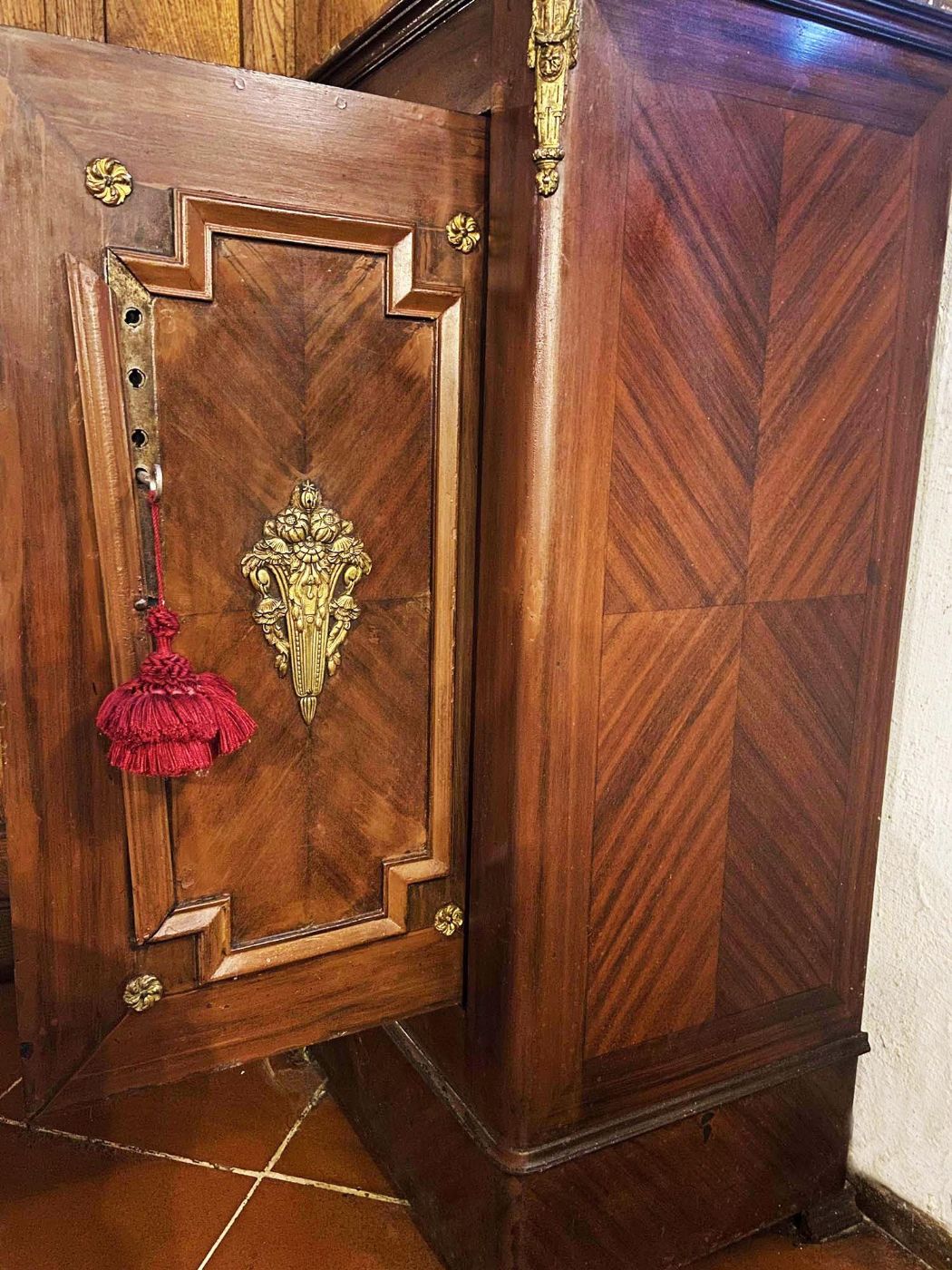
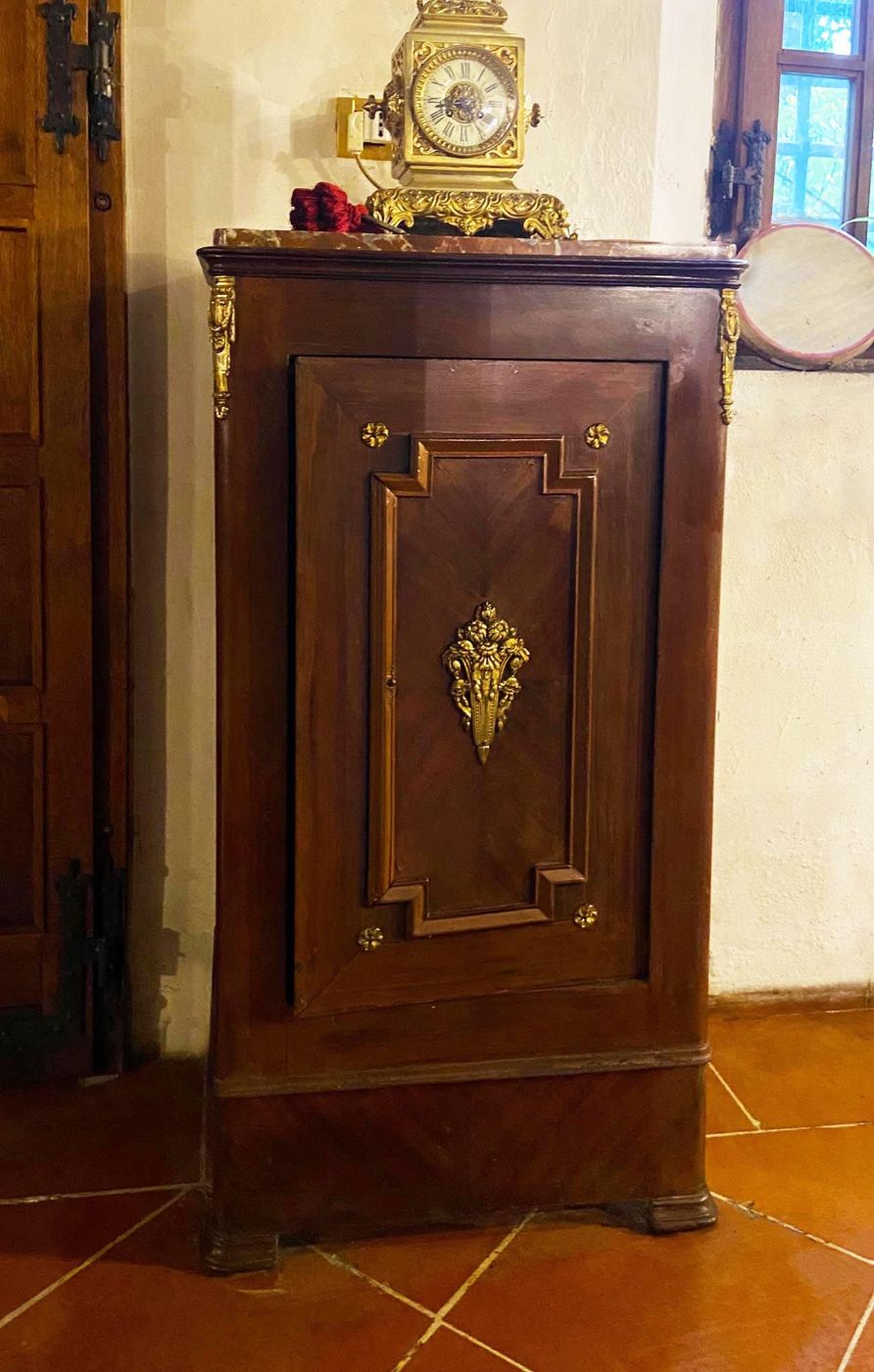
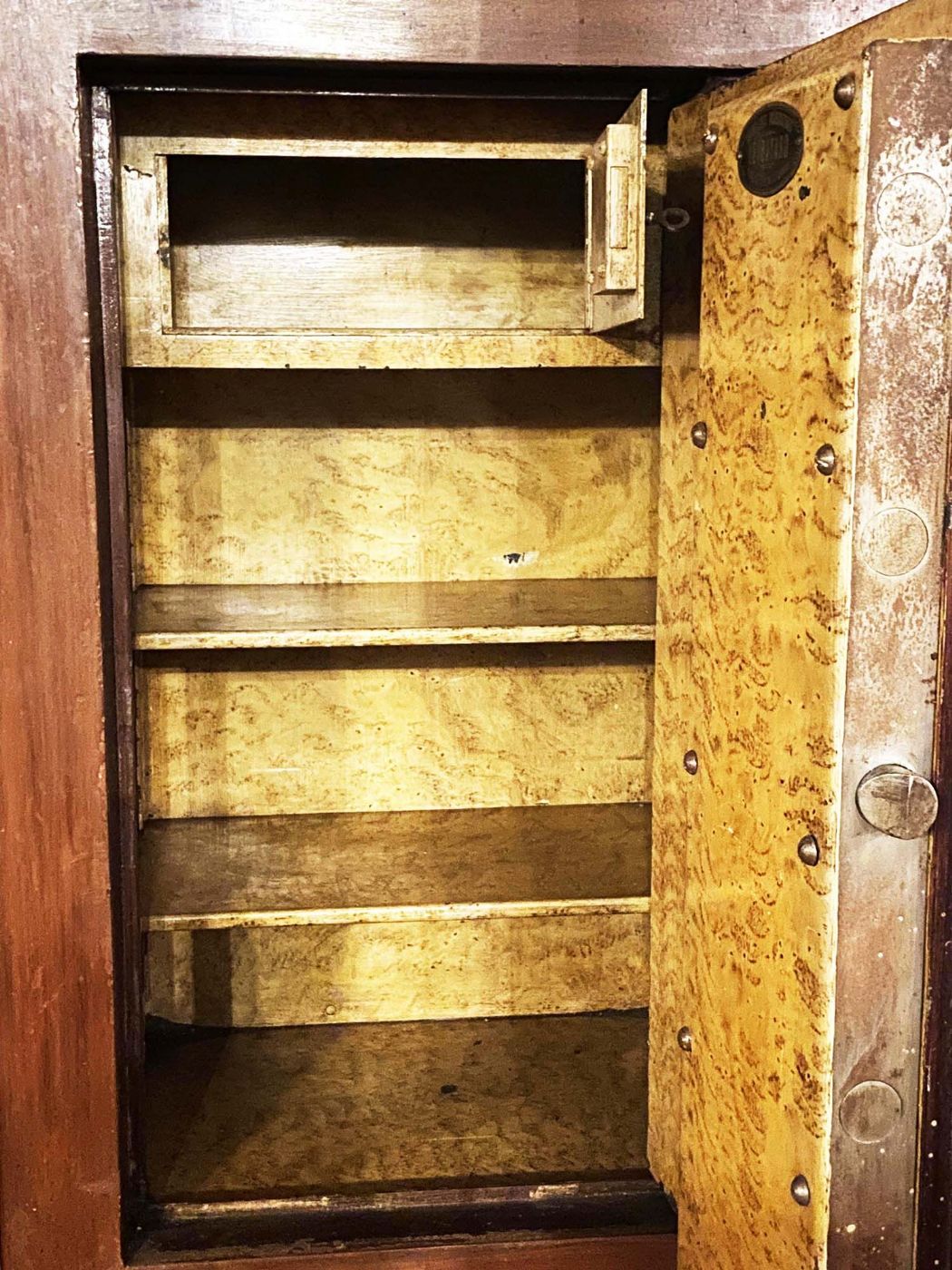

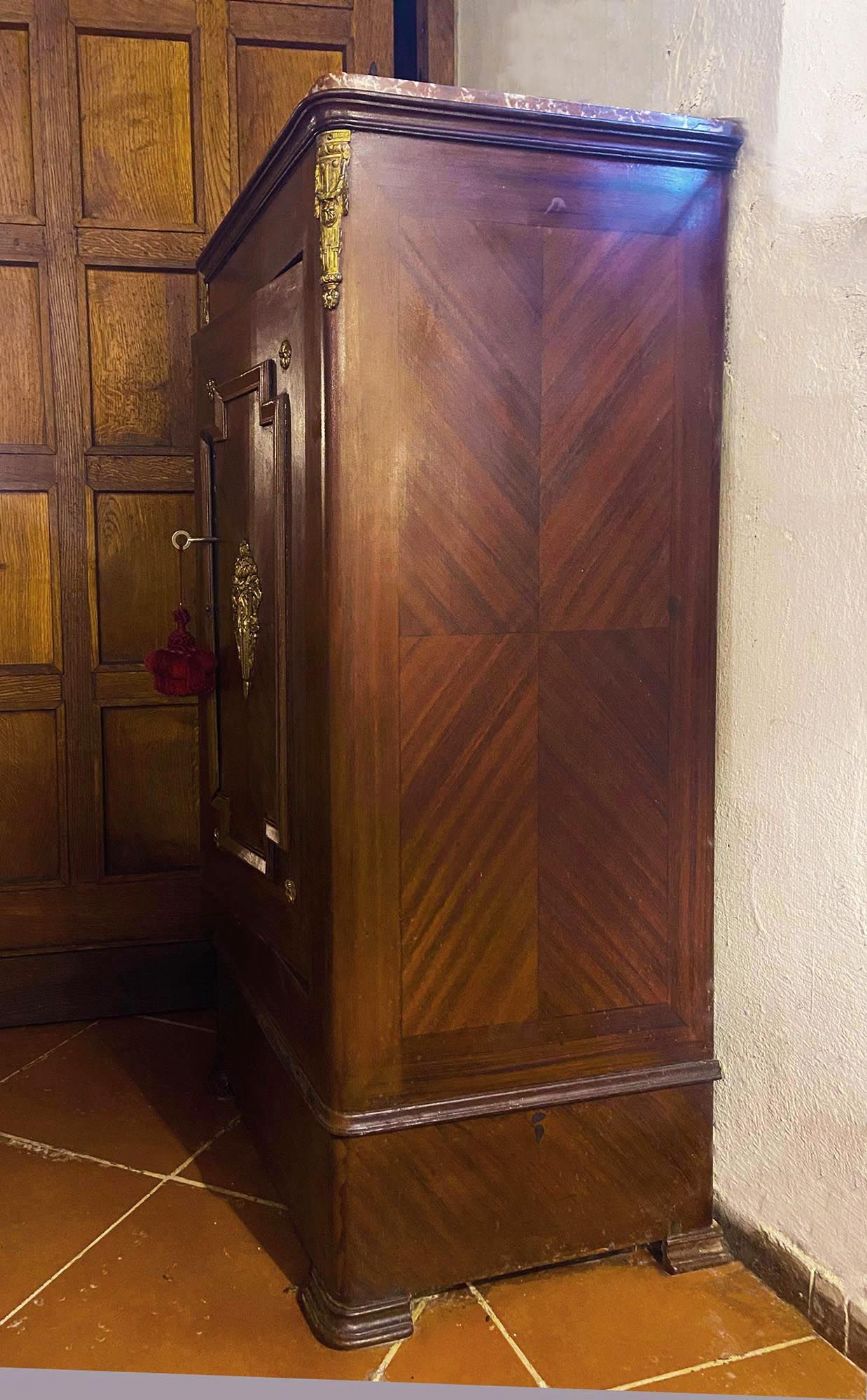
Rare and elegant French iron safe artistically painted with imitation wood, with the typical "herringbone" drawn on the sides and in the front panel.
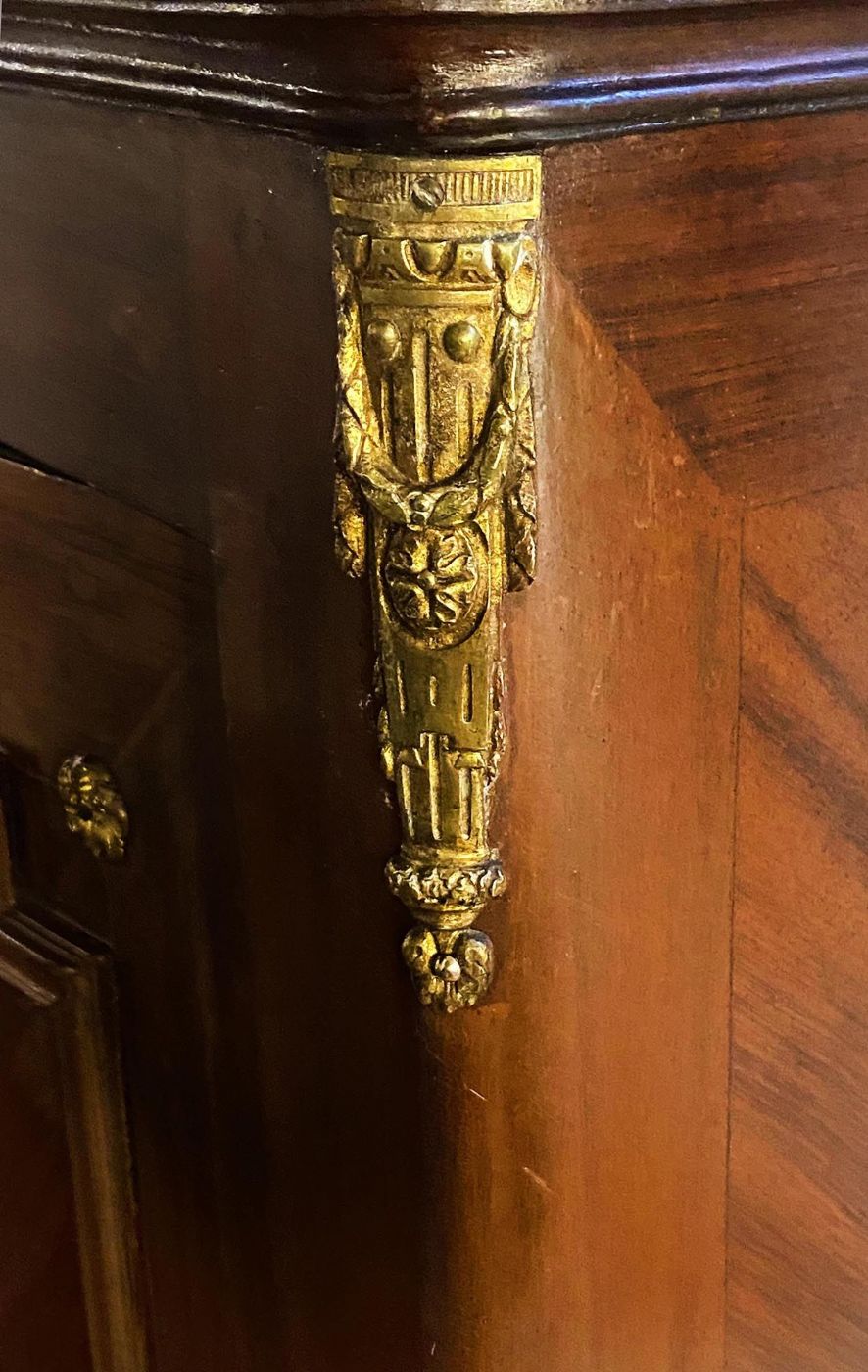
The safe is decorated with gilded bronze ornaments in the two upper corners, in the central part of the door, enclosed within a frame moved to form four corners of "wooden slats" a refined floral decoration, and in each of the four corners of the frame four flowers .
This type of safe was made "ornamental" with gilded bronze applications to be placed in elegant environments
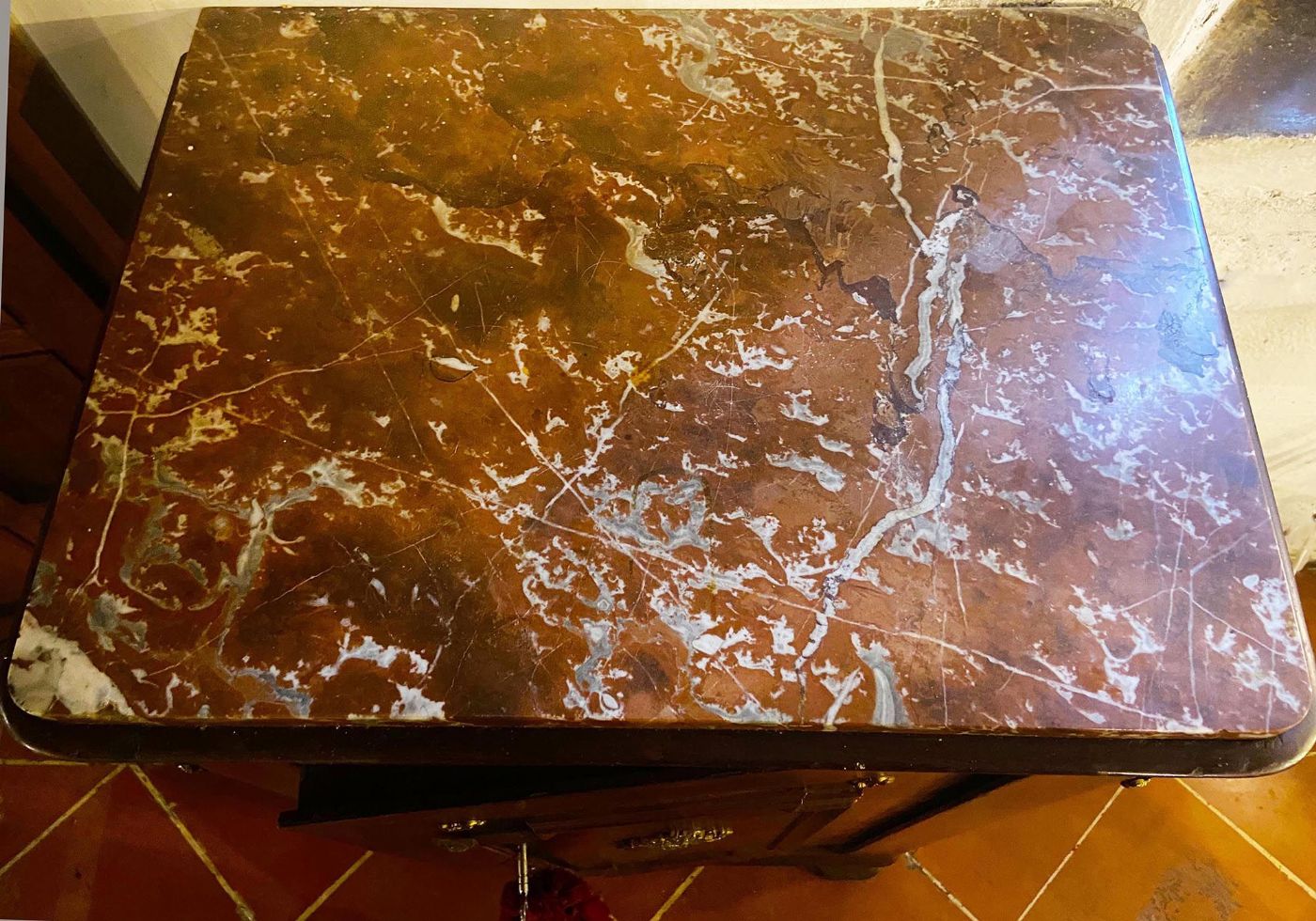
The upper floor of the safe features a slab of “marbled red French marble”.
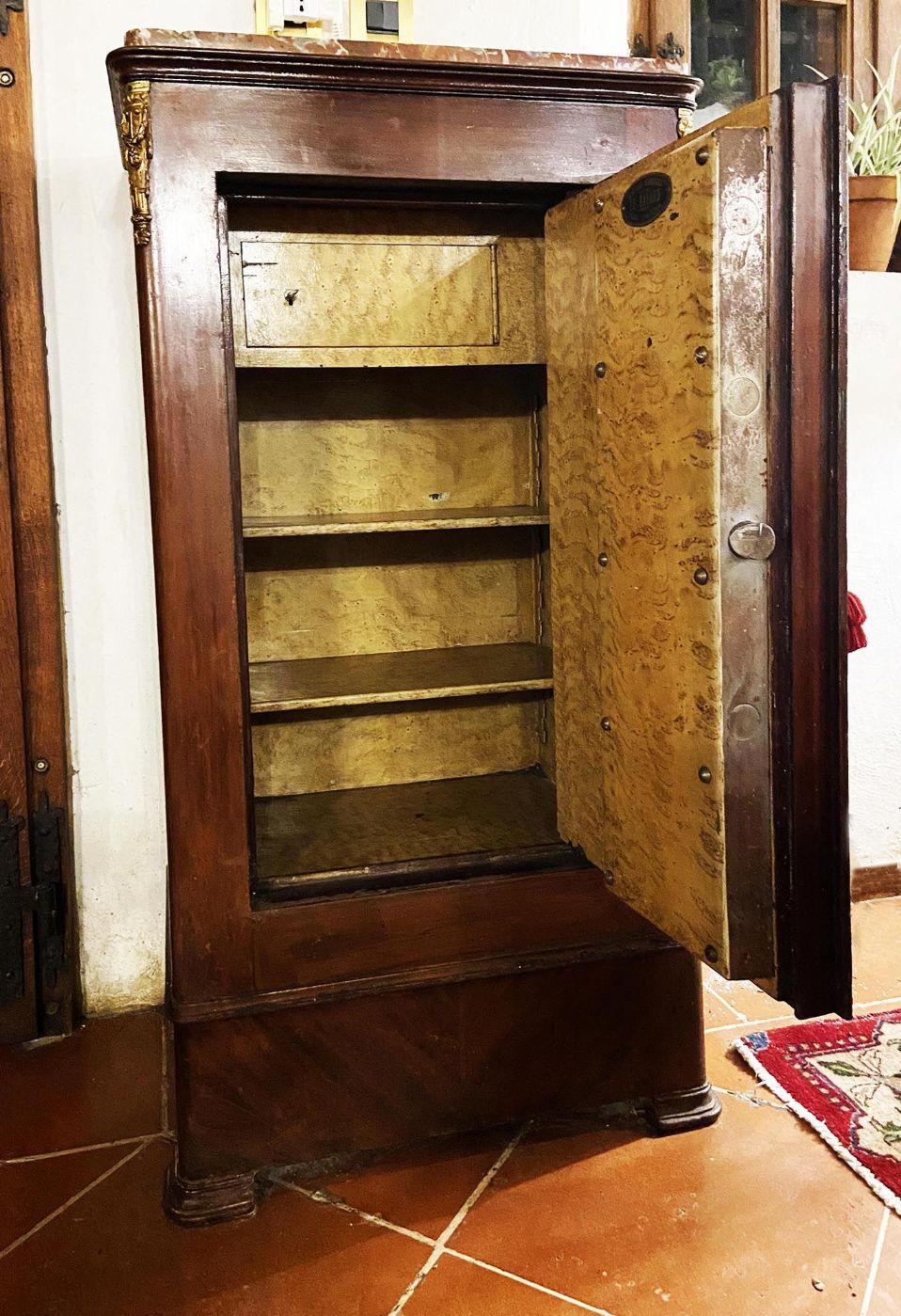
Inside the safe there are two shelves and a safety compartment closed with a key.
All the safes of this brand have the particularity of having a vertical combinational mechanism, with a Picardie pump and combination safety lock.
Measurements: height cm. 116 cm wide. 61 cm depth. 45
thickness of the marble cm. 2
France: mid-nineteenth century. Second Empire (ca.)
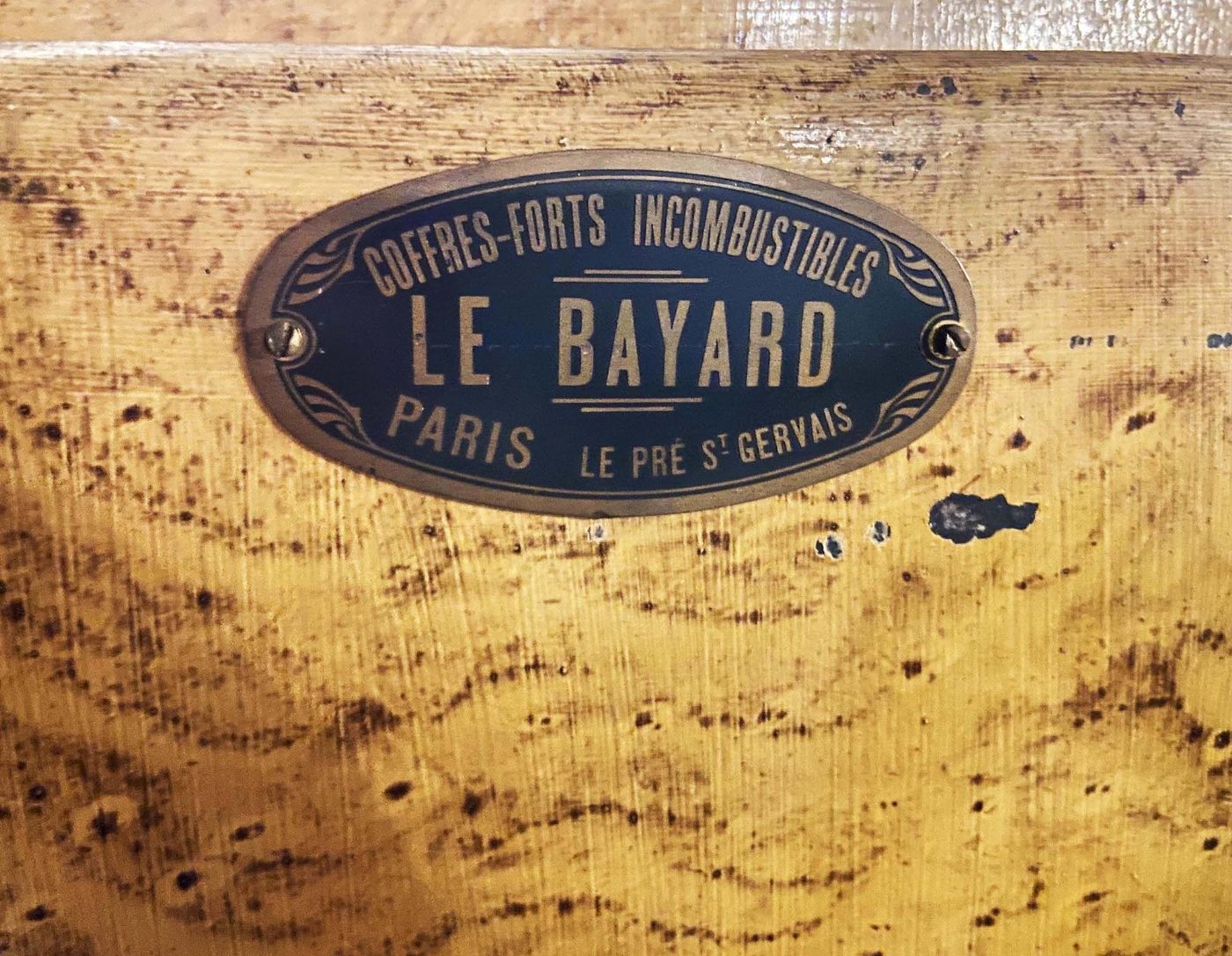
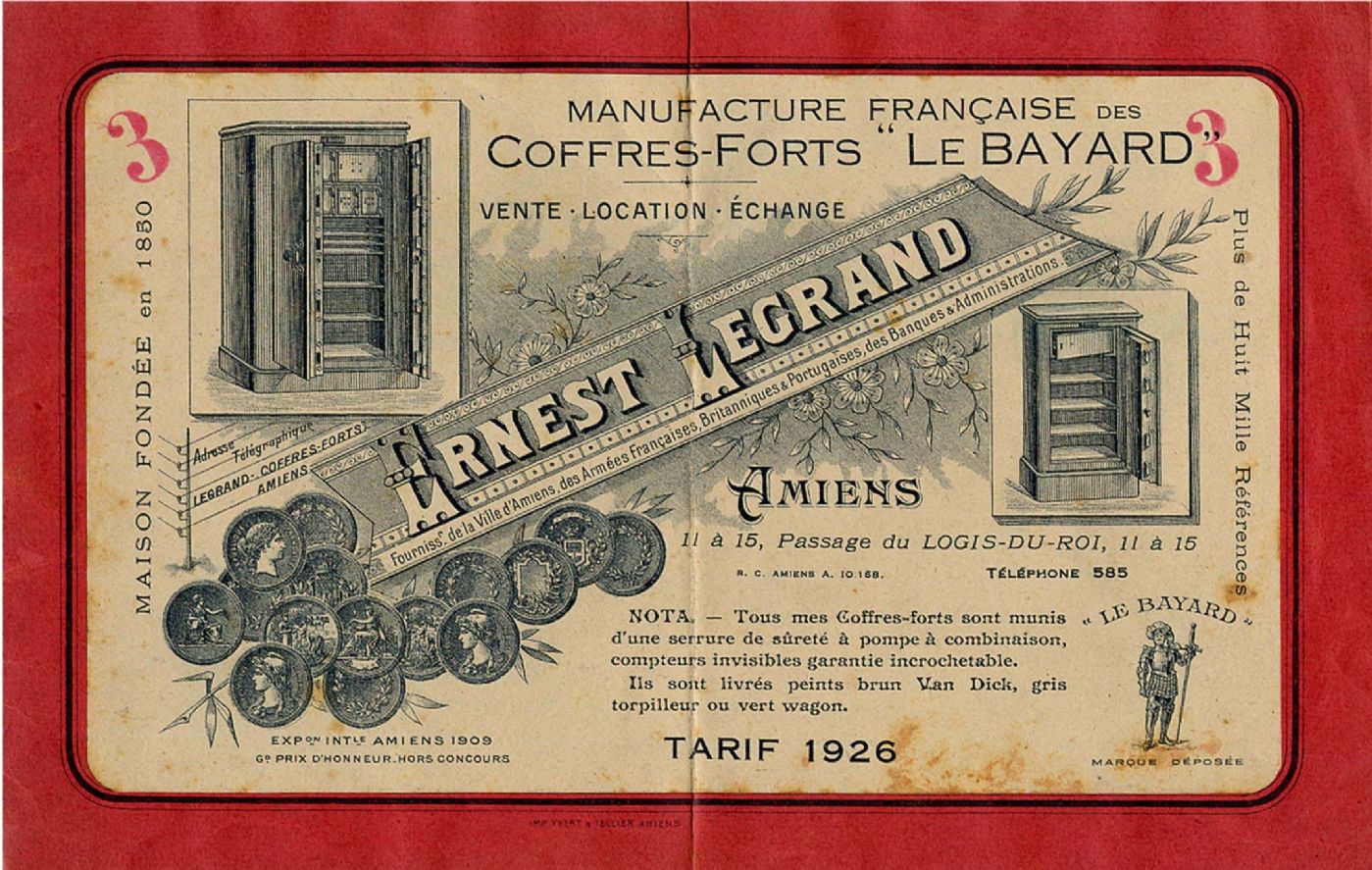
“Le Bayard” (founded in 1850) was a factory present both in Paris and in Amiens, a city located in the Somme department in the Hauts-de-France region. Safes were produced in the 19th and early 20th centuries by Ernest Legrand, supplier to the French, British and Portuguese armies. Of the city of Amiens, of the banks and administrations.
The factory brand logo represents the knight “Pierre Terrail de Bayard”.
Pierre Terrail, lord of Bayard, better known knight Bayard, was born in 1475 or 1476 in Château Bayard (in Pontcharra), and died on 30 April 1524 (exactly 500 years ago!!) in Romagnano Sesia or in Rovasenda (in Piedmont).
He was a French nobleman who particularly distinguished himself as a knight during the Italian wars (15th and 16th centuries).
His life is narrated by one of his comrades in arms, Jacques de Mailles, in the story “Very joyful and very pleasant of the kind lord of Bayart”, as a good knight without fear and without reproach. He was responsible for the character that symbolizes the values of French chivalry at the end of the Middle Ages. One of his mottos was “Accipit ut det” which means “Receive in order to give”.
Photograph n° 10: Cover of the 1926 catalogue.
Courtesy of the Departmental Archives of the Somme (Amiens)