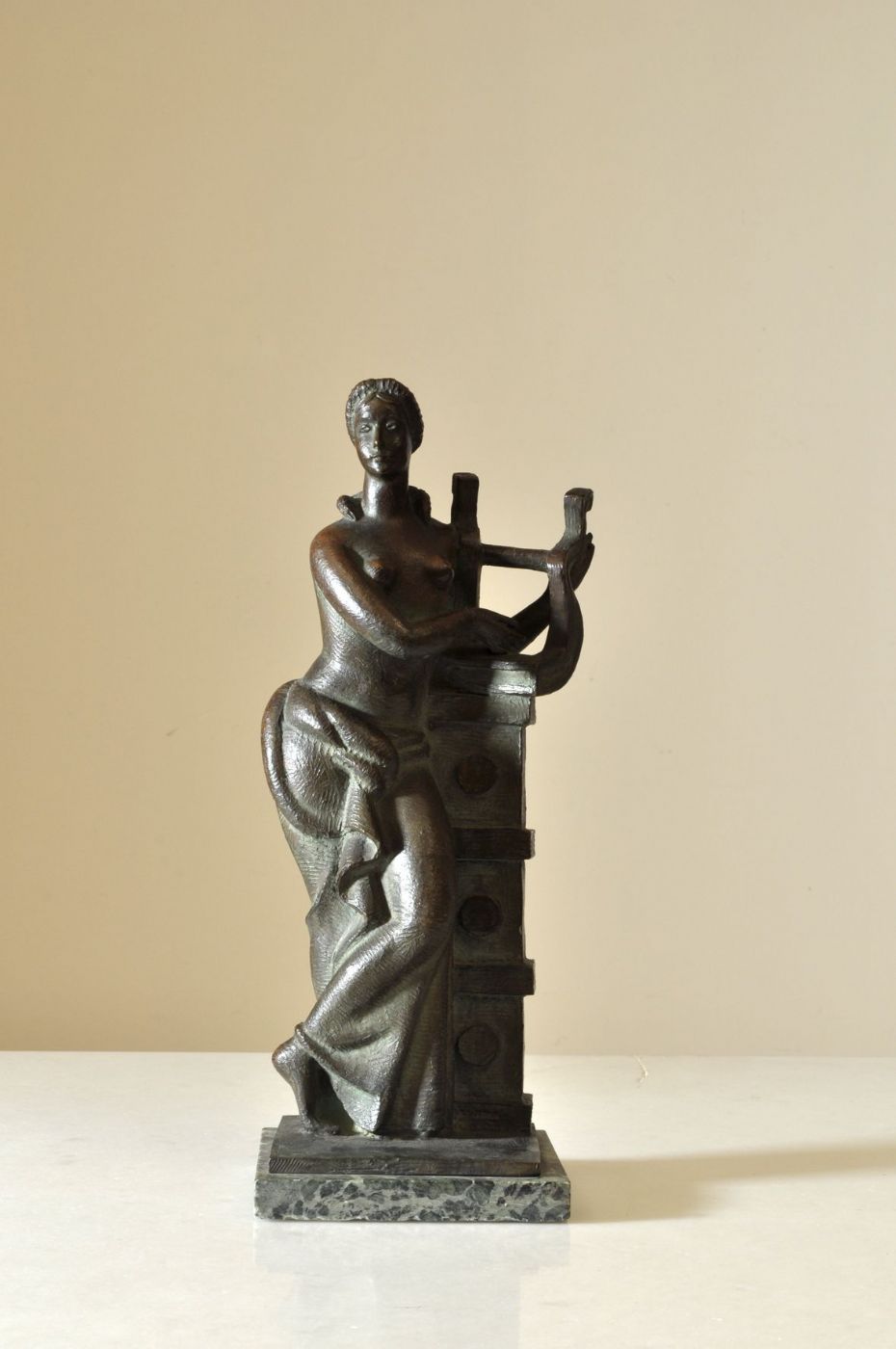
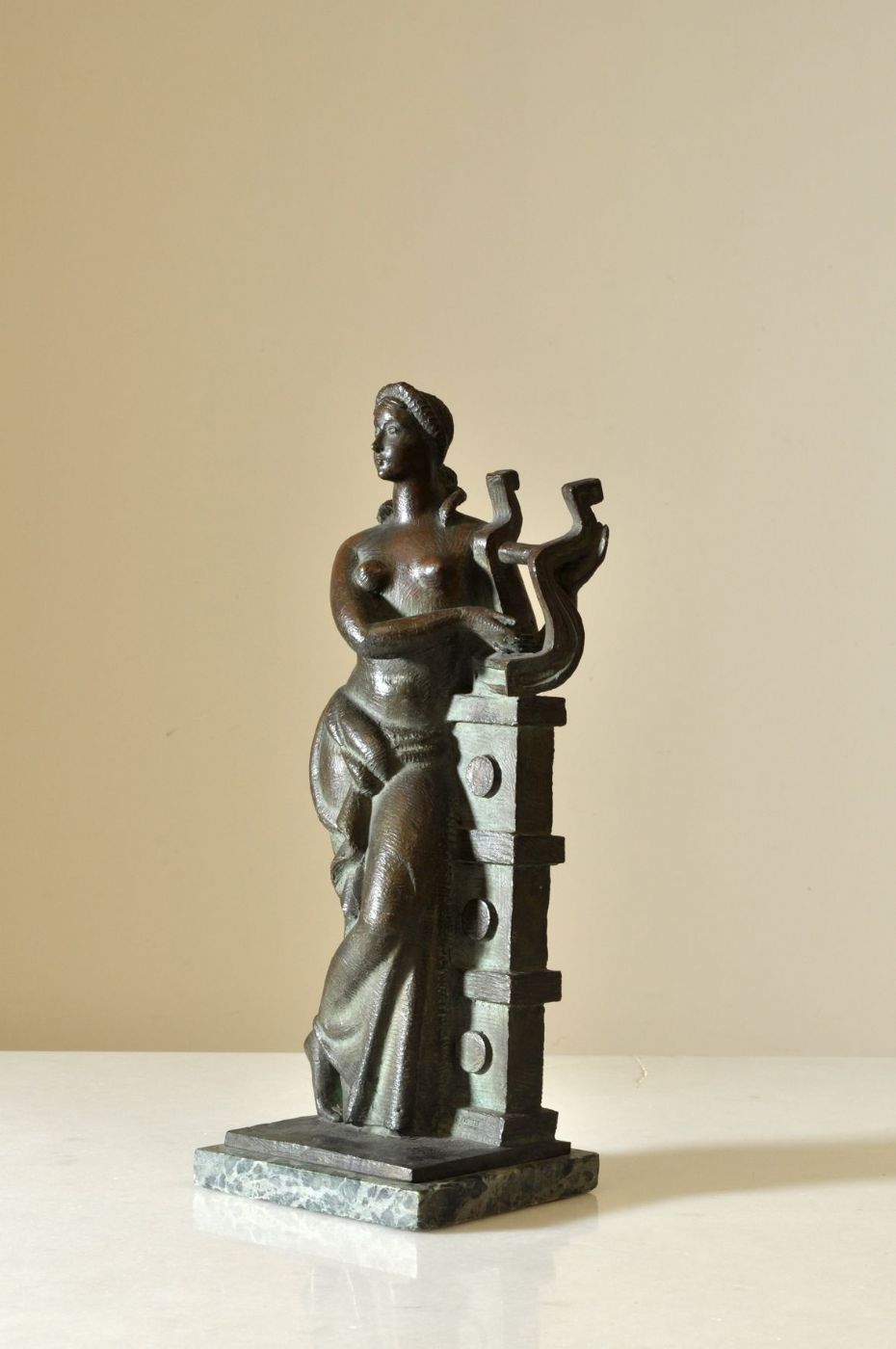
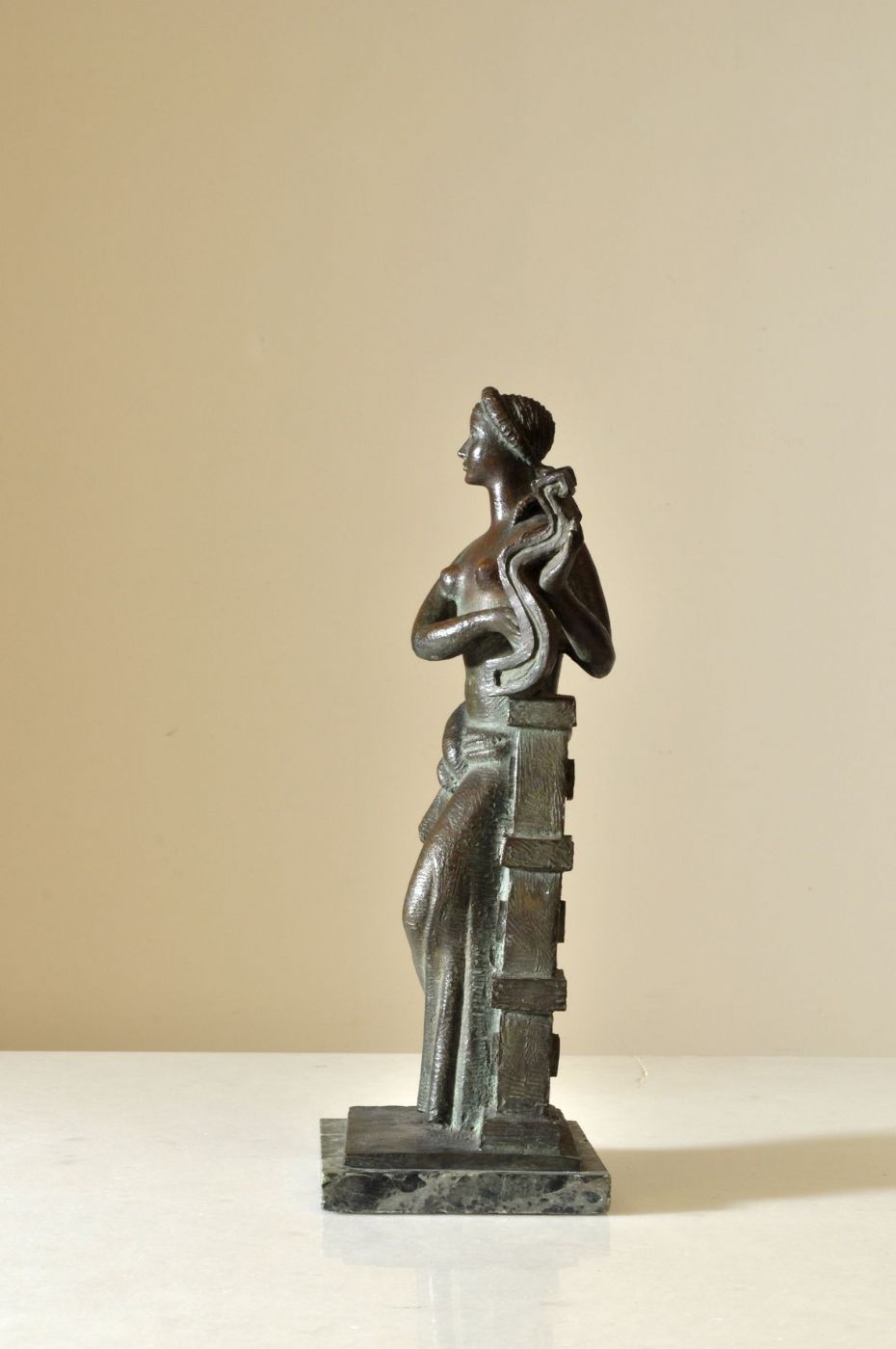
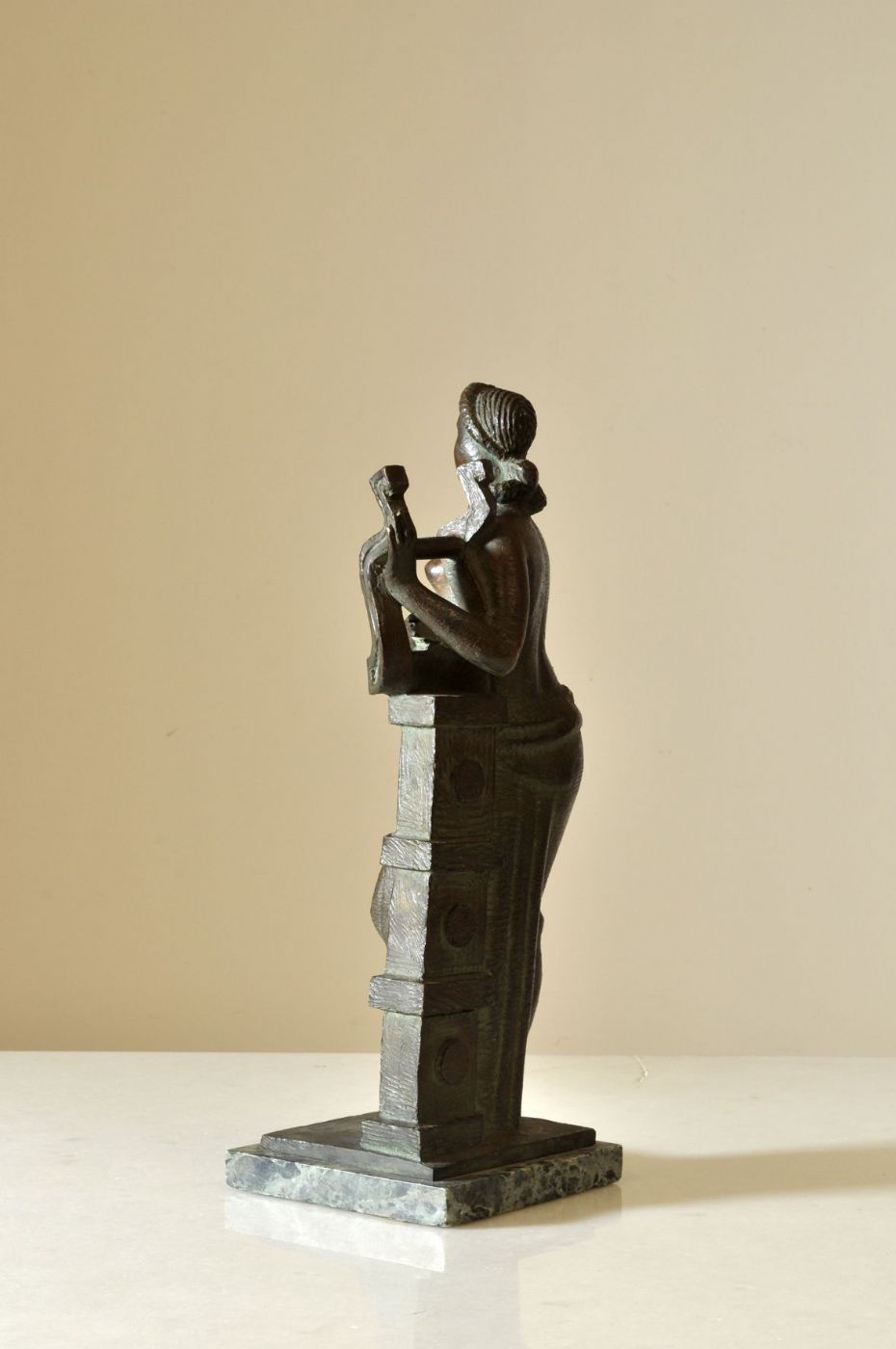
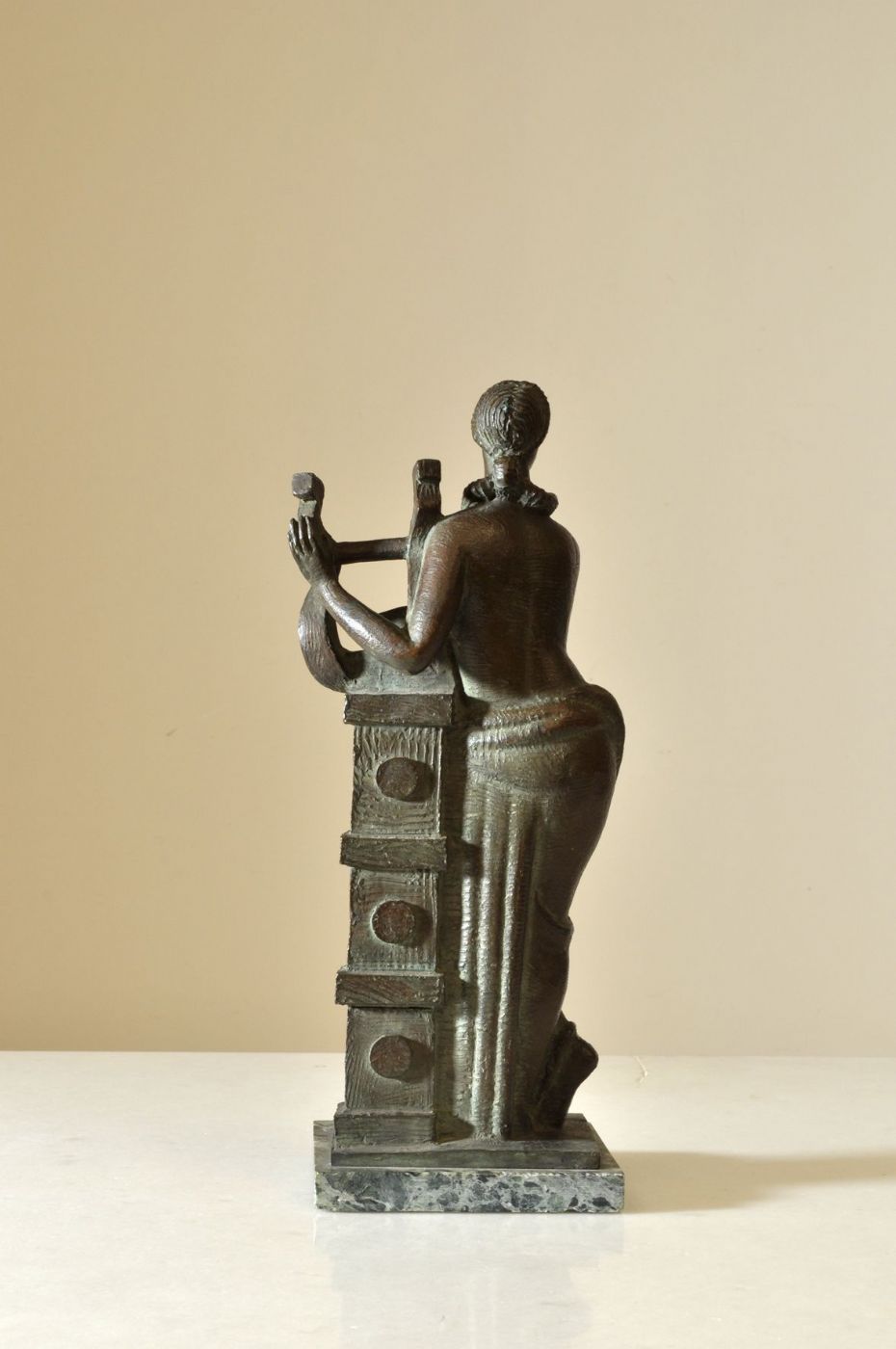
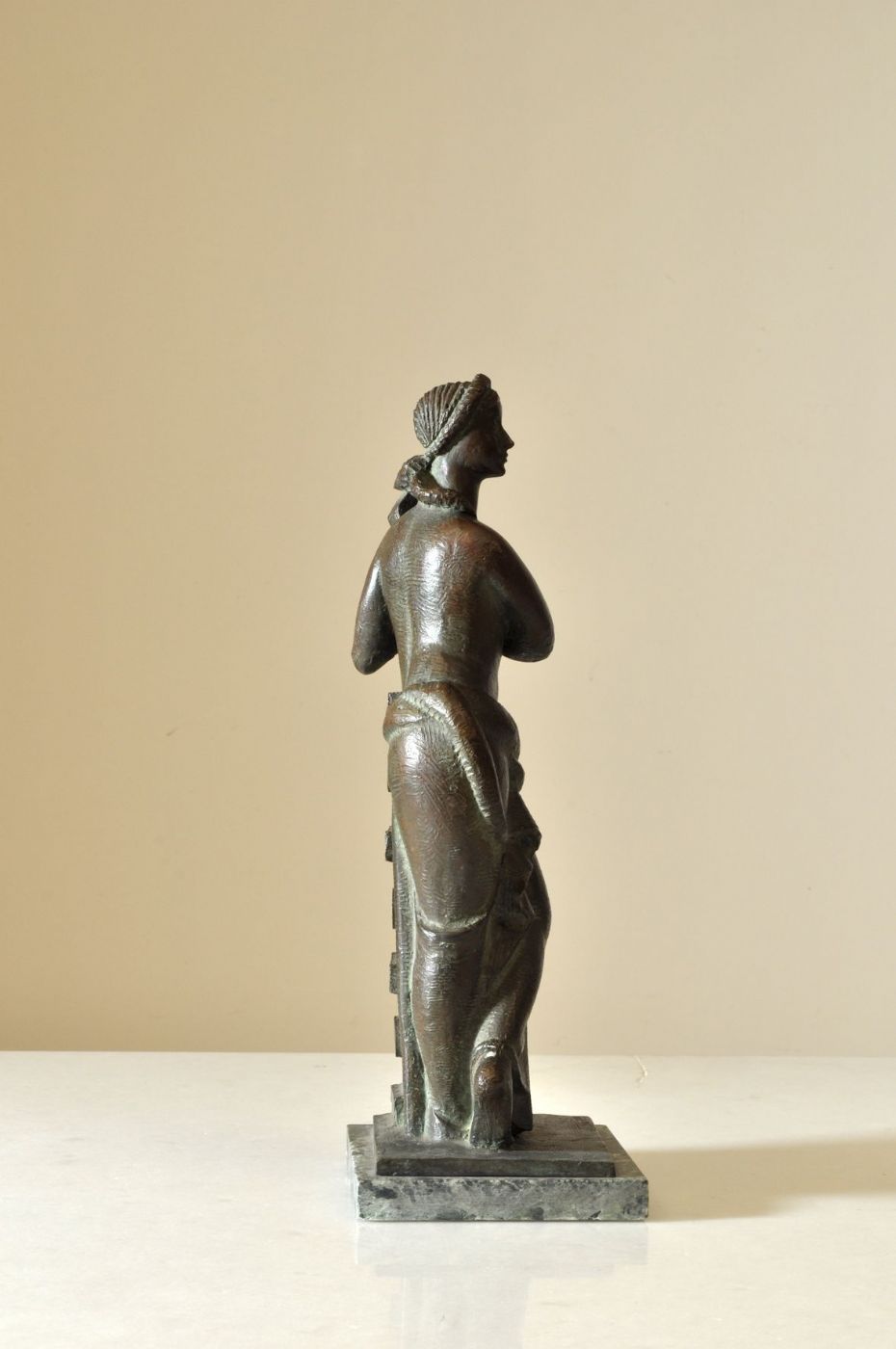
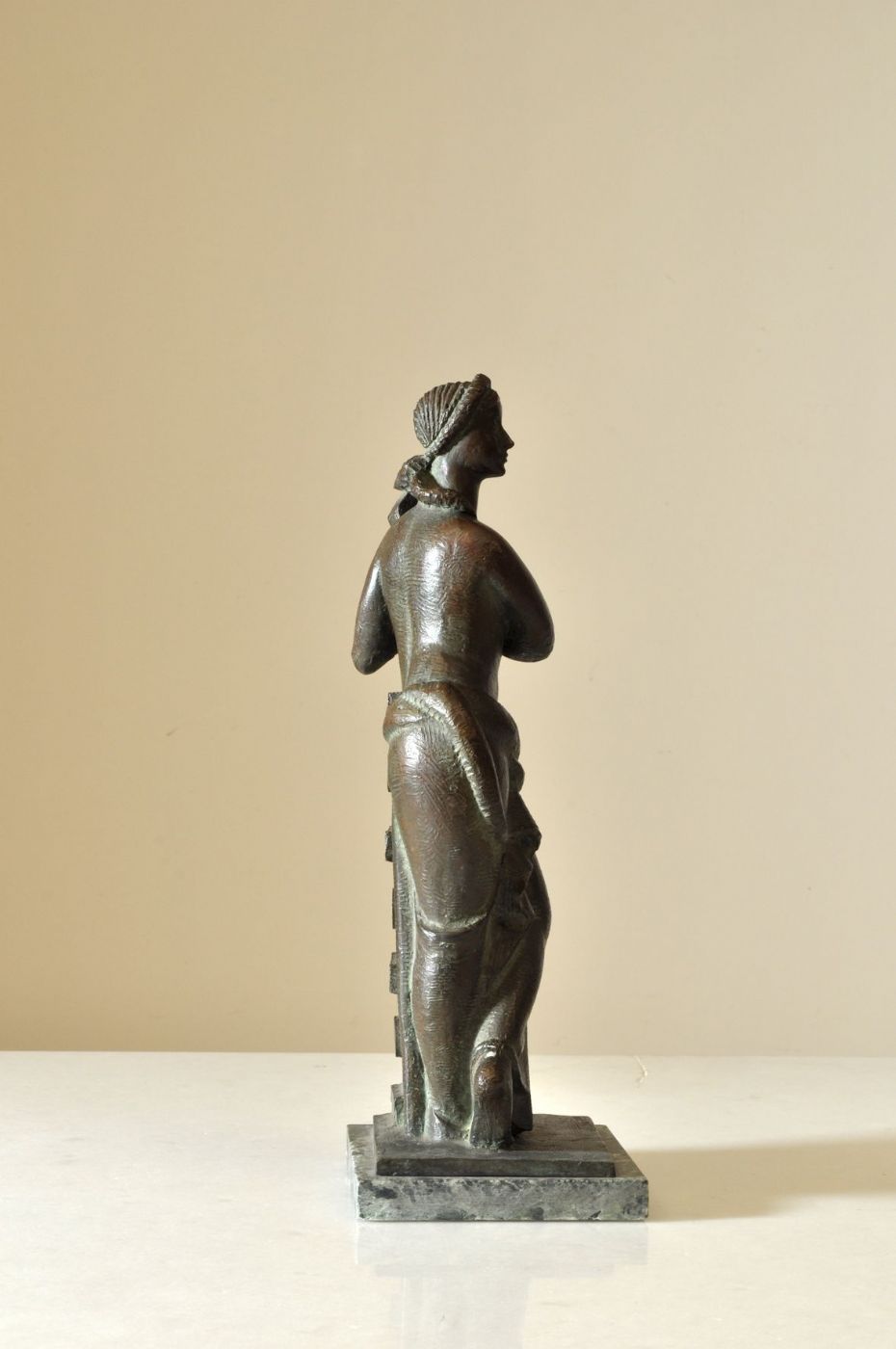
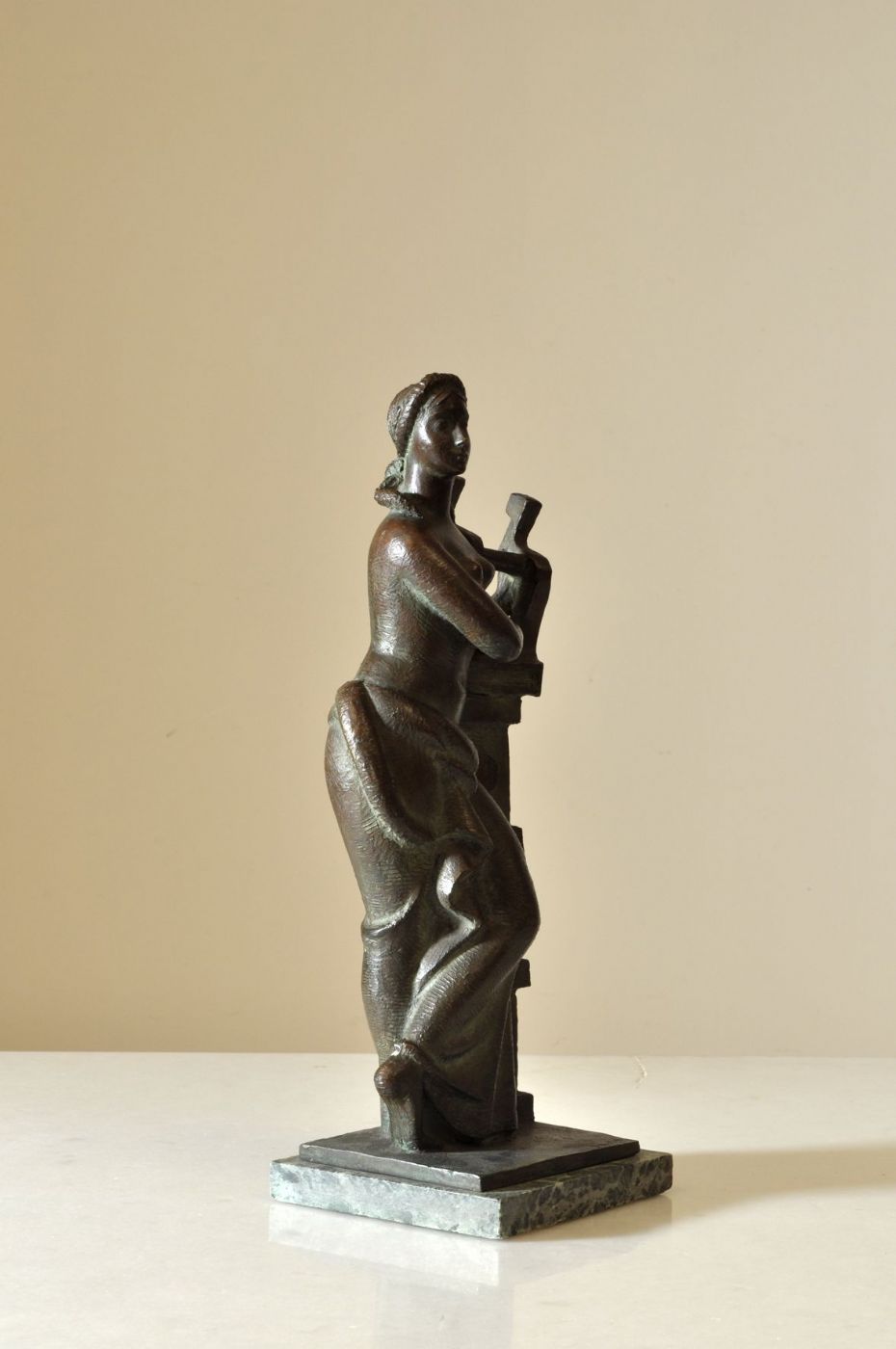
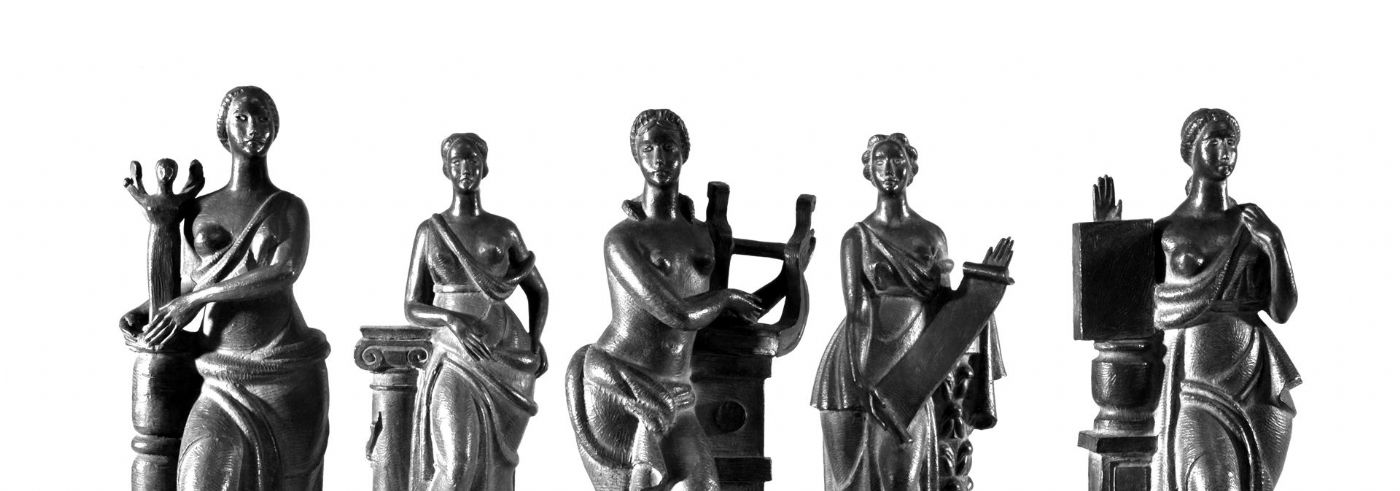
ARTURO CARRERA
(Milan, 1897 - after 1937)
Erato, circa 1935
Bronze, height 41.5 cm
Signed on the base "A.M.Carrera"
In Greek mythology, Erato (in Greek ??at?, in Latin Erato), daughter of Zeus and Mnemosyne, is one of the Muses, specifically that of choral song and love poetry.
Her name seems to mean "amiable" and would derive from Eros, heeding what Apollonius Rhodius suggests in his invocation to Erato that opens the III book of the Argonautica. Erato is mentioned together with the other Muses in Hesiod's Theogony and was invoked in the proem of a now lost poem, the Radina, remembered and briefly cited by Strabo. The romantic story of Radina meant that her supposed tomb, which was located on the island of Samos, at the time of Pausanias was a destination for pilgrimage of unhappy lovers. Erato was represented as a figure connected to love even in Plato's Phaedrus However, at the time Apollonius was writing, the 3rd century BC, the Muses were not yet seen as figures so closely linked to a specific art as happened later.