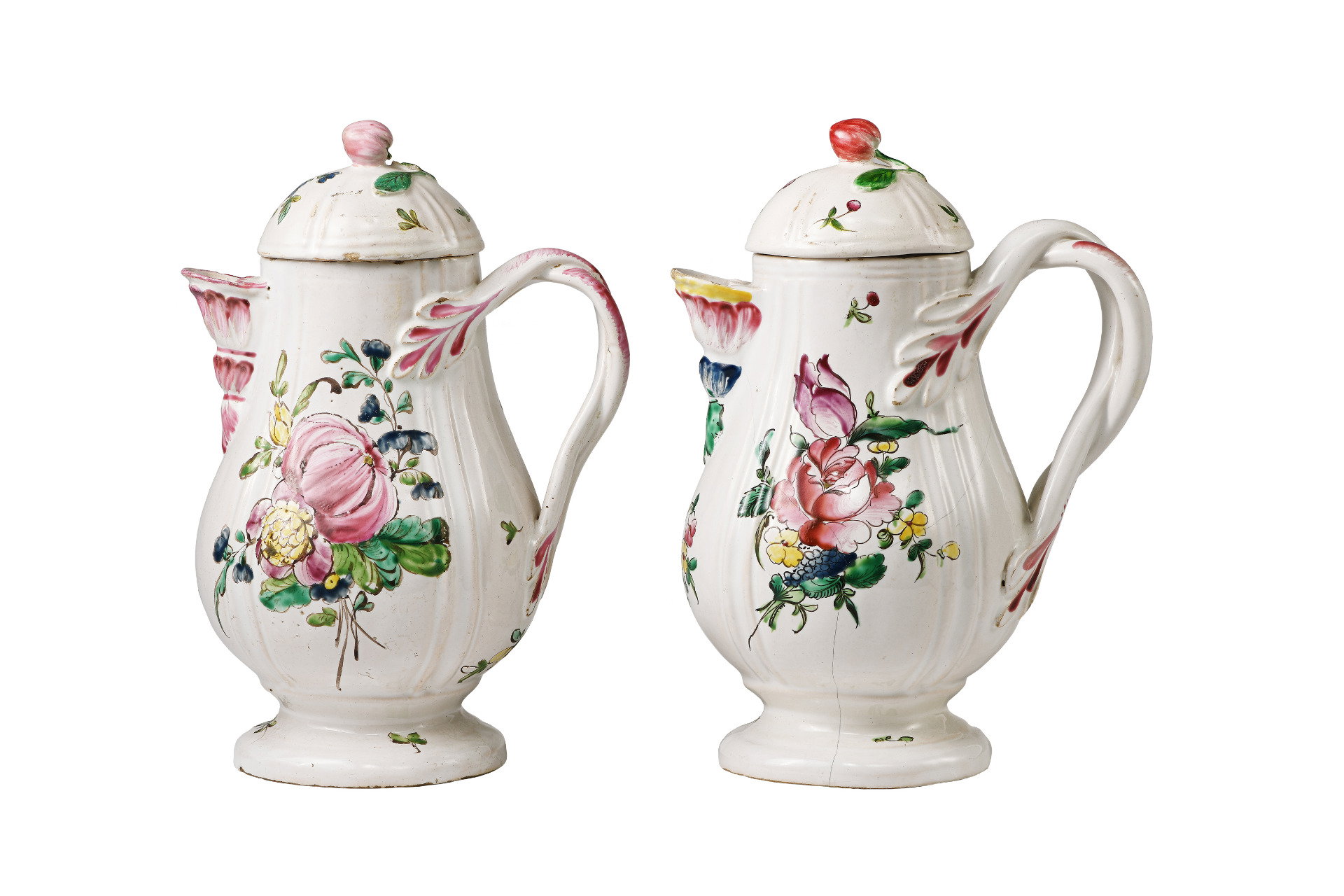
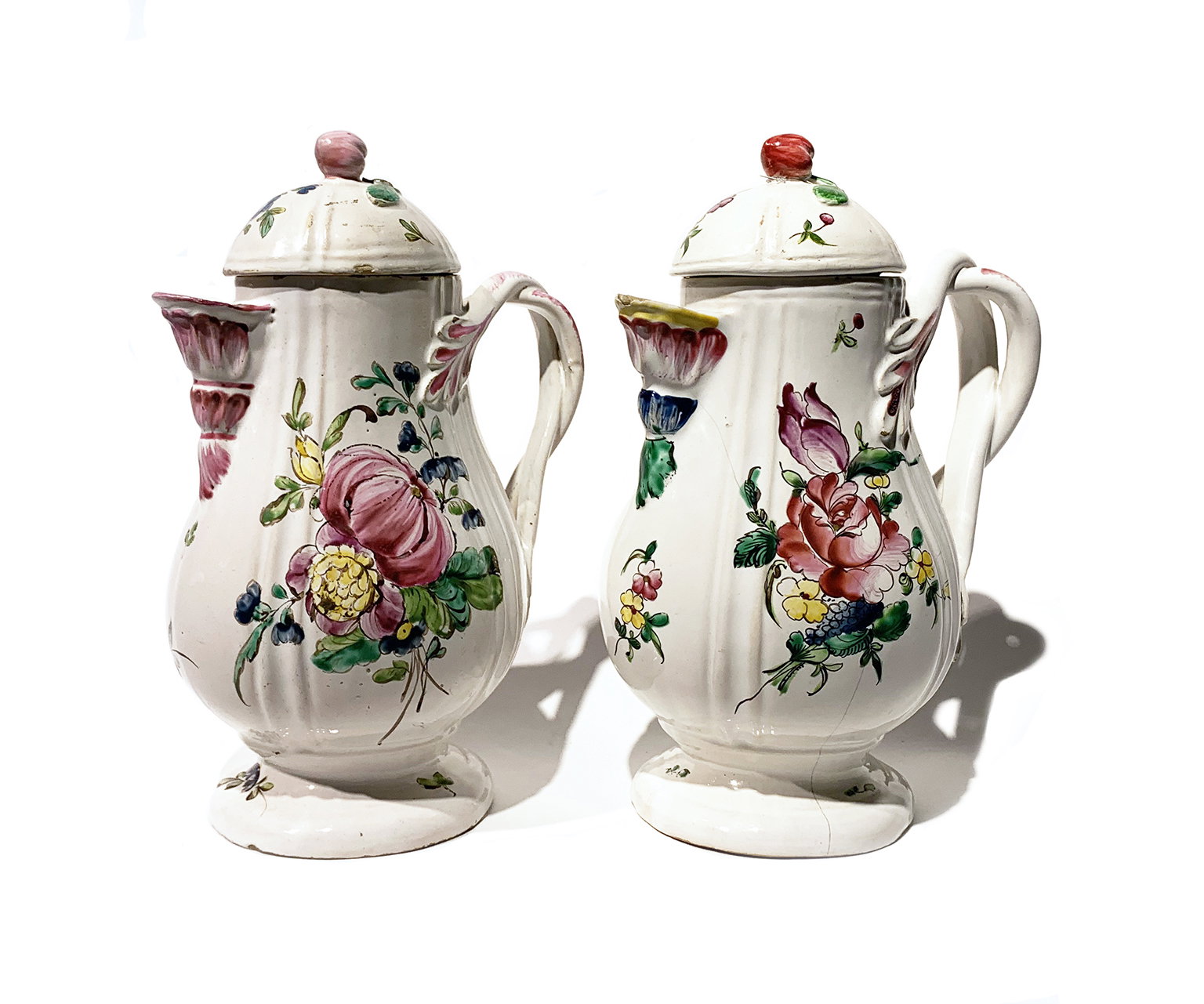
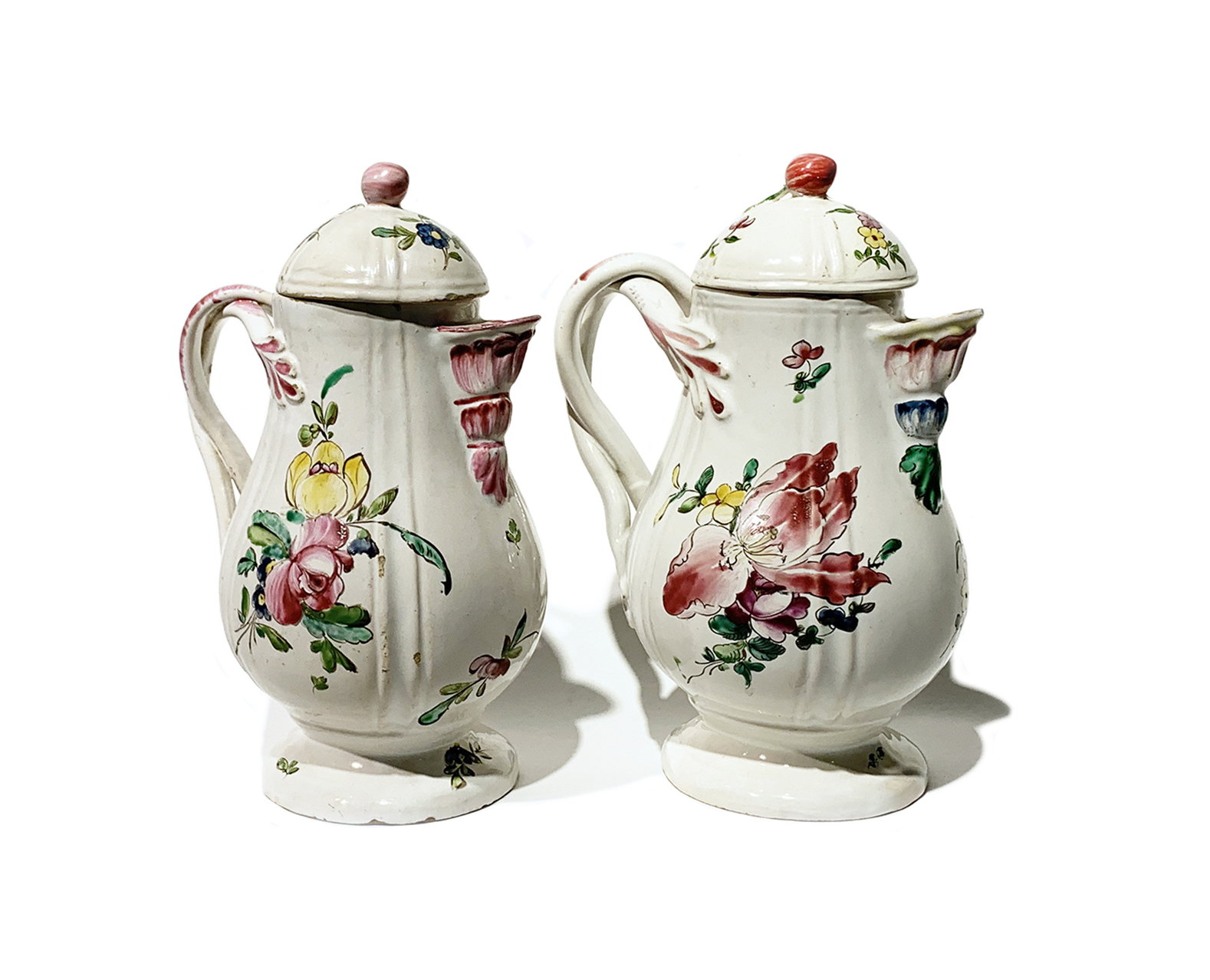
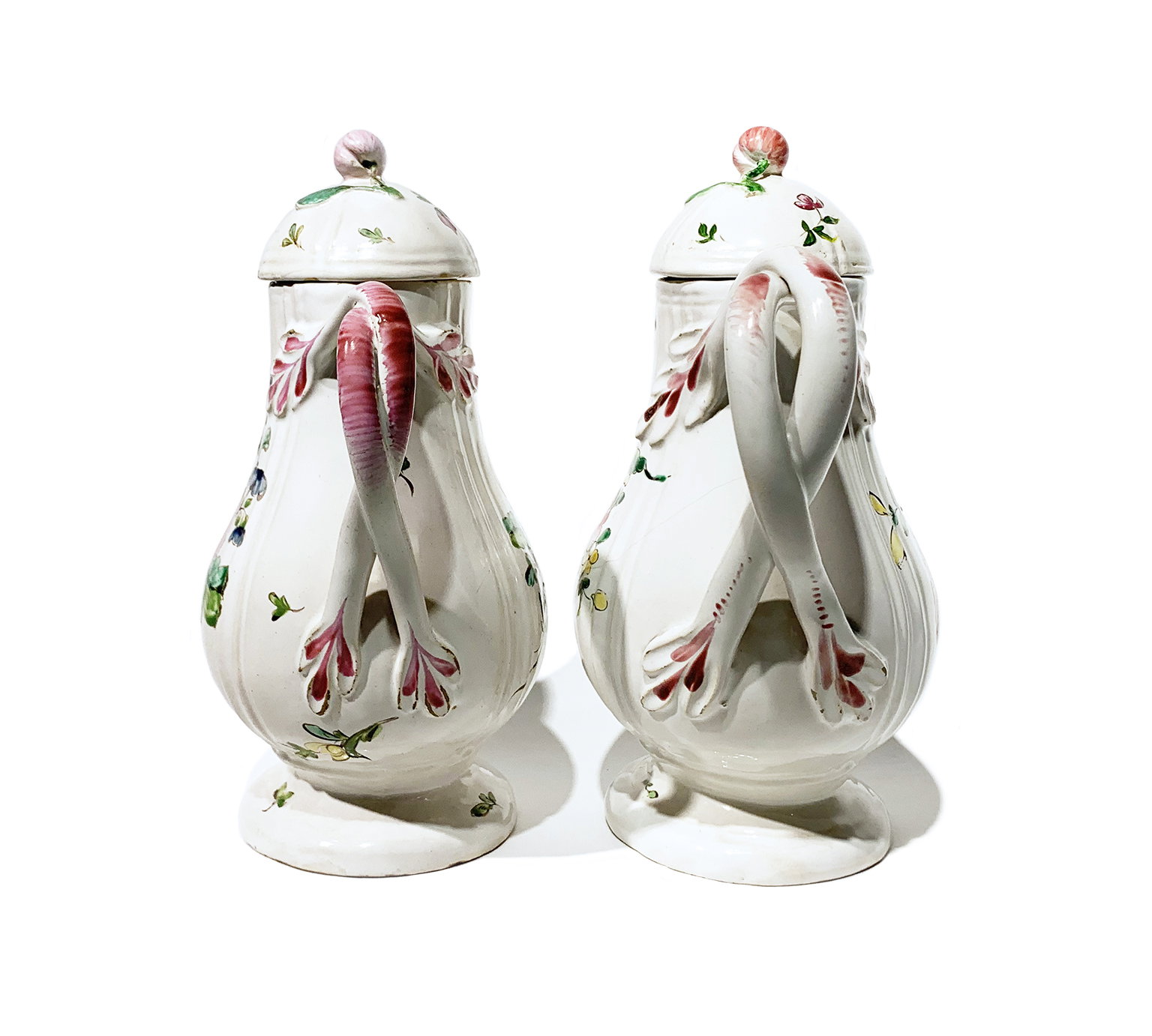
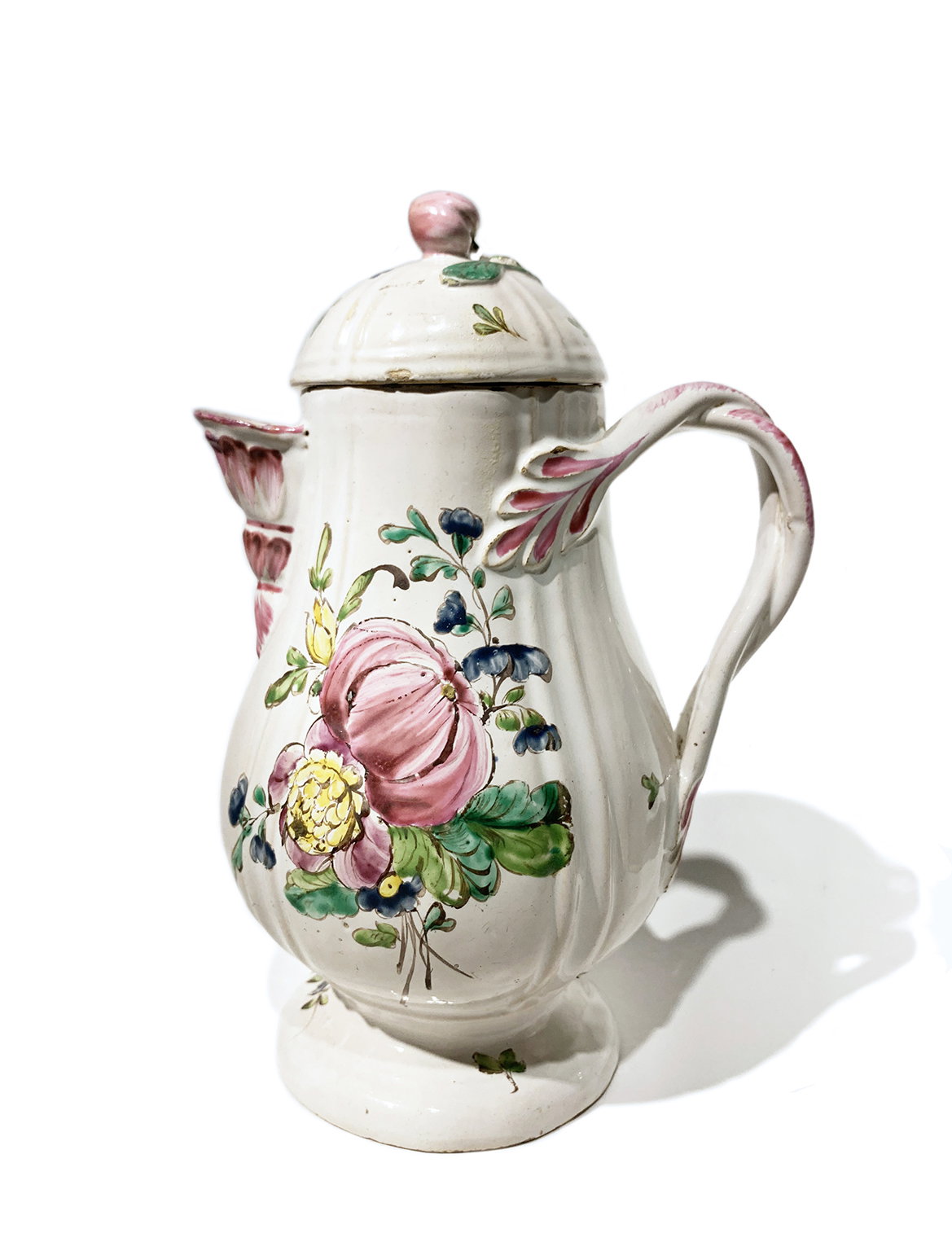
Ancient Pair Coffee Pots. Pasquale Rubati Manufacture, Milano, 1770 Circa
Description:
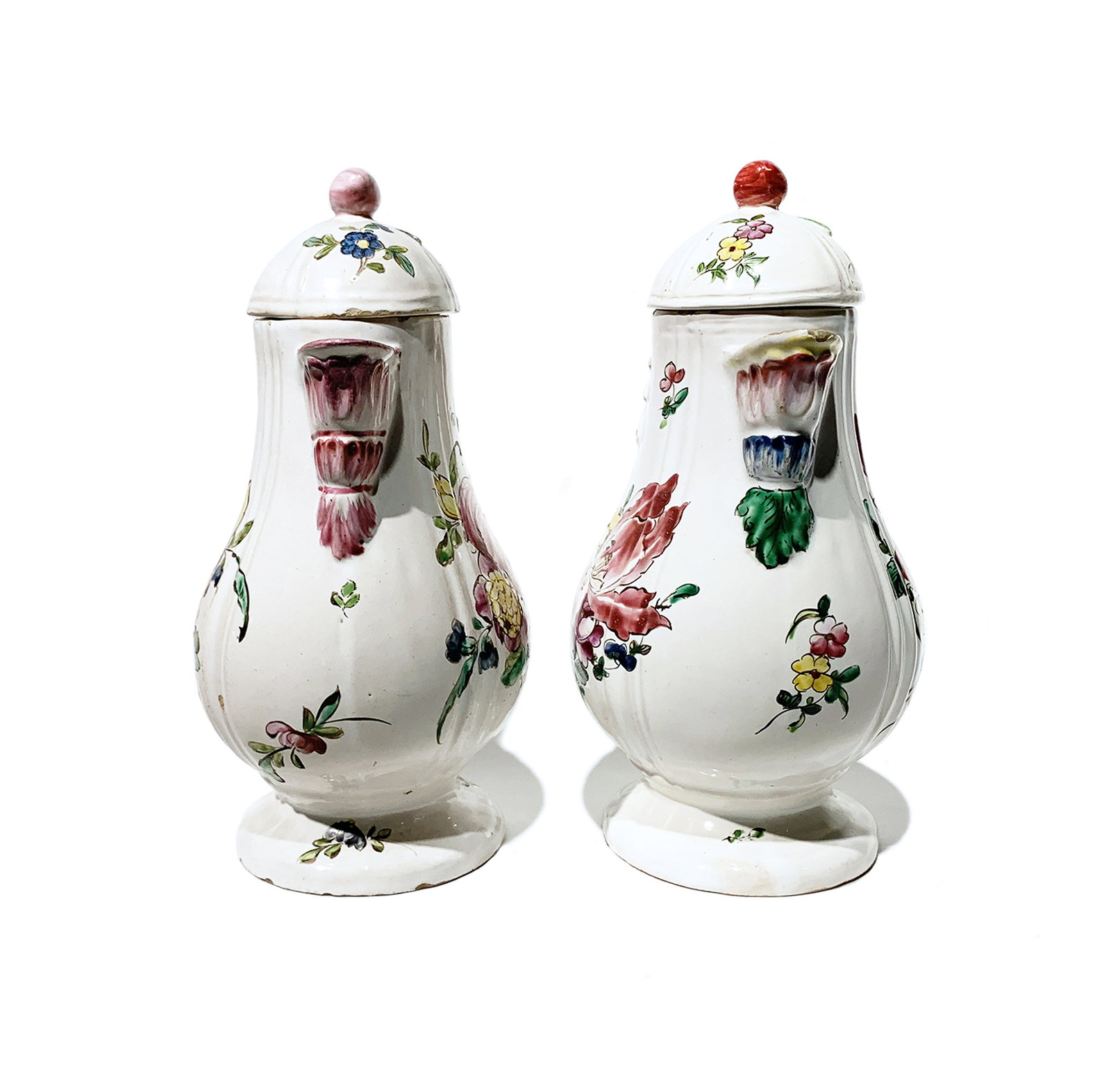
Pair of small Coffee Pots
Manufacture of Pasquale Rubati
Milan, 1770 Circa
Maiolica polychrome decorated “a piccolo fuoco” (third fire).
a) height 7.87 x 5.51 x 3.93 in (20 x 14 x 10 cm); weight 0.74 lb (339 g)
b) height 7.08 x 5.51 x 3.93 in (18 x 14 x 10 cm); weight 0.68 lb (310 g)
State of conservation:
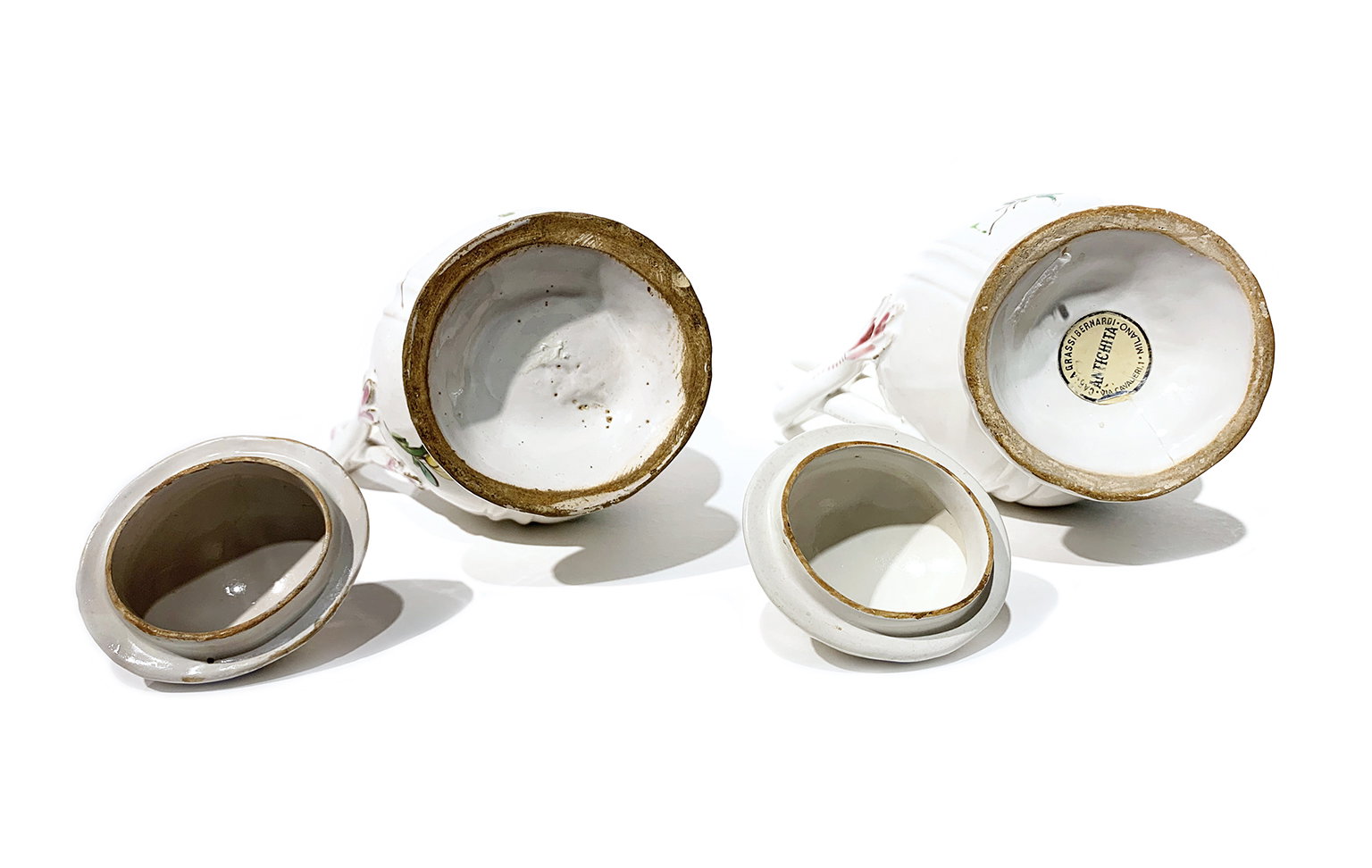
a) good the body: it has small signs of use on the foot and hem and a subtle fêlure on the foot and along the side. The lid is recomposed from several fragments with some repainting;
b) A fêlure on the body probably closed during restoration with some repainting. The lid, not the original, was cast in a later period and has some repainting and small signs of use on the foot and hem.
The maiolica and porcelain factories of the eighteenth century belonged mainly to the great royal families or to the noble families who made the manufacture of ceramic works a motif of prestige. In Milan, under Maria Theresa of Austria, we instead witness a real opening to new industrialists who, by virtue of the privatization granted by the government, took on real business risks and gave life, even amid conflict between them, to flourishing factories. It was here that there was to be some of the most elegant and sought-after production of the moment, artworks which still remain objects of collection today.
In Milan in the 18th century, two majolica factories were active. The first was that of Felice Clerici, from 1745, and the second was opened by Pasquale Rubati in 1756, in competition with Felice, for whom he had been a worker. Upon Rubati's death, in 1796, the enterprise was continued for a few years under his son Carlo.
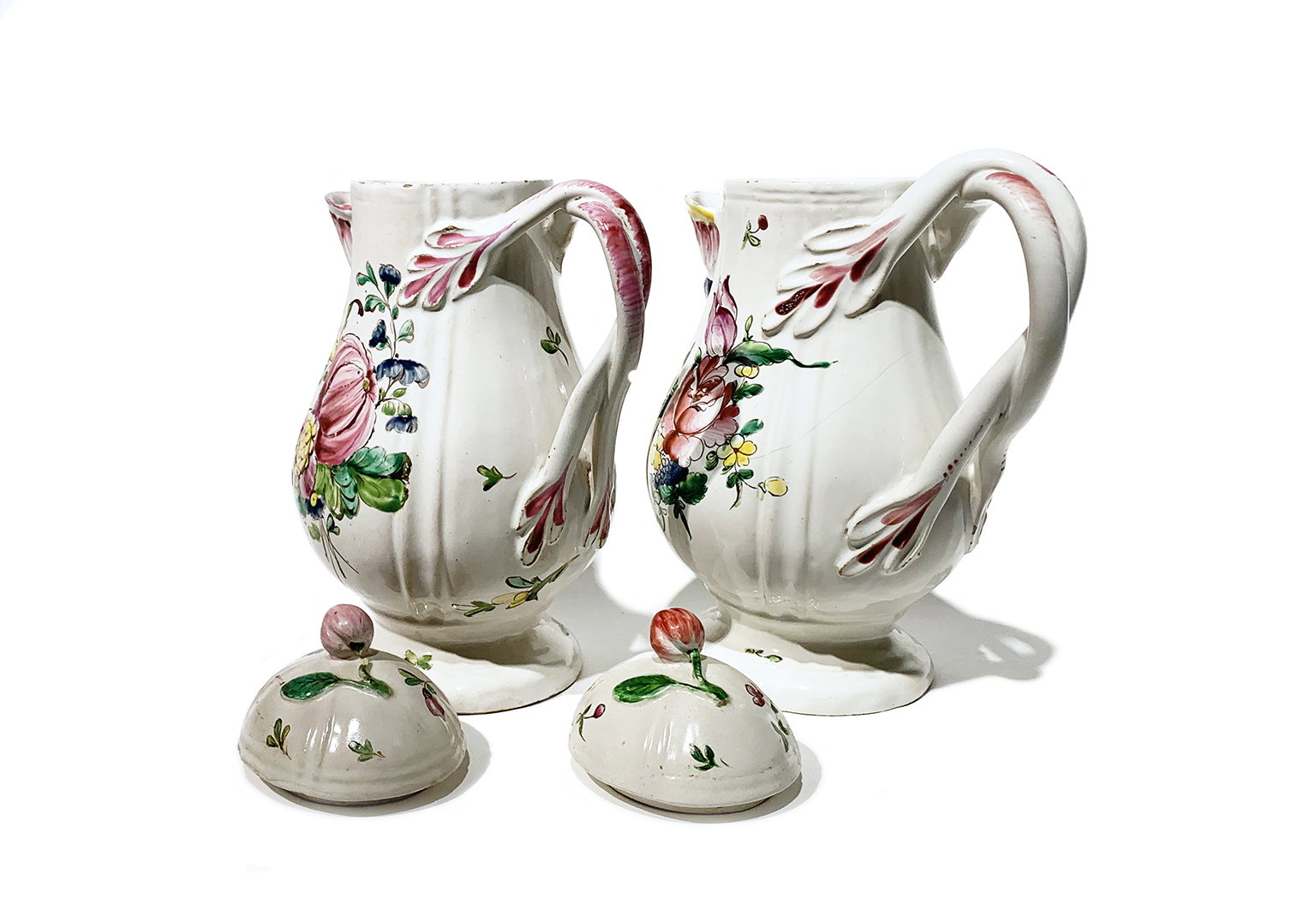
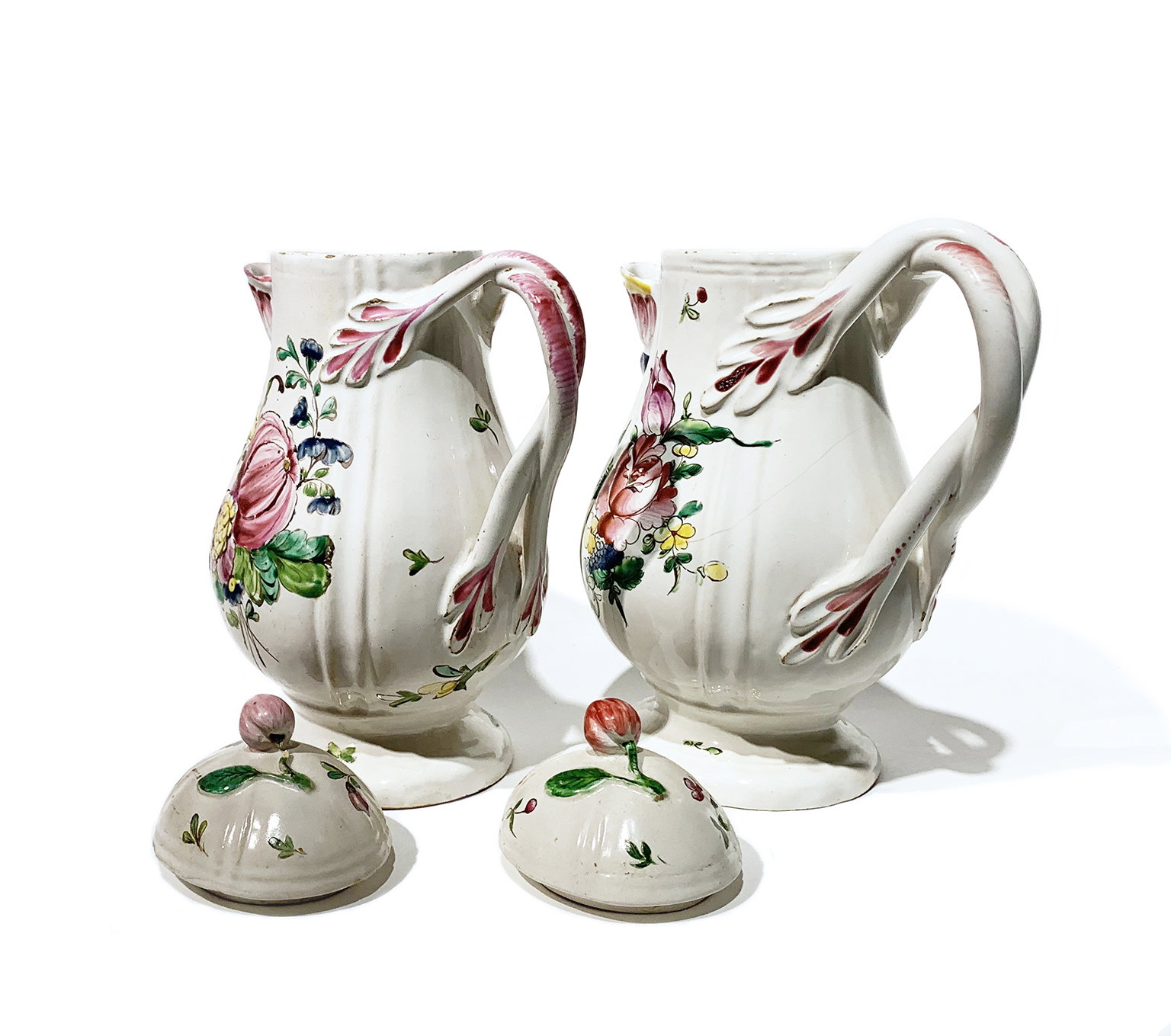
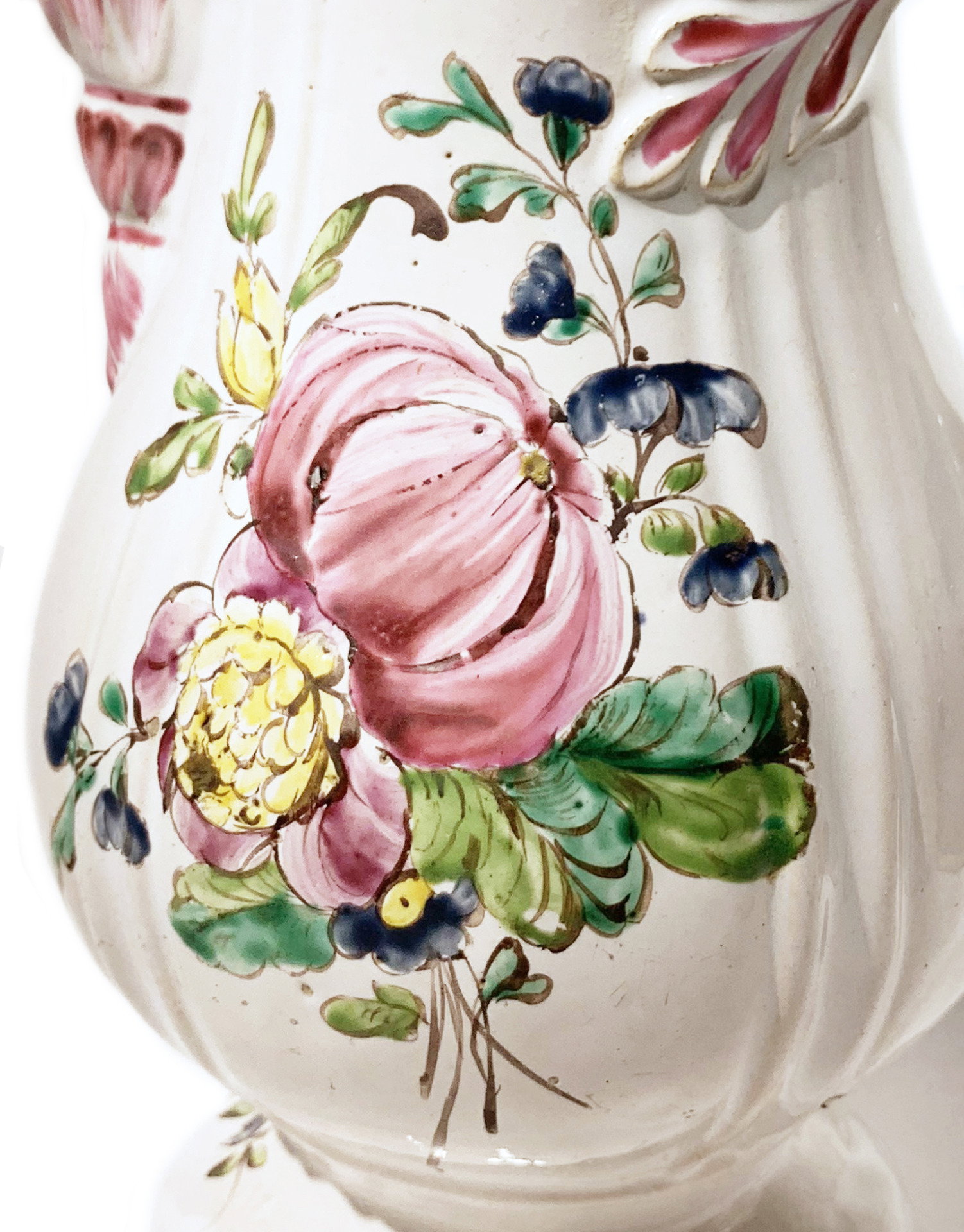
The small coffee pots, which make up a rare set of products from the Pasquale Rubati manufacture, have a pear shape with a ribbed body, resting on a low flared foot. The spout is a shelf and the handle is in the shape of intertwined twigs that open at a certain point into thin leafy branches. The lid is a cap surmounted by a small fruit. The spout of one is decorated with three colors and edged in yellow, while the other in pink shades.
The decoration, made with colors “a piccolo fuoco” (third fire), covers the body with flowered bouquets of roses and tulips and small secondary flowers scattered along the surface.
This type of object has numerous morphological comparisons in Milanese specimens with decorations "al carabiniere", "allo struzzo", "assortment with green flowers" and "heart" (R. Ausenda in R. Ausenda, Museo d'Arti Applicate, Le Ceramiche, T II, Milan 2001, nn. 307; 309; 315; 327; 372; and relative bibliography) and is probably inspired by similar specimens of porcelain very popular in the eighteenth century.
A precise comparison is represented by three specimens preserved at the Museum of Applied Arts of the Castello Sforzesco in Milan (invv. 2172; 4081; 4076). The decoration itself finds confirmation in objects from the last phase of manufacturing (R. Ausenda in R. Ausenda, Museo d'Arti Applicate, Le Ceramiche, T II, Milan 2001, pp. 387-391, and relative bibliography).
Bibliography:
R. Ausenda in R. Ausenda, Museo d’Arti Applicate, Le Ceramiche, Tomo II.