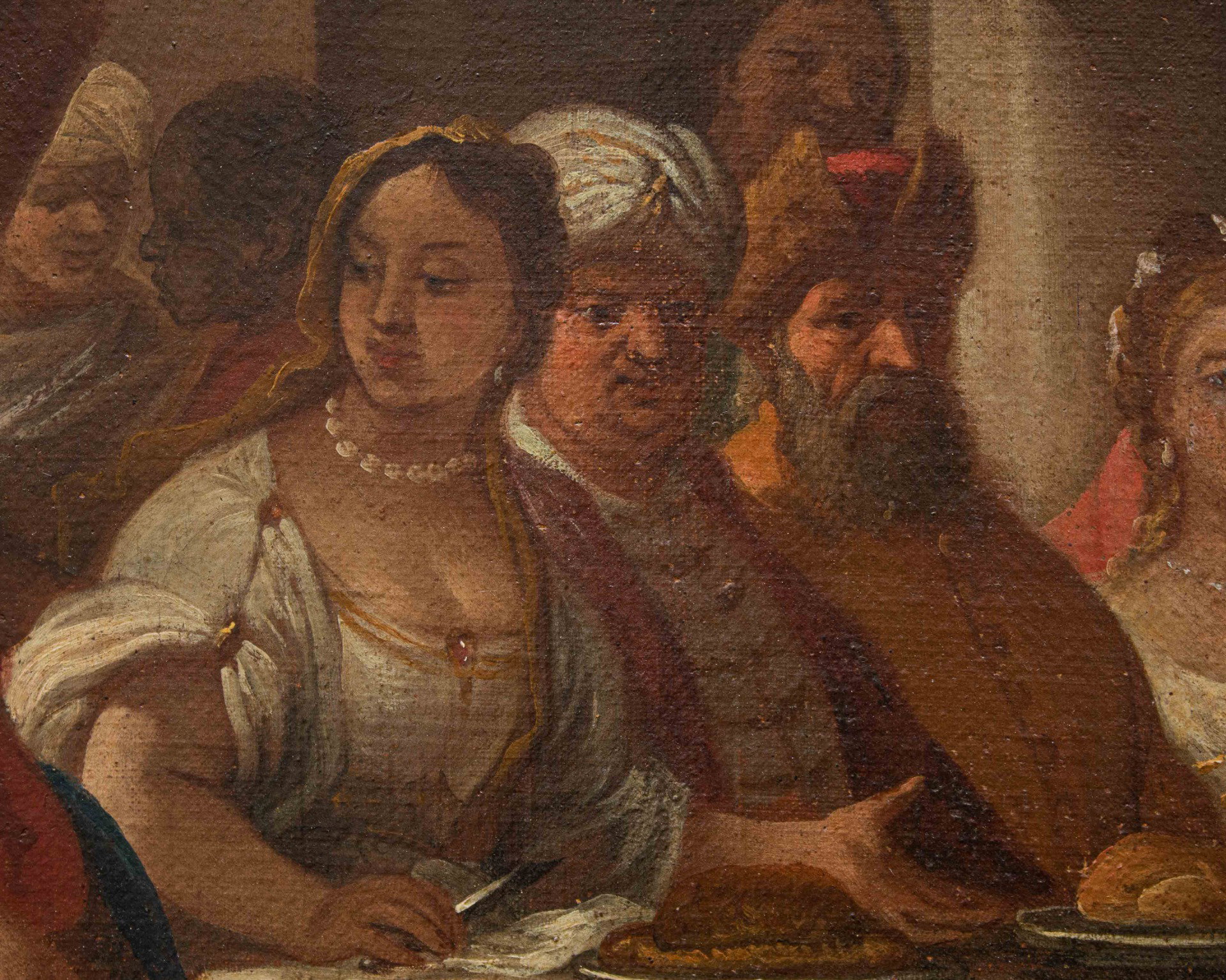
18th century, Neapolitan School
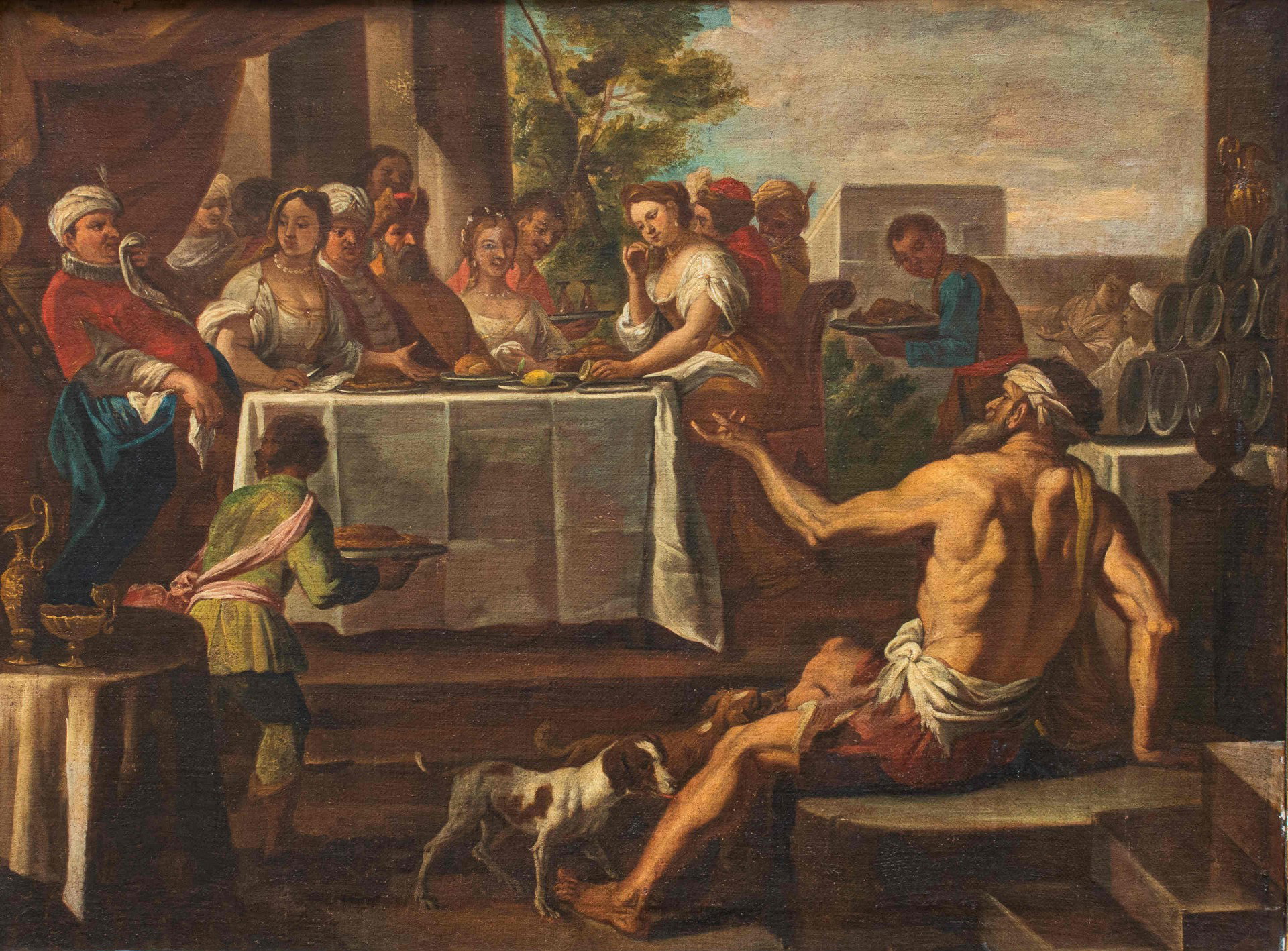
The Feast of the Rich Man Dives
Oil on canvas, 73 x 98 cm – with frame 101.5 x 126.5
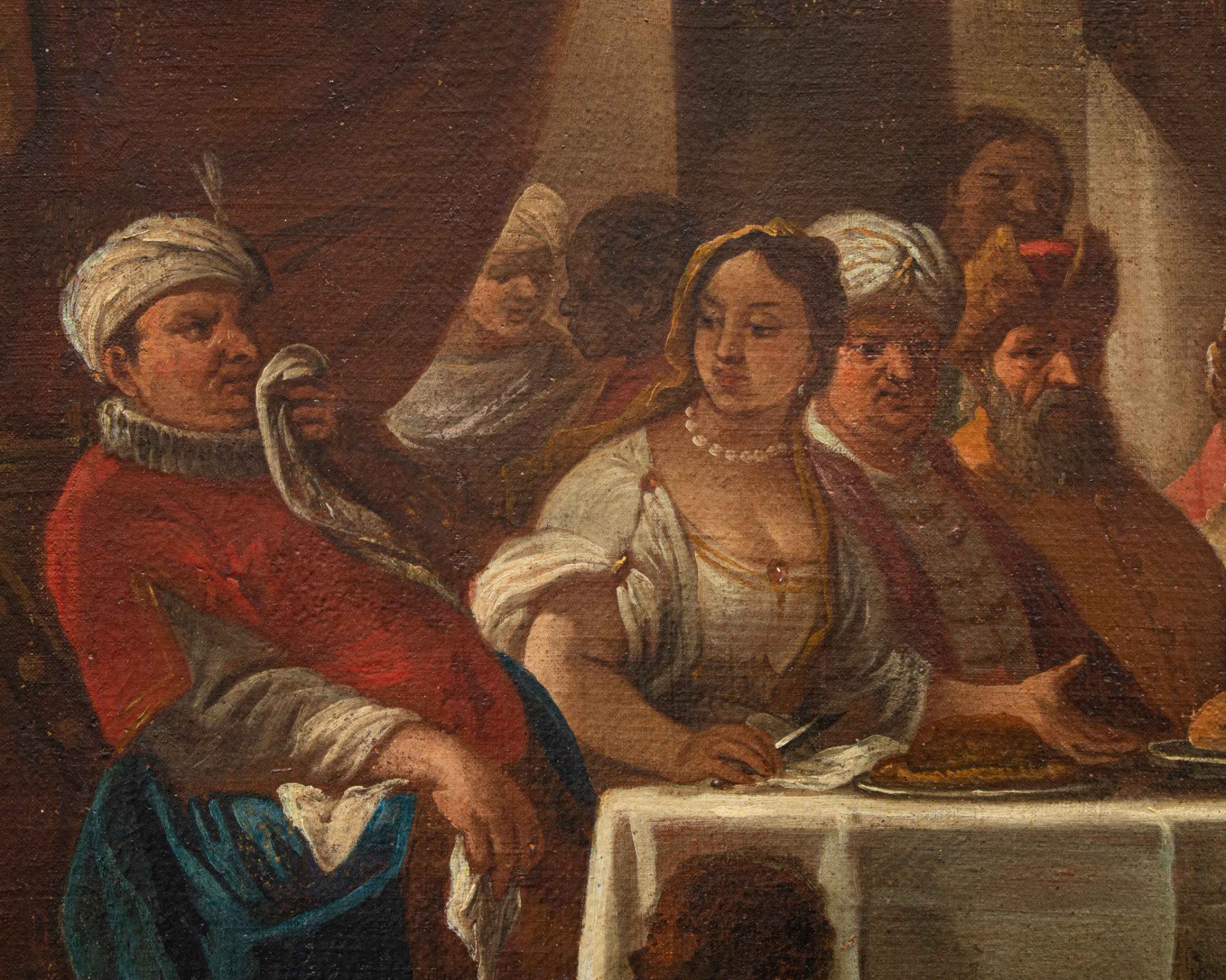
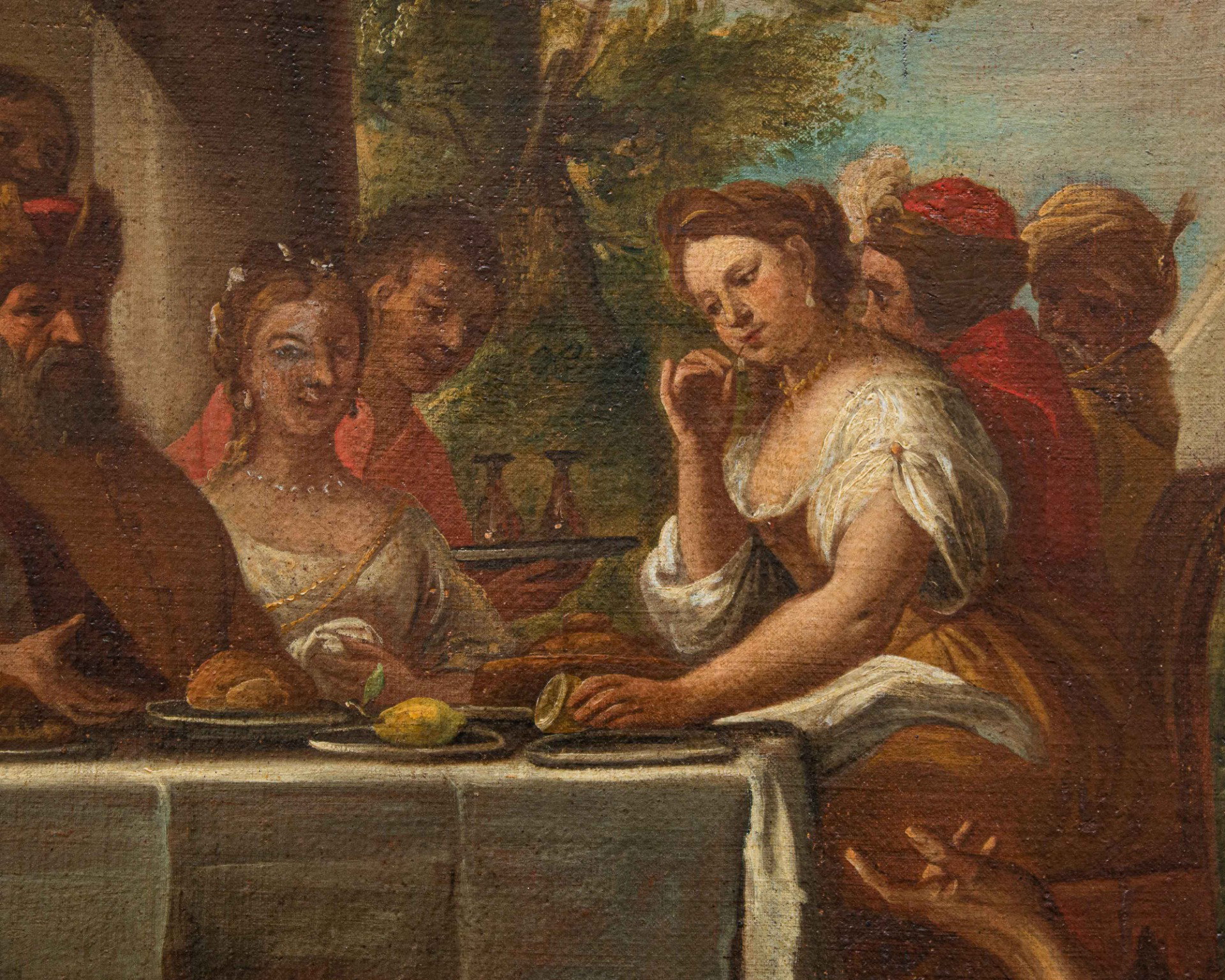
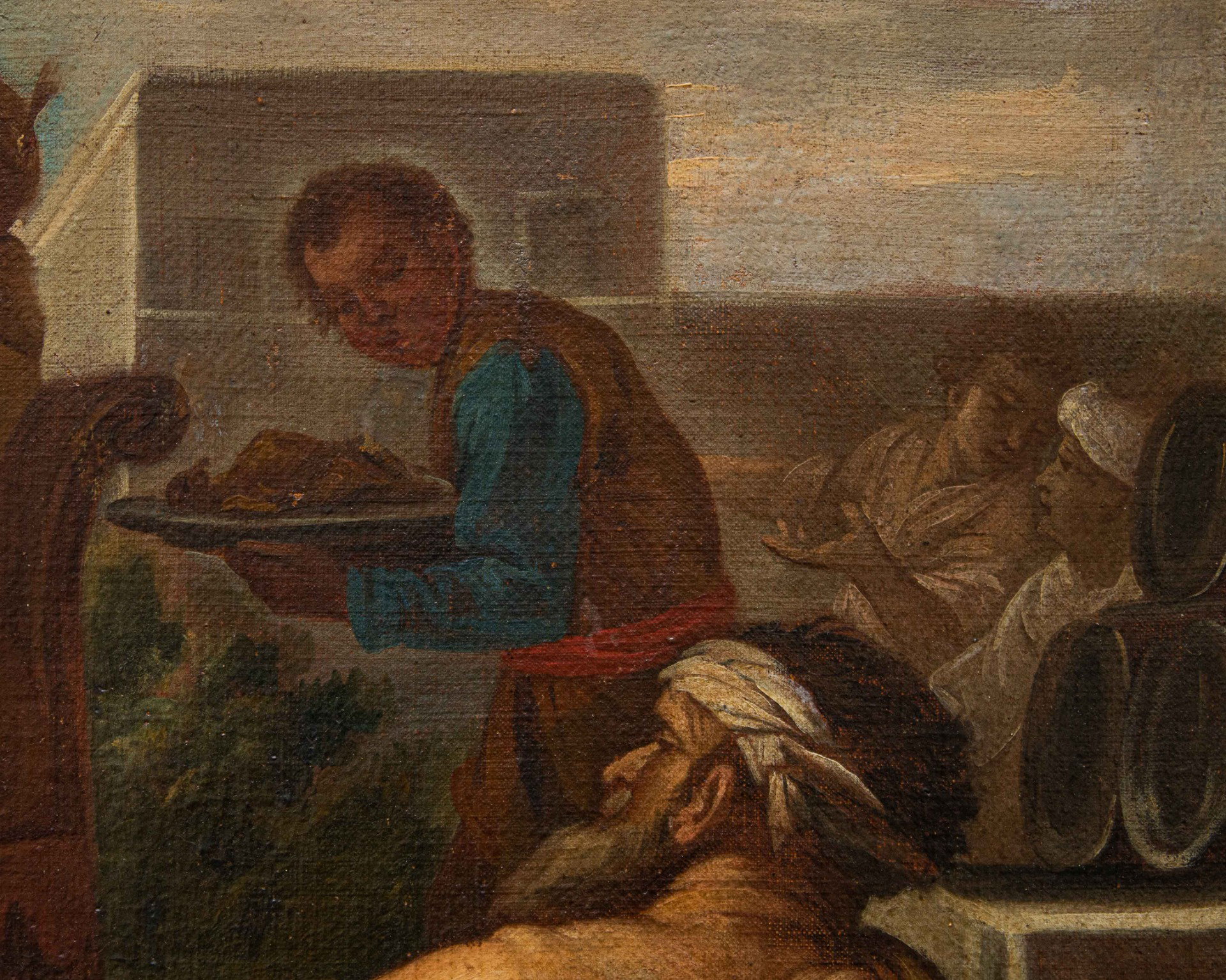
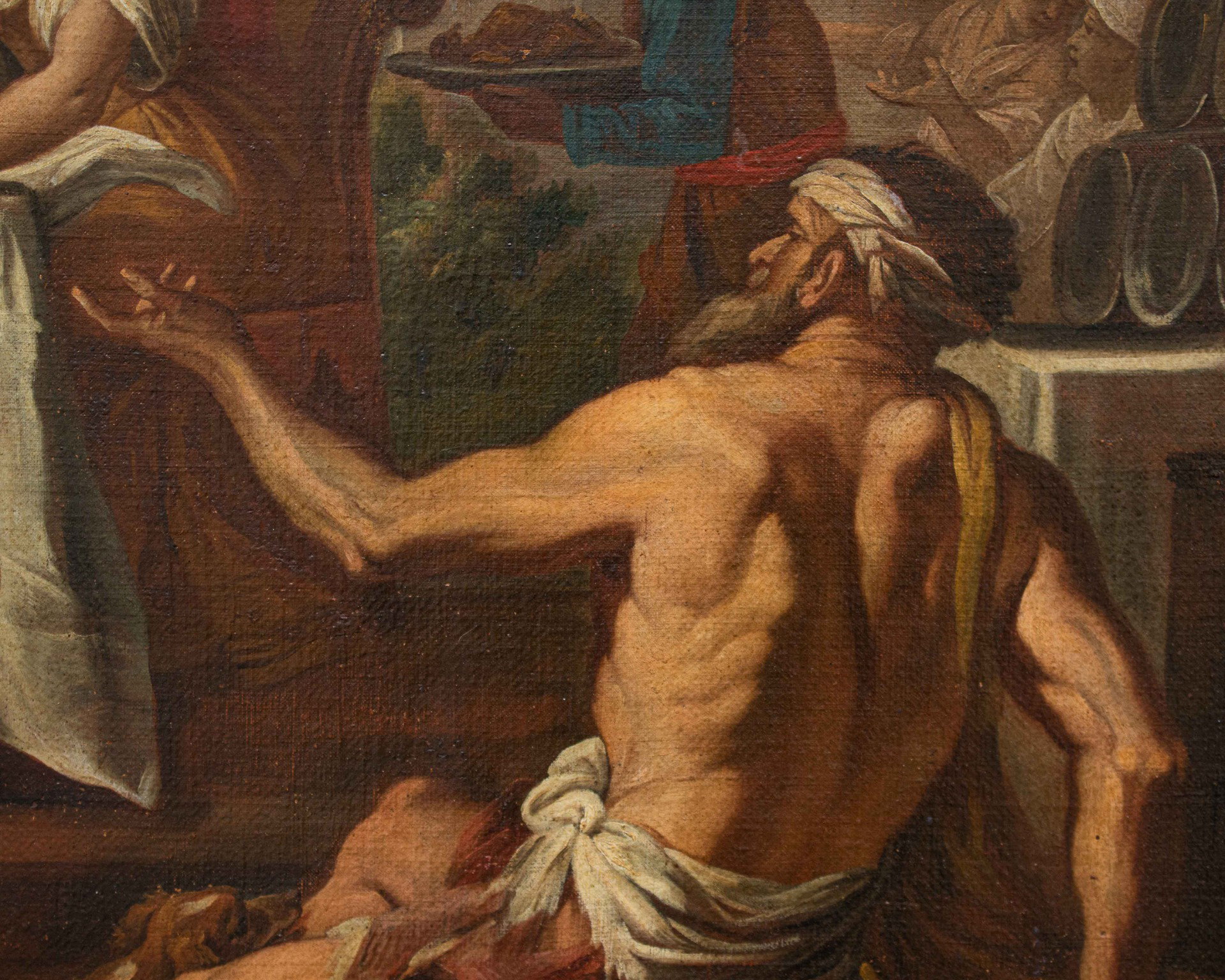
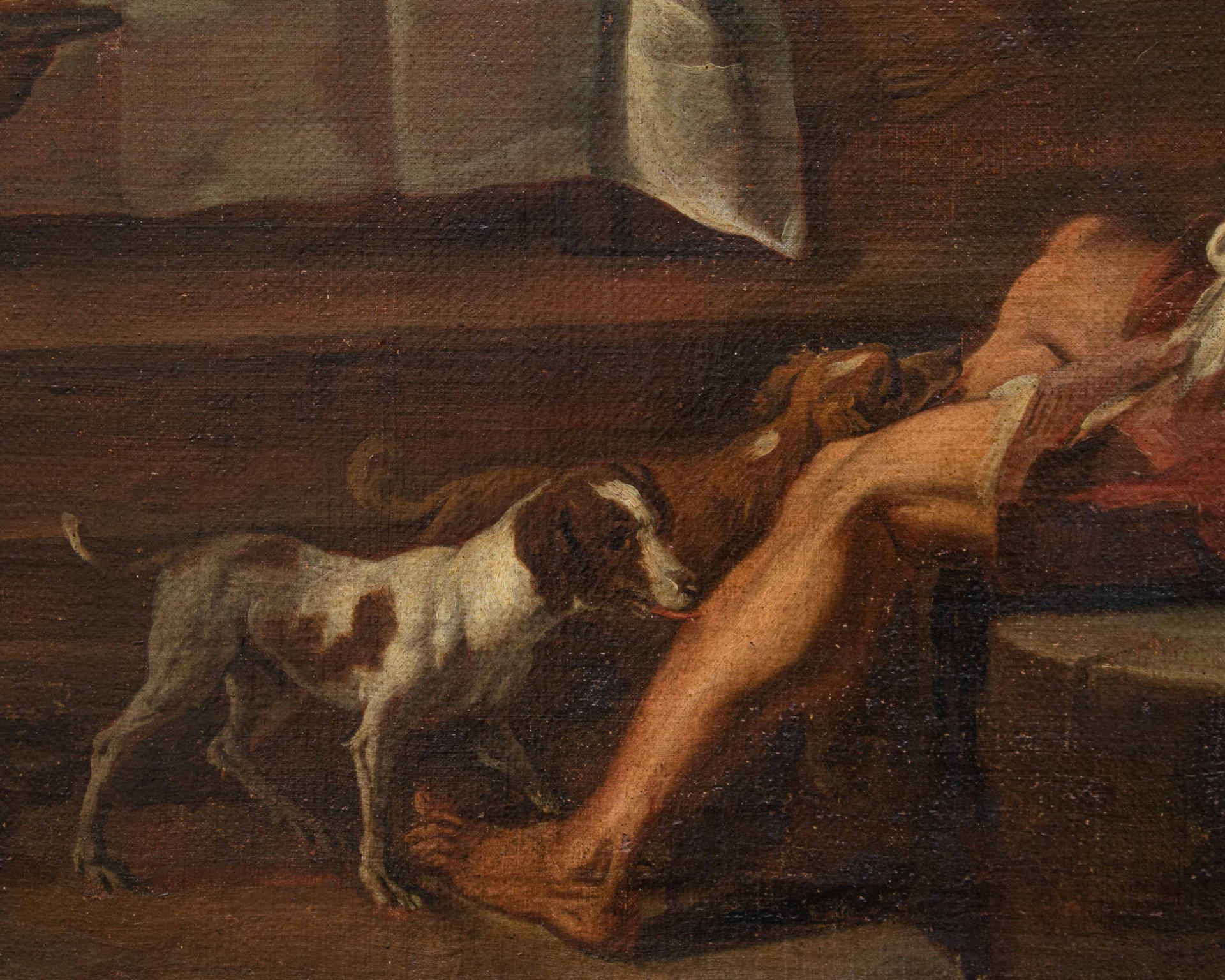
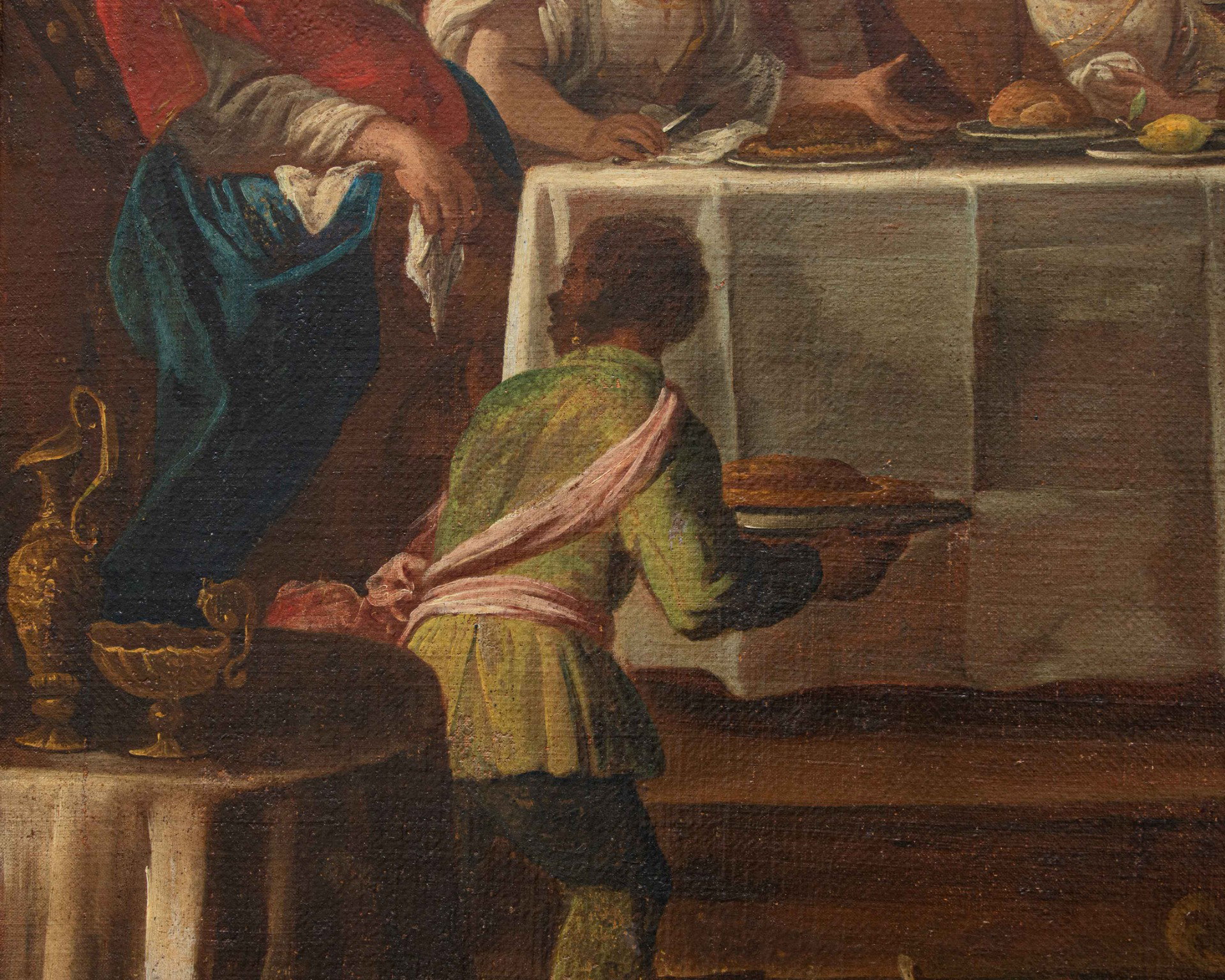
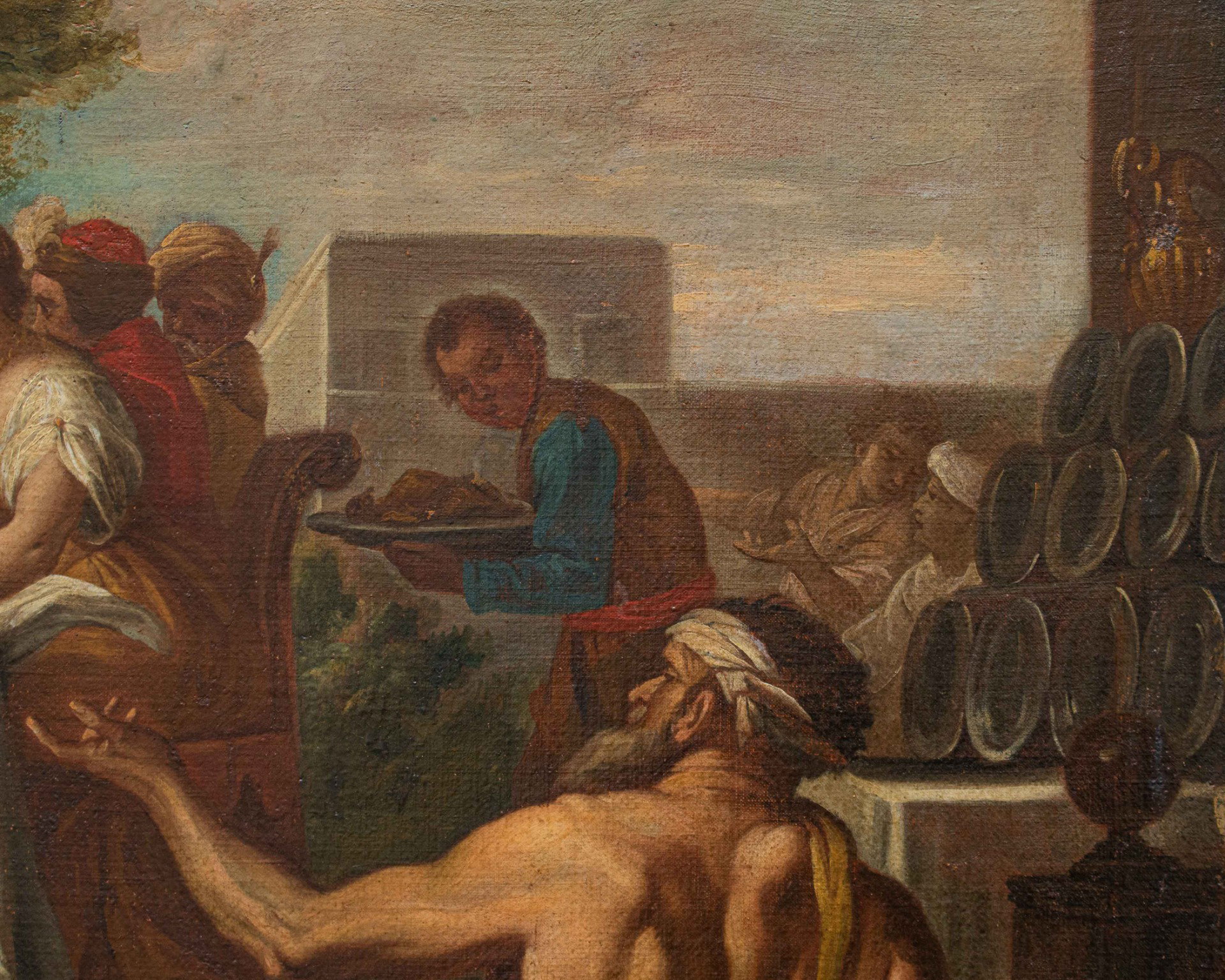
Also present are the inevitable silver dishes, neatly arranged in ostentatious display on the right side of the painting, and the dogs who, alone, come to the aid of the beggar by licking his wounds; the present painting unfolds the parable of the rich man Dives in an airily detailed manner. Recalled in Luke (16:19-31), the story constitutes a literary precedent to Dante's contrapasso: a very rich man, priest of the temple of Jupiter, organized Lucullan banquets every day, dressed in purple and fine linen; one day a poor man came to him, begging for assistance, named Lazarus. The rich man did not deign to give him any attention. Responding to the ancient Latin maxim of nomen omen, the beggar Lazarus, whose name in Aramaic, Elazar, means "the one whom God helps," once departed, sat next to Abraham, while the rich man Dives was damned in the flames. The proper name assigned to the rich man, Dives, which never appears in the Gospel text, is the result of a subsequent literary tradition; it is in fact a distortion of the Latin verb with which the passage was translated from Aramaic: epulabor, or "to feast."
The present reveals the all-Neapolitan debt in the crowded deployment of figures, strongly defined through the burnished chiaroscuro that pervades the canvas. The dramatic nature of the gestures, evident in the disdainful expression of Dives and in the elaborate sitting of Lazarus, reflects the great Baroque season of the Parthenopean city, fully embracing the traditional narrative incisiveness. The progressive illumination that caresses the figures, however, betrays a surpassing of the manners that had already belonged to Mattia Preti (1613-1669) and Bernardo Cavallino (1616-1656). The eighteenth-century declination of the work is revealed in particular through comparison with a painting of a similar subject made by Luca Giordano (1634-1705), and now preserved in the art gallery of Palazzo Magnani. Giordano's perspective plunge into the sky, in which blurred architectures stand out, is reflected in the present in the holiday palace on the right background of the canvas.
With Ars Antiqua it is possible to postpone all amounts up to € 5,000 at ZERO RATE, for a total of 12 INSTALLMENTS.
Ex. Tot. € 4,500 = Monthly installment € 375 for 12 months.
Ex. Tot. € 3,600 = Monthly installment € 720 for 5 months.
For amounts exceeding € 5,000 or for a longer delay in time (over 12 installments), we can provide a personalized payment.
Contact us directly for the best quote.
LIVE TV
– SUNDAY 17.00 – 21.00 Dig.terr. 126 – Sky 861 - 937
– Streaming on our website www.arsantiquasrl.com and on our social media Facebook and Youtube