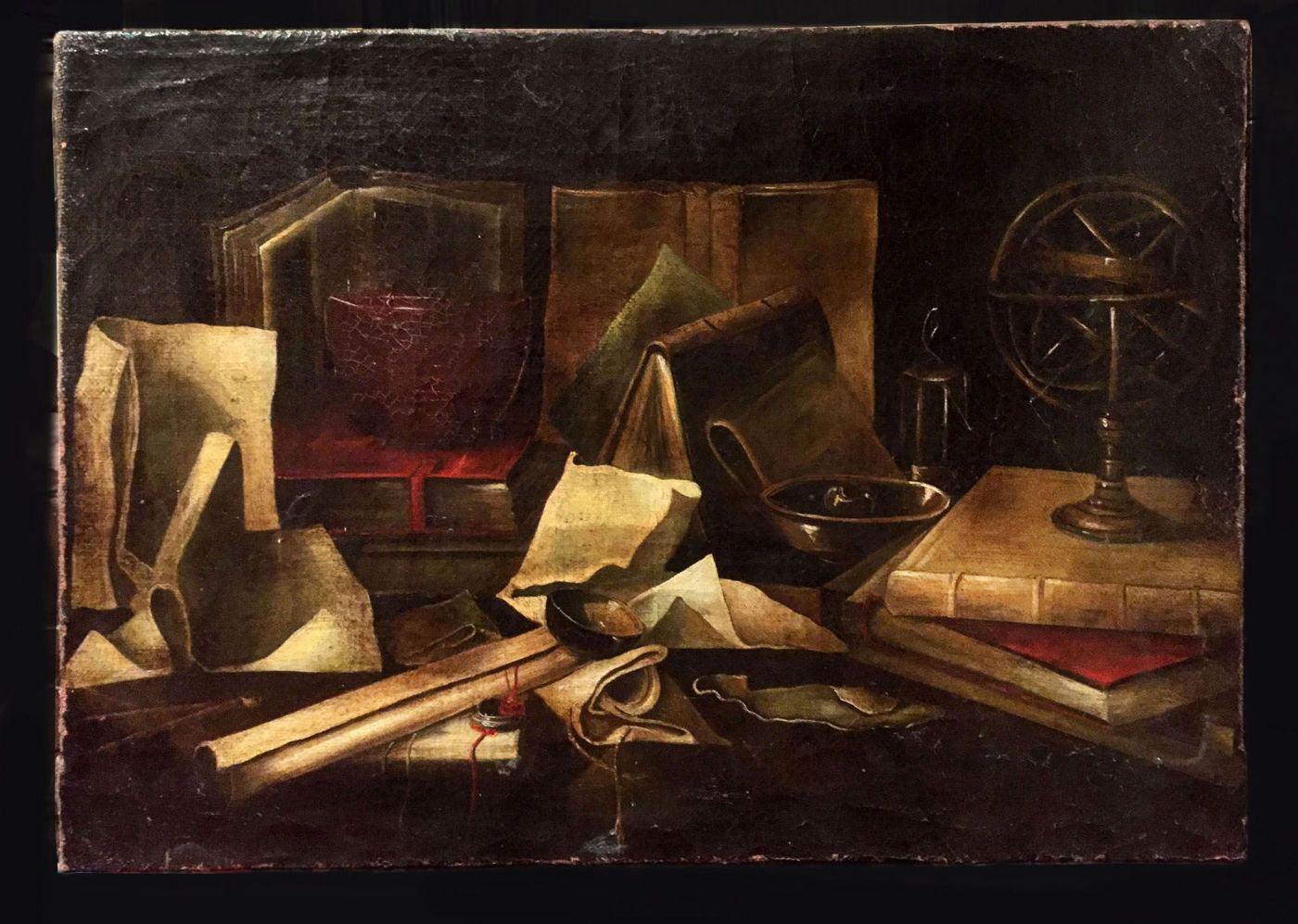
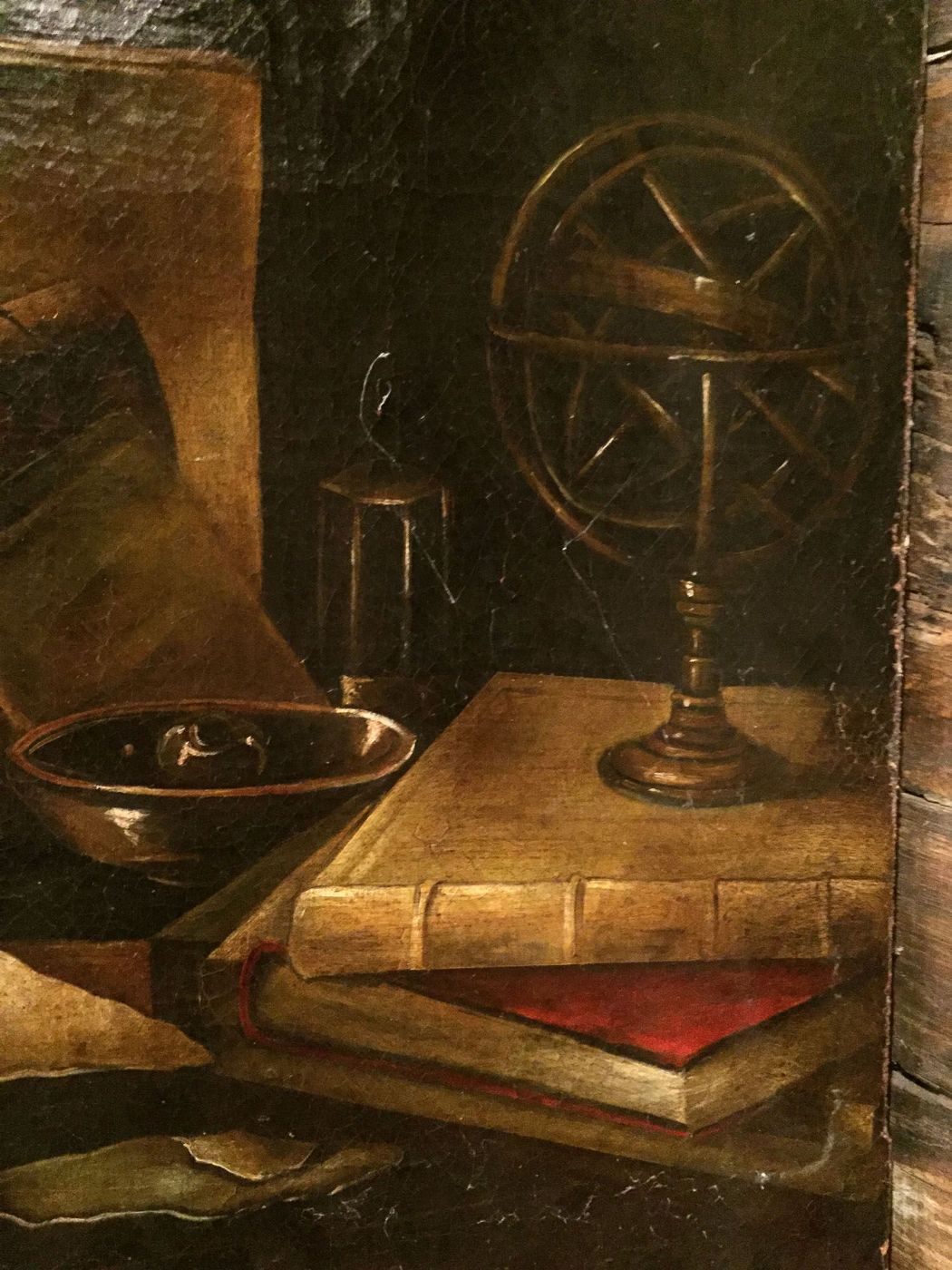
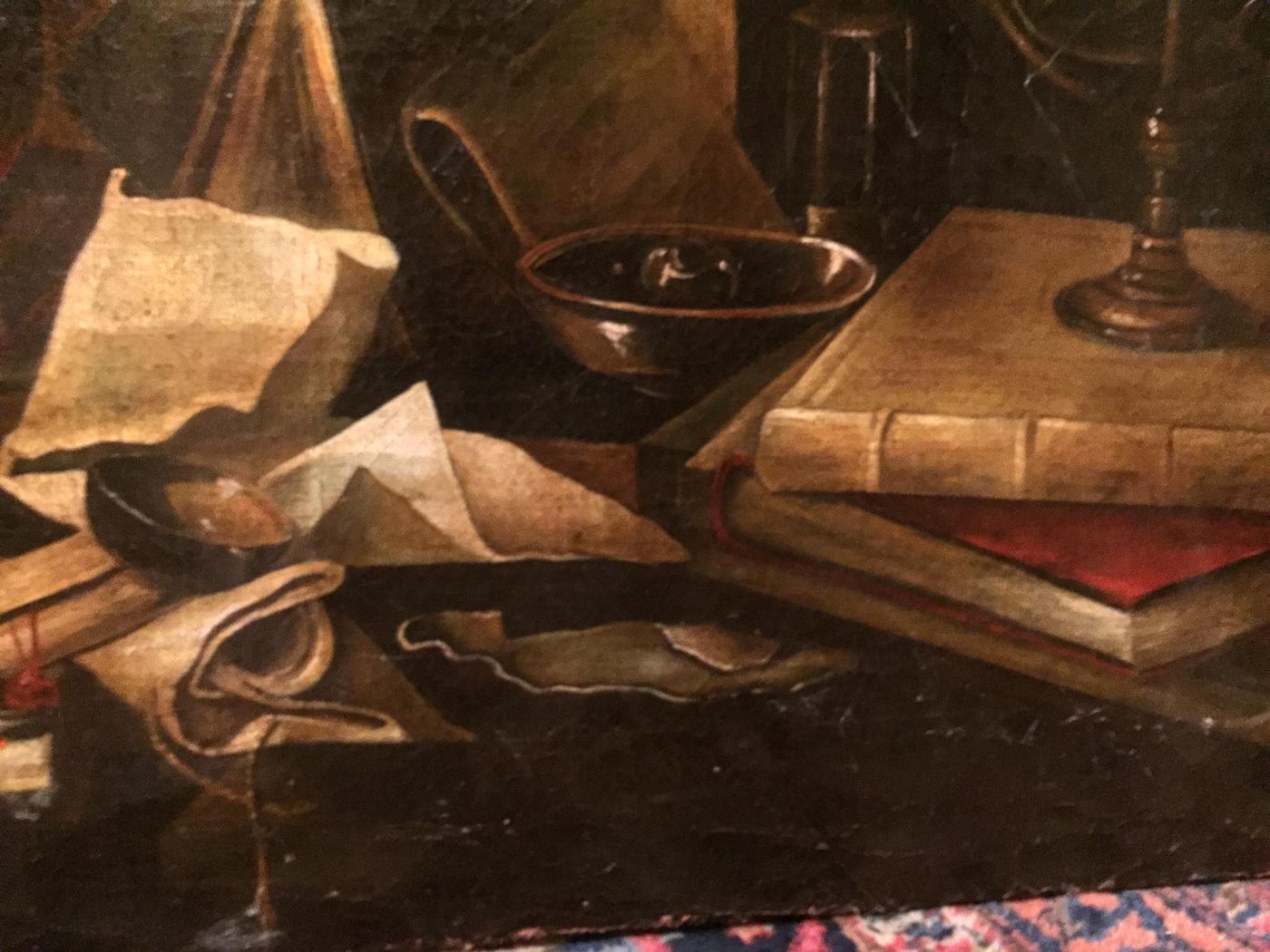
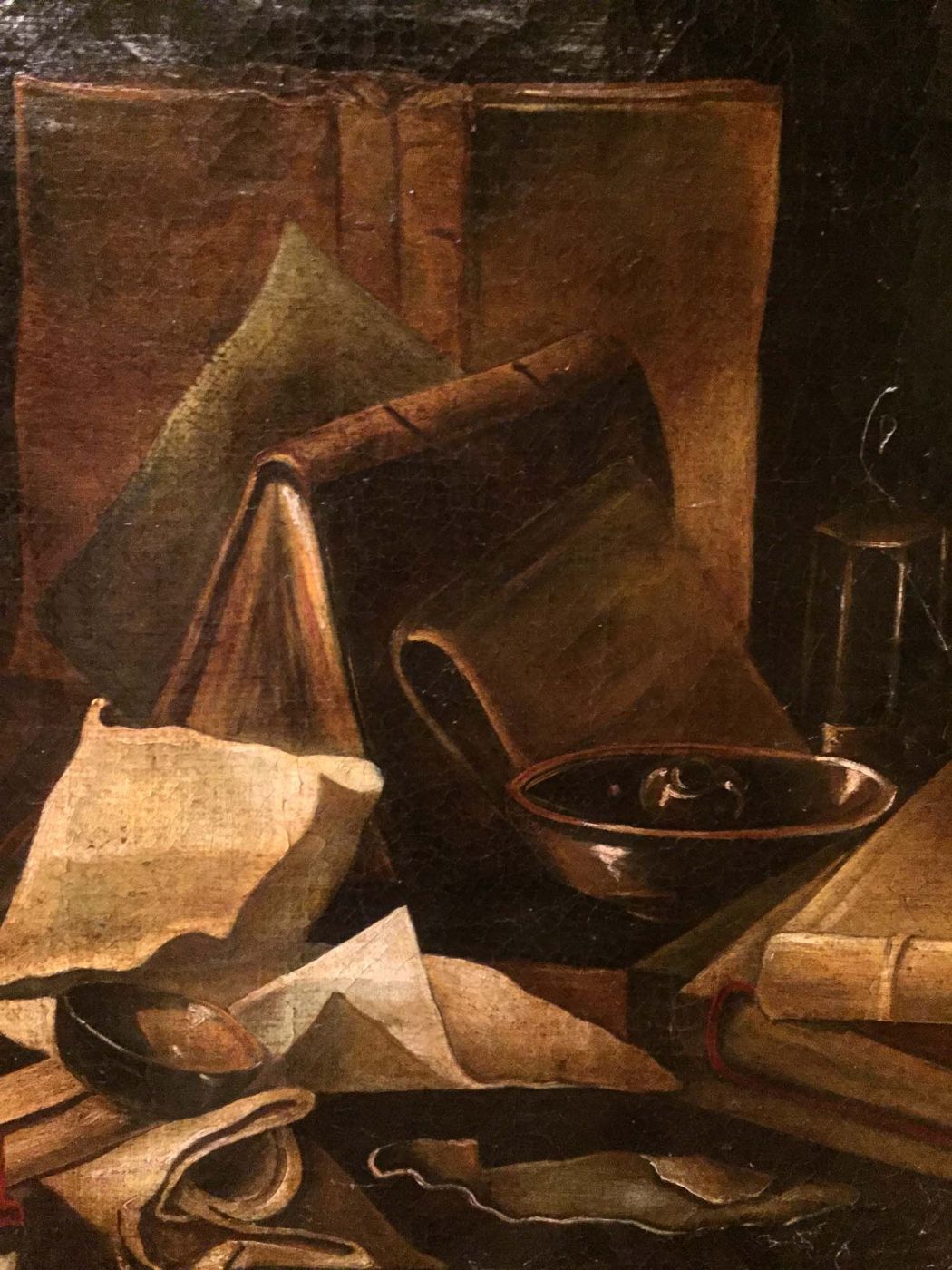
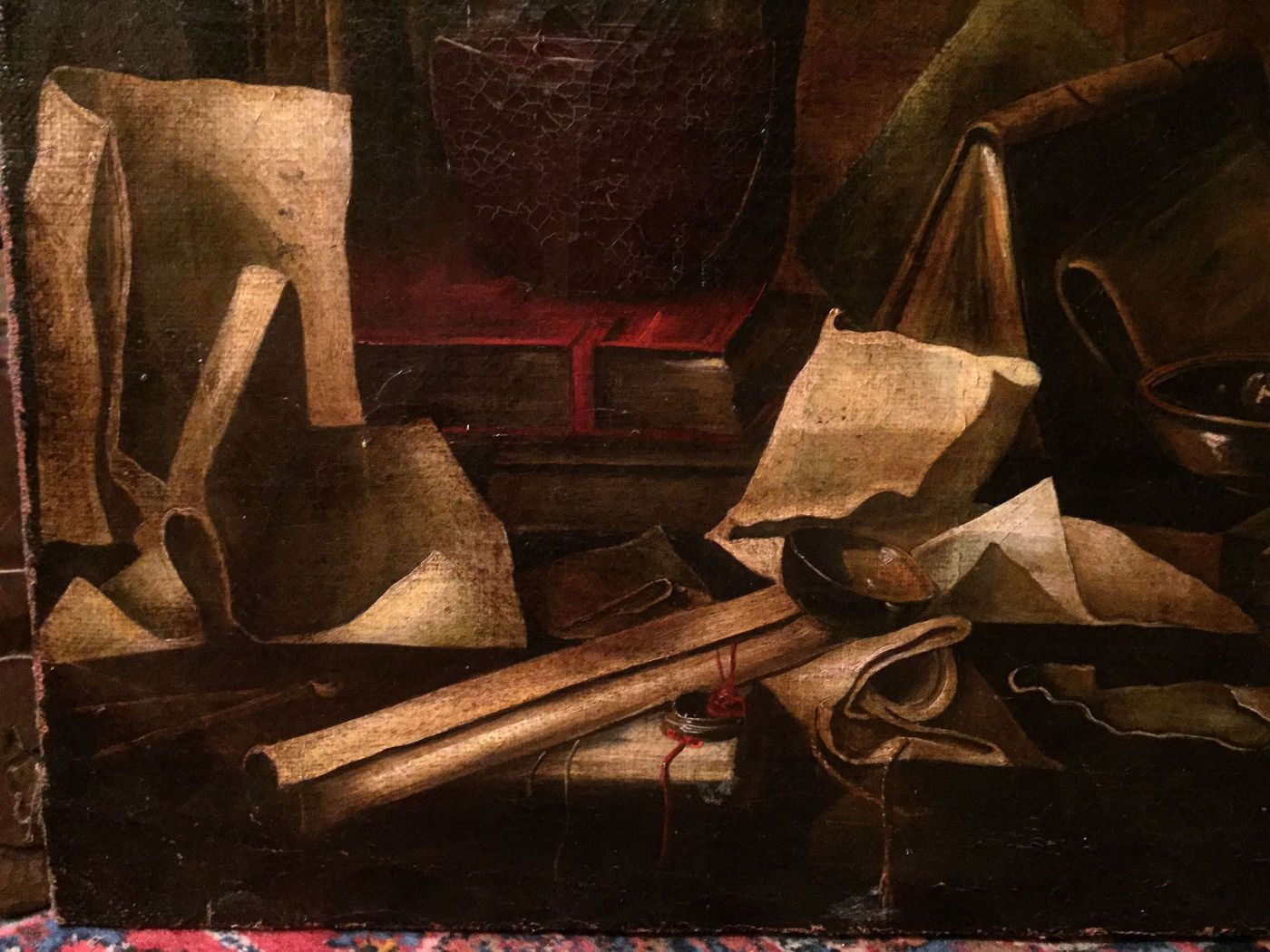
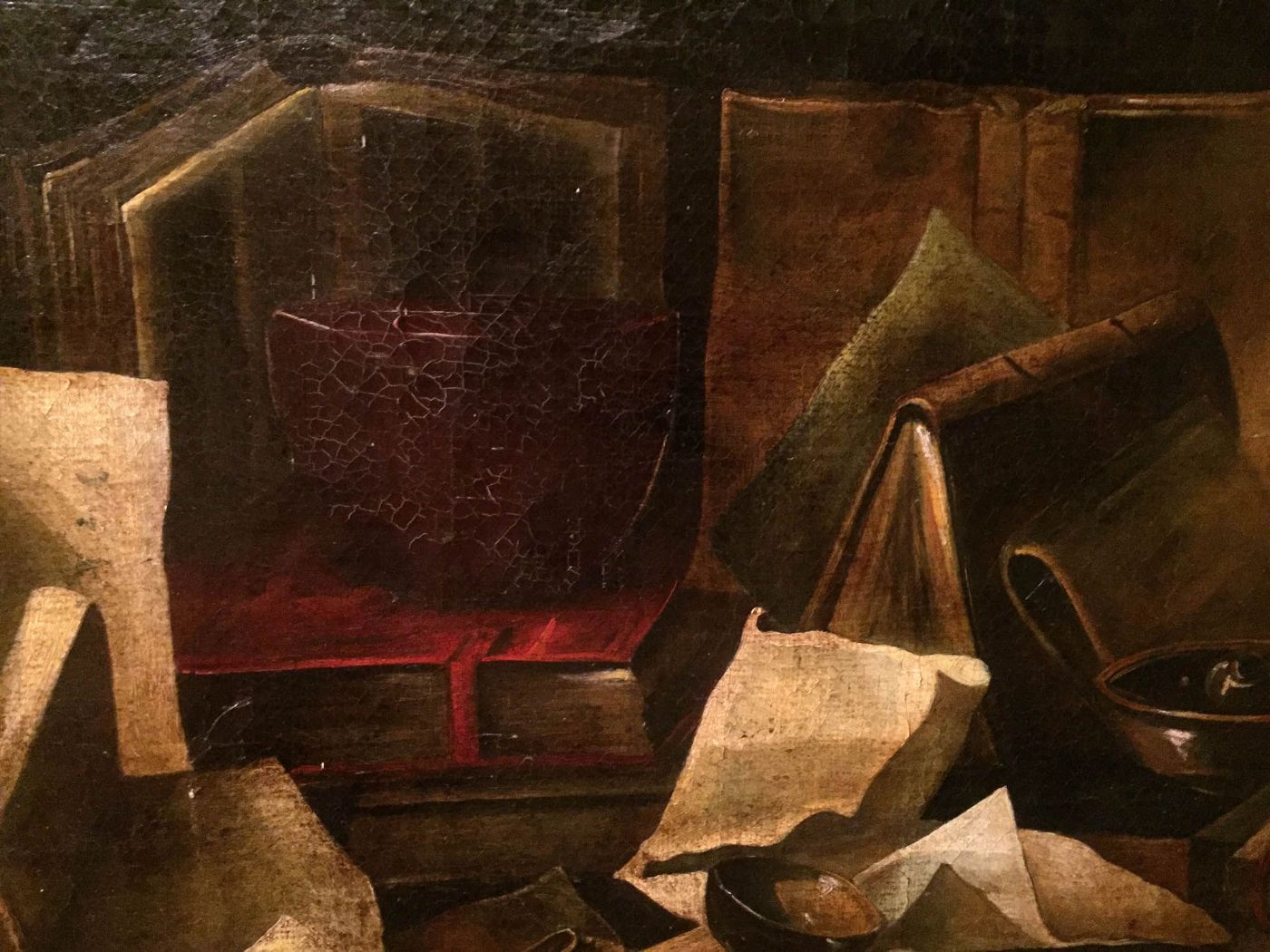
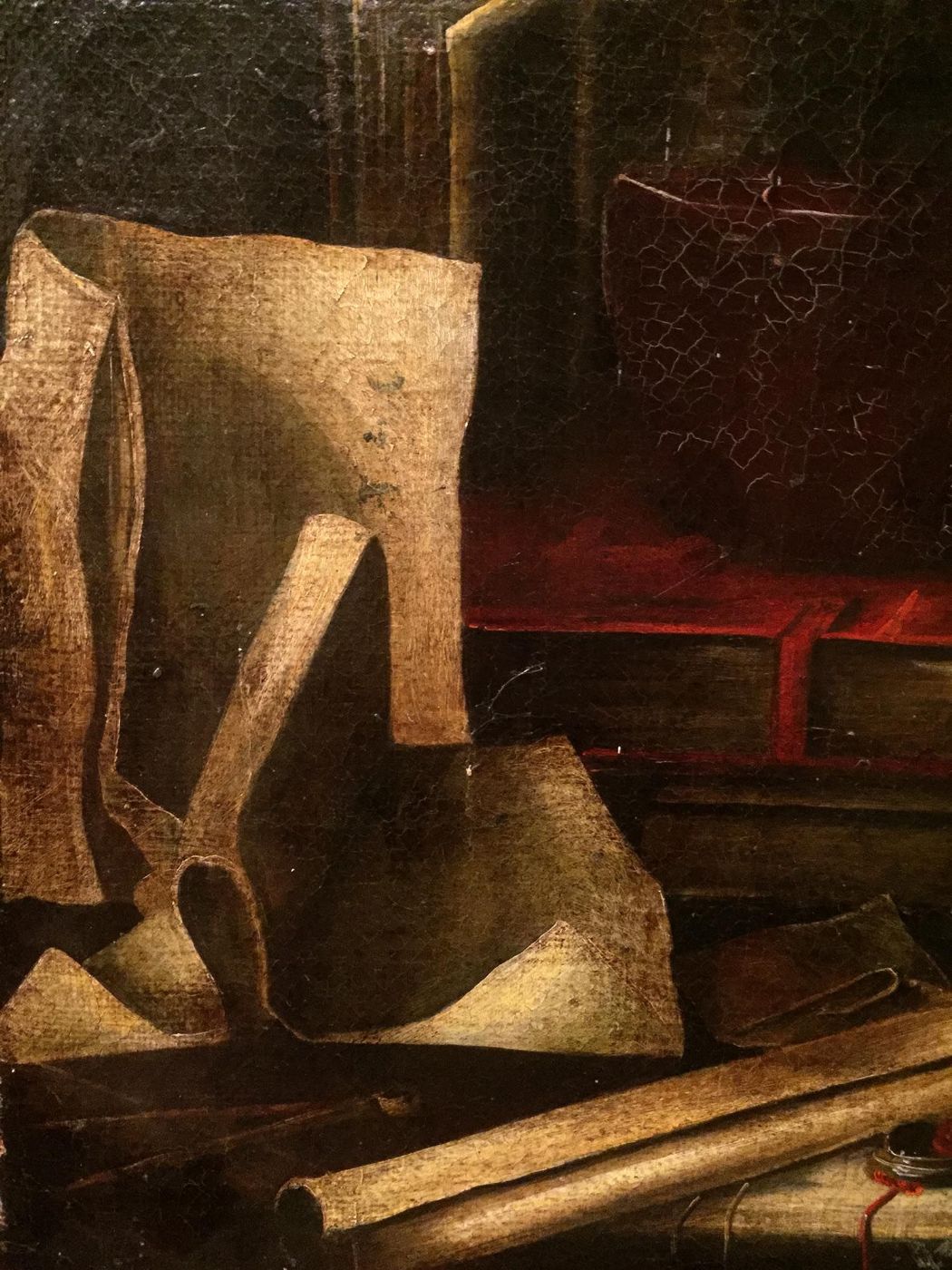
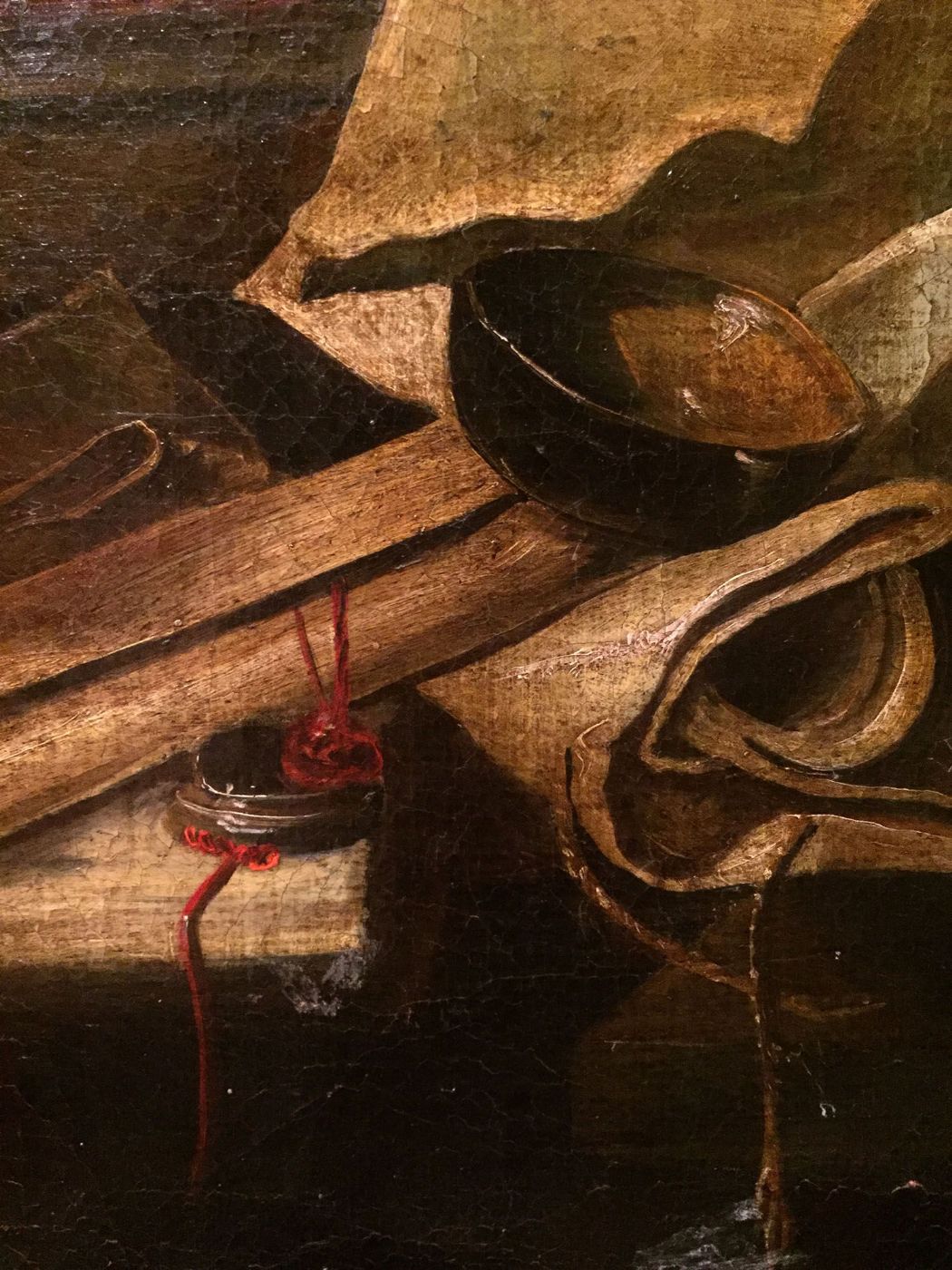
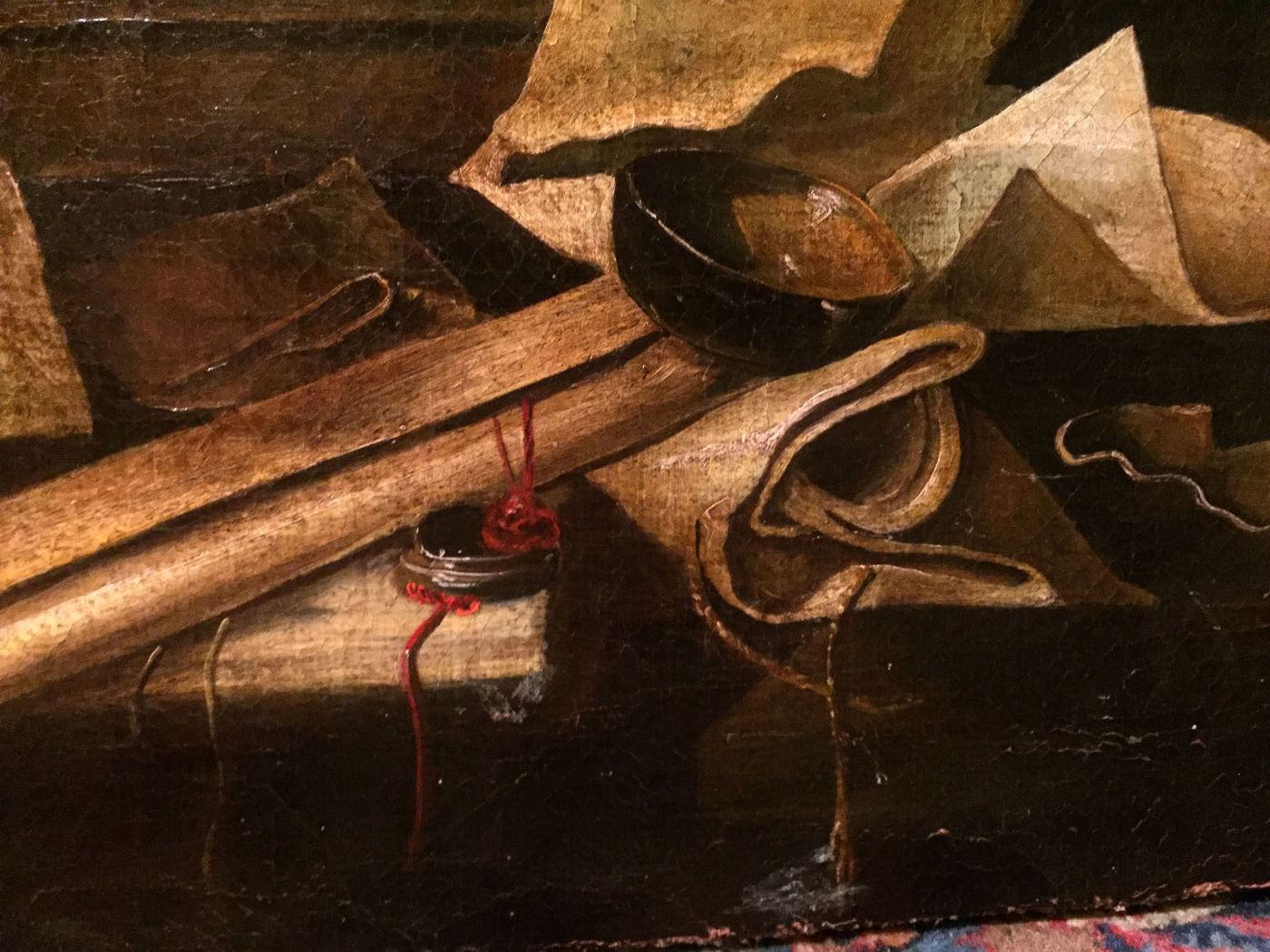
A skillful and fascinating painting from the early 1800s, relatable to the sphere of Bartolomeo or Bonaventura Bettera (painters from Bergamo who lived between the mid-seventeenth and mid-eighteenth centuries), in which we find scientific instruments such as the astrolabe (an ancient portable astronomical instrument used by sailors to measure the height of stars above the horizon, later replaced by the sextant), a small lantern, parchments, and ancient books, reminding us of the "Vanitas" where each object had a particular meaning related to the passage of time.
A kaleidoscope of symbols enclosed in this well-executed studio work from a pictorial point of view, where the appeal to the epic of the seventeenth and eighteenth-century Still Life is strong.
Bartolomeo or Bonaventura Bettera was born in Bergamo on August 28, 1639; the family, probably of builders, came from Gandino in the Seriana valley, where a Giovanni Maria Bettera erected the imposing basilica in 1630-40. He was an imitator of the art of Evaristo Baschenis in the field of still life compositions, including various objects, but particularly musical instruments. He deviated little from the compositional character of the master, so much so that he was often confused with him in the attribution of unsigned works. Several of his paintings, however, are signed with the two initials divided by a cross: in paintings in the Camozzi castle in Costa di Mezzate, at the Accademia Carrara, in the Collegio di S. Alessandro in Bergamo, in the Cicogna house in Milan. Even if the direction is similar to that of Baschenis, the color is more opaque, the grouping of objects less felicitous, the fabrics and draperies of lesser executive finesse. Although living in Bergamo, B. went for some time to Rome (as can be deduced from the signature in a painting in Brugherio, Milan) and went to Milan in 1687, where he probably remained until the end of his life at the end of the seventeenth century. Two other of his works are in Bissone (Canton Ticino) and three in the Hofburg in Vienna.
Bonaventura was probably Bettera's son: only one painting of him is known in Bergamo, which bears the signature: "Bonaventura Bettera 1718", always with musical instruments, scientific objects, books, parchments: other works can be attributed to him, including two other canvases in Bergamo.
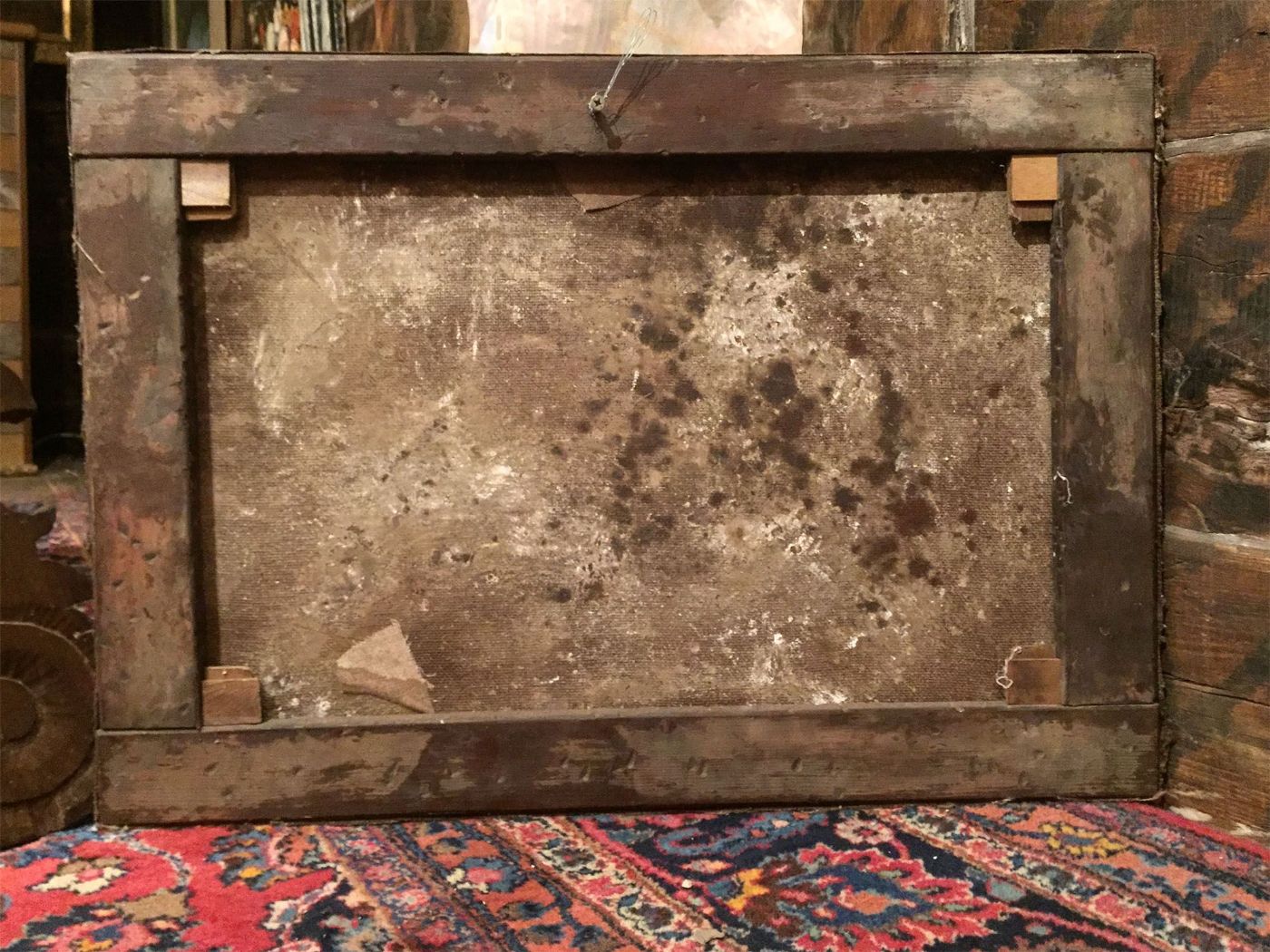
Oil on canvas.
Lombardy - early nineteenth century
Measurements: Height cm. 49.5 Width cm. 69
http://www.palazzodelbuonsignore.com
https://www.romagnavirtualtour.it/virtual-tour-palazzo-del-buon-signore/