19th century, Small ivory tankard
Description:
19th century
Small ivory tankard
Carved ivory, silver mounting with gilded interior, emeralds, rubies, and pearl
H. 10.8 cm
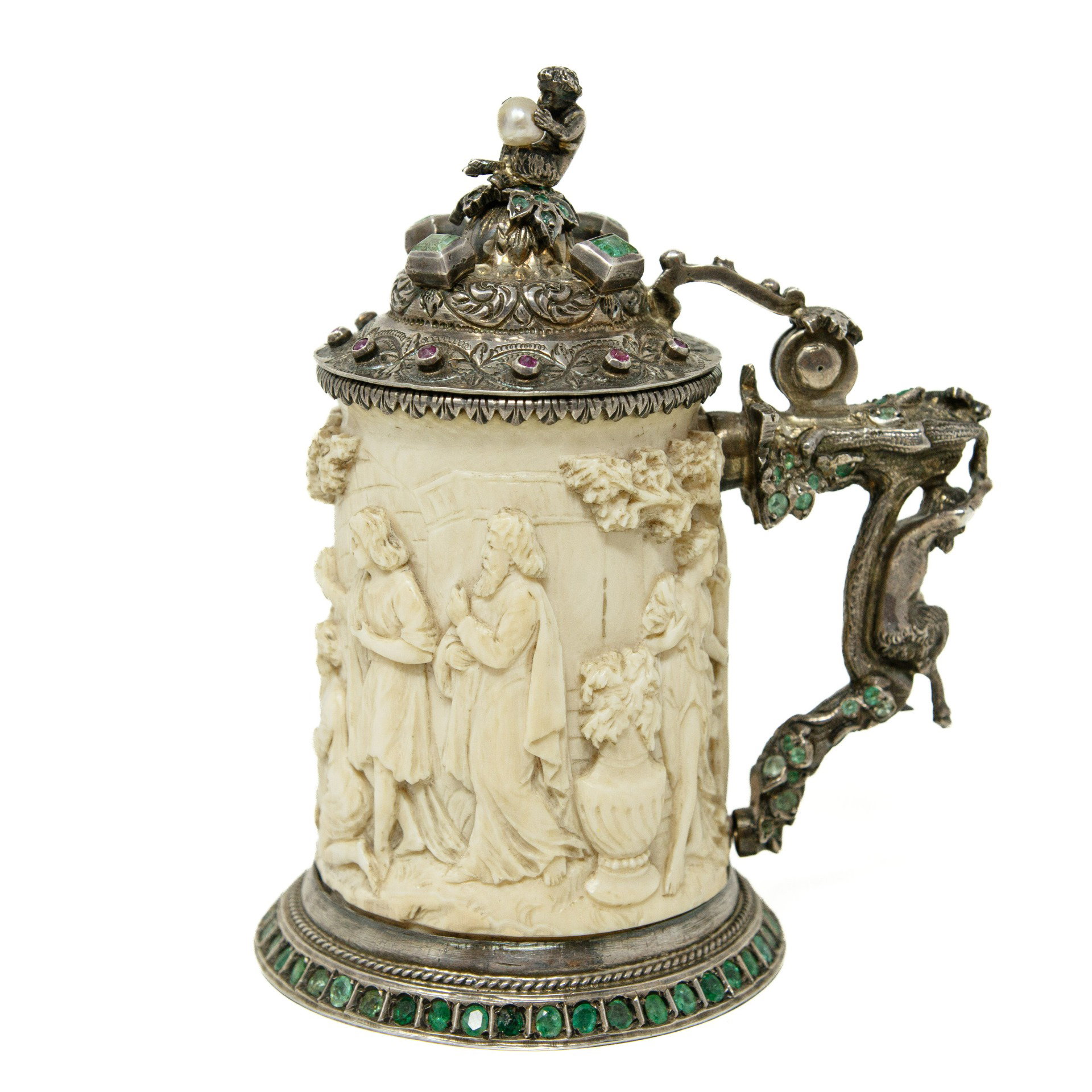
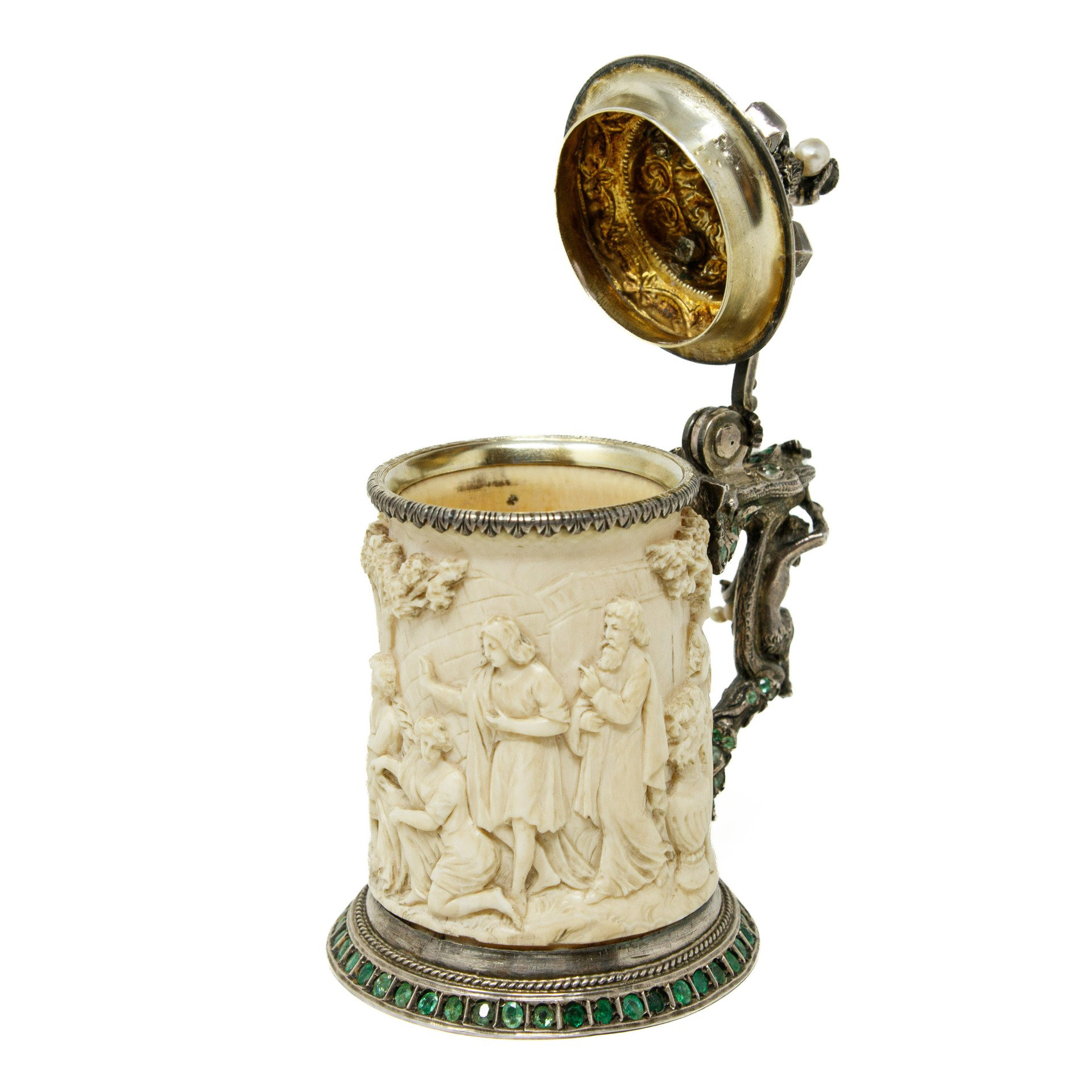
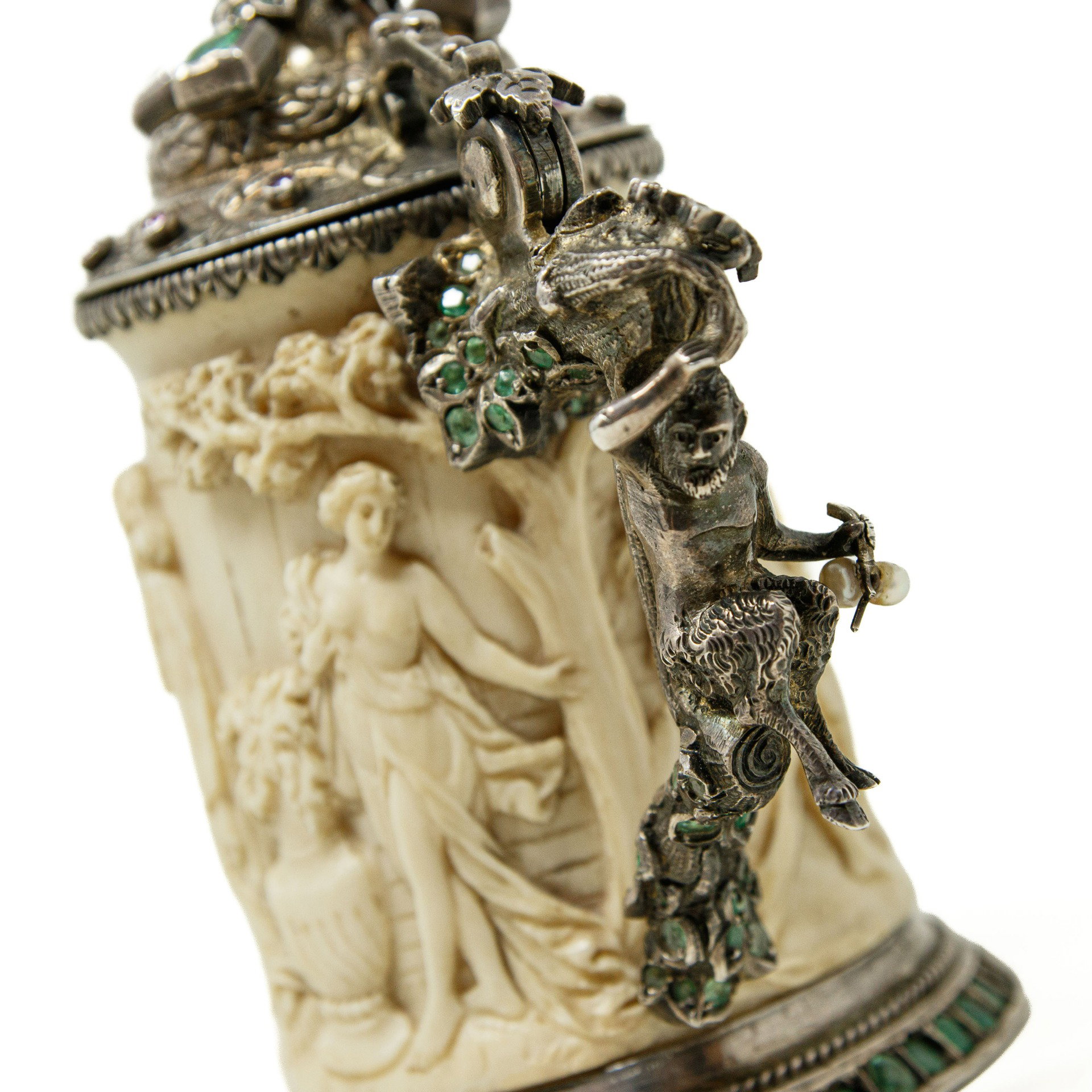
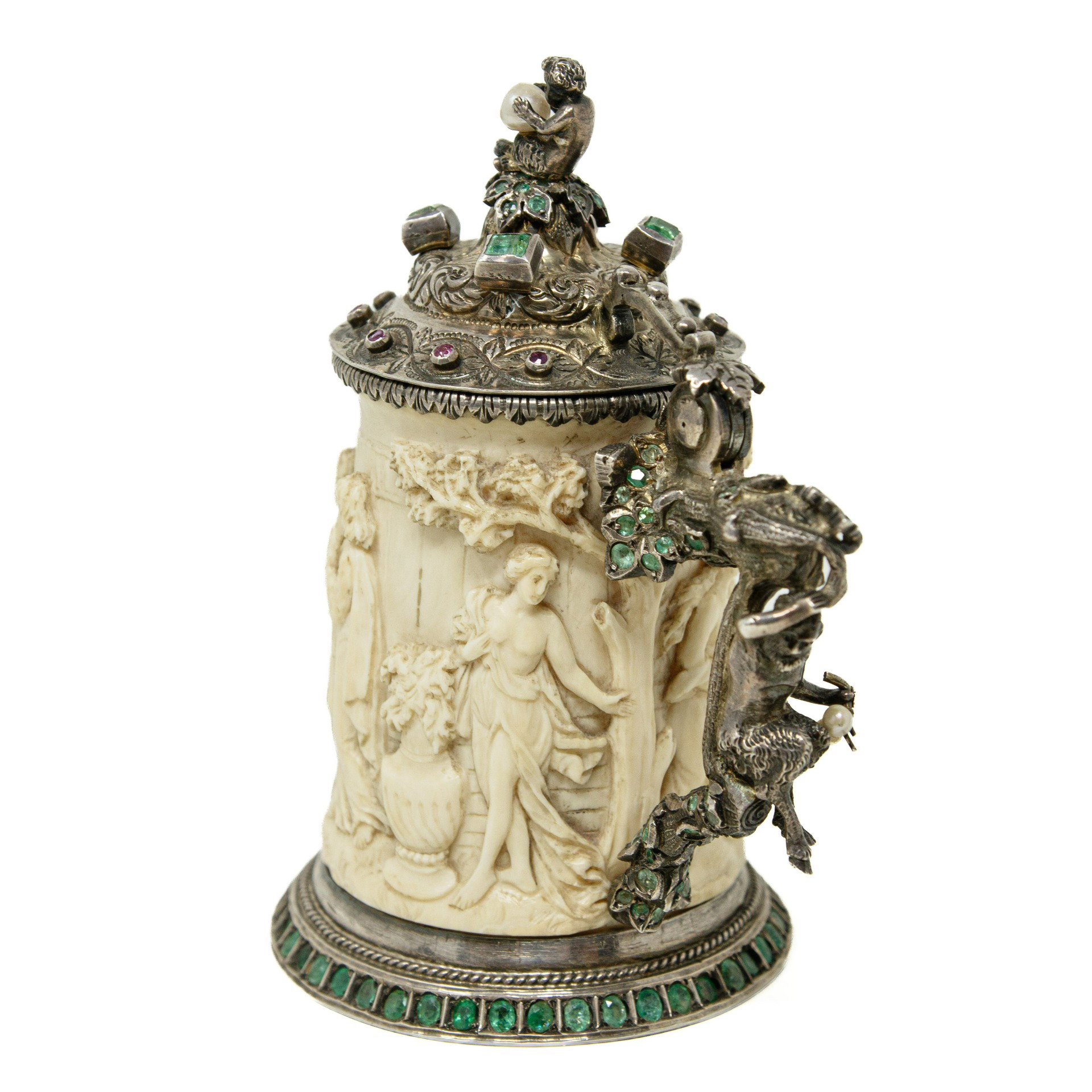
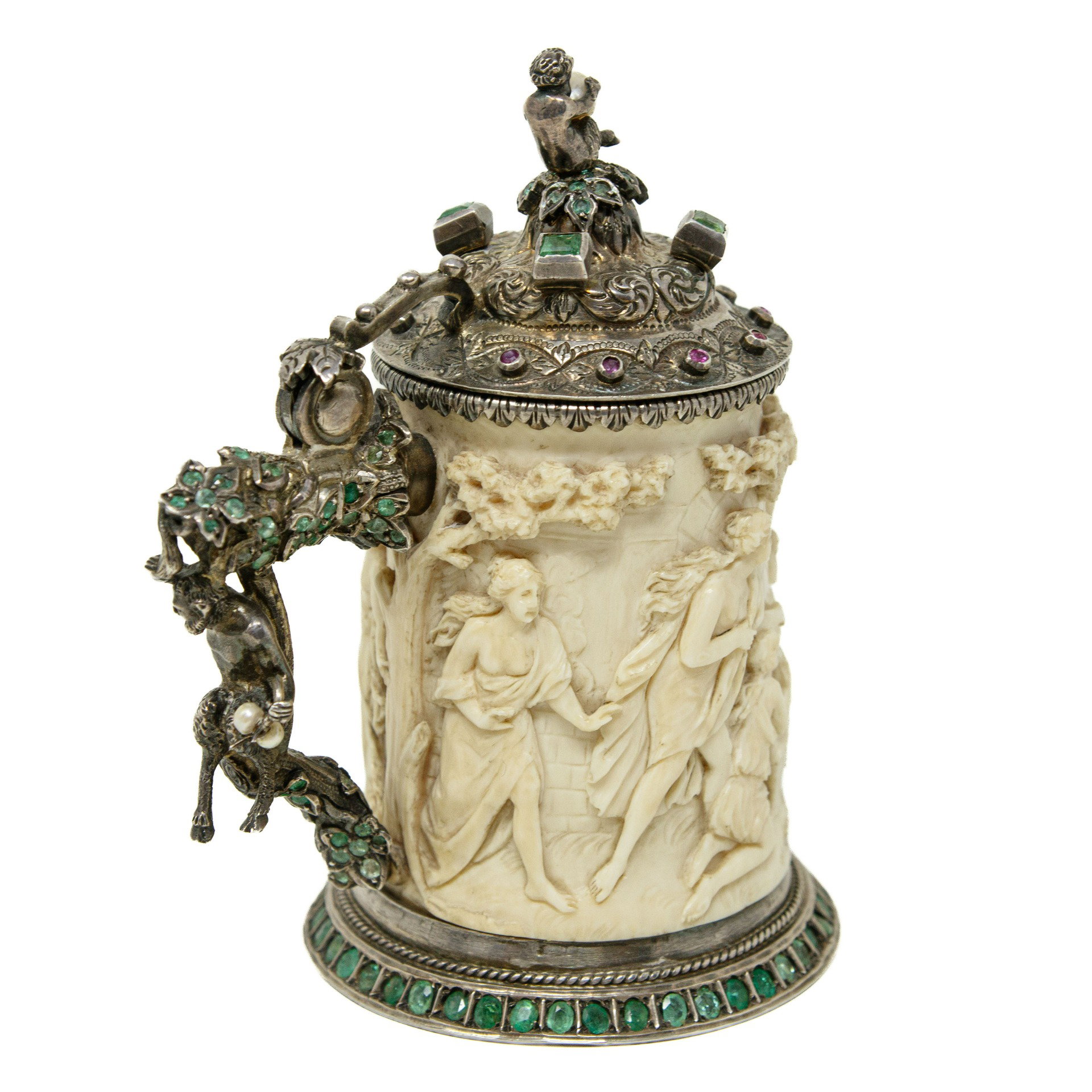
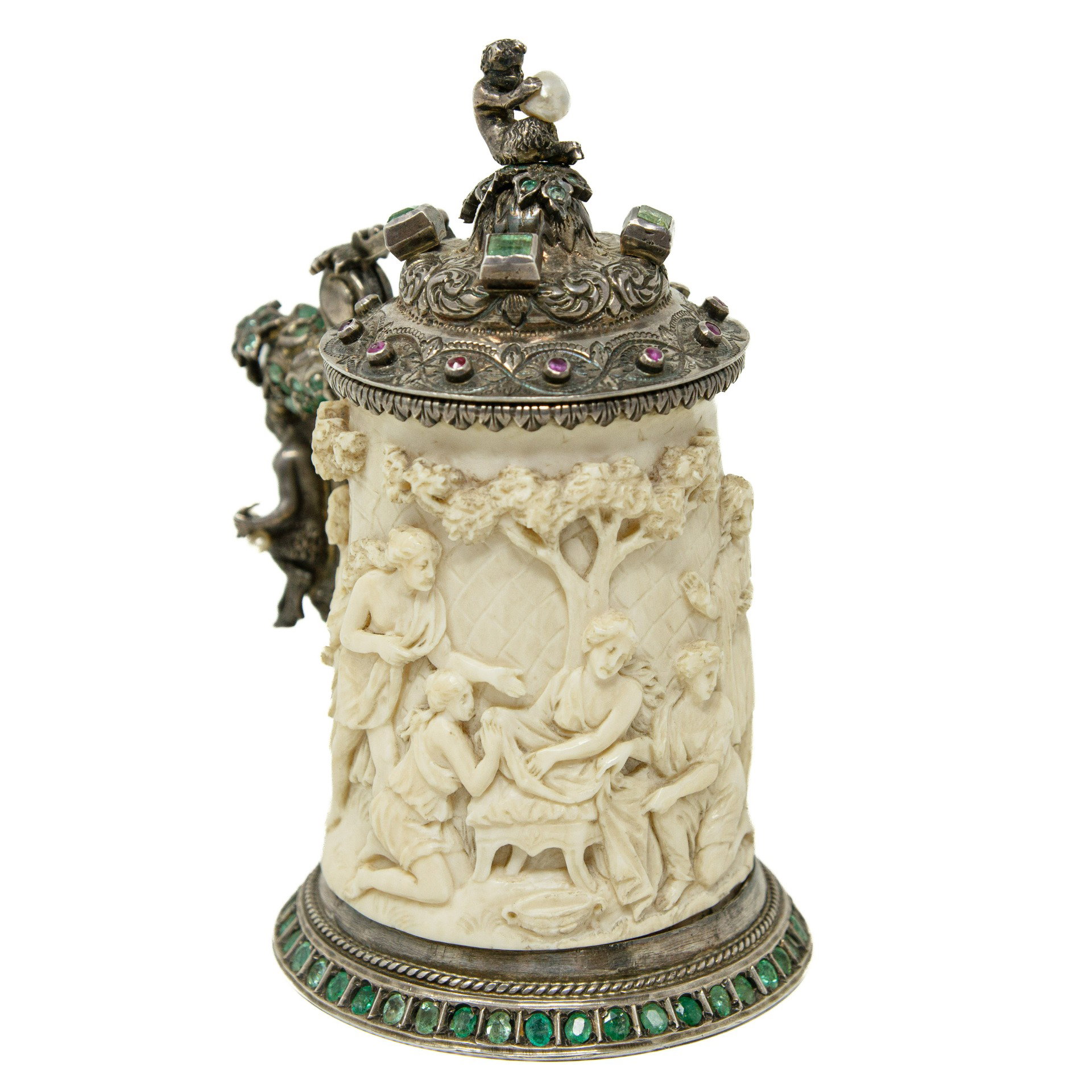
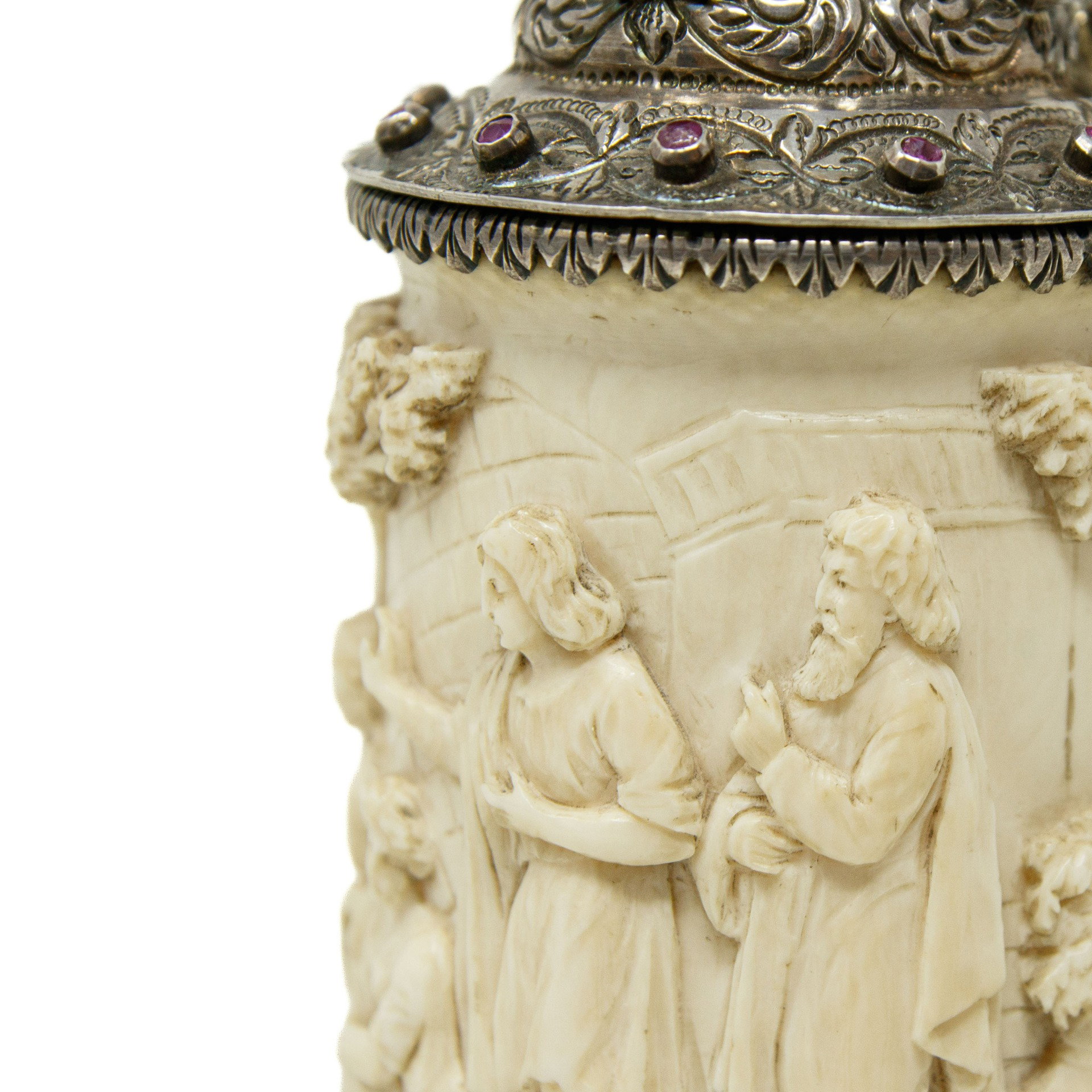
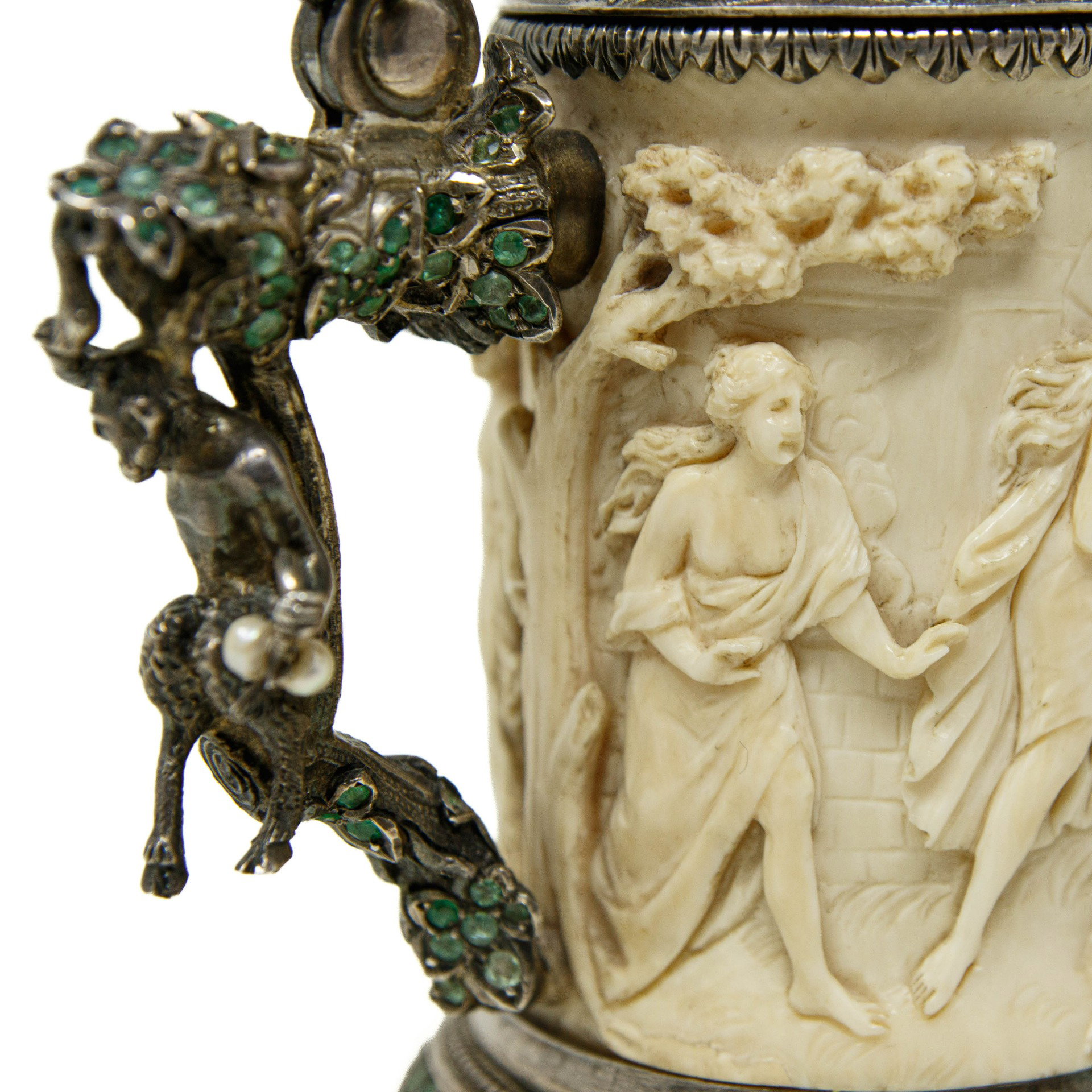
The universe of 19th-century decorative arts often looked to the splendors of the Baroque and Renaissance as an inexhaustible source of wonder, translating their opulence through artifacts of extraordinary technical and executive virtuosity. A sublime example of this is this small ivory tankard, a piece for display and high collection that condenses an impressive richness of material and form in just over ten centimeters in height. The cylindrical body of carved ivory dialogues harmoniously with a sumptuous worked silver mounting, embellished inside with warm gilding and decorated outside with a profusion of precious gems. Finely set emeralds adorn the profiled base and the tendrils of the handle, while rubies and pearls decorate the domed lid, culminating in a full-figure sculptural finial that supports a large baroque pearl, enhancing the object's typically eclectic vocation.
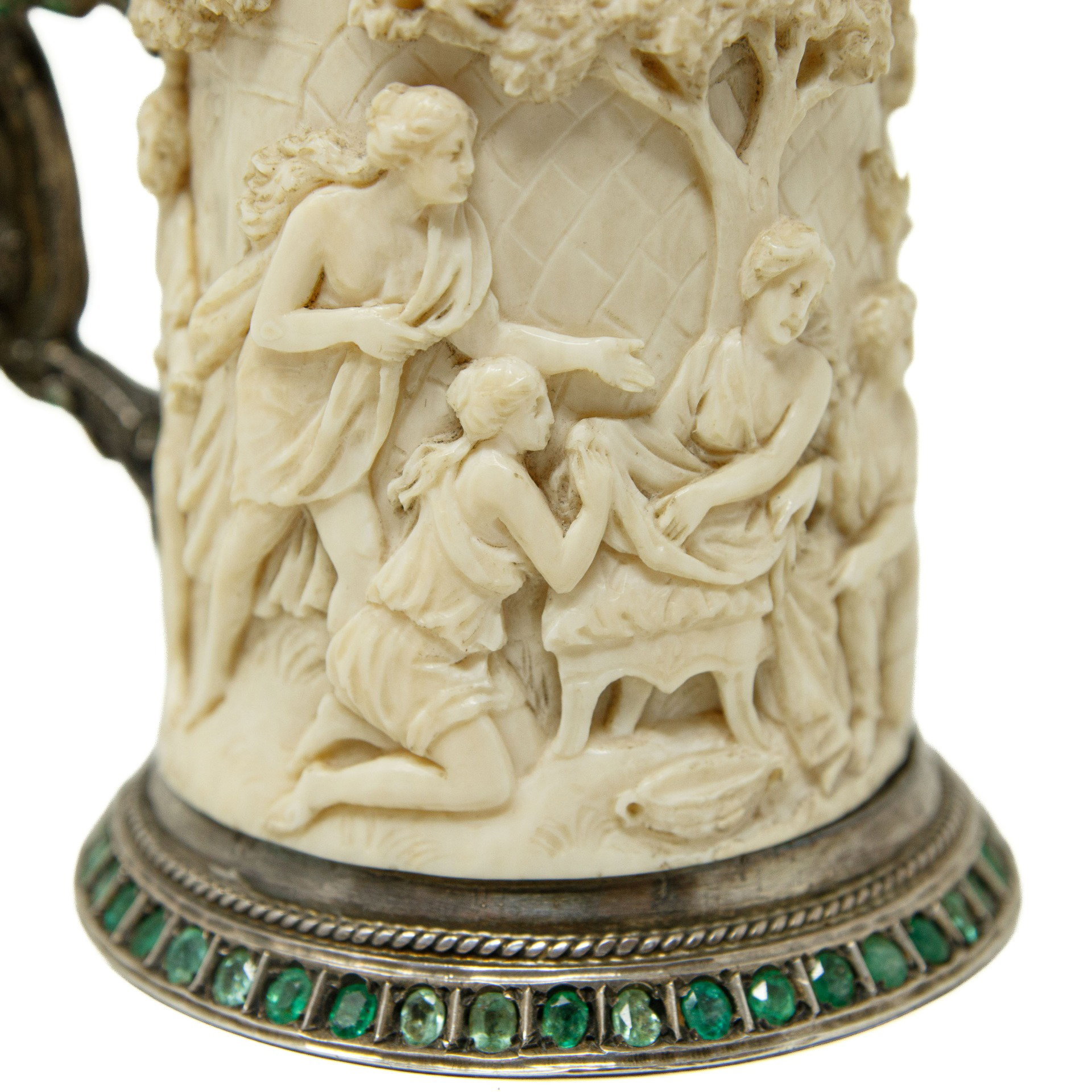
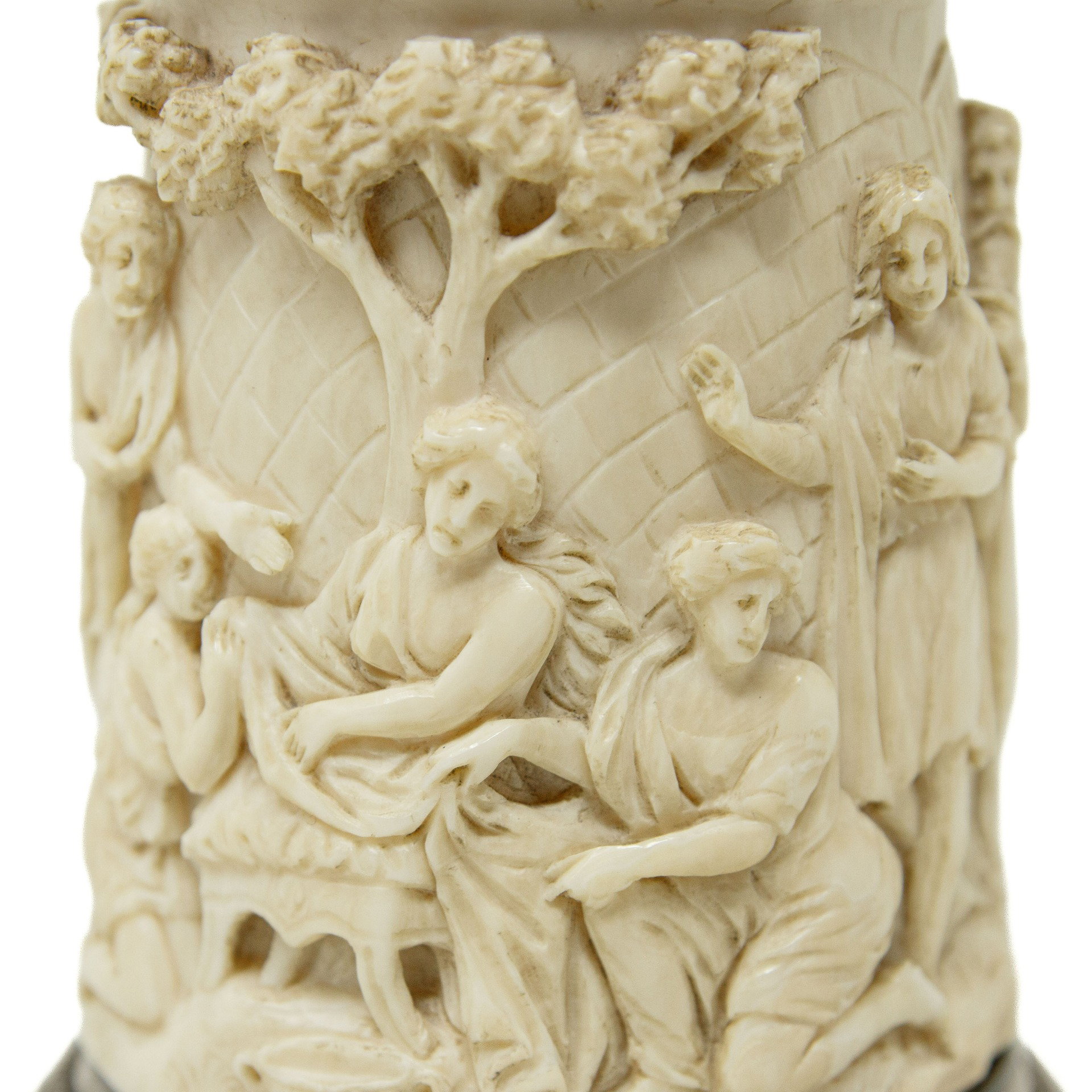
The work is elevated by a plastic narrative that envelops the entire cylindrical wall, revealing a crucial episode from classical epic literature taken from the nineteenth book of the Odyssey. It is the touching and tense scene of Odysseus's foot washing, who has returned to Ithaca in the guise of an old beggar. At Penelope's explicit order, the faithful, elderly nurse Eurycleia is tasked with welcoming the unknown guest and washing his feet, a ritual gesture of hospitality that transforms into a moment of secret recognition when the woman identifies a scar on the hero's knee, acquired in his youth from a wild boar on Mount Parnassus.
The complex relief composition unfolds with narrative continuity and great theatricality. At the center of the narration, we do not find a seated character, but rather an empty upholstered stool, the precise seat prepared to receive the hero. Behind this seat, a female figure stands out clearly, very likely Queen Penelope herself or Eurycleia, caught as she oversees the preparations with a ceremonial and elegant gesture of her hands, as if indicating the space destined for the guest to be honored. In front of the stool, ready to carry out the royal order, the figure of the servant kneels, entirely bent downwards where the basin for the ritual bath is placed. Odysseus stands solemnly, concealed by a thick beard and humble clothing, maintaining a watchful attitude to prevent his secret from being revealed prematurely. Beside him move supporting figures, among whom the figure of a young man stands out, identifiable as his son Telemachus, who acts as escort and guardian of his father within his own home, now invaded by the suitors. The ivory craftsman organizes the space by skillfully combining high and low relief, defining an architectural background of lattice and leafy trees that frame the characters, conferring spatial depth to such a reduced surface.
From the perspective of comparisons and plastic inspiration, the tankard relates to the glorious tradition of ivory tankards produced in Augsburg, Nuremberg, and Flemish centers during the 17th century, famous for their enveloping narratives on mythological or sacred themes. The 19th-century carver demonstrates a deep knowledge of these models, infusing the continuous and soft drapery of the garments and the delicate anatomies of the handmaidens with captivating grace. The metallic elements, in particular the lid's finial and the sumptuous volute handle, are entirely modeled as full-figure leaping satyrs, accentuating the connection with the Dionysian and hedonistic universe typical of Baroque parade vessels. These mythological creatures, with their curled goat legs and expressive faces framed by beards, seem to climb the silver structure, creating a refined thematic and stylistic contrast between the sacredness of the biblical scene carved in ivory and the vital pagan licentiousness expressed by the goldsmithery. The result is a small masterpiece of micro-sculpture, designed to fascinate the close gaze of connoisseurs within the most exclusive Wunderkammer of the nineteenth century.