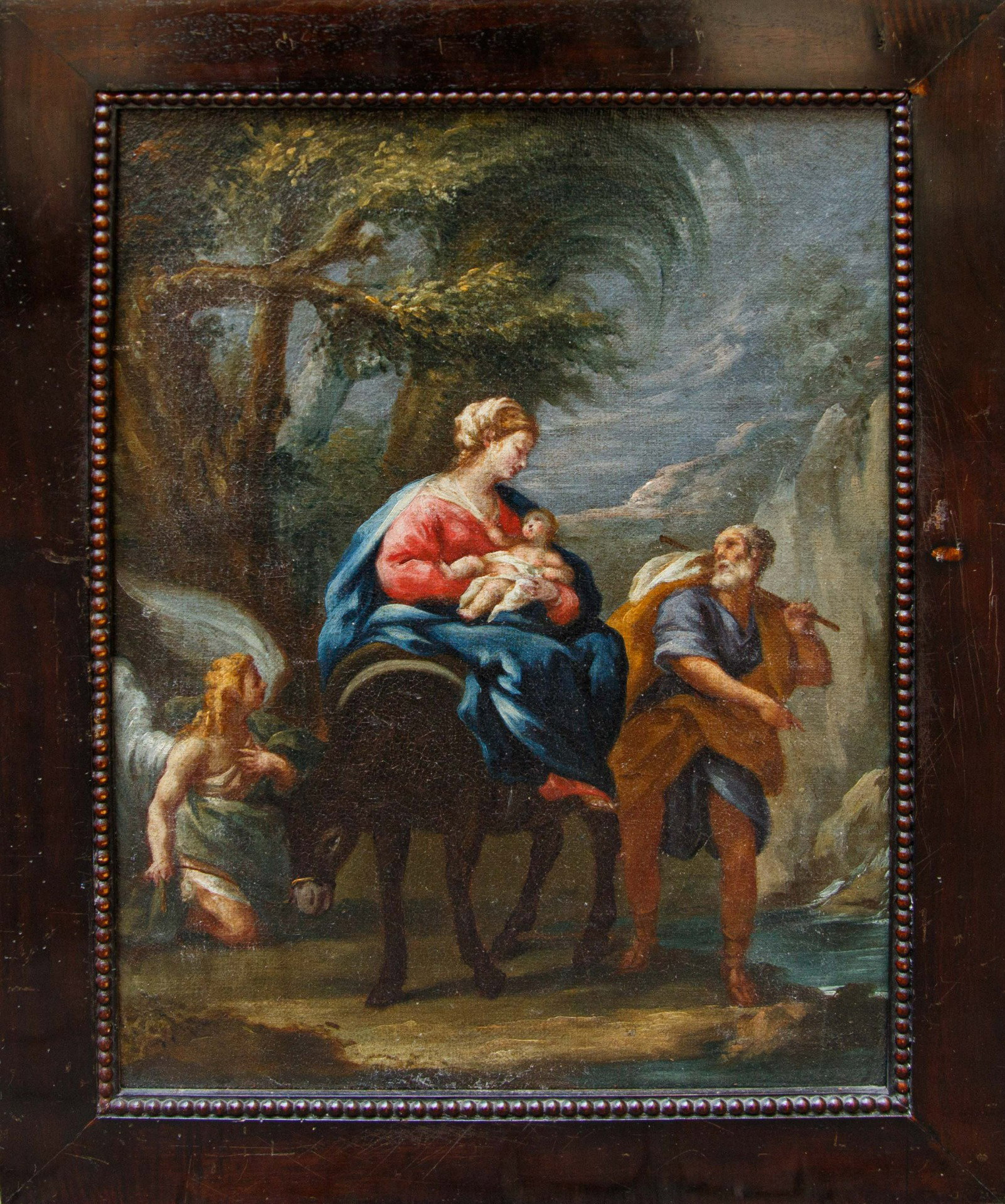
Lombard School, 17th century, Flight into Egypt
Description:
Lombard School, 17th century
Flight into Egypt
oil on canvas, 58.5 x 44 cm
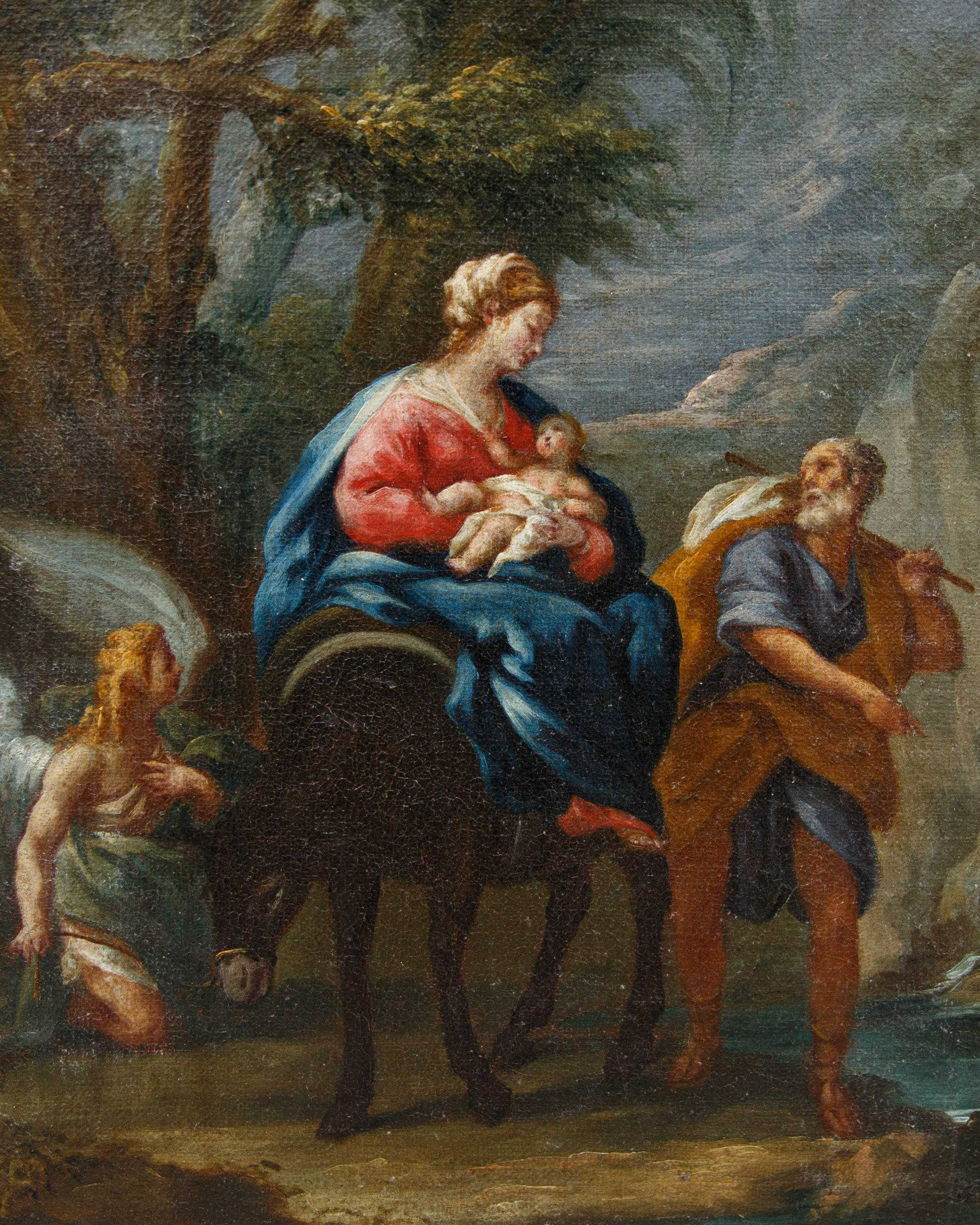
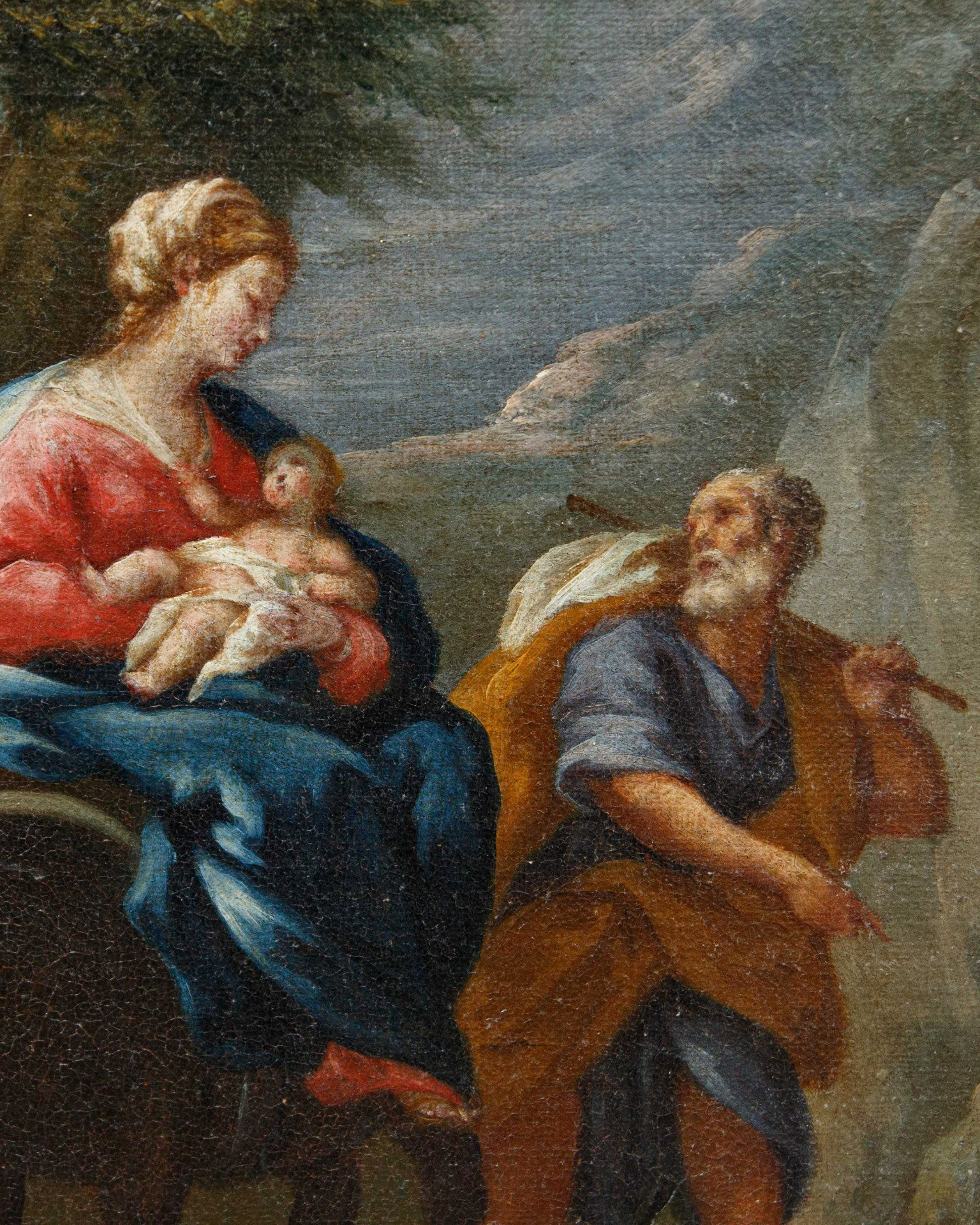
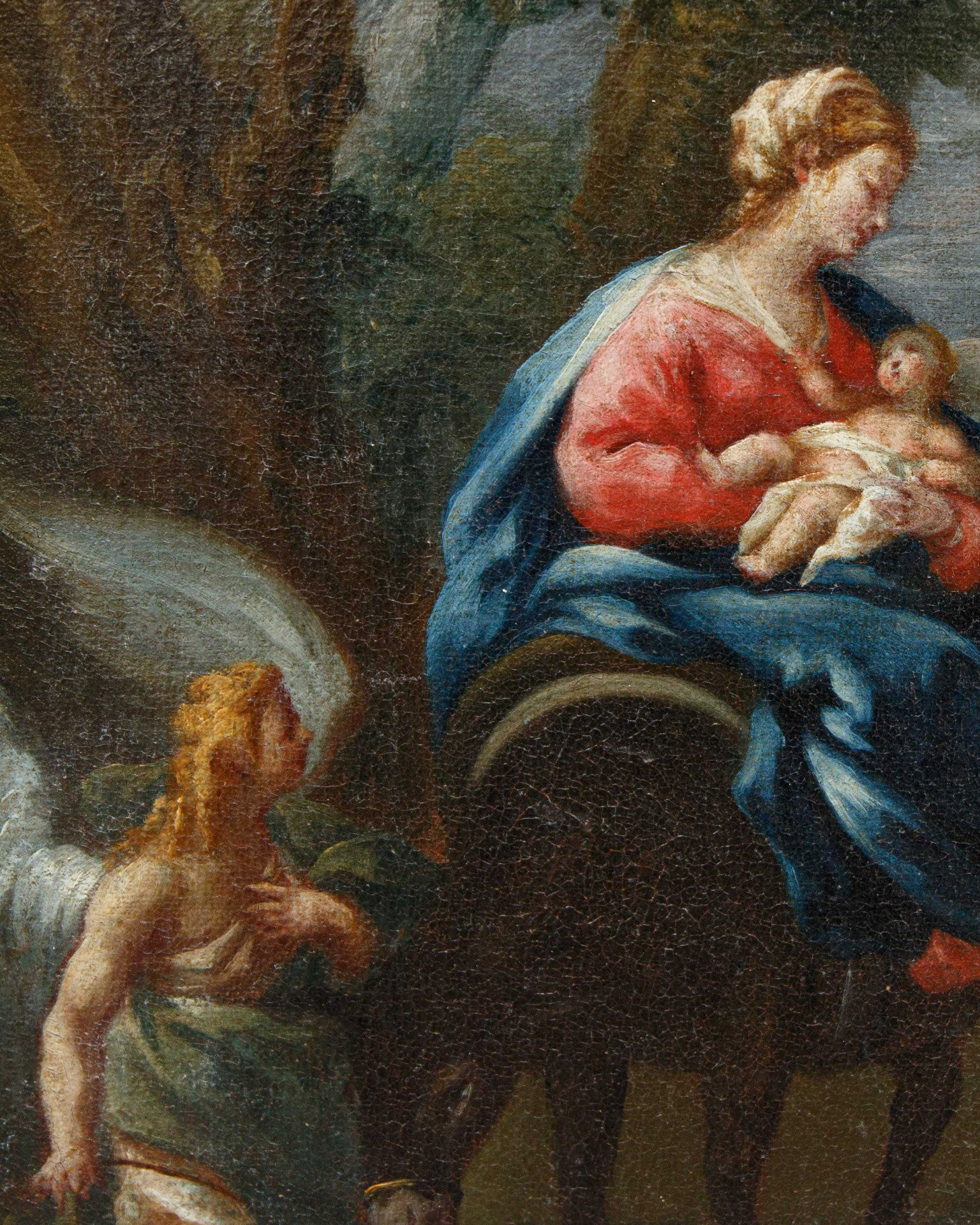
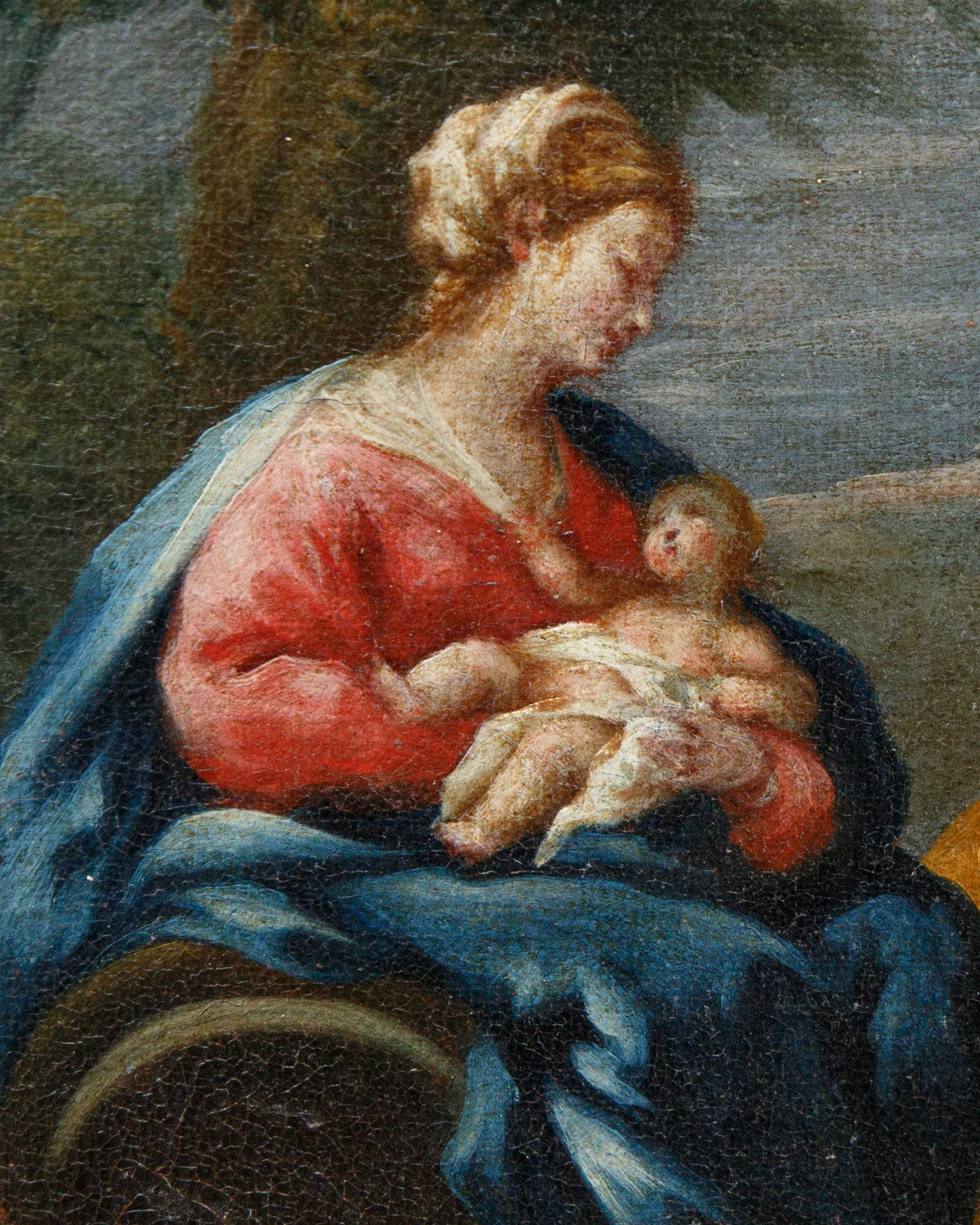
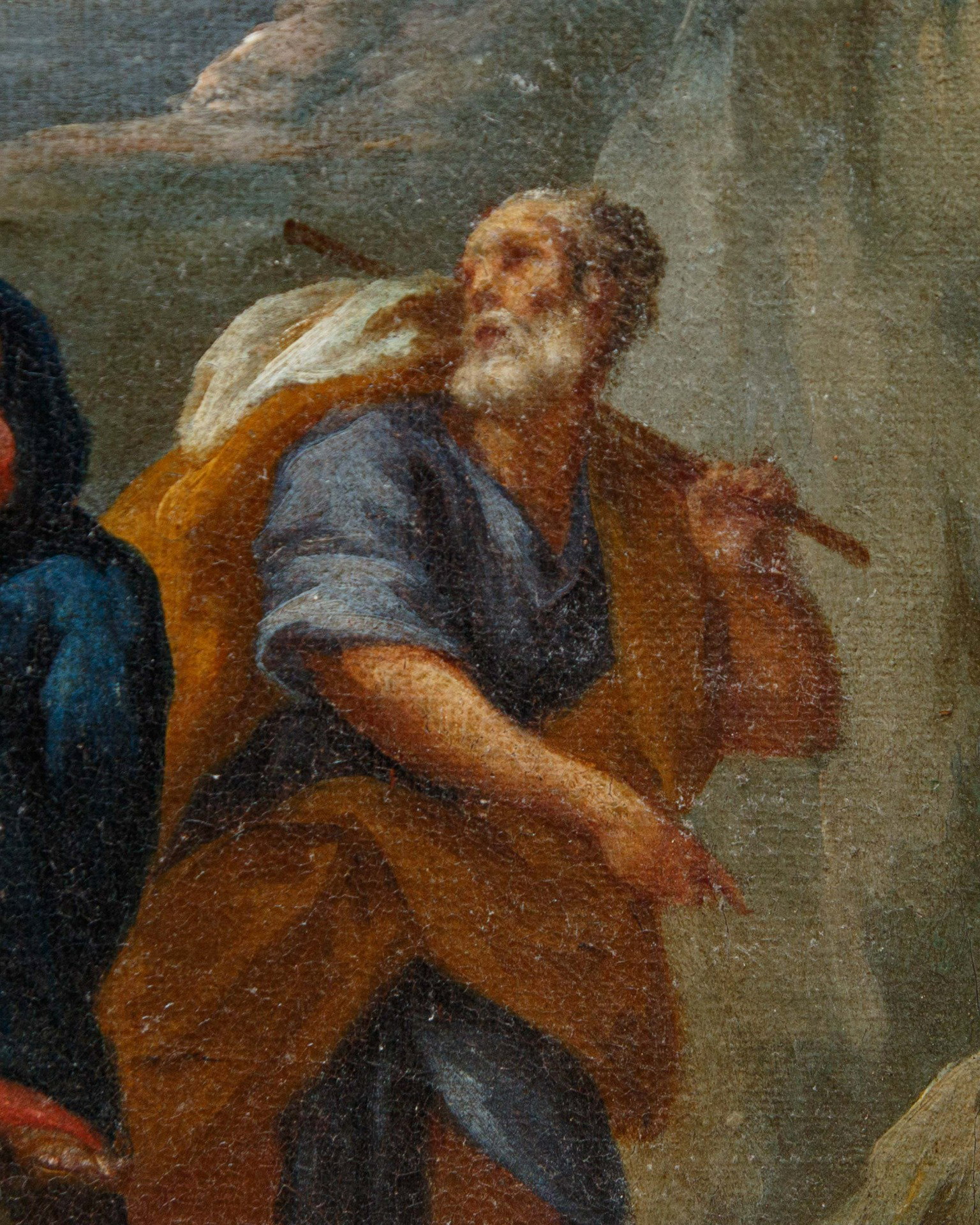
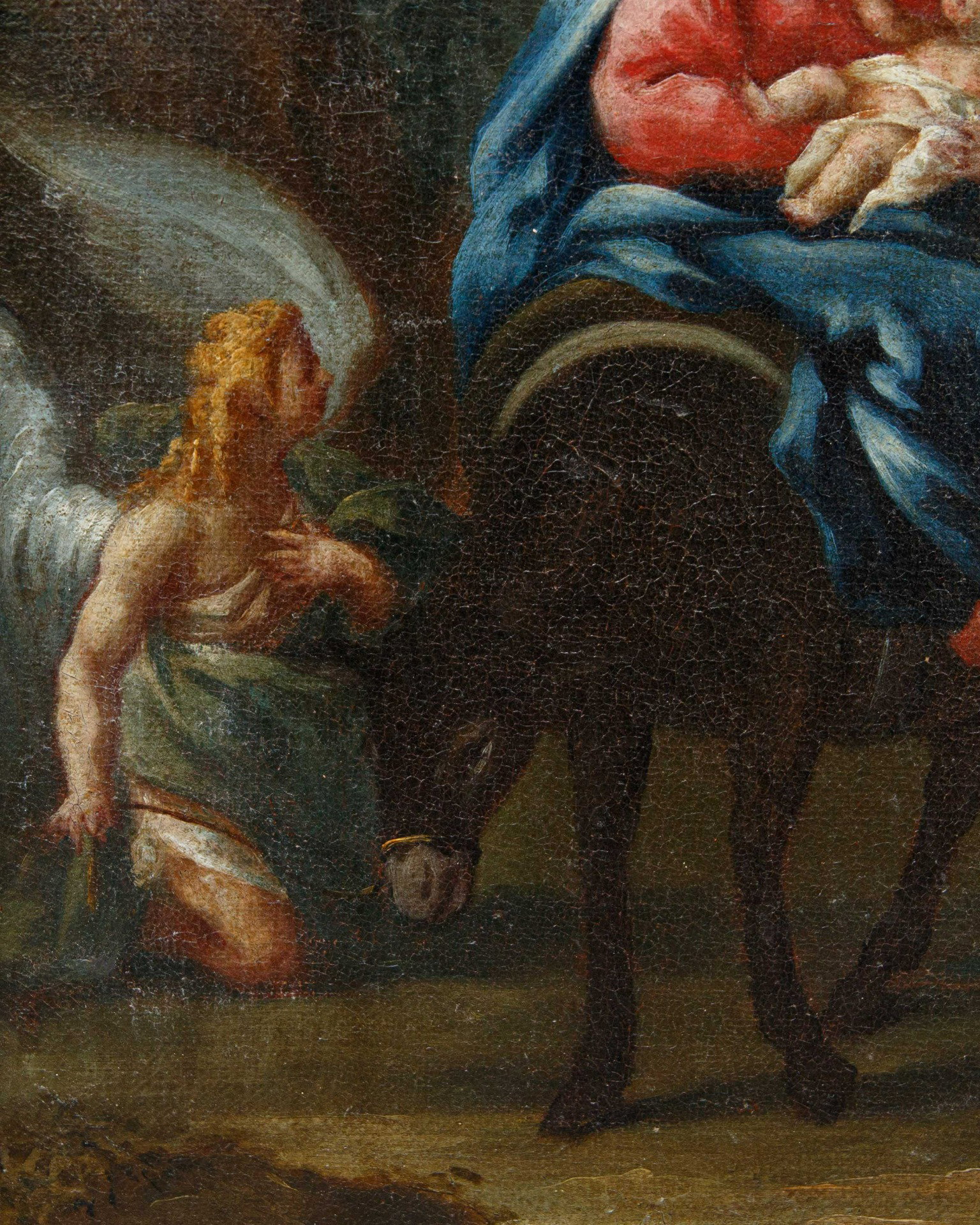
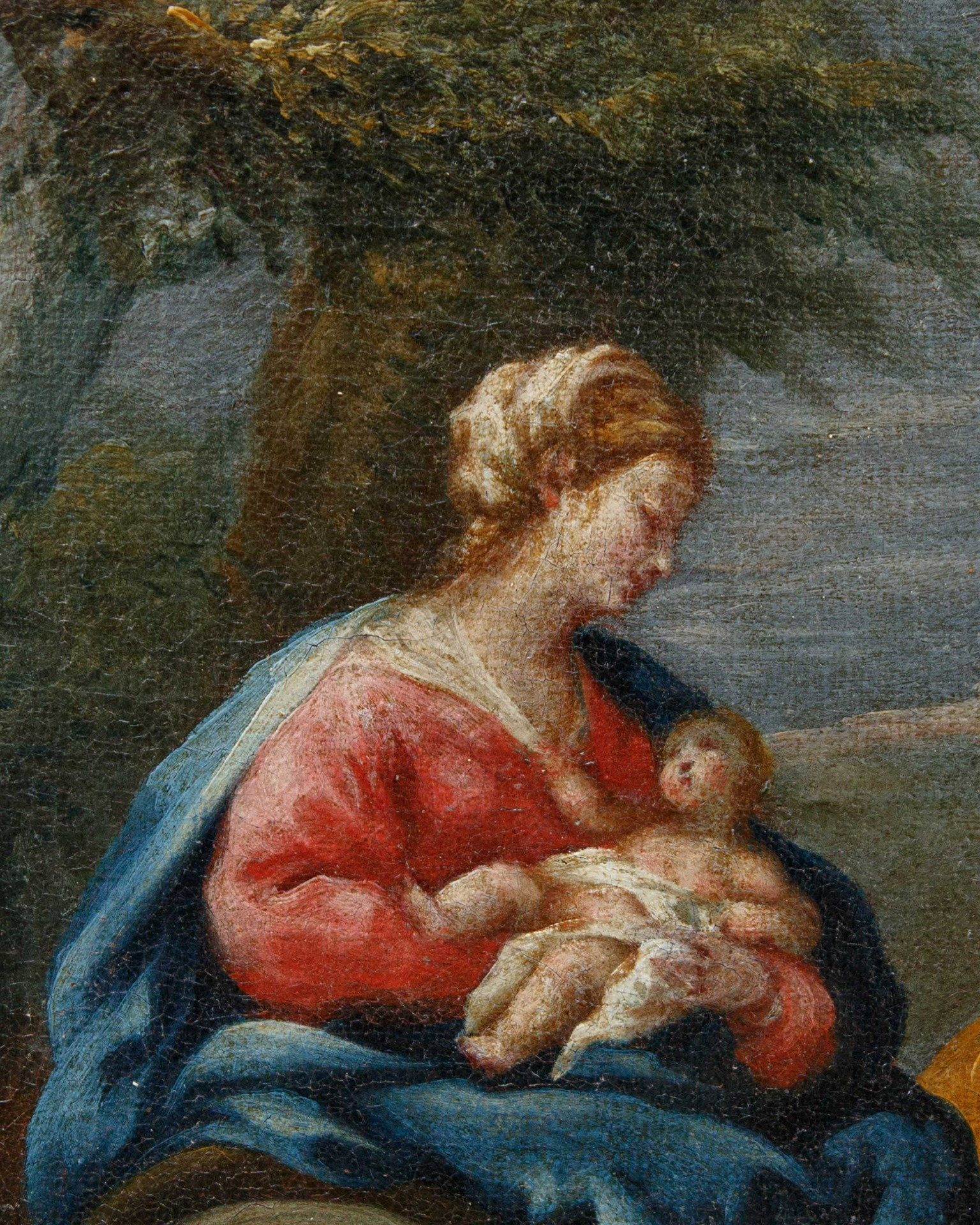
The work depicts the Flight into Egypt, set in a hilly landscape dominated by dense arboreal vegetation in earthy and green tones. In the center of the scene, the Virgin Mary, dressed in a pinkish-red robe and a draped blue mantle, sits astride a dark donkey, holding the Child Jesus in her arms. To the right, Saint Joseph walks beside the animal, supporting a bundle on a stick, while casting a watchful, concerned glance at the family. In the foreground to the left, an angelic or servile figure with an Apollonian aspect kneels in an attitude of humble service, tending to the donkey. The composition of the landscape and the vegetal background are punctuated by bright light rendered with broad, sweeping brushstrokes.
The painting fits perfectly within the tradition of 17th-century Lombard painting, a period characterized by a synthesis of the devotionalism of previous centuries and a taste for affective and scenic narration. In particular, the work exhibits strong affinities with the pictorial style of the Nuvolone family, whose workshop dominated the Milanese scene for decades.
The rendering of the figures is the element that most decisively points towards the Nuvolone area. Observe the Virgin, and particularly the angel in the foreground: there is a tendency towards physiognomic idealization that never devolves into pure academic abstraction, maintaining a certain volumetric solidity. The application of color is characterized by an executive speed that does not seek microscopic finish but focuses on the overall effect and the rendering of light on fabric. This style is clearly indebted to the lesson of Carlo Francesco Nuvolone. Comparisons can be made with works such as "Christ and the Adulteress."
While the main figures show the influence of Carlo Francesco, the organization of space and the integration with the landscape also lead to considering his brother, Giuseppe Nuvolone. Giuseppe, while following in his brother's footsteps, developed a more pronounced taste for scenography and an attention to naturalistic detail, sometimes almost anecdotal, inserted into devotional contexts. The use of large trees with foliage treated in a pasty manner and with "broad brushstrokes," forming a natural canopy above the Virgin, is a compositional solution frequently found in his work. A fitting comparison can be made with "Flight into Egypt."