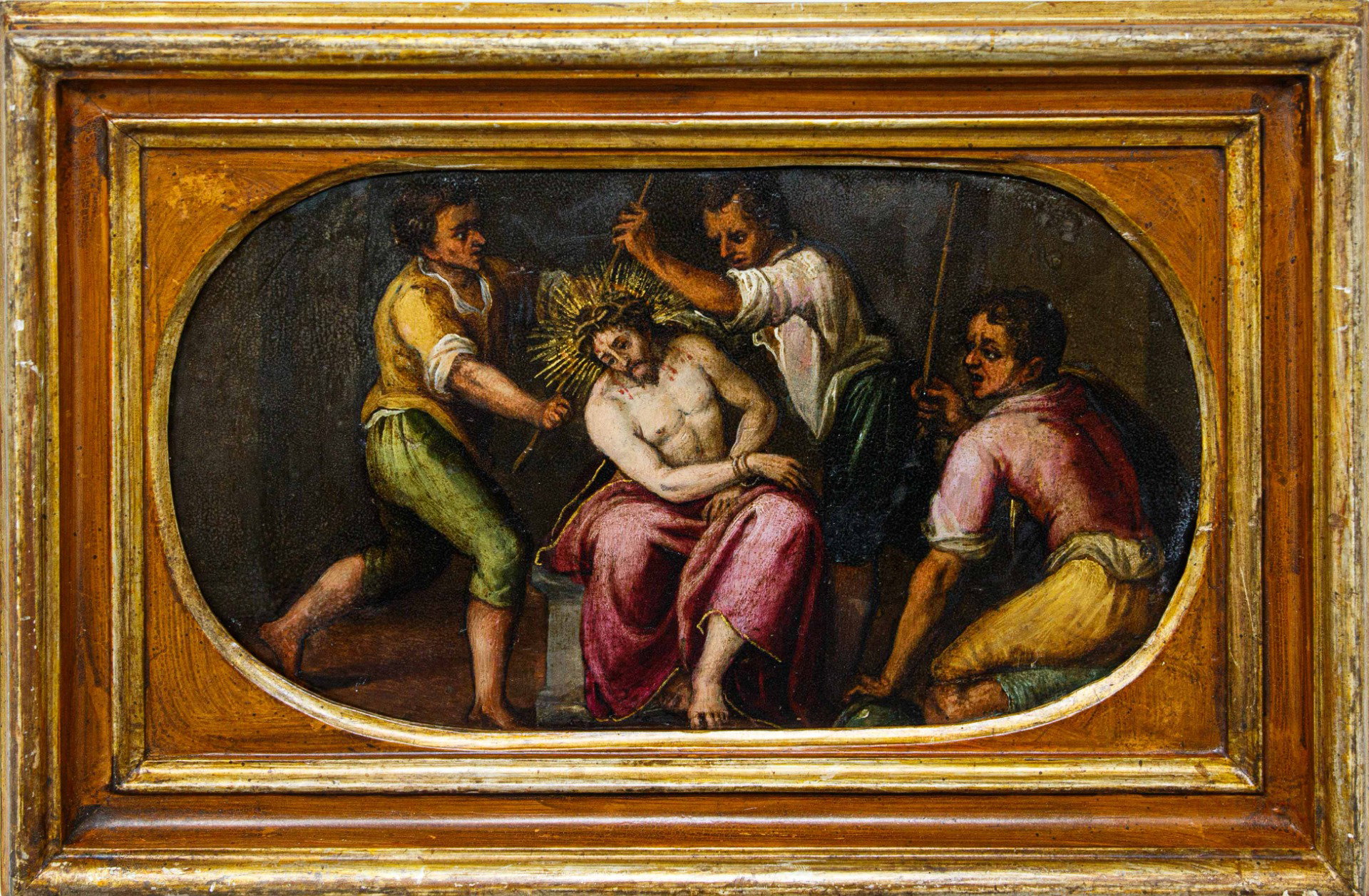
Tuscany, 16th century, Christ Crowned with Thorns
Description:
Tuscany, 16th century
Christ Crowned with Thorns
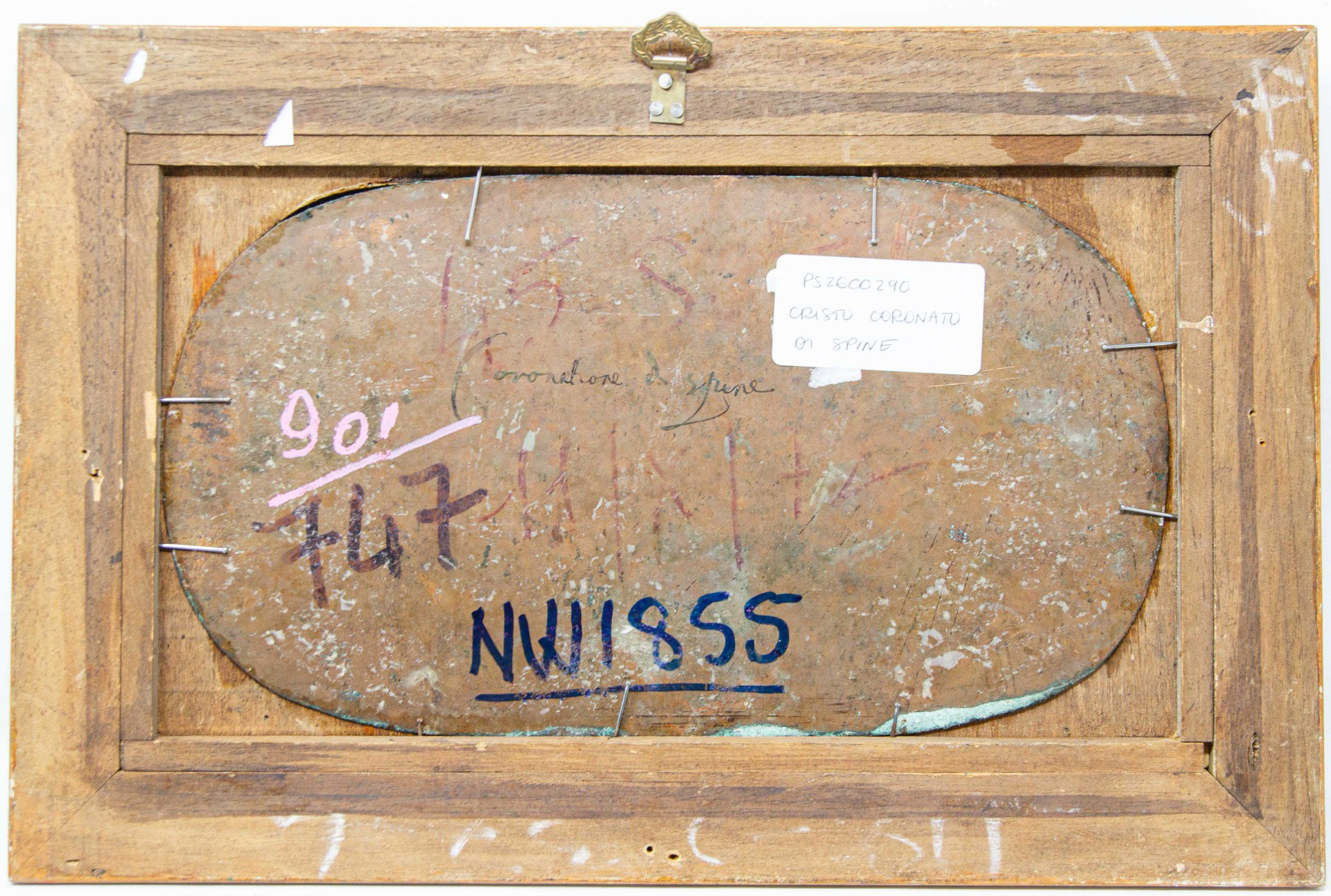
Oil on copper, 17 x 30 cm – with frame, 26 x 39.5 cm
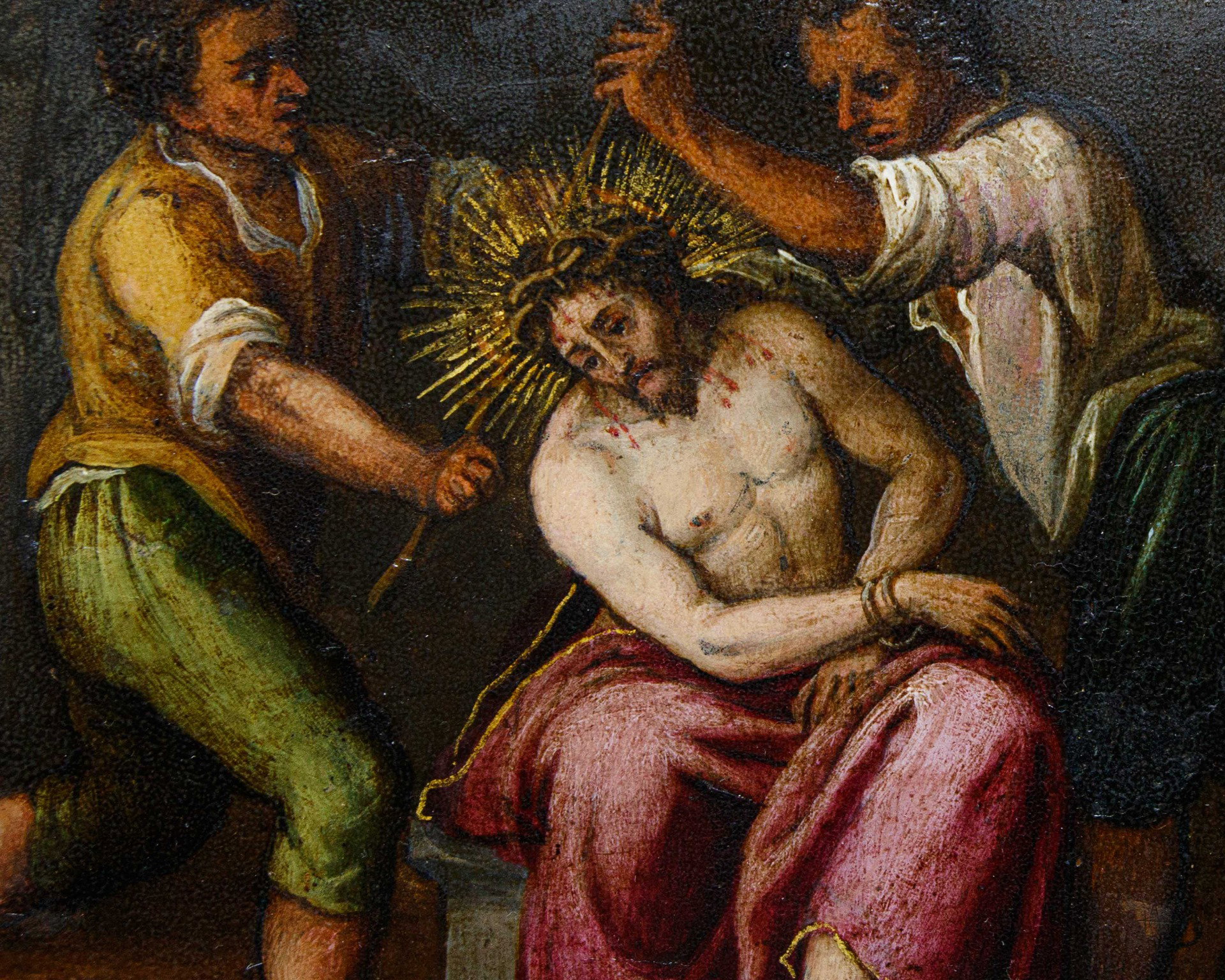
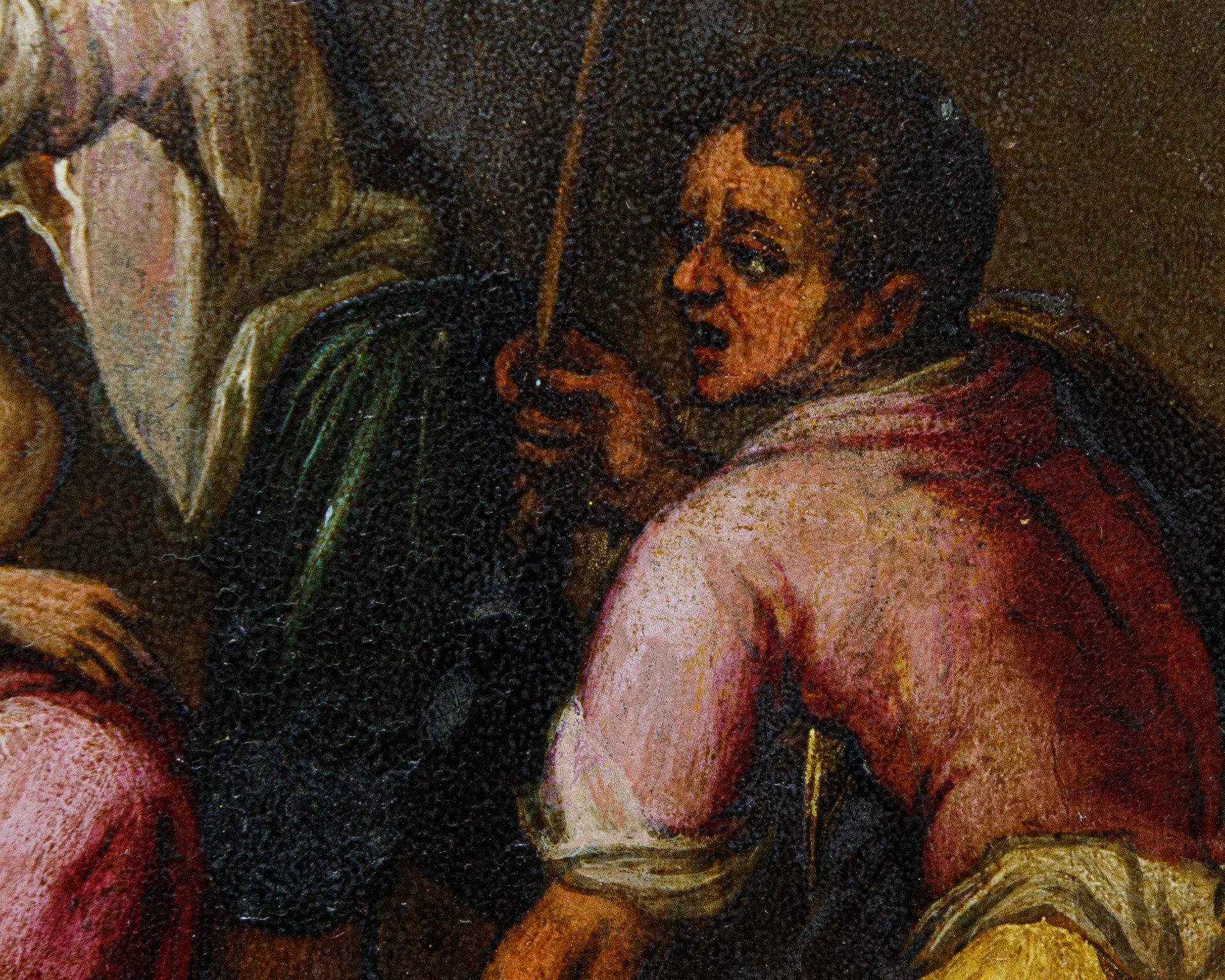
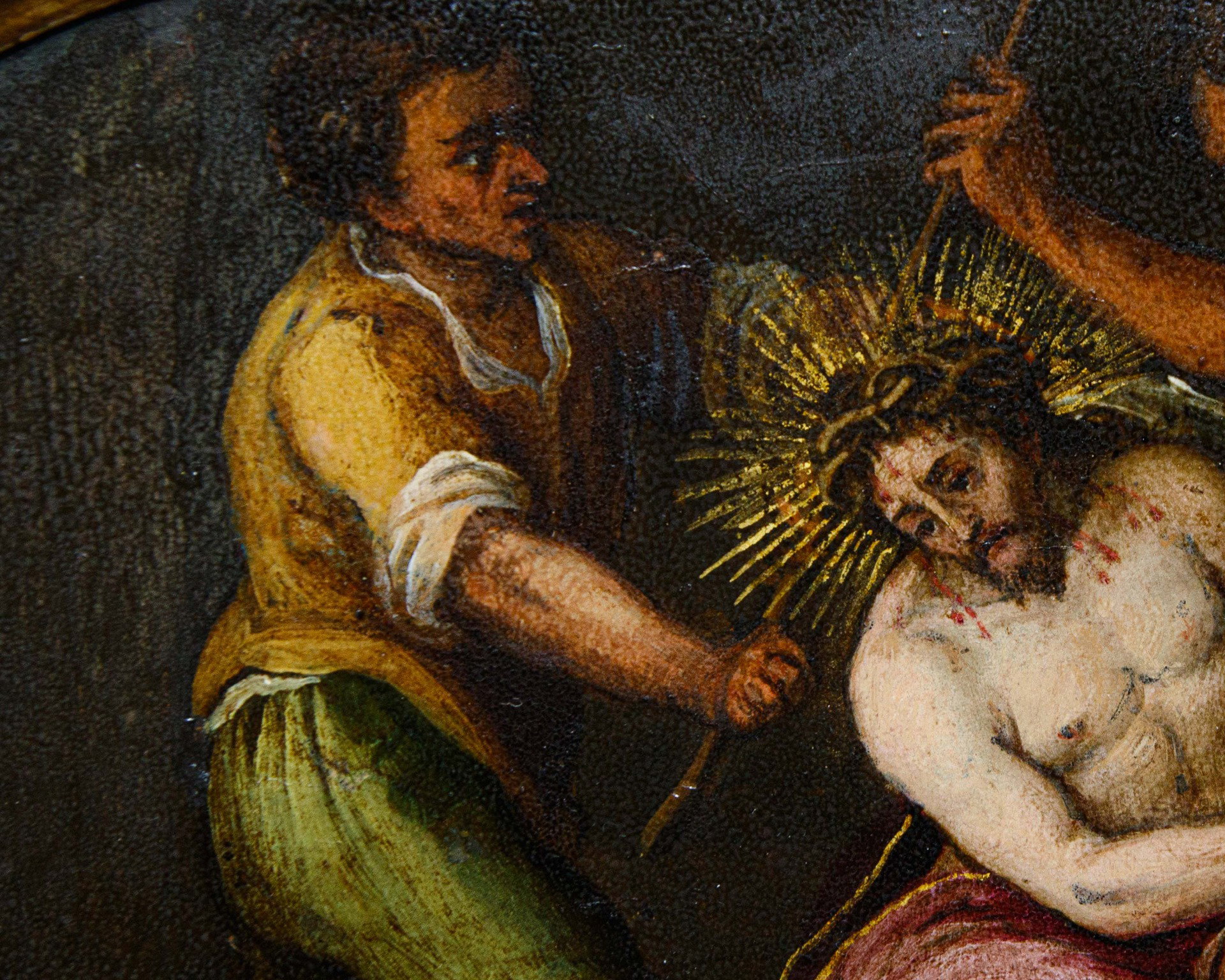
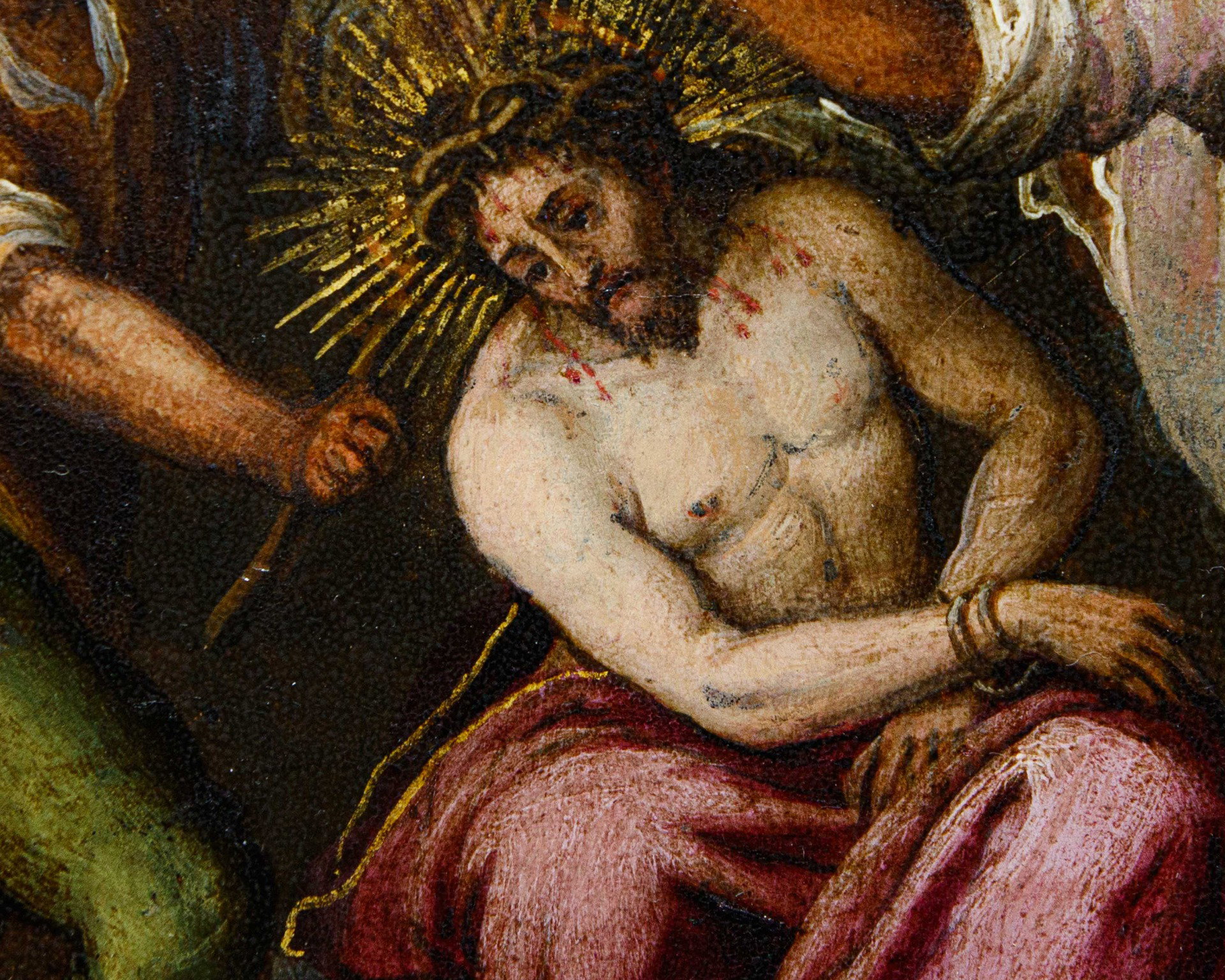
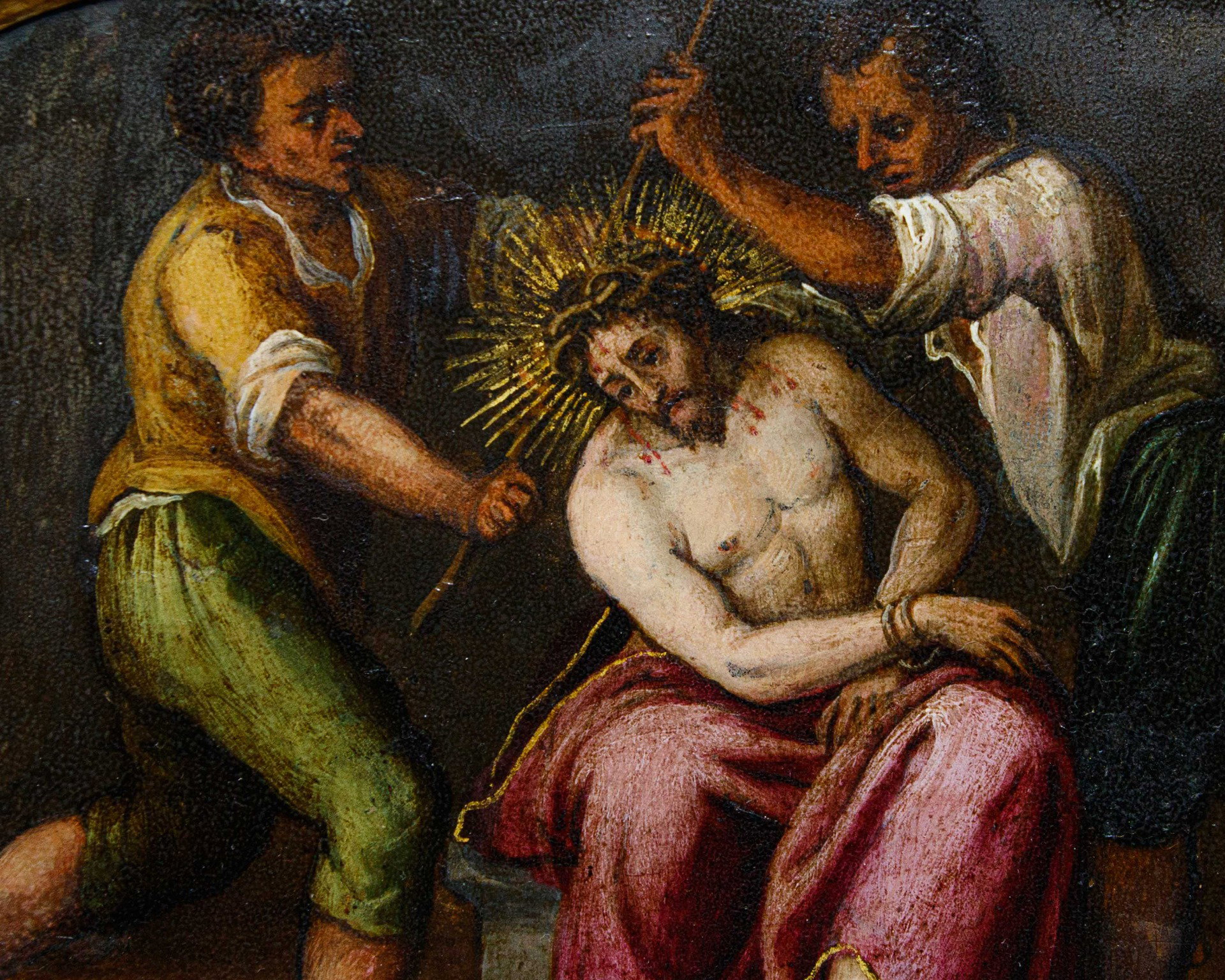
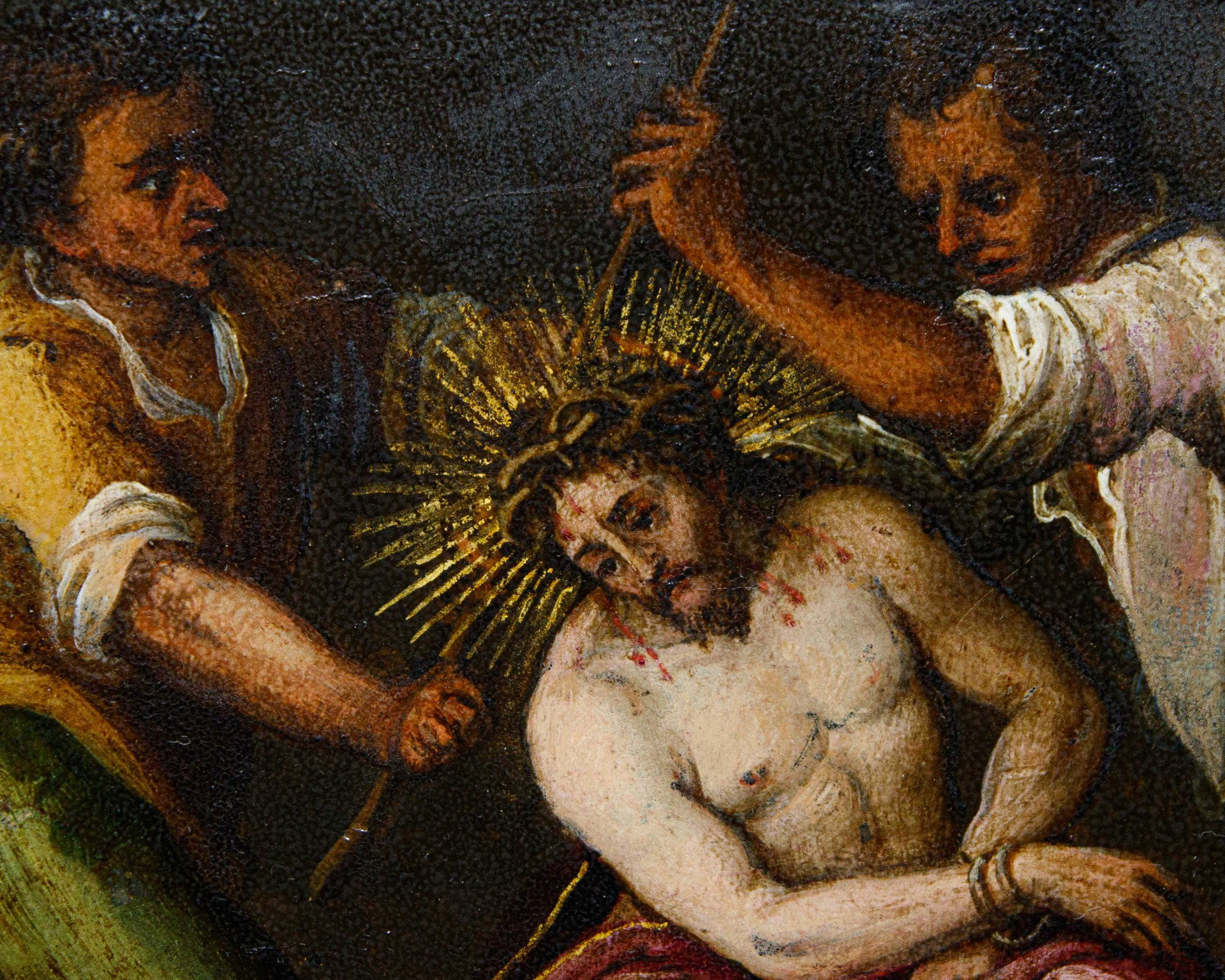
This refined oil on copper from the late 16th century represents an emblematic work of Tuscan figurative culture, distinguished by the preciousness of the metal support which lends the pictorial layer a vitreous luminosity and exceptional pigment preservation. The painting illustrates with intense dramatic involvement the evangelical episode of the Crowning with Thorns, a central moment of the Passion in which Christ, seated and with bound hands, undergoes the torment inflicted by his tormentors. The composition is organized around the central figure of the Redeemer, draped in a crimson mantle with tormented folds, while three male figures surround him acting with studied, almost choreographic gestures: two of them are using sticks to drive the crown of thorns onto Jesus' head, while a third, on the right, observes the scene with an expression charged with psychological tension. Stylistically, the work is located in the heart of Tuscan Mannerism of the second half of the sixteenth century, reflecting that learned and artificial language that had its greatest exponents in Giorgio Vasari and Francesco Salviati. The painter demonstrates a profound knowledge of the stylistic elements of the "maniera" then in vogue at the Medici court, characterized by forced dynamism and a nervous anatomical definition that recalls the experiments of Francesco I's Studiolo. In particular, the influence of Girolamo Macchietti is evident, from whom the author borrows the refinement of poses and that iridescent palette that transfigures reality into a high-profile intellectual formal abstraction. The scene, despite its intrinsic violence, is resolved with typically Tuscan formal elegance, where the rigor of the underlying drawing guides the painter's hand in the meticulous rendering of details, such as the reflections of light on the bodies and the marked expressions of the faces, transforming the religious narrative into an object of refined private devotion.