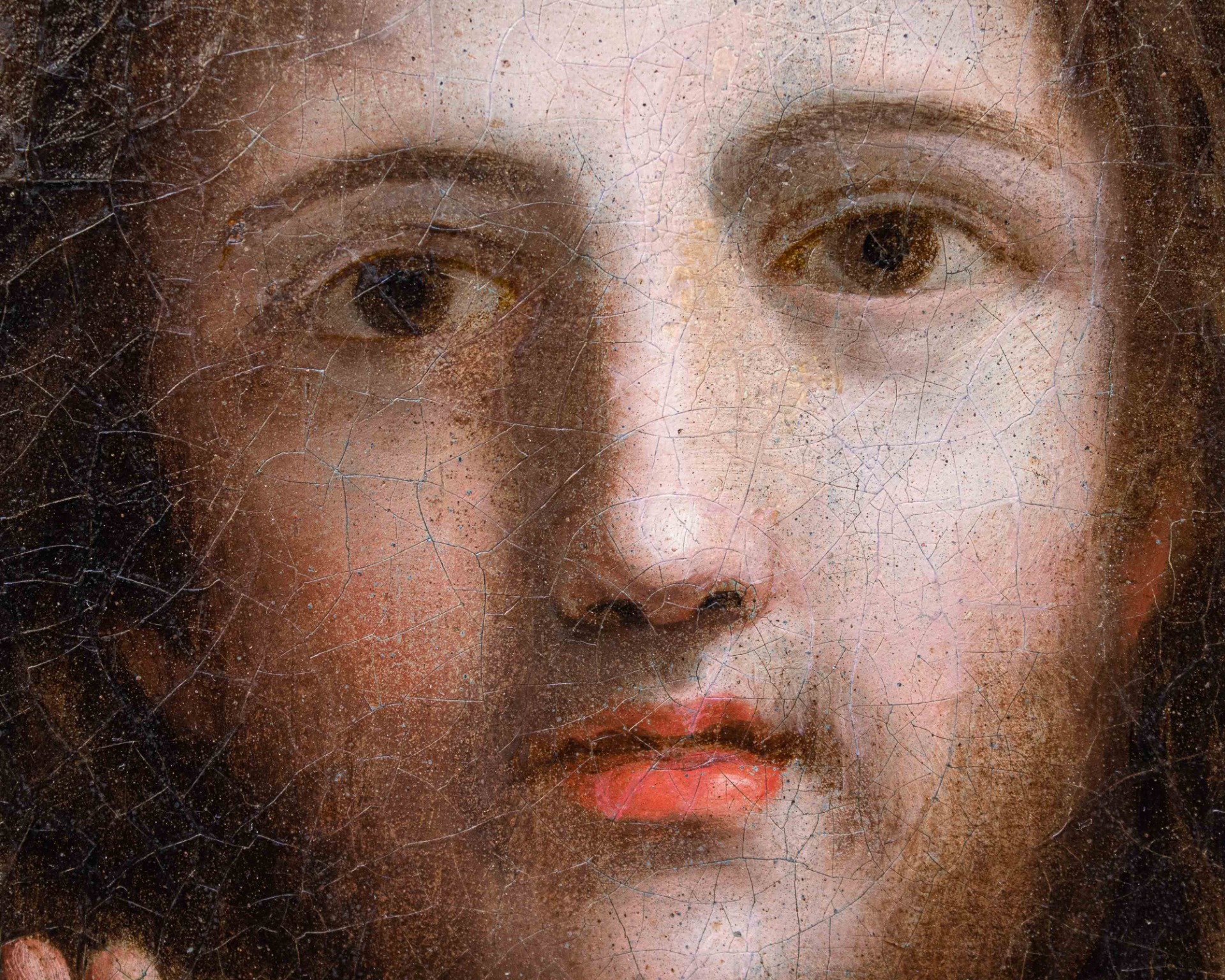
16th-17th Century School, Christ Blessing
Description:
16th-17th Century School
Christ Blessing
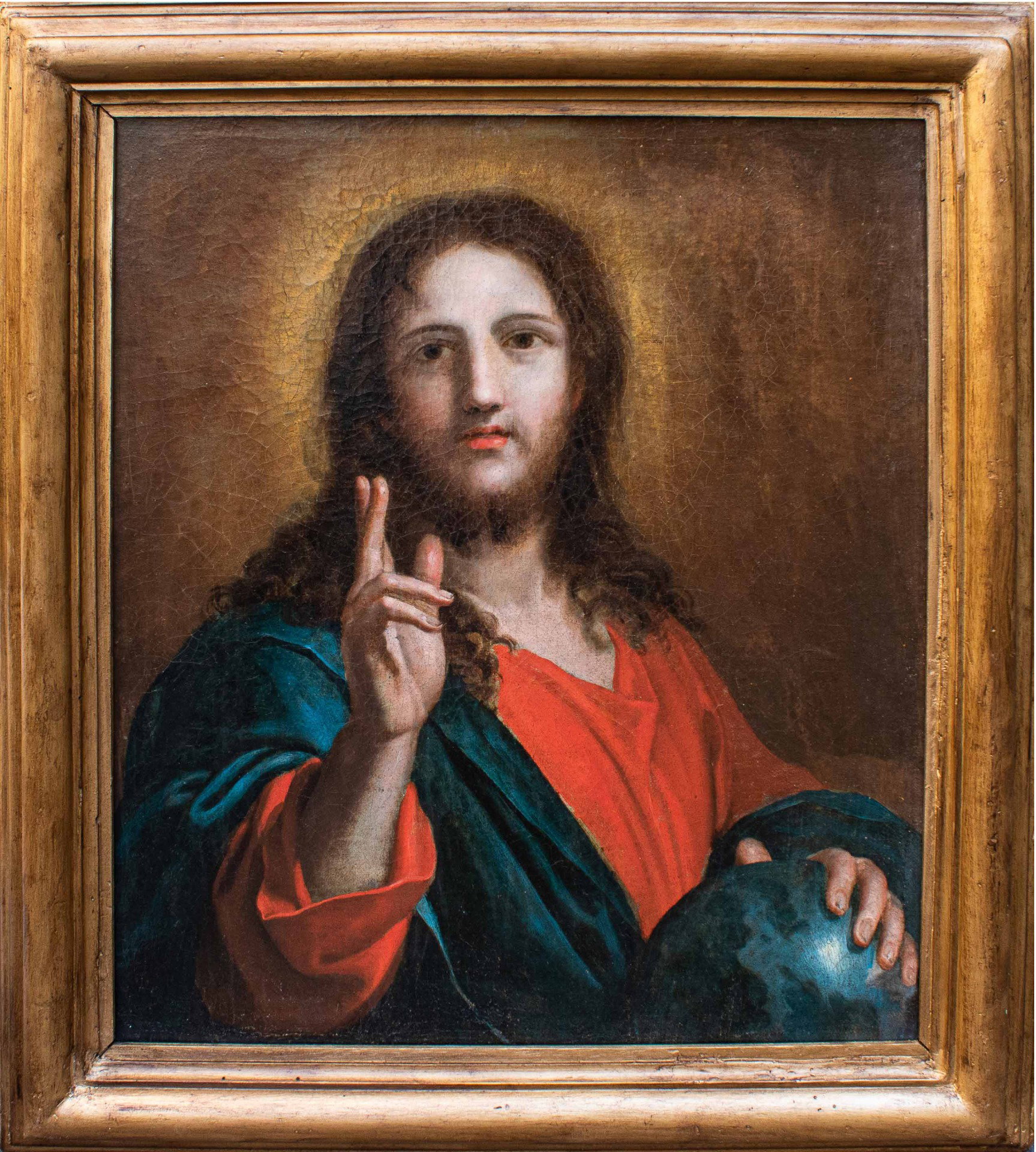
Oil on canvas, 58 x 69 cm
With frame 73 x 83 cm
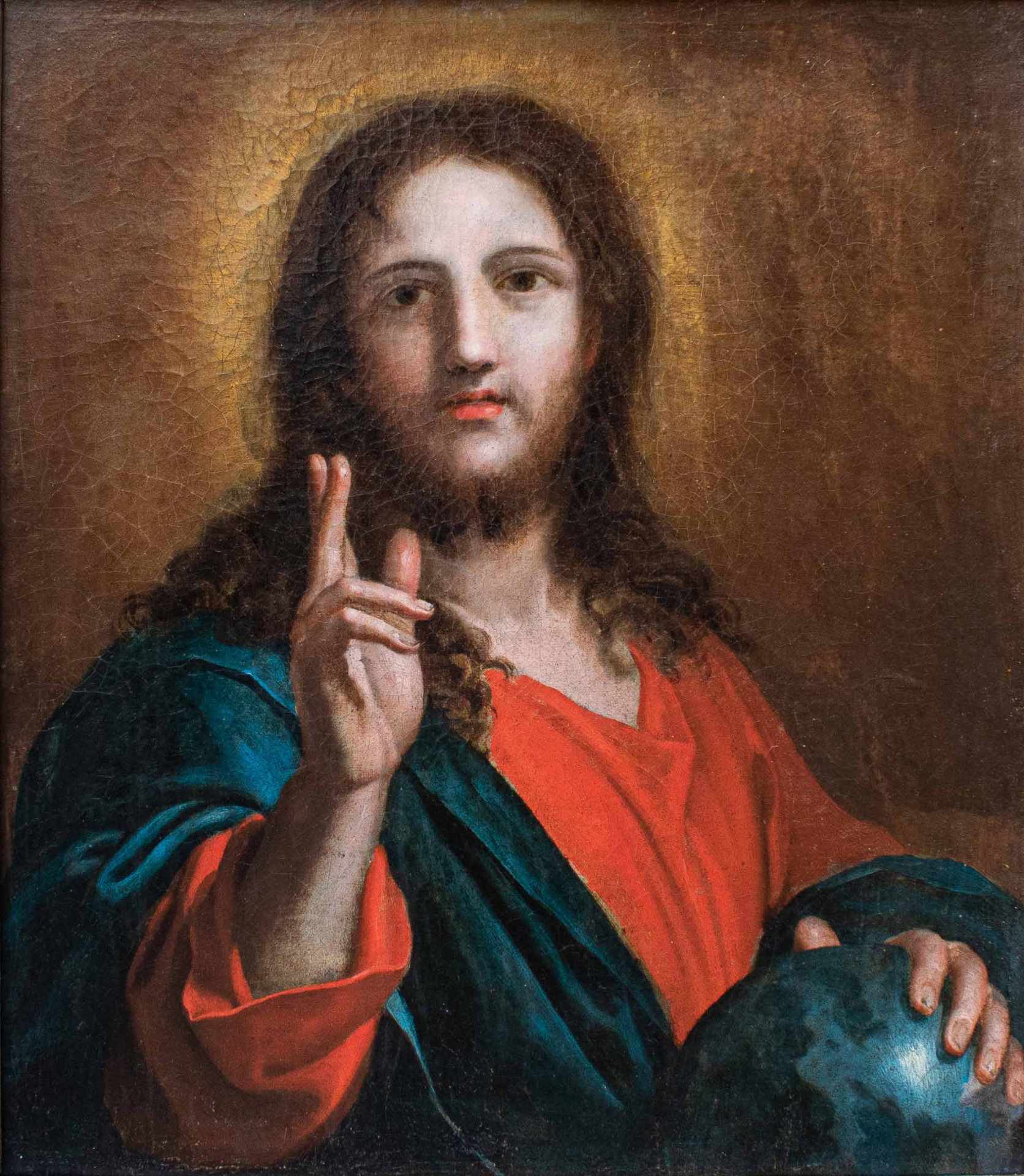
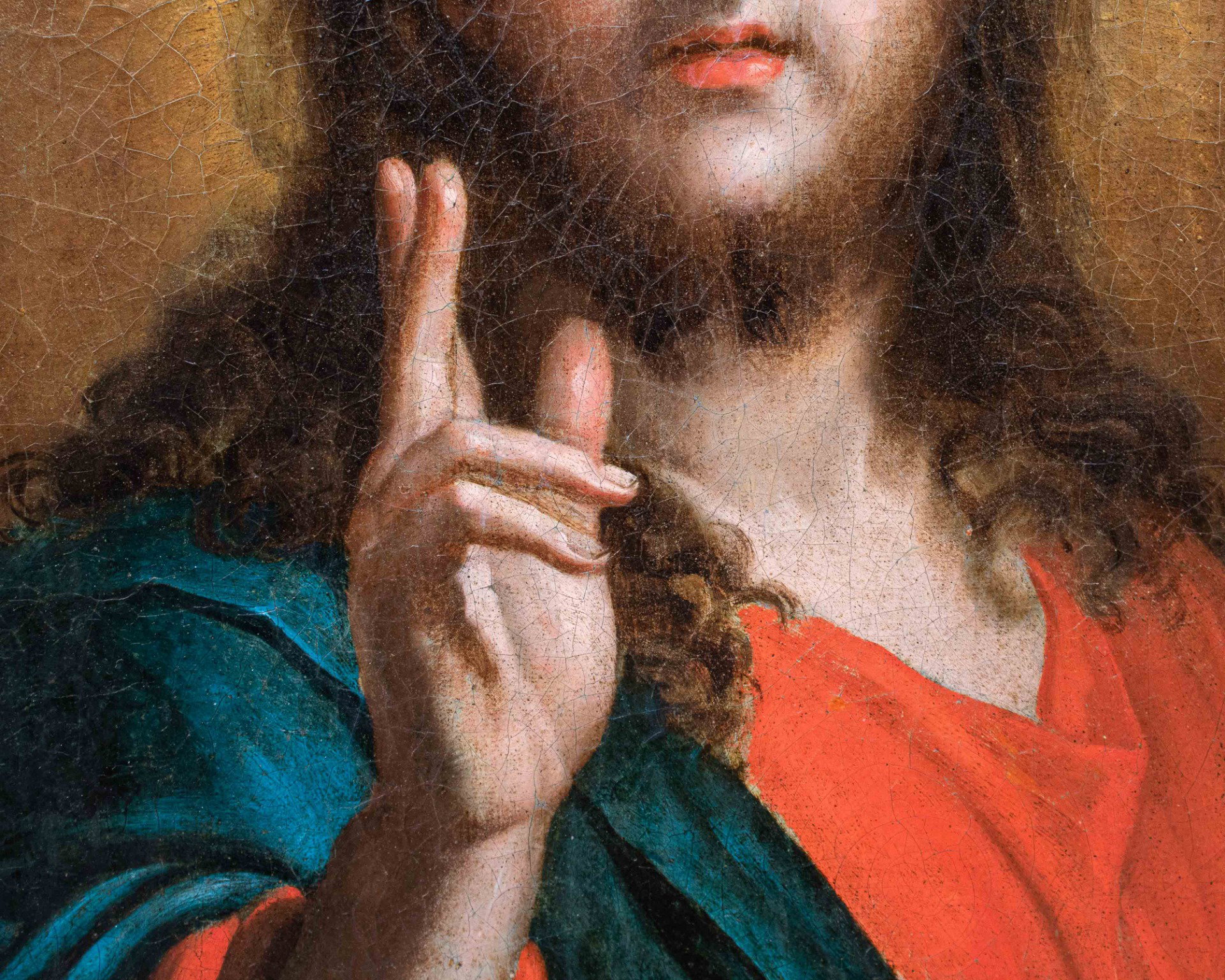
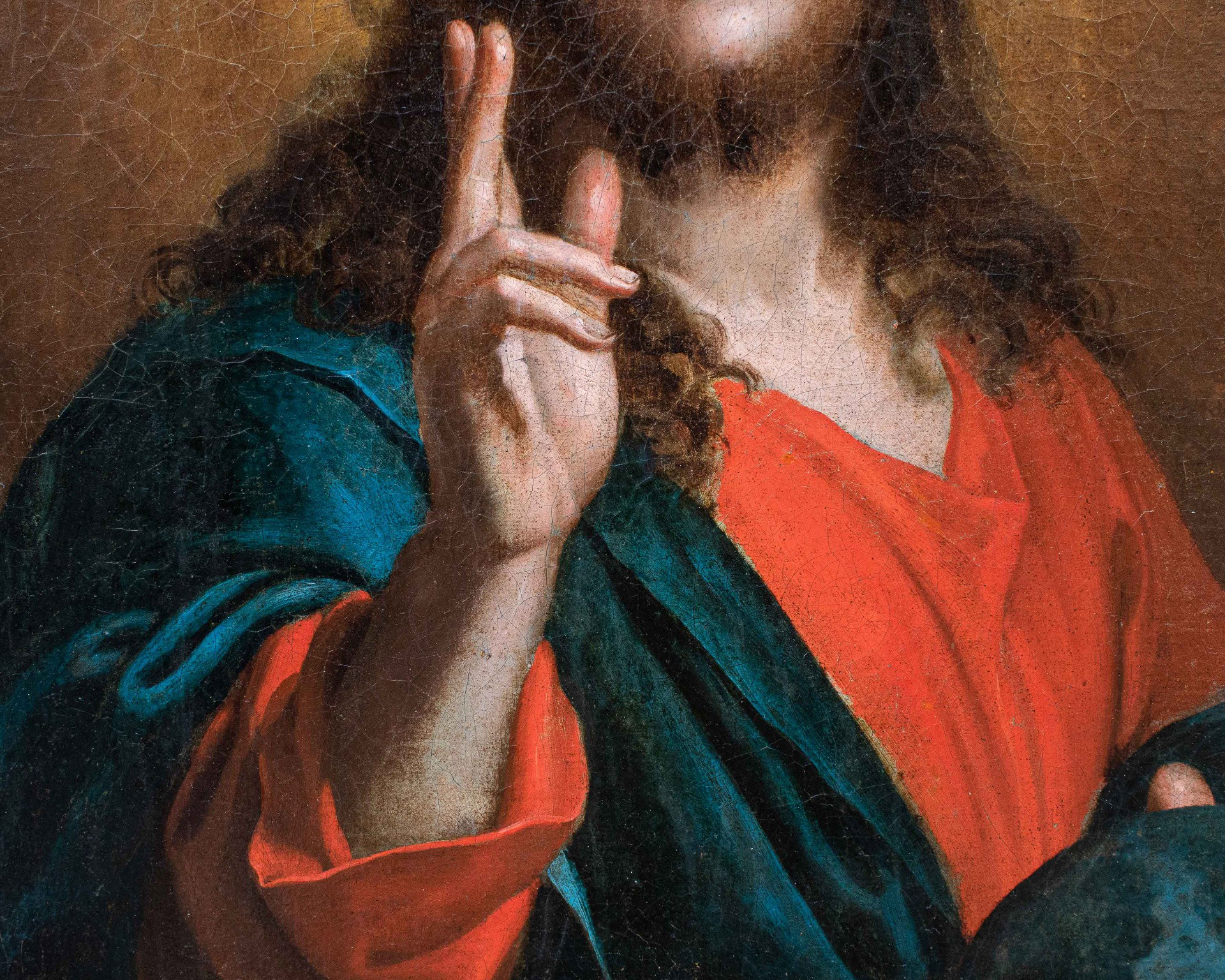
The iconography of the Salvator Mundi recalls, enriching it, divine dedication to humankind, with particular reference to Christ's sacrifice for the salvation of all. The attribute of the globe in fact denounces the Urbi et orbi extension of divine blessing, declared in the present painting by Christ himself through the gesture of his right hand, sacred par excellence. The codification of the globe attribute dates back to ancient pagan symbolism of the Roman emperor depicted in bas-relief or minted by the state treasury, holding the globe of victory, an explicit reference to his military conquests. In the development of a modern iconography that would align with solid figurative references, from the late Roman on one hand, to the Jewish on the other, early Christian artists adopted the meaning of the globe held by the emperor to attribute it to Christ, the true and ultimate emperor, reigning in the earthly and the otherworldly realms.
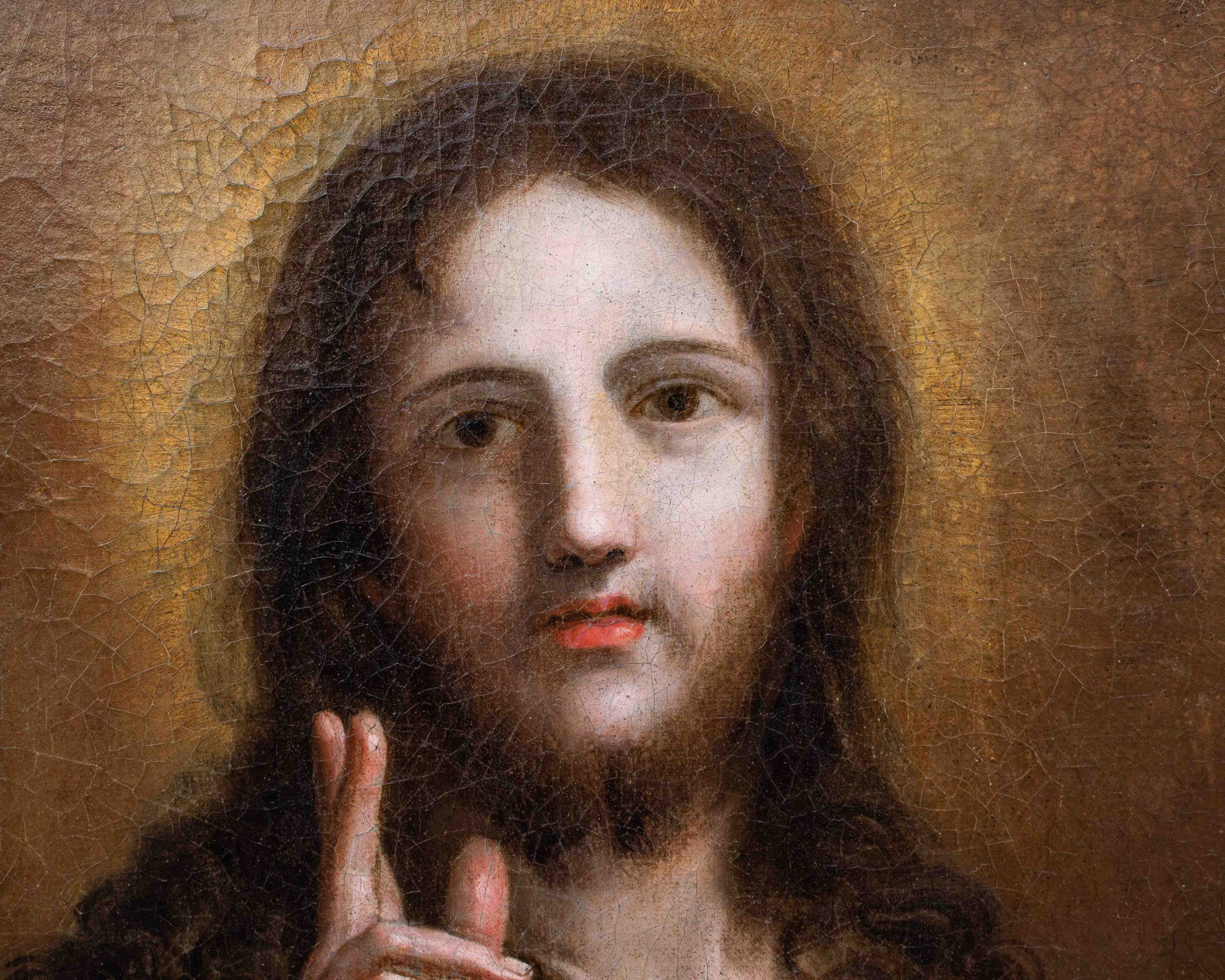
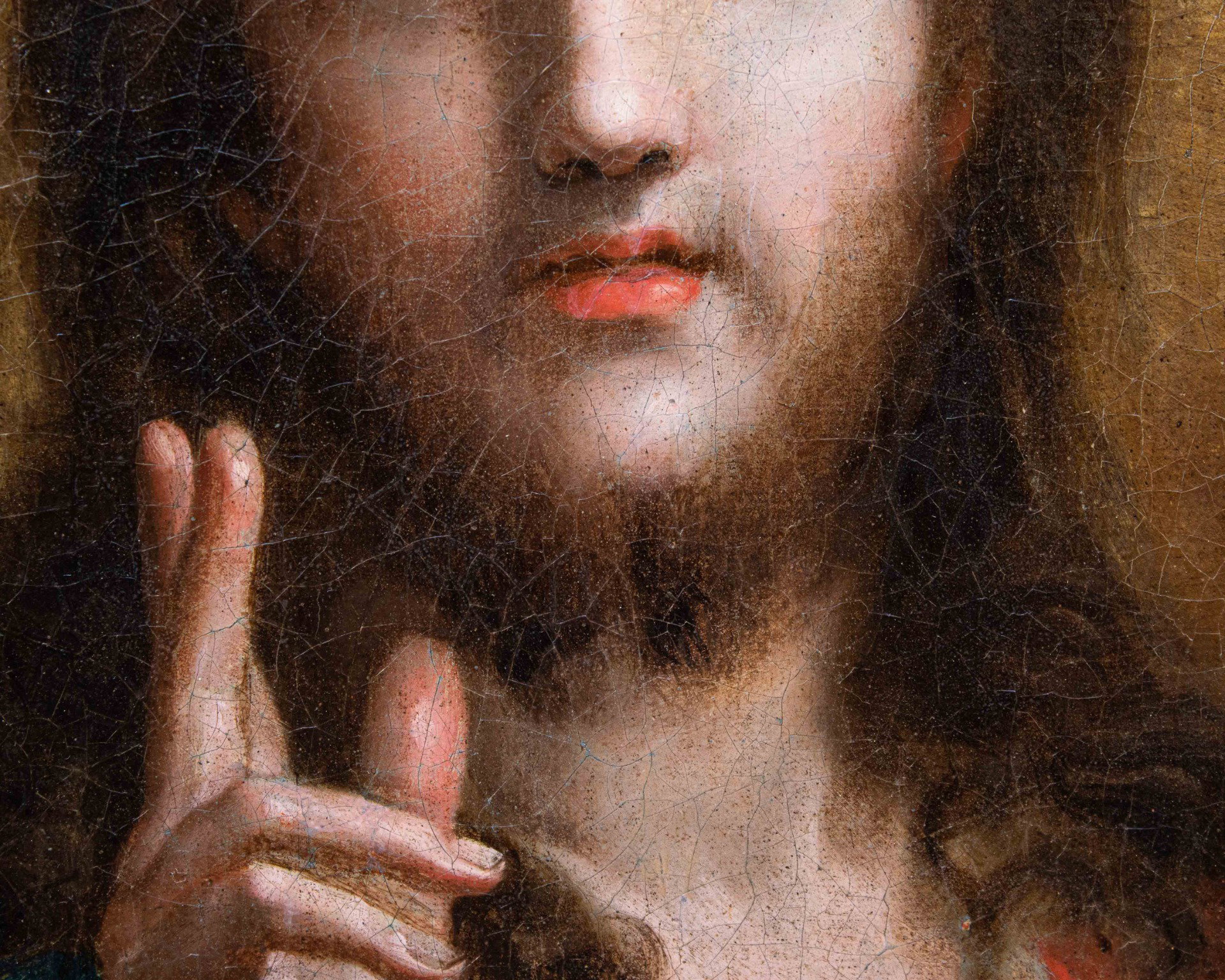
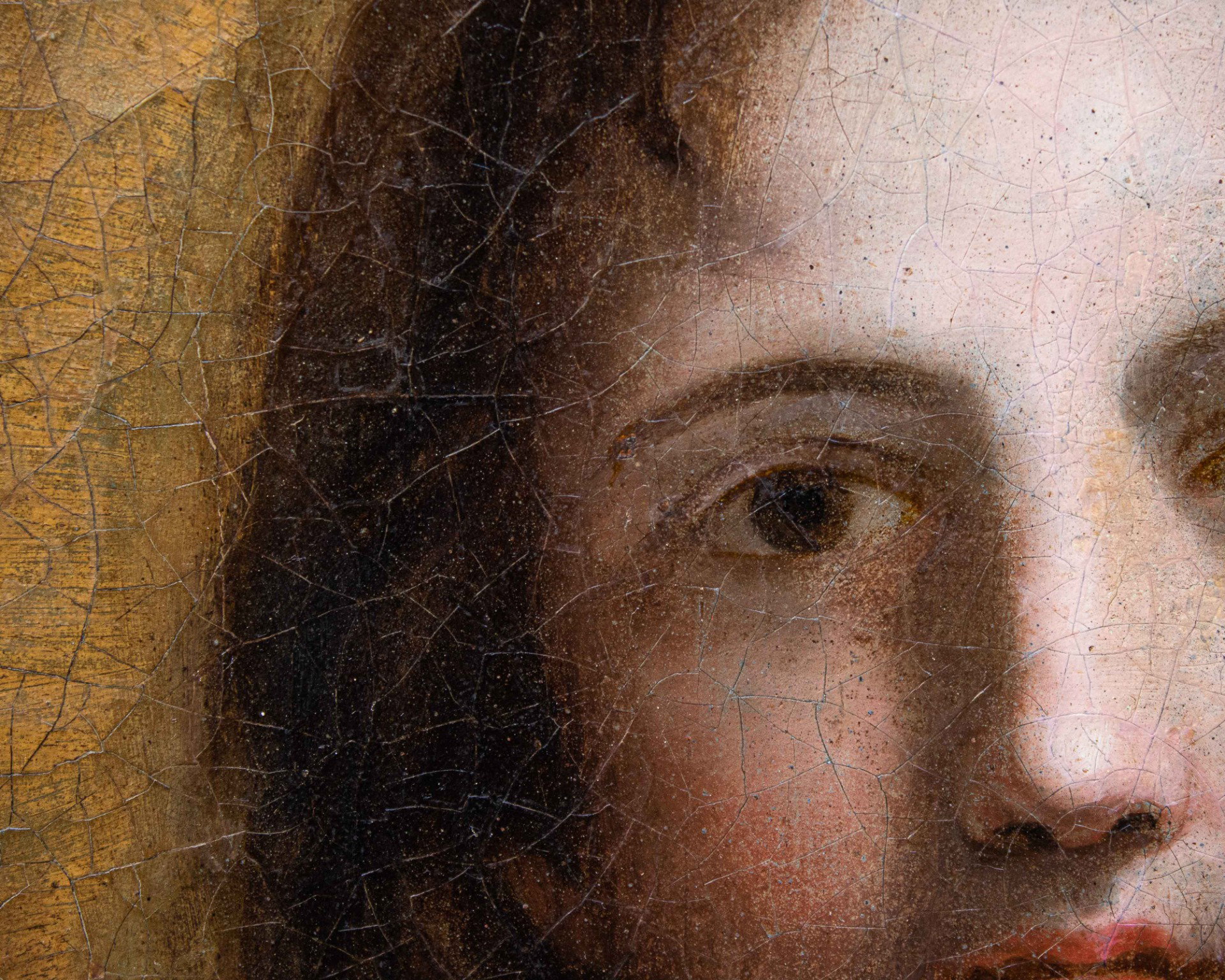
The figural type subsequently achieved widespread recognition both for the immediacy of its message and for the captivating aestheticization of the benevolent gesture. In the present painting, a double light source illuminates the figure of Jesus, one originating from the halo, delicately illuminating the brown background against which the scene is set, and the other from Christ himself, illuminating the red garment he wears. The crackling folds of the blue mantle draped over his right shoulder animate the portrait, enriched by the methodical presentation of the Son in three-quarter view, here preferred over the classic hieratic frontality that was often widespread.
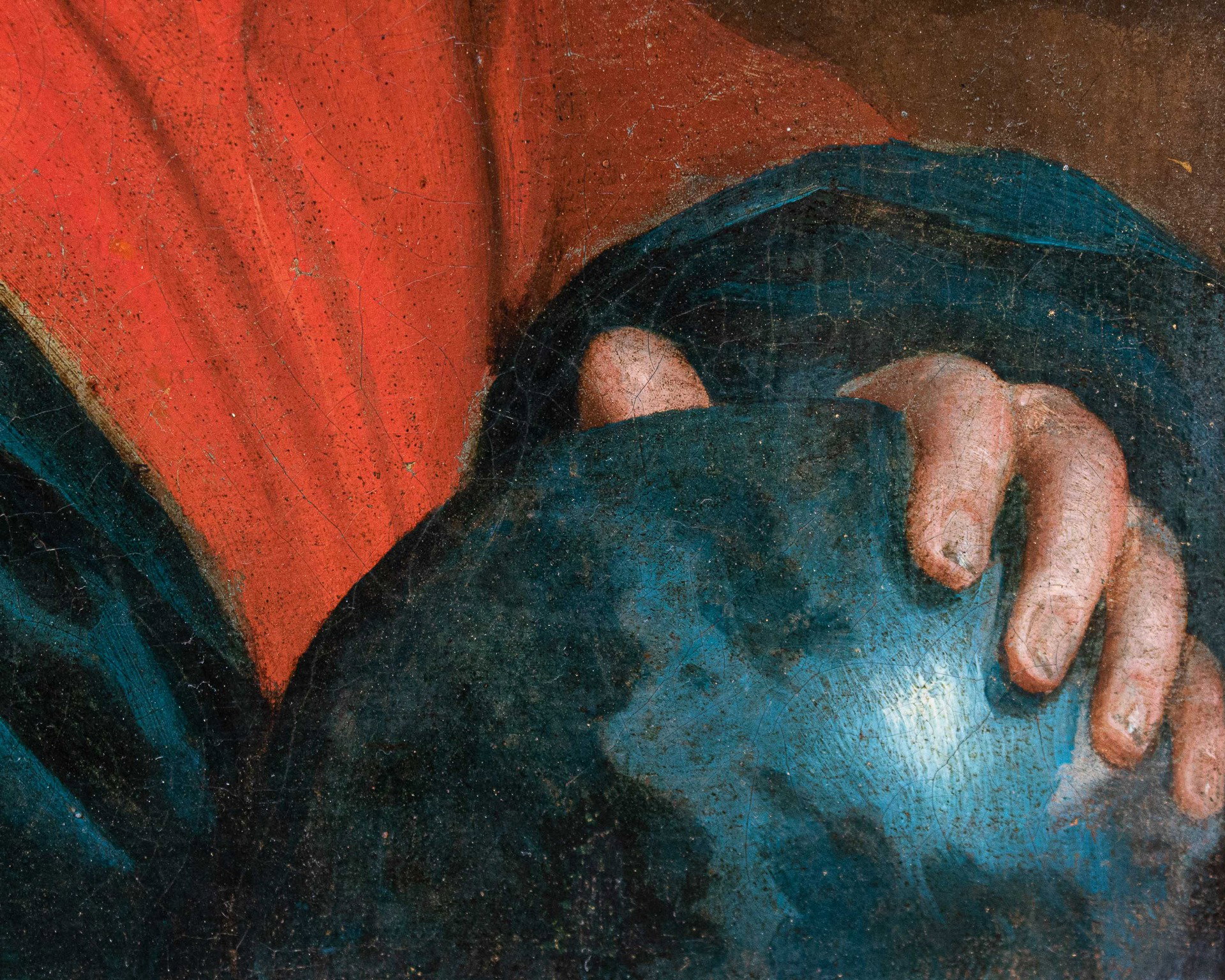
On the globe, the artist chooses to depict the outline of the emerged lands, reserving a candid glimmer where Jesus's hand is positioned.
The artistic history enumerates several excellent examples of this subject: suffice it to recall Antonello da Messina's Christ Blessing (National Gallery, London), although not holding the globe; or the Flemish examples preserved at the Museum Mayer van den Bergh (Antwerp) by an anonymous 16th-century artist and at the Philadelphia Museum of Art, a work by Gerard David. Related to Italian brushwork, one also remembers the Salvator Mundi by Andrea Previtali (National Gallery, London) and by Titian (St. Petersburg, State Hermitage Museum).