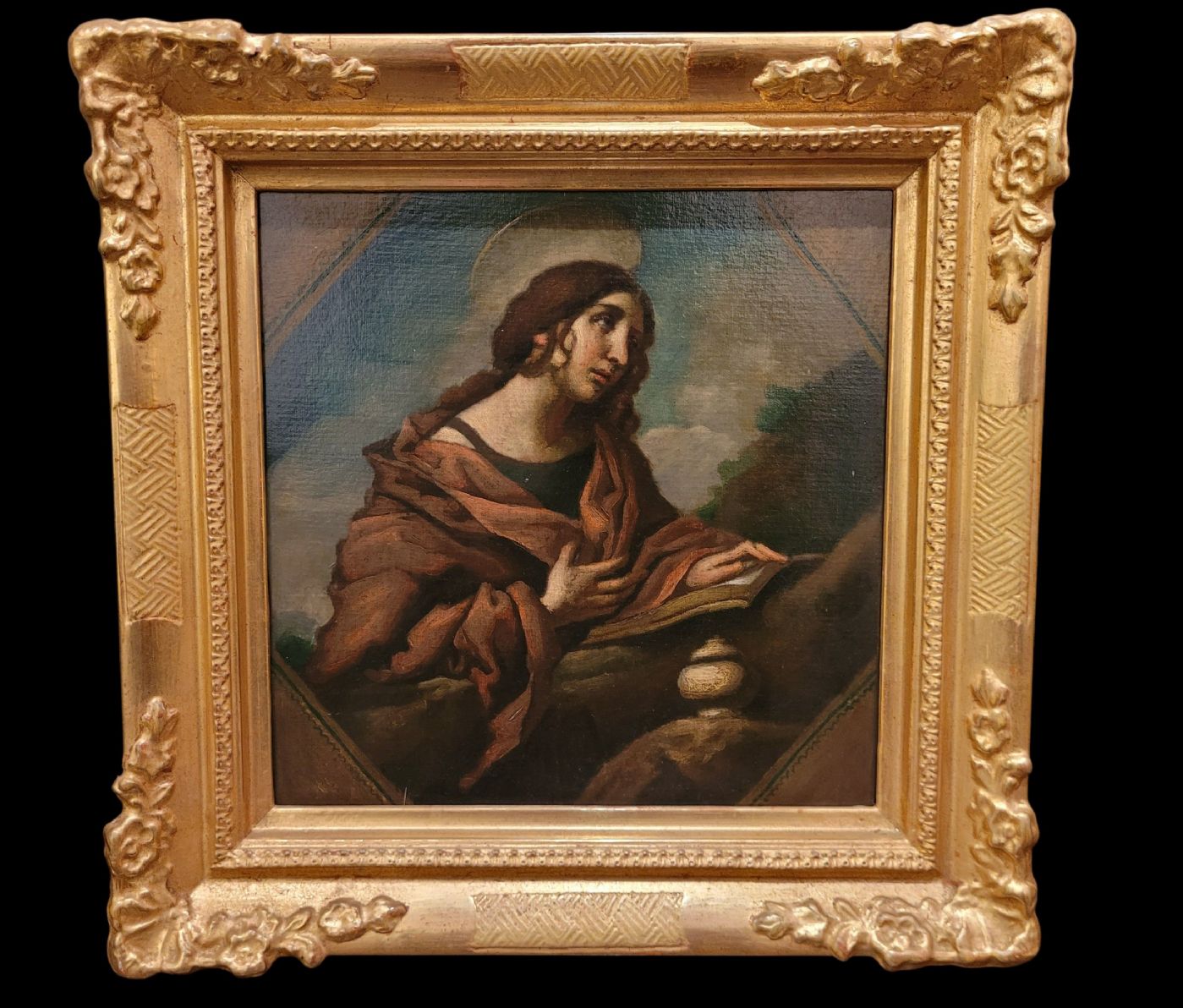
“Penitent Magdalene” Follower of Carlo Dolci (1616–1687)
Description:
Follower of Carlo Dolci (1616–1687)
“Penitent Magdalene”
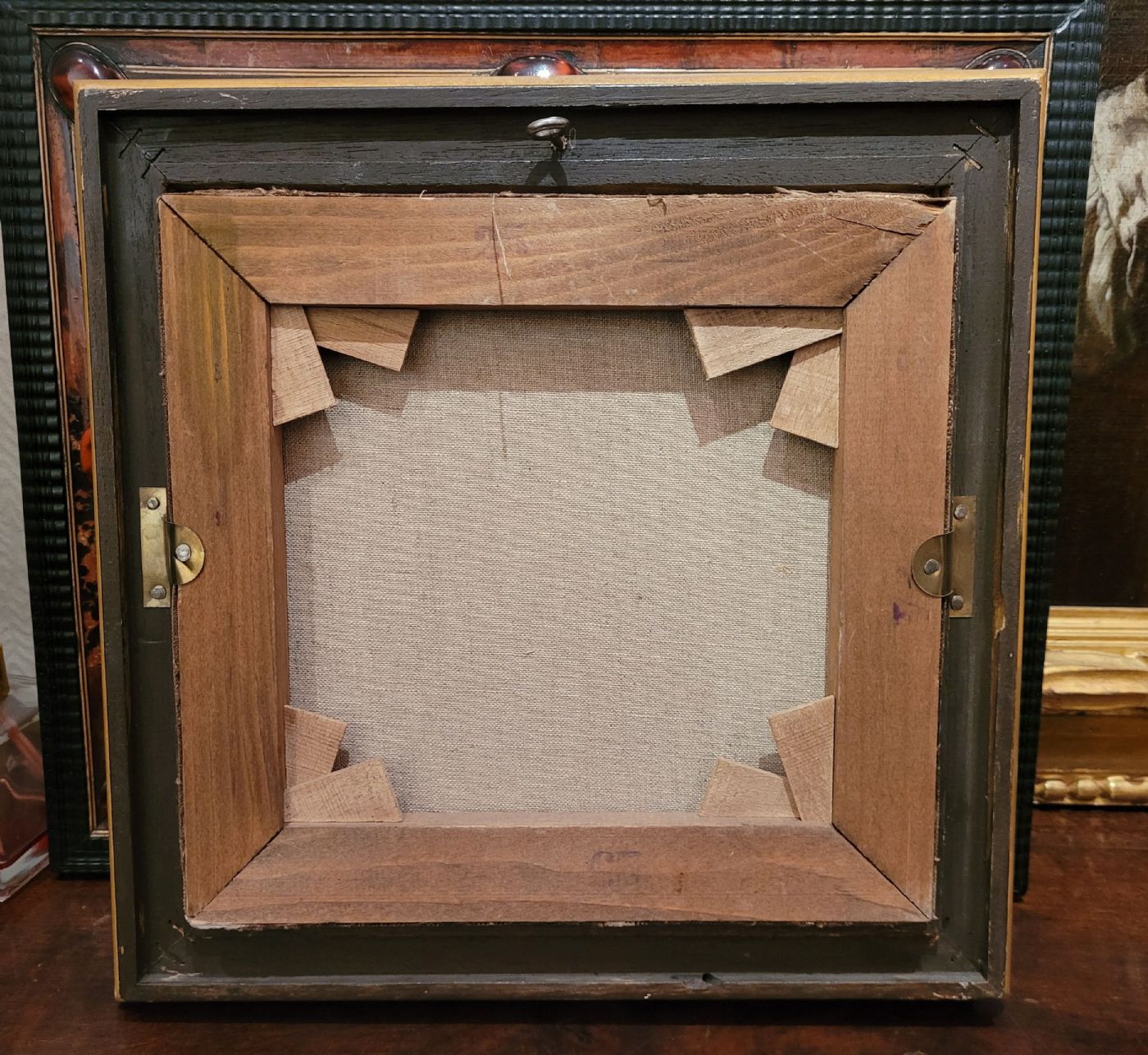
Technique: oil on canvas with recent relining
Period: late 17th century early 18th century
Canvas: 24.5x26 cm
Frame: 20th century wooden frame cm
Condition: excellent
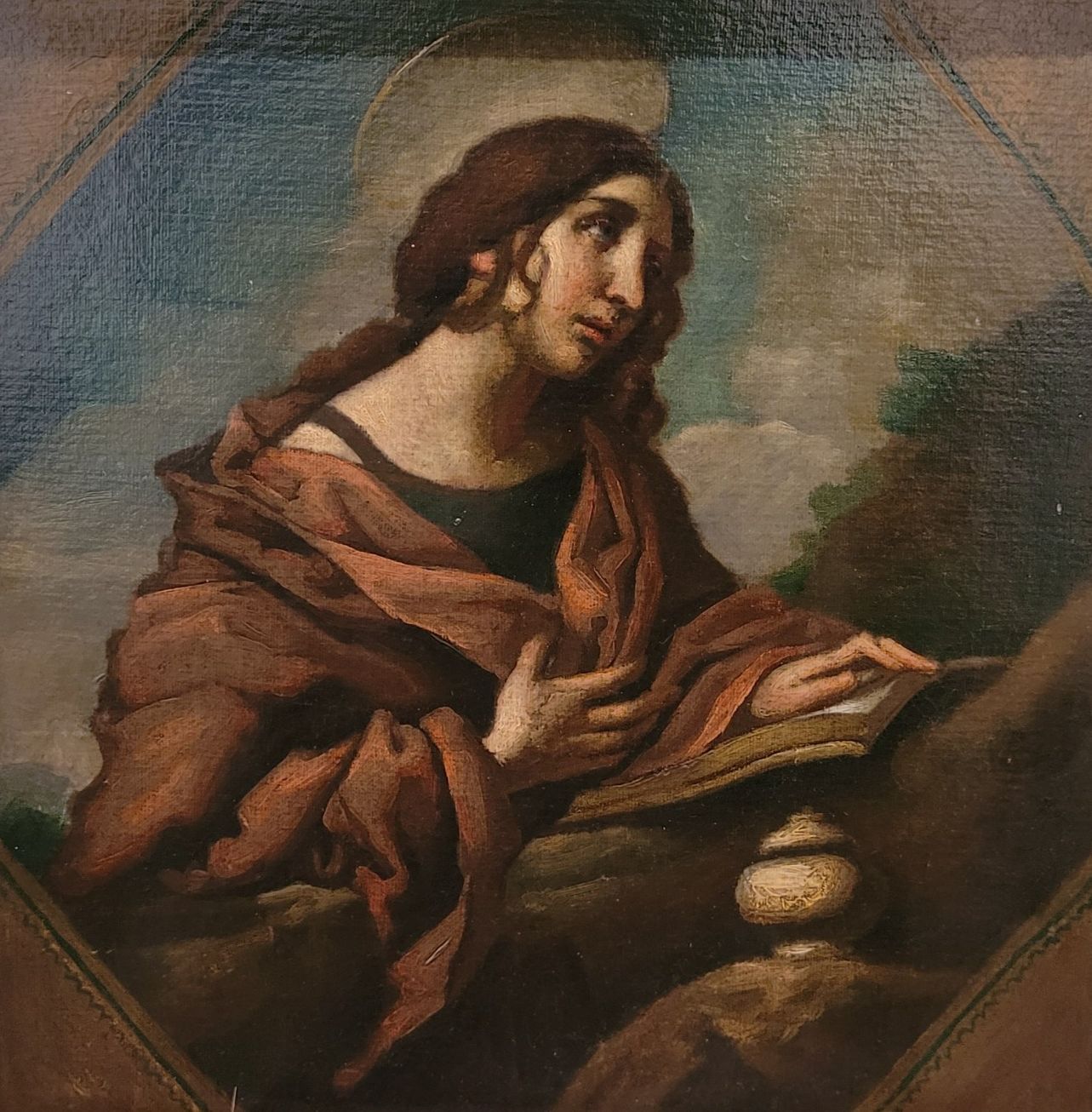
Refined devotional depiction of Mary Magdalene Penitent, portrayed from the waist up in a moment of intense contemplation. The saint, with her head slightly bowed and her gaze turned towards the sky, interrupts her reading of the holy book, bringing her hand to her chest, a gesture that expresses the profound spiritual recollection and sincere repentance that characterize her iconography.
In the foreground appears the traditional ointment jar, a distinctive attribute of Mary Magdalene, a reminder of the evangelical episode of the anointing of Christ. The barely sketched landscape in the background and the soft luminosity of the sky contribute to creating an atmosphere of silent meditation, in which the figure emerges with great compositional balance.
The work reveals a clear adherence to the models of Florentine devotional painting of the second half of the 17th century and shows significant affinities with the production of Carlo Dolci, one of the greatest interpreters of Baroque religious painting. The delicate idealism of the face, the sweetness of the expression, the collected gesture of the hands, and the calibrated chromatic harmony indeed refer to the language developed by the Florentine master, famous for his images of intense spirituality intended for private devotion.
From an iconographic point of view, the painting reprises a compositional scheme very close to the Penitent Magdalene preserved at the Alte Pinakothek in Munich, a testament to the fortune and diffusion of the models conceived by Carlo Dolci within his workshop and among the numerous followers active in Florence in the second half of the 17th century.
While departing from the enamelled finish and meticulous technical precision that distinguish the master's autograph works, the painting is distinguished by the quality of its execution, the sensitive psychological rendering, and the refined compositional setting, configuring itself as a significant example of Florentine devotional painting inspired by the models of Carlo Dolci.