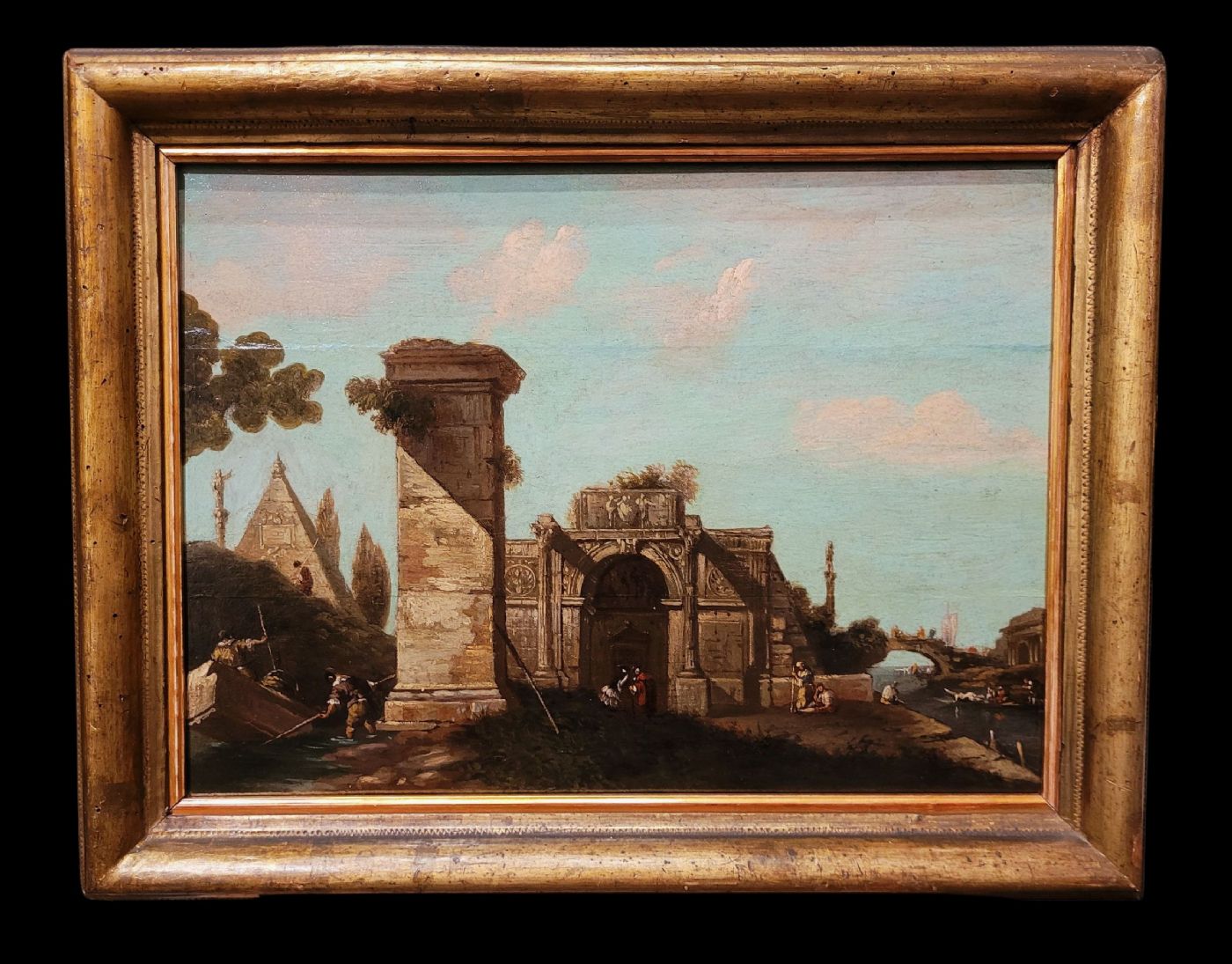
Arcadian view of the Venetian hinterland by Giovanni Migliara (Alexandria, October 15, 1785 – Milan, April 18, 1837)
Description:
"Arcadian view of the Venetian hinterland"
Author: Giovanni Migliara (Alexandria, October 15, 1785 – Milan, April 18, 1837)
Attribution: Prof. Emilio Negro
Technique: oil on panel
Period: first half of the 19th century
Dimensions: 1900s frame 38x48 cm - Panel 29x38.5 cm
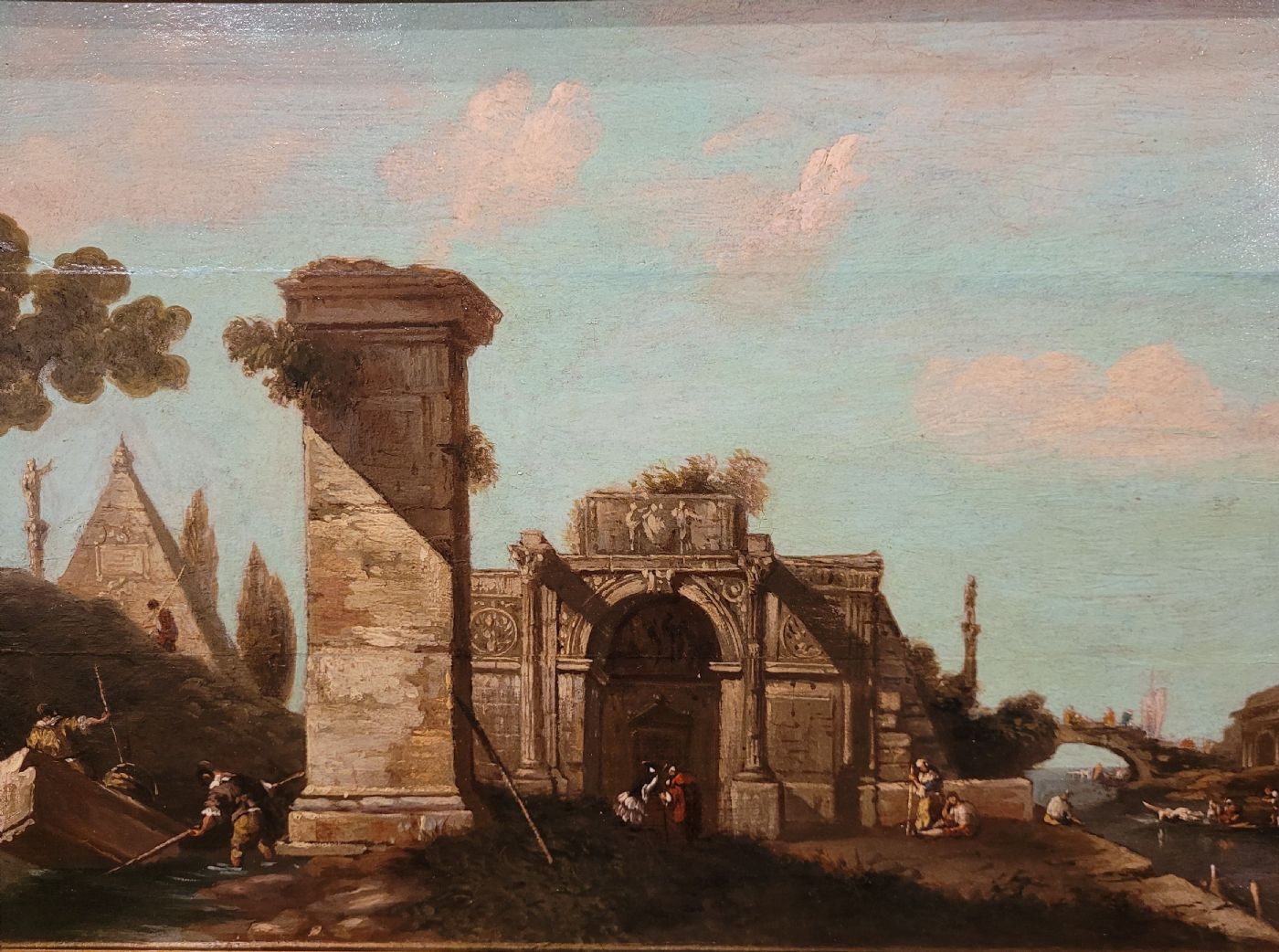
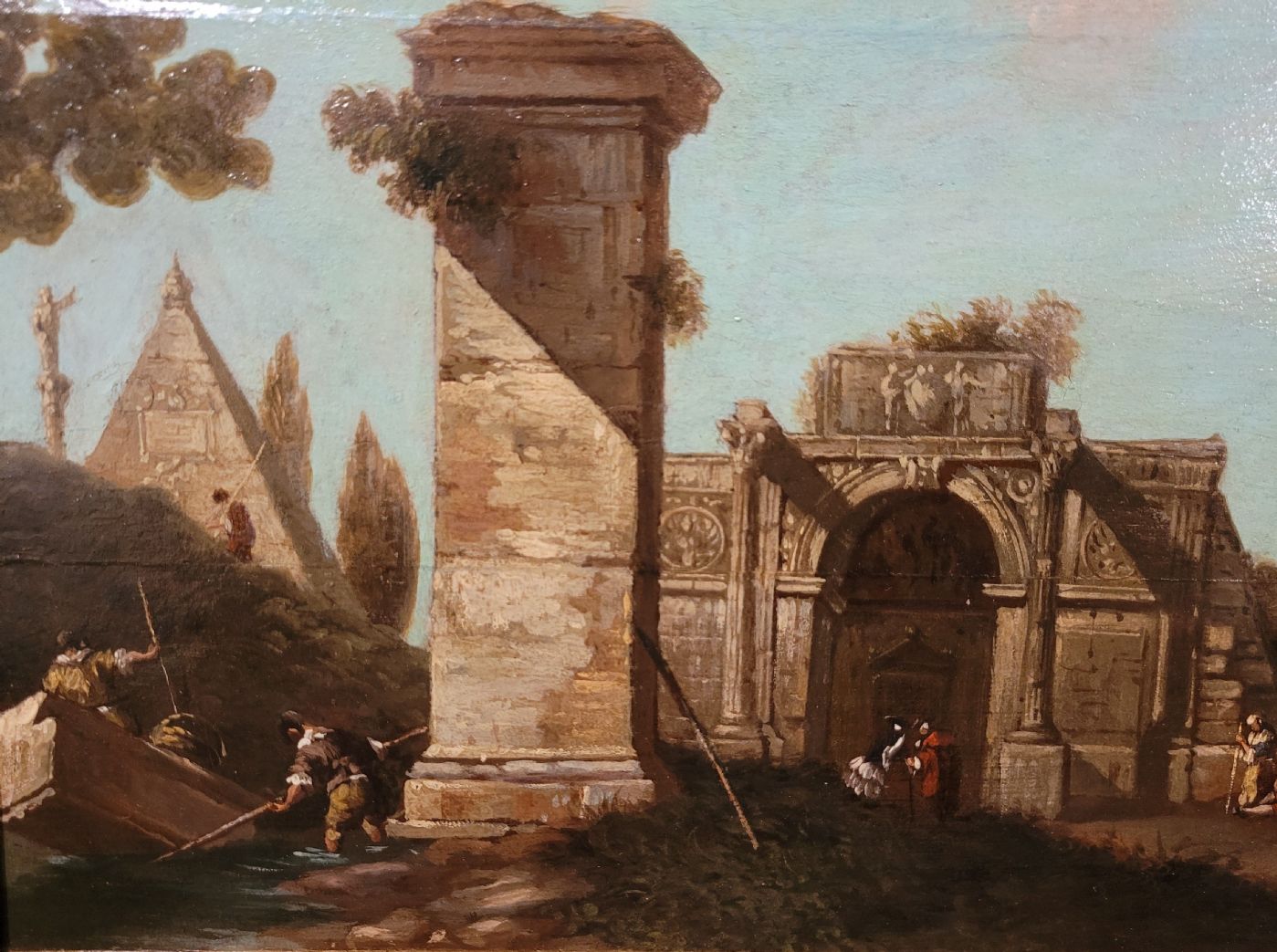
A painting in oil on panel depicting an arcadian view of the Venetian hinterland, characterized by an idealized landscape where natural and architectural elements coexist in compositional balance. The scene develops through an airy perspective construction, with vegetative wings and luminous openings that guide the gaze towards the depth of the landscape.
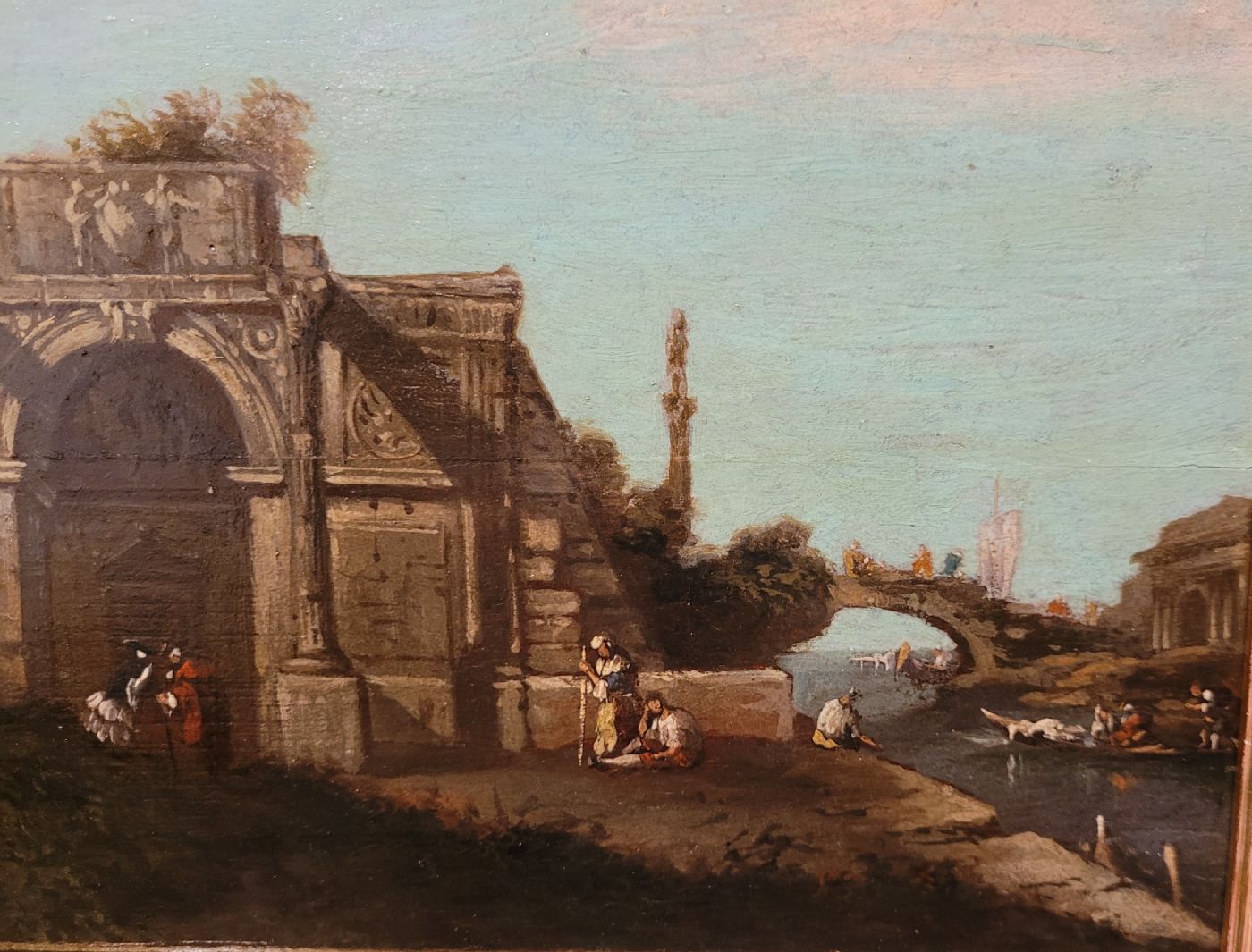
Particularly significant is the glimpse of a Venetian canal on the right of the composition, animated by the presence of a boat that introduces a narrative and dynamic element within the scene. This detail establishes a direct link with the Venetian lagoon reality, contrasting the pastoral tranquility of the hinterland with a hint of daily life and human activity. The insertion of the canal also serves as an effective perspective device, expanding the spatial depth and guiding the observer's eye along a diagonal visual path.
The ensemble conveys an idealized and lyrical vision of the landscape, where nature and human presence coexist in harmonic balance, according to an arcadian taste typical of landscape production in the first half of the 19th century.
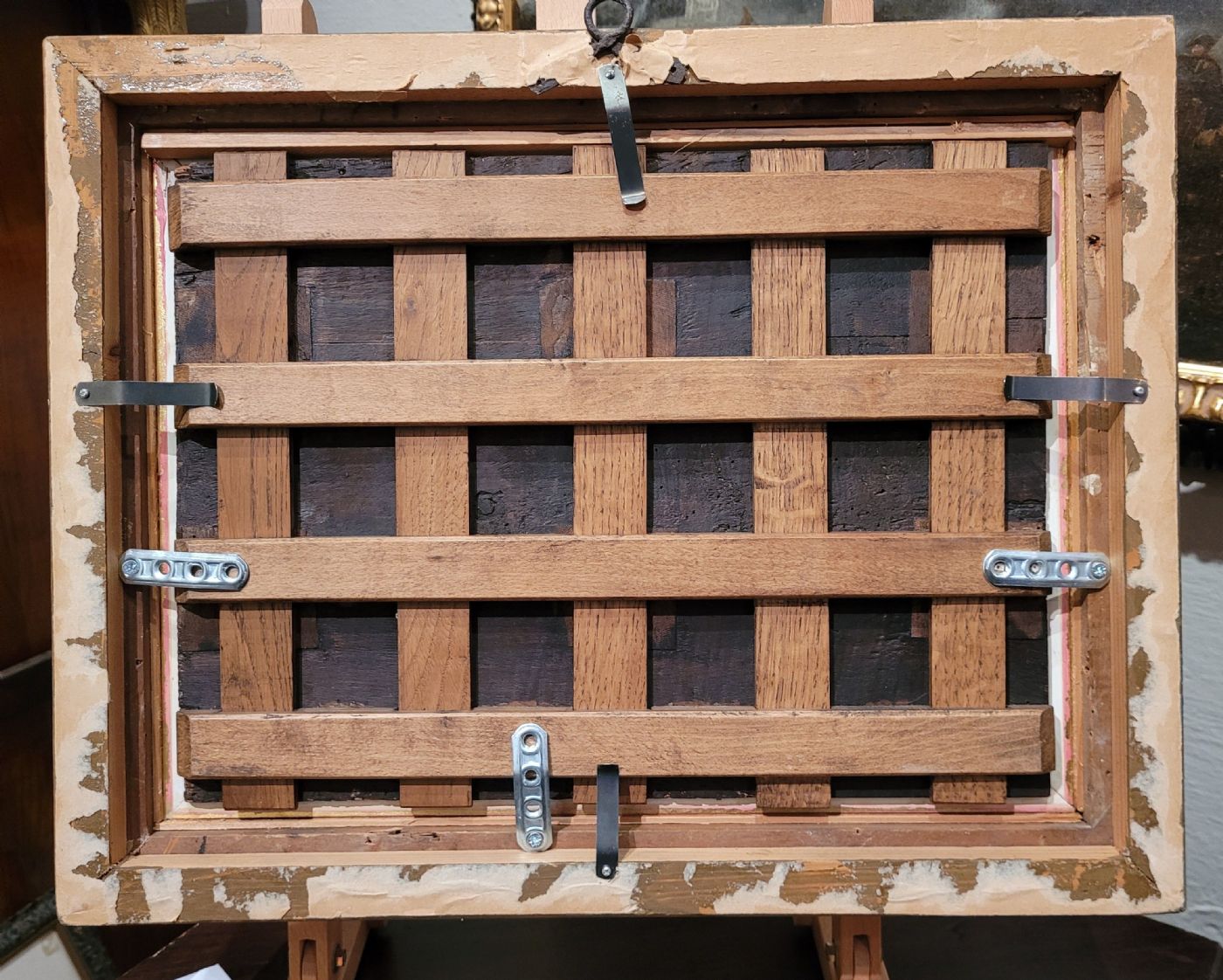
The work is executed on a wooden panel, subsequently parqueted, a conservation intervention aimed at stabilizing the support and preventing deformation or warping of the wood. This structure testifies to conservation attention focused on preserving the flatness of the painting.
The work is attributed to Giovanni Migliara by Prof. Emilio Negro based on stylistic and compositional considerations, attributable to the artist's landscape and view production, known for his perspective accuracy and poetic interpretation of architectural and natural landscapes.
The composition fits into the tradition of Italian romantic vedute, in which the landscape takes on an evocative and ideal value, rather than descriptive, reflecting the arcadian taste prevalent in landscape painting between late Neoclassicism and Romanticism.