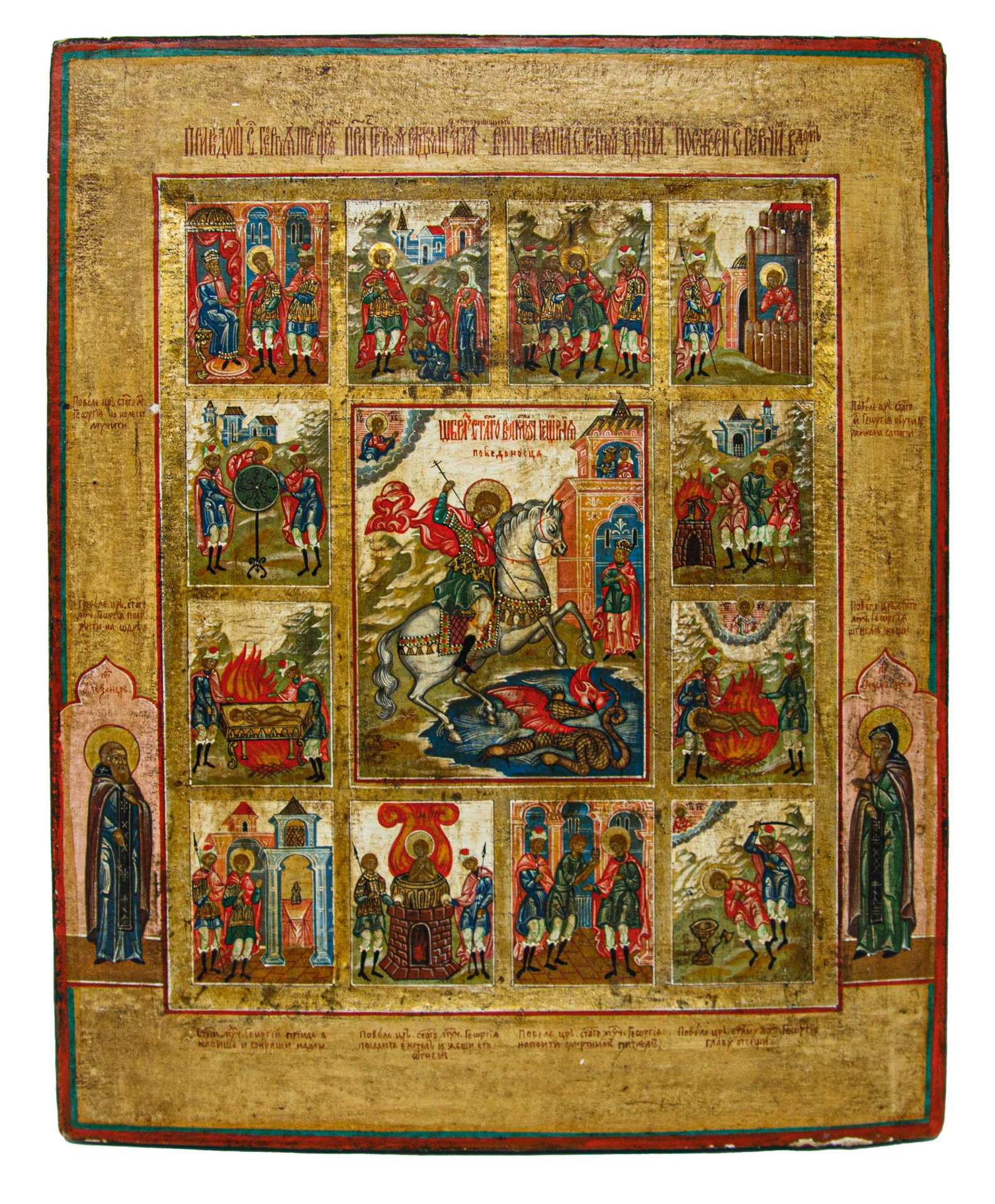
Russian School, 19th century, Icon with the Life of Saint George
Description:
Russian School, 19th century
Icon with the Life of Saint George
Tempera on panel, 38 x 30 cm
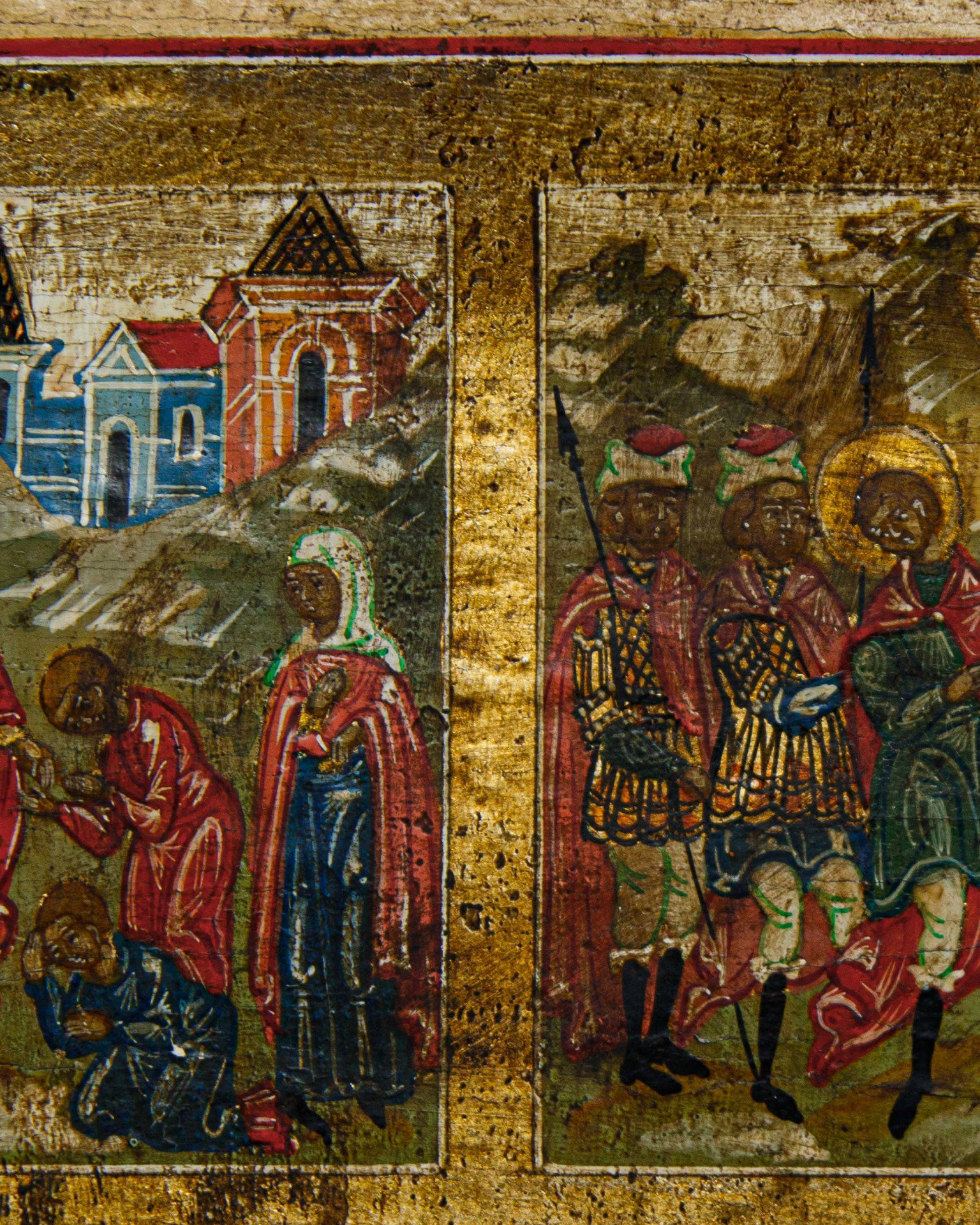
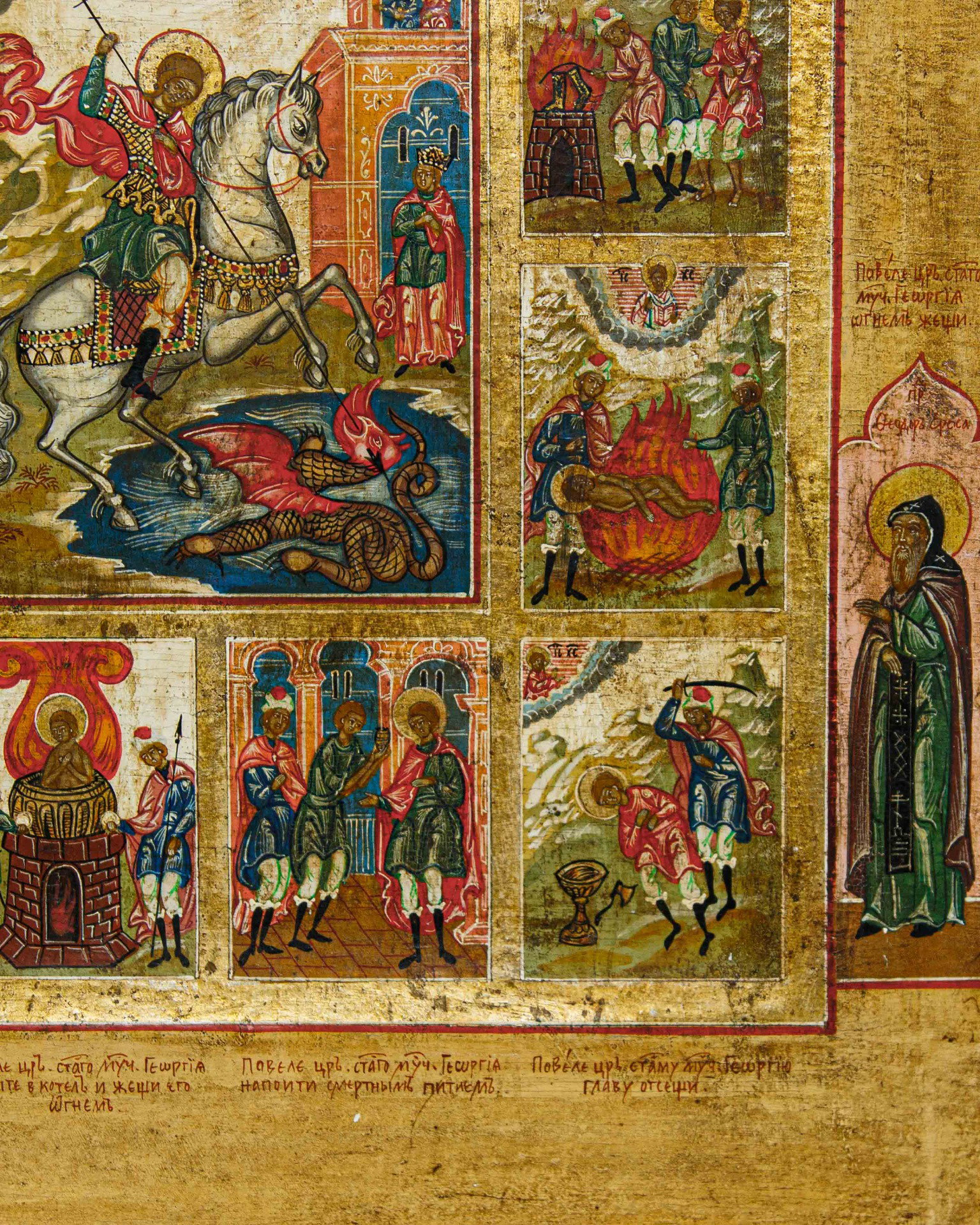
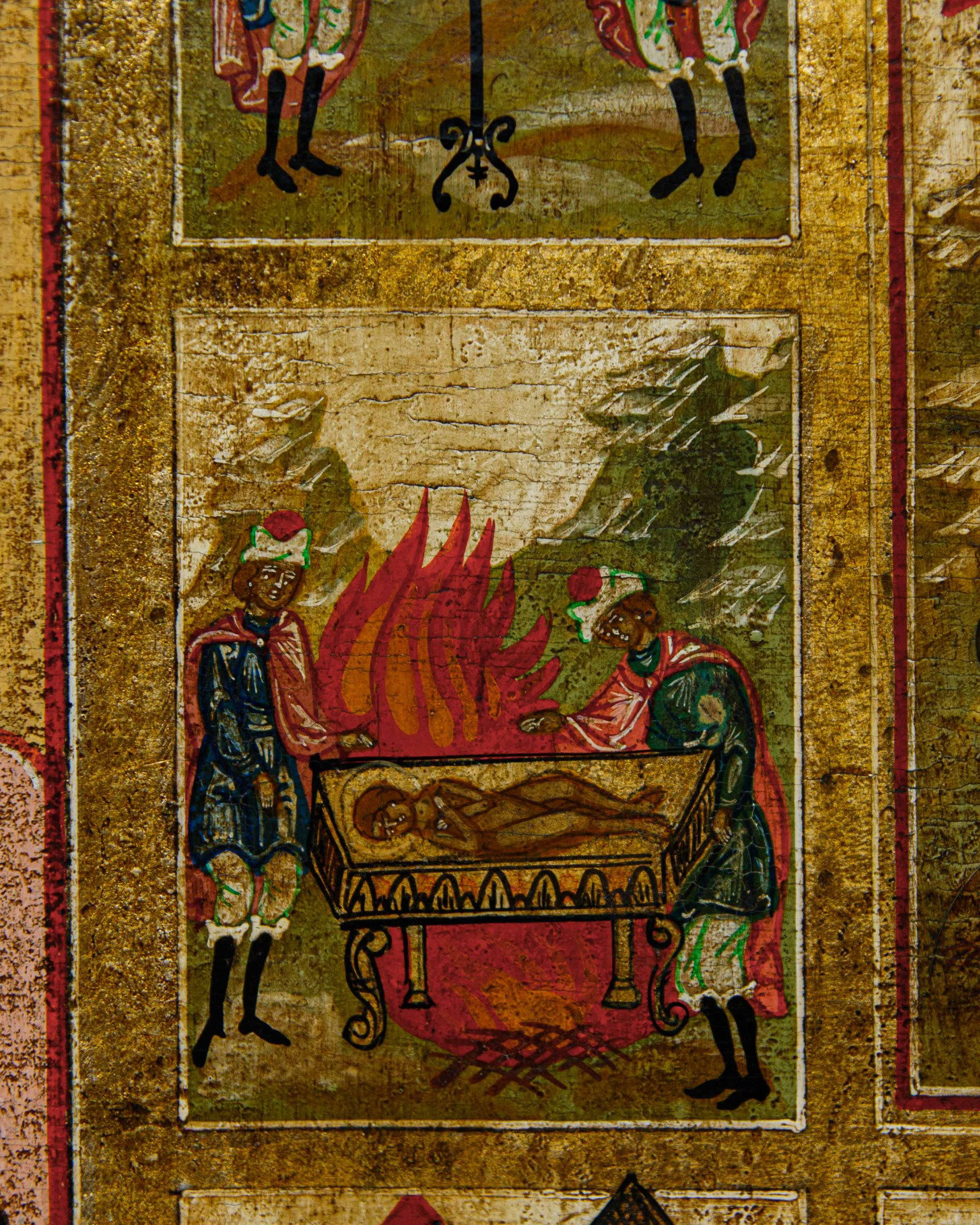
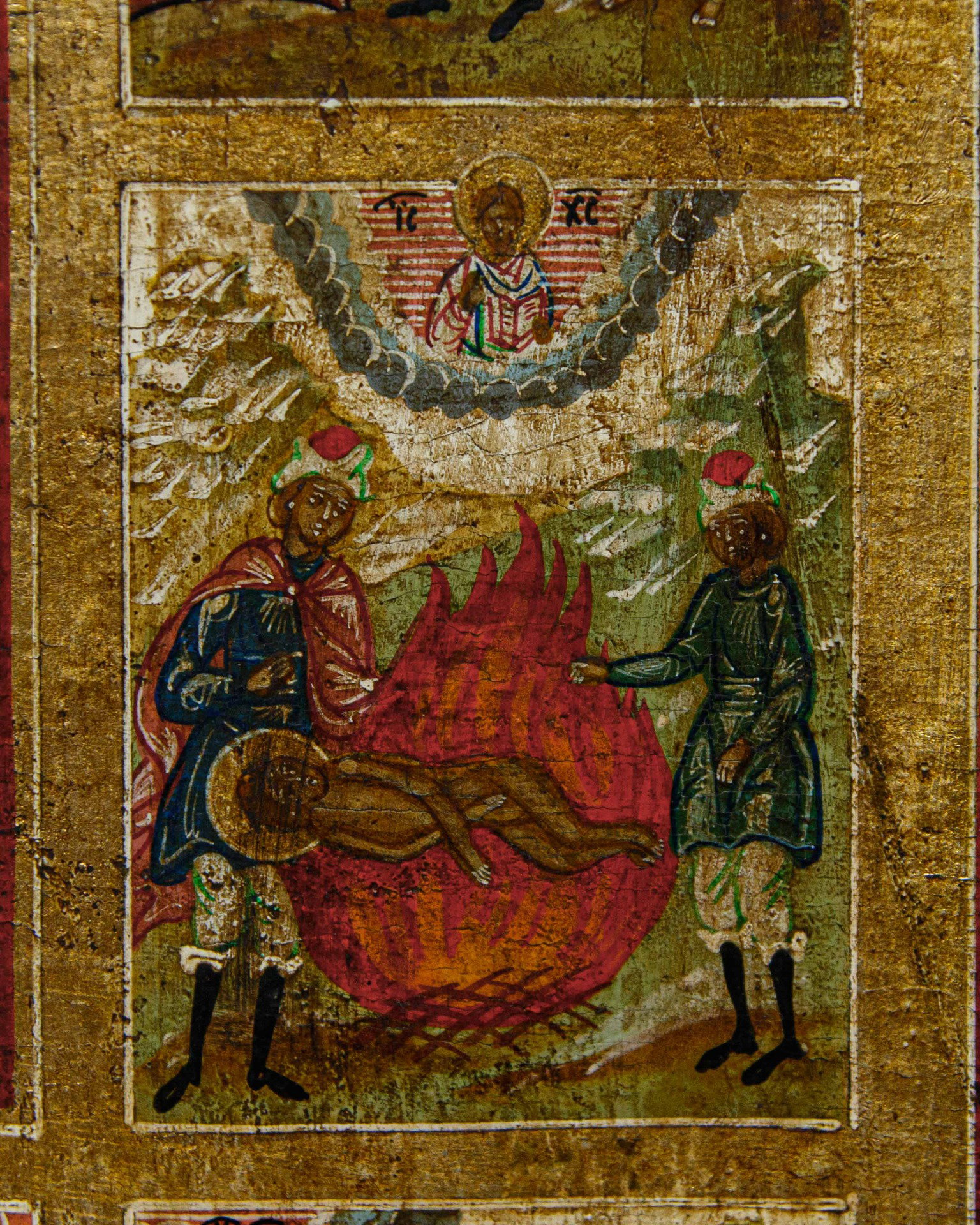
Conforming to the compositional standards of the finest Russian icons of the early 19th century, this icon arranges the salient episodes of Saint George's passionate journey in a modular grid. The moments, to be read from top to bottom and from left to right, disregarding the larger central panel, condense the overflowing host of prodigies, conversions, and resurrections of Saint George himself.
Educated in the Christian religion by his parents, George chose a military career during the reign of Emperor Diocletian. Despite his more than excellent service to the creator of the tetrarchic system, George was condemned to martyrdom by the same emperor because of his faith. Some accounts of the Saint's life substitute the Persian ruler, Dacian, for the Byzantine emperor Diocletian: this panel could ambiguously refer to either one, given the typically Persian headwear worn by the fellow soldiers appearing in the various scenes. The fact, however, that George spent a large part of his life in the Middle Eastern territories, would also make it possible to hypothesize a convention on the part of the artist in representing non-Roman figures, in any case extraneous to the religious narrative and therefore pagan, as was usually the case in the medieval period. At the time of his transfer to Palestine, George had a vision in which God communicated to him six years of tribulation, three deaths, and three respective resurrections.
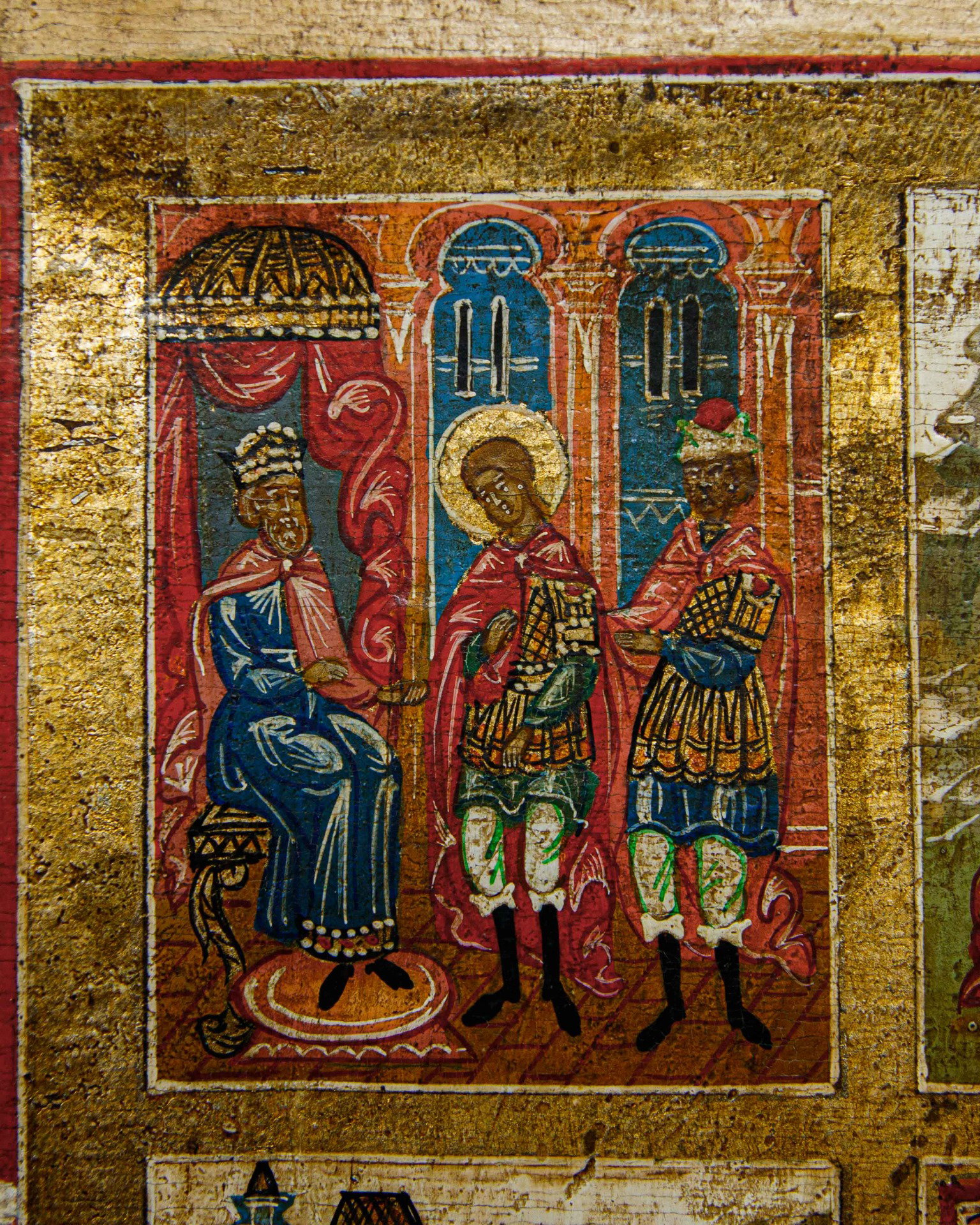
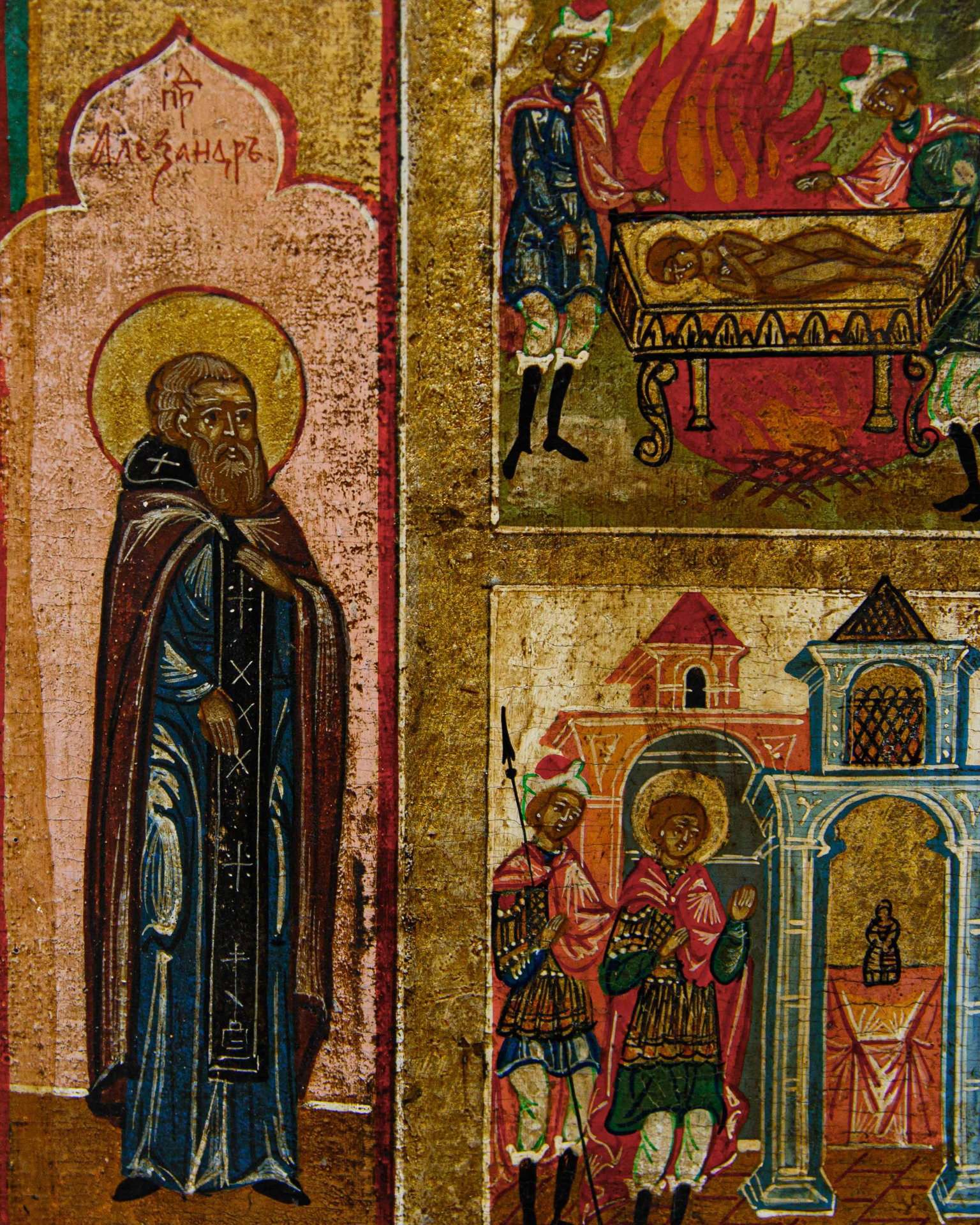
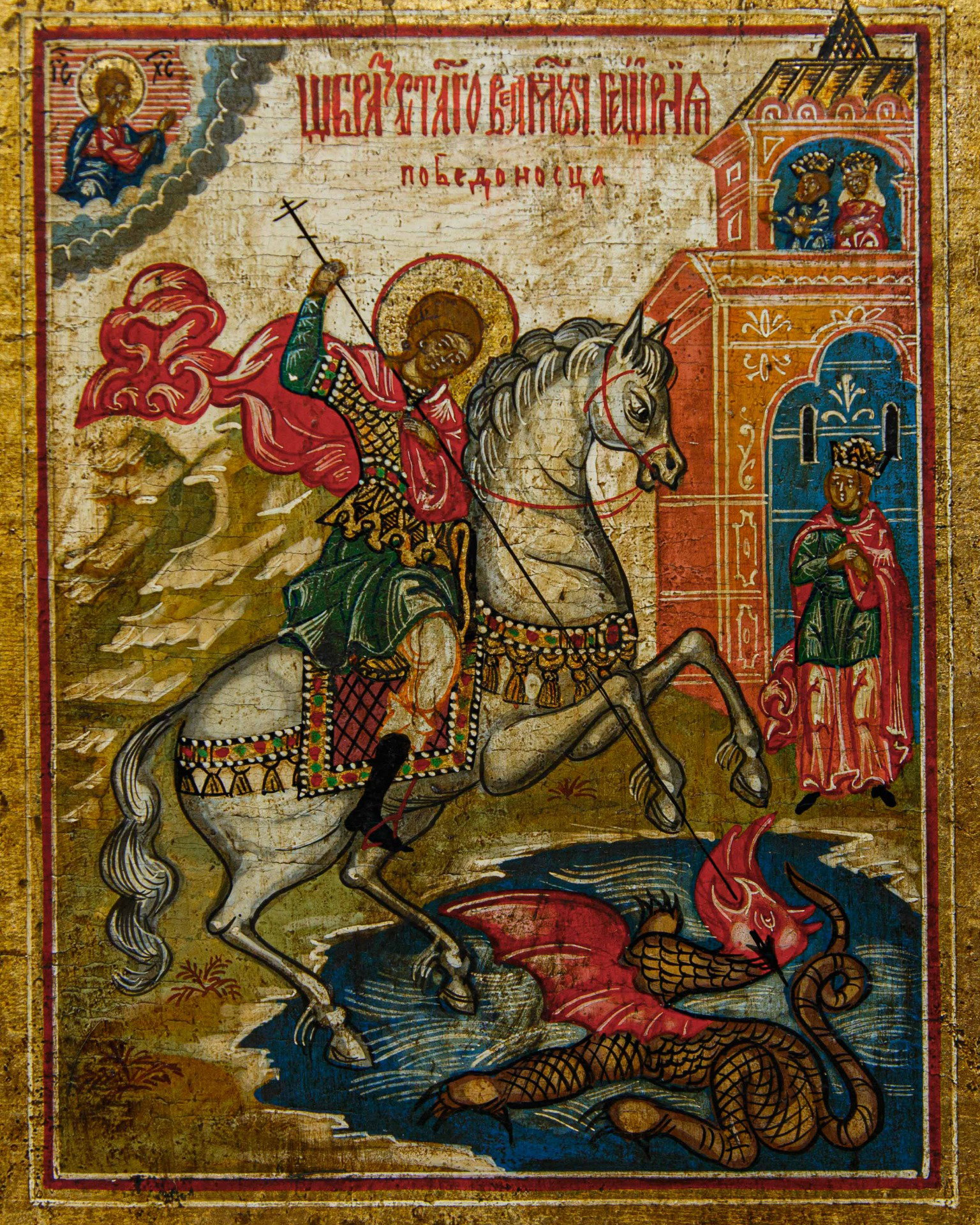
In the first frame, the saint is received by Diocletian, who learns of his religion. After having donated all his possessions to the people (II), George is led to prison by imperial soldiers (III). Here he converts the magister militum Anatolius (IV), but the tortures begin immediately: after the wheel filled with nails and swords (V), the saint is subjected to the torment of boiling shoes (VI), and of fire (VII), for which a resurrection is noted (VIII). Subsequently, George enters a pagan temple and with a single breath knocks down all the stone idols (IX), but is again overcome by fire (X) and probably by poison (XI), finally receiving decapitation (XII). The Saints placed on the sides of the panel, Alexander and Theodore Stratelate, seem finally to refer to the central episode, the one retold by Jacopo da Varazze in the Golden Legend concerning the killing of the dragon that infested the city of Silene in Libya.