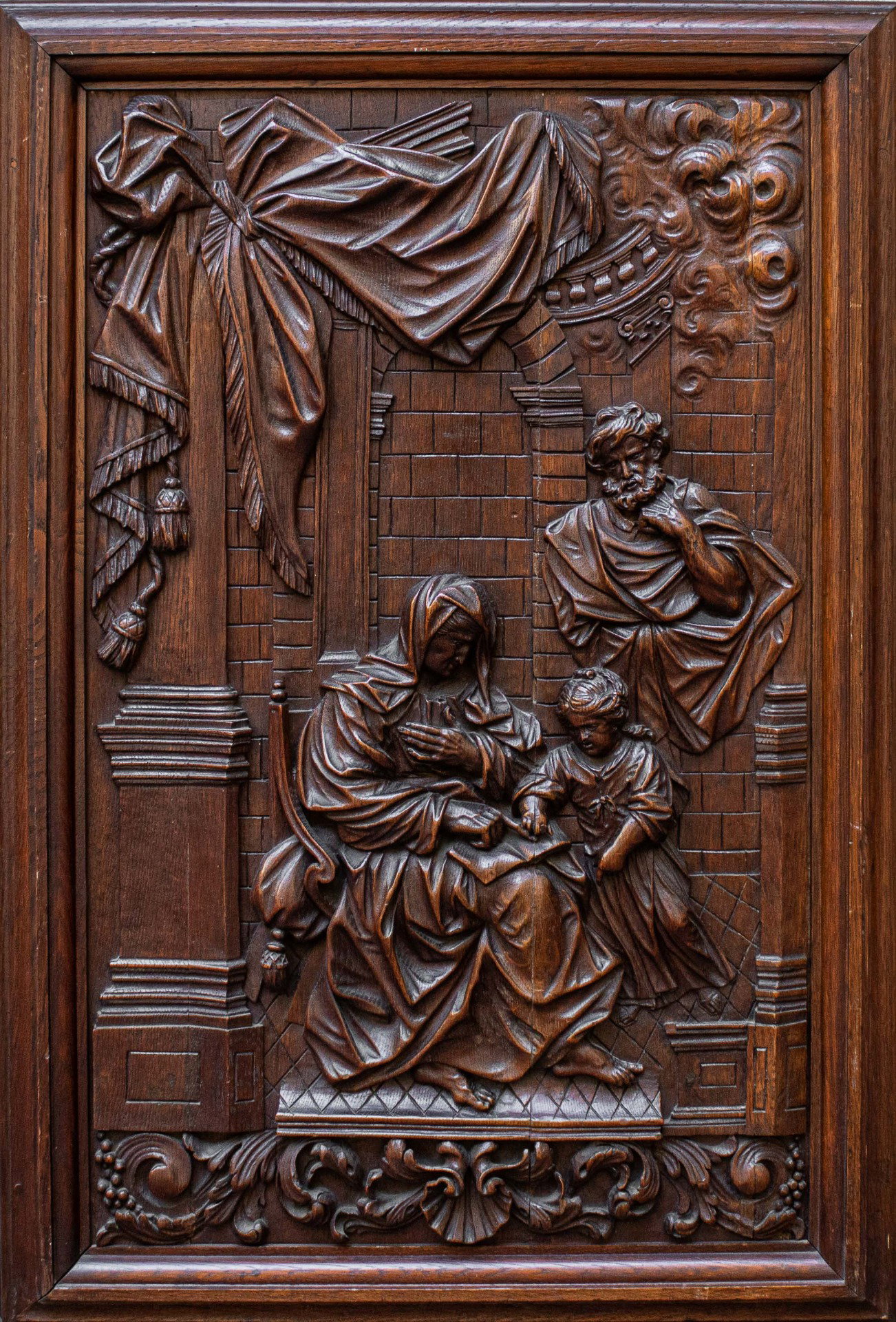
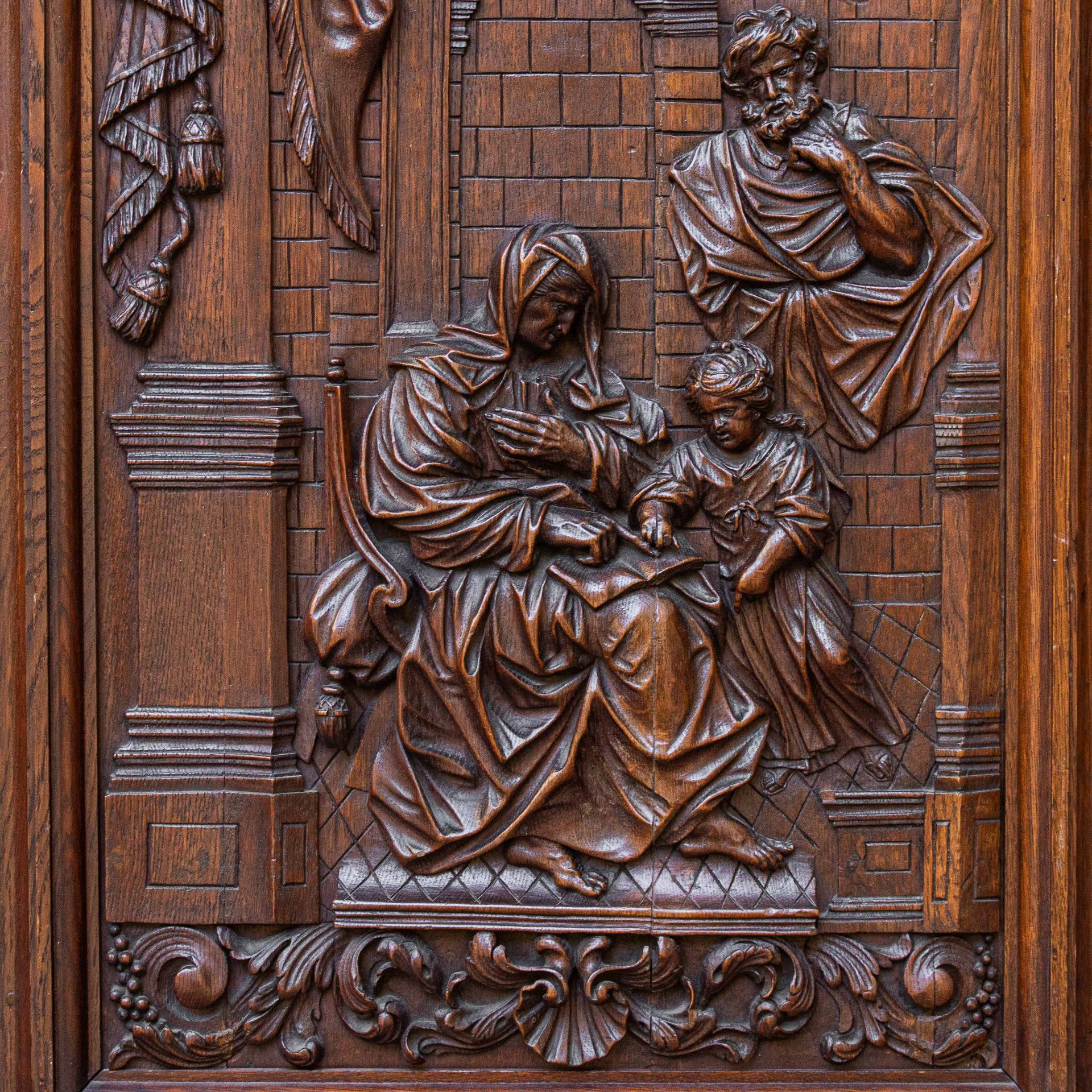
17th Century, Education of the Virgin
Description:
17th Century
Education of the Virgin
Wooden relief, 77 x 48 cm – frame, 90 x 61 cm
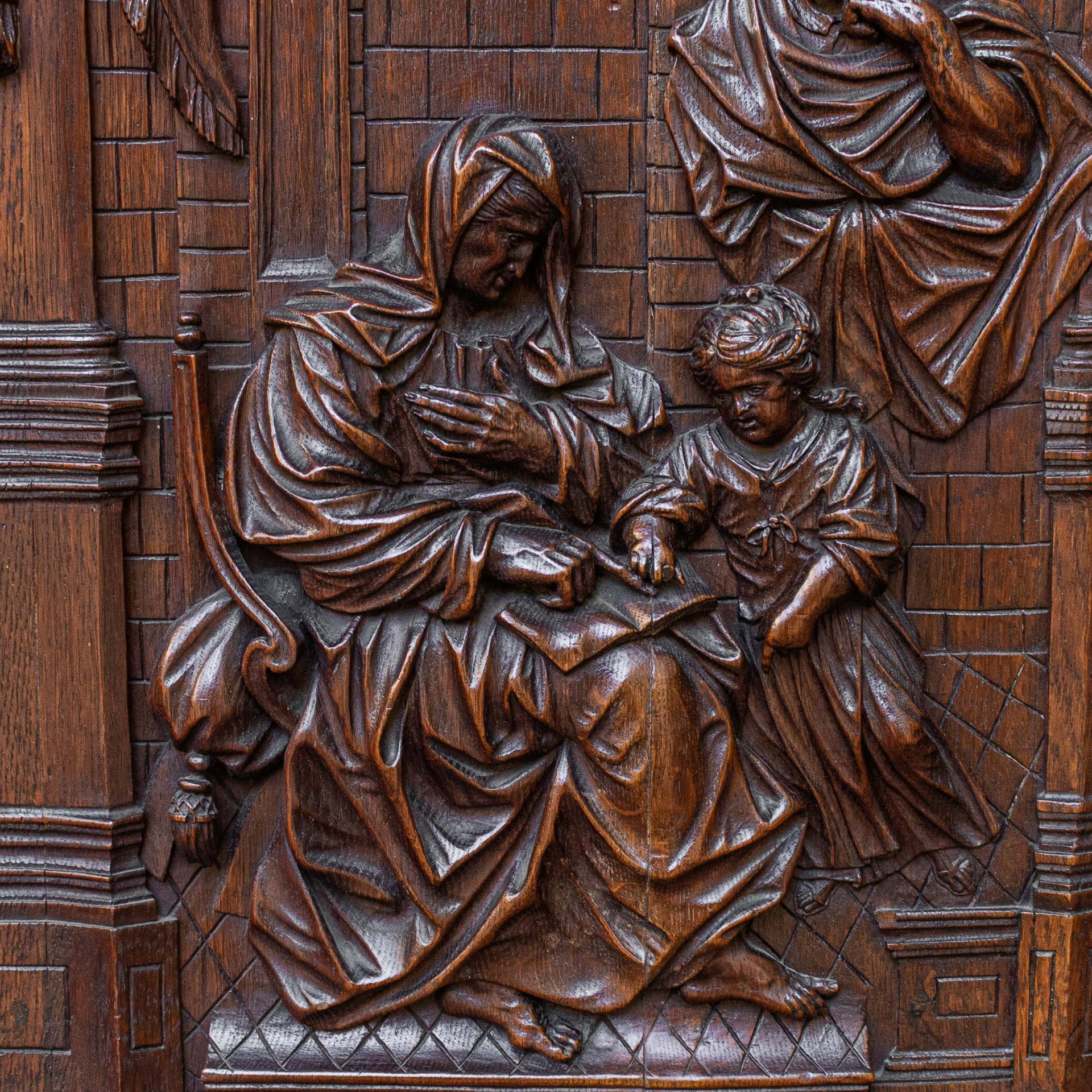
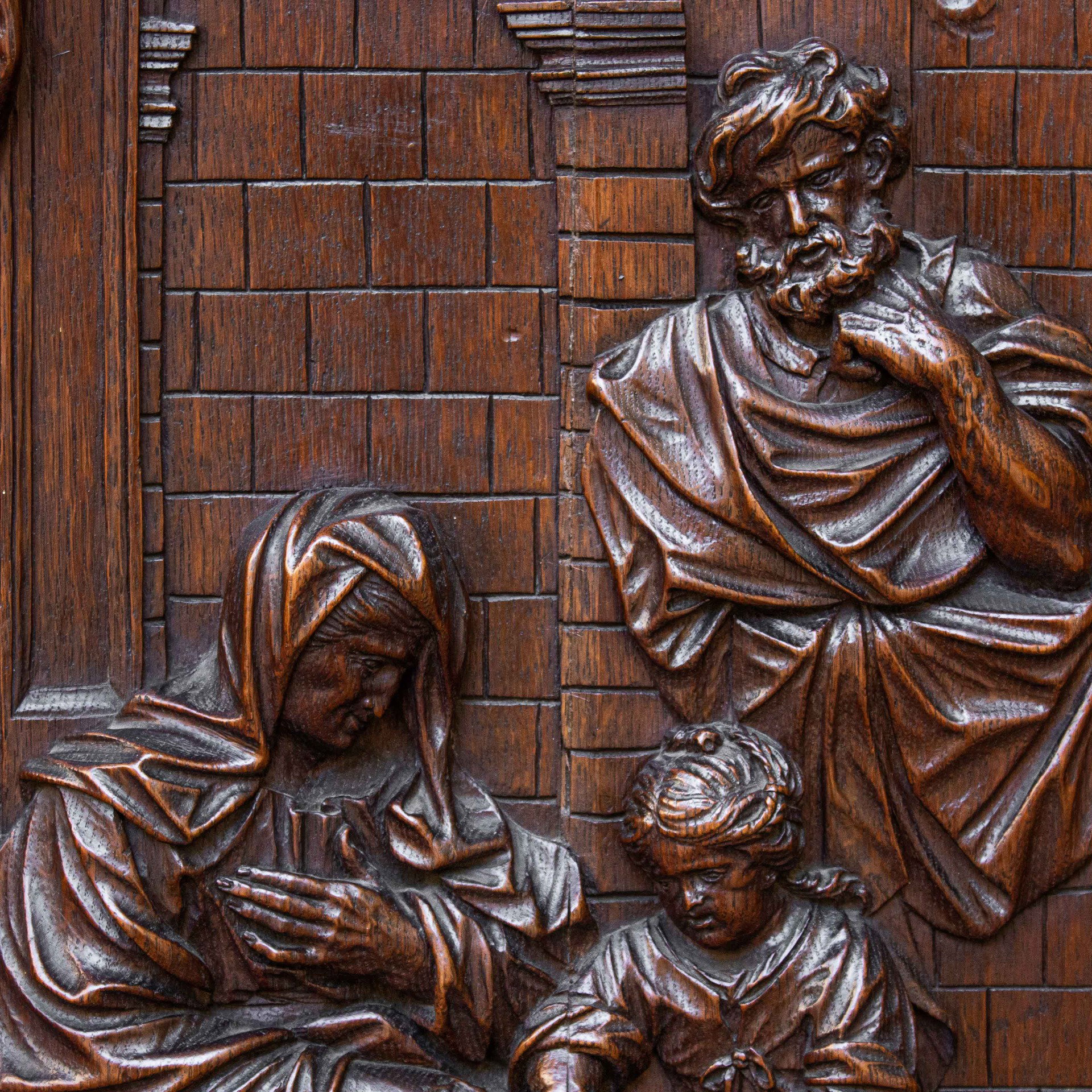
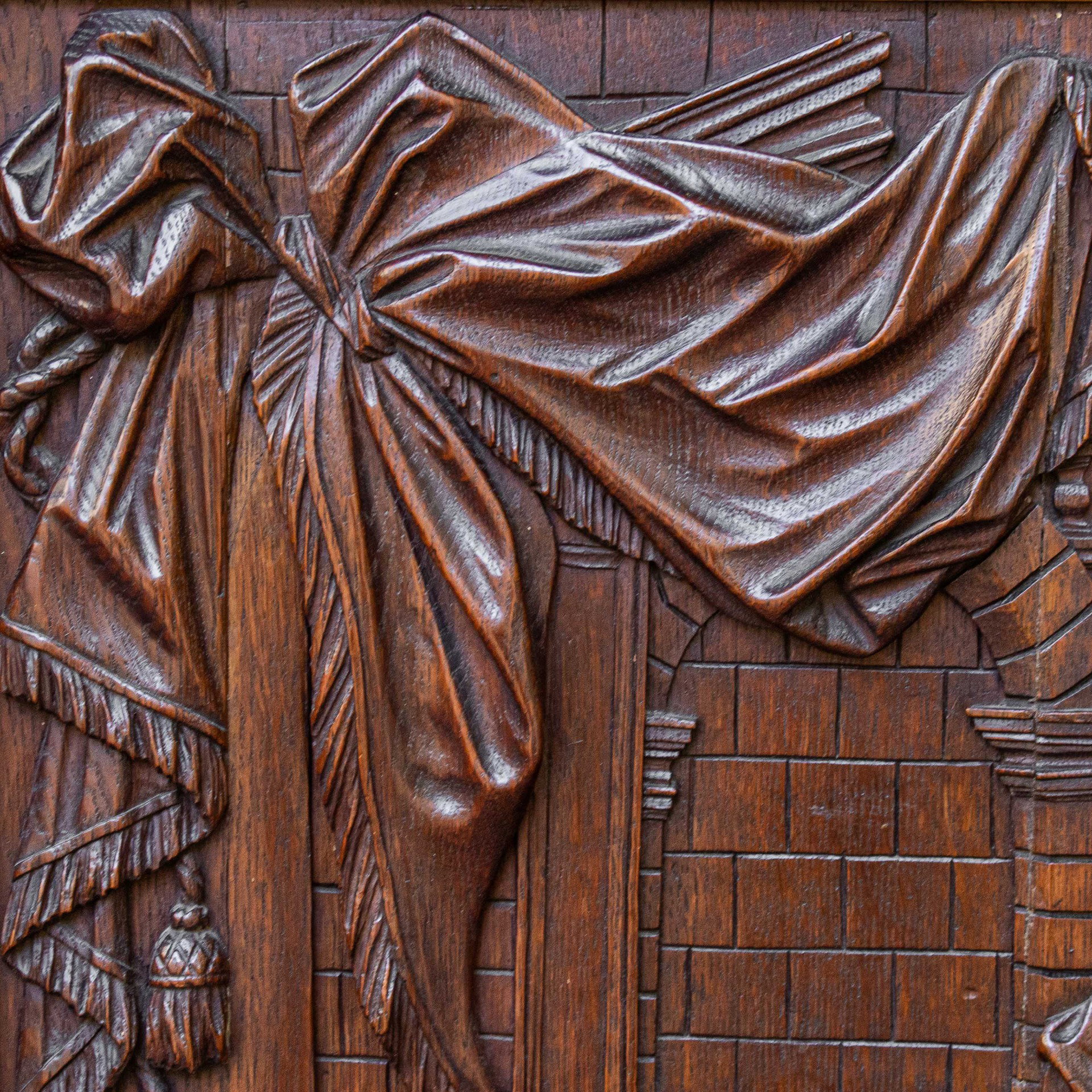
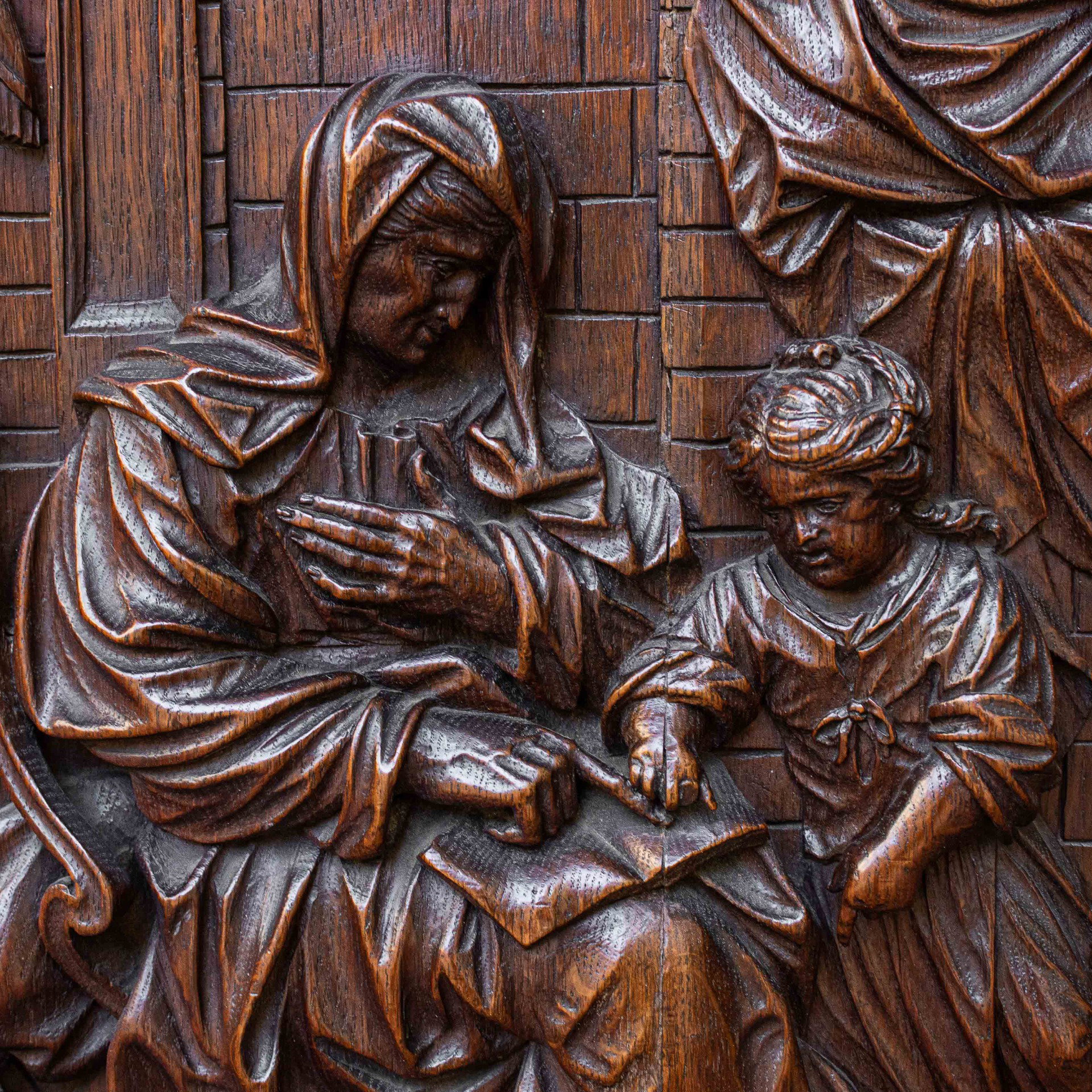
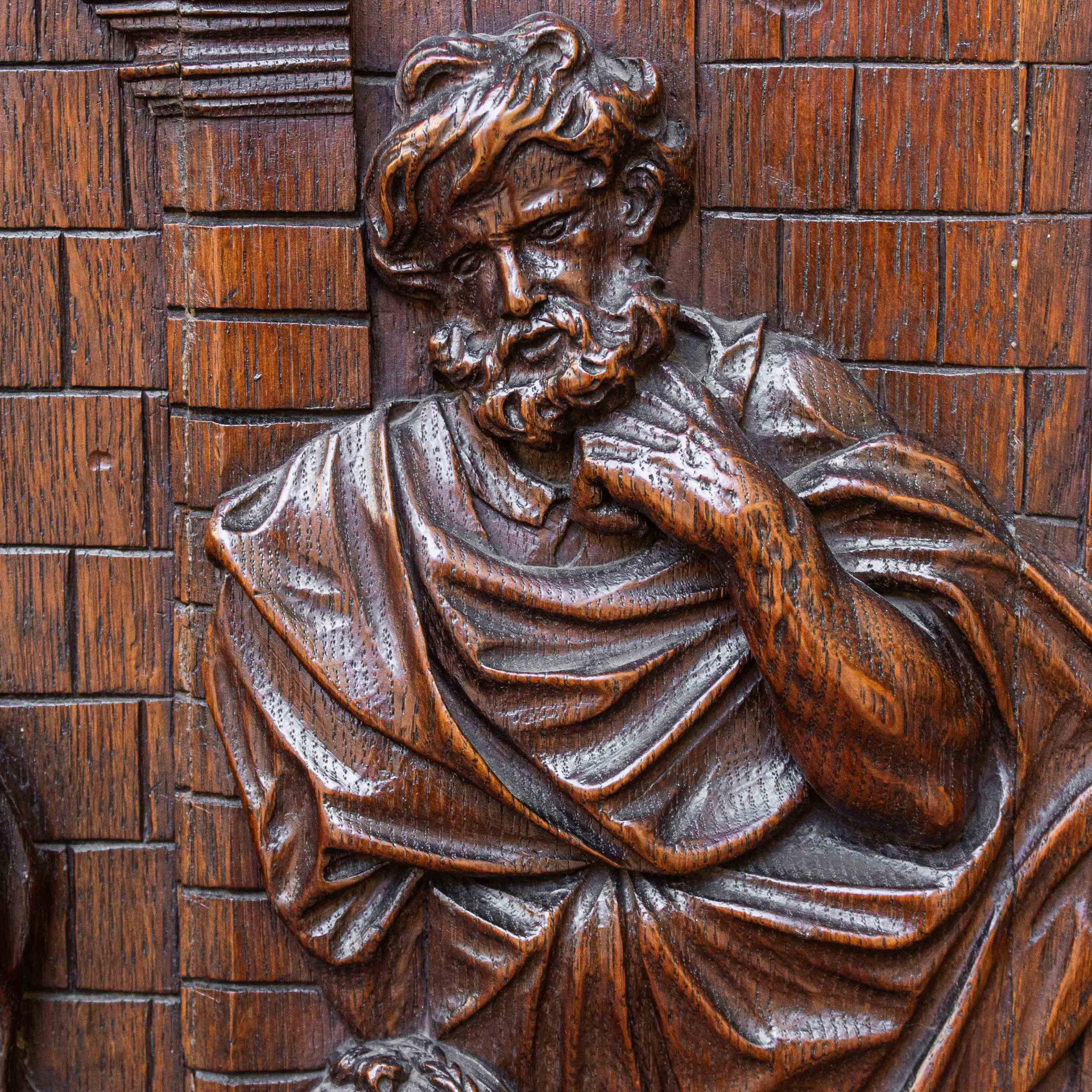
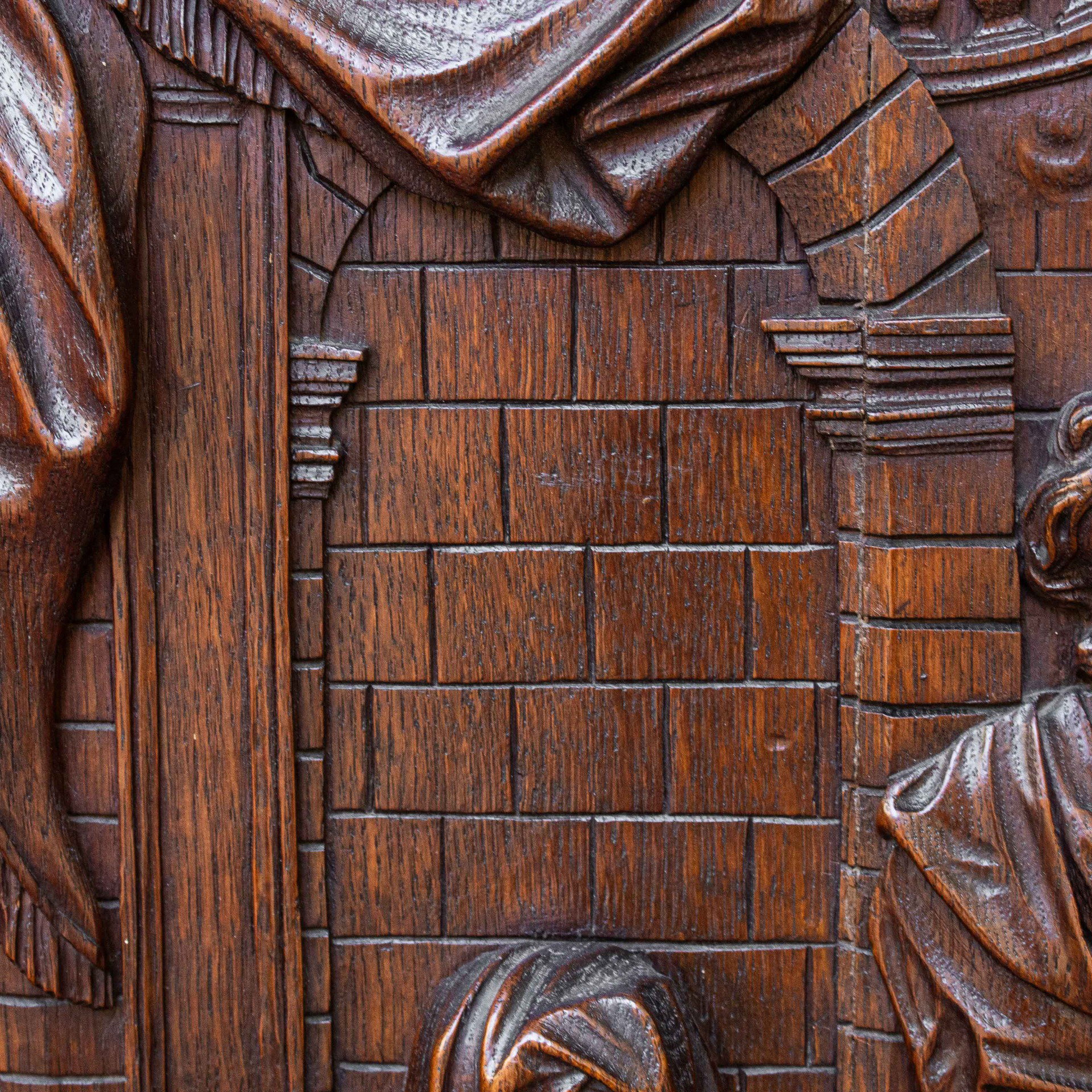
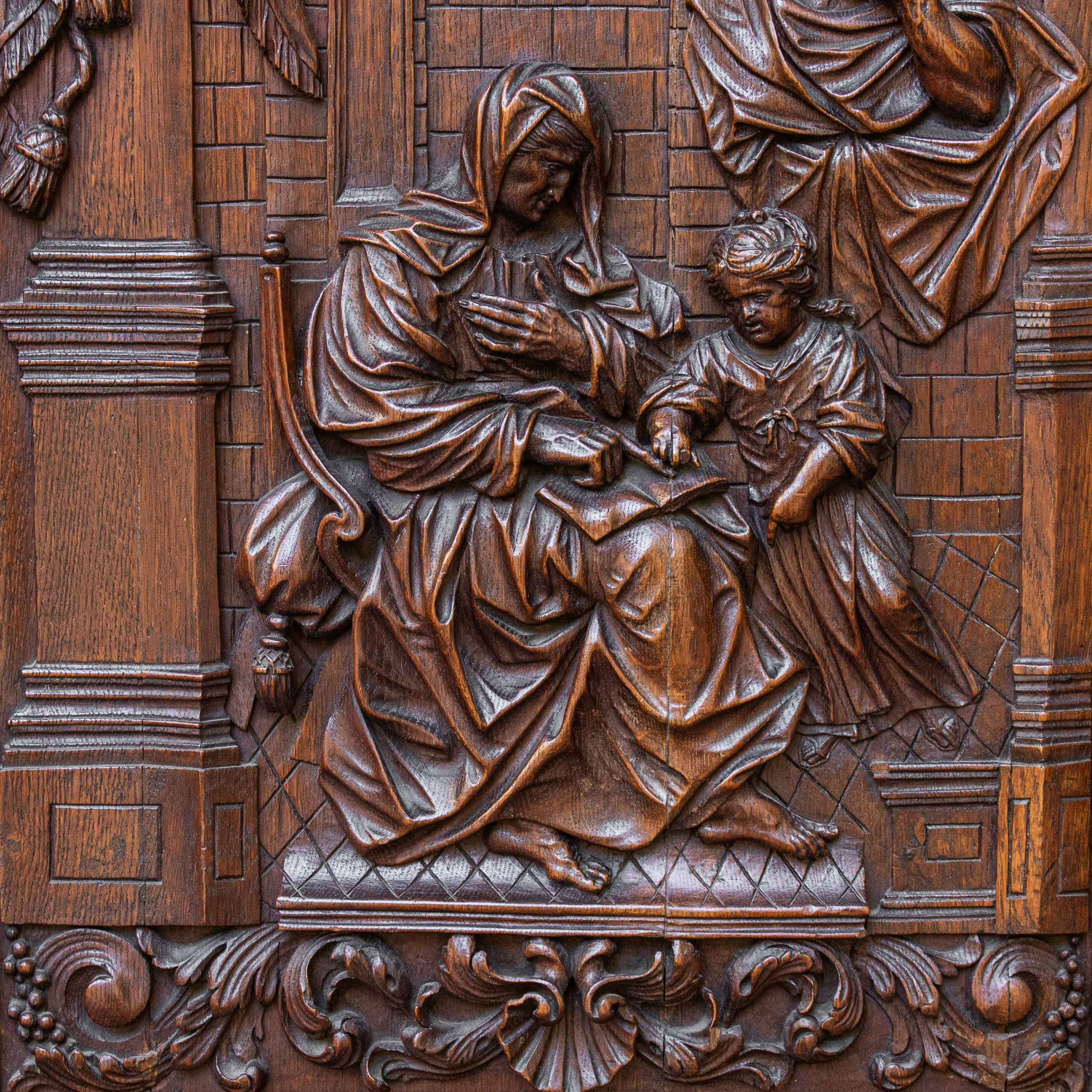
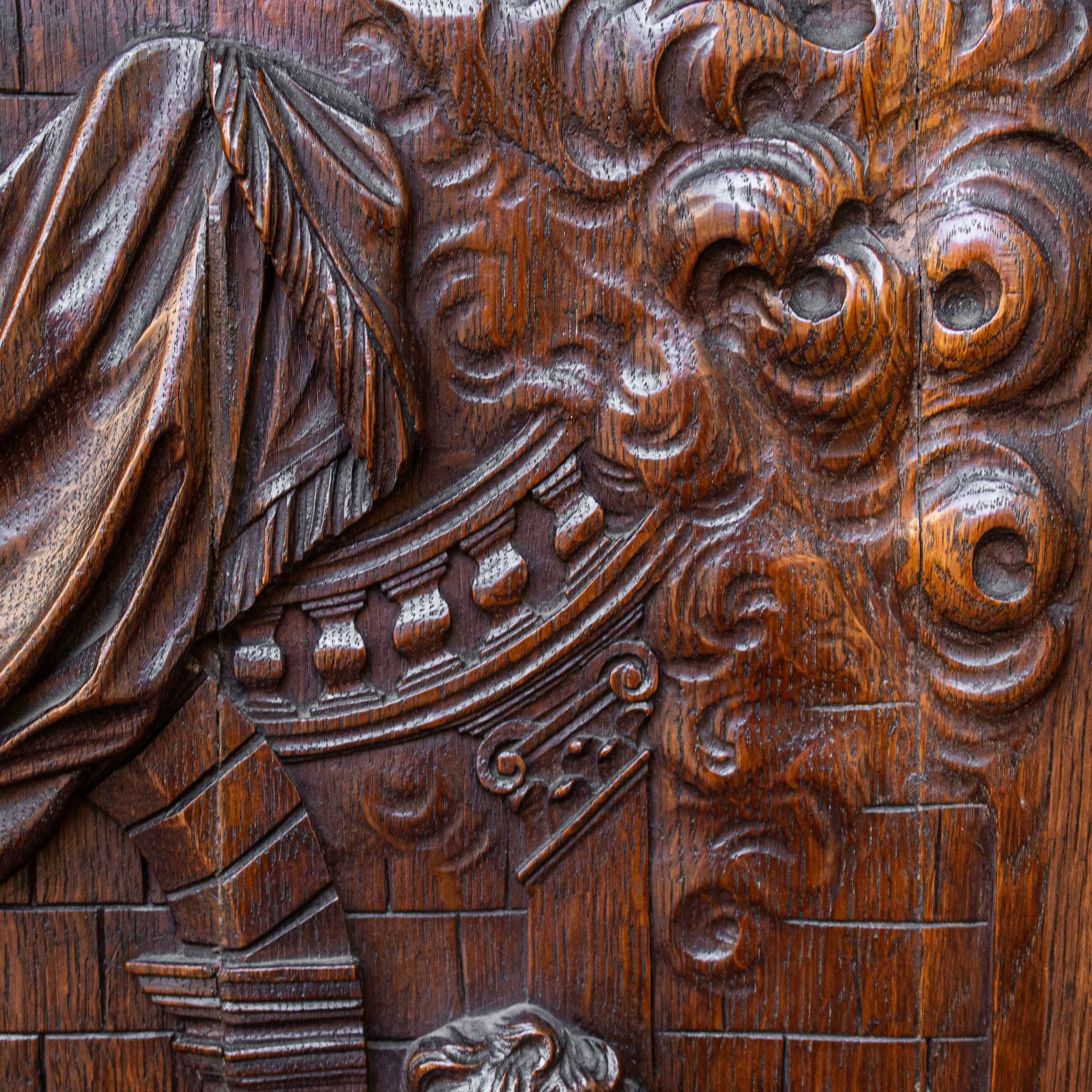
The subject of Mary's education is very rare in the world of art. This particular Marian iconography is inspired by apocryphal writings, particularly the Protevangelium of James and the Gospel of Pseudo-Matthew, filled with fairy-tale anecdotes. Mary spent her very early childhood in Jerusalem, in the home of her parents Anne and Joachim. The little girl was admired by the entire people of Israel: she spent most of her time praying and embroidering fabrics. At three years old, she walked with a steady step and spoke like an adult. Her mother Anne also taught her to read: in the present wooden relief, Saint Anne is depicted, seated in a sumptuous cascade of robes, helping little Mary with her reading. Off to the side, as will later be the iconography of Saint Joseph, Joachim watches the scene, enraptured. The rich furnishings in which the artist places the scene, although not philologically reflecting that of a typical Israelite dwelling, aim to convey the respectful climate of severity and religious dedication nurtured by the Virgin's family. The walls and columns are high, clean, without any possibility of distraction or pomposity. The heavy front curtain is drawn back to allow the viewer to participate in the intimate contemplation. The series of volutes and acanthus leaves below is an embellishment by the artist, intended to showcase his charming skill. The central shell is a further Marian reference, an allegory of the divine conception.
The subject of Mary engrossed in reading, sometimes kneeling on a cushion, is almost absent in medieval art. The iconography was revived from the Renaissance onwards, partly due to the renewed cult of Saint Anne: it should be noted, however, that its execution on a wooden support is truly rare. While examples in painting are not lacking (Francesco Cairo, 17th c., ASST Spedali Civili di Brescia; Filippo Lauri, 17th c., Galleria dell'Accademia Nazionale di San Luca, Rome; Giuseppe Bazzani, 1729, MAST Castel Goffredo; Giambattista Tiepolo, 1732, Church of Santa Maria della Consolazione or della Fava, Venice; Venanzio Bisini, 1786, Pinacoteca Diocesana di Leonessa), the present work appears to be a very rare execution in medium relief, exceptionally predating most of the paintings mentioned.