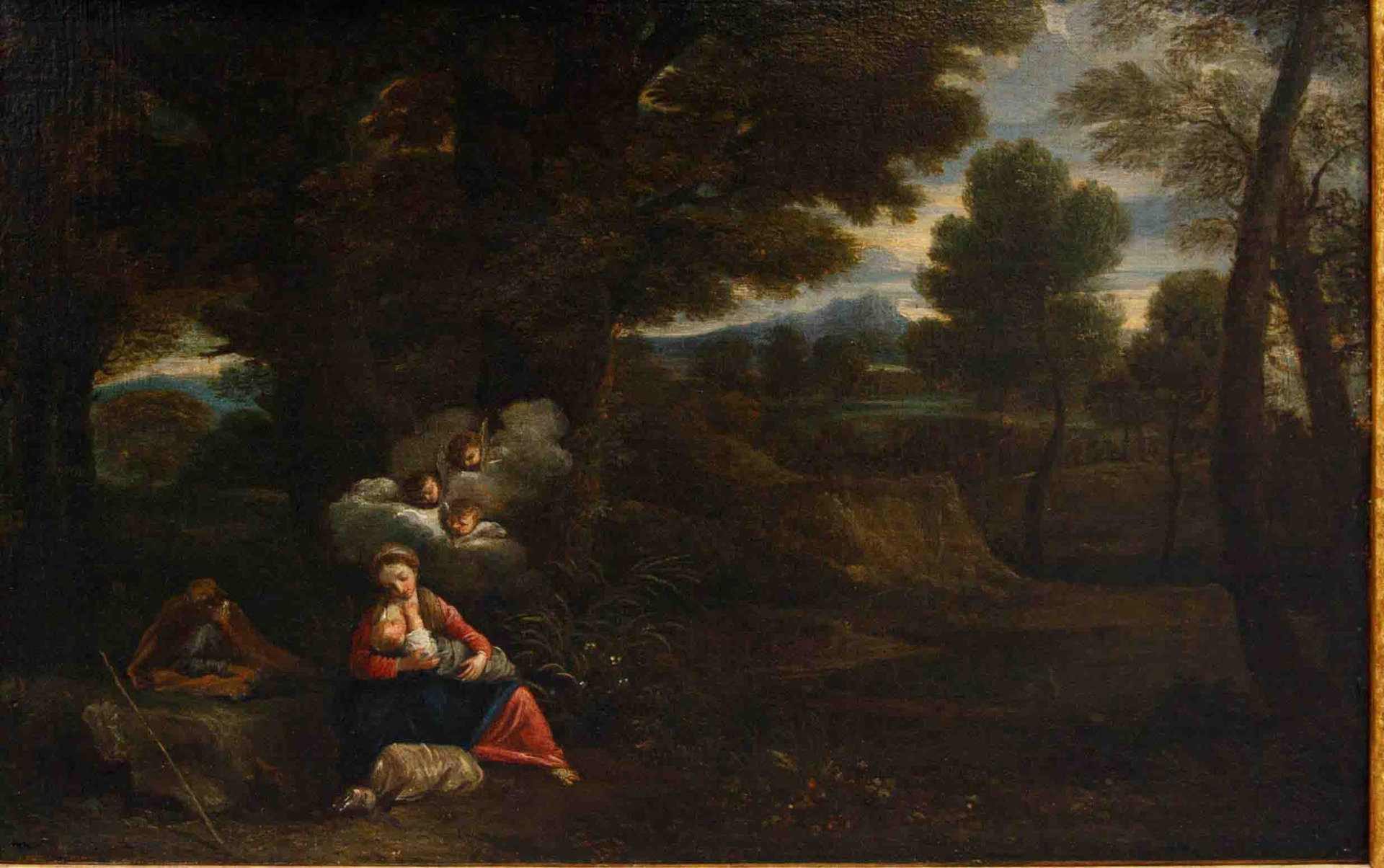
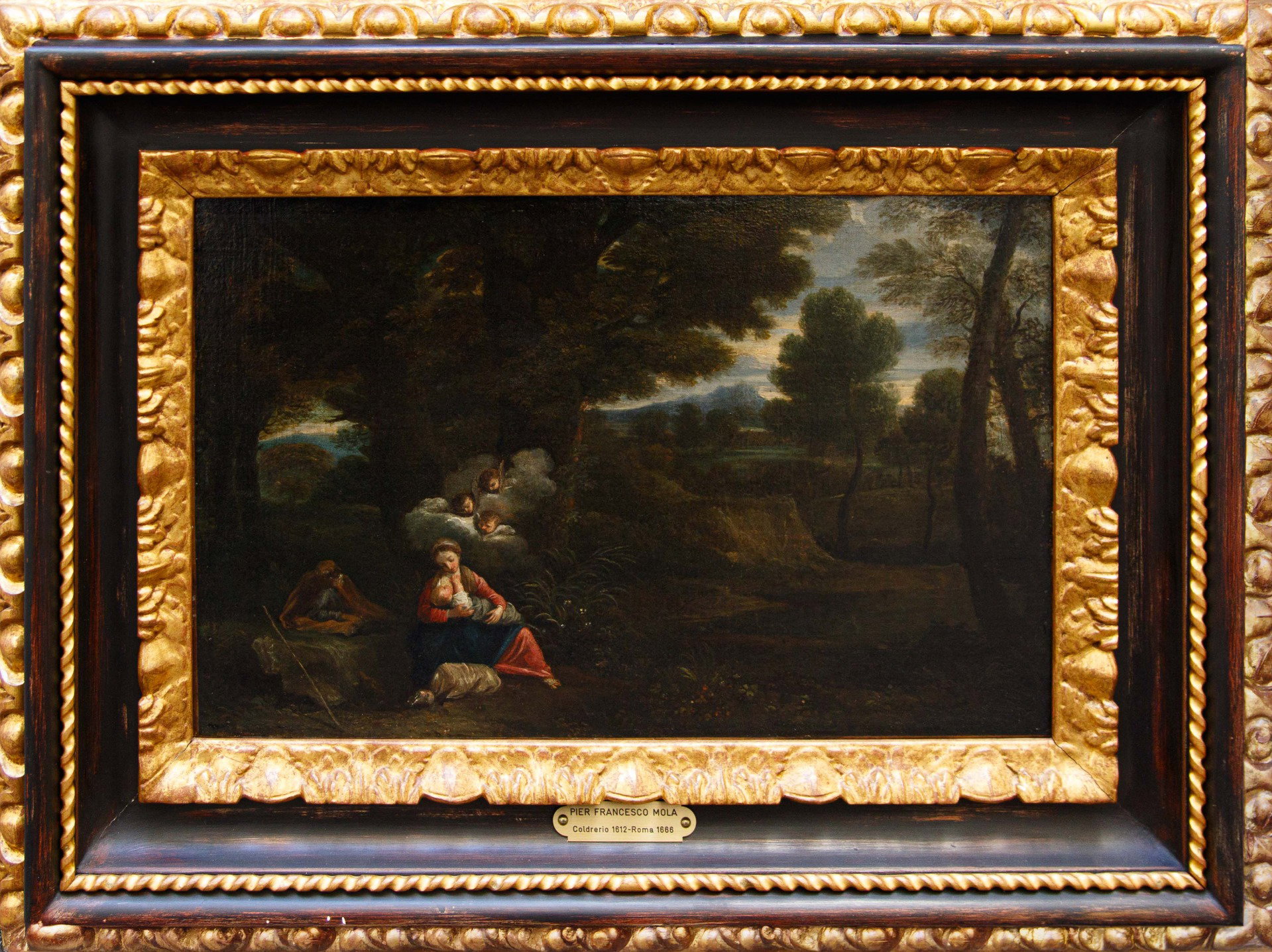
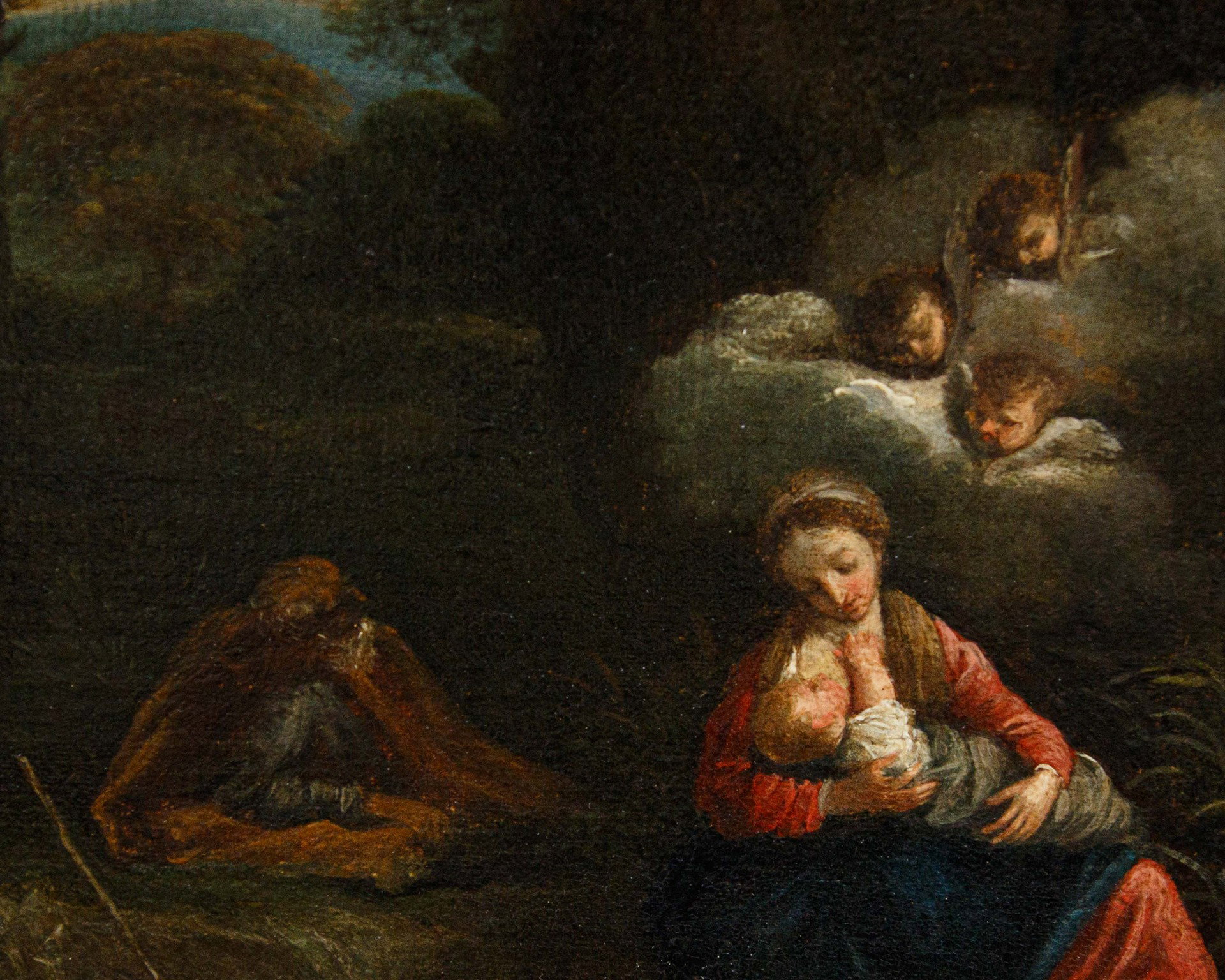
Pier Francesco Mola (Coldrerio, February 9, 1612 – Rome, May 13, 1666), workshop of, Rest on the Flight into Egypt
Description:
Pier Francesco Mola (Coldrerio, February 9, 1612 – Rome, May 13, 1666), workshop of
Rest on the Flight into Egypt
Oil on canvas, 30.5x46.5 cm
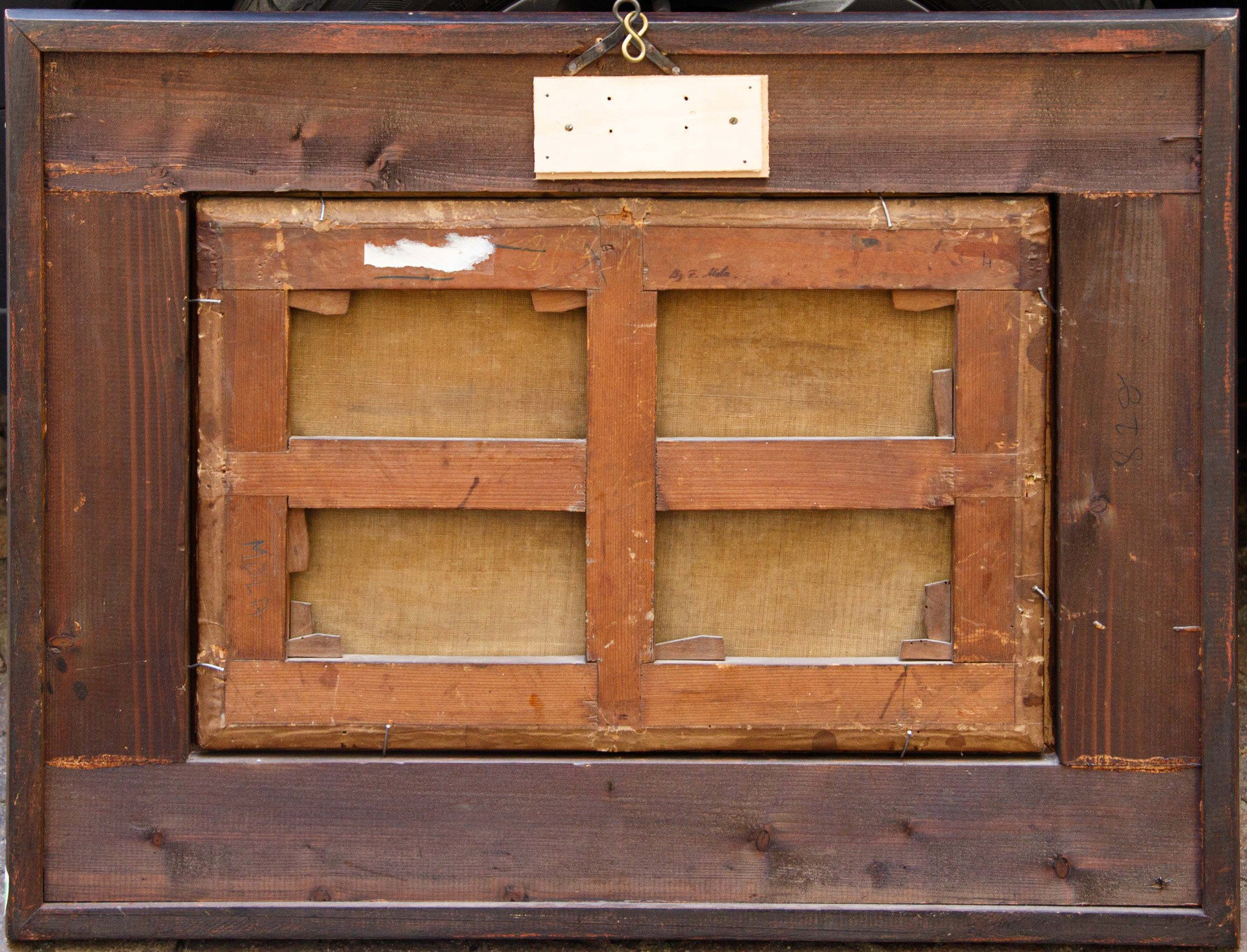
Inscription on the back of the frame "By F. Mola"
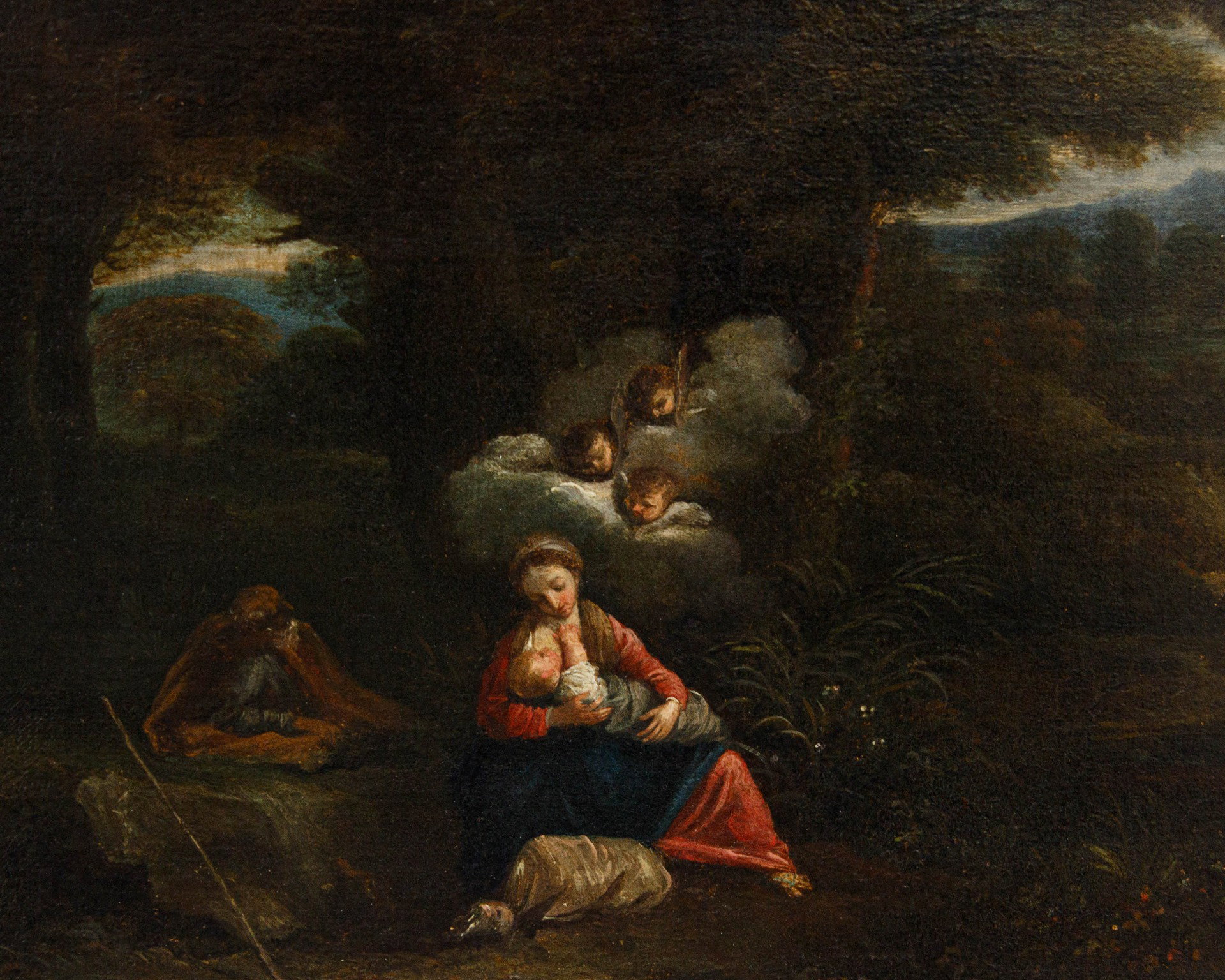
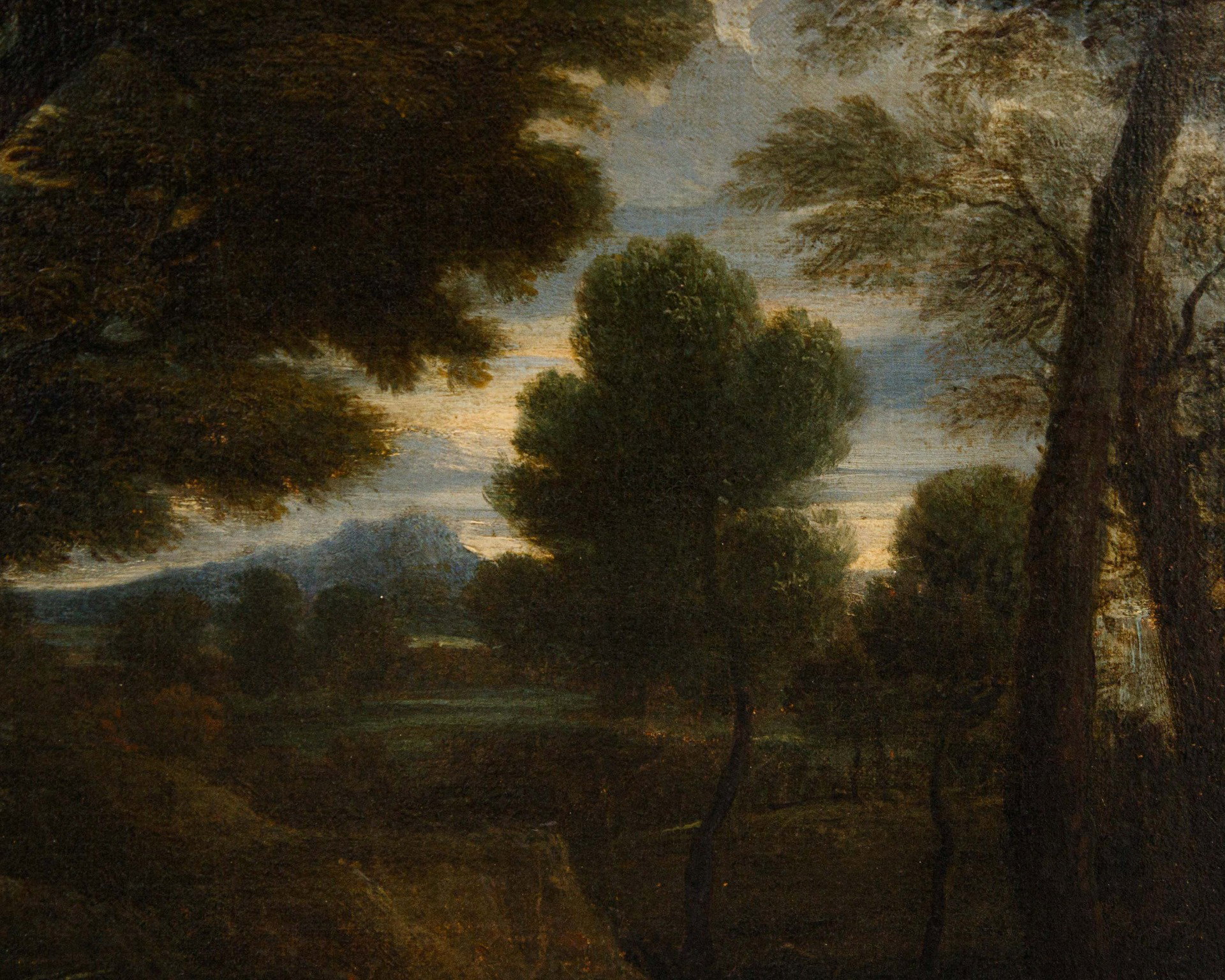
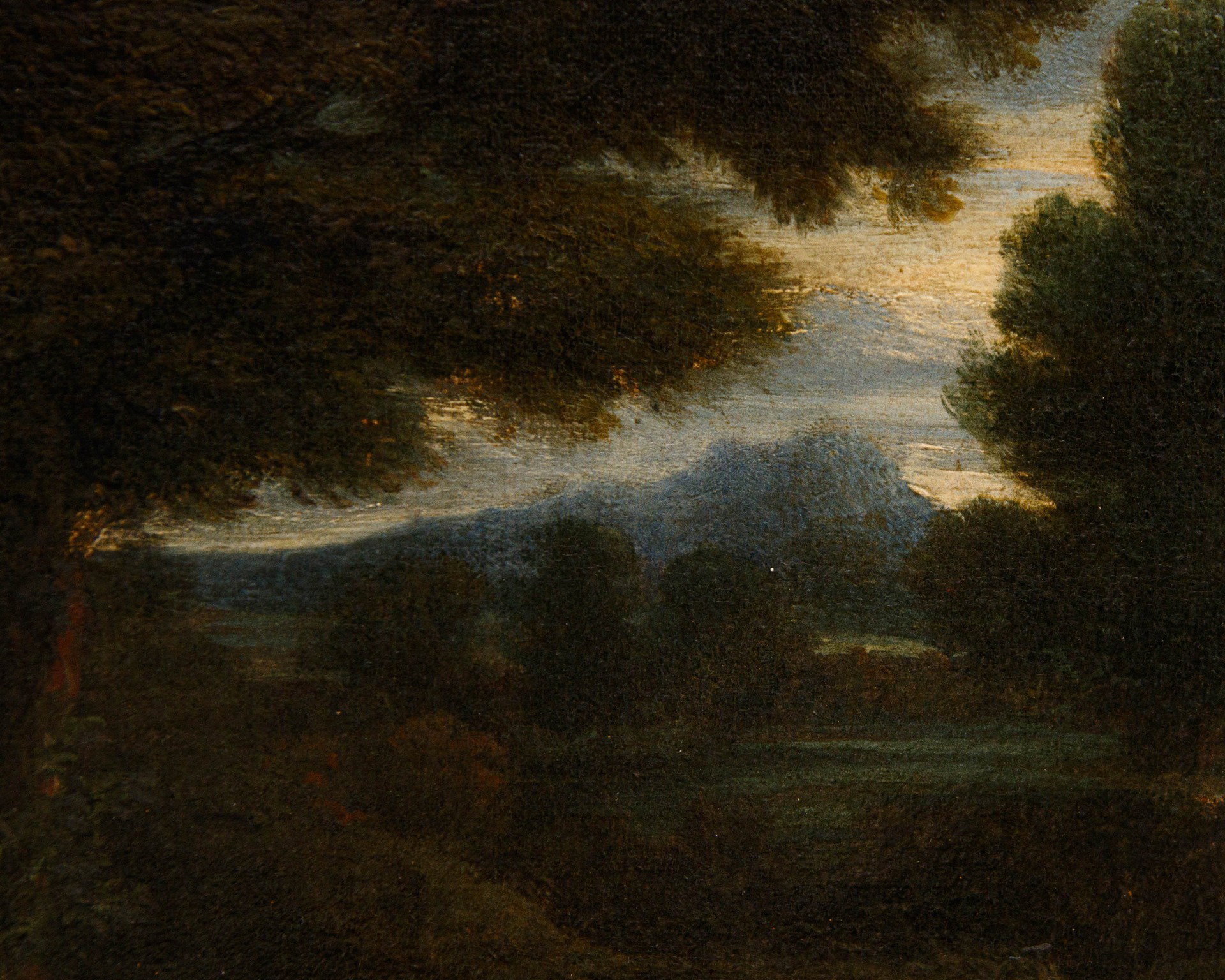
This refined oil on canvas composition, produced within the workshop of Pier Francesco Mola, transposes the sacred theme of the Rest on the Flight into Egypt into a dimension of idyllic pastoral serenity. The scene, compact and intimate, shows the Virgin Mary seated on a rock while nursing the Child with a gesture of profound tenderness; beside her, the presence of a jug and a bundle recalls the daily and humble dimension of the journey. Saint Joseph, caught in a moment of quiet, leans on the rocky ground, turning his gaze towards a small cloud from which three cherubs emerge, the only element connecting the earthly scene to the divine realm. In the background, a donkey grazes among the foliage, while the landscape opens towards bluish hills and distant mountains, suggesting an atmospheric depth that envelops the figures.
Pier Francesco Mola, born in Coldrerio in 1612 and trained primarily in Rome, was a prominent figure of the 17th century, capable of blending the Bolognese classicism of Albani and Guercino with the chromatic richness of Venetian origin observed in the works of Titian and the Bassanos. His skill in creating landscapes with figures made him famous among the Roman aristocracy, as his works were not mere biblical illustrations but poetic reflections on the relationship between man and environment. The painting in question perfectly reflects this poetics, and its existence is justified within the complex organization of the workshops of the time. The autographed prototype of this composition, now exhibited at the National Gallery in London, served as a reference model that the master made available to his collaborators to satisfy a growing market demand. The creation of multiple versions of the same work was indeed a common practice: it allowed for the offering of quality paintings at varied prices and at the same time served as a pedagogical exercise for students, who learned the trade by copying the master's inventions. The quality of this workshop version emerges strongly when compared to other Mola masterpieces in museums, where the dialogue between figure and landscape follows similar patterns. In the Saint Jerome in Meditation preserved at Palazzo Pitti, the same sensitivity is found in the rendering of rocks and vegetation, struck by a vibrant light that defines the volumes in an almost tactile manner. An equally significant comparison is with Christ and the Samaritan Woman at the Well in the Bristol Museum and Art Gallery, where the monumental yet intimate arrangement of the protagonists and the warm chromatic application directly recall the harmony of the Rest analyzed here. Finally, the ability to integrate the sacred narrative into a vast and suggestive horizon is evident in The Prophet Elisha and the Shunammite Woman at the Ringling Museum in Florida, a work in which nature ceases to be a mere backdrop to become a participant in the characters' state of mind. Ultimately, this canvas represents a significant chapter in the dissemination of Mola's style, demonstrating how his vision of the Arcadian landscape had found fertile ground in a host of collaborators capable of replicating that sense of sacred silence and natural beauty that constitutes the artist's highest achievement, making this small scene a precious testament to seventeenth-century collecting and devotion.