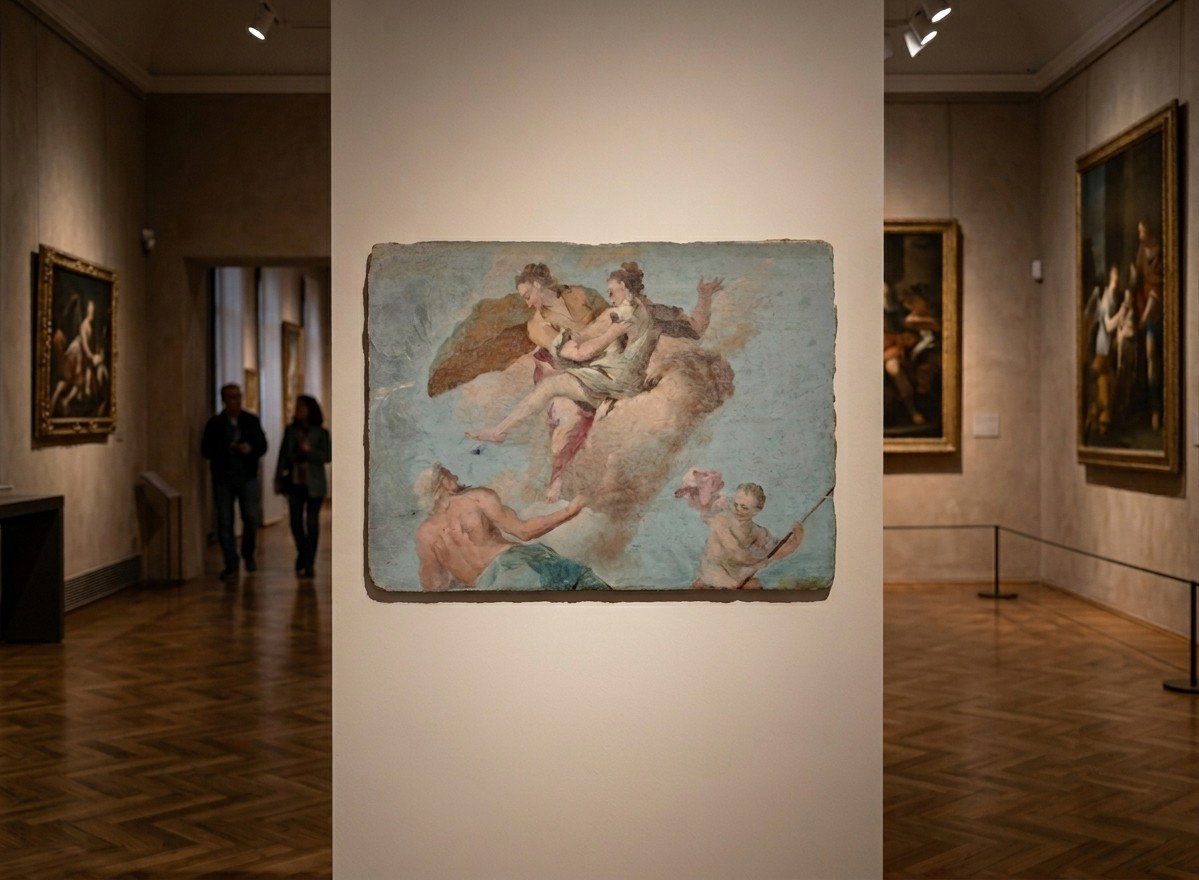
PREPARATORY SKETCH - ANTONIO PELLEGRINI (CIRCLE OF) - 18TH CENTURY
Description:
Object Technical Data Sheet
Cultural Sphere: 18th-century Venetian School / Circle or workshop of Giovanni Antonio Pellegrini (Venice, 1675 – 1741).
Object: Preparatory sketch (model) for fresco decoration or a large ceiling canvas.
Materias and technique: Oil on wooden panel (structurally parqueted support).
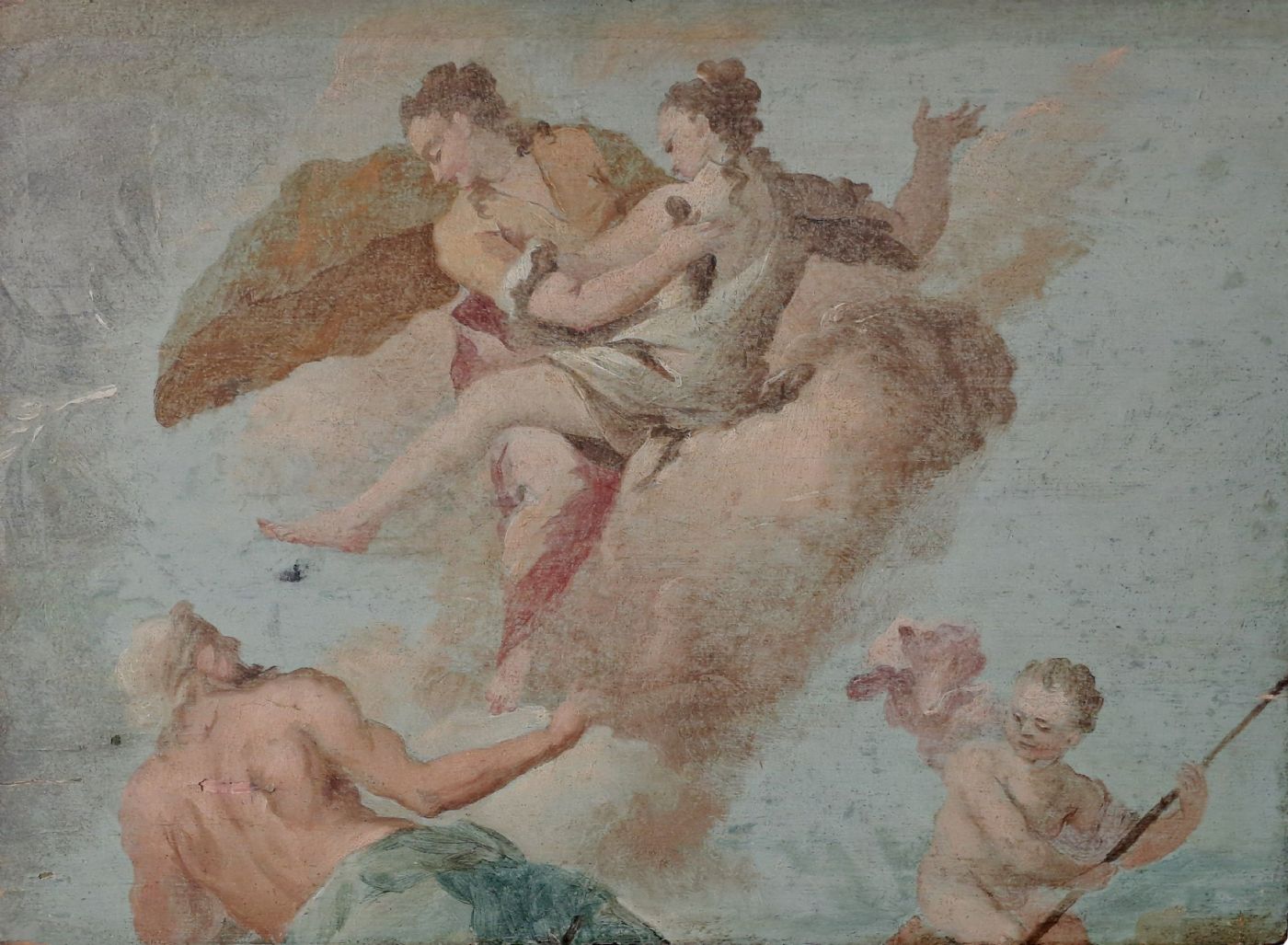
Subject: Allegorical-mythological scene (identifiable as The Triumph of Minerva or Venus and Adonis with allegorical figures, a fluvial/marine deity, and a putto).
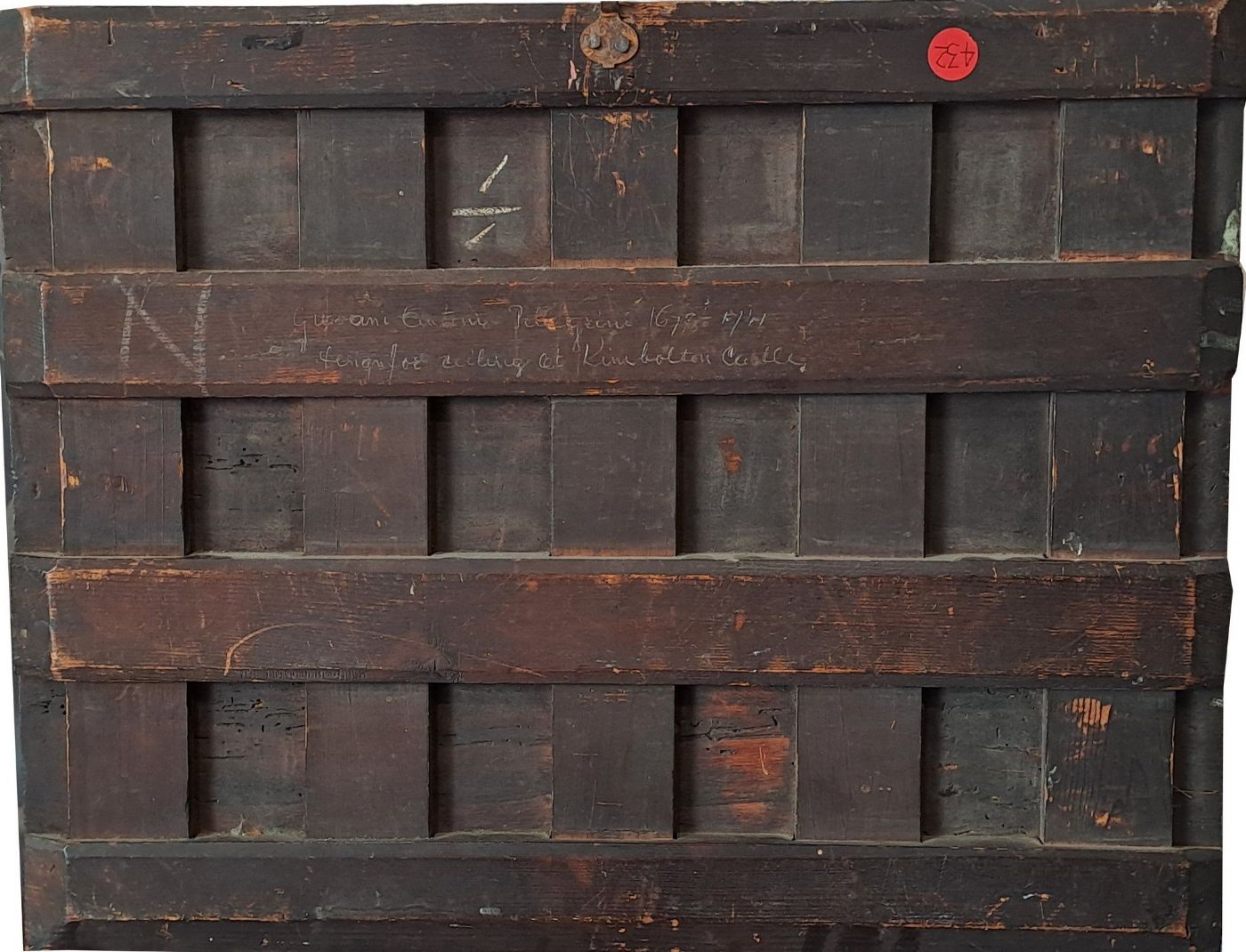
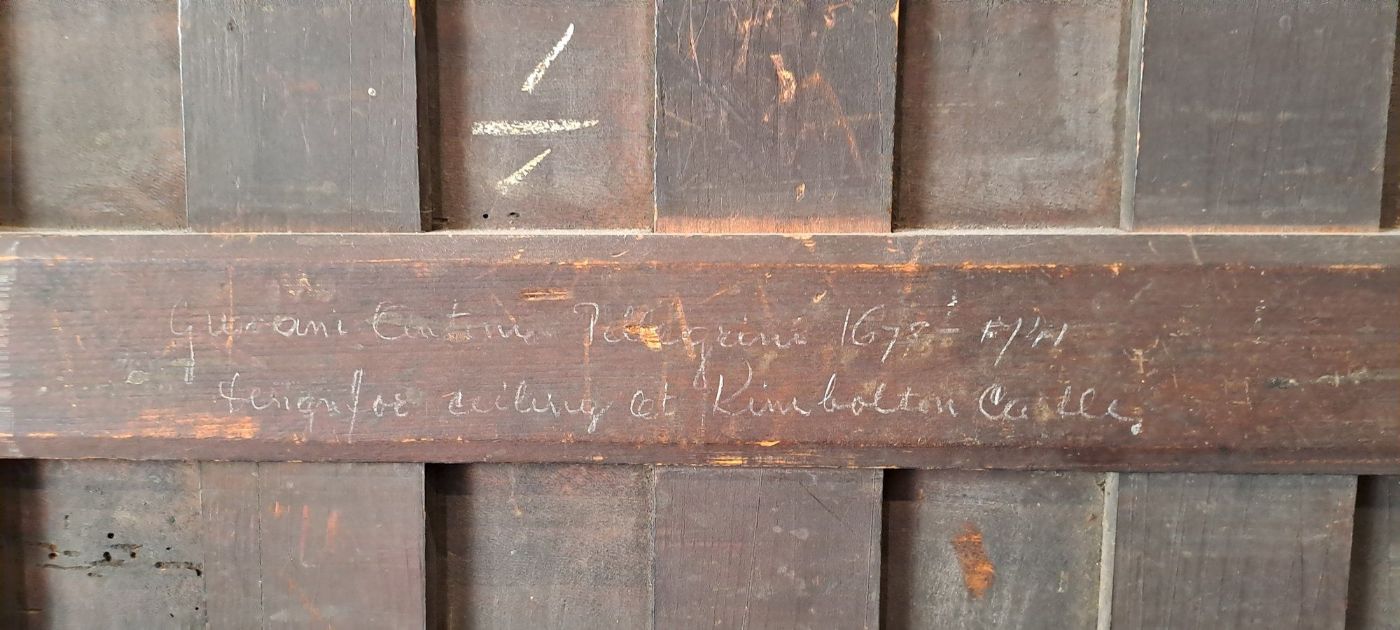
Historical inscriptions (on the reverse): * “Giovanni Antonio Pellegrini 1675-1741 / design for ceiling at Kimbolton Castle” (in English cursive script).
Presence of a red stamp from an auction/collection catalogue (“432”).
Stylistic and Formal Analysis
The painting is an extraordinary example of a late Baroque / proto-Rococo sketch, characterized by extremely airy, luminous, and concise brushwork, typical of the great period of Venetian fresco painters working abroad.
Compositional structure and figures
The work is based on a dynamic diagonal, conceived for a view from below (ceiling perspective).
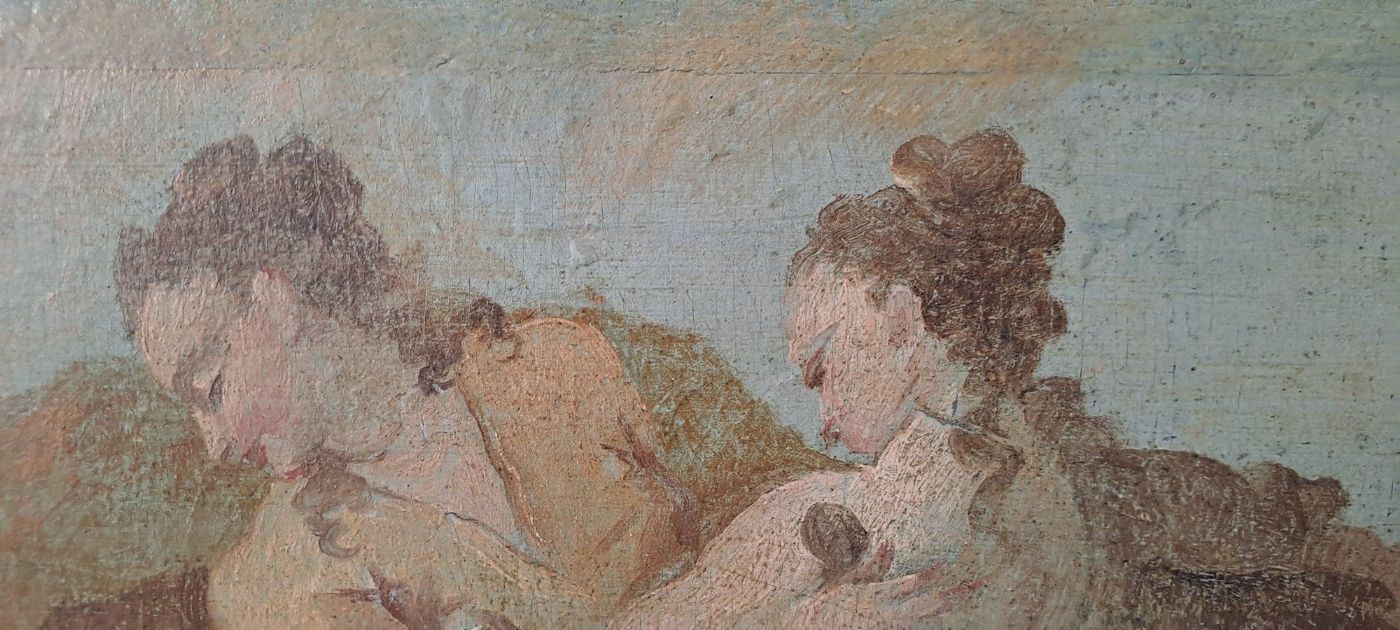
The central group: Two semi-divine female figures rest on a dense mass of amber clouds. The chiaroscuro on the bodies, unfinished but suggested by rapid touches of white lead and ochre, denotes exceptional speed of execution aimed at studying the overall luminous effect (the "glance").
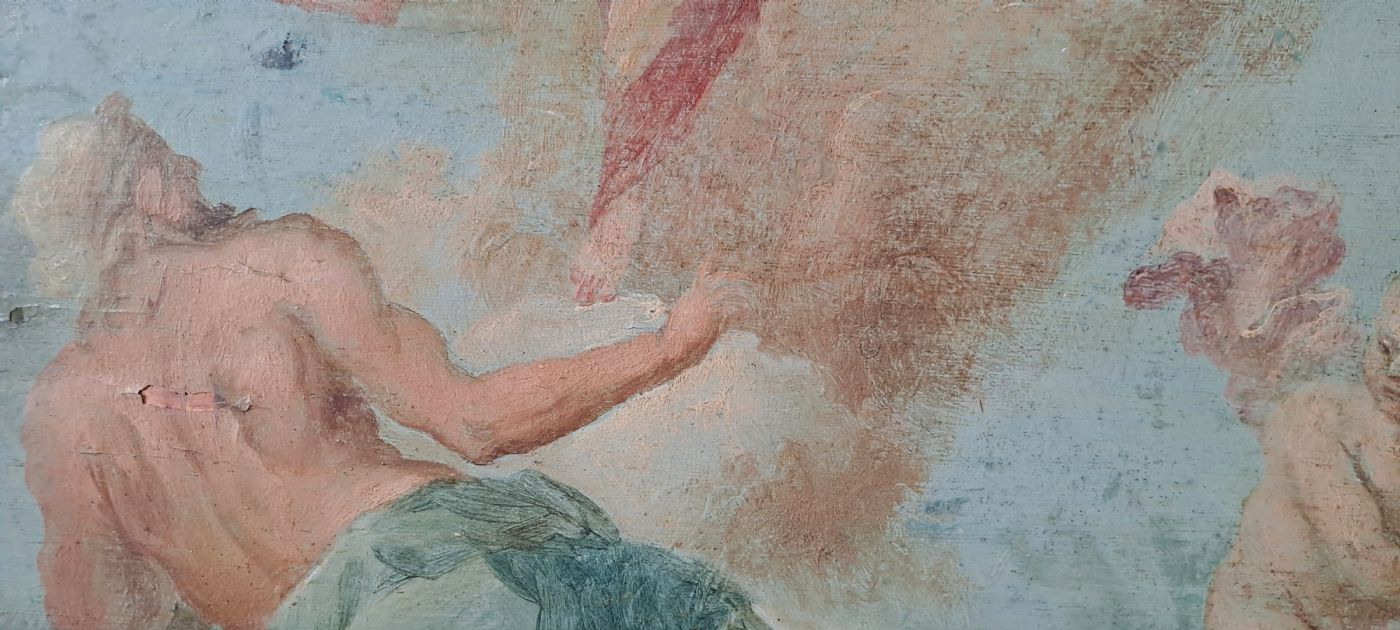
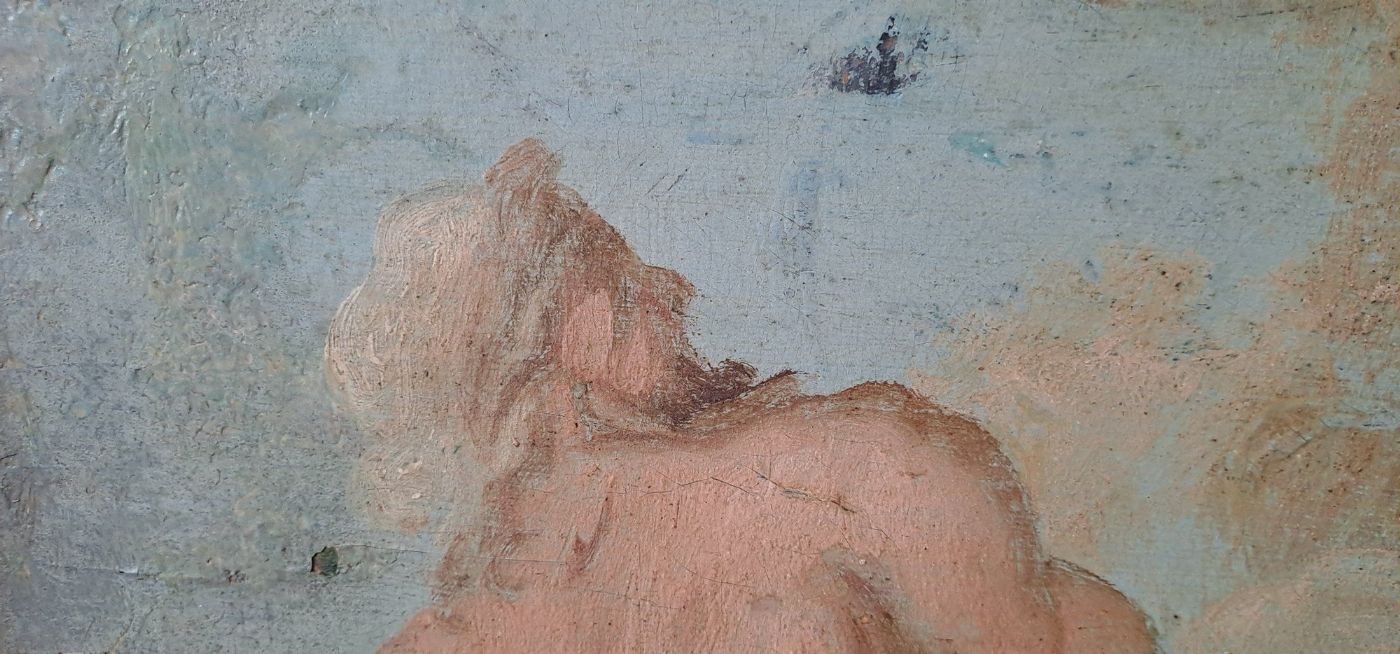
Bottom left: A powerful nude male figure seen from behind (a river allegory or a marine/terrestrial deity like Atlas or Triton) acts as a perspectival wing and a connection between the earthly and celestial realms.
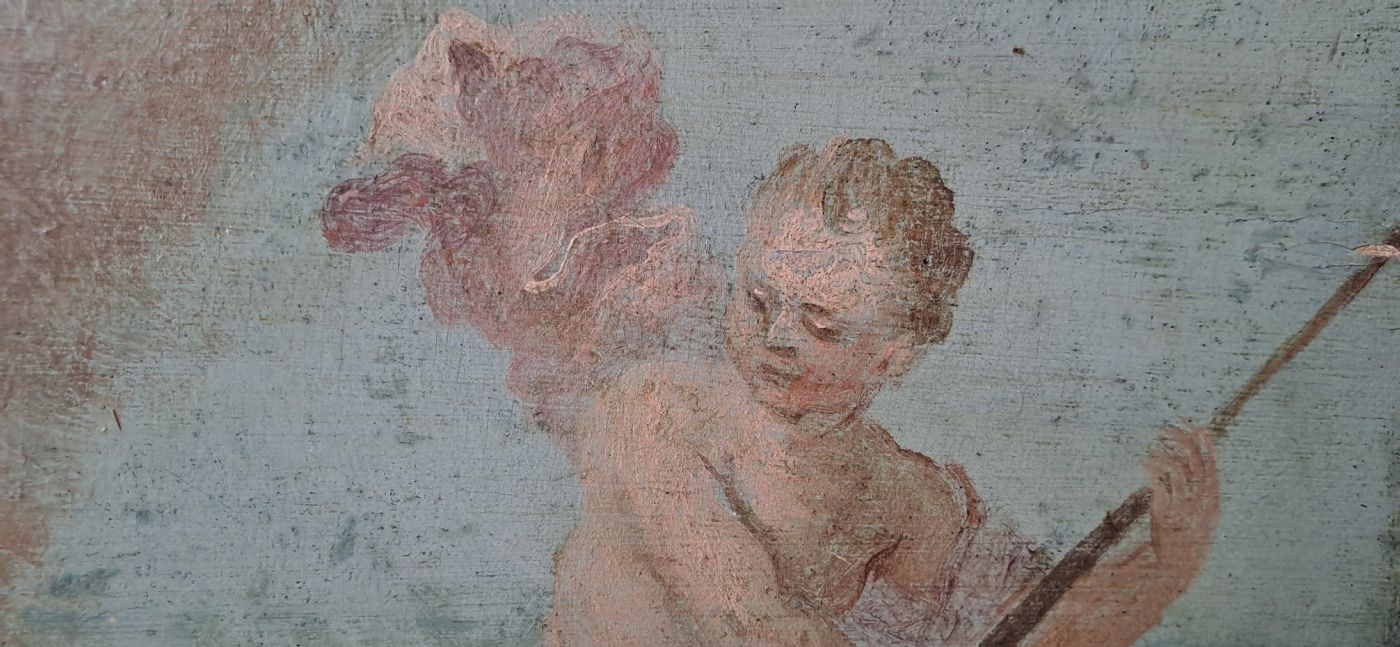
Bottom right: A winged putto (or cupid), rendered with very few but skillful brushstrokes, holds a linear element (a staff or a spear) and a shifting pink drapery.
Color and application (The Venetian "touch")
The palette is dominated by a blue-celeste background (the open sky), contrasted by the warm tones of the chalky clouds, the bright pinks of the flesh tones, and the muted emerald green of the male figure's drapery. The painting progresses in dabs and quick touches: the artist does not dwell on anatomical detail but uses the shifting light and chromatic vibration typical of the language of Sebastiano Ricci and Pellegrini himself.
Analysis of the Support (The Reverse)
Examining the back of the painting offers elements of undoubtedly historical and antiquarian value:
The Panel and Parquetting: The wooden support shows a structure reinforced by a fixed grid parquetting, a historical conservation intervention (likely carried out between the 19th and early 20th centuries) to stabilize the natural movements of the wood and prevent warping.
The Inscription: The handwritten note directly attributes the artifact to Giovanni Antonio Pellegrini, identifying it as a preparatory study for the frescoes at Kimbolton Castle (Cambridgeshire, England), where the Venetian painter worked between 1708 and 1713 on commission from the 4th Earl of Manchester.
Attributive Critical Note: Although the inscription on the reverse is an important contemporary documentary trace, philological prudence requires classifying the sketch as "circle/school" or "workshop" of Pellegrini. The style fully reflects the master's freshness and calligraphic lightness, but a comparative study with the surviving ceilings of Kimbolton (such as the Chapel or the Grand Staircase) will be necessary to confirm the autograph hand or identify it as the work of a skilled assistant working on the same site.
Condition
The work shows excellent overall legibility. The pictorial surface shows natural signs of age: a dense and fine craquelure consistent with the period, and some localized micro-flaking of paint (visible particularly on the back of the male figure on the bottom left), which do not compromise the visual unity and indicate the absence of heavy, recent covering restorations.
Dimensions: 78 x 37 cm
A regular certificate of authenticity with a photo will be issued. We assure a response to your emails within 24 hours. REGISTERED WITH THE PANEL OF EXPERTS AND CTU AT THE COURT OF LA SPEZIA