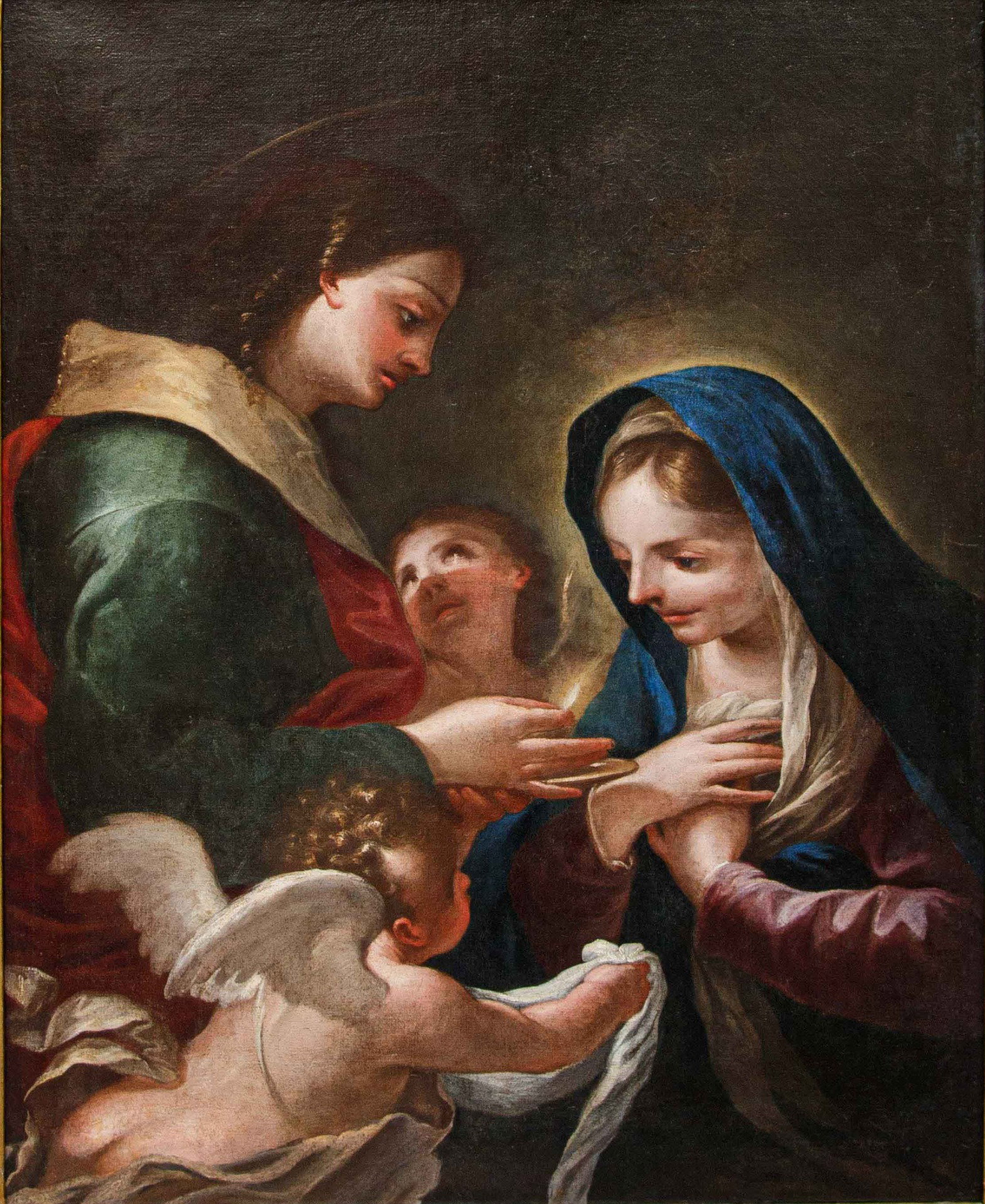
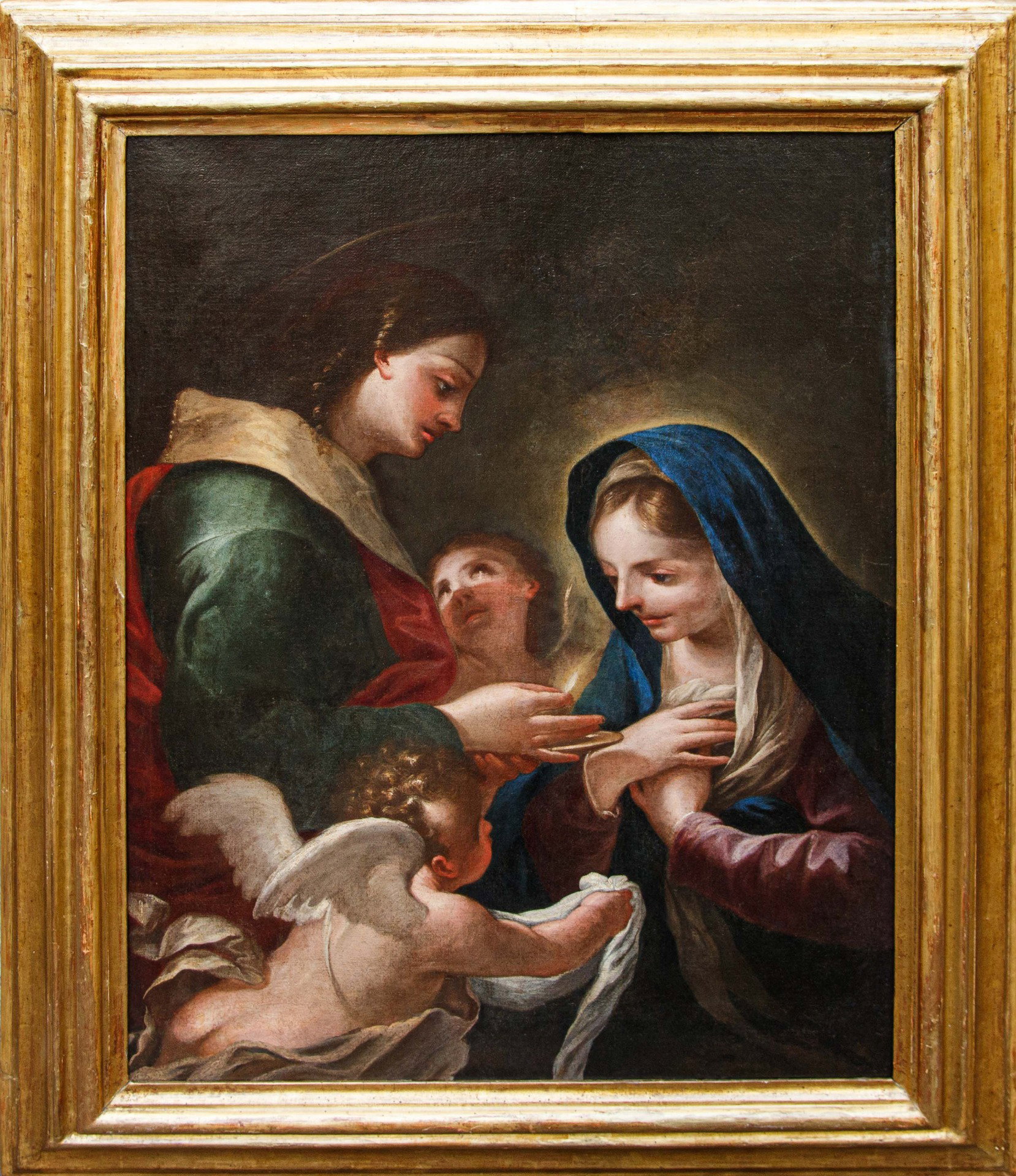
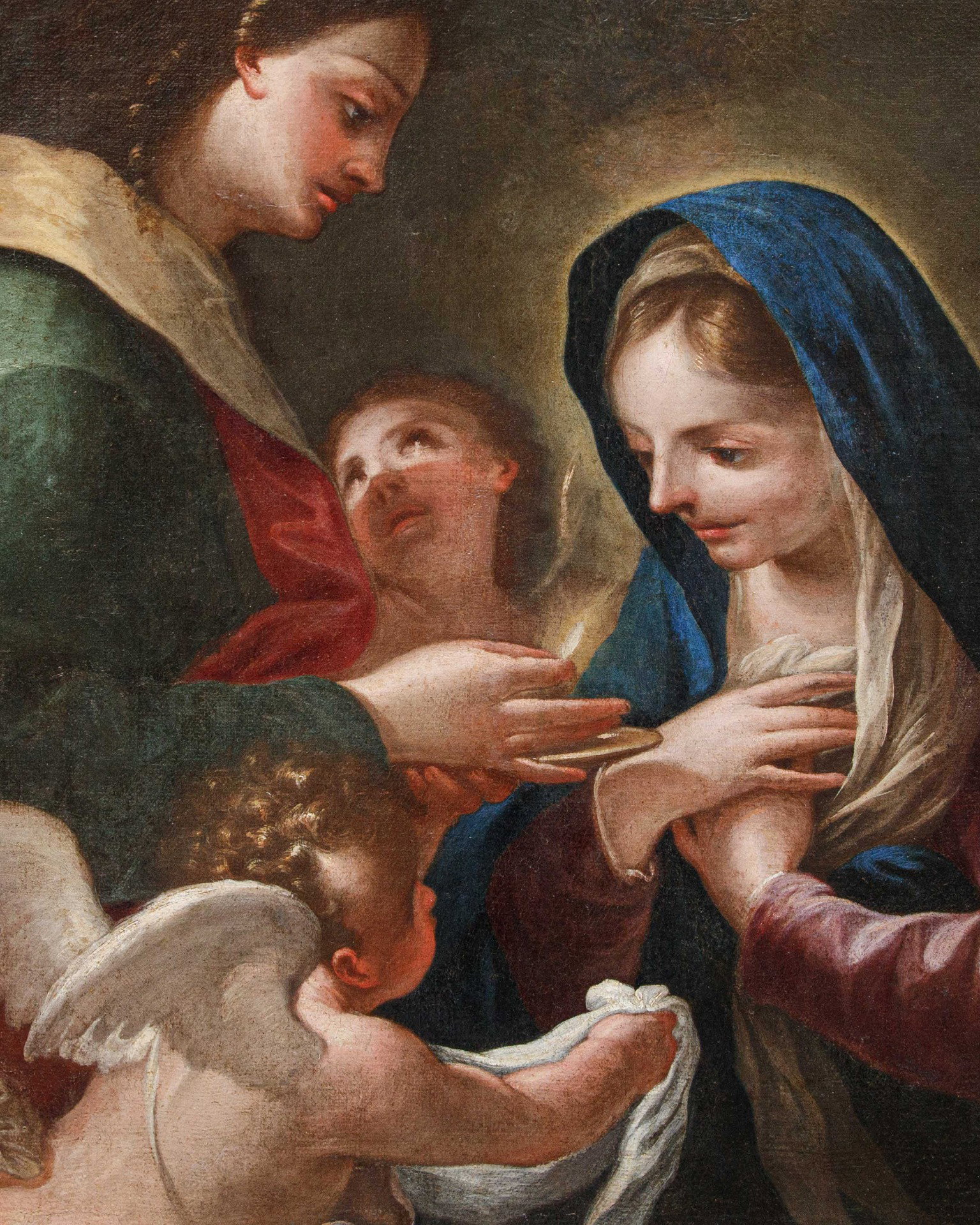
Emilian school of the mid-17th century, The Virgin receives the Eucharist from Saint John
Description:
Emilian school of the mid-17th century
The Virgin receives the Eucharist from Saint John
Oil on canvas, 95 x 72 cm
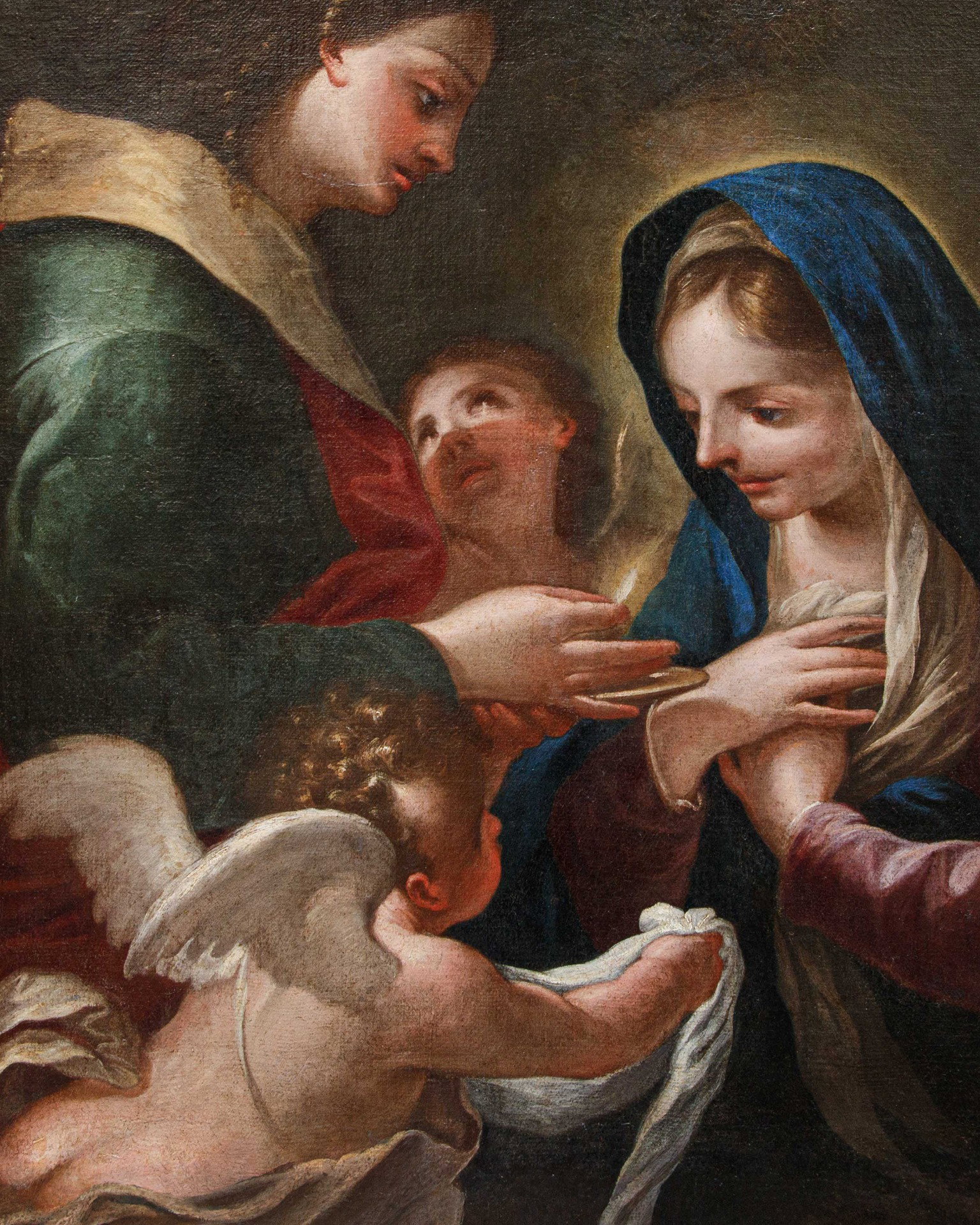
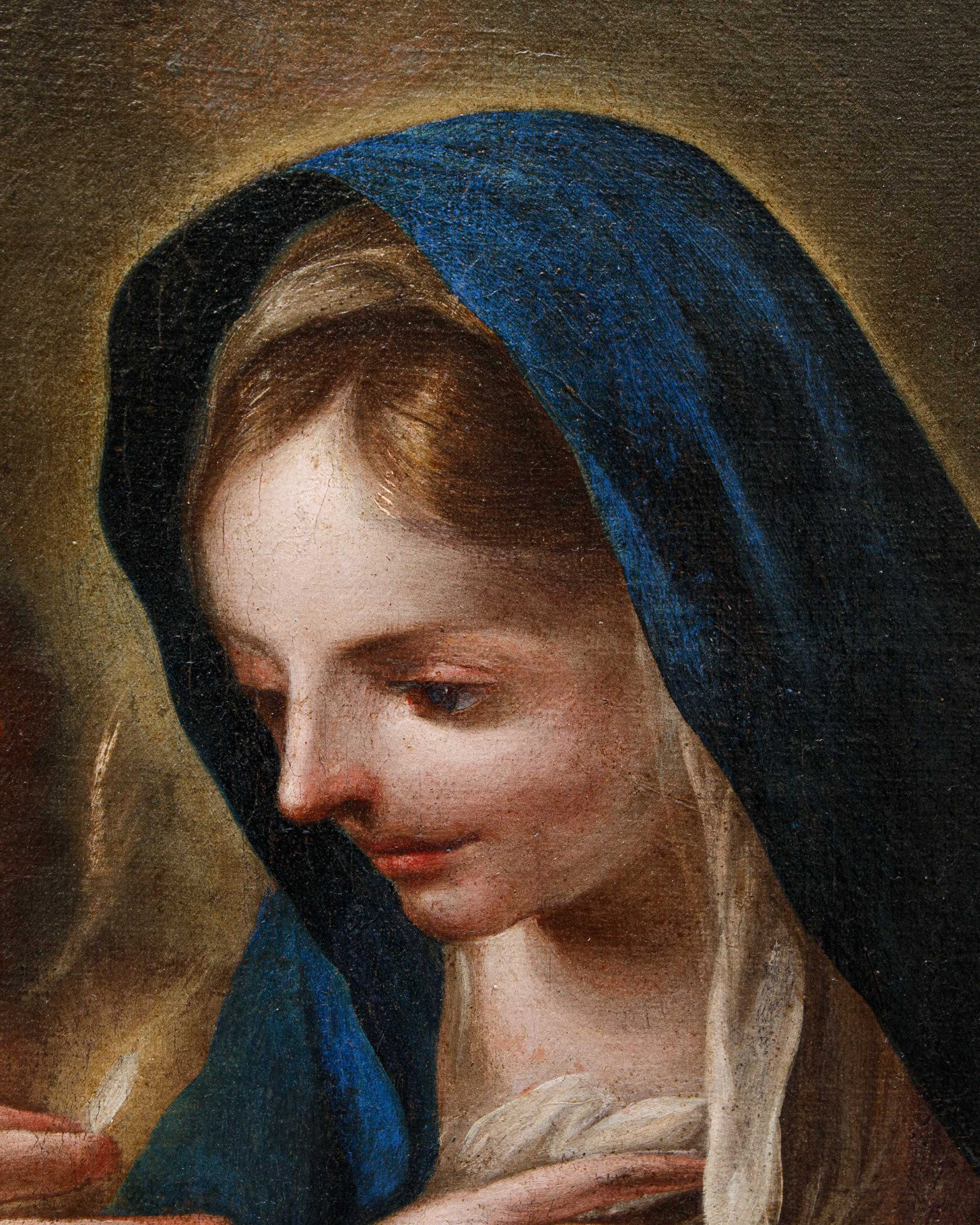
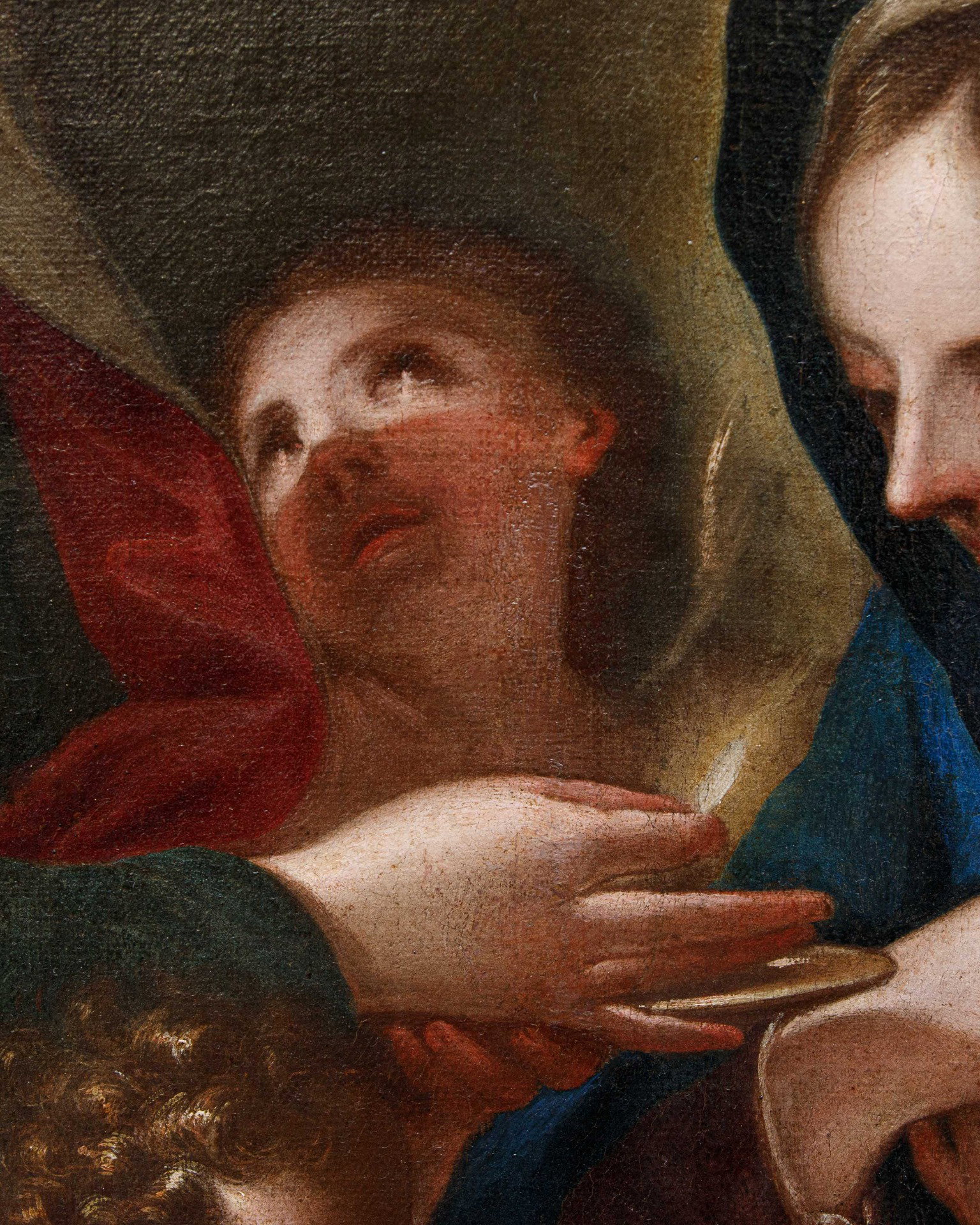
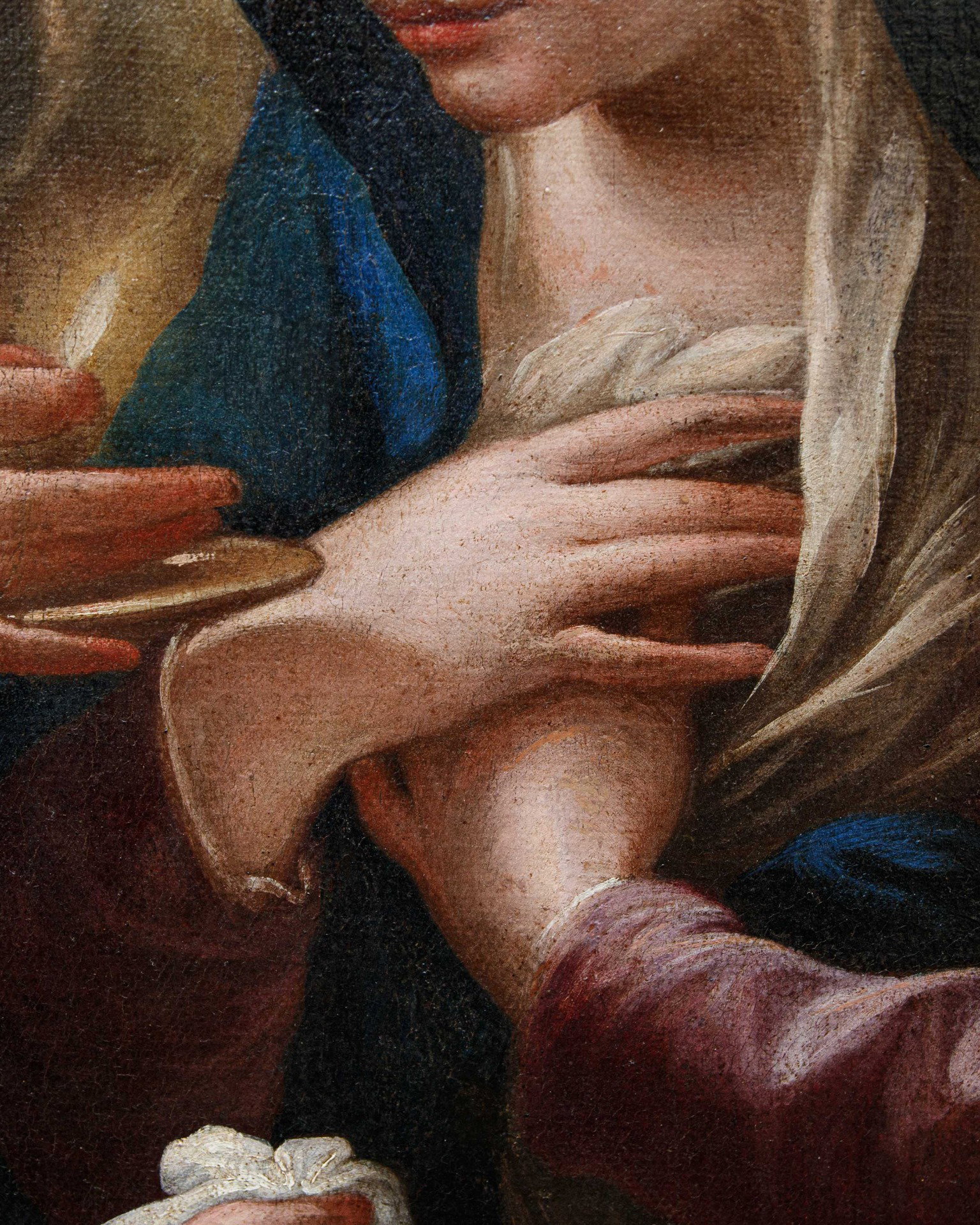
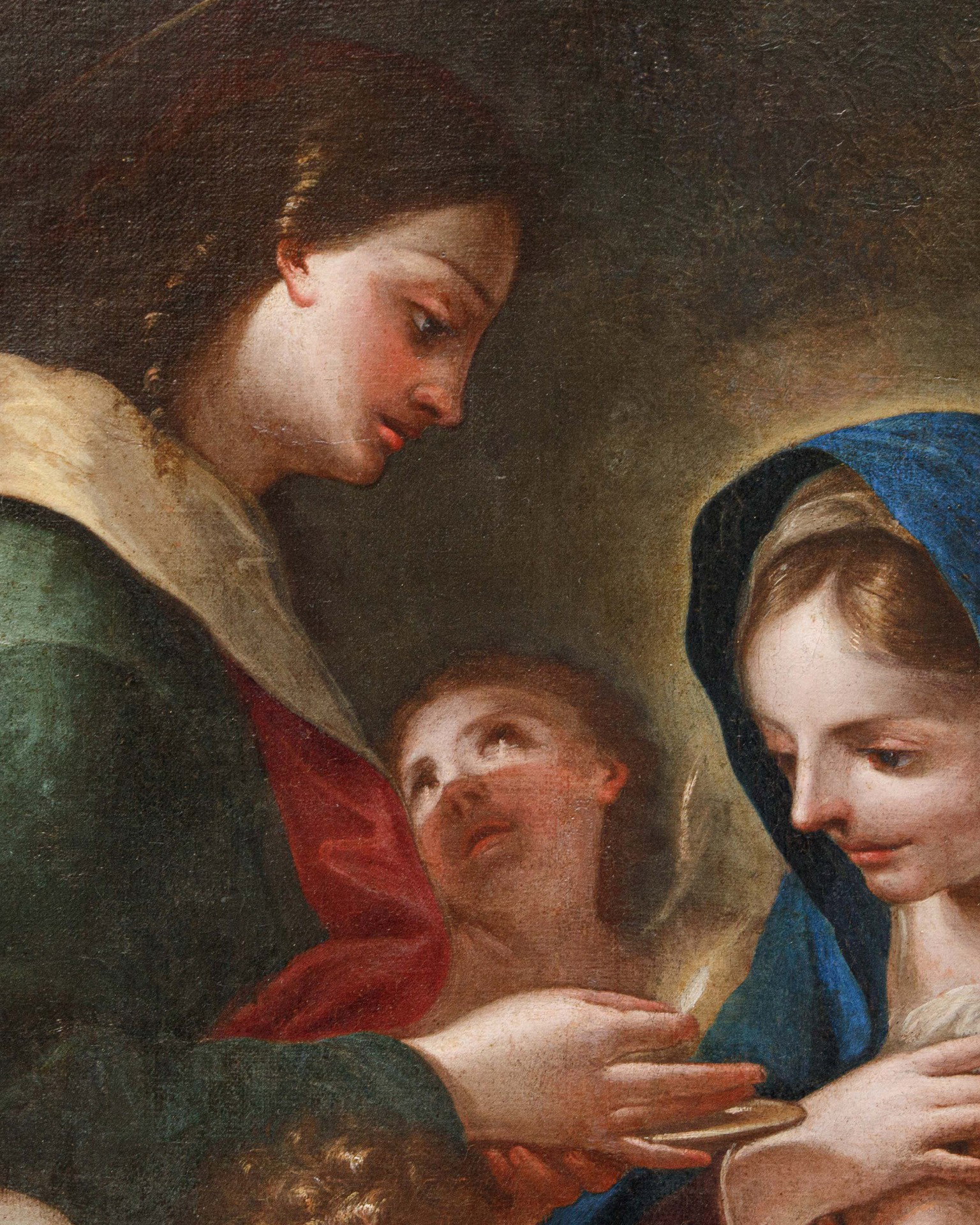
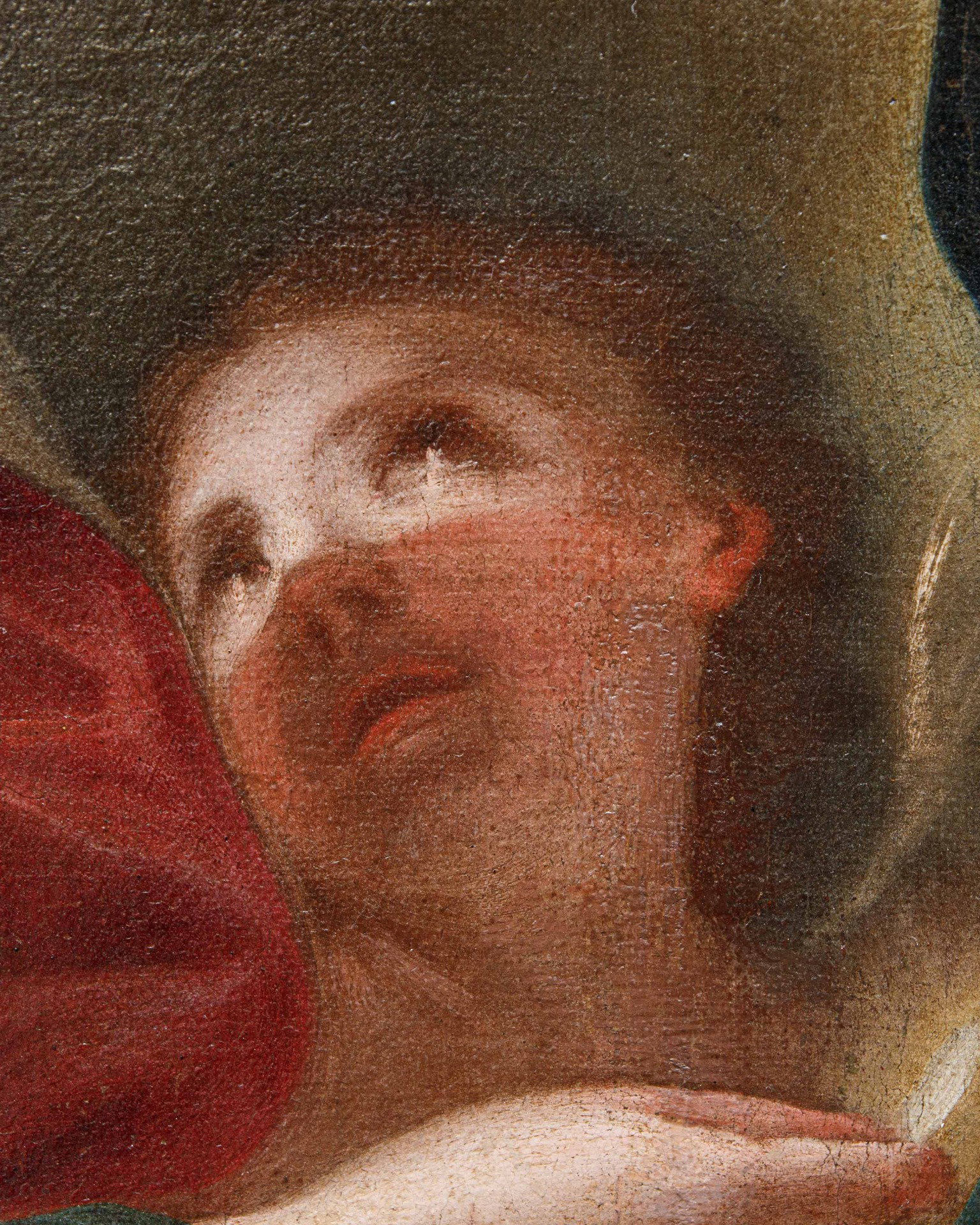
The painting under examination, an oil on canvas attributable to the Emilian school of the mid-17th century, depicts a moment of the highest spiritual and liturgical density through a tight and intimate composition, built on a skillful dialogue of gazes and gestures that unfolds in a nocturnal and soft atmosphere. At the center of the representation is the Virgin Mary, her head slightly bowed and her gaze lowered towards the host, while her hands crossed over her chest emphasize a gesture of acceptance and reverence. Her traditional deep blue mantle stands out sharply against the dark background, framing a face with delicate, almost porcelain features that emanates its own light. On the left, the figure of Saint John the Evangelist, characterized by warm colors given by his red mantle and green robe, presents the host with measured and solemn gestures, acting as a bridge between the human and the divine. Two cherubic figures assist in this sacred rite.
The analysis of the subject reveals a precise devotional intention typical of the Counter-Reformation, aimed at exalting the dogma of Corpus Domini through an episode that, although not reported in canonical texts, belongs to the tradition of Mary's life after the Resurrection. The choice of "half-figure" is not accidental, as it allows the viewer to eliminate all spatial distance and participate emotionally in the mystical act, concentrating attention exclusively on the host, which becomes the luminous focal point of the entire work. From a historical-critical point of view, the canvas fits perfectly into the Emilian artistic landscape of the High Baroque: in this composition, one can trace the legacy of the Carracci and Reni schools, visible in the formal solidity of the figures and the almost academic grace of the faces, but one also senses a persistent echo of Correggio's softness, perceptible in the delicacy of the flesh tones and the way chiaroscuro caresses the volumes. This style, often defined as Baroque classicism, avoids the dramatic exaggerations of Caravaggism to favor a composed and poetic narrative of "affections," capable of transforming theological dogma into a domestic and touching vision. The work thus attests to the technical skill of the Bolognese and Parmesan workshops of the period, adept at blending formal rigor and emotional intensity into an image of extraordinary communicative effectiveness.