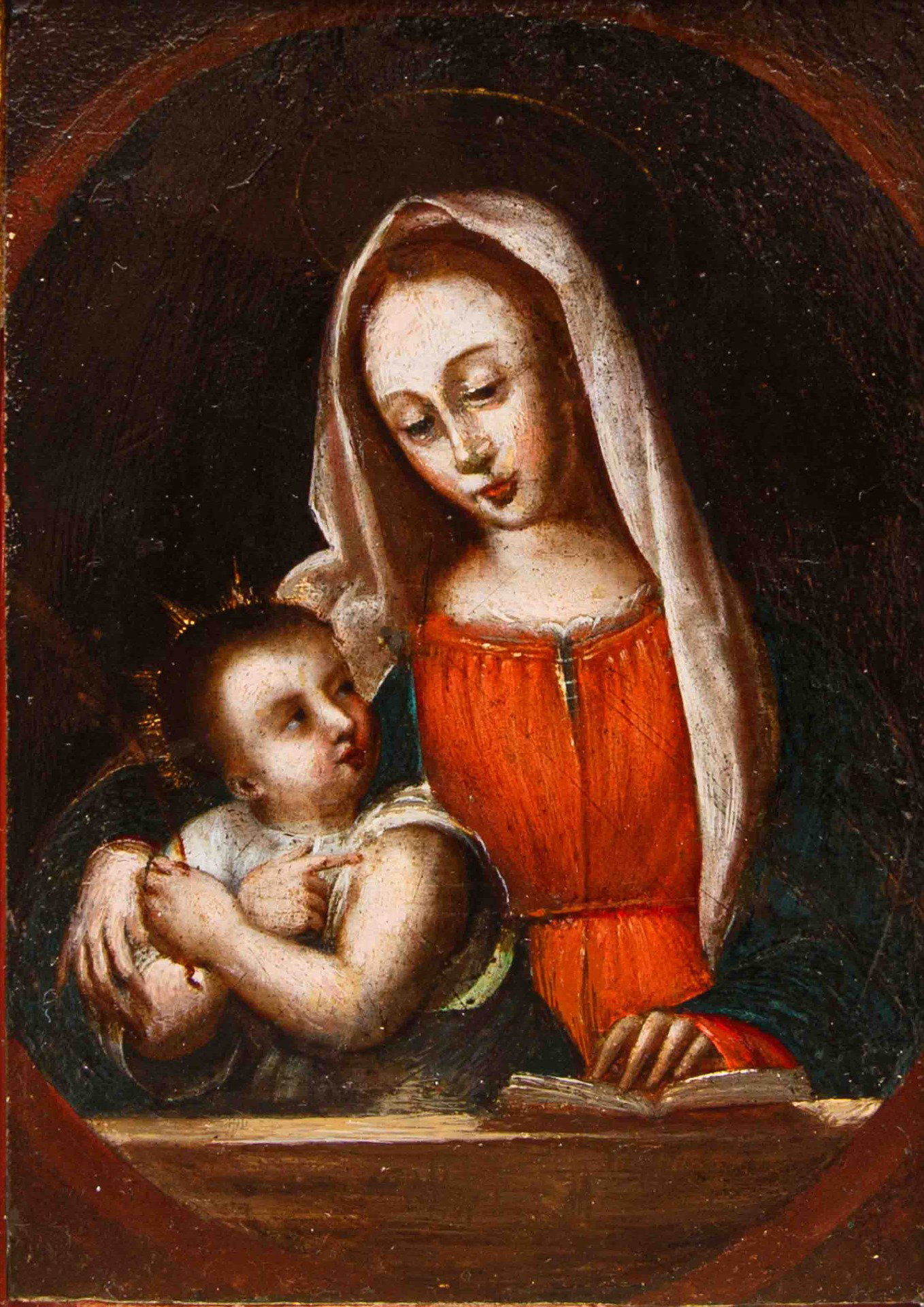
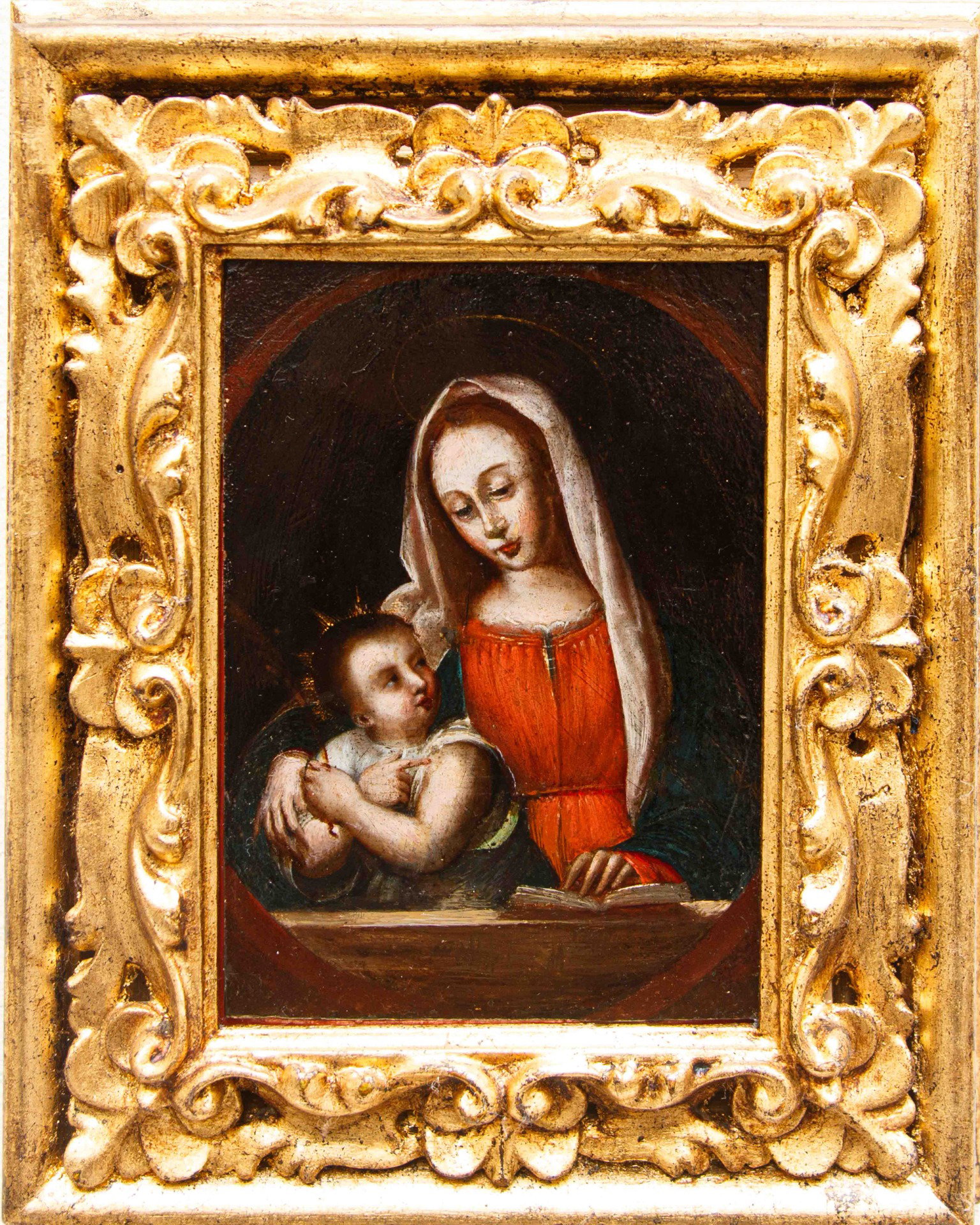
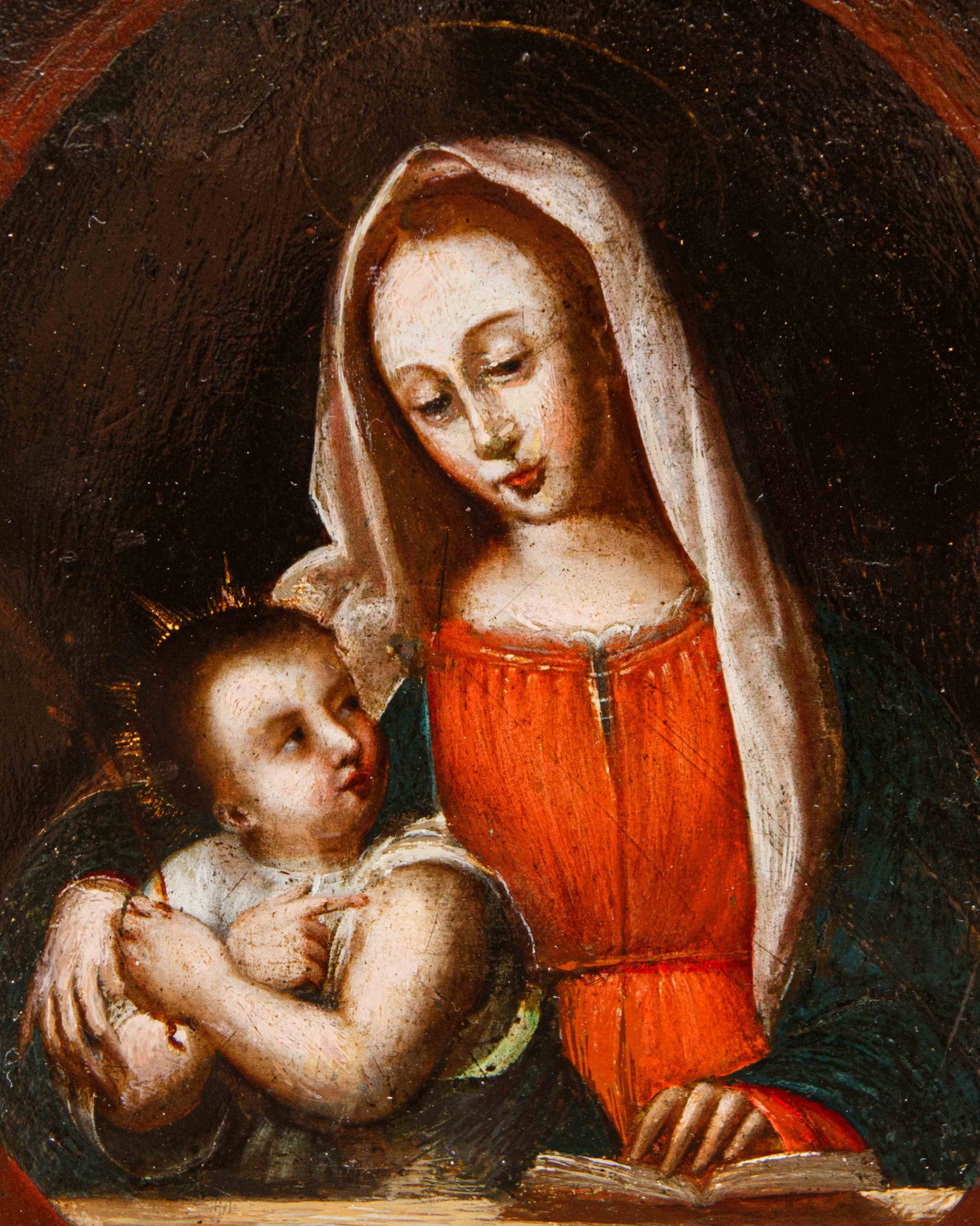
Lombard School, 16th century, Madonna and Child
Description:
Lombard School, 16th century
Madonna and Child
Oil on copper, 18.5 x 13.5 cm
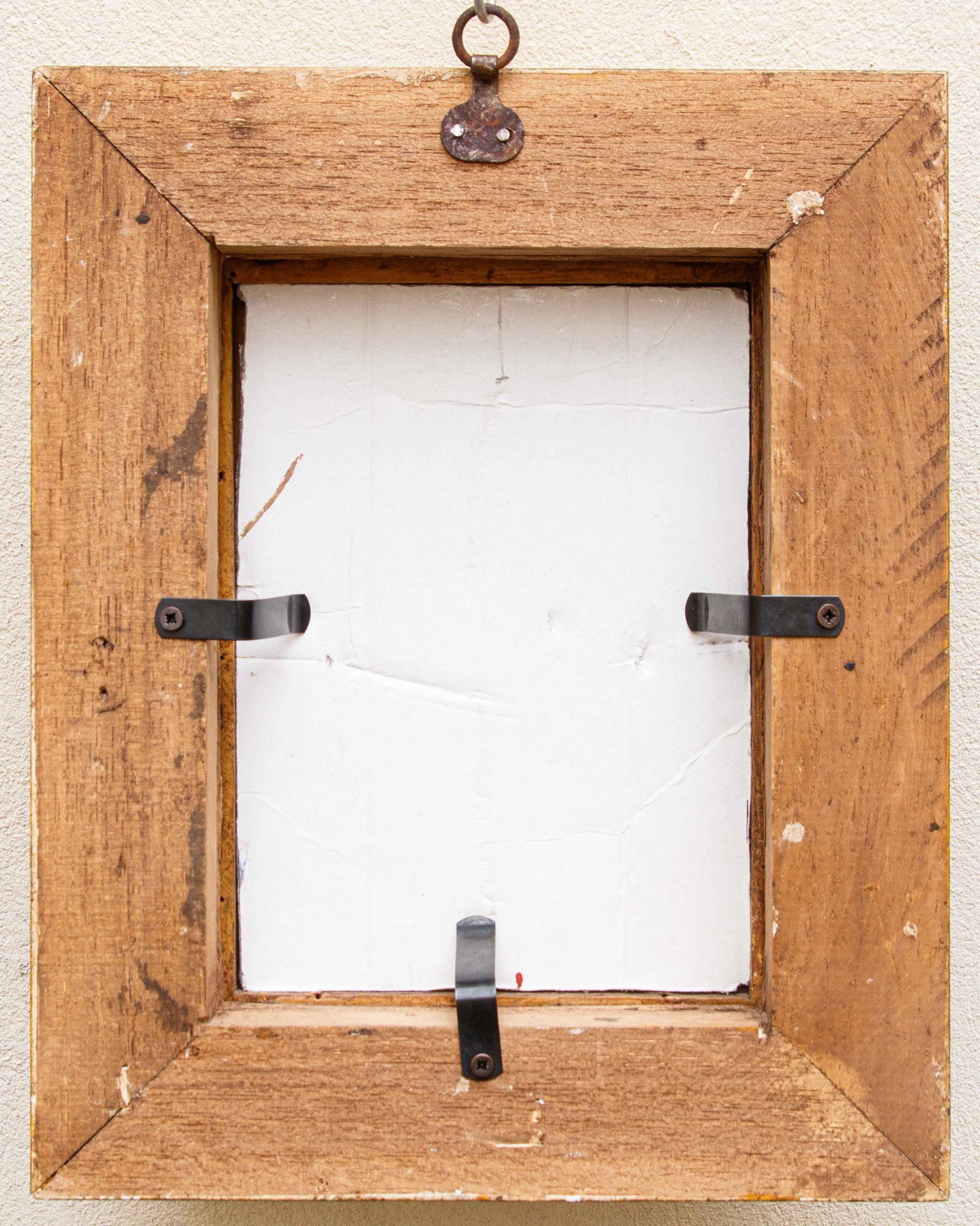
With frame, 28 x 22 cm
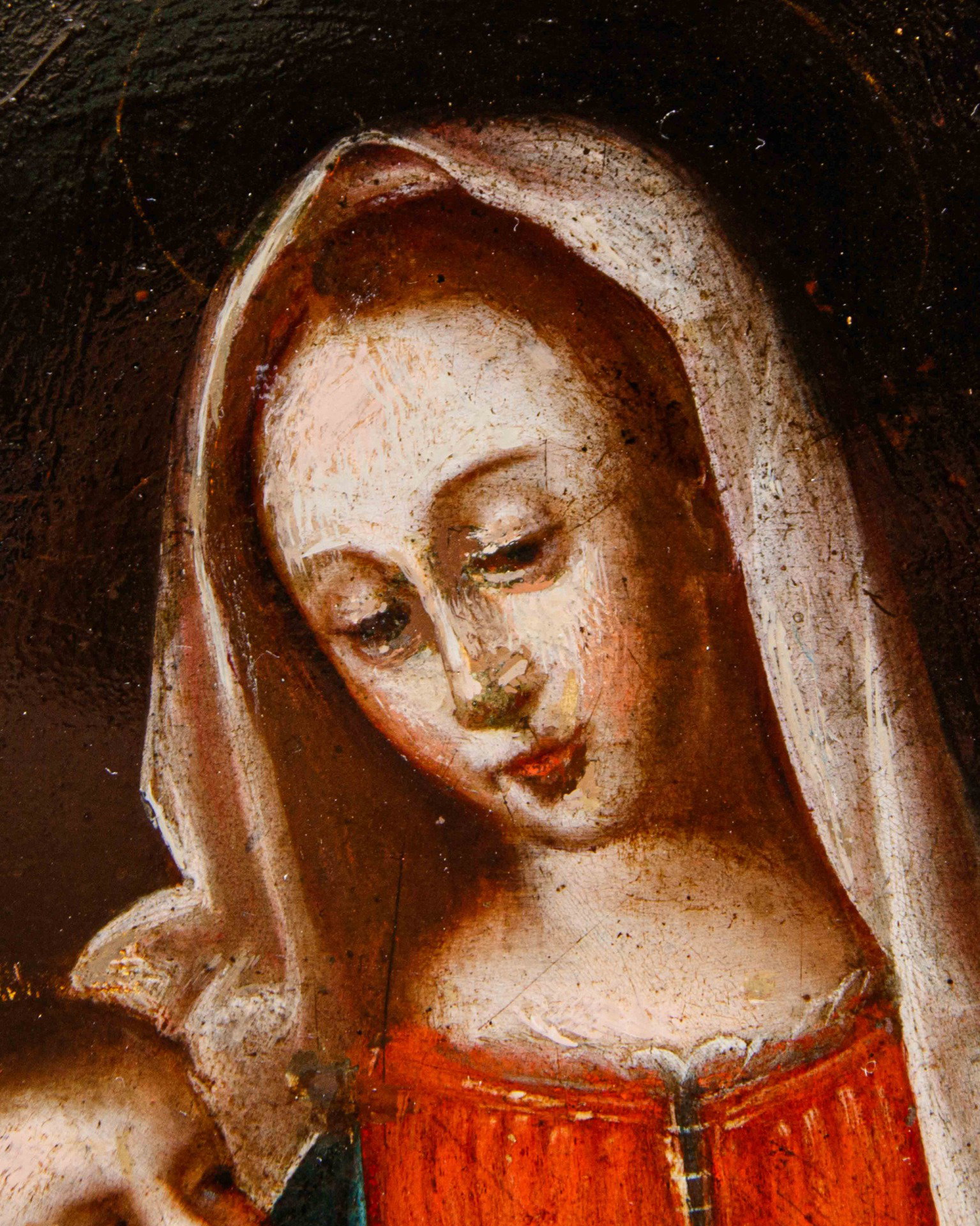
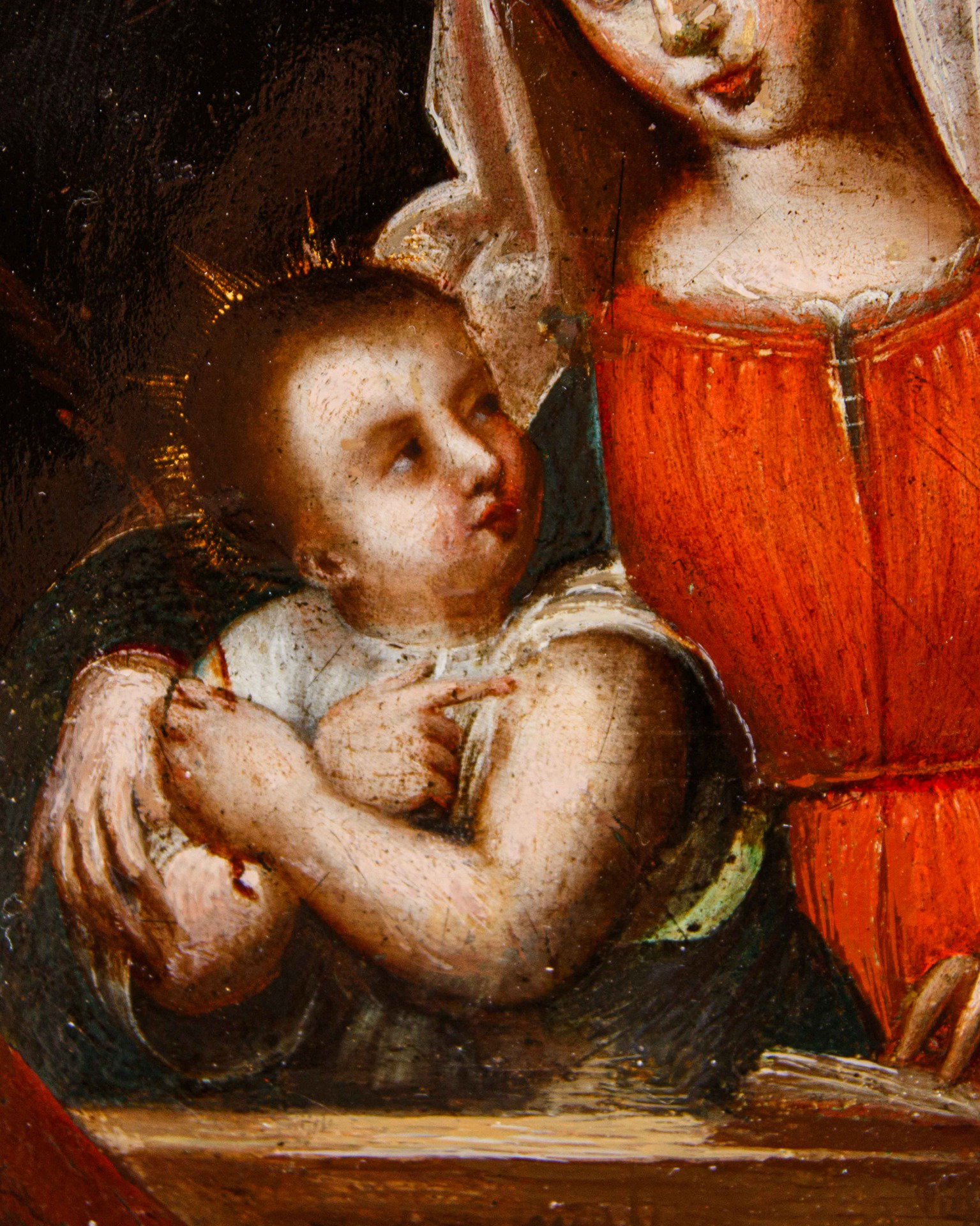
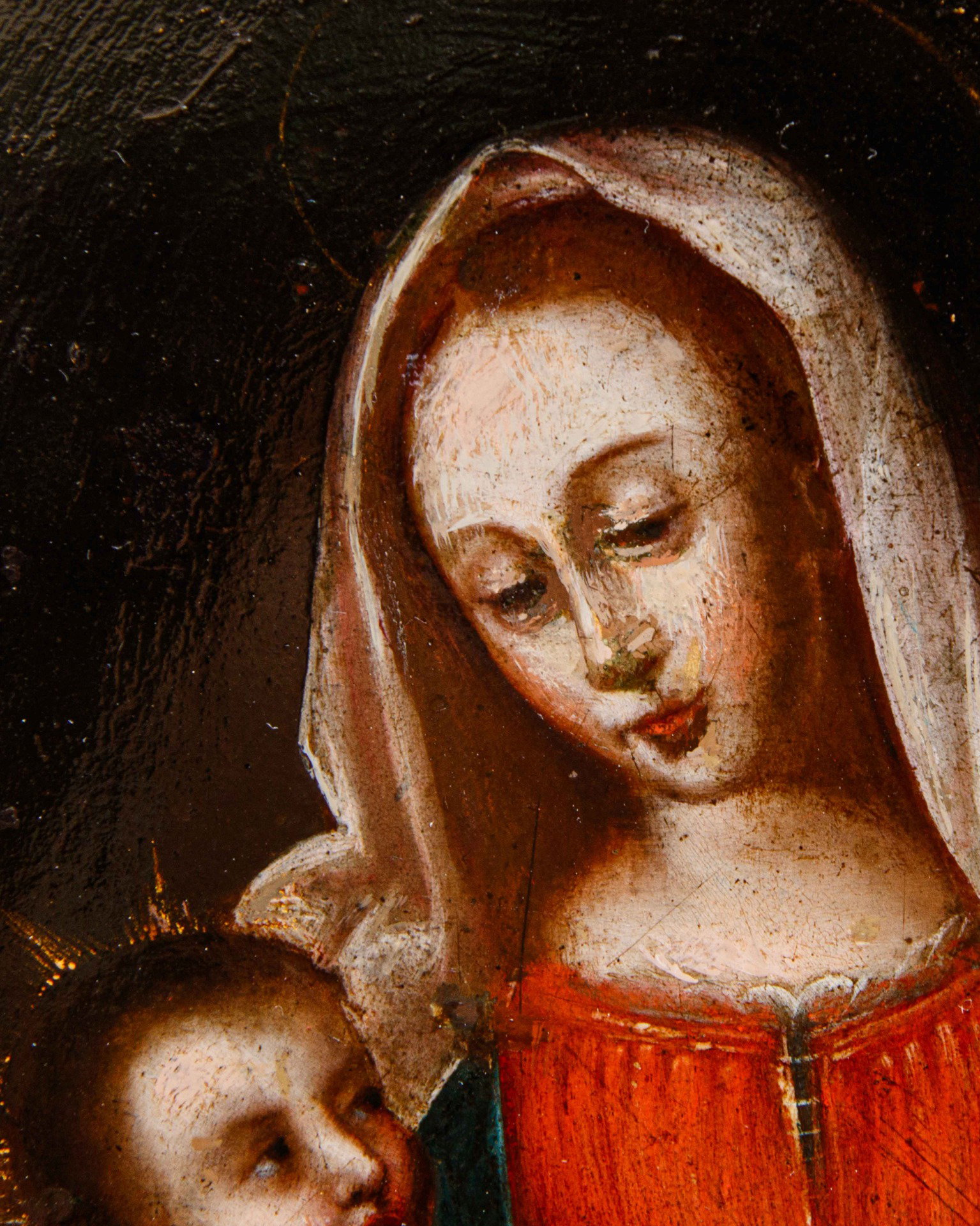
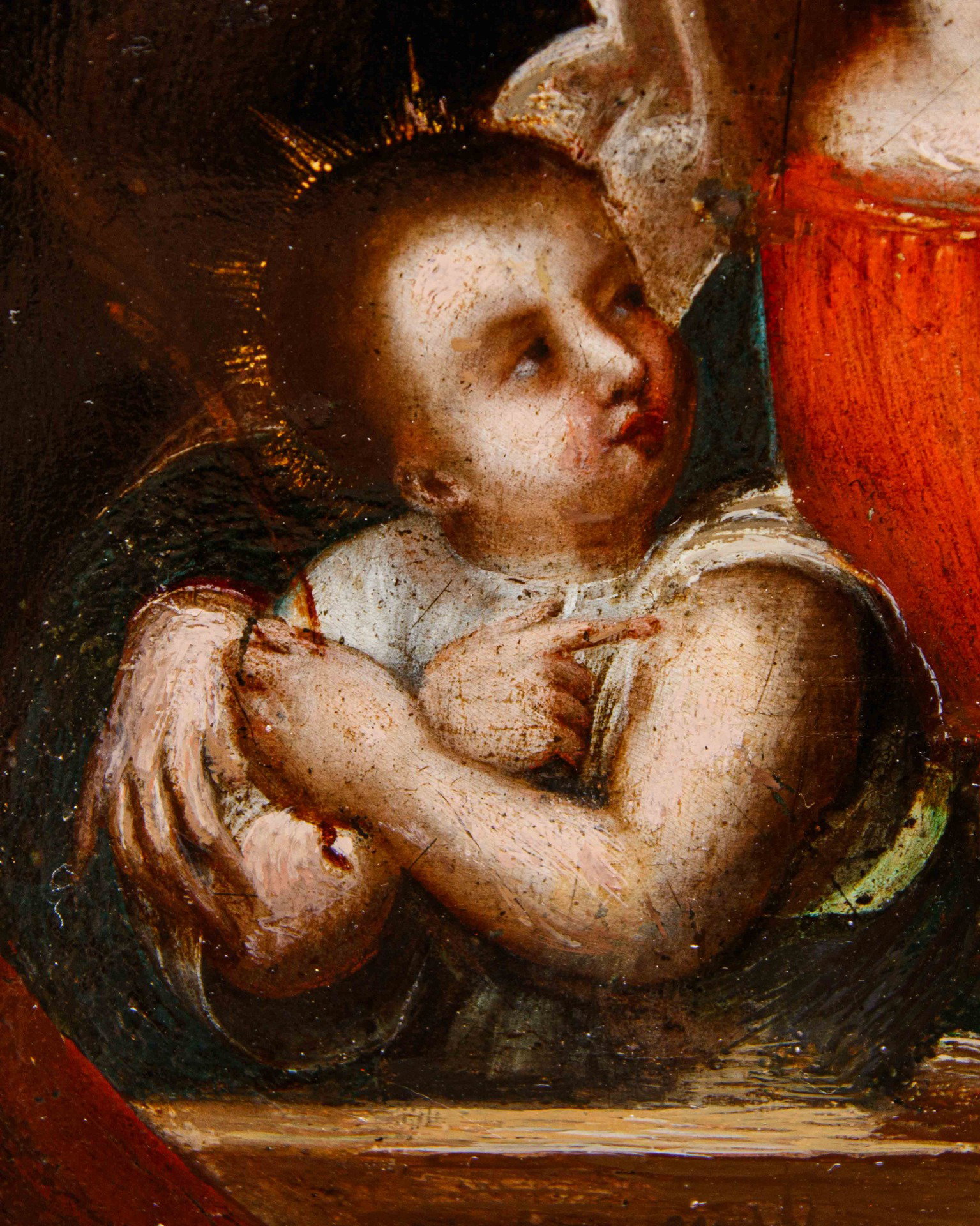
The work, an oil on copper depicting the Madonna and Child, is presented with a close-up half-bust framing, emphasizing the intimacy of the chosen subject. The image is dominated by the figure of the Virgin, whose tilted face and deep gaze directed towards the Child express tenderness and melancholy, a premonition of the Passion. The dominant colors are the bright red of the robe and the pure white of the veil, which contrast with the darkness of the background. The presence of a fine halo around the Child's head and the affectionate gestures with which the two figures are immortalized – the palm held gently in the Child's hands and the Virgin's index finger pointing to the open book – accentuate the devotional and intimate character of the copper, which was most likely born from a private commission.
The painting reflects various aspects typical of Lombard painting in the 16th century, a period strongly influenced by Leonardo da Vinci's presence in Milan (active until around 1513) and the subsequent adherence to the principles of the Counter-Reformation. Indeed, the Leonardesque influence is evident in the use of soft chiaroscuro and sfumato to model the flesh tones, especially in the faces, which lend the figures a sense of delicacy and psychological depth: the relationship between the Madonna and Child is rendered with tenderness and humanity, emotionally involving the observer in the embrace and exchange of glances.
Furthermore, throughout the 16th century, artworks began to align with the requests of the Council of Trent: simple and clear compositions were favored, facilitating the devotion and emotional identification of the faithful, while figures were often isolated against dark backgrounds to focus attention on the protagonists and their spiritual significance. There is a constant attention to Flemish-Lombard detail and naturalism, which here manifests in the rendering of hands, drapery, and the materiality of objects.
From an iconographical point of view, the work also appears to be influenced by the lessons of Bernardino Luini (Dumenza, circa 1481)