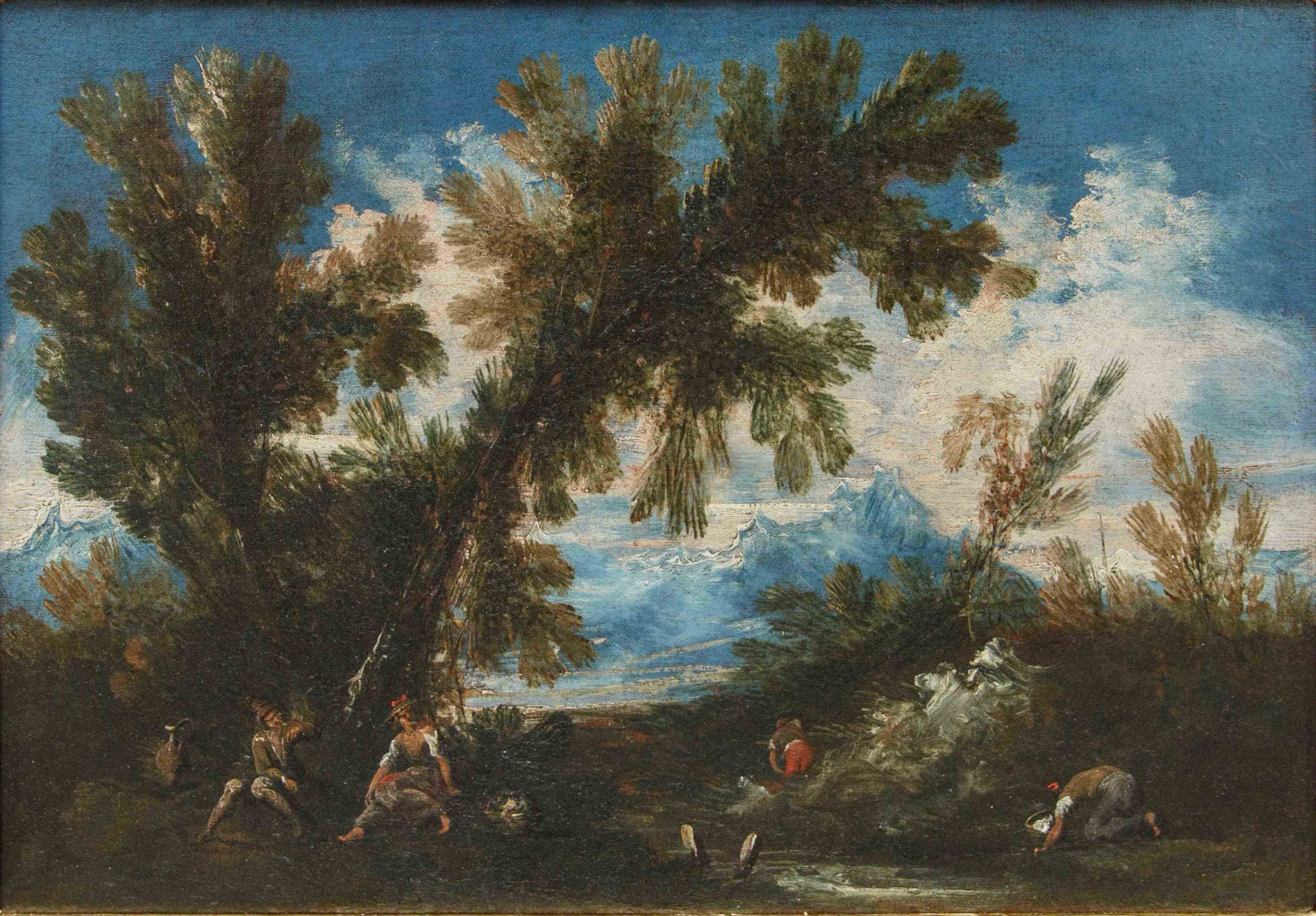
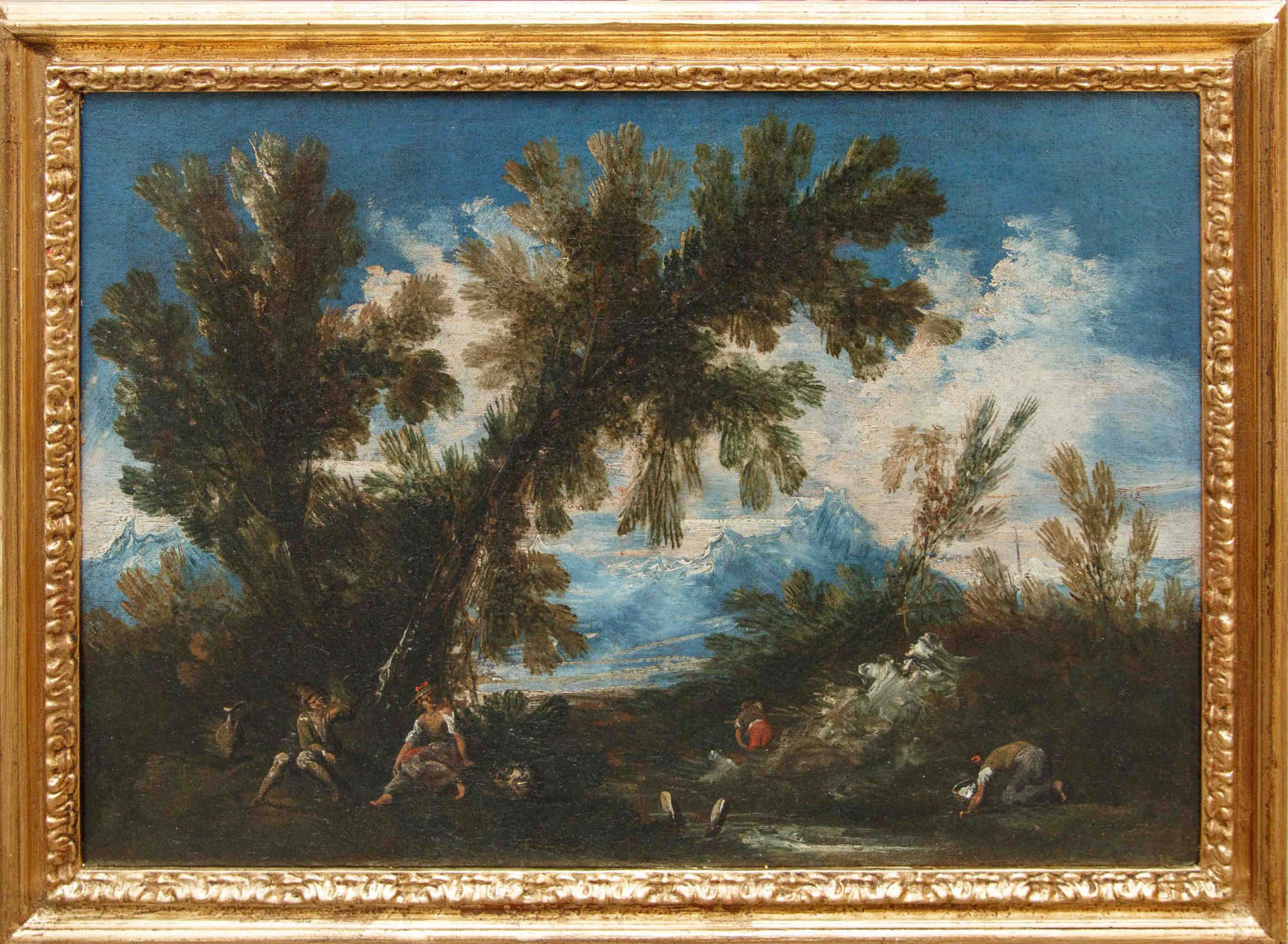
Antonio Francesco Peruzzini (Ancona, 1643 or 1646 – Milan, 1724), Landscape with figures
Description:
Antonio Francesco Peruzzini (Ancona, 1643 or 1646 – Milan, 1724)
Landscape with figures
Oil on canvas, 47 x 62 cm
With frame, 58 x 74 cm
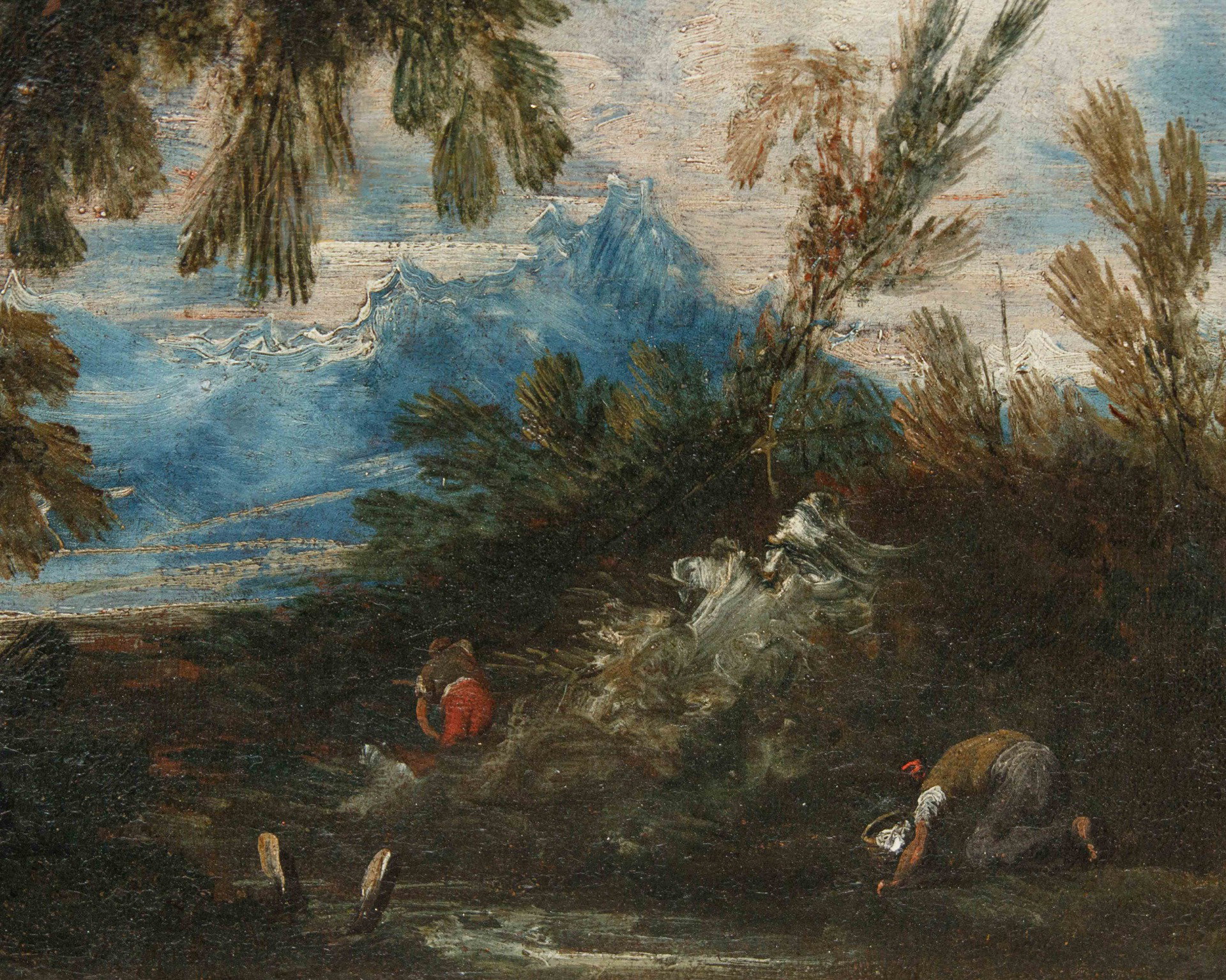
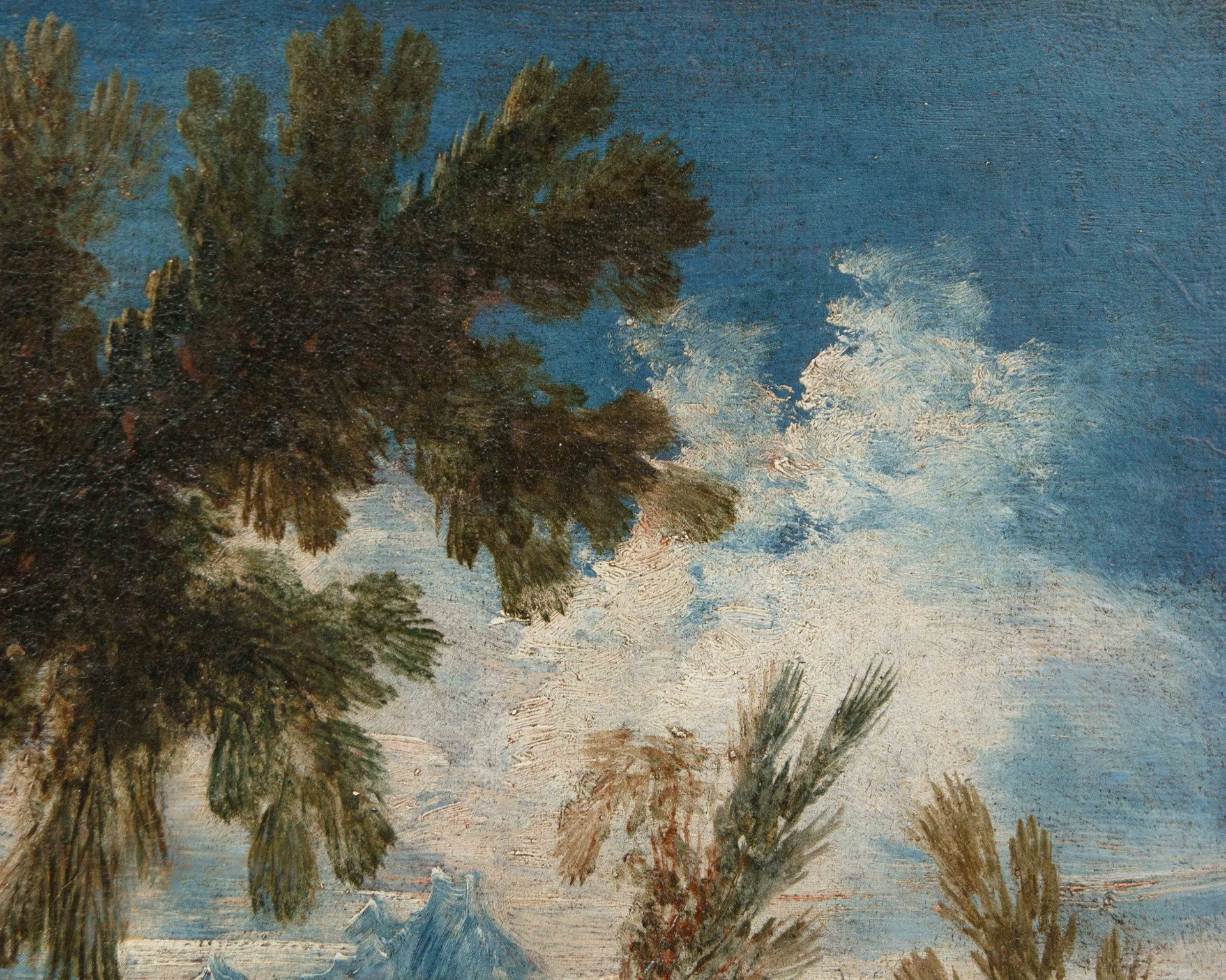
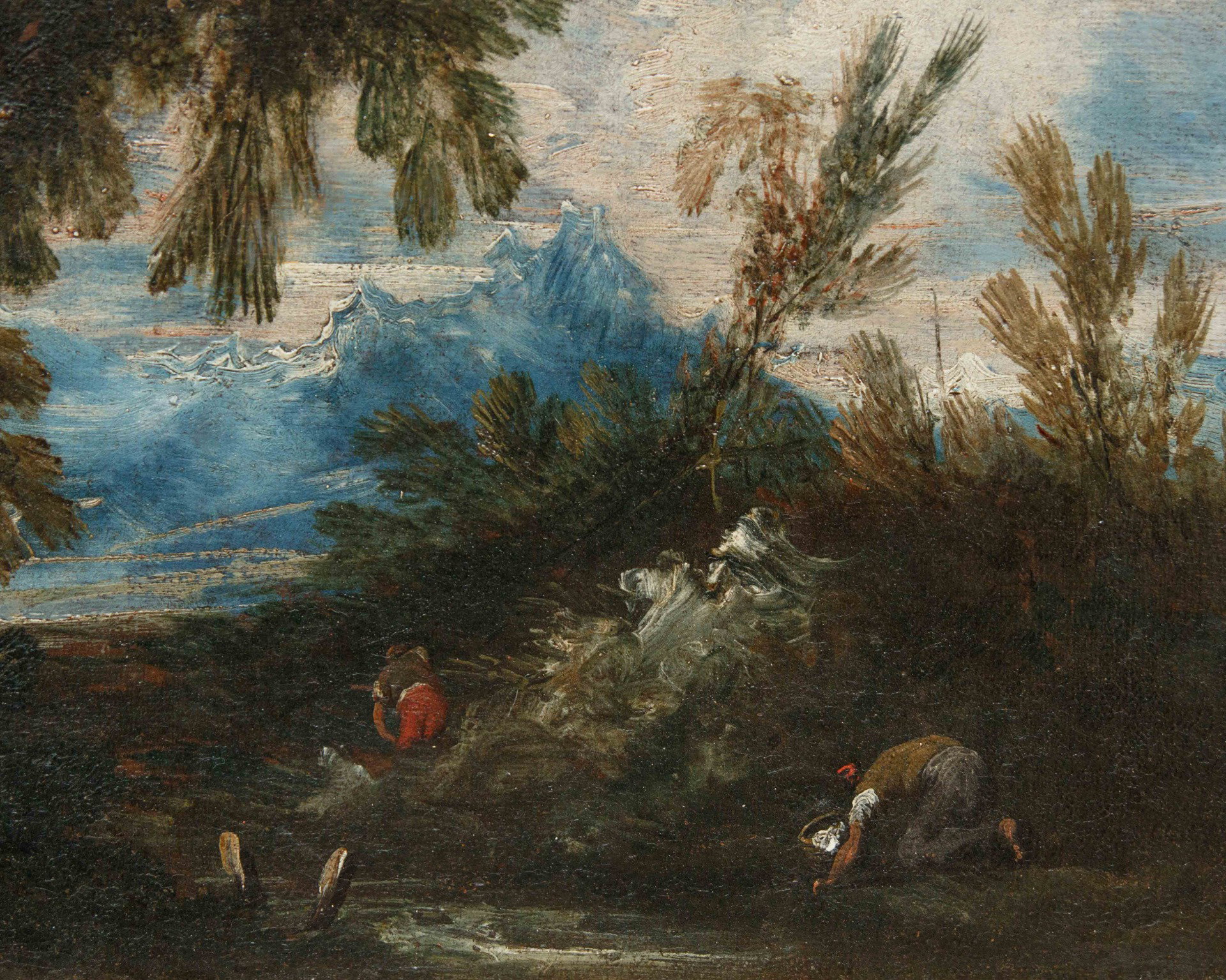
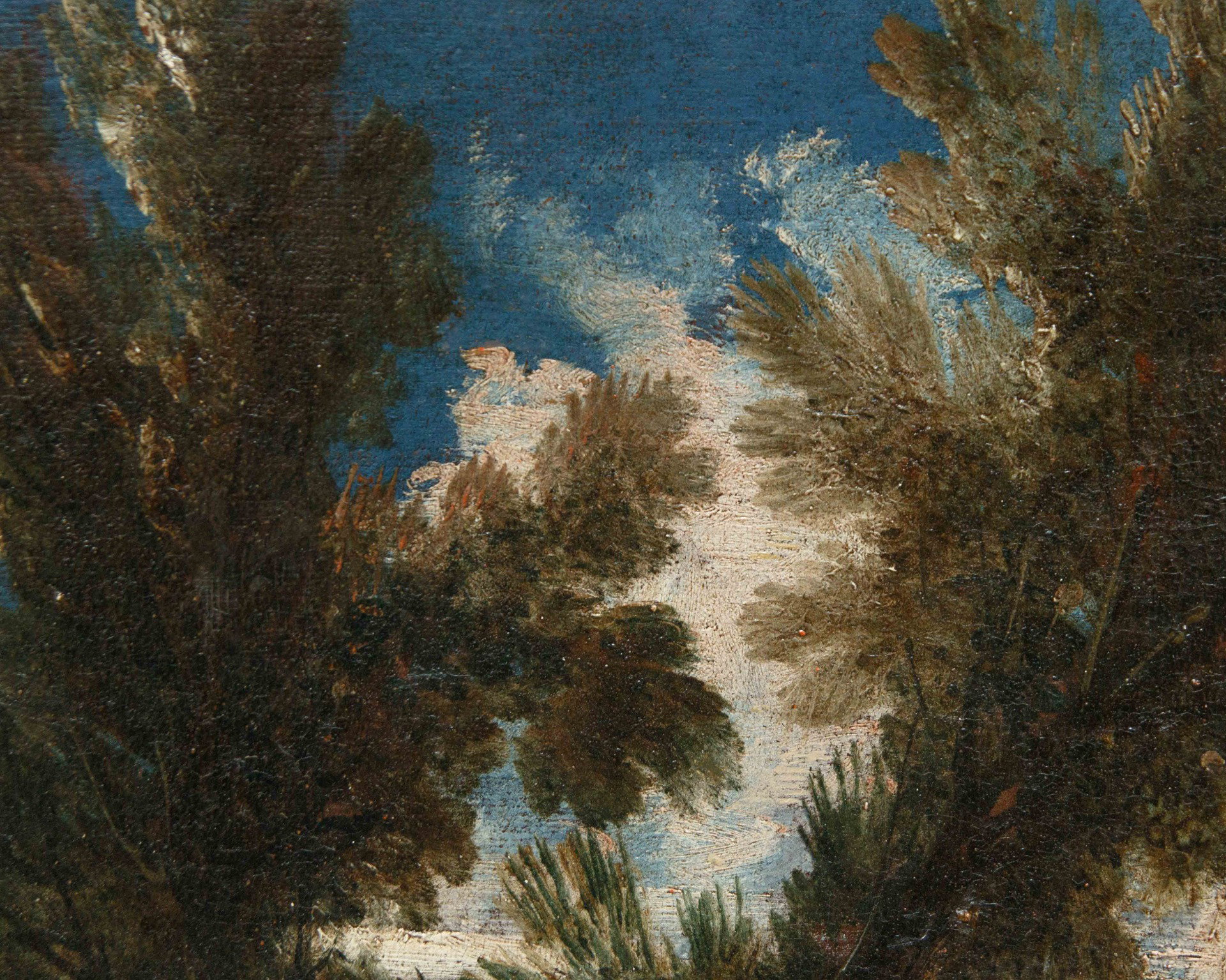
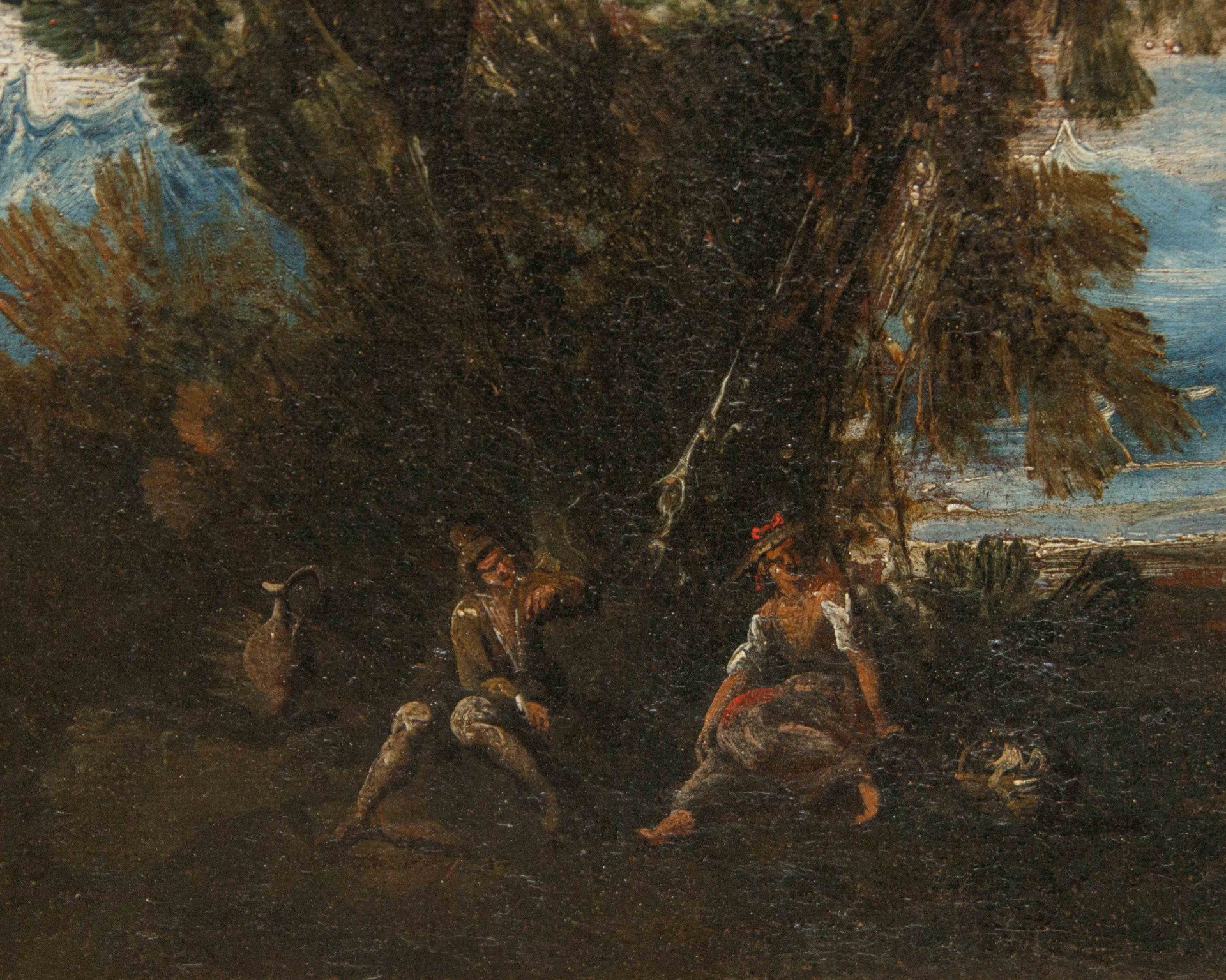
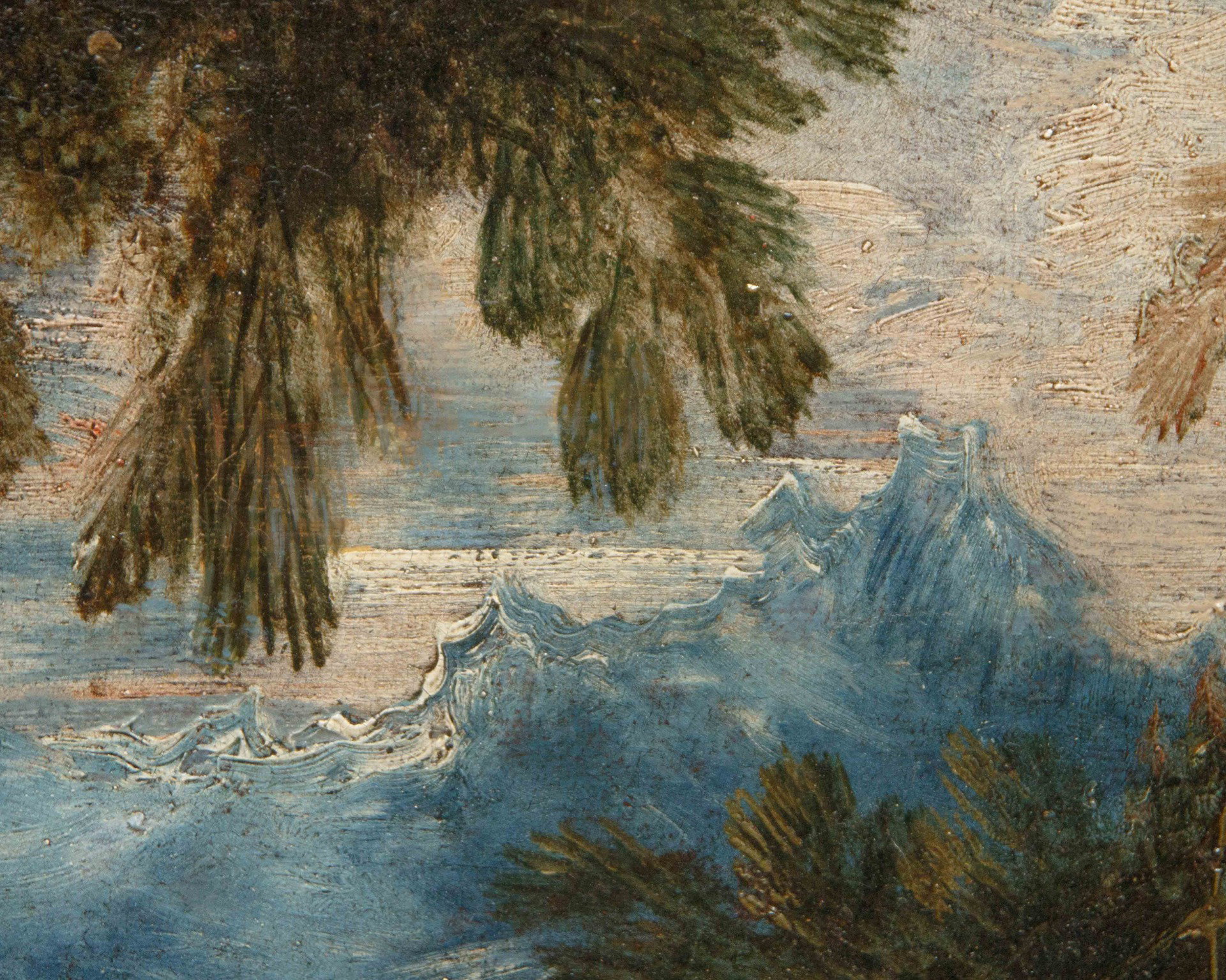
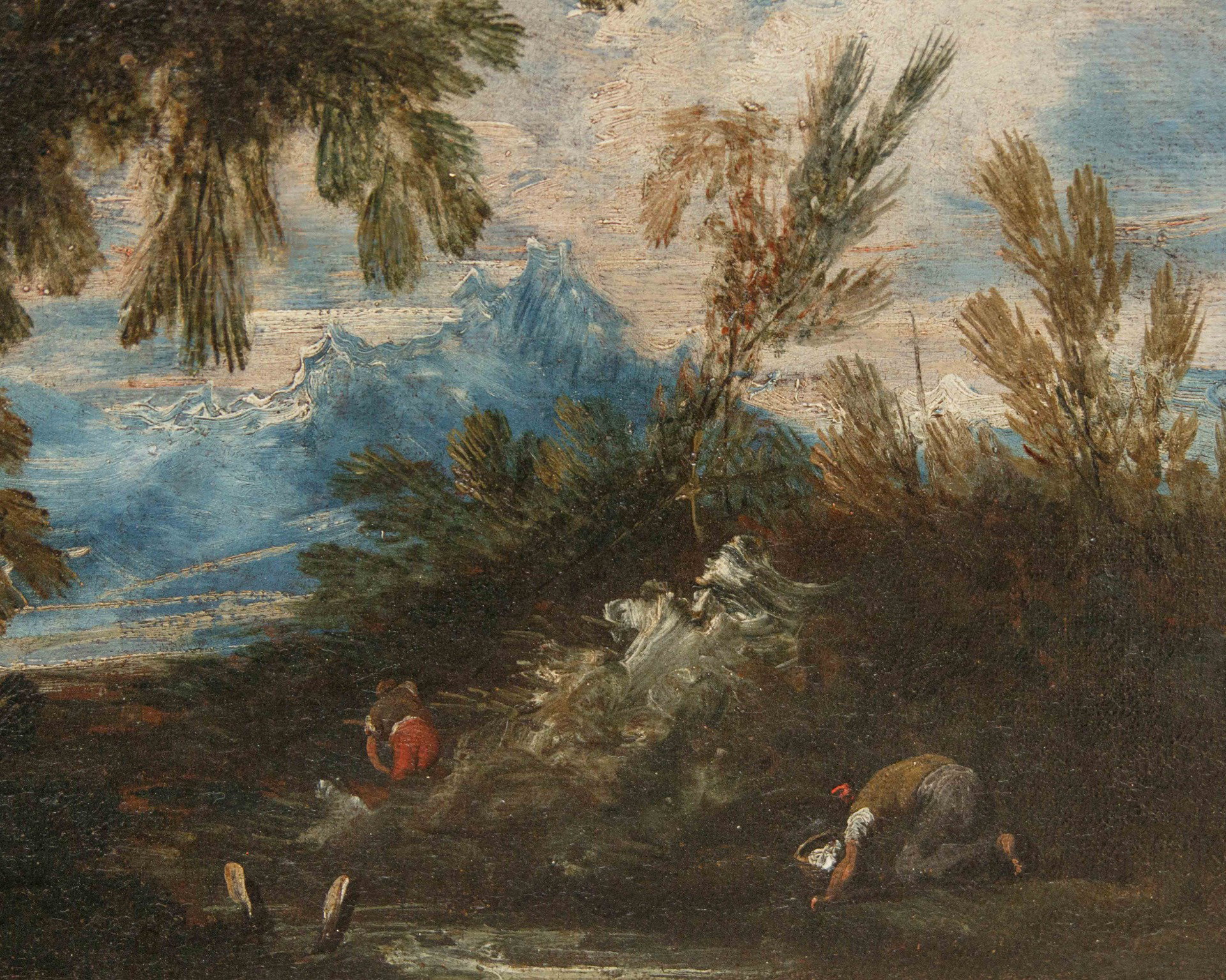
Landscape with figures is a painting by Antonio Francesco Peruzzini, one of the protagonists of landscape painting between the late 17th and early decades of the 18th century. The work presents a broad and articulated composition, dominated by a large tree that frames the scene and leads the gaze towards a luminous horizon crossed by frayed clouds. In the foreground, immersed in the shade of the vegetation, small figures of shepherds and travelers can be seen, variously posed around the bank of a river. The compositional structure shows close affinities with Antonio Francesco Peruzzini's Landscape with a Rustic House, now at Villa Giannettino Luxoro in Genoa, both in terms of spatial organization and the relationship between nature and human presence. In this case too, the figure is a subordinate element, almost absorbed by the surrounding environment, according to a conception of landscape that favors the expressive power of nature over narrative. The arboreal masses, constructed with an energetic and scratched brushstroke, define deep hollows in the terrain, while the trunks are enlivened by small touches of light in the areas hit by the sun, a recurring feature in Peruzzini's pictorial lexicon. The figures, minute and nervous, strongly recall the models of Alessandro Magnasco, so much so that part of the criticism does not exclude his direct intervention, especially in light of the documented presence of Magnasco in Florence from 1703 onwards, coinciding with Peruzzini's arrival. In those same years, the Tuscan city also saw the activity of Marco and Sebastiano Ricci, with whom Peruzzini shares chromatic affinities and a common propensity for vibrant atmospheric effects. The difficulty in distinguishing the different hands reflects a widespread collaborative practice, which characterizes much of the output of the Ancona master. From a stylistic point of view, the painting presents typical elements of Peruzzini's mature phase: clouds with frayed outlines, a rapid and incisive stroke, a preference for barely suggested rustic or ruined architecture in the background, and a tendency to let inhabited centers fade into the distance. These motifs recur in works datable between the last decade of the 17th century and the first decade of the following century, a period to which this painting can also be plausibly assigned, by analogy with works such as The Temptations of Saint Anthony Abbot and landscapes created in collaboration with Magnasco. The canvas is fully integrated into the production of Peruzzini's workshop, a painter who trained in a family environment dedicated to art and was active in numerous Italian centers, from Rome to Bologna, from Milan to Medici Tuscany. Throughout his career, he frequently collaborated with other artists, entrusting specialized painters with the execution of figures, a practice that often makes precise attribution of individual parts difficult. This Landscape with figures effectively testifies to this dynamic: a work in which the evocative power of nature, the refined luminous construction, and the vitality of human presences merge into a shared language, an expression of a pictorial season marked by continuous dialogue between multiple artistic personalities.