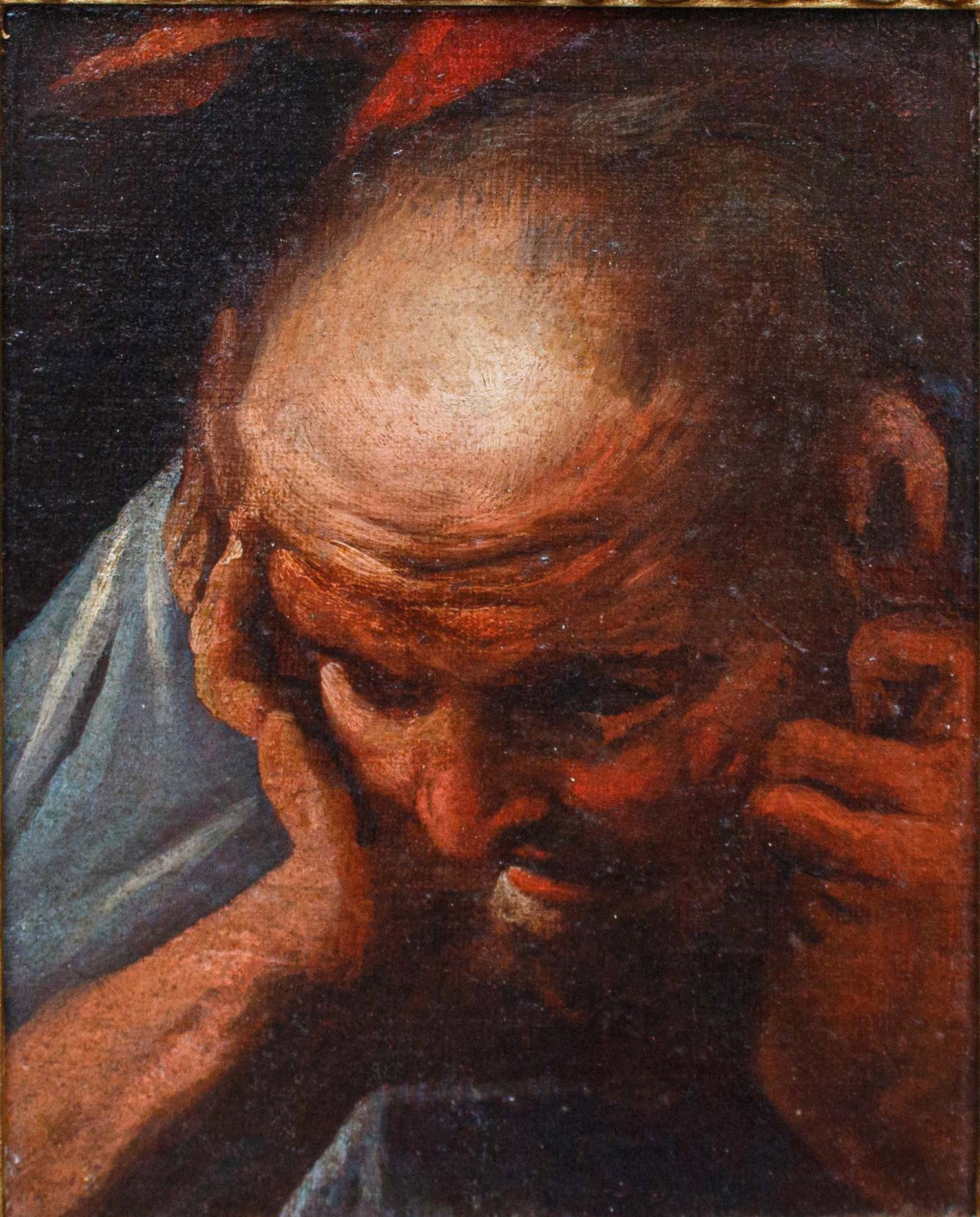
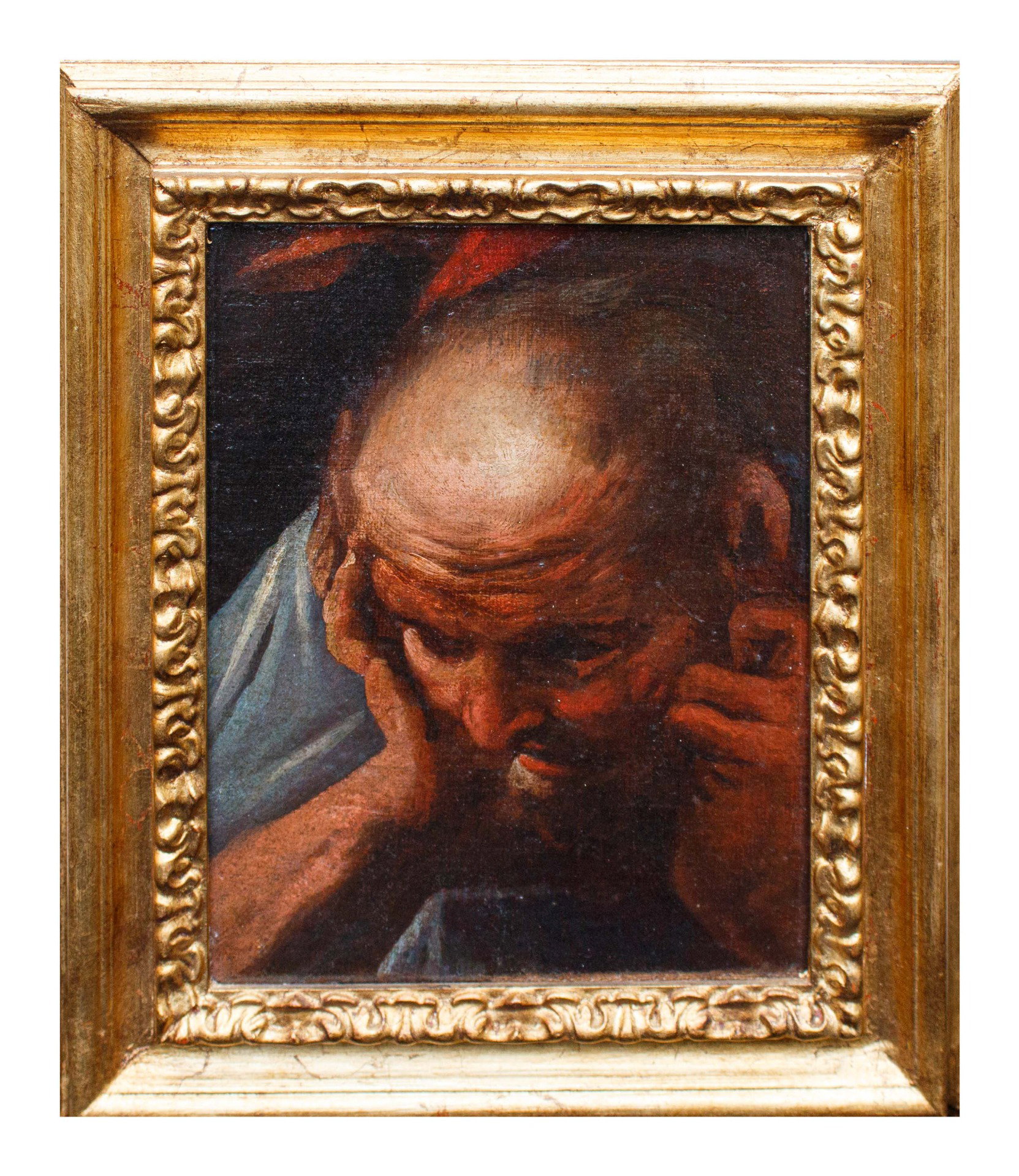
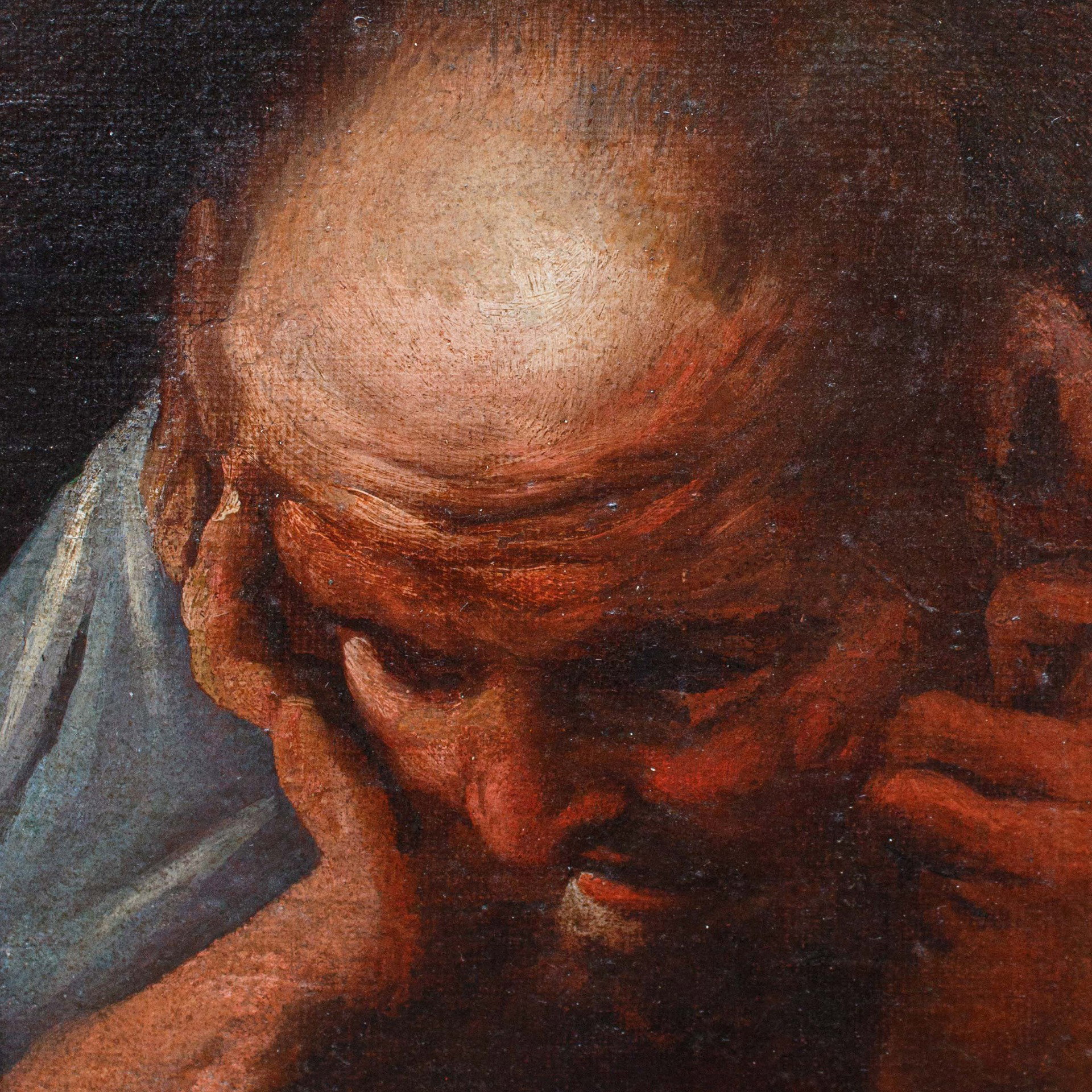
Antonio Zanchi (Este, 1631 – Venice, 1722), Study of a Male Face
Description:
Antonio Zanchi (Este, 1631 – Venice, 1722)
Study of a Male Face
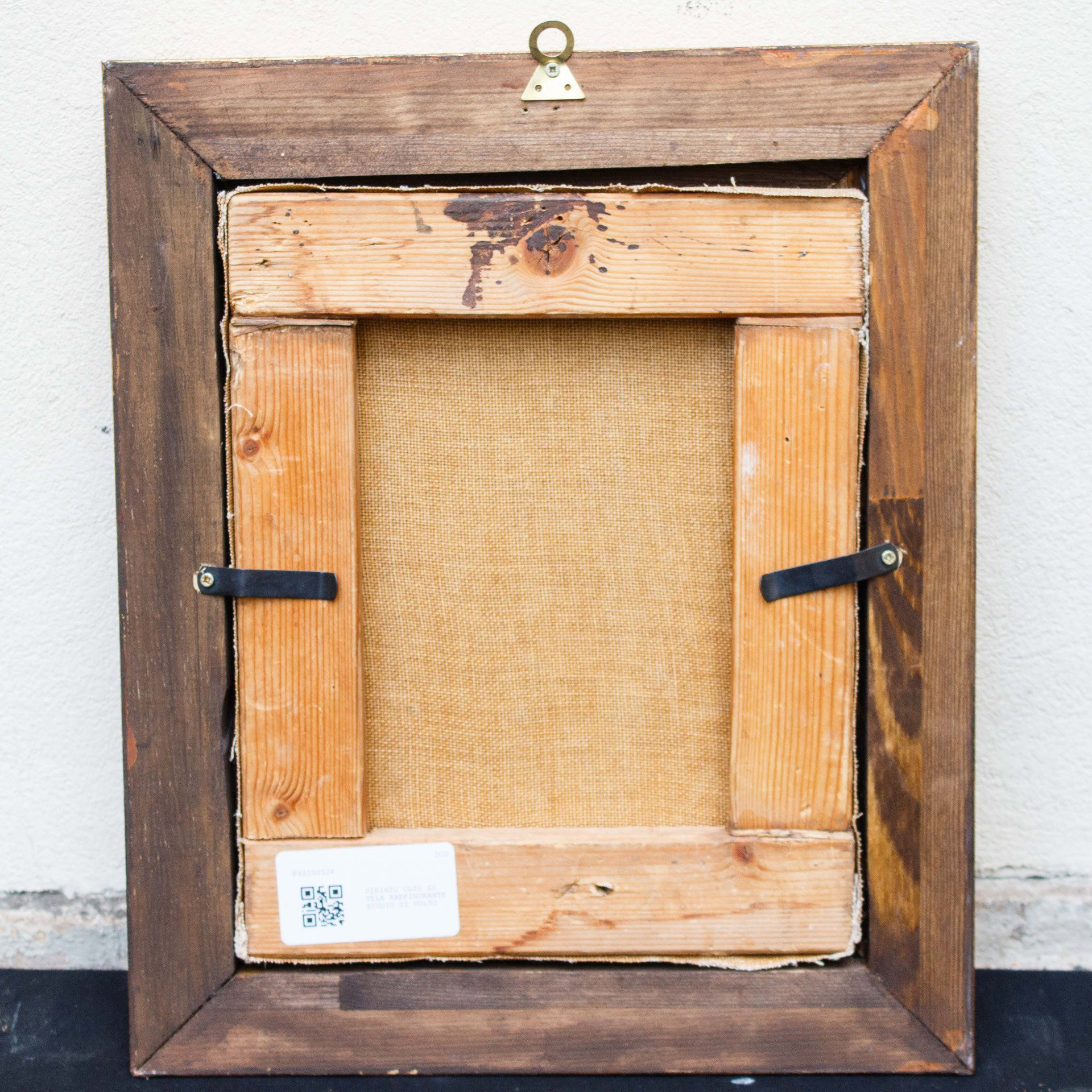
Oil on canvas, 27.5 x 22 cm
Frame 36 x 30.2 cm
The second half of the 17th century in Venice saw the contrast between the so-called "tenebrosi" (dark ones) and "chiaristi" (light ones): the former were supporters of Tintoretto-esque chiaroscuro fillers, while the latter advocated for greater tonal clarity. The chromatic drama that the tenebrosi, whose spokesman was the painting of Luca Giordano, employed as a constant characteristic of their pictorial language, was also shaped through the adoption of the same by visiting artists working in the city. Thus, Giovan Battista Langetti, for example, who had been influenced by Ribera's lesson, obtained the commission for the altar of the Venetian church of the Terese, adding the shadowy styles of the master, reminiscent of Caravaggio, to those of the indomitable Tintoretto.
Antonio Zanchi operated similarly, pursuing the poetics of dramatic shadow, distinguishing himself through his highly personal calligraphic treatment of color. Approaching Tintoretto's (1518-1594) painting, he was able to appreciate its suggestions by participating in the decoration of the Scuola Grande di San Rocco, where the master had been engaged in the creation of his most famous cycle with episodes from the Old and New Testaments: Zanchi created two extraordinary canvases divided by an architectural pilaster (The Virgin appears to the plague-stricken), placed alongside the grand staircase, along with works by Pietro Negri and Giovanni Antonio Fumiani. The commission spurred the artist to demonstrate his painting skills in numerous Venetian churches: the three canvases depicting Stories of the Virgin on the ceiling of Santa Maria del Giglio (1690-1696) should be noted, as well as the decoration of the Church of the Blessed Virgin of Health (1700-1709). On bergamascan soil, then part of the possessions of the Serenissima, Zanchi left a Moses drawing water for the basilica of Santa Maria Maggiore; at the same time, he established relationships with numerous Bavarian princes.
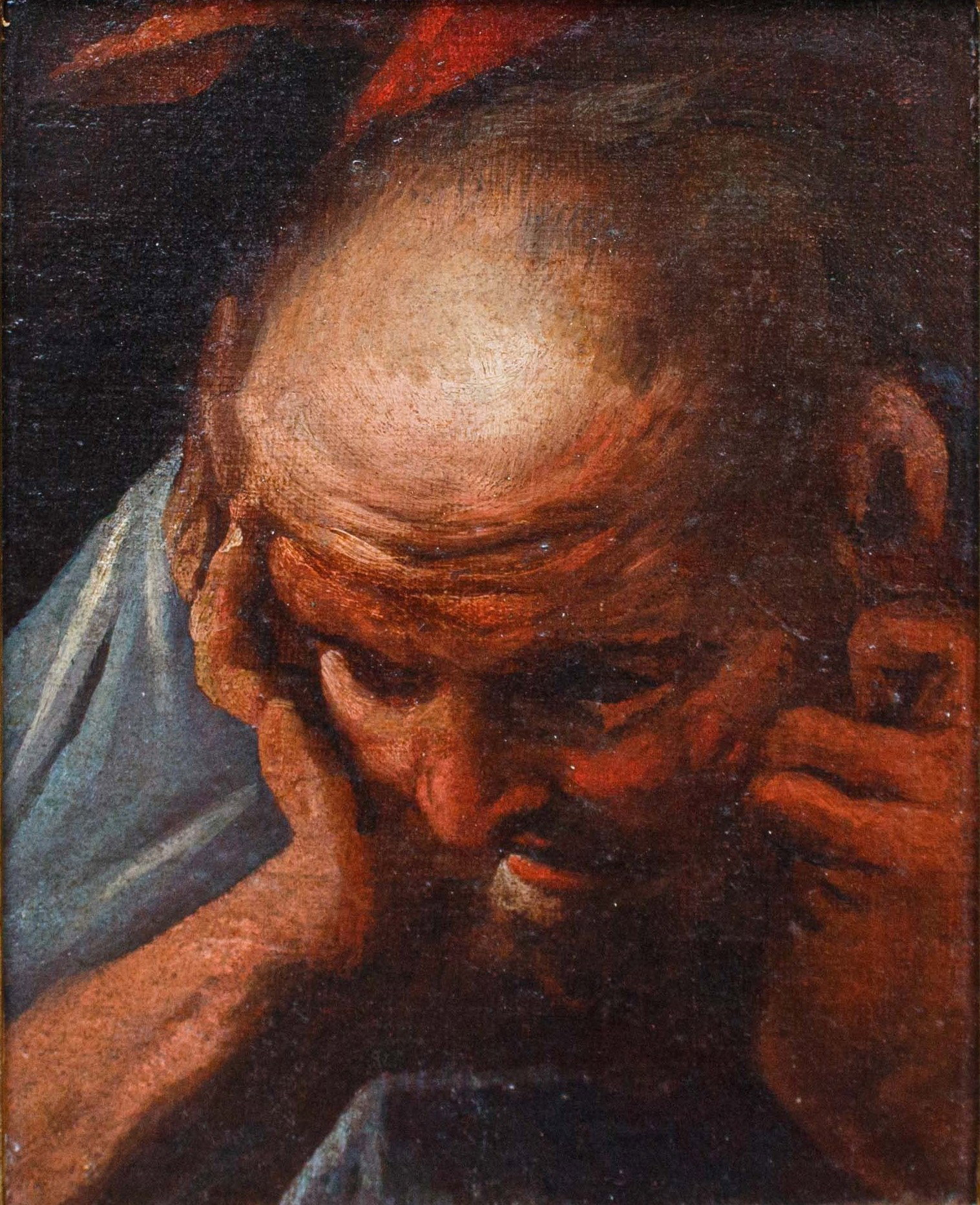
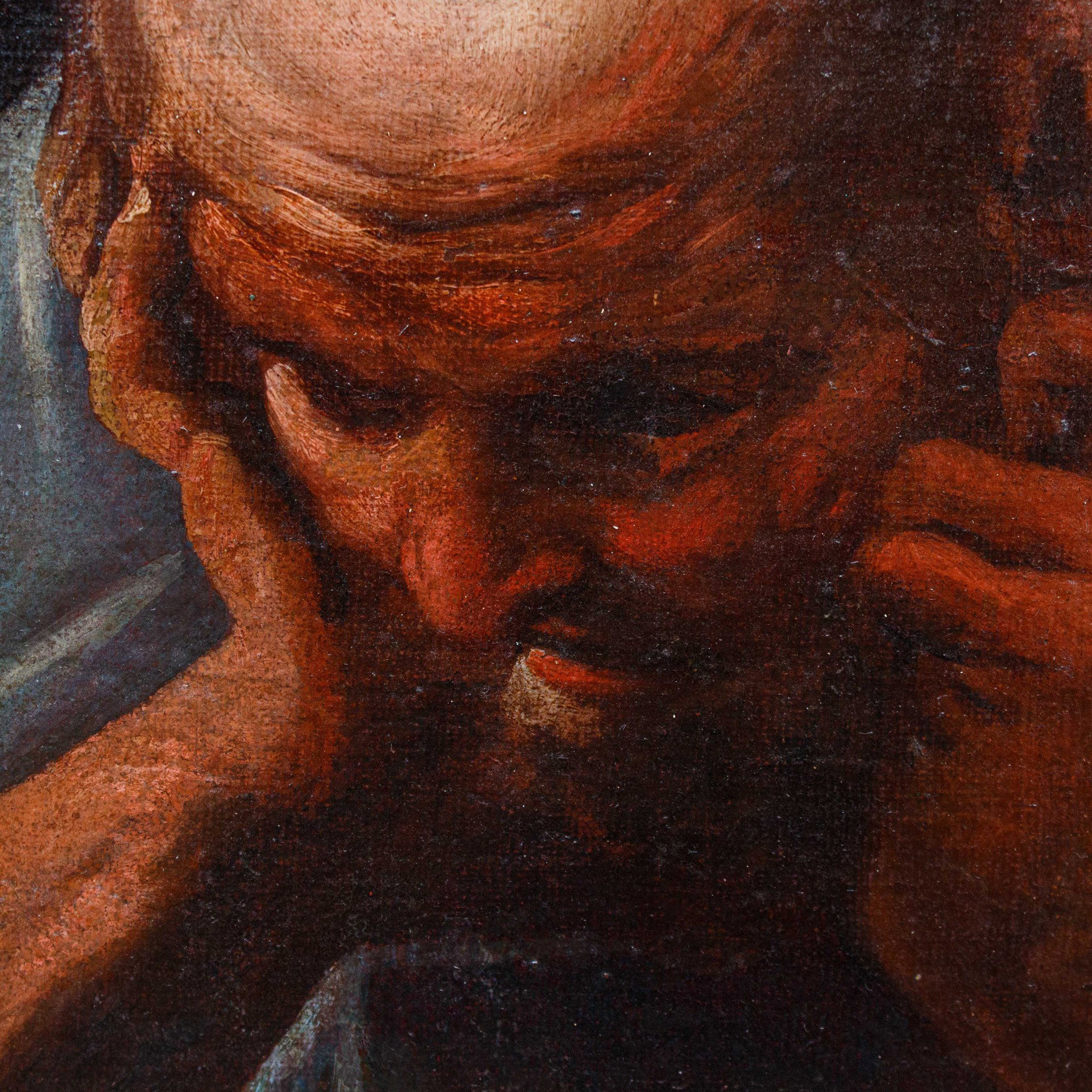
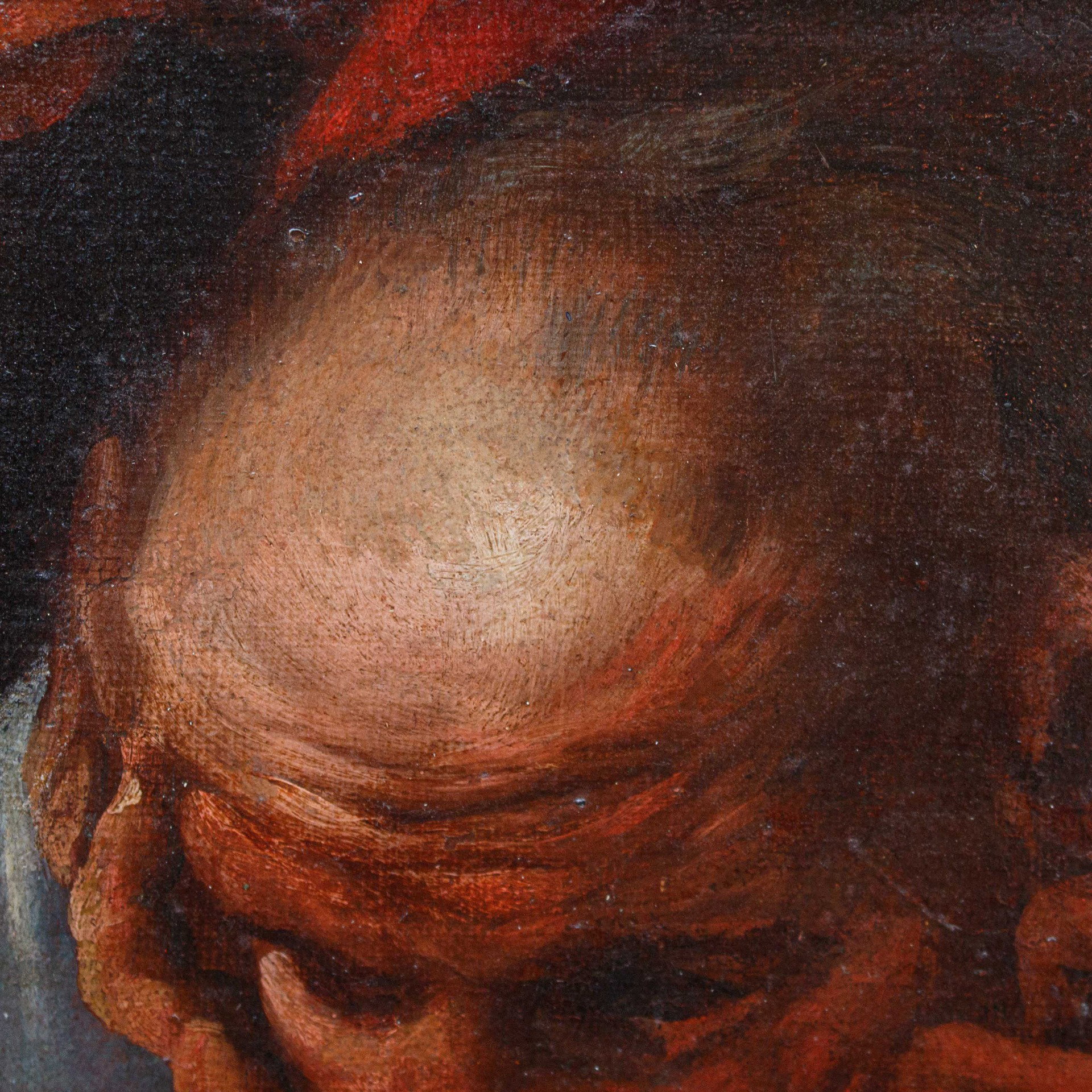
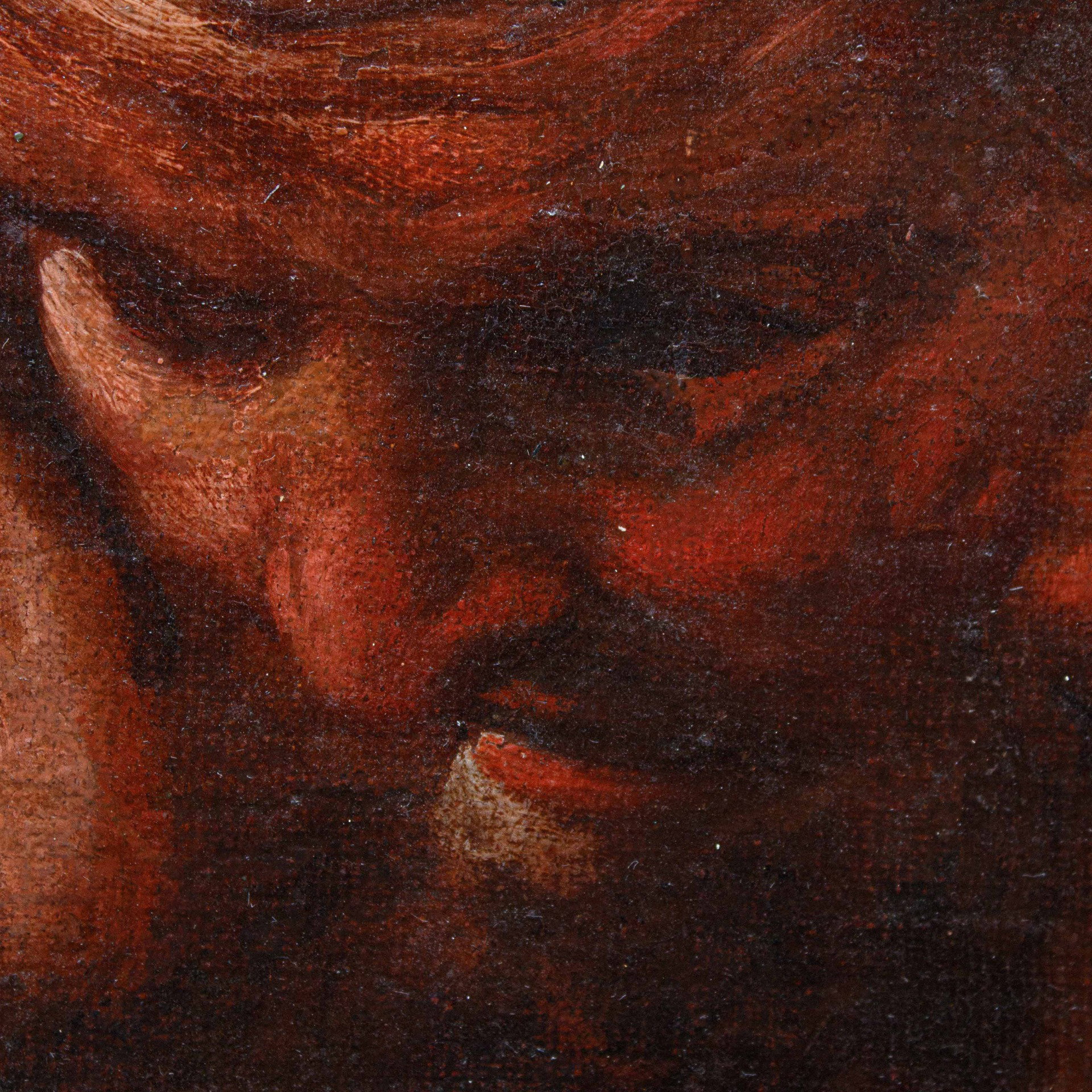
The present painting presents an evocative and close-up view of a male head. It is possible to hypothesize that the work was conceived as a sketch for a subsequent larger canvas with multiple figures, or that it is a standalone study of a typified male subject aimed at figuratively identifying a suggestive state of mind.
It is possible to compare the painting with works by the artist characterized by the same chiaroscuro contrast, in which the vividness of the colors is matched by the evocative bewilderment of the depicted figures. Particular attention should be paid to "Giuseppe interprets the dreams of Pharaoh" (private collection and Collection of Wawel Castle, Krakow) and "Abraham teaches astrology to the Egyptians" (Church of Santa Maria del Giglio, Venice). Equal realism, investigated in the expressive grimace of agitated participation, is recognizable in "The Death of Socrates" and "The Death of King Josiah" (private collections), as well as in the exceptional "Sisyphus" (The Mauritshuis, The Hague). In the paintings "Tomiri with the head of Cyrus" (Ceschina Collection, Venice) and "Abraham and Isaac" (private collection), the same tense anatomical proposal is found, with a strong light igniting the surfaces.