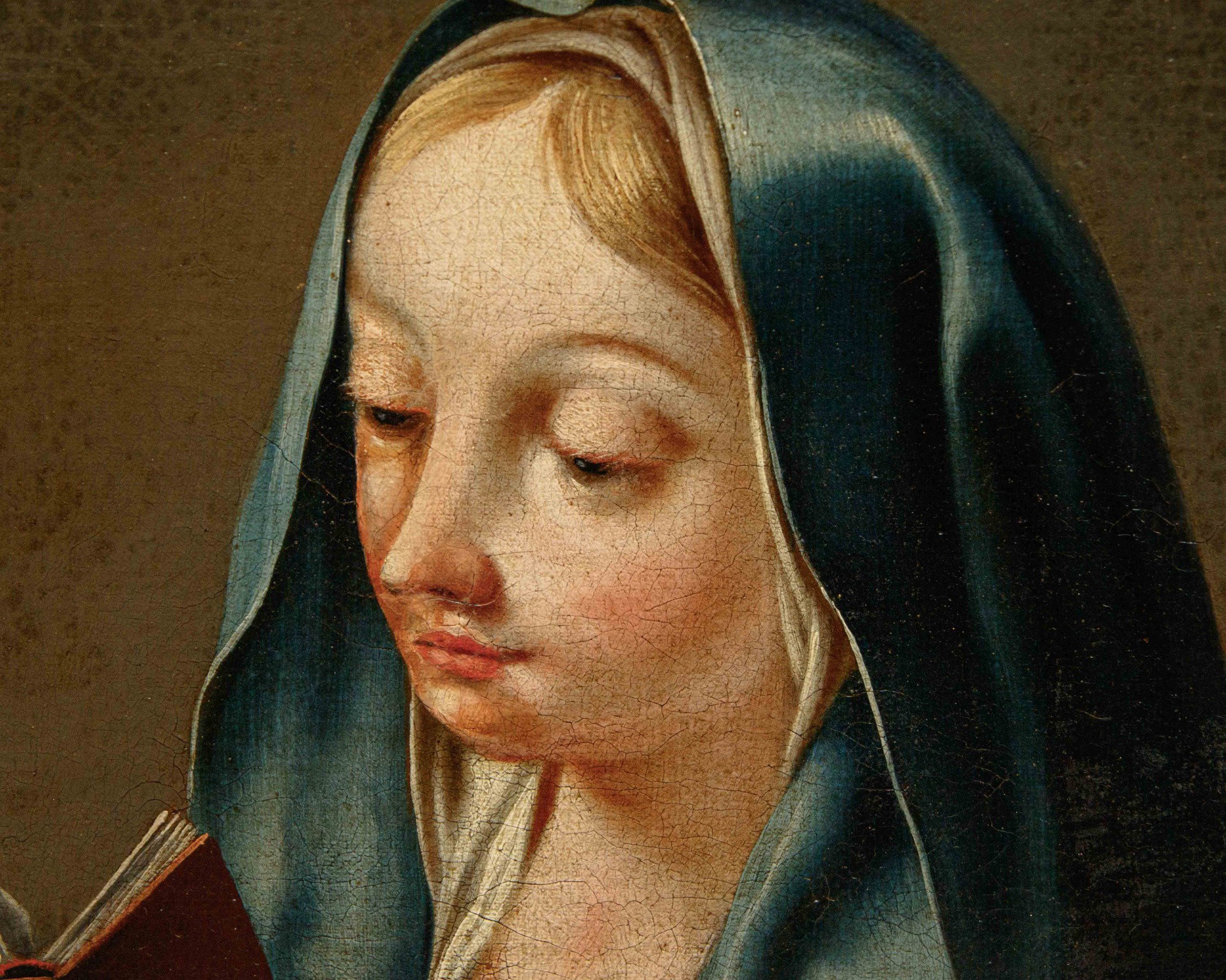
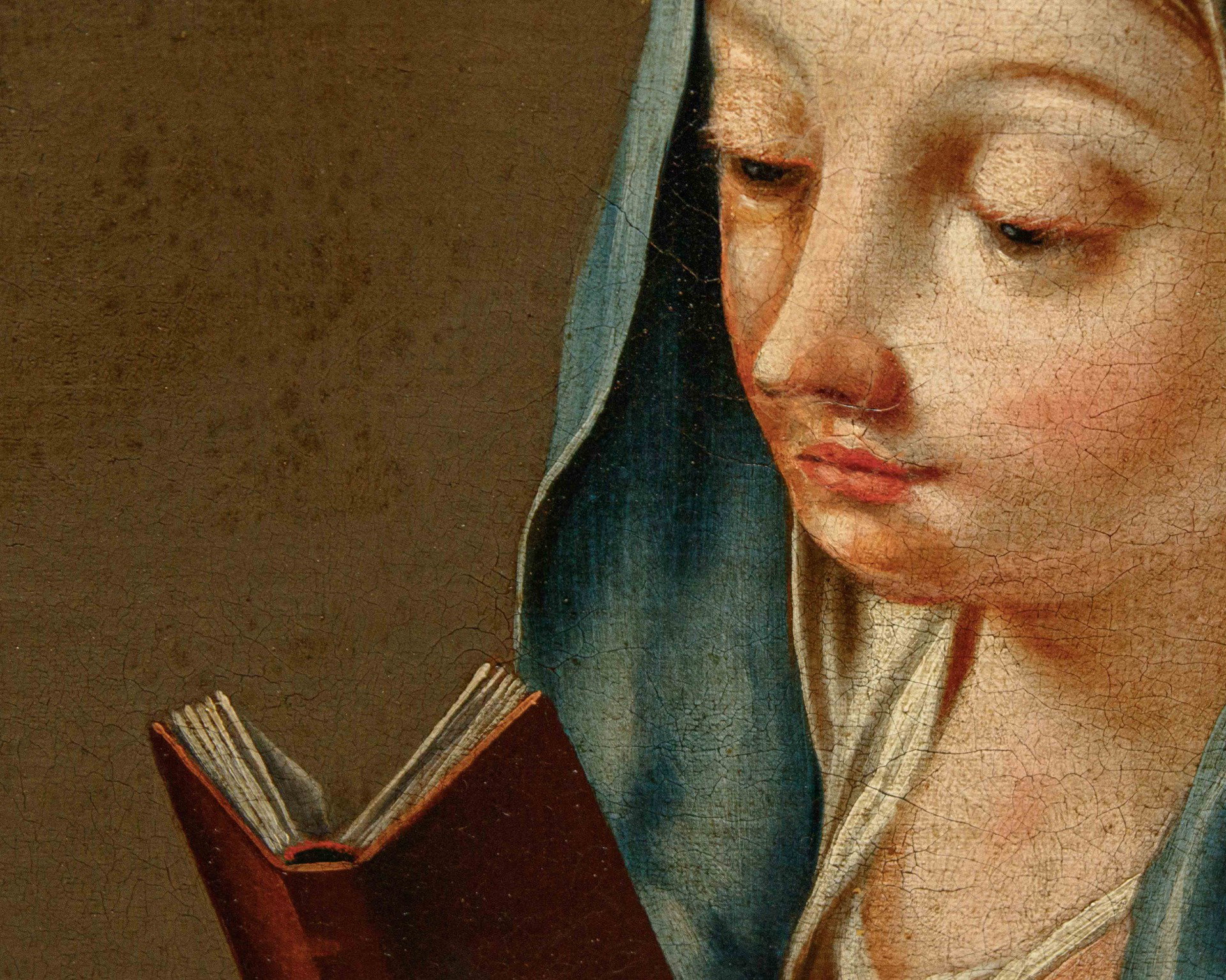
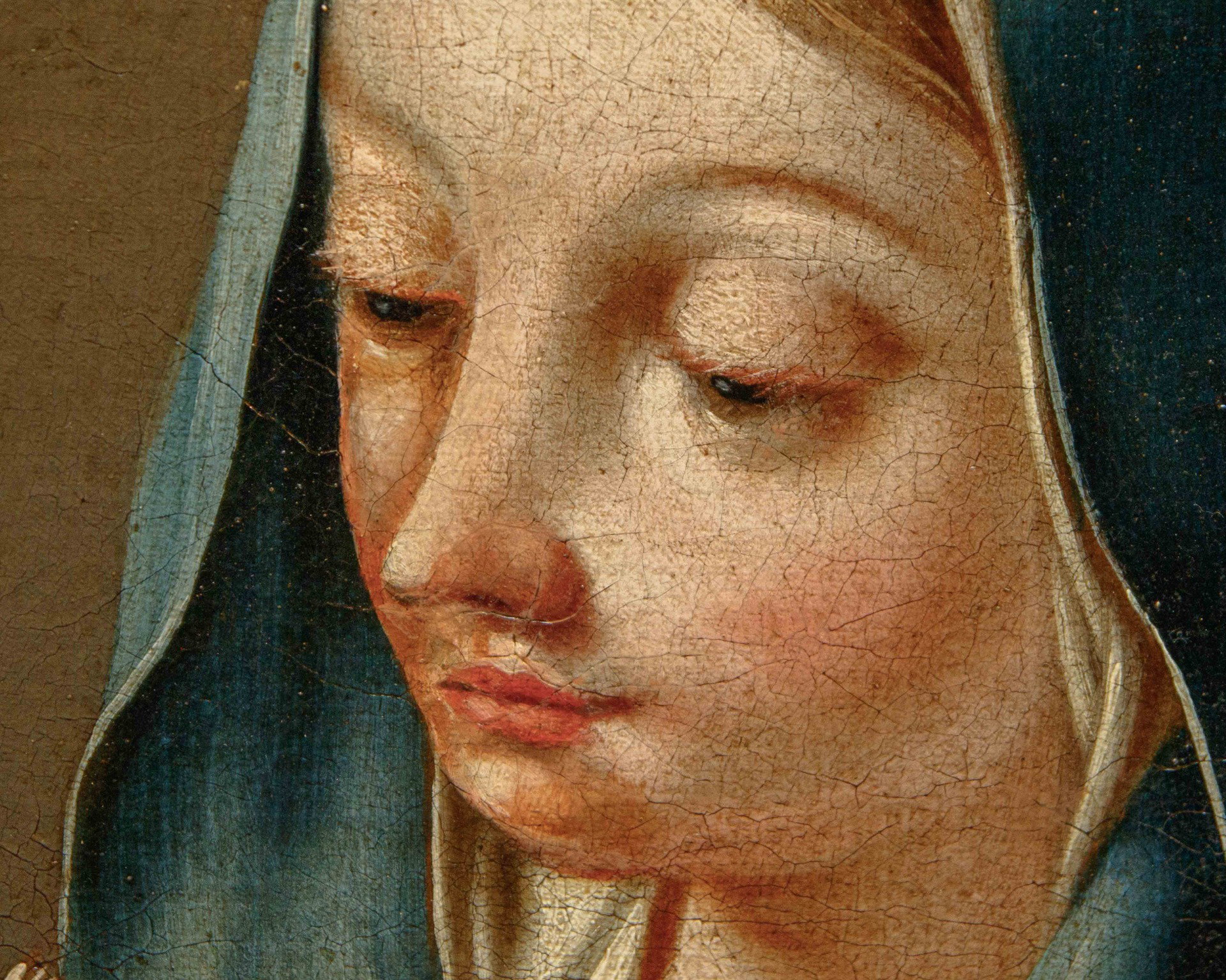
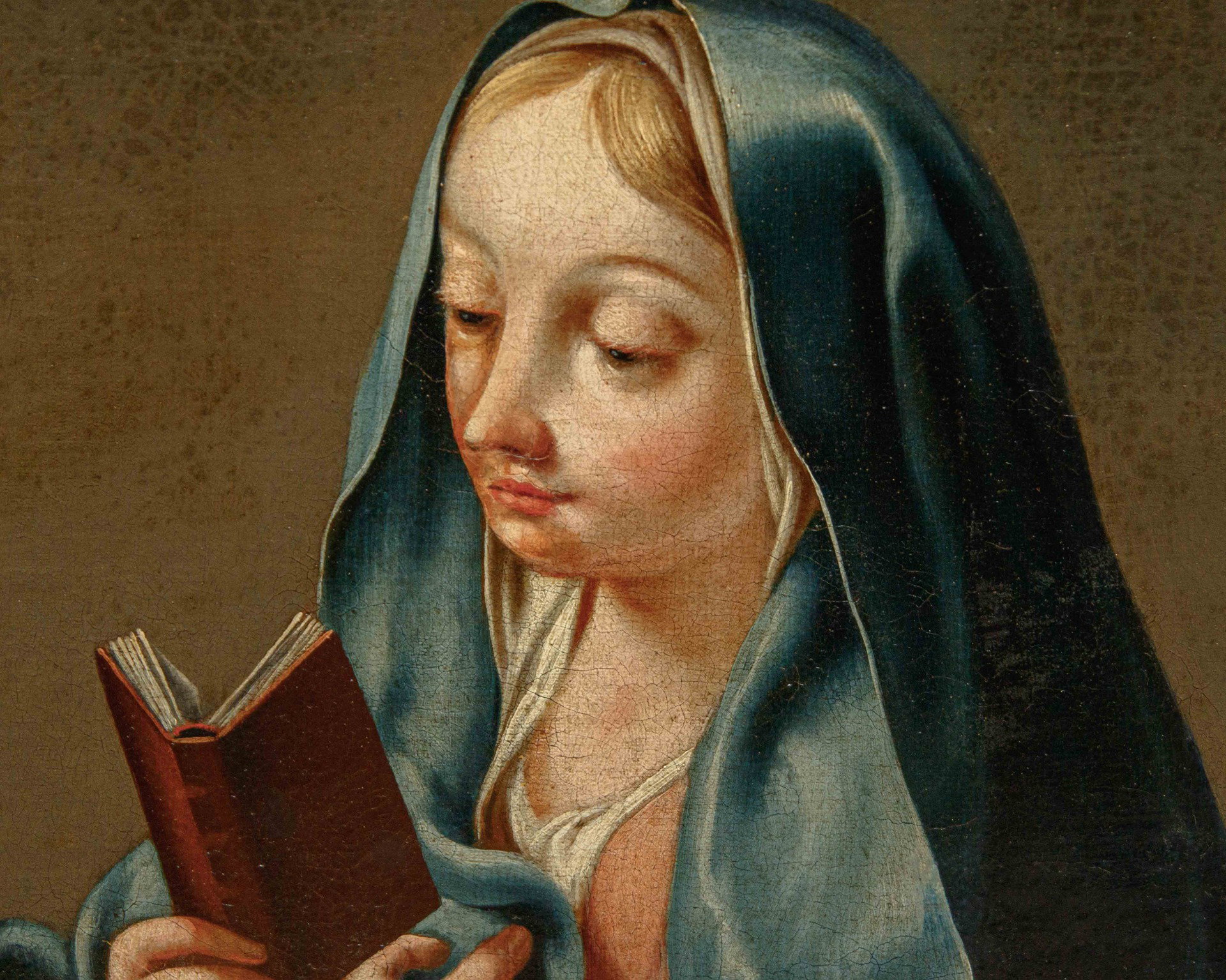
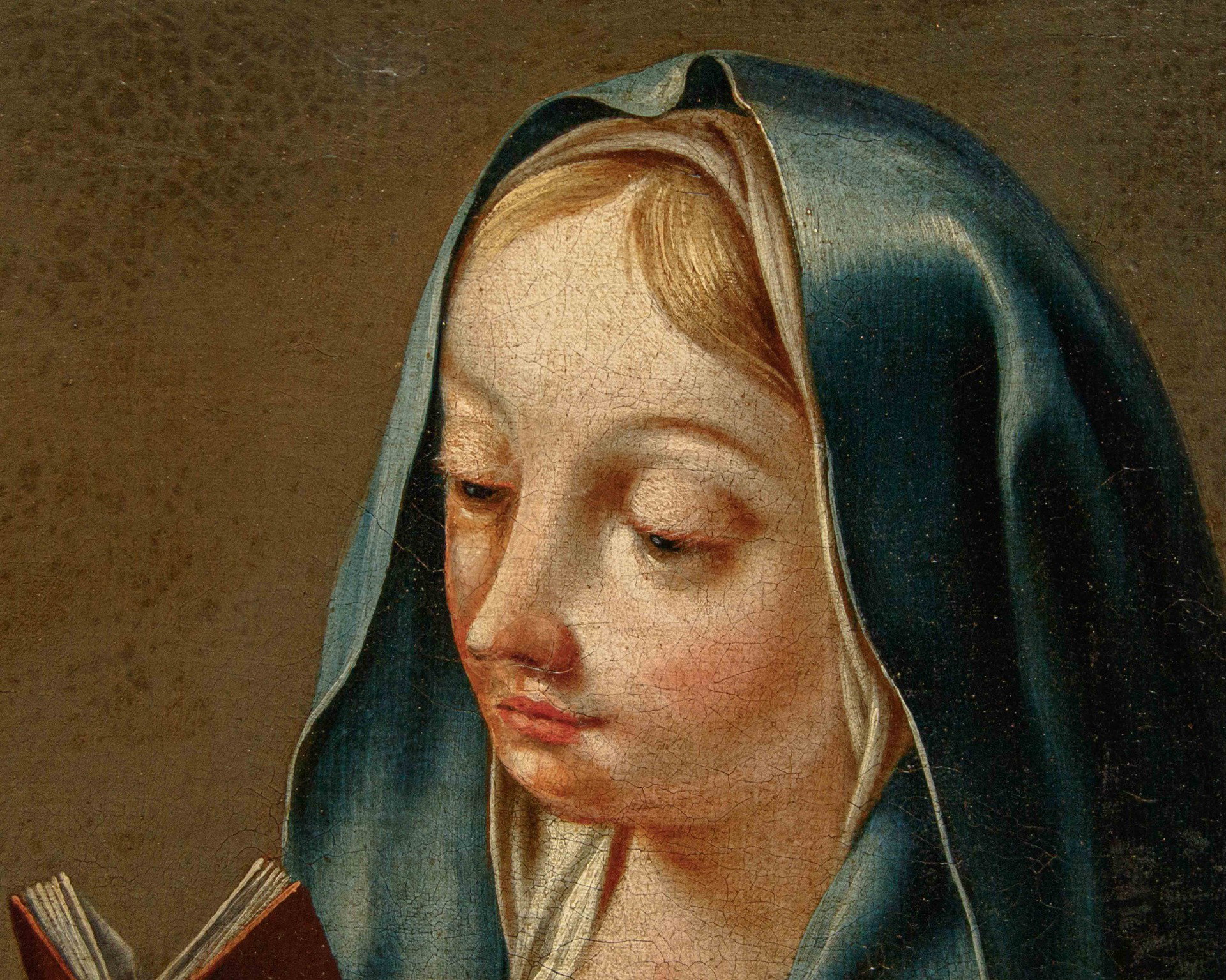
Workshop of Giovanni Battista Pittoni (Venice, 1687 – 1767), Reading Madonna
Description:
Workshop of Giovanni Battista Pittoni (Venice, 1687 – 1767)
Reading Madonna
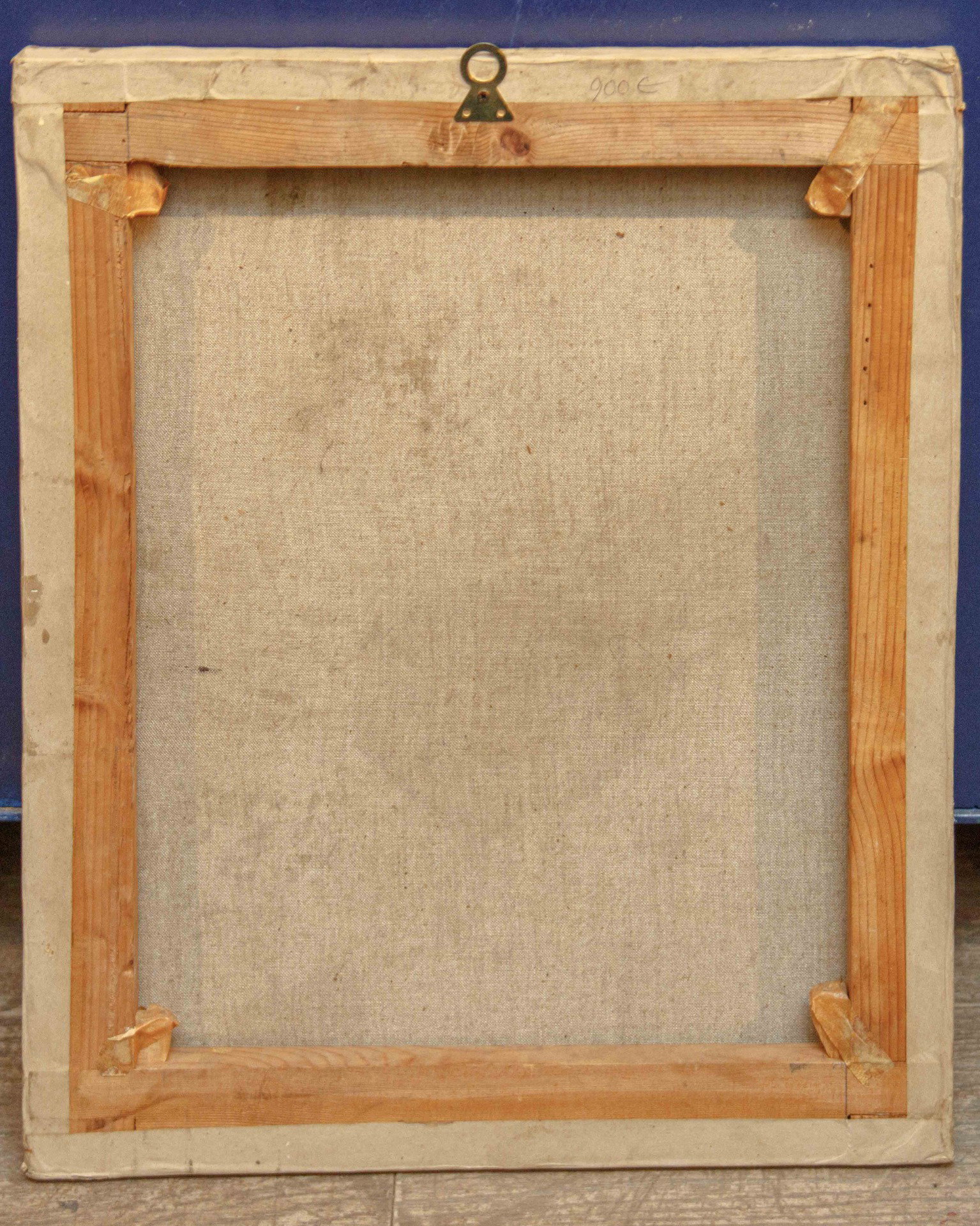
Oil on canvas, 55 x 43 cm
The painting "Madonna che legge" (Reading Madonna), attributed to the workshop of Giovanni Battista Pittoni, is fully situated within the refined cultural climate of Venetian Rococo, of which Pittoni was one of the most authoritative protagonists. The work depicts the Virgin caught in a moment of intimate meditation: seated, enveloped in a flowing blue mantle, she holds a small prayer book in her hands, while her downward and absorbed gaze suggests a dimension of silent contemplation and gentle spirituality. The work closely resembles numerous autograph paintings by Pittoni dedicated to the same Marian subject. In particular, comparison with the "Madonna" preserved at the Gemäldegalerie in Berlin highlights affinities in the facial type, the gentle inclination of the head, and the collected posture of the figure. Similar resonances are found with the "Madonna che legge" now in an unknown location but published in the catalog of the Federico Zeri Foundation as an autograph work by the Venetian painter, as well as with the "Madonna" kept in a private Genoese collection. In all these examples, the same suspended atmosphere, the same formal elegance, and a similar attention to the dialogue between color and light recur, elements that suggest a close dependence on the model devised by the master. From a historical and artistic point of view, the execution of the painting can be placed within the Pittoni workshop, when, around the 1720s, the artist's personality had already been clearly defined. Trained under his father Francesco Pittoni, Giovanni Battista developed an independent style, capable of combining monumentality and grace, as evidenced both by large decorative cycles – including the "Martyrdom of St. Thomas" for San Stae and the canvases of the "Tombeaux des Princes" – and by more intimate devotional compositions, intended for private and contemplative viewing. In this "Madonna che legge," Pittoni's workshop receives and reworks the master's lexicon with great fidelity, reproducing an image of intense sweetness and high formal quality. The painting thus stands as a significant testament to the fortune and diffusion of Pittoni's models, as well as to the ability of his workshop to translate the unmistakable poetics of Venetian Rococo into coherent and refined works.