PORTICO MANTEL CLOCK IN MARBLE AND BRONZE - FRANCE - DIRECTORY
Description:
Object Description
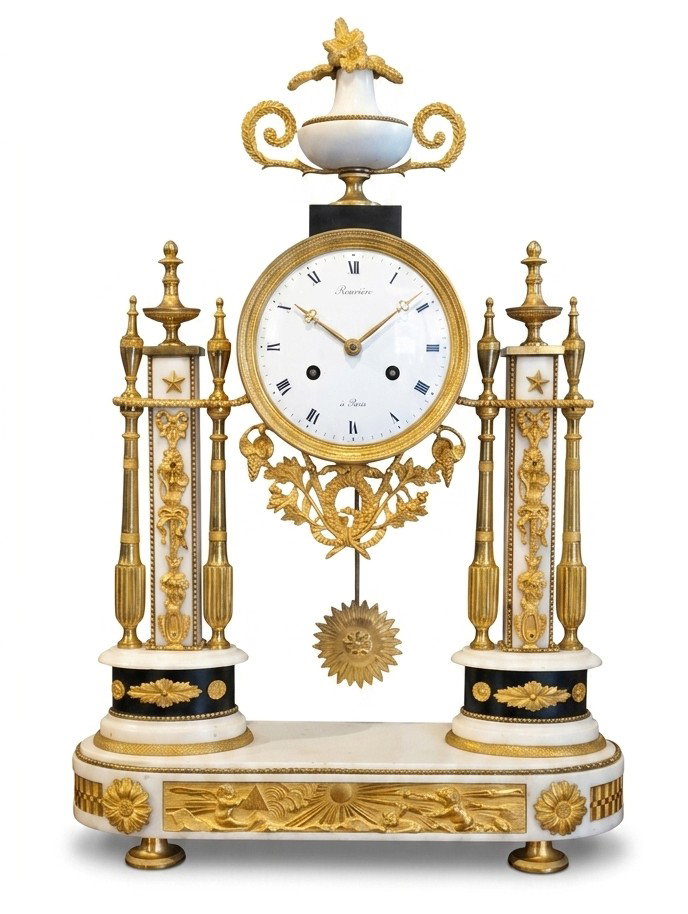
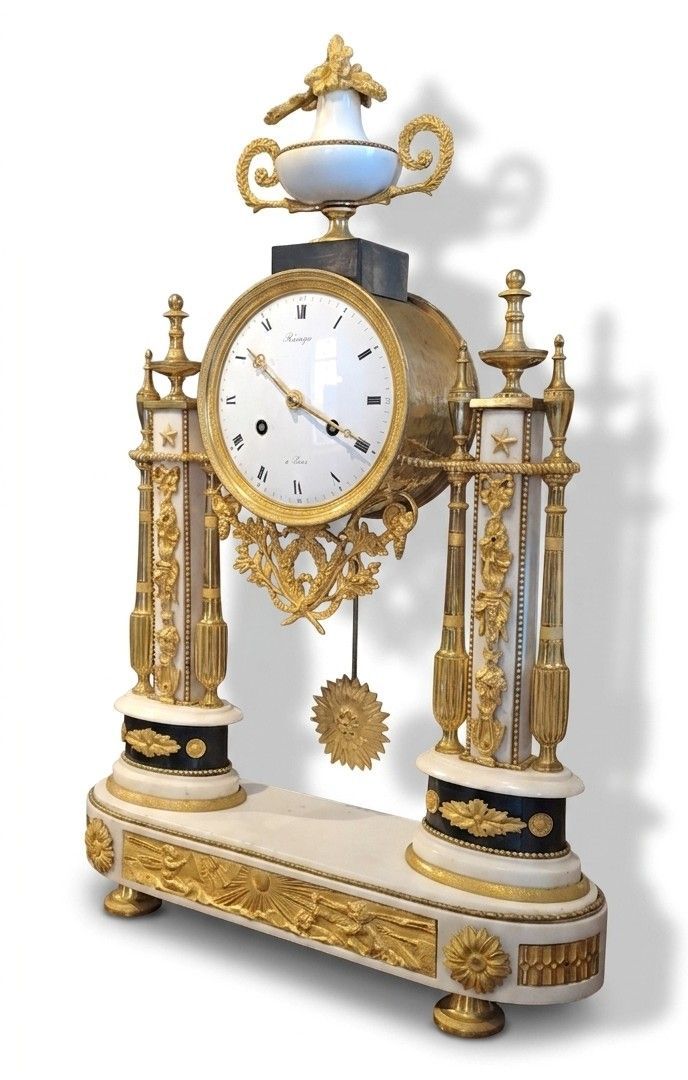
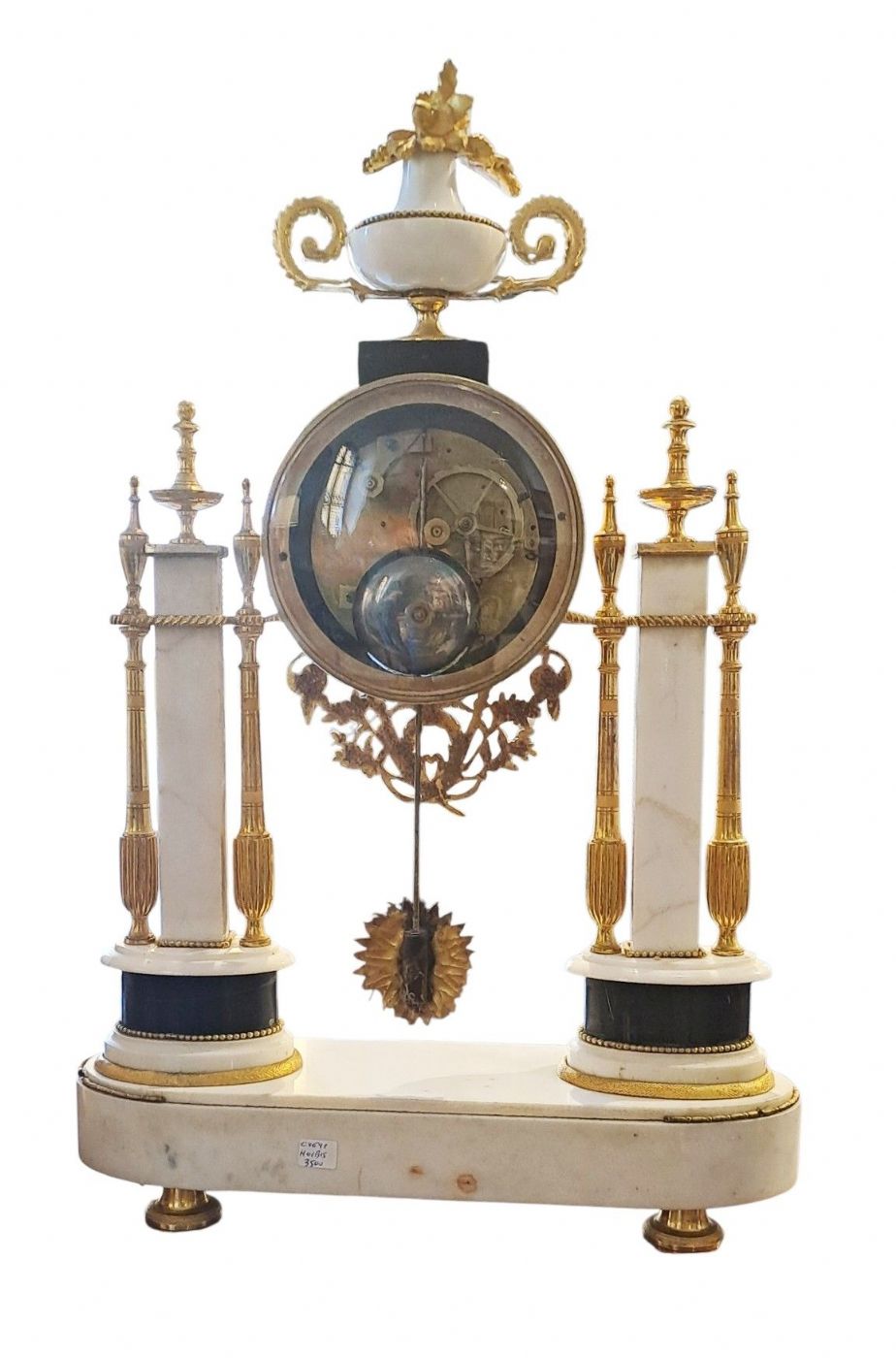
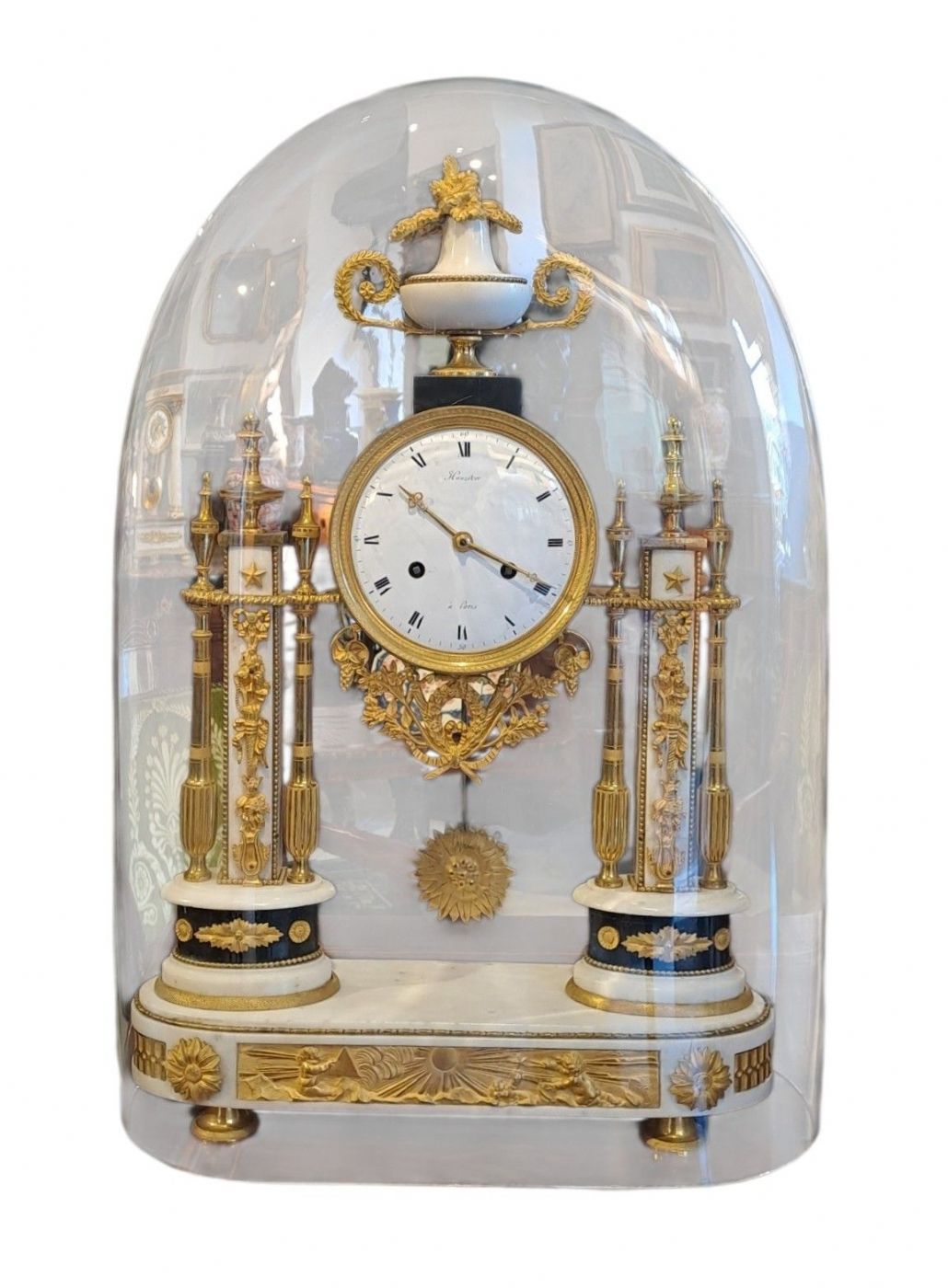
Type: Portico clock (pendule portique) with original glass dome.
Style and Period: The general style draws from Louis XVI / Neoclassical, characterized by a return to the symmetry and proportions of classical architecture. However, the presence of rigorous and geometric elements, the shape of the pillars, and the documented activity of the clockmaker place the manufacture between the late Directory and the very early Empire period (circa 1795–1805).
Materials: White Carrara marble, black marble (used in the cylindrical blocks at the base of the pillars and in the support of the top vase), finely chased and mercury-gilded bronze.
Structural and Decorative Details
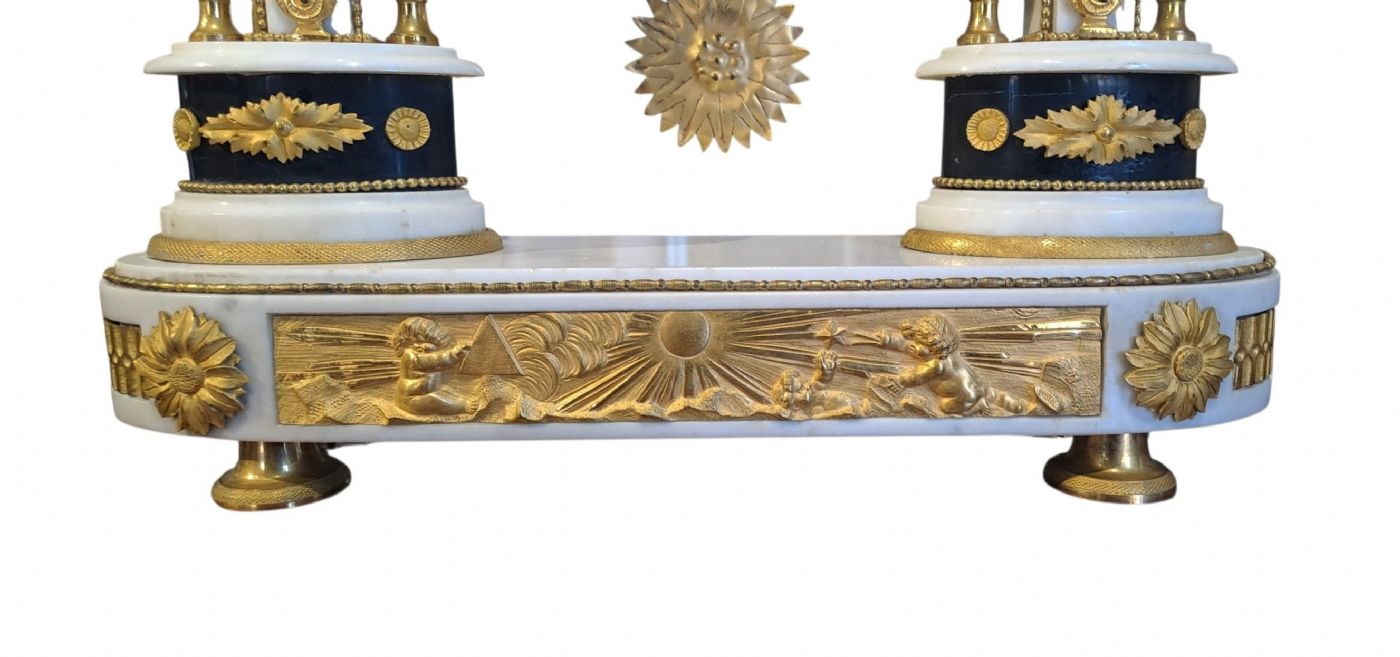
The Base: Made of white marble with rounded corners, supported by gilt bronze knurled disc feet. The front features a gilt bronze bass-relief insert depicting putti (cupids) in a landscape with a radiant sun, pyramids, or geometric elements, flanked by floral rosettes on the sides.
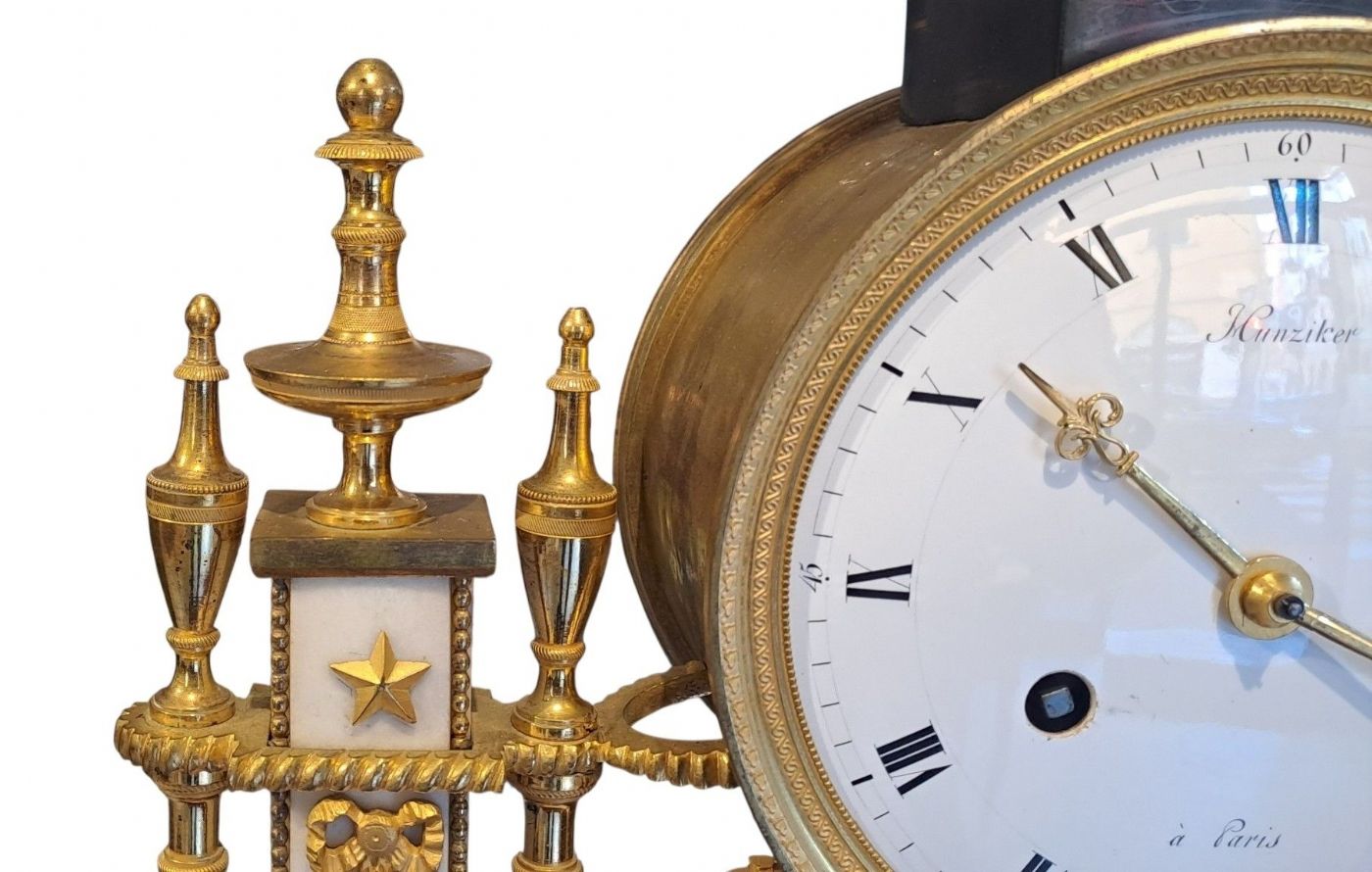
The Pillars (Portico): Two white marble square-section columns, decorated on the front with elaborate gilt bronze applications featuring leafy motifs, garlands, and five-pointed stars at the top. The pillars rest on black marble cylindrical bases decorated with horizontal gilded friezes.
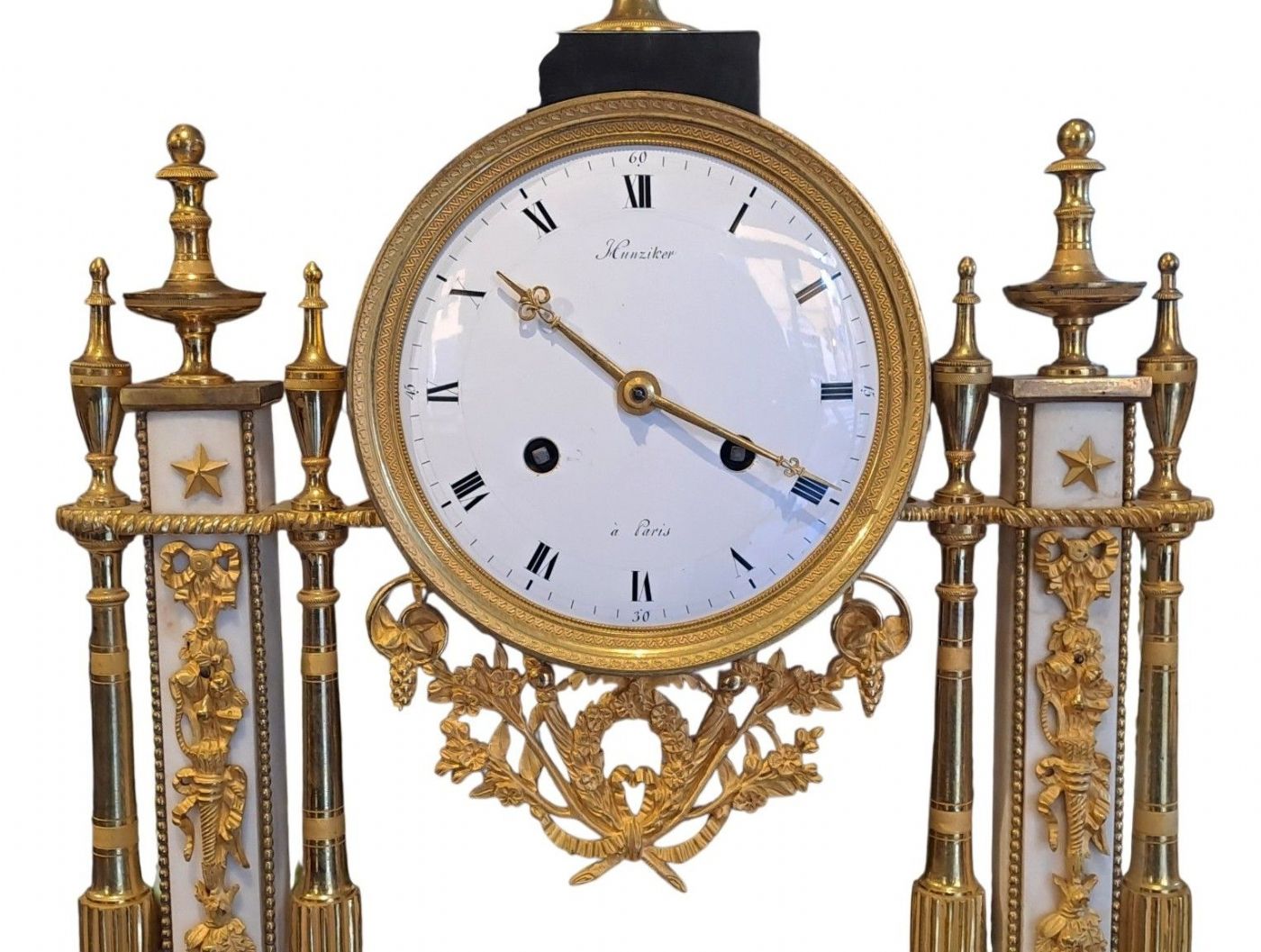
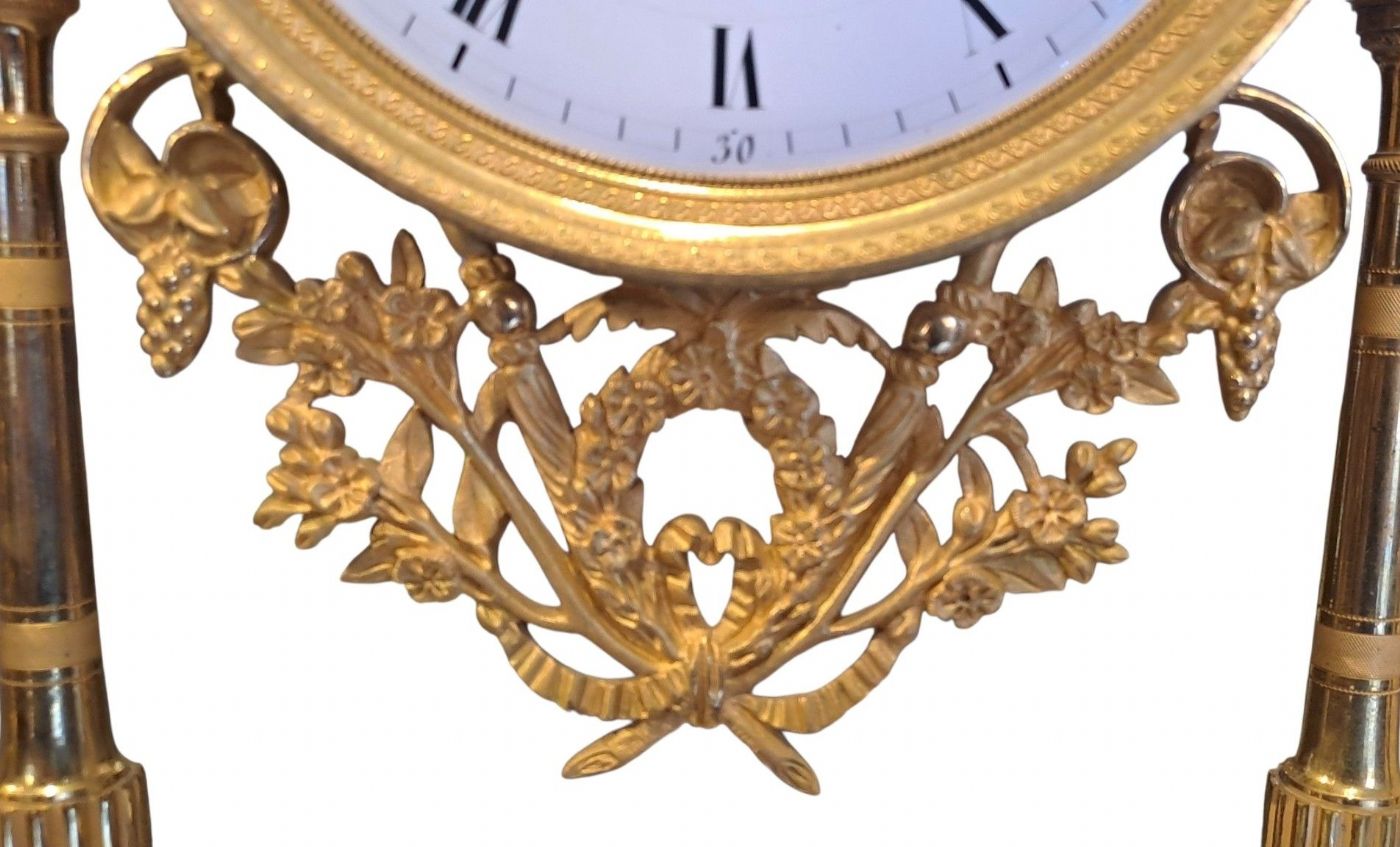
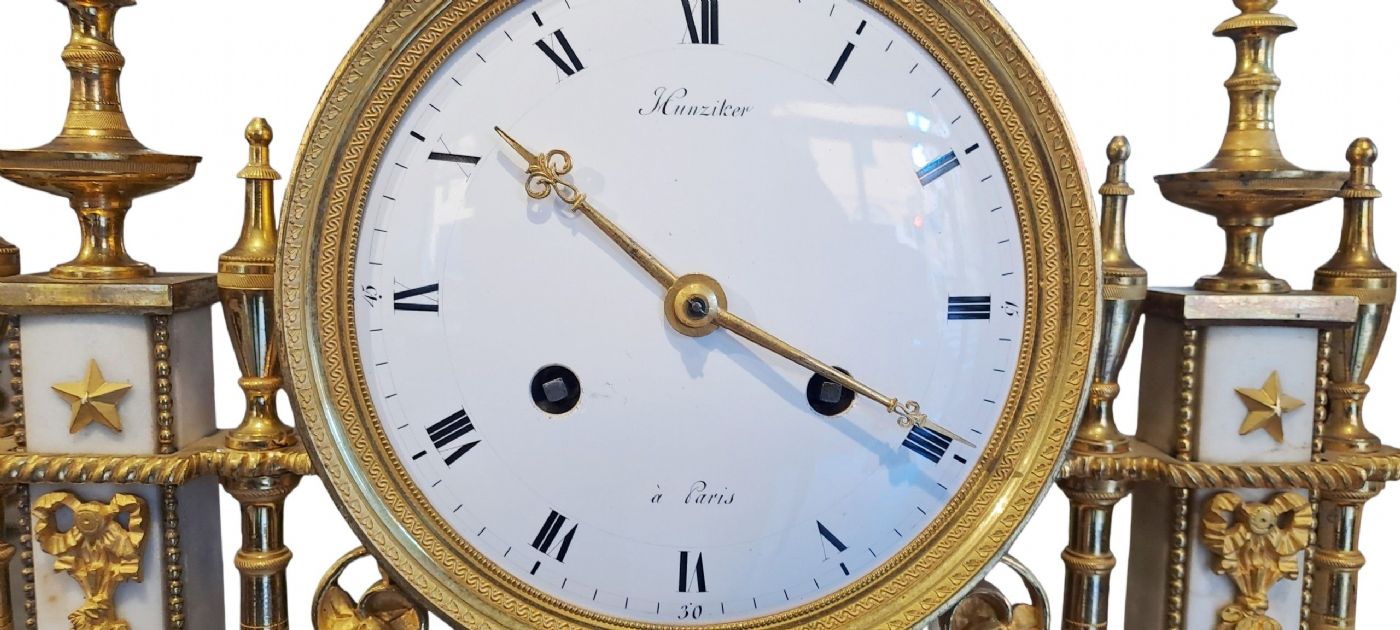
The Dial and Movement: The dial is white enamel, protected by glass and framed by a finely beaded gilt bronze bezel. It features Roman numerals for the hours and Arabic minute markers on the outer edge. The hands are pierced and gilded with geometric/floral motifs. Below the dial hangs a floral festoon that frames the pendulum's descent, the latter ending in a splendid radiant sun-shaped lens.
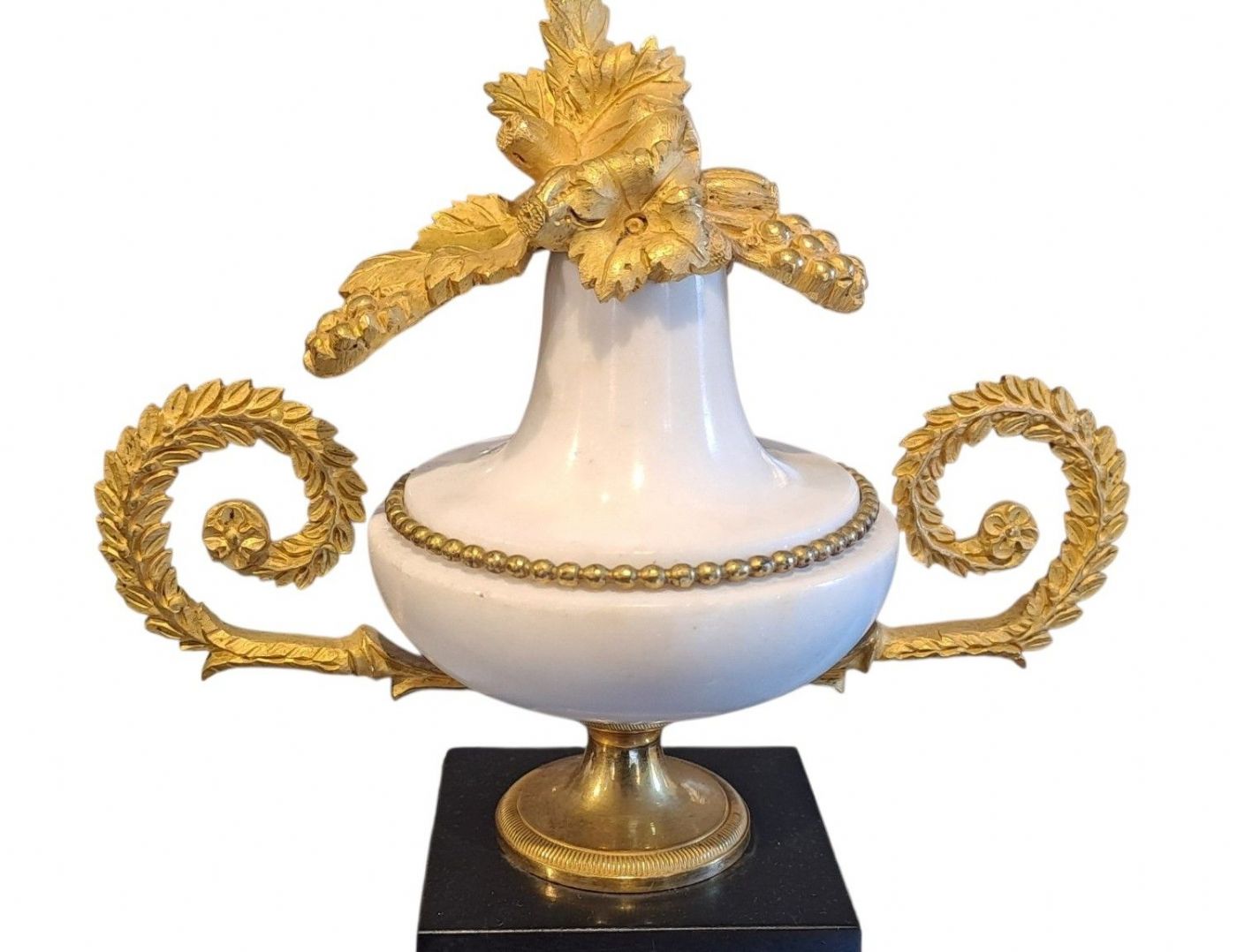
The Pediment (Cimasa): At the top of the dial rests a black marble block that serves as a pedestal for a refined white marble two-handled vase, decorated with a floral garland at the top and gilded bronze volute handles.
Clockmaker Information: Hunziker à Paris
The dial bears the clear legible signature: "Hunziker à Paris".
Identity and Period: This is a renowned master clockmaker of Swiss origin active in Paris during the Directory and First Empire periods, specifically documented between 1800 and 1825 (some sources attest to his activity from 1807).
Workshop Location: French historical registers (including the famous Tardy dictionary of clockmakers) place his prestigious workshop at Rue de Bussy No. 22 (also known as Rue de Buci), in the heart of Paris.
Fame: Hunziker was known for the superb quality of his movements and for his collaboration with the best bronze makers of the period. Many of his creations featured the portico or allegorical structure, typical of the neoclassical taste of the transition between the late 18th century and the early 19th century.
Dimensions: clock 60 x 39 depth 20 cm
A regular certificate of authenticity with photos will be issued. We assure a response to your emails within 24 hours. REGISTERED WITH THE EXPERT AND CTU REGISTER AT THE COURT OF LA SPEZIA