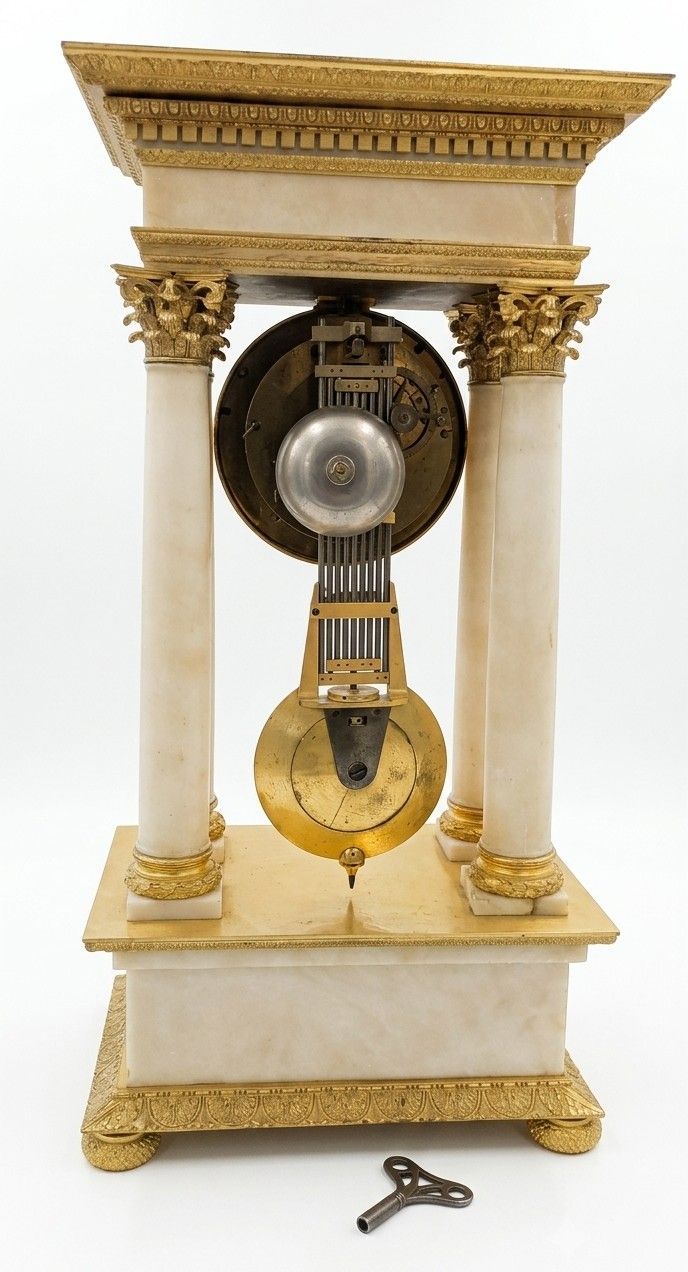
LARGE PORTICO CLOCK IN ALABASTER AND GILT BRONZE - FRANCE - 19TH CENTURY.
Description:
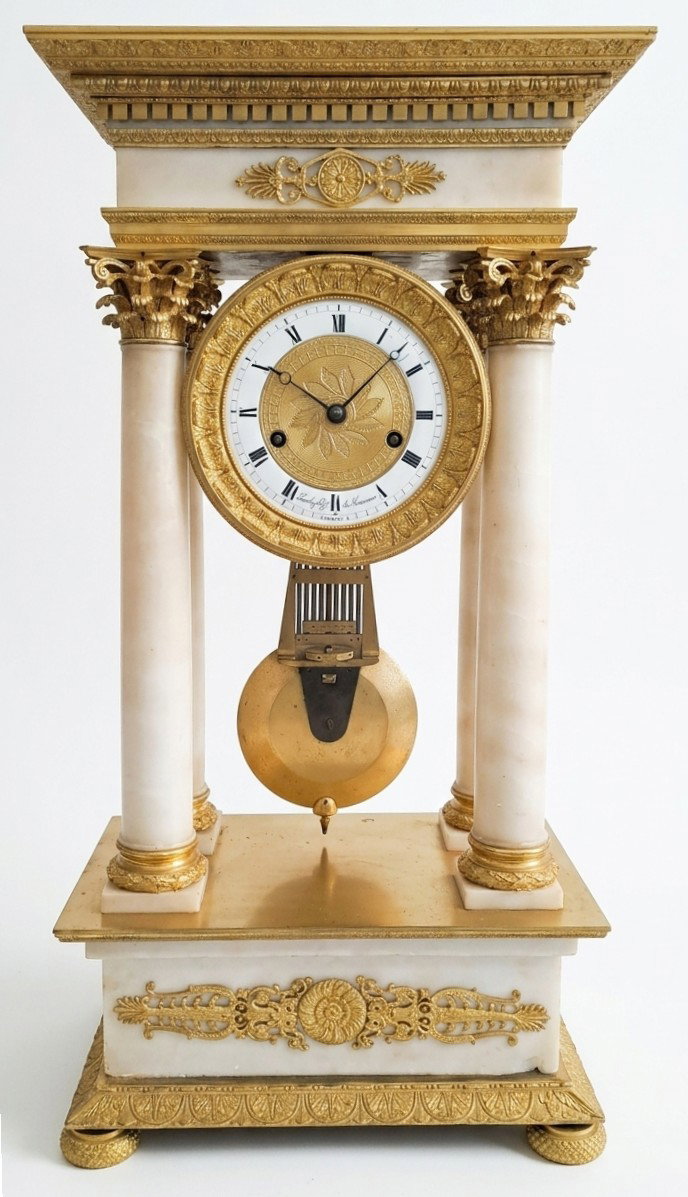
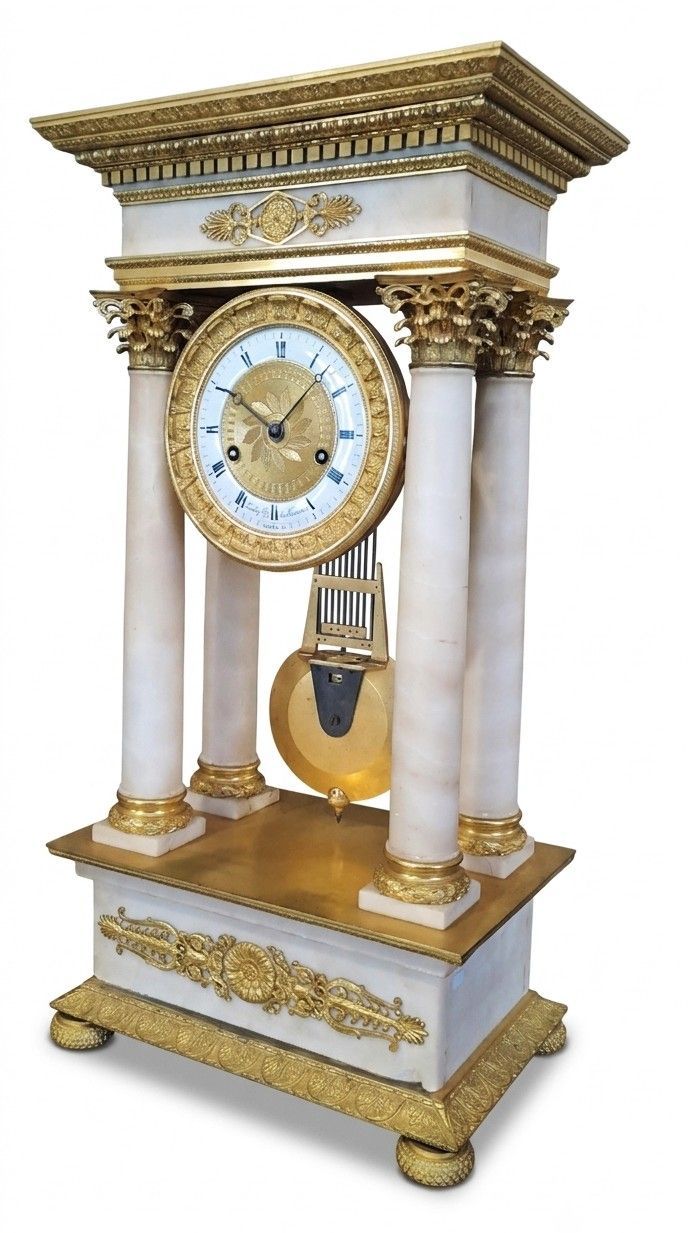
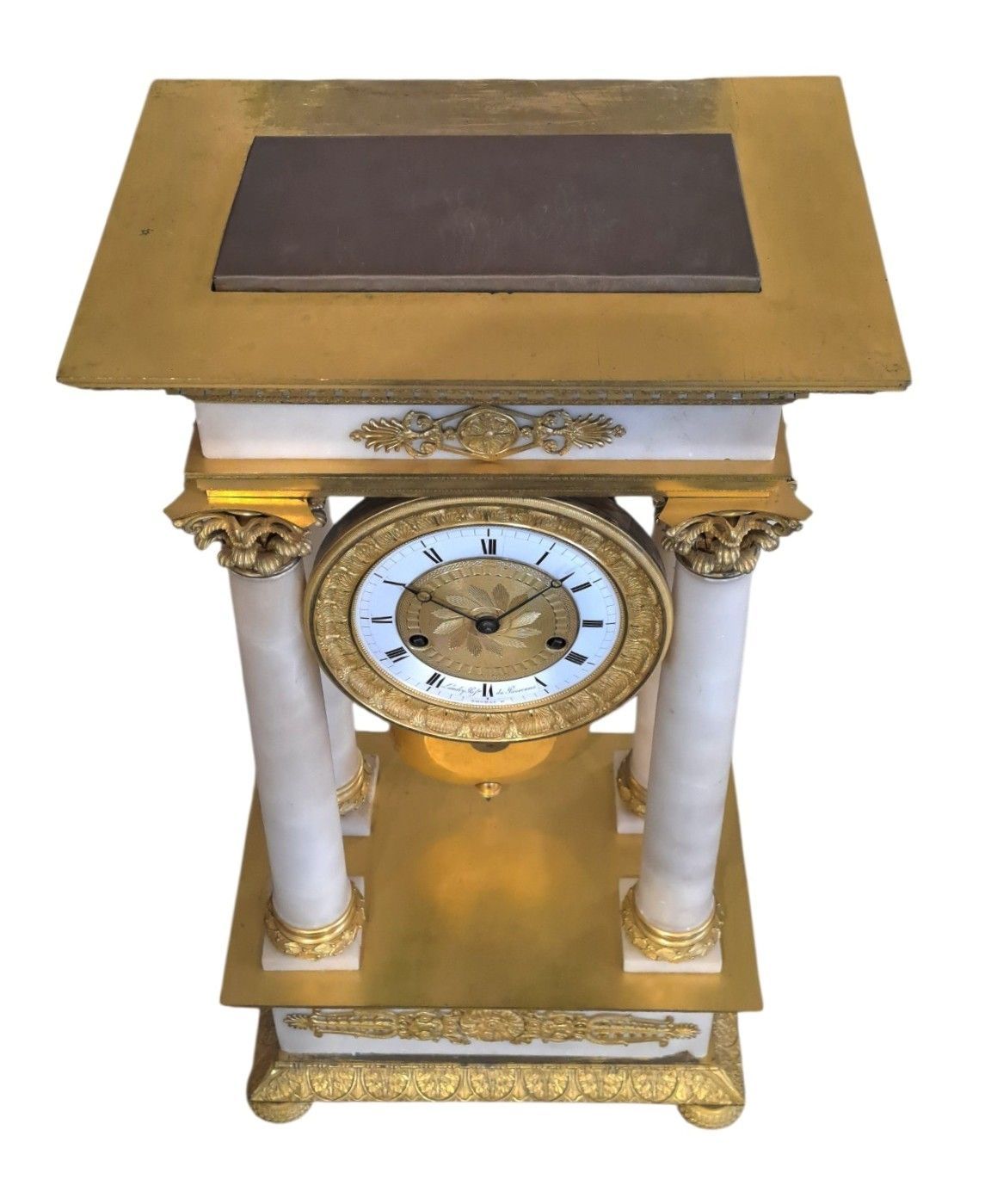
Monumental "Portico" Clock in Alabaster and Gilt Bronze. Splendid and imposing "à portique" (temple-style) table clock in precious veined white alabaster and finely chased, mercury-gilt bronze (ormolu). The piece, characterized by extraordinary sculptural richness and monumental proportions, stylistically sits between the late Empire period and the Charles X era, a Parisian manufacture.
Description of the Case and Architectural Elements
The clock is structured according to a rigidly neoclassical architectural design, organized on three levels:
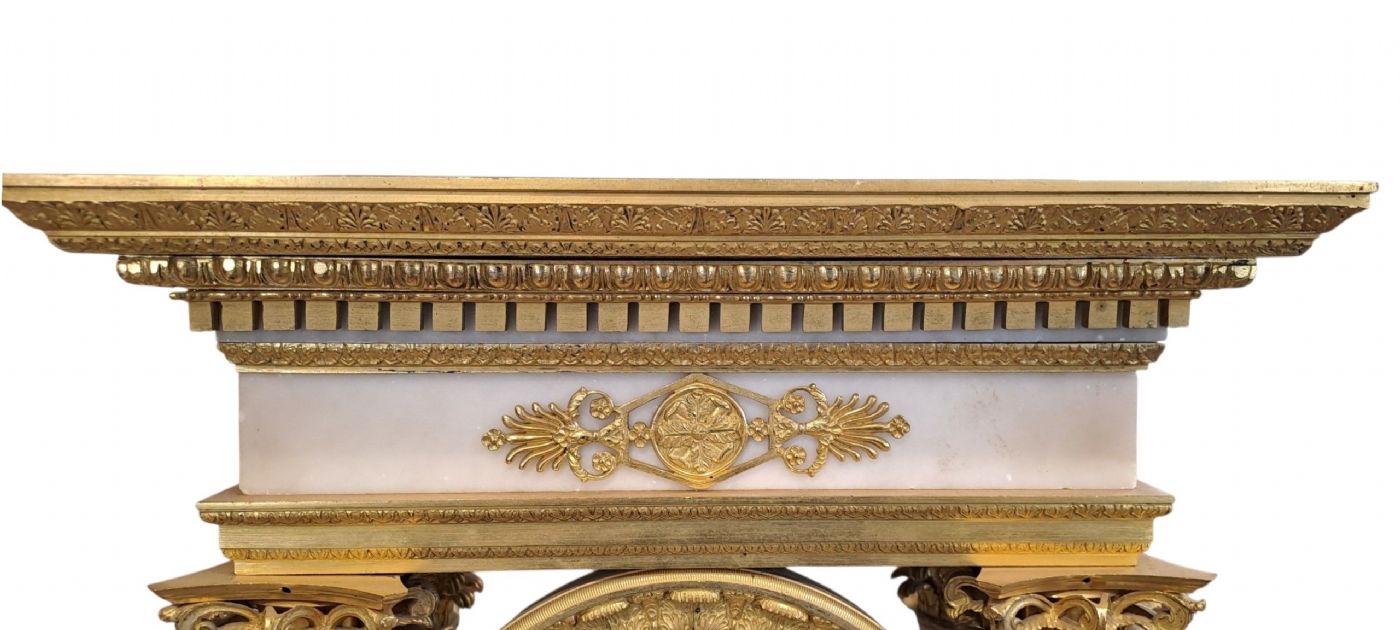
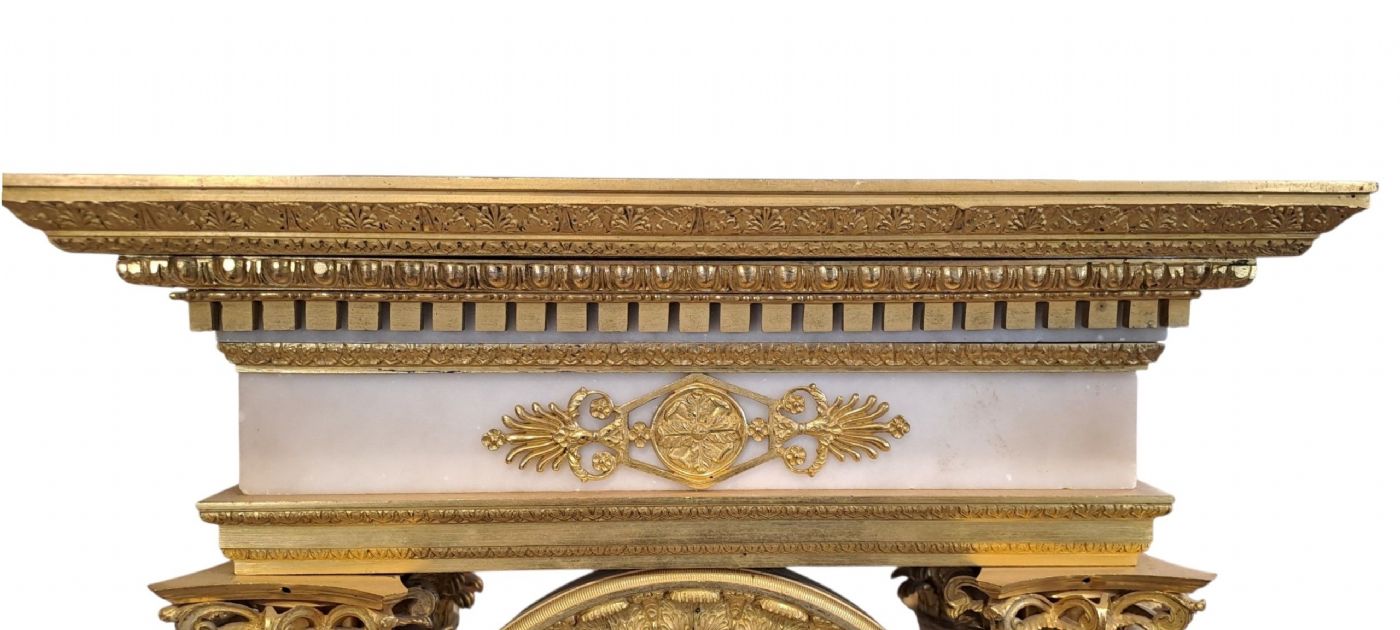
The Apex (Cimasa): Large alabaster entablature, embellished with a rich gilt bronze dentil cornice. An elegant gilt bronze appliqué with palmette motifs and a central garland stands out on the frieze.
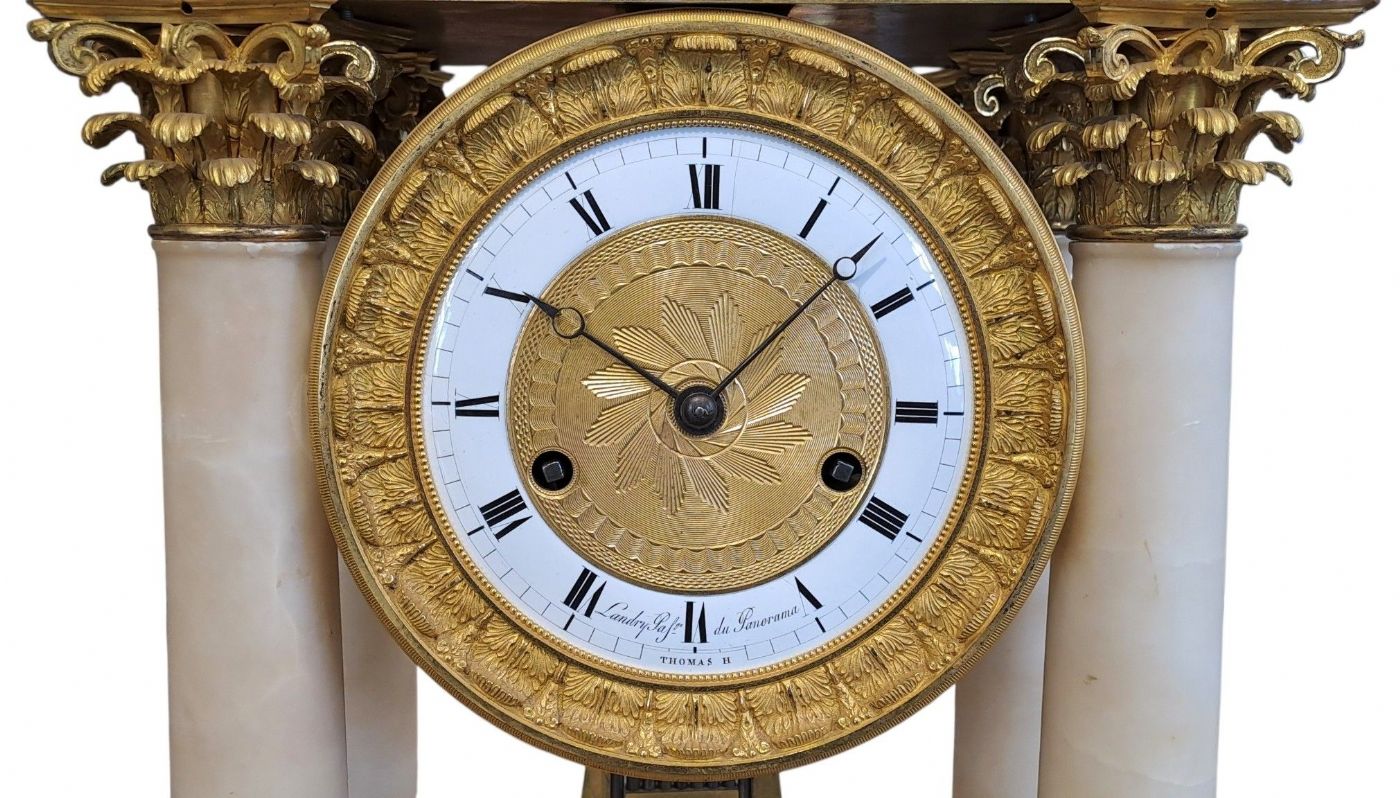
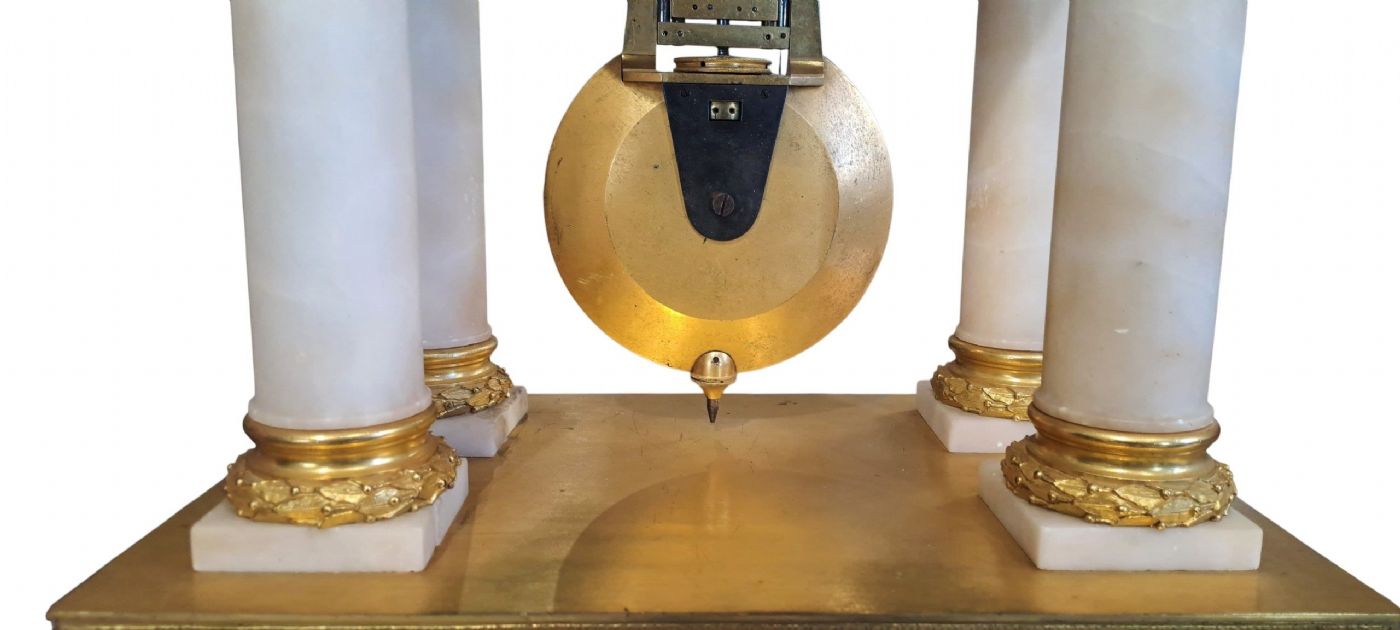
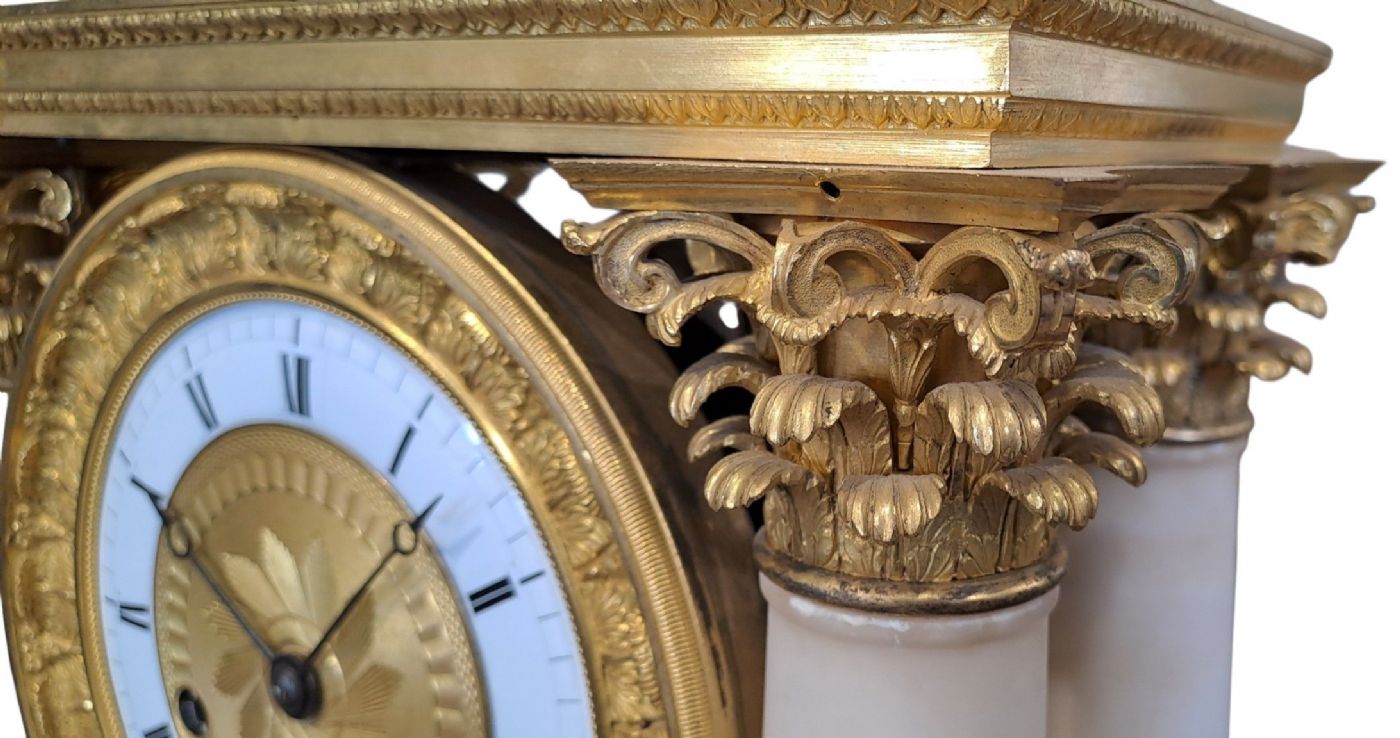
The Portico: Supported by four solid alabaster columns with Corinthian order capitals. The capitals are masterpieces of casting and chasing, richly adorned with three-dimensional, feathered acanthus leaves and volutes. The bases of the columns, also in gilt bronze, rest on a gilded intermediate platform that mirrors the large pendulum bob.
The Base: Imposing rectangular alabaster plinth, enriched on the front by a gilt bronze appliqué depicting a central rosette between opposing leafy volutes and acanthus scrolls. The entire structure rests on four substantial, finely knurled onion feet.
The Dial and the Clockmaker
The dial is visually striking and typical of the first half of the 19th century:
Outer Ring: White enamel with black Roman numeral hours and linear minute track. Center: Gilt bronze, splendidly finished with a sunburst pattern of geometric floral motifs achieved through engraving.
Signatures: In the lower part of the enamel ring, the signature clearly reads: Landry Pas.ge du Panorama / THOMAS H.
Historical Notes on the Clockmaker: The signature refers to the renowned dynasty of Parisian clockmakers Landry (including Pierre-Alexandre Poux-Landry and his successors), active in Paris with a prestigious workshop located within the famous Passage des Panoramas, one of Europe's first and most luxurious covered arcades. The inscription "THOMAS H." most likely indicates the technical collaborator who signed the movement.
Type of Mechanism and Pendulum
The clock retains its original, high-quality movement:
Movement: French "Parisian" circular movement with an anchor escapement. It features two sets of gears for independent timekeeping and chiming.
Chiming: External count wheel (visible on the back), which strikes the hours and half-hours on a silvered metal bell.
Pendulum: Exceptional and heavy bimetallic thermal compensation pendulum (composed of alternating iron and brass rods), designed to counteract length variations due to temperature fluctuations. It ends with a very large gilt bronze lenticular bob. The suspension is of the knife-edge type, typical of contemporaneous precision regulating mechanisms.
Condition: The case shows no evident cracks in the alabaster; the gilding retains a splendid period luster in the matte/polished contrast areas. Complete with butterfly winding key.
Dimensions: height 59 cm, width 30 cm, depth 20 cm. A regular certificate of authenticity with photos will be provided. We guarantee a response to your emails within 24 hours. REGISTERED WITH THE EXPERTS AND CTU REGISTER AT THE COURT OF LA SPEZIA.