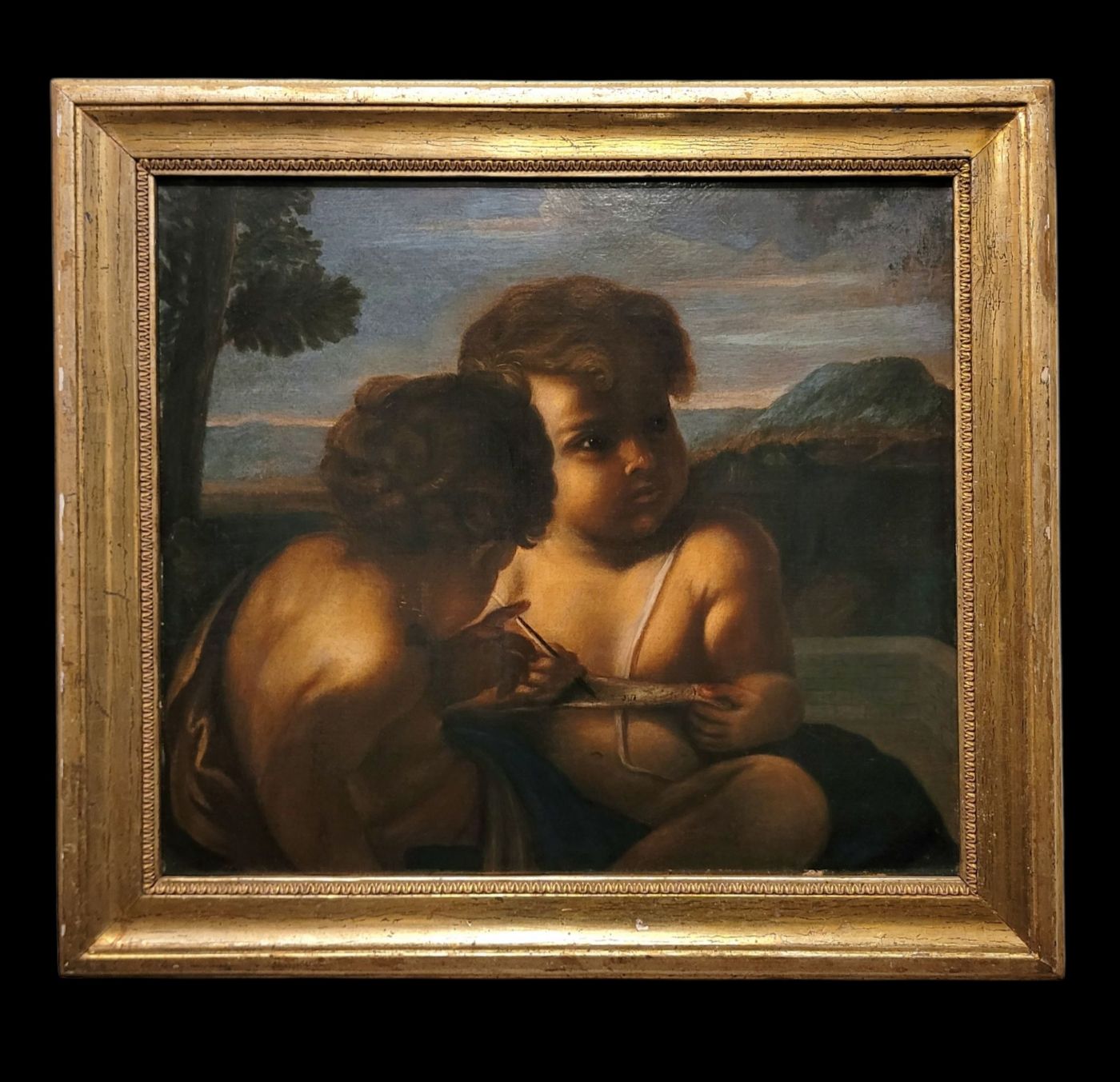
Allegory of Erudition, oil on canvas from the 17th century
Description:
Title: "Allegory of Erudition"
Date: Late 17th century
Technique: Oil on canvas
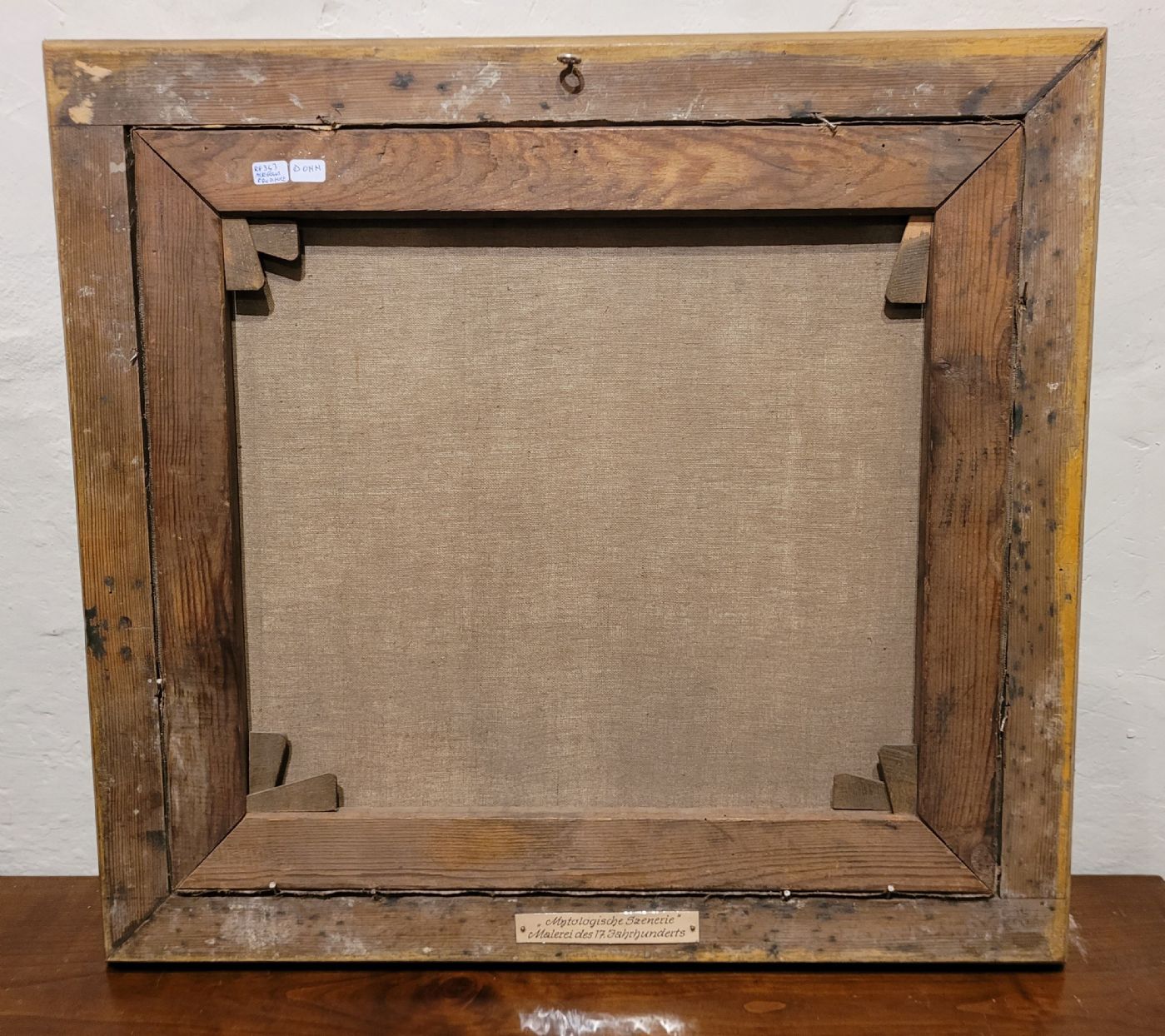
Canvas dimensions: 51x46 cm
Frame: 19th-century wooden frame, 62x57 cm
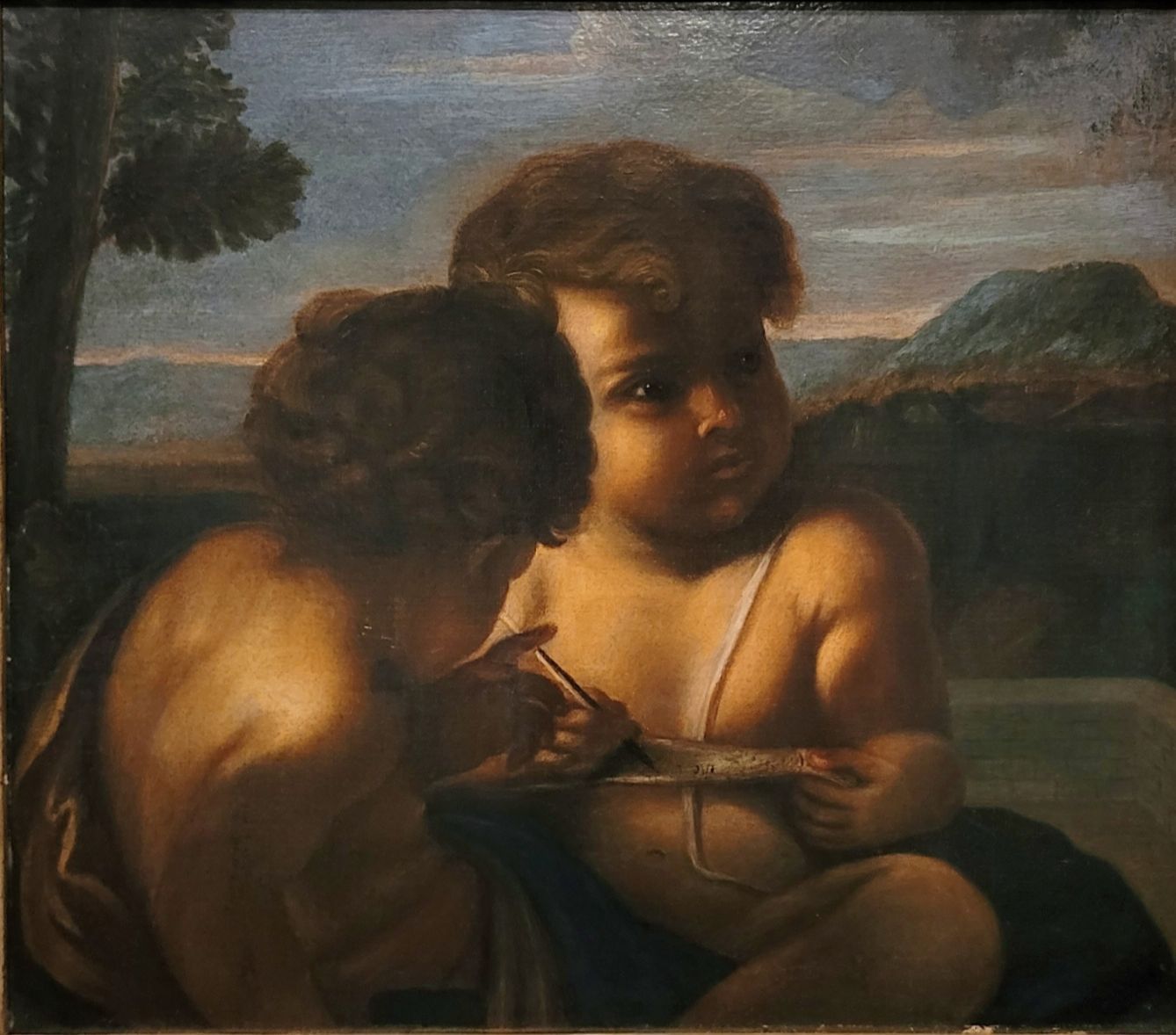
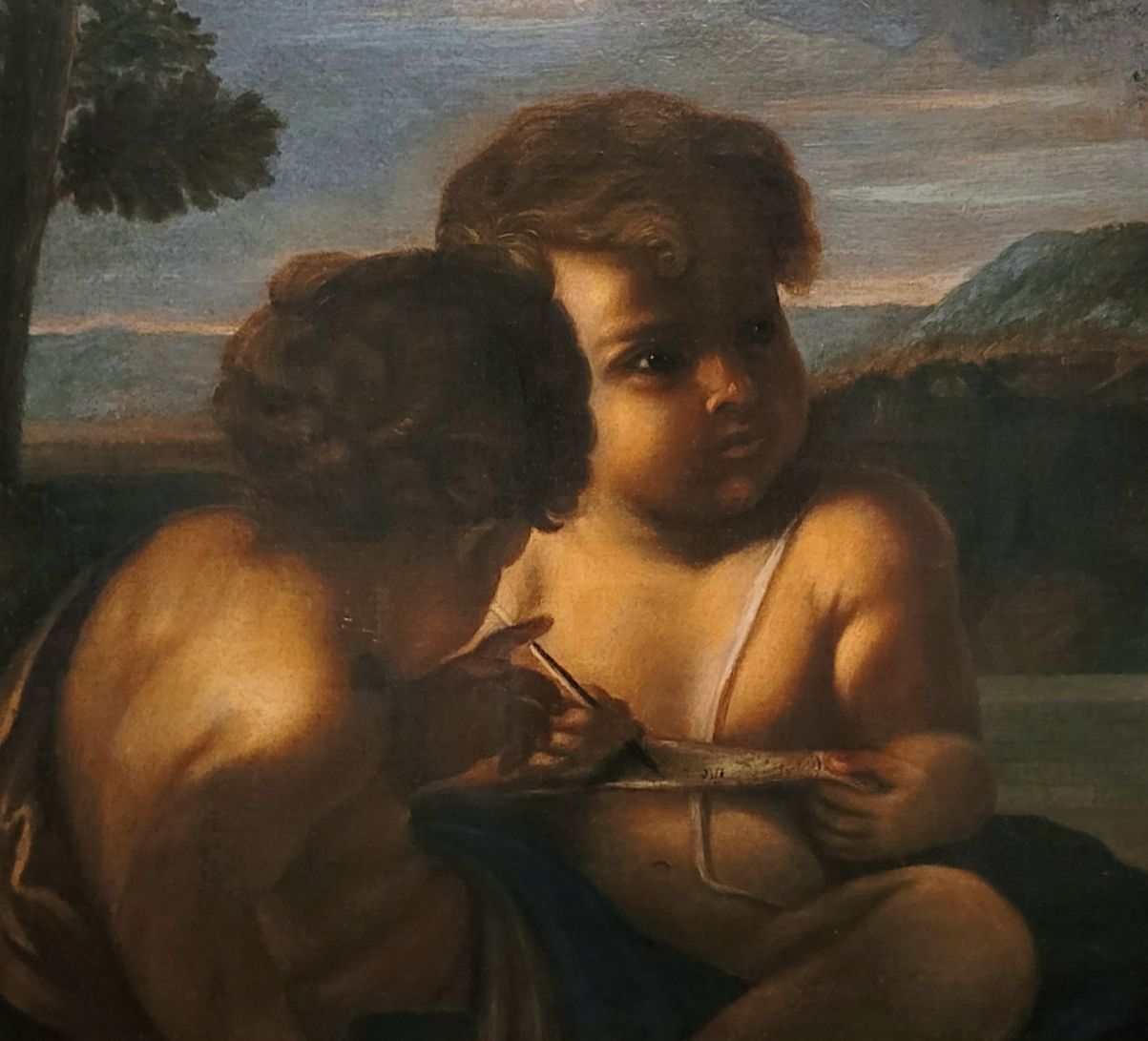
The painting depicts two putti engaged in writing. In the foreground, the putto facing the viewer holds a sheet of parchment in his left hand and a quill pen in his right, as if about to write, while the other, seen from behind, observes with attention and curiosity. The composition is set in a lightly sketched landscape, characterized by a tree on the left and rolling hills in the background, bathed in twilight.
The lighting emphasizes the strong contrast between light and shadow, highlighting the plasticity of the child figures and focusing attention on the act of writing. The warm tones of the flesh tones contrast with the browns of the landscape, in line with a sensibility typical of Baroque tradition painting.
The work represents an allegory of erudition, understood as the exercise of study, knowledge, and learning. The writing instruments are symbolic attributes of knowledge, while the putti, frequently employed in allegorical painting between the 16th and 17th centuries, take on the role of personifications of intellectual virtues. The concentrated attitude of the figures underscores the value of discipline and the transmission of knowledge.
In terms of composition, chiaroscuro treatment, and the type of putti, the work fits within the tradition of 17th-century Italian allegorical painting, when child figures were frequently used to embody abstract concepts such as the arts, virtues, and disciplines of knowledge. The quality of the modeling and the intimate atmosphere are reminiscent of Emilian and Roman Baroque-era cultural models.