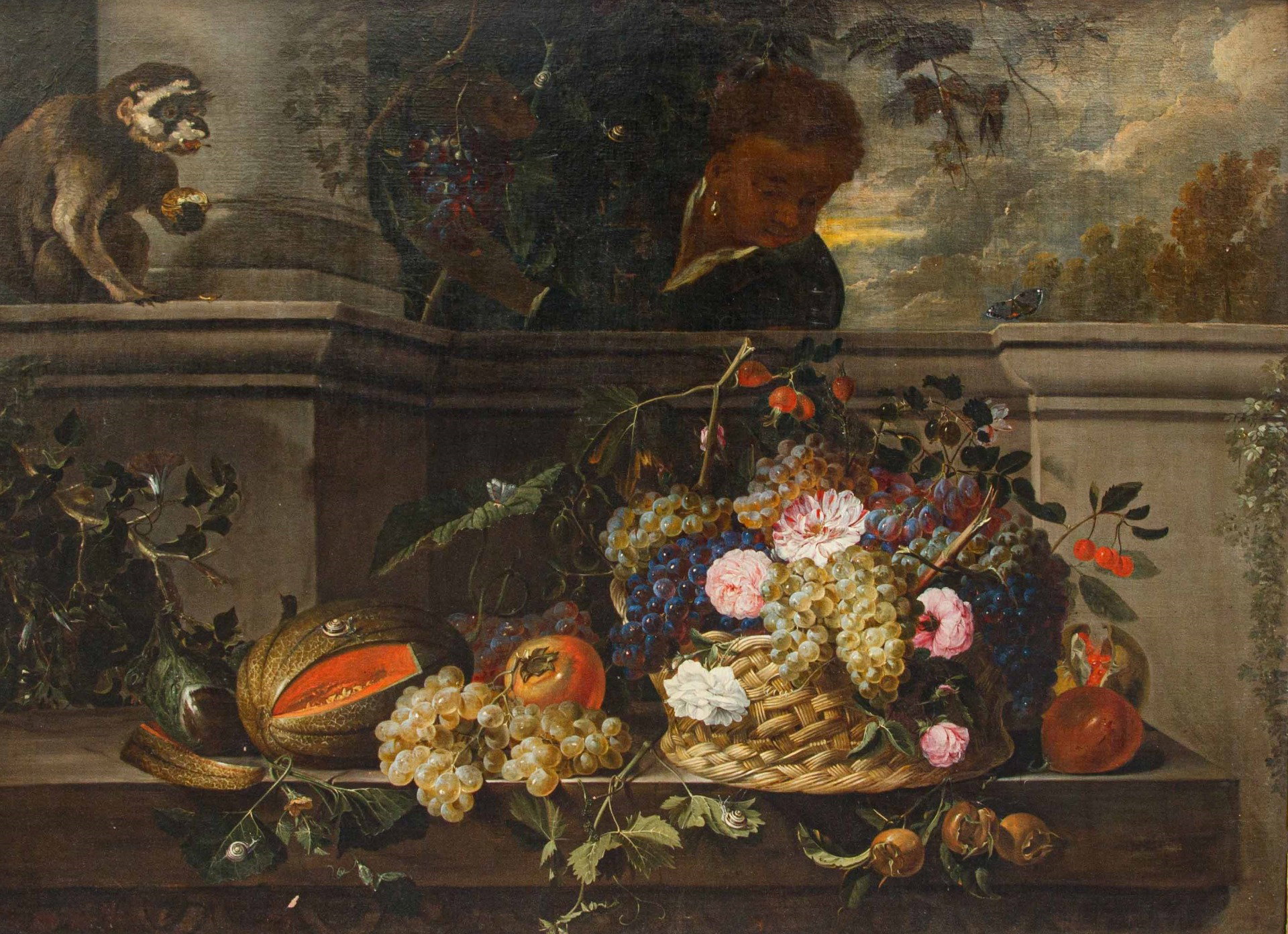
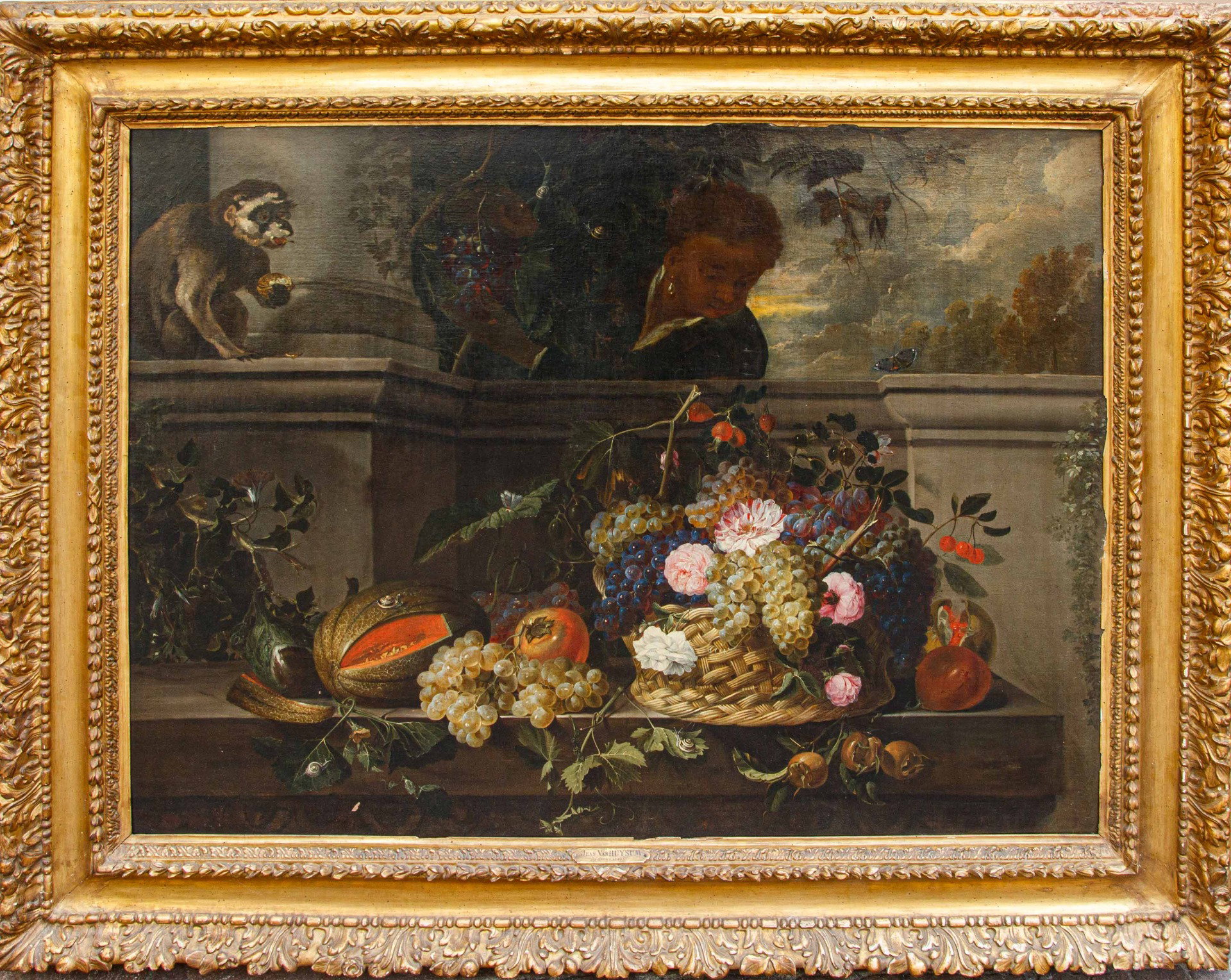
Jan van den Hecke (Quarmonde, 1620 - Antwerp, 1684), Still life of fruits and flowers in a garden
Description:
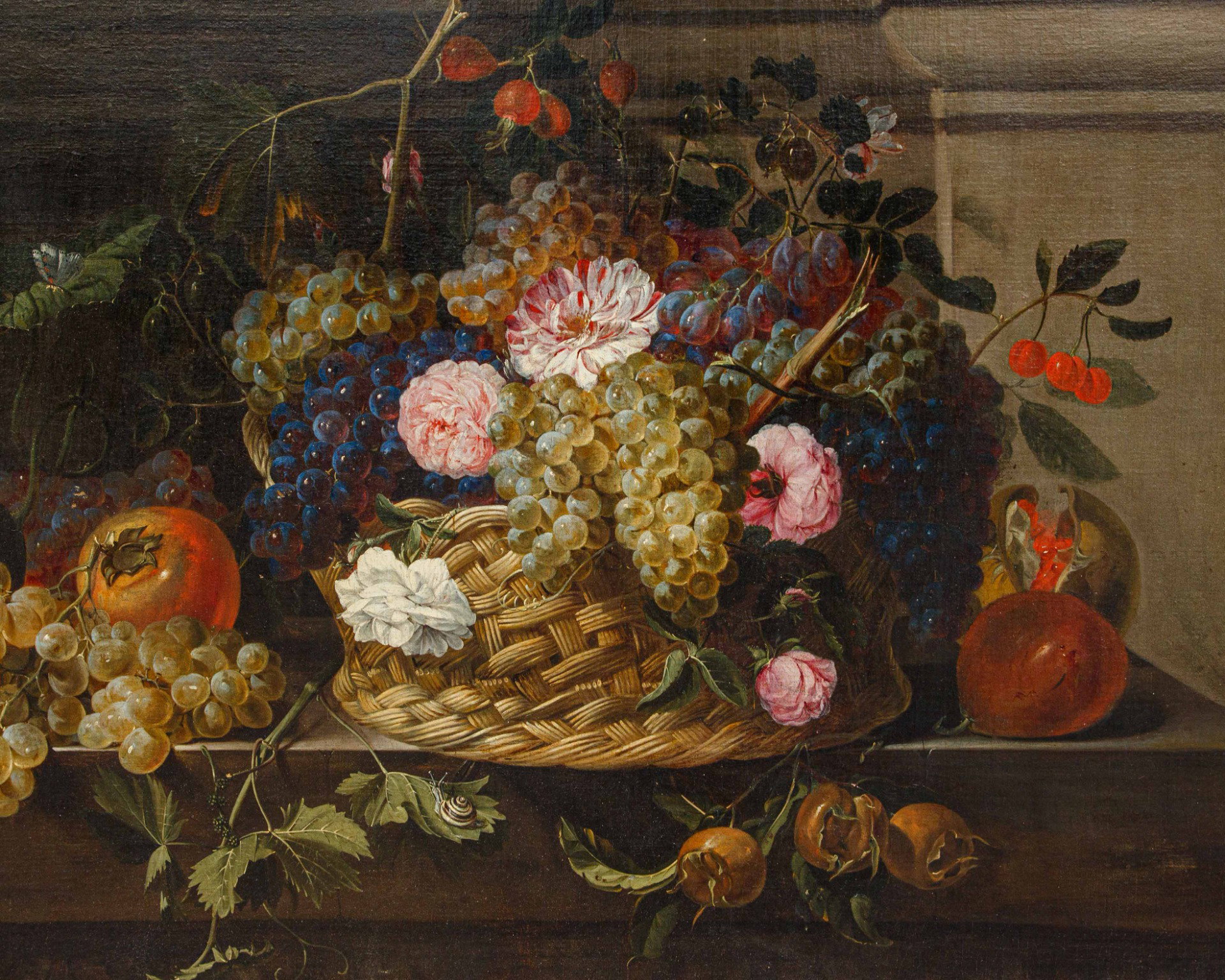
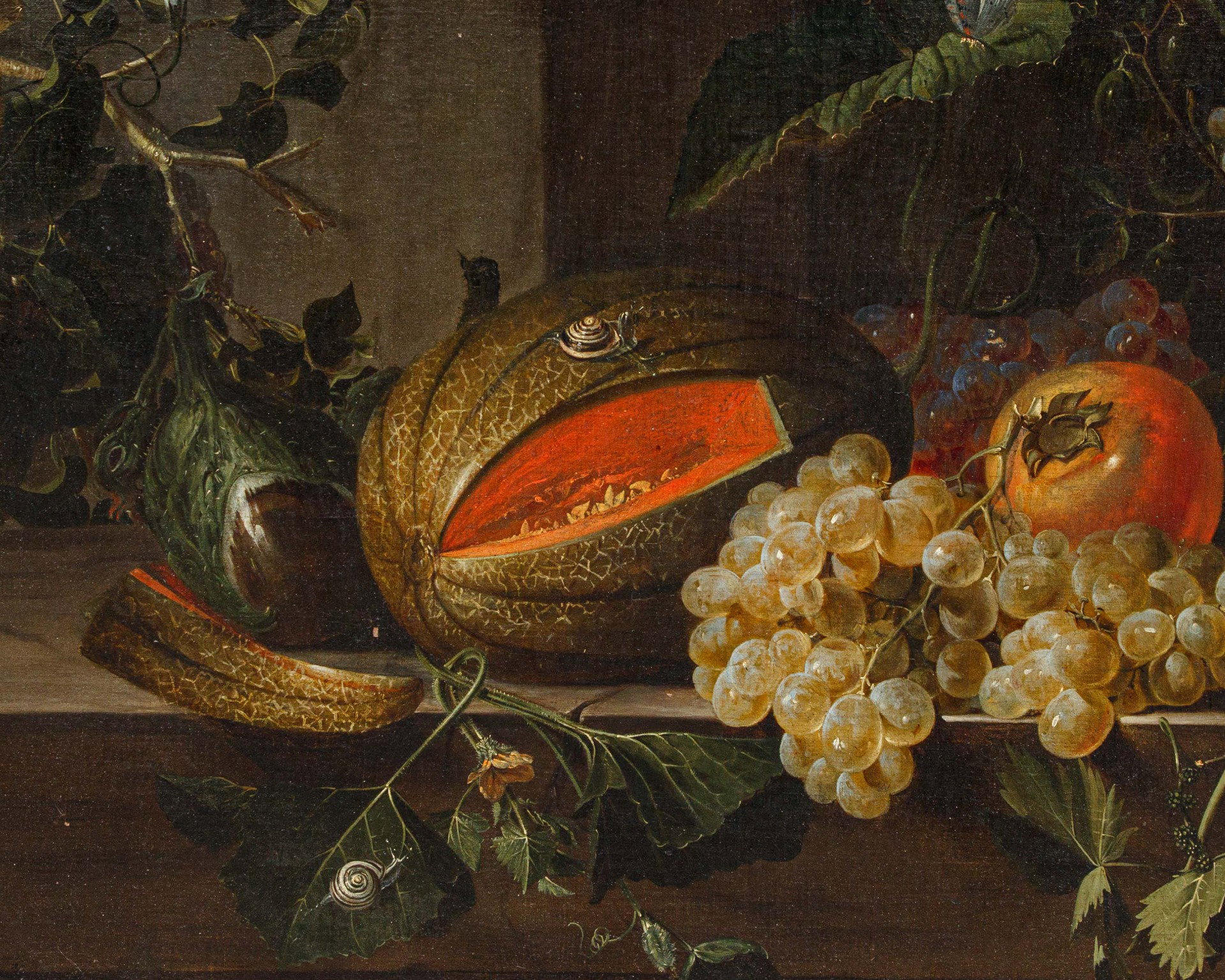
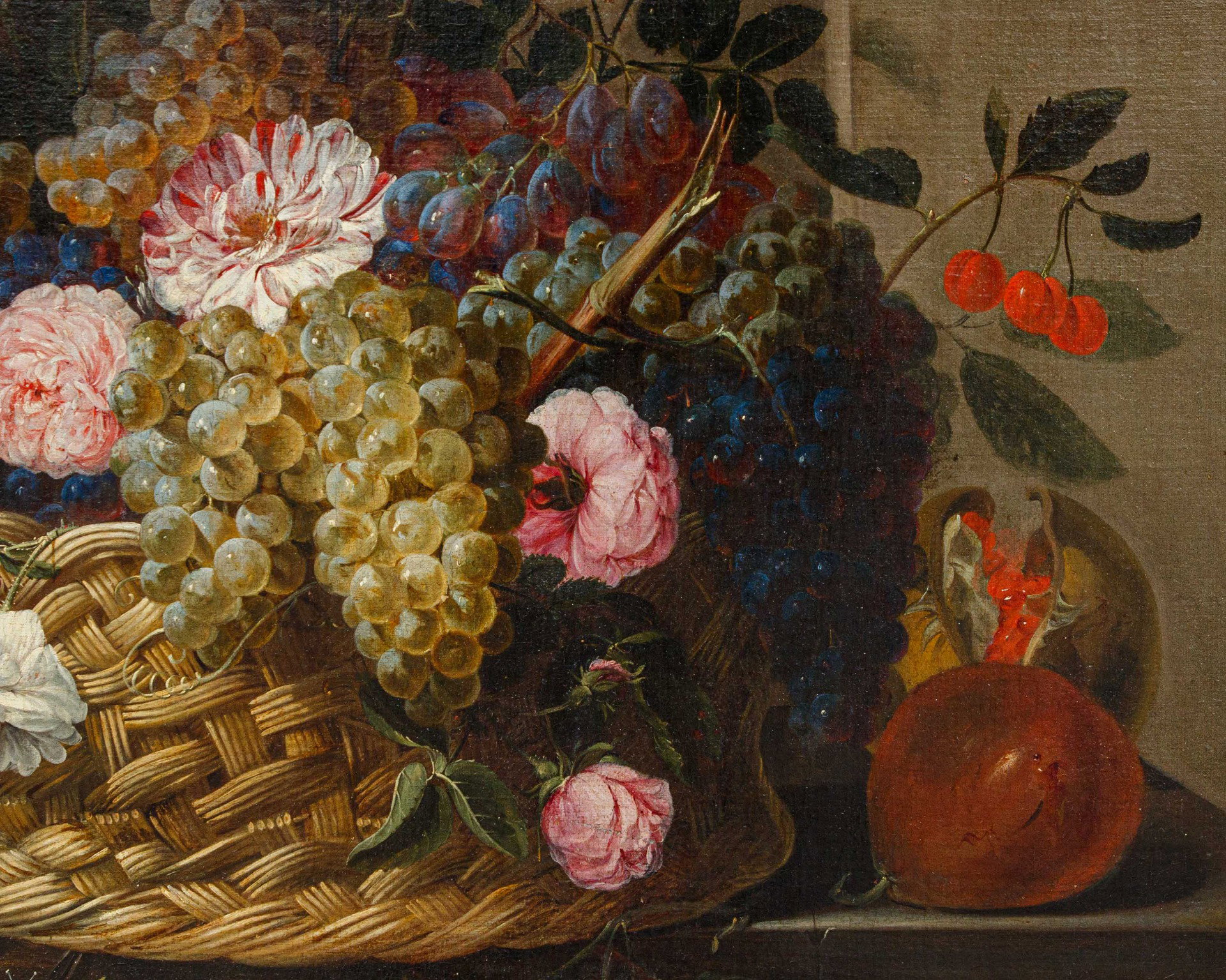
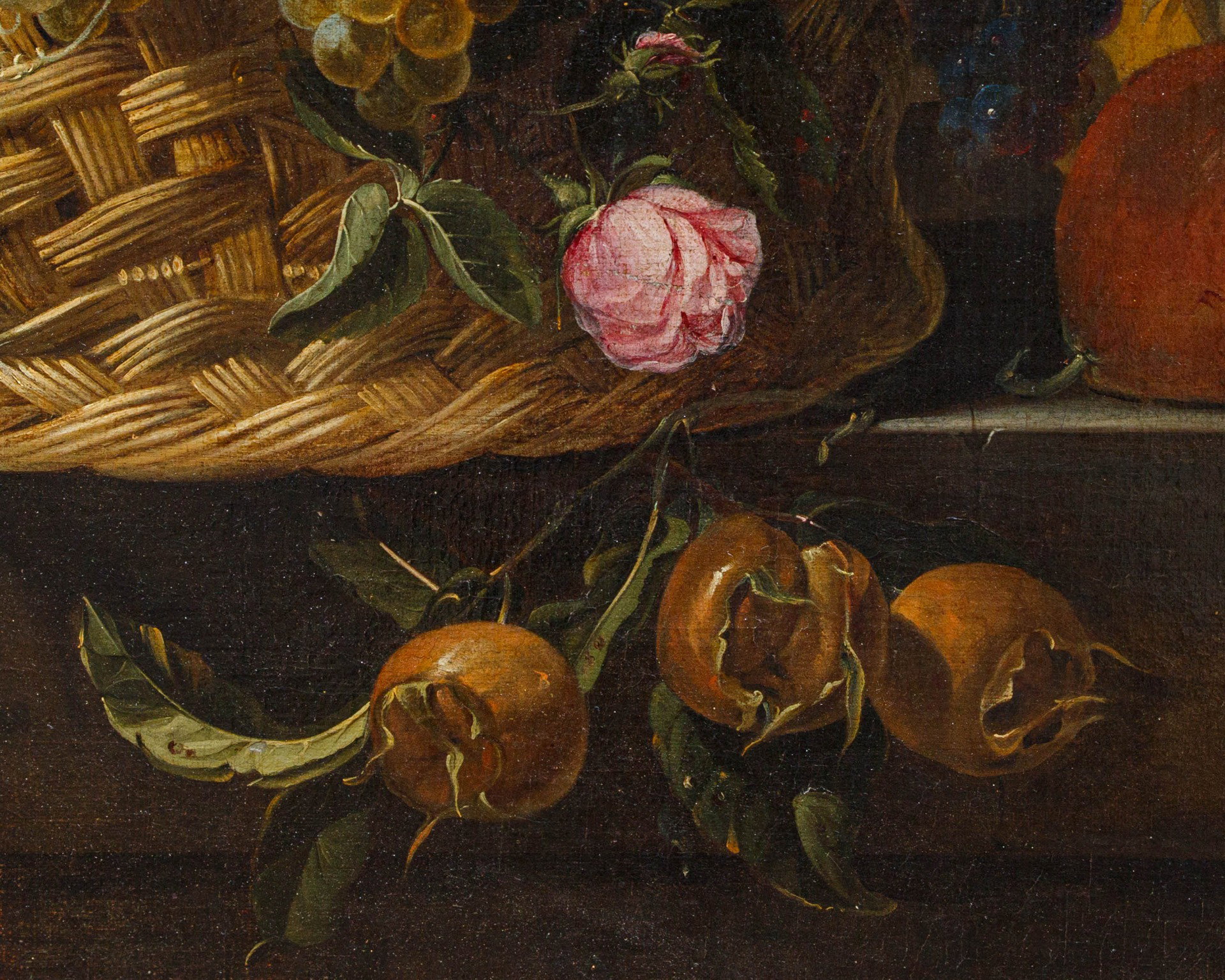
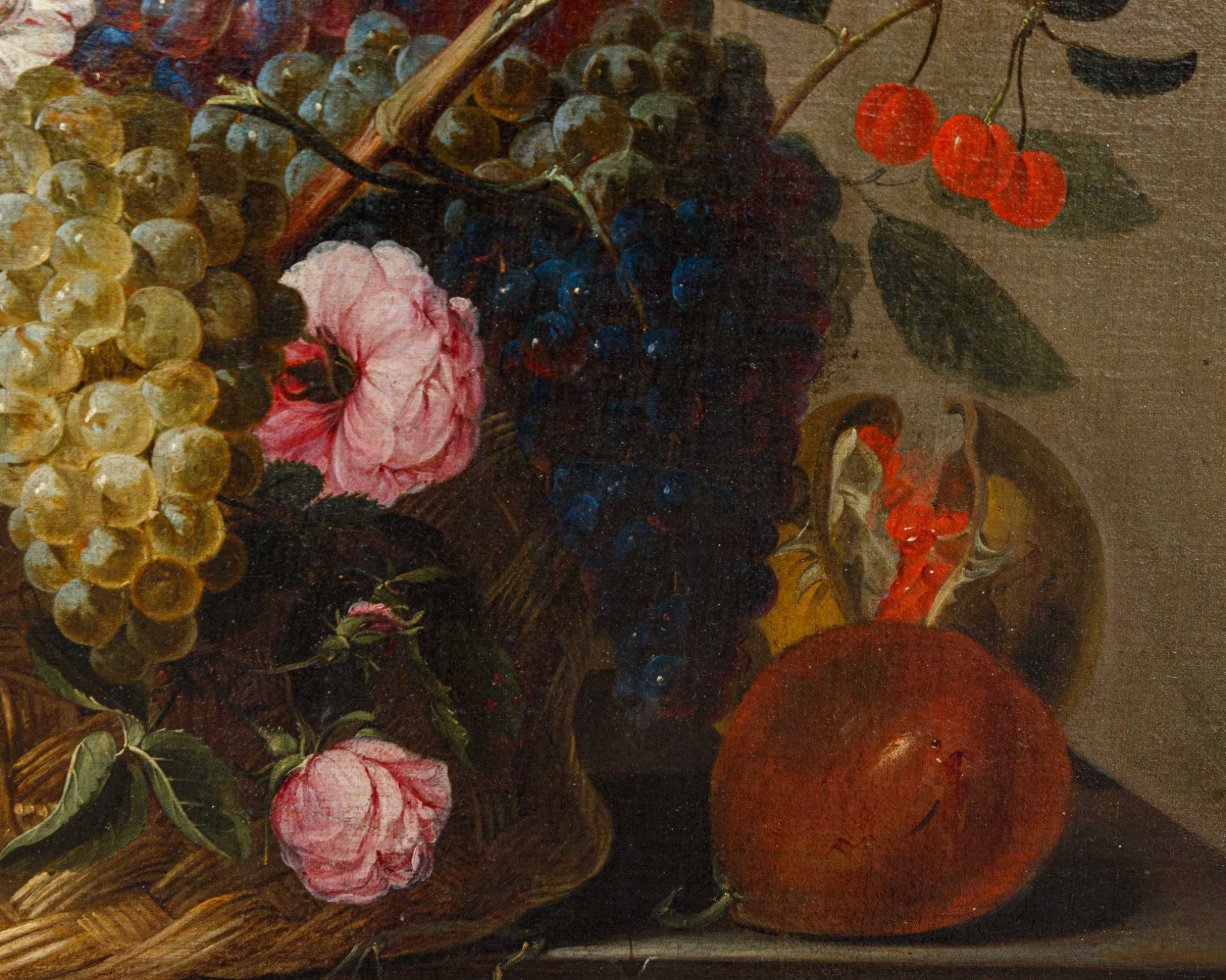
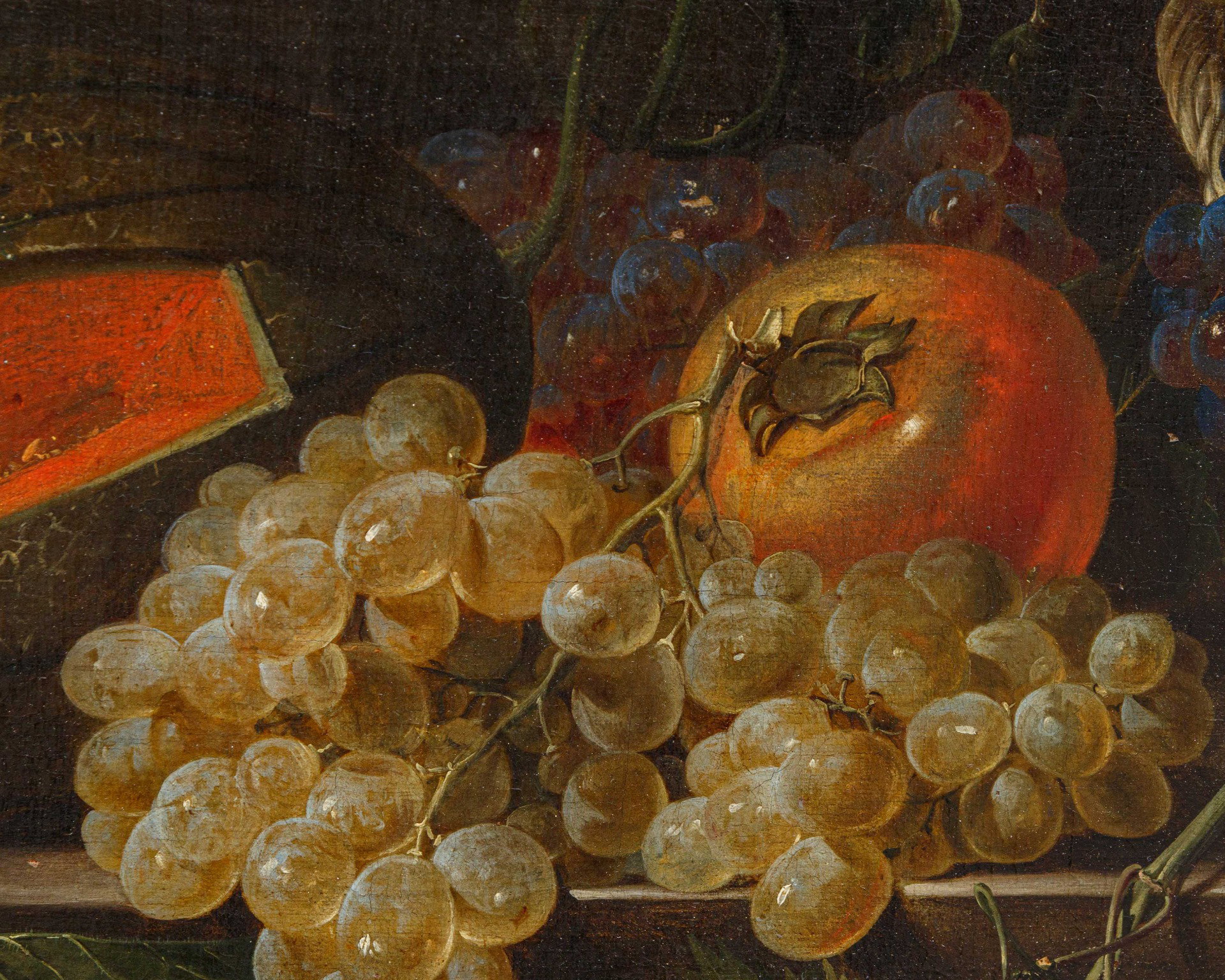
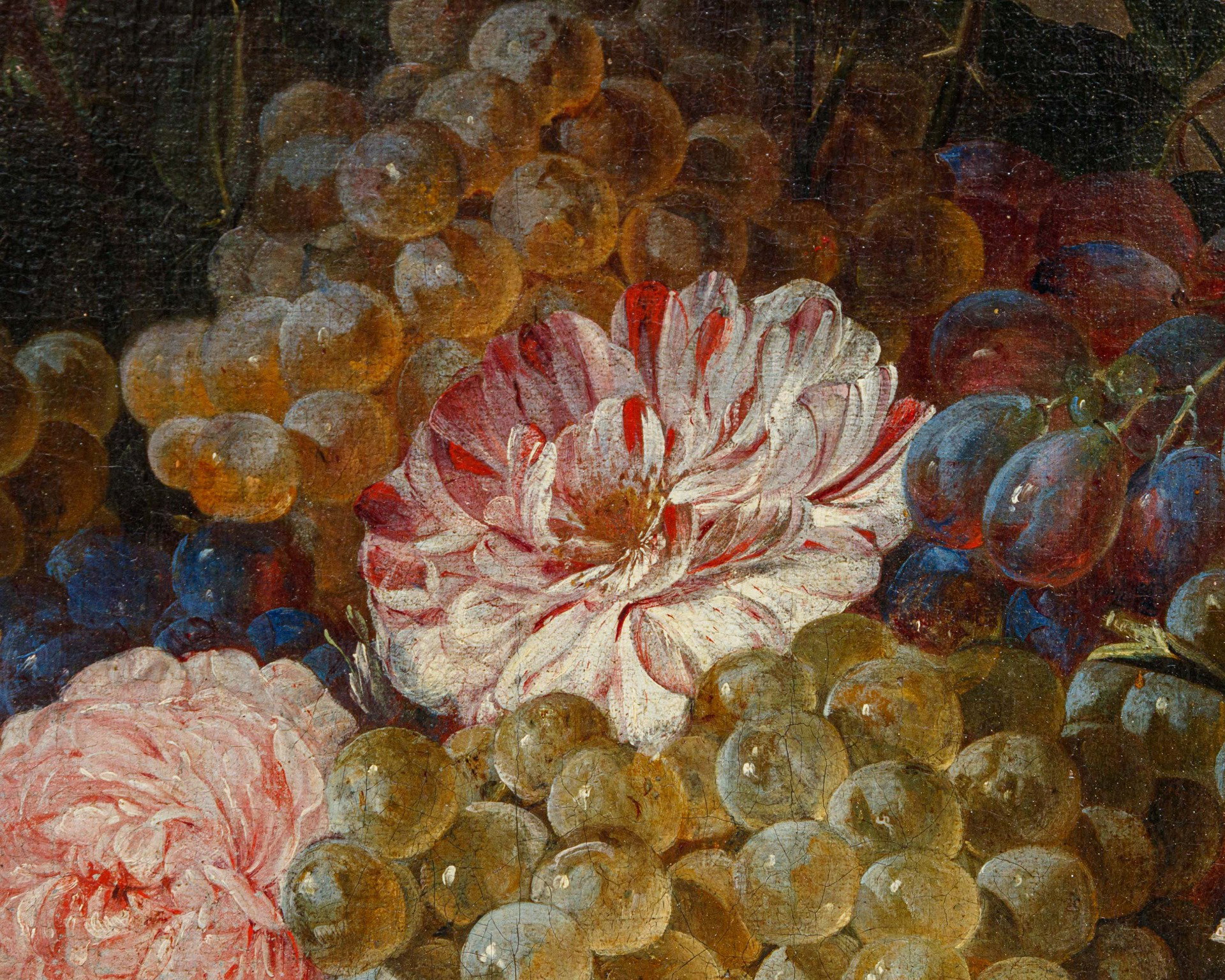
Jan van den Hecke (Quarmonde, 1620 - Antwerp, 1684) Still life of fruits and flowers in a garden Oil on canvas, 107.5 x 141 cm With frame 143 x 176 cm This painting, a refined and monumental oil on canvas composition, represents an extraordinary example of 17th-century Flemish genre and still life painting, restored to the correct attribution to Jan van den Hecke thanks to the opinion of Fred G. Meijer. The complex scene combines the analytical precision of the Northern tradition with an evident theatricality of Mediterranean breath, transcending rigid period categorizations to merge pure still life with human and anecdotal elements. From a historiographical perspective, the work boasts a distinguished provenance and an emblematic critical path: it is registered in the RKD database (no. 118274) and, historically, was attributed to Jan van Huysum, appearing with this reference both in the famous Charles Sedelmeyer sale in Paris in 1907, and in the 20th-century specialized literature curated by Cornelis Hofstede de Groot and Maurice Harold Grant. Only recent philological analysis has made it possible to reposition the work within Van den Hecke's catalog, dating its execution to the 1660s or 1670s. Born in Quarmonde in 1620 and trained in Antwerp, where he became a master of the Guild of Saint Luke in 1642, Jan van den Hecke perfectly embodies the figure of the cosmopolitan Flemish painter. His biographical trajectory is marked by a long stay in Italy, documented between 1644 and 1659, during which he worked in Rome for important patrons, including Duke Paolo Giordano II Orsini of Bracciano. This Roman period was crucial for the evolution of his style, allowing him to absorb the chromatic sensuality and dramatic management of light typical of the Italian Baroque, before returning to Antwerp, where he remained active until his death in 1684. The work in question belongs to the artist's full maturity, subsequent to his return to his homeland, and subtly bears the fruits of that fruitful cultural cross-pollination. The canvas's arrangement reveals an undeniable influence of Italian painting, particularly the great period of Roman still life and the revolutionary insights of Caravaggio. On a monumental stone balustrade in the foreground, a sumptuous display of fruits, flowers, and insects is arranged, dominated in the center by a splendid woven basket, overflowing with grapes and roses in delicate white and pink hues. This central element serves as a learned and conscious citation of Caravaggio's celebrated Basket of Fruit, not only in the choice of the wicker support but also in the way the basket juts slightly over the marble edge, invading the viewer's space through a typically Merisian illusionistic device. Alongside it, the volumetric and almost tactile rendering of the split melon, the pomegranate, and the peaches evokes the lesson of Roman naturalism, characterized by dense material and chiaroscuro contrasts that give the objects a solid plastic presence. Completing the narrative, inserting it into a garden setting bordered by classical architecture, are the figures of a young boy and a monkey. The boy, partially in shadow behind the balustrade, observes the scene almost spying on the viewer as he reaches for the bunch of grapes above, while the animal, perched on the left and caught in the act of holding a fruit, introduces a dynamic and allegorical element, frequent in Nordic compositions as a symbol of vanity or base human instincts contrasted with the ephemeral beauty of nature. The background, characterized by a typically Flemish sky streaked with luminous clouds, blends harmoniously with the theatrical structure of the foreground. The result is a painting of the highest quality, where Flemish accuracy in describing botanical details and various textures – from the wrinkled skin of the melon to the glassy transparency of the grapes – marries magnificently with the luminous sensibility and spatial grandeur learned by Van den Hecke during his years in Italy.